← Run the Numbers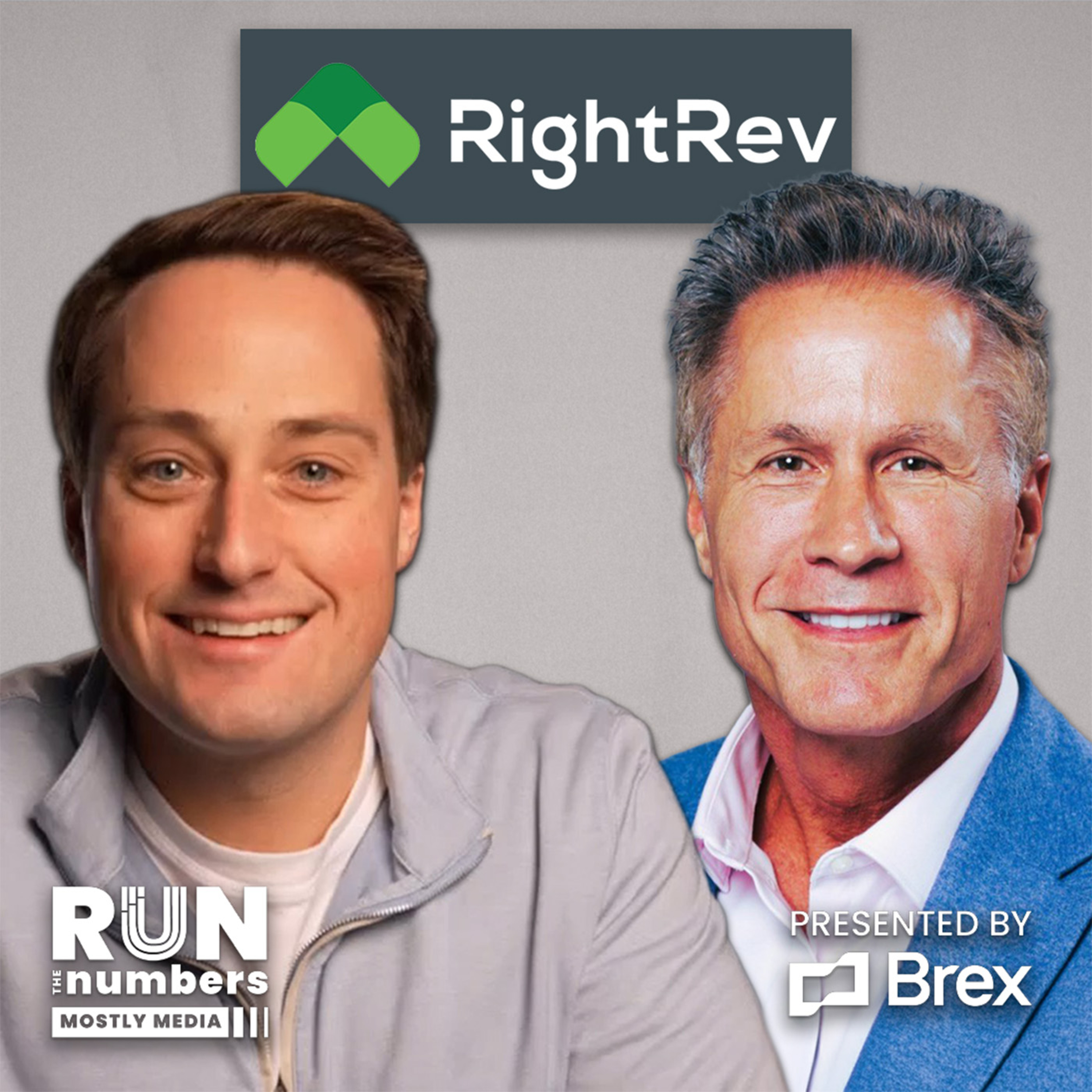
Loading summary
Transcript85 lines
- [00:00]
Dan Miller
I think sometimes just that voice of the CFO is helpful on the call. It just shows the customer or prospect the depth of awareness and the importance of that customer.
- [00:10]
CJ
There's a term that I've seen you throw around before, and that's Revtech. Can you break that down?
- [00:15]
Dan Miller
For us, billing was the thing and CPQ were the thing. Revenue was kind of the poor stepchild. Revenue is the driver. In 201718 I had John Chambers, former CEO and chairman of Cisco, on our board and he always talked about market timing. A startup has to time it right and then also accelerate that even more.
- [00:35]
CJ
RevOps implies you're just helping to get the deal done and you're assisting with the sales process. But we booked all these deals and it's messy and I think you need to rethink the structure.
- [00:45]
Dan Miller
It really does get back to that data piece. The good news is we have the best data. The bad news is we're at the end of a very long stream of data.
- [00:55]
CJ
Is this thing on?
- [00:59]
Dan Miller
Yesterday's price is not today's price.
- [01:10]
CJ
Welcome back to Run the Numbers, the podcast where we talk with the world's top CFOs. I'm CJ, a tech CFO, and my goal is to tease out the playbooks and tactics the best finance leaders rely upon to make you better at your job. On today's show, I'm speaking with Dan Miller. Dan is the Chief Financial Officer at Right Rev, where he's building the infrastructure behind modern revenue recognition for complex models. Think subscriptions, usage outcomes, and everything in between. He's also been the CFO at Fastly and spent a decade scaling NetSuite, so he's seen just about every stage stack in growth curve finance can throw at you. In this episode, we go deep on why leasing yes, leasing is underused in software and where it actually makes sense. The origin story of Revtech and why revenue recognition may be the next great AI battleground. How Dan evaluates durable growth versus hypergrowth and and what a CFO should focus on when their company is good but not going bonkers. Where AI helps in finance and where it's just fancy software with a solution looking for a problem and what it's like being a CFO at a company that sells to CFOs and how that changes your relationship with sales. If you like the show, please remember to like and subscribe. It helps us with the algorithmic overlords. And if you're looking to hire the best finance and accounting talent, I'd love to help you. I have a Recruiting service that will pair you with qualified and amazing candidates from our warm database full of podcast listeners and newsletter readers who self select into learning about CAC payback periods on weekends. If that's of interest, shoot me an email@talentostlymetrics.com on to today's episode with Dan Miller. Dan, welcome to the Run the Numbers podcast.
- [02:44]
Dan Miller
Thanks, buddy. Good to see you again.
- [02:45]
CJ
You've been a CFO more times than I can count on one hand.
- [02:49]
Dan Miller
Well, I think the most interesting part of my career is when I did a right turn. I was CFO of about a $200 million private equity backed company in San Francisco. Software and services company called nexent, growing about 34% a year. EBITDA positive. We needed an ERP system. We got the call. Hey, the COO of NetSuite, Jim McKeever, wants to take you to a Warriors game and sit in the floor seats. Okay, twist my arm. I'll go do that. By the fourth quarter, Jim was saying, hey, I'd love to have you come run our largest vertical, which was the software vertical. So I ran about a $600 million ARR business for them for about three years before then going back and being a CFO again fastly. But my point is that yes, CFO, multi stage, early stage, late stage, public, but the best part of my career, the most I think rewarding in helping me be a better CFO today was being a GM and seeing how all of those functional leaders, the marketing people, the demand gen, you know, the sales people, the customer success, support people, all of those things, including product, having those all report into me helps me be a better CFO today. I mean, I think you stand in the shoes of those people and have to manage their challenges. Not that you can't be if you just go, go be a CFO your whole career, but it certainly helped me to live that for three years and realize how challenging each of those jobs are. And I think I bring that today to my business partners and I can partner with them better.
- [04:08]
CJ
Well, I'd like to ask you to reflect on what durable growth looks like, because you've seen growth of all different stages. You've seen growth where servers are melting off the wall. You've also seen companies that are trying to find their footing with a new product. How do you look at like a company's life cycle and, and what durable growth means at each stage?
- [04:27]
Dan Miller
Part of this is switching costs. I mean, as I'm watching this stuff, it's the innovation, the pace of innovation, the pace of product introduction. The pace of new companies is coming on market that you had AI native companies, now it seems like there was even something newer than an AI native company. And if you're a company out there today looking at various vendors, you kind of got to go, well, am I going to buy this thing? And it's going to be, I don't know about obsolete, but not the best thing in a month. And then also as our investors have pointed out, we've got Norwest and other great investors investors. The incumbents aren't sitting, you know, and doing nothing either. And they've got a whole bunch of other things that maybe these can be earlier stage very successful companies are having. So getting back to your question around durable growth, it really does ultimately, whether it's recurring or whether it's consumption or whatever the words are that anybody wants to wrap their head around. Predictable and durable growth I think comes with that switching cost and your ability to retain those customers. And we're going to talk about, I think a little bit later how customer success is so critical and has to be really the whole org. I loved when you wrote that about the Snowflake thing and I think that's really where this is all going. It was already there with SaaS, but I think you pointed out it was more event driven. Now it's more of a everyday occurrence. But with all of the, the new innovation that's going on, it's really around that, that friction and around switching costs and how easy or how hard it is. The other just I think is we'll talk a lot about this I think as well, which is just around the data piece. Who owns the data, how, how is, how is that data being used and all of the other stuff we're going to talk about around the hygiene of it will also be in terms of how durable that growth is.
- [06:02]
CJ
You mentioned Snowflake, then that's a customer that you're pretty close with, right?
- [06:06]
Dan Miller
Yeah. Joggin, our CEO and founder from day one, was their design partner as they went through a journey around how they were going to price and package. And there were multiple chapters to their journey. We actually took two major chapters with them. As marketplaces have become more prevalent as discounting and gross margin at various ways of using credits becomes more complex. We had to take two tiers of them, sort of their initial and then really about a year and a half ago they went to the street, said we're changing our model and we took that journey with them and had to change our product significantly. I would Say three years ago there was this use case around. We call it dynamic discounting, which is sort of discounting and allocations changing each period. Not set it and forget it for an entire contract. That use case was probably three years ago. Not prevalent at each. I would say in almost each case that we go into now with a prospect we are seeing that use case around complexity of dynamic discounting and the allocations that are done for the contract across the elements changing much more frequently. May not be monthly in some cases, but it'll depend all driven around the consumption model. So Snowflake has been great at helping us innovate and I think they're super happy with us as a vendor and also they're an investor. Your piece you wrote up recently was fantastic in terms of breaking some of that down. I don't know if the audience has read that, but if they haven't, it was a really great write up.
- [07:29]
CJ
Thank you. I appreciate that from, especially from a practitioner like yourself. And I just think that Snowflake has been such a pioneer in how to build a business around a commitment based model. And a lot of people say, oh, that's just how they price. I'm like, no, that's how you run your entire business.
- [07:44]
Dan Miller
There were these mega companies doing it already, but incrementally it didn't matter to them. It did matter to our friends at Snowflake who was trying to, who are trying to manage growth and margin into all that predictability. And one thing I wanted to talk about in there, just really double click into and this is actually worth spending a minute on, is when I left that suite, I became CFO of Fastly, which was 95% consumption.
- [08:06]
CJ
Wow, I did not know that.
- [08:07]
Dan Miller
Building that forecast model was kind of what you alluded to, which was looking at history. Okay, there's an election, there's a Super bowl, there's a whatever, there's seasonality, there's whatever. And then you kind of segment customers and do all of that, which was great. It's absolutely table stakes and super hard to do now what's happening, right? And what happened to us at Fastly was we wanted some predictability. We wanted to take something in there and just try and just wouldn't be 100% because we were always, we're never going to get away from that sort of usage thing but try and build some more pieces in there. Maybe it's services, maybe it was some things were subscription around some security product or whatever. So we can munch into that and just, just kind of Stabilize it a little bit. It's happening a little bit in reverse now. I think you pointed this out which is some of the pricing packaging that's going on as a tester with consumption while keeping the subscription model. And then I think probably at some point start to invert for a lot of the legacy players. But for a consumption based company today that's looking to do this, I mean what's happening there is in terms of the forecasting is you're now not just forecasting the consumption, those allocations are changing as you go. And now you're not only just forecasting consumption, you're forecasting the change in those allocations and why that's important besides just how much revenue you're going to recognize in a period and running scenarios around that putting on your FBA hat. But then gross margin impact because you're shifting amongst higher or lower gross margin elements and now it's affecting your gross margin. And by the way we're working on this product is going to come out in the next quarter and I think it's going to be a game changer for folks particularly for the FP and A side but also kind of the controllership side and of course the CFO around doing those scenarios. Not just that a when are we going to see more consumption usage and then you know, bill that all and then get get the revenue. But that allocation piece which no one is able to do other than us. Aaron Levy at Box is really doing a lot of really great thinking I think around this. One of the things we feel really really good about is at right REB is we of course work with great partners like Salesforce and a whole bunch of other billing systems and they have great data and they provide us that data because you need it for rev rec. We're doing the allocations piece which no one else has. You're able to do some things along forecasting side that others can't do. And that's where I think we can help CFOs. But also it's kind of the FB and A folks doing some of the allocations around some of these more complex situations.
- [10:32]
CJ
Context is king, especially when it comes to forecasting your revenue in a commitment or usage based model. And I came from the enterprise SaaS world at first where they paid us the same amount every month even if they didn't show up. It was like the Planet Fitness model. But then I worked at a completely usage based. There weren't even any commitments, it was just usage based of how many orders you did you find these very interesting quirks and seasonality that you have to just understand the rhythm of the business and live it quarter to quarter to forecast it. And so Monday was always our highest order day of the week, right? And then Tuesday was 5% less than Wednesday was 5% less. Then you get to the end of the week and you're at about 80ish percent of what Monday was. But then you can also have some customers that are active on weekends. So a Saturday was worth 0.25, whatever a Monday was, and a Sunday was worth 01. But then, oh, we have Labor Day. What's the analog to that? Do we look back in time and say, well, what was Labor Day the last time? Or what about Christmas when it fell on a Wednesday seven years ago? What does that look like?
- [11:30]
Dan Miller
Maybe to even use? Maybe one of the use cases we're working on now with a customer AI company with, you know, a capability that the whole idea is that the AI will capture the situation. That capture rate is another lever like you're now forecasting. Not just volume and growth and everything else. You have to now guess at how successful will your product be around the growth in that. So it is, it is to your point, it is a multi dimensional problem. And getting that right of course is fundamental. Then I think the allocations piece and then that gross margin piece gets really interesting as well. I've just seen sort of, I guess we're sort of expecting by 2028, we're expecting something around 70 to 80% of these models to be consumption heavy, if not consumption based.
- [12:14]
CJ
Hey, thanks for listening. We'll be right back after a word from our sponsors. Being a cfo, you know how much I love tools that actually make the lives of accounting and finance folks easier. One of my favorite tools right now is really the AI native ERP going head to head with Netsuite. Yes, someone is finally doing it. I met Rillet two years ago when they were still in stealth. Since then, they've absolutely taken the finance world by storm. Their mission is to make the zero day close a reality. And they're actually doing it. Customers are literally closing their books at 1:35pm on the first day of the month. They've got everything you need to scale your business. Complex revenue recognition, native integrations, custom reporting, multi entity close management and much more. They're only a few years in and are already supporting nasdaq, publicly listed companies. Companies. Yes. Seriously, if you want to scale your business on an ERP that wasn't built in the 90s you need to check out. Really? Book a demo@rillet.com CJ oh cool, that's me. That's R-I l l e t.com CJ R-I l l e t dot com CJ Tell him I sent you there. Ali and the team at Tabs are building something that directly addresses one of the biggest headaches I see finance teams deal with today. Pulling data from your erp, your CRM, your FPA tools and your usage systems and actually making it all work together. If you're running usage based pricing or complex contracts, you already know how this usually plays out. Contracts live in one system, usage data lives somewhere else. Billing happens in another tool. Revrec gets layered on top at month end and finance ends up just reconciling everything by hand to close the books. This is exactly the problem Tabs was built to solve. Tabs is an AI native revenue platform built for controllers and CFOs. It brings together data from your ERP, CRM and real product usage into a single system of record. From there it automates billing, collections and revenue recognition without Finance having to duct tape workflows together every month. If usage based revenue is core to your business, this is the future of how billing and Revrec get done. Go check them out@tabs.com run. That's tabs.com run we've all been burned. We've all bought that enterprise planning tool that promised the world, only to realize six months later that we've basically taken on a second full time job just to keep the software running. I want to talk about a company that was built specifically to kill that cycle. Abacum. I actually remember my very first conversation with their founder and CEO Julio Martinez over three years ago. Back then they were just starting out in Spain. Fast forward to today. Julio moved the home base to NYC and they're the engine behind finance teams at Strava, Replit and JG Wentworth. Abacum doesn't turn you into a software admin. The integrations are actually self service. You don't need a $300 an hour consultant to plug in your ERP or HRIs. And they're doing AI in a way that actually impacts the things FP and A teams are doing every day. Things like creating variance summaries, building formulas and modeling scenarios. If you're scaling fast and you're trying to avoid that legacy platform trap. Abacom is the move. They're building the future of our tech stack and they're doing it with a CFO's perspective go to Abacum AI to see it for yourself. That is Abacum AI. This is just a fun one to riff on, but something I've seen at least in the subscription space. So just to move to that for a sec because I know you're passionate about revenue is. There are a lot of these new age AI companies, Dan, and they're selling a three month pilot at like a pretty small cost. Let's say it's $3,000. They're multiplying it by four and saying look everybody, we got $12,000 in ARR. And not only are they claiming it's all air, they're paying their sales reps on it as if they have a $12,000 booking.
- [16:08]
Dan Miller
This actually gets to another thing which I think we'll start to see more of is the concept of a commit. Right. Is that yes, your credits but you got to use. And of course that's already prevalent. The rep is just. Yeah, you went through the scenarios. The rep was super disincentivizing and trying to figure out how to do that. The subscription model had a lot of blessings and unfortunately they're going away a little bit. It is tough to comp people on this. We actually engaged the Alexander group on it to try and help with some of the more complex situations around the the consumption model. When I was at fastly, it's an endless topic but you have the use case that you're talking about too. So you sell the trial and you get. Let's just say, but let's say it's at a hundred K. How long does that rep keep that account? And let's say they do nothing for six months and then oh, in month 10 suddenly they do a $5 million deal. Does that rep get anything? It's a really tricky situation because obviously that's a huge commission to pay off somebody. So these situations and use cases are very challenging.
- [17:03]
CJ
And Snowflake had to go through multiple iterations of how they compensated reps too. Because with a rep who maybe can't impact like day to day the workflows that get moved over to have the taxi meter running. So how do you look at terms of just getting that that booking? Is that just the start of the process versus the actual consumption that happens which leads to that future booking if it's successful?
- [17:26]
Dan Miller
Absolutely.
- [17:27]
CJ
Well.
- [17:27]
Dan Miller
And it does sort to start to lead you down a path of how much of this can be self serve. And I think there's an element of this around again margins and profitability and cash flow that you talked about as well, and that relates to when do we pay people out versus when do we collect on these things. It really gets into CFOs. We got a lot of things going on on the rev revenue side. But it's your point. We also got them going on the expense side in terms of compensation.
- [17:50]
CJ
You're so right. Because there are a lot of companies out there who don't align their cash strategy at the company level to their cash strategy at the rep and commission level.
- [18:02]
Dan Miller
We just came out with a lessor accounting product which is the first of its kind that allows a company to do 842 lease accounting along with revenue recognition. ASC606.
- [18:17]
CJ
Can you just explain like a lessor scenario?
- [18:20]
Dan Miller
The most basic thing you can think of is if you lease a car. I'm thinking about tech equipment. I was VP controller of Extreme Networks and we were, we would get a big order and they'd say well now we want to do a lease structure. So you would do the order and you would just basically add to that. You'd flip it over into a financing leasing company and you get the rev rack. Now with 842 and 606, how you do that is sequentially you would apply the lease accounting rules and then the 606 rules to be able to capture the various elements of that. Now getting away from a car and now starting to think about is hardware. You got hardware, software, services, whatever else, support, and you're bundling all of that together. Now you have a multi element arrangement and of course we got to go through all of that again. The point was in a world where we're talking about monetization, in a world where we're talking about customers wanting to pay monthly or quarterly or whatever, versus kind of annual, all upfront, I start to think about why isn't the lease structure used in software more often. Of course there's nothing too secure per se, but I do think it matches very well. Helping companies pay more over time, but actually then allowing vendors like software customers be able to sell more stuff using that lease approach. I do wonder if it's going to become more prevalent is really my question. And we won't, we won't know. We certainly see it on the hardware side a lot of I just wonder if it'll be there on the software side.
- [19:43]
CJ
In some ways it reminds me of companies securitizing the chips that they have. And you could argue, well, how useful are these chips if they only have a useful life of like four to five years or something like that? But we're definitely moving towards a world where hardware is sexy again. There are a lot of companies out there that are blending both software and hardware and it's going to impact how the P and L looks and how the balance sheet looks.
- [20:05]
Dan Miller
We were actually having the conversation yesterday about kind of OpenAI Nvidia and we're excited about it. Right. Rev thrives in complexity. If you've got a straightforward business model, straight consumption or straight subscription, we're happy to work with you. But it's probably not the complexity that we deal with with all of our customers. So the more complex and higher scale you have is really where we kick in. Literally had a call with a very complex situation in a Singapore company that's doing some very innovative things. The more complexity, the better for our product. It's where we tend to differentiate ourselves. And the point there is let CFOs not worry about the back office stuff. Really worry about thinking about how to best monetize. That's why I bring up the lease approach. If lease ends up being somebody that helps you sell more software, why wouldn't you do it?
- [20:48]
CJ
Dan, what do you think the CFO's role is in sales? I know you could say, well CFOs, they sell the company to get capital and stuff. But you're literally the CFO of a company for CFOs, you get plugged in there.
- [20:59]
Dan Miller
I have to give credit where credit's due here. My GM role at NetSuite was an outgrowth of Jim McKeever who was the original CFO of NetSuite. He liked being a CFO but he really liked being a sales guy. So he spent about 25% of his time being CFO. You know, wrote it all the way through from early stage to public company, eventually became the CEO and my boss. But he was spent 75% of his time selling from very early on. And so when he became COO and moved on, he needed somebody to backfill on the sales side. So I was VP Finance at GM and so I just learned from him really how to do this. And it is getting out there in the trenches, understanding the use cases, understanding the product very deeply, as in hands on, being able to admin the product. Essentially yes. It is unique because we are selling to the office, to the CFO and those situations are unique. If you're selling something else, it may not be as relevant even then I sort of would maybe challenge our friends in the CFO world to understand that market very well. Maybe not be the trusted advisor on something that isn't office of the cfo, that's sort of tough. I mean, you and I have seen it at all. We've been through hyperscale, whatever. So it's helpful to know that we're in a whole bunch of different companies every day. But I think it makes the job a lot more fun because you are now not just the back office cfo. You are very much in front of the customer. So when you're doing things like pricing and packaging, you're not just coming at it from a spreadsheet or a gross margin perspective. Of course you're going to do that, but you're really thinking about it from the lens of the customer and helping win that sales team and marketing team generate leads and then ultimately win deals.
- [22:29]
CJ
Just to get more tactical here. So there are probably a lot of people out there listening who say, that's great, I want to help on sales, but we don't sell to CFOs. Put yourself on a sales call. What are the ways that a CFO can help move the needle? Is it. Is it just on I can give you better payment terms or are there other ways that you can help influence the buyer?
- [22:46]
Dan Miller
Certainly on those things, that's where people are going to expect you to contribute is sort of contract structure and all of that. And that actually gets directly back to the monetization theme. So like, I mean, we're sort of beating that horse. But it's so true if you don't have a back office as a CFO that can support some of those things. Payment structure being more on the more simplistic end as you add exceptions and other sort of modifications to a contract. Being able to account for them in the back office without doing backflips and killing yourself and hiring a bunch of accountants is super important. Look, I think sometimes just that voice of the CFO is helpful on the call, especially if you're in the earlier stage around the credibility, financial stability of the company and all of that sort of stuff. I think it just shows the customer or prospect the depth of awareness and of the importance of that customer. The first demo. You're probably not having this. In my case I am. But in the case where it's not an office, the CFO thing, you got to judge every situation, but I think it just shows the commitment to that customer and making that customer successful.
- [23:42]
CJ
That's such a great point because sometimes it's just the presence of this is worth my time and I just want to be here to be a resource to you as the cfo and if you're an earlier stage company and you're trying to sell, it's like this is an expensive hourly call for us.
- [23:56]
Dan Miller
I probably in an hour call, maybe talk for two minutes. They're a very important two minutes, I believe. And I, I've seen them be very important. Again, I learned it from Jim. I think the voice of the CFO is very important.
- [24:07]
CJ
So you mentioned getting your team in order. There's a term that I've seen you throw around before, and that's RevTech. Can you break that down for us?
- [24:15]
Dan Miller
We're sort of creating the term and it's always a little concerning to do that until you test it. And so I wanted to test it on you and maybe your audience.
- [24:22]
CJ
Let's workshop this here.
- [24:23]
Dan Miller
There's Rev Ops, right? The importance of that is where you and I spend a lot of our time. So I think just aligning with that, we aren't pretending to do anything around billing or cpq. Those are our friends and partners. We will never do that. We're going to stay strictly around revenue. Maybe again, to your point, a little bit on the snowflake thing, where billing was the thing and CPQ were the thing, revenue was kind of the poor stepchild. I love that about your snowflake example, which is super important. CPQ and billing, you got to be able to do those things. You gotta be able to build things. Revenue is the driver. That's what we're seeing is that, look, there's a ton of vendors very capable of solving those problems on CPQ and billing, and they'll continue to evolve and improve and get better. Where the pain that we see every day is that they're really aren't ready for the revenue piece. But I think that's why we sort of think this RevTech term is very interesting. Because, yeah, it's focused on revenue.
- [25:18]
CJ
I think it is time for a new term around that. Because Rev Ops implies you're just helping to get the deal done and you're assisting with the sales process. But if you flip the model on its head and you're using revenue as a driver as to where the company is going, you're not using anymore as, hey, we just got to clean up this after, because we booked all these deals and it's messy and that that was the compelling event, then I think you need to rethink the structure.
- [25:41]
Dan Miller
It really does get back to that data piece. The good news is we have the best data. The bad news is we're at the end of a very long stream of data. We are dependent on so many subsystems in that case, or you know, kind of upstream data that is critical to our success. And so the dependencies are there and the partnerships need to be there. So I think the technology is critical. We've got some really incredible innovations coming out here in the next couple quarters around how to handle that data, create hygiene, sequence it. And everybody's working on this problem. But in our particular case as it relates to revenue, we've got some exciting things working on there.
- [26:21]
CJ
Hey, thanks for listening. We'll be right back after a word from our sponsors. Well, well, well. Here's what nobody tells you about being a CFO. You'll spend 50% of your time on stuff that is killing your momentum. The best CFOs I know are business leaders who know how to drive growth in heroic fashion. But most of us end up spending our days buried in manual work. I'm talking about collecting receipts, reviewing expenses and manually reconciling spend. It's painful. That's why CFOs need Brex. Brex built an intelligent finance platform that pairs corporate cards with built in expense management. Plus a team of AI agents to handle the manual finance tasks for you. That way CFOs have more time for the high impact projects that drive growth, you know, actually worthy of your CFO time. Bottom line, Brex is automating hundreds of thousands of hours of manual finance work every month across 35,000 companies like Anthropic, Coinbase and Doordash ready to spend less time buried in expenses and more time driving results. Check out Brex app brex.com/metrics. It is brex.com/metrics please guys. How the hell do I have three kids in daycare? Brex.com/metric you just launched your new AI product. The new pricing page looks great. I'm talking crisp but behind it last minute glued code, messy spreadsheets and running ad hoc queries to figure out what to bill customers get invoices they can't understand Engineers are chasing billing bugs. Finance can't close the books. Well with Metronome you hand it all off to the real time billing infrastructure that just works. Rely on reliable, flexible and built to grow with you. They turn raw usage events into accurate invoices. Give customers bills they actually understand and keep every team in sync in real time. Whether you're launching usage based pricing, managing enterprise contracts or rolling out new AI services, Metronome does the heavy lifting so you can focus on your product not your billing. That's why some of the fastest growing companies in the world world like OpenAI and Anthropic run their billing on metronome. Visit metronome.com to learn more. That's metronome.com Here's a growth tax nobody talks about. Every new monetization model you ship creates a nightmare for your finance team. Ad usage based pricing. Now you're tracking consumption against commitments. Launch product bundles. That's multiple performance obligations per contract. Offer mid cycle upgrades. Good luck reallocating revenue manually. But that's exactly where Right Rev shines. Right Rev is the revenue recognition engine built for companies that can't afford to let accounting slow down growth. When your Rev rec is automated, your product team can ship new pricing without asking finance for permission. And your sales team can close creative deals without worrying about downstream chaos. To get up on my CFO soapbox for a sec, I love talking about creative pricing models, hybrid pricing credits, tiered usage. But I've seen too many companies where the sales team is celebrating a huge quarter while finance is still trying to figure out how to recognize half of it. In a world where your pricing model might change three times next year, that flexibility is everything. If you want to scale your monetization without breaking your books, visit ryterev.com that's rytrev.com where modern monetization meets bulletproof accounting. You led me right to our next question because me and you collaborated on this State of AI and Finance report and I wanted to walk through with you where AI is actually useful. In revreck we can be honest because there may also be spots where AI is actually just software looking for a problem that we've already solved.
- [30:00]
Dan Miller
I think the FOMO thing is real. Nothing I've seen. I mean Stanford just did a study a couple weeks ago where practitioners are doing very simple use cases with very simple steps with lots of human review. And I think that just indicative. Will it change in a year? Of course. And things you know, we're going to happen here, but we don't see a world I'll be extreme where you know, sort of an order comes in and suddenly revenue spits out the back because the agents are doing it. What we do see is a lot around that hygiene stuff and the data and the synchronization of these systems. Ultimately if we can just know that that, that data that we have in Right Rev is accurate, we're going to get revenue right every time. That being said, we got to run around and get a lot of data synced up and that's a great use for an agentic approach. And some of the data stuff that we're working on. The other example, and we can demo these today, they're super exciting I think is around productivity and error reduction are the two things that we. Those are the two dimensions that we're focused on in our product and the productivity piece. So you come up with a new SKU and the ability a human could go and take a look at all of the other similar offerings and do that. Here's the, you know, the rev rec rule for this particular SKU. And as you could do it quicker and probably better by if you've got hundreds or thousands of SKUs, there's other things around, you know, kind of proofing out journal entries and deferred revenue reconciliations and those kinds of things that are more, I would say table stakes, things that are. That are already fairly easy today. Any of the recon stuff I think is pretty basic at this point. You see all of these AI based close management stuff doing the recon stuff. So those are the kinds of things that we're focused on is around data synchronization and sort of those errors are eliminated. And then also just some of the, the productivity stuff.
- [31:42]
CJ
I want to zoom back out on just the finance stack in general because there's this word that's thrown around a lot when we talk about AI and it's deterministic. Can you just make that real for people? Because I feel like the definition gets conflated a lot.
- [31:55]
Dan Miller
Revenue recognition is rules based. We all know that. And so some using an agentic approach which is by definition probabilistic. And I'll come back to probabilistic in a second. It's really not going to fly with auditors at this point certainly or really CFOs or controllers or anybody around the table. So the deterministic approach within revenue recognition is here to stay for the, certainly for the foreseeable future. IBM did a study fairly recently which using an agentic approach and a probabilistic approach converging on a deterministic approach, we'll get there someday. It's in some research lab within IBM. These things are moving very quickly, but when that day comes, we'll embrace those things. But we don't see that being out in the field in operations anytime soon. Within actual revenue recognition, that deterministic approach, a rules based approach is not going anywhere anytime soon.
- [32:47]
CJ
You can run really cool forecasts to the moon with probabilistic outcomes, but you may not be able to recreate it. It's kind of like searching for a needle in a haystack and you'll pull something different out every time. There's certain elements of finance where deterministic A plus B is always going to equal C. That's a feature, that's not a bug.
- [33:05]
Dan Miller
I've been CFO of three cybersecurity companies. These agents and being floating around in systems. I think I'm talking to a variety of companies in cybersecurity that are just working on this exact approach but they're not out in production yet in the real world. Those are very early stage products. So all the CIOs in the world and the CISOs of the world are quite nervous about their ability to have these agents flying around in their system. So it's going to be a little while before the enterprise is adopting these things for a variety of reasons, probably beyond the two that I'm mentioning. But it is super exciting. Like I think a year from now you and I are hopefully talking and have a lot of fun. But right now I certainly for the next year I think it's going to be a steady as she goes and some of these corner case use cases I should mention. So we're out talking to a variety of stage companies. We're anything from high growth stage companies might be a 50 to $100 million ARR company up to tens of billions I mentioned earlier. So they're asking what's your AI strategy But they're not actually expecting or wanting really anything in our product that's really AI for the most part. Those earlier stage companies they're more interested in sort of what we're doing there and want to see stuff. So we do see the spectrum of companies that are doing that. I would imagine that will continue to creep up. But you think about the ciso of the $10 billion company not really excited about having some of these things in his network at this point you have.
- [34:19]
CJ
Kind of this contest in my mind of you have the incumbents trying to innovate faster than the new players can find distribution. What do you think of this whole new age player versus incumbents who ends up winning and maybe it's different depending on the category you're in, but there is that real fight.
- [34:36]
Dan Miller
So in 201718 I had John Chambers, former CEO and chairman of Cisco on our and he always talked about market timing. A startup has to time it right and then also accelerate that even more. I think frankly just getting over the skis a lot on some of this stuff. And it's fine that if I was them, I'd be doing the same thing, no problem there. I have no ethical problem with that. But in terms of where things are actually at, we all sort of know the surveys are being done, the data is being produced by credible, you know, places like Stanford and Berkeley and IBM that show that it's really not out there. But that's the game people are playing. They're just trying to accelerate market adoption by saying, you're missing out.
- [35:13]
CJ
So it's the FOMO effect. I see a lot of companies right now and they're raising a ton of money multiple times in one year. And part of me is like, good for you. You filled up the war chest. But then I'm also like, it's going to be a lot harder to recruit employees if your 409A goes up. And also scarcity can be a good thing because it makes it so you don't fund the BNC projects.
- [35:34]
Dan Miller
It truly is. I mean, I think efficiency and scarcity is good and they're being told by their investors to not worry about that scarcity thing right now. So there's Jan Spence, Ben Send, do whatever they got to do. Look, I think the thing I think we all know is going to happen in that space and I'm not again, particularly any sector within there, but just there's just going to be a ton of consolidation and failure within there. They're going to run out of money and I think they're going to over commit if I specifically, and I'm not picking on vendors here, but I'm just saying because, because of my days at netsuite. The ERP thing is a tricky one, but revenue recognition is too. But you don't just sort of pull an ERP system and then say, oops, I'm going to rip it out and go to another one. It's super painful. I think we're going to see a lot of unhappy customers for a while and some churn in those spaces because those products can't be as mature as netsuite. And netsuite is waking up. That's one of the things we love about what we do, right, is, is that innovation is constant. Sometimes it's higher, sometimes it's lower, but it does ultimately cause, you know, kind of the rising tide and makes at least our office of the CFO job, hopefully makes them a lot easier. I mean, look at netsuite, right? I mean, the cloud thing took forever for cloud ERP to happen and those guys grinded Away, grinded away for years at NetSuite and finally it took off. And I think a similar thing's gonna happen here.
- [36:42]
CJ
Some will win, like, inevitably, one or two of these companies. I'm keen on a couple, particularly in the ERP space, who, who I think will win. It'll be kind of like the story of Wiz. Like both of us were in cyber security before. That's a story of a company that everyone was like, they're at like a billion dollar valuation at $10 million in ARR or something. And it actually worked out. But then you see all the bodies on the side of the road of all the other cybersecurity companies who also took on the funding, and it didn't end up in a $32 billion acquisition of Google.
- [37:09]
Dan Miller
So I talked to 10 employee kind of cybersecurity guy yesterday, founder, CEO, and I mean, it's an interesting time. I mean, you know, you. And I would say, well, there was a time where if you got the million of ARR and you're one, it'd be like, what? Like, what are you talking about? How did you do that? You get one deal now, it's kind of almost expected. I mean, you got to be in revenue fairly quickly. And then not only that, I'll call it hyper scalar kind of rates that to be even get investors and investor dollars. Which is why maybe your friends in the RP space are certainly seeing that. And so that's why they raised multiple rounds. It's an interesting time and it does get back to your durable growth. Is a lot of this growth truly durable? And the lovables and the other guys that are out there? I'm not in a position to say one way or the other, but it is a really interesting time. But it is having this sort of tangential effect on the rest of the market today.
- [37:57]
CJ
Only the companies, it seems like, who are tripling year on year are getting the headlines. But the reality of the companies that I talk to is the majority of them are not in hypergrowth mode. And it doesn't mean that they're bad companies. There are a lot of great companies who just aren't growing 300% year on year. What do you think a CFO is supposed to do? What can they impact? That the company is good, but it's not growing like wildfire.
- [38:18]
Dan Miller
This is a $64,000 question with so many CFOs right now, because you're right, the majority of them are not. But that's what the investment community is really looking for. Now I think they're, they'll temper those things. I do think it ultimately does get back to the durable growth. If I look at our customer base, we're just a nice solid super company that's growing very well. It's almost impossible for us to hyperscale. It's just because of the complexities that we deal with and the sales cycles. It may be tertiary, buddy. I think it maybe gets this window in time. You and I have been through these cycles before. I mean I'll, you know, maybe one of the stories we'll tell a little bit later as this very successful company in the late 90s, big IPOs and then the bubble burst, we all kind of went through that. I think this is one of those. It may not have a bubble bursting. I'm not saying that, of course that's a whole other discussion, but certainly this has to temper a little bit because as you're saying, some very good companies that have very nice exits in them somewhere. I do think there's some glut at the PE element of the market and investor market, the sponsors. I think there is what we're seeing, which everybody's adding sort of this consumption piece because if you can price in package it right, you can drive more quick, immediate growth through that consumption piece. And I, I think back to what we're saying earlier. I think not only that but also the agentic capabilities are sort of alluding and combining to where I think CFOs are embracing that because they can see some more accelerated growth.
- [39:38]
CJ
Dan, when I was looking at your resume, you've served in multiple industries from cyber to lidar to back office and in different stages like you mentioned before, early stage, fast growing, also public. How did you find your own personal product market fit as a cfo? Whether that be by industry or company size and stage.
- [39:57]
Dan Miller
Ultimately it was always about growth. Even in the the company that was growing at 40% a year, which is obviously nothing like we're growing currently at Right Rev or many of the previous startups. It was a right time, right place, 2008 and everything else was in the tank. Got a call from Heidrick and said Heyrick did struggle. Say hey, here's the, here's a company. And energy efficiency and smart grid were hot at a time when nothing else was. And so we were growing at 40% was really good. You know, I think it's always been about growth because I think with growth comes challenges. Makes the CFO job a lot more interesting. I'm probably not that guy that's going to be just super focused on a basis point for you. That's probably not me. I'm more entrepreneurial, just like you and many other folks on your podcast. So that's where I think it gets fun, is where how do you expand, how do you grow, how do you get more efficient within that while you're growing is super fun. And I think anybody could do the back office piece, kind of do all that sort of stuff, something, you know, get. You can get better at over time. But I think moving to that front office piece and really being part of that growth and a growth catalyst.
- [40:55]
CJ
A lot of the listeners are finance leaders, whether that be a director of FP and a VP of finance or a cfo. And they find themselves, Dan, working at a company that is not AI. Maybe it's a marketplace, maybe it's vertical software and they have this sense of fomo, but they're still at a good business. What would you say to those people who are trying to navigate if they should jump to a shiny object?
- [41:16]
Dan Miller
Well, if you've got a good mentor and a good boss and you're learning a lot, I sort of rotate towards the good mentor and a happy life. I have certainly gone on those rocket ships and things can go south fairly quickly in some cases. That's the volatility we deal with in this marketplace. One thing that doesn't go away and is use the word durable. You got a good boss, you're a happy. You're a happy camper within the company and you're learning a lot and it's helping you grow as a professional, I don't think that ever goes away. I just had so many great bosses in my career. I just keep go down the list. One thing I love working with Joggin every day is helping build this business is super fun. We're great partners in crime trying to figure out how to grow it and deal with some of these really interesting challenges. And it's great to have a guy to sort of work through those things.
- [42:00]
CJ
There's something to be said about having a really good CEO CFO relationship because when I became a CFO for the first time, it was this weird thing where it was the first time in my career, Daniel, I wasn't reporting to a finance person. So I had to change the way I interacted a bit. And it's a bit different in your scenario, right, Rev, because you're making a finance product. But in a lot of the scenarios, I bet in your career you had to figure out how the whole Song and dance went in the balance between you and the CEO.
- [42:25]
Dan Miller
I was brought in by an investor because spending was a little higher than they wanted to be or maybe more than a little. So there's my first meeting with Joggin.
- [42:33]
CJ
That's a tough meeting.
- [42:34]
Dan Miller
Ultimately it's about do you like each other, do you trust each other and are you going to work together to solve the problems? And we did. And from day one there was a lot of trust. That hasn't always been the case. That's not. It does depend and it can be very challenging. I've been blessed in many cases though. You have to have done the work, you have to have be smart enough, you have to have intellectual curiosity about the business. I mean, that's one thing I maybe say for the younger folks to listen is that don't just stay in the back office, go to that all hands meeting where they're talking about some new product or some arcane support thing or whatever the heck it is. Because that really does help you grow as a professional. I start out in audit, right? You're like sitting there going, this is the dumbest job ever. I'm just basically looking at these invoices. But what you can pick up is what did that billing person do? What did that AP person do? What did the procurement person do? And now you're actually starting to understand how a business works.
- [43:22]
CJ
So, Dan, I'm going to take you into what we call our long ass lightning round. And so you're a successful guy. I ask every successful leader on the show, give me one thing you've messed up on the job before. It could be this job or a different one.
- [43:34]
Dan Miller
So there was a time in my life when there was a lot going on and I was probably a stressed out guy and I would say lost my cool. It was only a mentor that saved me from that and sort of made me realize that just it's not that important and take a minute to gather yourself. I would say that's it. I don't know that I've ever sort of thankfully messed up anything that I can remember materially on the technical side. But as you know, that's a small piece of the job. Most of the time it's really the interpersonal side and how you deal with people. But is I would say that looking back at my career, there's probably a five minute period of time where I feel like, like I probably should have not behaved in a certain way. It certainly wasn't out of bounds and instead it was really more just Stress getting to me, that was probably the issue.
- [44:15]
CJ
I have an exact four and a half minute period of my life where I regret things that I said and lost my cool. So I'm there with you, man.
- [44:24]
Dan Miller
Good buddy.
- [44:25]
CJ
If you could tell your younger self something, knowing what you know today, what would you tell them?
- [44:29]
Dan Miller
Yeah, it's get the good mentors and if you get one, just leech off them as best you can. Treat them right, make them look good and really latch onto them for your career because they just. They just are people if you find the right ones. I still have an audit partner at Deloitte who I checked with 30 something years ago.
- [44:45]
CJ
You really?
- [44:46]
Dan Miller
Yeah, yeah. John Kelman, Deloitte, probably the biggest audit partner in the San Jose office. He's now retired two years, but he is. He was a guy that just took me under his wing right from the get go. And you know, still to this day, as somebody I check with, particularly since he was a Rev Rec expert, my sort of general ledger person, she worked for me for four companies in 15 years. You know those people as well. You're blessed to find people that like working with you and that are amazing at what they do. I think that's probably the other one.
- [45:10]
CJ
Next one for you, more of a technical one. Can you walk me through your finance software stack? What tools does your team use to get the job done?
- [45:16]
Dan Miller
Rippling on the HCM side, it's NetSuite for ERP, it's Brex for credit card stuff. We're not doing the ramp thing. Even though it seems everybody's doing the ramp thing. I still do my model in good old Excel and I like to do it that way. I think it allows me to see some things. I certainly am using some AI capability to do the scenarios but. But that is that. And then for T and E we're using expensive.
- [45:39]
CJ
Nice. It's a good stack.
- [45:40]
Dan Miller
We wanted to drink our own champagne. So we would do not need the level of automation with our volume today or even our complexity to have the stack that we have. But we use Salesforce CPQ with the Colliers RCA and Billing RCB down into right Rev because roughly half our customers sort of had that flow today to help us with new product features. So that's our stack.
- [46:03]
CJ
This has been an absolute blast to hang out with you any anytime we can hang out. I appreciate it.
- [46:07]
Dan Miller
I do too, buddy. Talk to you about this all the time offline. What you do for the community is absolutely amazing. I literally can't wait to see your blog posts. And the stuff that you're doing, the people you're talking to. I don't know that your younger listeners realize 30 years ago when I started my career, none of this was happening. You literally had to go talk to somebody to figure this out. The fact that you can blast this stuff out and make it happen and really share this kind of knowledge is just gold for these people. And it's really great what you do.
- [46:33]
CJ
Putting that on a commercial. Thanks man.
- [46:36]
Dan Miller
Thanks.
- [46:36]
CJ
Buddha in the Numbers is a mostly media production yelling and intro by Fat Joe. Artwork by Meg Delesandro. Show is executive produced by Ben Hillman. Nothing said on this podcast is intended to be business or investment advice. It's the sole opinion of me, a guy who feeds his dog way too much ice cream and has a history of net operating losses. Lol. If you like this podcast, hit subscribe and give us five stars. It will take like two seconds and our algorithm overlords love it. Drink water, call your mom and have a great day.
- [47:05]
Dan Miller
Peace.