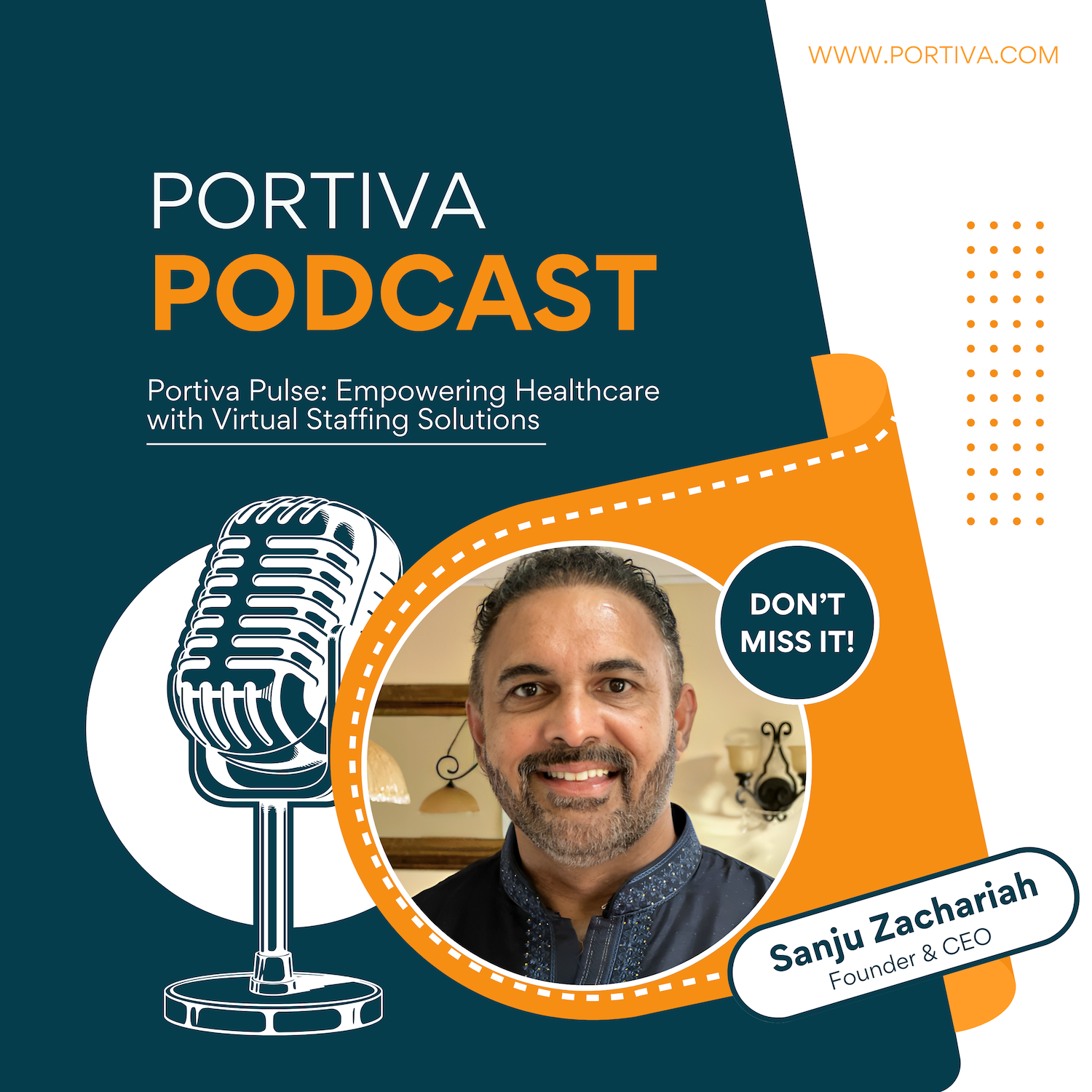
Podcast
Sanju Zachariah’s Podcast
Hosted by Portiva · EN
Welcome to ”Portiva Pulse” – the podcast where Sanju Zachariah, President and CEO of Portiva, explores the future of virtual medical staffing and healthcare efficiency.
Join Sanju as he delves into how Portiva’s innovative services such as virtual medical assistants, remote medical scribing, dental virtual assistance, prior authorization, insurance verification, medical transcription, and medical billing are revolutionizing medical, dental, and veterinary practices. Through expert interviews and real-world insights, ”Portiva Pulse” uncovers strategies to reduce administrative burdens, enhance patient care, and streamline healthcare operations.
Whether you’re a healthcare professional, entrepreneur, or tech enthusiast, this podcast is your gateway to the next era of medical staffing.
Tune in and stay ahead in the evolving world of healthcare administration! 🎧
77episodes
Episodes
Newest firstAll episodes
Solutions Medical Scribes: Boost Efficiency & Save Time
Feb 500:05:16Tap to summarizeFeeling buried under endless documentation? In this episode, we explore solutions medical scribes and how they can transform the way healthcare professionals manage patient records. From real-time charting to secure EHR integration, these scribes provide a full support system that reduces administrative burden and allows doctors to focus on what matters most — patient care. We dive into practical examples of how solutions medical scribes improve workflow efficiency, accuracy, and compliance across all types of medical practices. Whether you’re a solo practitioner or part of a large healthcare network, discover how the right scribe solution can save hours each week, enhance documentation quality, and ultimately improve patient satisfaction.
Transcribe →How Remote Scribes Help You Navigate HIPAA Compliance
Feb 300:06:12Tap to summarizeIf clinical documentation feels overwhelming and HIPAA compliance adds another layer of stress, this episode breaks it all down clearly and practically. We explore how remote scribes help you navigate hipaa regulations by supporting real-time documentation, reducing after-hours charting, and strengthening safeguards around electronic protected health information (ePHI). Designed for clinics, hospitals, and private practices, this conversation highlights how remote scribes integrate securely into your workflow without increasing compliance risk. You’ll learn how remote scribes help you navigate hipaa regulations through proper HIPAA training, secure access controls, encryption, audit trails, and legally required business associate agreements. From telehealth documentation to EHR access and vendor due diligence, this episode shows how the right remote scribe partner can reduce administrative burden, improve documentation accuracy, and help you stay focused on patient care—confident that compliance is built into the process.
Transcribe →Online Doctor Assistance: Smarter, Faster Virtual Care
Feb 300:05:05Tap to summarizeFeeling sick but don’t have time to visit a clinic? This episode explores how online doctor assistance is transforming modern healthcare by allowing patients to connect with licensed medical professionals through secure digital platforms. From video consultations to message-based follow-ups, online care makes it possible to receive medical advice, prescriptions, and ongoing support without long wait times or travel, making healthcare more accessible and patient-friendly. We also look at how online doctor assistance benefits healthcare providers by reducing clinic congestion, improving workflow efficiency, and enhancing continuity of care. Whether it’s managing chronic conditions, handling minor concerns remotely, or improving patient satisfaction, virtual medical support is becoming an essential part of today’s healthcare ecosystem—for patients and providers alike.
Transcribe →How Virtual Assistants Help You Manage Daily Tasks Better
Feb 200:04:47Tap to summarizeFeeling overwhelmed by endless to-do lists, emails, and admin work? This episode breaks down how virtual assistants can help you manage daily tasks by taking time-consuming responsibilities off your plate. From scheduling and inbox management to patient follow-ups and data organization, virtual assistants provide flexible, remote support that keeps your day running smoothly without added overhead. We explore how virtual assistants can help you manage daily tasks across healthcare practices and small businesses, reduce burnout, and improve focus on high-value work. Whether you need part-time support or a specialized assistant trained in medical workflows, this episode shows how smart delegation can give you back control, clarity, and peace of mind.
Transcribe →Virtual Receptionist vs Automated Phone Service Explained
Feb 200:05:26Tap to summarizeChoosing between a virtual receptionist vs automated phone service is a major decision for healthcare and medical practices dealing with high call volume and patient communication challenges. In this episode, we break down how each option works, what patients actually experience when they call your office, and why the difference between automation and human interaction matters more than ever in modern healthcare. Using real-world scenarios, we explore the pros and cons of virtual receptionist vs automated phone service, including cost efficiency, patient satisfaction, after-hours support, and scalability. Whether you’re running a growing medical practice or optimizing your current phone workflow, this discussion will help you decide which solution — or hybrid approach — best supports your patients while keeping your operations running smoothly.
Transcribe →How Virtual Assistants Help You Manage Daily Tasks
Jan 2900:04:15Tap to summarizeManaging everyday responsibilities can feel overwhelming, especially when unexpected situations derail your plans. This episode explores how virtual assistants can help you manage daily tasks by keeping life organized, reducing stress, and handling time-sensitive needs when you’re not at your best. From scheduling and documentation to task coordination, virtual support plays a bigger role in productivity than many people realize. Using a real-life scenario, we break down how virtual assistants can help you manage daily tasks that often fall through the cracks—like navigating urgent errands, handling paperwork, or coordinating next steps when you’re sick or unavailable. If you’re looking for smarter ways to stay on top of responsibilities without burning out, this episode offers practical insights you can apply immediately.
Transcribe →Claims Denied for No Prior Authorization Explained
Jan 8Tap to summarizeClaims denied for no prior authorization can feel like a gut punch for providers and billing teams alike. In this episode, we break down why claims denied for no prior authorization happen so often, what “prior auth” really means, and how small assumptions or paperwork errors can lead to unpaid services. Through real-world examples, we explain how these denials impact cash flow and staff time—and why they’re one of the most common (and frustrating) denial reasons. We also dive into prevention and recovery strategies for claims denied for no prior authorization. You’ll learn how to build proactive workflows, track denial trends, and submit stronger, timely appeals when denials occur. Whether you’re in billing, revenue cycle management, or clinical operations, this episode gives you practical steps to reduce denials and get more claims paid.
Transcribe →