Loading summary
Transcript222 lines
- [00:00]
Kylie Lowe
The greater New England area can evoke images of luxurious getaways. But what really lies beyond this coast? Both archives of dark history and more modern mysteries, all of which I have set out to uncover. I'm Kylie Lowe, investigative journalist and host of Dark Down East. Each week I dig deeper into the cases from the place I call home and into the stories of the people at the hearts of them. Listen to Dark down east now, wherever you get your podcasts. Support for Scratch and Win comes from Progressive Insurance. Fiscally responsible financial geniuses, monetary magicians. These are things people say about drivers who switch their car insurance to Progressive and save hundreds. Visit progressive.com to see if you could save Progressive Casualty Insurance Company and affiliates. Potential savings will vary. Not available in all states or situations. In the early 1980s, Australian media mogul Rupert Murdoch bought one of Boston's two big dailies, the Herald, and he made some changes.
- [01:05]
Frank Phillips
People say, ah, God, Murdoch. I said, that was fun.
- [01:11]
Kylie Lowe
Frank Phillips was a reporter there.
- [01:13]
Frank Phillips
That was real fun journalism. These guys with Australian accents. I'd say, you know, we got a budget story here. The governor I can get a piece of before it comes out. We get a scoop. And they said, frank, Frank, the budgets. We want you to stir up the animals. We don't need budget stories.
- [01:33]
Kylie Lowe
That was the Murdoch mandate.
- [01:35]
Frank Phillips
Go out and stir up the animals. And I said, okay.
- [01:43]
Kylie Lowe
Phillips was a politics reporter. He wasn't going to file splashy stories about mob hits or the latest meltdown of the Boston Red Sox. But he had faith that in this town, the world of politics could be just as stirring. He told me that every morning he'd drive in from the suburbs, and just as he crested the hill in Belmont and beheld the city below, Phillips thought about the scene in Roger Rabbit when the investigator character first enters toont, a red curtain lifts, and suddenly the world comes to life in absurd, cartoonish color. Boston was Toontown. The politicians were the Toons, and Phillips was here to tell their stories. The more scandalous, the better.
- [02:35]
Frank Phillips
There are people cutting corners, people doing favors, patronage jobs. And I would go in there to this press room, and all these young Ivy Leaguers would be on a globe here and, oh, God, these people you're banshing with the time.
- [02:47]
Kylie Lowe
What are you complaining about?
- [02:49]
Frank Phillips
They're characters, and we want them to screw around. I said, guys, catch them.
- [02:55]
Kylie Lowe
As it turned out, 1986 would be a memorable year in Toontown. A great year for catching mischief and stirring up the animals.
- [03:04]
Frank Phillips
Oh, yeah, this is great. This is when politics was politics in Massachusetts.
- [03:09]
Kylie Lowe
It was an off year for president, but an on year for all the big statewide offices. Governor, Attorney general, Secretary of state, and of course, treasurer. Bob Crane, master of the lottery, had already been elected to an unprecedented five terms thanks to the legislature lifting term limits on his job, and he was now running for a sixth. At the beginning of that year, there was no reason to believe Crane's race would be the race to watch. But then there was no reason to believe what was about to happen in the governor's race.
- [03:47]
Frank Phillips
Let me go back to 86.
- [03:51]
Kylie Lowe
Early in the election season, Philip got a tip that the Republican nominee for governor suffered from occasional mental breakdowns. He had been spotted talking to himself on the phone and wandering around his office stark naked first thing in the morning.
- [04:07]
Frank Phillips
And I remember talking to even my editors with their Aussie accents. Jesus Christ, how do we write that? I've never seen anything like this. 2000 signatures.
- [04:19]
Kylie Lowe
Then it came out that the nomination papers for this same candidate included forged signatures.
- [04:25]
Frank Phillips
Forgeries. All told, local officials have corroborated 649 such alleged forgeries.
- [04:31]
Kylie Lowe
Once that story broke, the Republican Party hastily drafted a new candidate. But pretty soon it came out that this second candidate had claimed to be a Vietnam veteran, when in fact he never served.
- [04:44]
Frank Phillips
He made the startling announcement that he's been lying about his military service for years, and he finally withdrew. So they were absolutely in turmoil. The continuing confusion at the top of the ticket has made the GOP a laughingstock.
- [04:58]
Kylie Lowe
Even worse, it's virtually finally the party drafted a third candidate. But even then, the original candidate, the one with the forged signatures, was still listed on the ballot and refusing to remove himself because he was mad at his own party for dumping him here.
- [05:13]
Frank Phillips
They kicked him to the curb. He was a mess.
- [05:16]
Kylie Lowe
And the turmoil went on and on and on.
- [05:20]
Frank Phillips
Search committee as the party's latest and Republicans hope last candidate for governor.
- [05:28]
Kylie Lowe
Once the drama on the Republican side finally did settle down, there was no more story. The general election would be a blowout for the incumbent Democrat Michael Dukakis, which meant that attention that year shifted down ballot to the treasurer's race.
- [05:45]
Frank Phillips
There was no other race, no other.
- [05:46]
Kylie Lowe
Statewide race, which was actually shaping up to be quite interesting. From GBH News, this is scratch and Win, the making of America's most successful lottery. Hi, I'm Ian Coss. All through the lottery's formative years, there was one man making the key leadership appointments, one man making sure the revenue kept going up. Treasurer Bob Crane. As you may recall, Crane was handed the keys to the lottery partly to ensure that the patronage jobs would go to Democrats, which they did. The whole machine was well oiled to deliver money and jobs year after year. When the 1986 election arrived. And suddenly Crane found himself in the fight of his life. This is part seven, the dirtiest race in the Commonwealth. You told me that if this story were a movie, it should open with a shot of the St Patrick's Day breakfast in South Boston. Could you tell me why that was.
- [07:15]
Frank Phillips
The gathering of the clan of old Irish Catholic power players in Massachusetts.
- [07:25]
Kylie Lowe
Christy George was for many years the State House reporter for wgbh. And when I told her I was doing something on Bob Crane, she immediately mentioned this breakfast, which she covered many times.
- [07:38]
Frank Phillips
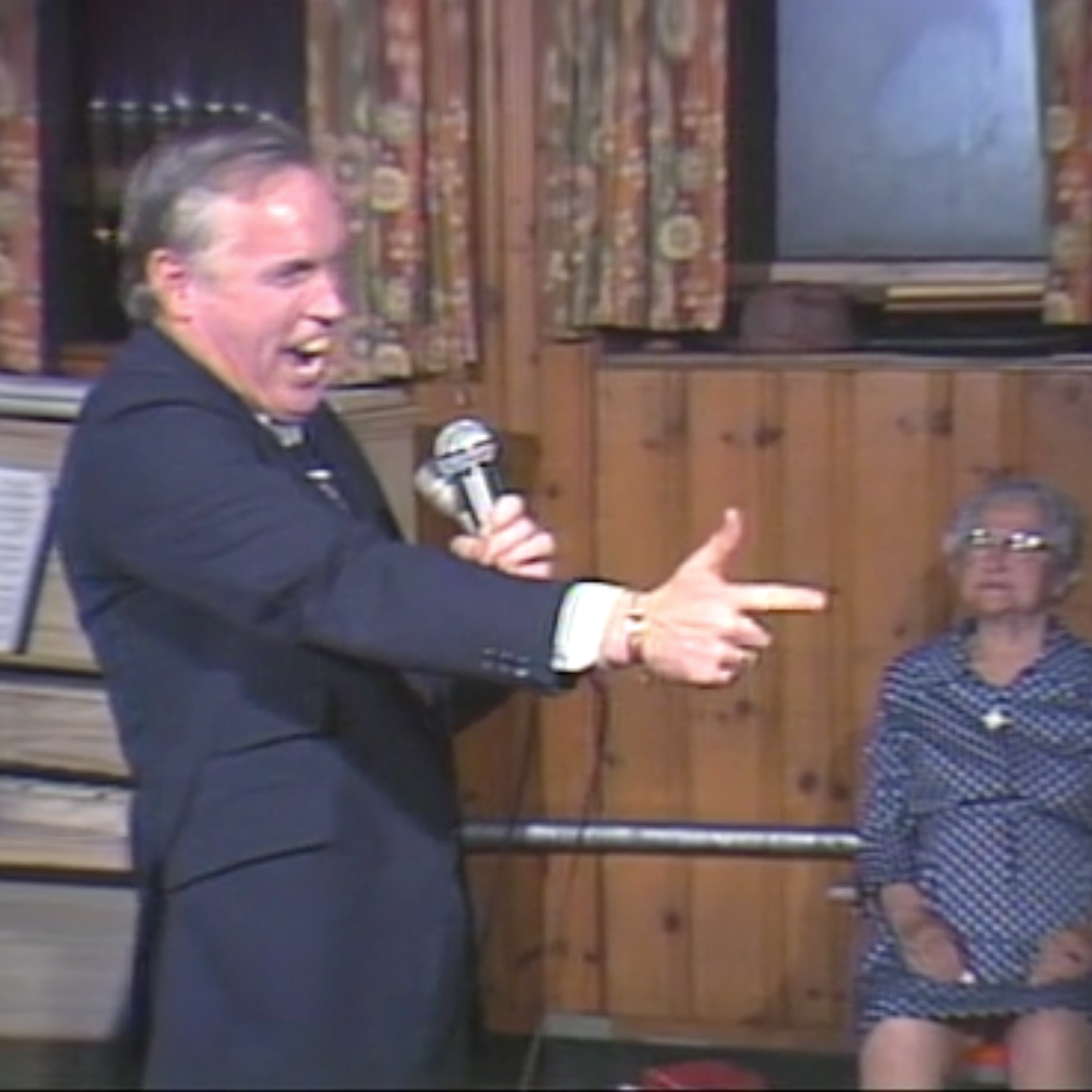
It's an old hall, brown walls and trestle tables. And as a reporter, I never ate. But it was the Irish breakfast with the eggs and the blood sausage and potatoes. If you're Irish, I'm in the parlor. There's a welcome there for you. And every year, they would gather in South Boston and listen to jokes and songs and barbs and celebrate their kinship and their grudges and their power. If you're Irish, this is a place for you. Hey. Thank you.
- [08:18]
Kylie Lowe
The main event for these breakfasts was and is the roasting. A chance to skewer friends and enemies alike. And Bob Crane was always there for it.
- [08:29]
Frank Phillips
Now you can tell all your Yankee friends you're in show business.
- [08:34]
Kylie Lowe
Like any good meme, the jokes at these events are dense, layered with insider references. I don't understand most of them, but the running joke about Bob Crane was pretty simple.
- [08:47]
Frank Phillips
Bob Crane?
- [08:49]
Kylie Lowe
He was a rogue.
- [08:51]
Frank Phillips
About six months ago, when the heat was really on. I'm not sure what investigation that was. Was it the condos? No. Was it the place down on the street? Well, one of those, you know, scams that he gets involved in.
- [09:06]
Kylie Lowe
It's not that Crane was necessarily rotten or crooked, not deep in some gangster's pocket, but that he was always right on the edge of what was considered fair play in the game of politics.
- [09:19]
Frank Phillips
And I was very happy to get 61% of the vote. I understand that's almost as much as.
- [09:24]
Kylie Lowe
Your commission on the retirement fund. Okay, that joke is a little in the weeds. This one's more clear.
- [09:33]
Frank Phillips
My advice to you, Mr. Treasurer, be, next time, use a shredder.
- [09:45]
Kylie Lowe
There were many accusations that swirled around Crane. His handling of state money, his relationships with banks, his wily election tactics. But the one that never, ever went away, that was so constant it barely felt newsworthy at all, was patronage. So how did Hiring work at the lottery. Did you really need to know somebody to get a job there? I think mostly David O'Reilly, who you may remember from episode three, started out as a part timer picking up paper betting slips in a state owned gremlin, but he stayed at the lottery for over 40 years. We used to say, who is your godfather?
- [10:25]
Frank Phillips
And it usually was godfather rather than.
- [10:27]
Kylie Lowe
Godmother, and it was a senator or.
- [10:29]
Frank Phillips
A rep, you know, who would then get in touch with Crane and say.
- [10:33]
Kylie Lowe
Hey, I got this person I'd really like to help. Godfather was the casual term for it. The more formal term was sponsor.
- [10:40]
Frank Phillips
You know, who's your sponsor?
- [10:42]
Kylie Lowe
So tell me, how did you start working for the Massachusetts State Lottery?
- [10:47]
Frank Phillips
I actually answered an ad in a Wednesday paper, I remember, and I was just out of the service.
- [10:54]
Kylie Lowe
Andy Solari, the communications technician we heard in episode six, claims that he was one of those rare unsponsored hires, but he had the benefit of very specialized skills and also serving in the military.
- [11:08]
Frank Phillips
Somebody told me, you never see ads for a lottery job in the paper because it's really political and stuff. But I went in and interviewed, and one of the first questions you get when you start at the lottery is, who's your sponsor? You know, and I didn't. I didn't even know what that meant, but everyone had a sponsor there.
- [11:26]
Kylie Lowe
So when you met other employees at the lottery, could you sort of tell, oh, this person is from, you know, the Senate president's office, and this person is from, you know, the state rep from Canton or, like, would you kind of know?
- [11:38]
Frank Phillips
Well, if they had a good sponsor, they'd let you know, you know, like, okay, don't mess with me. You know.
- [11:51]
Kylie Lowe
Patronage is probably as old as politics, certainly in this country. It's right there in the Constitution that the president gets to appoint people, presumably their people. That's the origin of the phrase, to the victor belong the spoils. It was spoken by a Democratic senator from New York in 1832 as a defense of patronage, as in, get over it, we won. Now we get to hire whoever we want. Over the years, Crane provided jobs to the son of House Speaker Tom McGee, that's the former tank commander from episode five, who dropped lots of F bombs and to multiple aides of Bill Bulger, lord of the state Senate, as well as not one, but three children of Attorney General Frank Bilotti.
- [12:43]
Frank Phillips
There was Bilates, there were kings, there were vopeys, you know, names you'd recognize from politicians and stuff.
- [12:52]
Kylie Lowe
A Republican state senator once claimed to have studied the political makeup of the lottery and found that 98% of employees were registered Democrats. 98%. Treasurer Crane certainly made good use of his political spoils. By the mid-1980s, the Massachusetts Lottery employed over 400 people. It was famous for doing everything in house, from ticket design to it, which allowed it to hire way more people than other states. Crane himself and estimated that half of those people had a sponsor. And to Crane, it was not anything to be secretive about.
- [13:36]
Frank Phillips
And there is nothing wrong with patronage. Patronage, in my opinion, is giving a job to someone who has been sent to you for an interview by a person in government as a sponsor. If that person is qualified and can do the job, then I'm for hiring him or her. He was unapologetic.
- [13:53]
Kylie Lowe
Renee Loth is a longtime opinion columnist for the Boston Globe, and she did an extended interview with Crane toward, towards the end of his career, Completely sanguine.
- [14:04]
Frank Phillips
About his reputation, about the patronage that he presided over at the lottery, or favors he did for friends and political allies that, you know, today would make your hair curl.
- [14:19]
Kylie Lowe
And Crane had a pretty simple argument to back it up. Just look at the lottery's results.
- [14:24]
Frank Phillips
And I've been successful by hiring people that probably came to me from a legislator, Hiring people I probably went to college with, Hiring people that I knew from another walk of life. But they all were qualified and did their job and made me look good.
- [14:41]
Kylie Lowe
Lottery sales were up, payouts to players were up, and not one major scandal in all its years of operation.
- [14:48]
Frank Phillips
I gotta say that even for all the politics, it was run like a business again.
- [14:53]
Kylie Lowe
Andy Solaris, you know, that's a big cash cow.
- [14:56]
Frank Phillips
Obviously it was something. You didn't want to screw it up. And I don't want to disparage anybody here, you know, but there were guys that were there just because they knew somebody. But most of the time, people knew their job and did their job and took it very seriously.
- [15:12]
Kylie Lowe
David O'Reilly, who got his first job through a family connection, argues that in many cases, people took those patronage jobs even more seriously.
- [15:21]
Frank Phillips
I don't know. There's something that comes with that too. Like you really there, you know, representing.
- [15:27]
Kylie Lowe
That person who gave you the job. So it comes with more responsibility, really.
- [15:31]
Frank Phillips
That you don't want to screw it up.
- [15:33]
Kylie Lowe
There was a sense of shared purpose for an employee to rig a drawing or misprint a ticket or botch a product rollout. They weren't just failing themselves. They would be betraying the lottery family. In the Crane days, we were honestly a family.
- [15:50]
Frank Phillips
It is not like that anymore.
- [15:52]
Kylie Lowe
It's just totally not like that because.
- [15:54]
Frank Phillips
We'Ve gone through, I think, five or six treasurers since Crane, but when you.
- [16:00]
Kylie Lowe
Think of the early days, it was.
- [16:01]
Frank Phillips
Only Crane, so it was his family of employees.
- [16:09]
Kylie Lowe
And like any family, it came with expectations. For one thing, you had to step up around election time. When I first started, I was given.
- [16:21]
Frank Phillips
Nomination papers, and I said, what are these?
- [16:24]
Kylie Lowe
The nomination papers were for Crane's reelection campaign.
- [16:29]
Frank Phillips
I wasn't very political. I wasn't very aware of the politics behind the lottery.
- [16:34]
Kylie Lowe
So I said, what am I supposed.
- [16:36]
Frank Phillips
To do with this?
- [16:37]
Kylie Lowe
And this guy told me, you go.
- [16:40]
Frank Phillips
Door to door and you get signatures for Bob Crane. He's the boss. They didn't ask. They said, hey, you're gonna collect the signatures for Bob Crane.
- [16:48]
Kylie Lowe
Andy Solari got the same request.
- [16:51]
Frank Phillips
I had bought this house in Brockton that need a lot of work. And I had the floors ripped out. I'm standing in the basement, I'm surrounded in dirt. Guy comes to the door and he goes, hey, you got those signatures yet? And I go, you know, I'm tied up with all this stuff. And he goes, well, I need them.
- [17:08]
Kylie Lowe
And it was not a request.
- [17:10]
Frank Phillips
I didn't take it that way. Do you want to work overtime this week? You know, so it was always implied, I guess, but heavily implied.
- [17:26]
Kylie Lowe
Here the power of patronage comes full circle. Crane doles out the jobs in order to gain political support. And then, of course, all those people know their jobs depend on him being in power, so they work to keep him there. It's classic machine politics, the kind of thing you associate with New York ward bosses in the 1890s, but alive and well in the Massachusetts lottery of the 1980s. What do you think changed fundamentally? Why did that fall out of favor?
- [18:02]
Frank Phillips
I just think that Watergate and all of the fallout from that seeped into politics even at the local level, even at the street level.
- [18:12]
Kylie Lowe
As Renee Loth recalls, it was really after Watergate that patronage started to become a dirty word.
- [18:19]
Frank Phillips
The feeling that we needed to clean up government, that there was too much corruption, and that we just needed to clean house. We are next in number 15, 20L route against Berne.
- [18:34]
Kylie Lowe
In the mid-1970s, soon after Watergate, the Supreme Court heard the first in a series of cases challenging the practice of patronage. This one about a local sheriff's office.
- [18:45]
Frank Phillips
In Illinois, so called patronage practice.
- [18:49]
Kylie Lowe
That case was followed a few years later by another brought by public defenders in Rockland County, New York.
- [18:56]
Frank Phillips
I believe there are two central questions before this court. First, Whether it is in the best interest of this country to virtually end the patronage system.
- [19:06]
Kylie Lowe
Both cases resulted in rulings that limited patronage.
- [19:10]
Frank Phillips
We'll resume there at 1:00.
- [19:12]
Kylie Lowe
But those rulings were just part of a larger political movement of reform that sought to root out cronyism and inside dealing that embraced transparency.
- [19:23]
Frank Phillips
Jimmy Carter represented part of that. Mike Dukakis represented part of that. A new generation was coming in with more idealism and less pragmatism. Maybe, but it took a long time for the old ways to die out.
- [19:39]
Kylie Lowe
In Massachusetts, Robert Crane was one of those last practitioners of the old ways. He had become treasurer back in 1964, with some help, by the way, from the previous treasurer, who also happened to be the best man at Crane's wedding. That's how it worked then. But in the era of squeaky clean Michael Dukakis, Crane was looking more and more out of step. He was ripe for a Challenger, and in 1986, he got one.
- [20:08]
Frank Phillips
Massachusetts has the most powerful Democratic machine in the country, and if I win, I'm going to root out the corruption and cronyism that exists in the state treasurer's office.
- [20:18]
Kylie Lowe
The challenger was named Joyce Hampers, a former state revenue commissioner and a Republican. But she barely ever mentioned her party affiliation or pedigree. Hampers ran on a message of cleaning up government, including at the lottery.
- [20:34]
Frank Phillips
Hampers says she would make some changes. Bigger payoffs for megabucks, runner ups, for one, and an end to patronage hiring. The people who can really measure up stay. The people who can't go.
- [20:50]
Kylie Lowe
Patronage. This thing that had been business as usual at the lottery since the beginning was now up for debate.
- [20:57]
Frank Phillips
About half the lottery employees were sponsored, so to speak. This is a $1.6 billion business. You don't run it with hacks.
- [21:06]
Kylie Lowe
And it looks like the Hampers campaign succeeded in making patronage an issue, because in 1986, you suddenly see Globe reports about lottery hiring with stats and tables comparing our lottery to other states.
- [21:20]
Frank Phillips
The charge? The treasurer's staff is five times larger than the national average. This is a time.
- [21:26]
Kylie Lowe
Not surprisingly, the reporting showed that Crain's family of employees was overwhelmingly white, even more so than other parts of state government. In 1986, only 5.5% of lottery employees identified as members of a minority group. And the family was likely larger than it needed to be, too. At that time, the Massachusetts lottery had more employees than the New York and Pennsylvania lotteries put together. And those are both much bigger states.
- [21:59]
Frank Phillips
I'm sorry my campaign had to use negative advertising it's not the campaign I wanted to run, but I know of no other way the voters could have known about the hiring practices.
- [22:08]
Kylie Lowe
The biggest, Crane was not expecting a serious challenge that year. No Republican had been elected treasurer since the 1940s, and Crane hadn't even had to debate an opponent since the 1970s. He had not seriously fundraised or staffed up. But the challenge from Hampers came on fast and hard. She and her husband owned a healthcare business with a lucrative patent on a dialysis machine. By the summer of 86, she had spent $200,000 of her own money on TV and radio ads. By the end of the campaign, she would spend $1.5 million. Joyce Hampers did not respond to our request for an interview.
- [22:53]
Frank Phillips
She had money to put into it, and that's what caught her eye.
- [22:57]
Kylie Lowe
Frank Phillips, reporter for the Boston Herald, started to tune in. This could be a story.
- [23:03]
Frank Phillips
And the Republican operatives were chewing on our ear and say, hey, listen, this is going to be a real race. Ukraine's vulnerable. You could get him and he could lose this.
- [23:26]
Kylie Lowe
When you're attacking the integrity of a politician, you, you don't need proof. You just need enough shady sounding stuff that the public can draw their own conclusions. And Bob Crane supplied plenty of good material, including a decades old business relationship with a man named Eugene Mercutt.
- [23:46]
Frank Phillips
So Gene Mercutt owned a company called Food Enterprises, I think it was based in Canton, Mass.
- [23:52]
Kylie Lowe
This is ad executive Jack Connors, and.
- [23:55]
Frank Phillips
He was a food broker.
- [23:57]
Kylie Lowe
A food broker is the person who gets products onto grocery store shelves and not just on the shelf, but on the best spot on the best shelf.
- [24:07]
Frank Phillips
And I happen to be a victim of Gene Mirka because when I got out of college and out of the Army, I was a Campbell soup salesman in the frozen food division. Swanson TV dinners, which I don't recommend, Pepper's Farm turnovers, which pretty good. And I'd go into a supermarket. And now if you walk into a supermarket, you walk down these rows of glass freezer cases. But back then they were like refrigerator cases with Frost.
- [24:33]
Kylie Lowe
Back then, the world of food brokering was also pretty ruthless.
- [24:38]
Frank Phillips
And you're moving their dinners out to move your dinners in. You came back the next week, your dinners were gone, their dinners were back.
- [24:44]
Kylie Lowe
The disappearing dinners. As far as Connors is concerned, that was Merkat's doing. At one point, Mercutt Enterprises was the biggest food broker in the entire country.
- [24:55]
Frank Phillips
They were the best of the food brokers and probably the toughest and, I don't know, the Details. But Gene Mercutt hired Bob Crane.
- [25:07]
Kylie Lowe
While Crane was working as treasurer, collecting his treasurer's salary, he was also working as a consultant for Mercut Enterprises. In some years, he made a lot more money from Mercut than he did from the state. That, plus the use of a company, Cadillac.
- [25:24]
Frank Phillips
Bob Crane became an asset, and it was part of the selling picture, if you will.
- [25:28]
Kylie Lowe
The brokerage business, after all, like politics, is all about relationships. That's how you get your clients frozen dinners at the front of the supermarket case. And according to Connors, Crane was helpful in cultivating those relationships. Part of the entertainment package, if you will.
- [25:48]
Frank Phillips
So when Gene Mercutt had Birdseye coming in or whatever, wouldn't it surprise me if Bob Crane was there to sing it? Two or three songs at the end of dinner. And it just made people's hearts a little happier.
- [26:00]
Kylie Lowe
One of the charming and confounding things about Bob Crane is that he had this. What you see is what you get quality to his politics. He it was not a secret that he had a lucrative side gig any more than it was a secret that the lottery was loaded up with patronage jobs. These were not things to be ashamed of. Crane worked for Merkut. Merkut supported Crane's campaigns. Crane deposited state funds in a bank that Merkut helped run. This was simply how the game was played.
- [26:32]
Frank Phillips
It never occurred to me that that was anything but smart business. It didn't bother me.
- [26:41]
Kylie Lowe
The Mercott story had made headlines back in the 1970s. Crane was even investigated by a federal grand jury at one point. But they never brought charges. And it seemed like the issue was settled until the summer of 1986, when Joyce hampers launched her media blitz.
- [27:01]
Frank Phillips
Bob Crane's been giving us the same old song and dance for 22 years now. People. People wonder just who's been pulling the strings. He gets $130,000 a year on the side while he's supposed to be serving.
- [27:12]
Kylie Lowe
Hamper's bet was that if the public knew about Crane's dealings, they would turn on him. Even after electing him five times before.
- [27:21]
Frank Phillips
Joyce Hampers put her money on a high risk strategy, gambling that she could win by exposing things like Bob Crane's outside income.
- [27:31]
Kylie Lowe
All through the summer of 86, Crane did not really engage. His campaign hadn't formally kicked off and he wasn't even planning to run TV ads at all. No debates were scheduled.
- [27:44]
Frank Phillips
That's right. Last year alone, Bob Crane made over $130,000 on the side. No wonder he's smiling.
- [27:52]
Kylie Lowe
Meanwhile, the Media campaign against him reached its Peak on September 17th. That night, at 6:55pm Prime Time, viewers of all three major Boston TV stations were greeted with a five minute attack ad, more like an infomercial, really, outlining a litany of accusations against Crane and claiming that, quote, bob Crane has been playing us all for fools. Afterwards, a Boston Herald poll showed the race in a dead heat. Both candidates had exactly 37% of the vote. The rest were undecided. Clearly, Crane could not ignore Hampers any longer.
- [28:40]
Frank Phillips
The following special edition of Point of View is being jointly sponsored by WLVI TV. 56.
- [28:48]
Kylie Lowe
The day after those poll results were reported, Crane and Hampers met for their first debate.
- [28:54]
Frank Phillips
The treasurer of Massachusetts is also the receiver general and is responsible.
- [28:58]
Kylie Lowe
Crane's white hair is combed neatly to one side. Hampers is wearing a big pearl necklace and even bigger pearl earrings. I'd say they're both going for respectable.
- [29:09]
Frank Phillips
And let me if I might start with you, Mr. Crane. If you are reelected, you will have been given the opportunity to serve as treasurer for 20, 26 years. Why is it good for the people of Massachusetts to have the same treasurer for so long? Well, it's good for the people of Massachusetts.
- [29:24]
Kylie Lowe
From the beginning, Crane is put on the defensive, forced to explain his record, his hiring practices, his long tenure, something he had not really had to do in a long time.
- [29:34]
Frank Phillips
Accomplishments. But just let me tell you this, Judy. Kyle Yasremsky played in the Red Sox outfield for 23 years, and I didn't hear anyone complain about it. Senator Kennedy is.
- [29:42]
Kylie Lowe
And he mostly sticks with a pretty simple line of defense. So What? Who cares?
- [29:47]
Frank Phillips
Mrs. Hampers.
- [29:49]
Kylie Lowe
Hampers, on the other hand, took the opportunity to press her attack and keep the focus where she wanted it on Crane.
- [29:57]
Frank Phillips
Tonight. What we're talking about. And we're talking about ethics, we're talking about integrity, we're talking about the old gang. We're talking about cronyism. We're talking about 22 years.
- [30:05]
Kylie Lowe
The debate setting, I should say, is very intimate. They're sitting in chairs, side by side around a low table, almost uncomfortably close.
- [30:14]
Frank Phillips
Matter of timing. Well, you're accusing him of doing things that are illegal. I am accusing him of doing things that are unethical. You're very reckless with your accusations, Mrs. Hamperson. In particular. You are distorting the truth. You are distorting my record. It doesn't interfere in one single way with the job I do as state treasurer and I.
- [30:34]
Kylie Lowe
But what you do see in that debate is an opening for a counterattack Crane doesn't quite seize on it himself, but it's pretty clear that the thing Hampers does not want to talk about so much is her own record.
- [30:49]
Frank Phillips
That's all we have time for. I'd love it if you would both come back for another half hour at the end of the elections to go through all these things. I'm here if you want to come back. If not, I thank you both very much.
- [31:01]
Kylie Lowe
At what point did you get involved?
- [31:03]
Frank Phillips
In late September, I was asked by him and by a couple people very close to him to get involved in his campaign.
- [31:12]
Kylie Lowe
Around the time of that debate, Crane reached out for help from one of his younger allies, William Galvin, the man who occupied Crane's old seat in the state legislature, to take on Hampers more.
- [31:24]
Frank Phillips
Aggressively than he was capable of. It wasn't his personality to go after anybody. I was a little more aggressive and I was significantly younger.
- [31:34]
Kylie Lowe
Crane's magic power was always charm. He was likable, gentlemanly. But this election was shaping up to be an all out brawl and Crane needed someone who could hit back. So you were kind of the attack dog.
- [31:49]
Frank Phillips
I wouldn't agree with that term, but I certainly could apply to false statements. And did.
- [31:54]
Kylie Lowe
Galvin became the new campaign manager, and in retrospect, we can see that he was just the man for the job. An opponent later dubbed Galvin the Prince of Darkness, a nod to his skills in the darker arts of politics. Amazingly, that name has stuck. Galvin is currently our Secretary of State, a job he has held for 30 years. And you can still find news articles that casually and unironically refer to him as the Prince of Darkness.
- [32:30]
Frank Phillips
One of the things that emerged as a significant issue was in doing research on her record as Revenue commissioner.
- [32:37]
Kylie Lowe
Hampers had served as the revenue Commissioner for the state in the early 1980s, so there was plenty of potential history to work with. One of her tax collectors had pleaded guilty to taking a bribe. And at one point, Hampers herself had to pay tens of thousands of dollars in back taxes to the irs. Pretty ironic for a revenue commissioner.
- [33:00]
Frank Phillips
So maybe we should take a look at the dirty laundry behind her campaign. Corruption in the Revenue Department during Hampers.
- [33:06]
Kylie Lowe
So Galvin and the Democrats began their counterattack. But at first, nothing seemed to gain traction. Some polling even showed that attacks on Hampers were only making her more popular and more sympathetic. It was, in the words of the globe, the Democratic establishment ganging up on a lone woman. But then they found the signature. It first appears on October 2nd. Well, it didn't start with a Signature. It started with a fired lawyer at the Revenue Department. Yeah. So on October 2nd, you file this piece that is. It's kind of complicated. There's this link between Joyce Hampers, the candidate, and this fired lawyer from the Revenue Department.
- [33:59]
Frank Phillips
Ex Revenue Commissioner Joyce Amperes set up a law practice.
- [34:04]
Kylie Lowe
In this piece, reporter Frank Phillips revealed a suspicious connection. A lawyer in the department got fired and then got a very generous settlement of $29,000 from Commissioner Hampers. Then sometime later, the two wound up.
- [34:21]
Frank Phillips
Working together, who later collected a 29 settlement that Hampers approved.
- [34:26]
Kylie Lowe
The story appeared on the bottom of page four. It's not especially exciting stuff, certainly not stirring up the animals. But it got interesting when Hampers denied she had ever signed off on that settlement.
- [34:40]
Frank Phillips
From the first story, it was complicated. This boiled it down. Did she sign the letter or not?
- [34:45]
Kylie Lowe
It got even more interesting when the Crane campaign then got its hands on the original settlement document with Hampers signature. And Hampers continued to insist she did not sign it.
- [34:57]
Frank Phillips
She denied that it was her signature on these documents, which we had again.
- [35:01]
Kylie Lowe
William Galvin Crane's campaign manager.
- [35:03]
Frank Phillips
And she denied it and she denied it, and she denied it. And I confronted her and confronted her and confronted. And when she said she didn't sign the letter, you know, my ears picked up and I said, we gotta find a handwriting expert.
- [35:18]
Kylie Lowe
The next day, Phillips landed a story on page one. It included a very serious looking image of the handwriting expert holding a document in one hand and a magnifying glass in the other.
- [35:31]
Frank Phillips
Handwriting analyst yesterday shot down state treasurer hopeful Joyce Hamper's claim that she didn't sign a controversial 1980 letter requesting a settlement.
- [35:43]
Kylie Lowe
Within a week, the Crane campaign was running attack ads about what came to be known as Signature Gate. And it was Hampers who was on the defensive. She soon reversed her stance and admitted that it was her signature.
- [35:57]
Frank Phillips
You know, I don't have 20 advisors and an old gang behind me. I'm just a woman running for office. And so in the heat of the campaign, yes, in retrospect, I should have taken the time to sit down, go over the file. It was one of those things in a campaign, and I've seen it so many times before, little things get blown up into major debates. You think in retrospect, that it was a mistake not to have admitted that you in the first place that you'd signed the letter. Well, Joe, the letter, as I said, we always know had. Bob had stuff going on. She was trying to make herself squeaky clean. But if you're going to be squeaky clean, you gotta be squeaky clean. Her credibility was damaged, and, you know, off we went. Bob Crane and the success of the lottery has helped my business and others like it for 15 years.
- [36:49]
Kylie Lowe
Alongside those attacks, Crane also had a positive message to run on. I'm the guy who gave you the lottery.
- [36:56]
Frank Phillips
Crane is deliberately running on the lottery as one of his major accomplishments. And the strategy is so effective that some voters worry that if he loses the election, the lottery will go, too.
- [37:07]
Kylie Lowe
And Crain could always count on his lottery for a little October boost. That month, the State Lottery distributed 200,000 copies of a newsletter with not one, but two images of Crane on the COVID Then later the same month, the lottery mailed out coupons for free tickets to one point households with Crane's name right there on the coupon. The Globe even reported that the lottery's own PR firm was paying a private investigator to help do opposition research on hampers. It was a full mobilization of the lottery machine to save the man who held that machine together. Good evening.
- [37:53]
Frank Phillips
I'm Joe Day. Tonight, the candidates for Massachusetts State treasurer debate.
- [37:57]
Kylie Lowe
On October 20, with about two weeks to go until Election Day, the candidates met for a second debate. And there were no niceties.
- [38:06]
Frank Phillips
How can the public have any confidence in you as treasurer when you can't even recall signing a letter spending 20?
- [38:13]
Kylie Lowe
The race had clearly devolved into something ugly and pretty unusual for the low profile job of state treasurer. The Harvard Crimson called it the dirtiest race in the Commonwealth. You had two candidates, both with some questionable history, both on the attack, and both trying to claim the moral high ground. Hampers was running out of time to change the narrative to make the race about Crane and his shadowy outside income from the food broker. So that night, she made a final gamble. A new accusation.
- [38:48]
Frank Phillips
Tonight, I'm going to give Mr. Crane a chance to answer me once and for all. I allege that Mr. Crane, in applying for a mortgage for a luxury condominium almost two years ago, listed income far above the $130,000 he has admitted to publicly. Mr. Crane, I ask you tonight to produce those mortgage documents and disprove the allegation. If you do, and it shows nothing more than the $130,000 I will withdraw from this race.
- [39:23]
Kylie Lowe
No one knew where the information behind this accusation was coming from, but Hampers was ready to bet her campaign on it.
- [39:33]
Frank Phillips
I will spend not another dime, and I will campaign not a minute longer. Let's see the facts, Mr. Crane. Let's throw away the ads and let's Set the record straight.
- [39:45]
Kylie Lowe
Crane was clearly not prepared to respond and simply moved on to his closing argument.
- [39:50]
Frank Phillips
So tonight I would just like to.
- [39:52]
Kylie Lowe
Say this, allowing the challenge to hang there in the blue walled TV studio.
- [39:57]
Frank Phillips
Thank you both for being with me tonight. Thank you in our audience for watching. I'm Joe Day. Good evening. Be sure to vote. Last night, Hampers charged that Crane made over $250,000 in 1984.
- [40:08]
Kylie Lowe
But Crane could not ignore the challenge for long. The very next day, he held a press conference.
- [40:16]
Frank Phillips
I've been in the food business on and off for 30 years. This afternoon, Crane took what he called the unprecedented step of releasing his returns to the public.
- [40:25]
Kylie Lowe
He released the documents Hampers was asking for showing all his income. And Hampers would not be dropping out of the race because, just as she claimed Hampers, Crane did in fact make over $200,000 in outside income during some of his years as treasurer.
- [40:41]
Frank Phillips
No one ever asked me how much money I made in 1984.
- [40:46]
Kylie Lowe
He did have an explanation for all that income and how he'd handled it. Still, though, the whole press conference looked bad, how he'd been forced into it. At one point, a reporter asked bluntly, are you a millionaire, Bob?
- [41:01]
Frank Phillips
Are you a millionaire, Bob? It would appear that I have a net worth of over a million dollars.
- [41:09]
Kylie Lowe
The response sounded like a confession. This press conference had all the makings of a signature gate moment where the nitty gritty complexity of government is all swept away and voters can assess their candidate in stark terms of honesty, integrity. Have they been straight with me? Suddenly, the campaign was back on the terrain that Hampers had wanted to fight on all along. That's what you'd think, at least. But William Galvin, Crane's campaign manager, has a theory to explain what actually happened.
- [41:49]
Frank Phillips
We're going to the bottom of the third inning at Shea Stadium in New York. The Red Sox, three, the Mets nothing.
- [41:55]
Kylie Lowe
The Red Sox were in the World Series that week, playing the Mets in what would be a nail biter of a series. The day of that awkward press conference, the Sox lost Game 3. The next day, they lost Game 4. But the day after that, they came back to win game five. The thing about politics as entertainment, politics as sport, politics is as stirring up the animals in all of us is that when there is better entertainment to be had, there's not much reason to pay attention to a race for state treasurer. The candidates actually met for one more debate that year, Hamper's final chance to make her case.
- [42:42]
Frank Phillips
And the debate was a Sunday afternoon. It was A Channel four. And it happened to fall on the same day. There was a Red Sox game.
- [42:55]
Kylie Lowe
That would be game six of the World Series.
- [42:58]
Frank Phillips
The game was up against the debate.
- [43:01]
Kylie Lowe
The Red Sox lost that one in perhaps the most mortifying 3 seconds of Boston sports history, when a simple ground ball rolled between the legs of our first baseman, giving the Mets the win. But if the Red Sox were cursed that year, Bob Crane was charmed.
- [43:21]
Frank Phillips
And he later said, yeah, no, I was very lucky.
- [43:26]
Kylie Lowe
In the end, it wasn't close. Crane won handily. Do you feel like the public cared about the allegations against Crane in that campaign? You know, about the patronage, about the. You know, whatever his dealings? Like, did people care?
- [43:55]
Frank Phillips
Do you remember the Ayatollah and the. What do they call the head of Iran?
- [44:02]
Kylie Lowe
The Shah? Frank Phillips remembers a political cartoon that came out during that campaign showing the candidates as the two leaders of Iran before and after the revolution. You had the corrupt and party loving Shah and then you had the corrupt and party stifling Ayatollah. You can guess who was who.
- [44:23]
Frank Phillips
Crane has got a champagne bottle and laughing, and Ayatollah is looking severe and said, you want the Ayatollah or the Shah? The Shah having a good time. And it really sums up the campaign. And she came across as the Ayatollah scolding, and it's perhaps a good deal, sexist, but she was scolding a guy that everybody liked, you know, the night.
- [44:53]
Kylie Lowe
Of the election, hampers claimed a kind of moral victory. She said in her concession speech, quote, now questions are being asked and new standards being applied and an era of good old boys is being brought to a close. And she was right about that. In one of Crane's final St Patrick's Day breakfasts as treasurer, he got a series of roasts and tributes, including from some of the younger politicians coming up on the scene.
- [45:30]
Frank Phillips
You made me. No, you got the wrong people. Well, one of you has.
- [45:36]
Kylie Lowe
And I gotta say, that new generation, that more reform minded generation, they're not the entertainers that Crane and his cohort were. The old guard really did know how to put on a good show.
- [45:49]
Frank Phillips
I don't have a brother. I bet you there.
- [45:53]
Kylie Lowe
Thank you, Mr. Treasurer.
- [45:55]
Frank Phillips
Happy St. Patrick's Day to all of you.
- [46:02]
Kylie Lowe
I try not to be too nostalgic about the days of patronage and machine politics. It was flawed and exclusionary. But I do think it's worth looking closely at what was lost when relationships and party loyalty were swapped out for far more elusive qualities like ideology and merit, justice. Antonin Scalia is in one of those landmark patronage cases before the Supreme Court, delivered what I find to be a kind of intriguing dissent, a defense of patronage. Scalia argues that as the political machines faded from New York and Chicago and Boston, one result is that parties lost their discipline and politicians became more focused on special interest groups than they were on their own constituents. He may be overstating the causality, but there is something prescient in what Scalia is arguing, especially in our moment when our politics are so polarized and our parties are so weak, that maybe patronage was the glue of party politics all along, the thing that bound constituents to elected officials in a way that was material. It was, in a strange way, the ultimate form of accountability. You deliver for me, I deliver for you. It's worth noting that when you look at all the issues at play in the 1986 election, the lottery itself was not really one of them, not in a fundamental way. You don't hear them debating the amount of lottery advertising or whether the drawing should be televised. Once, the very idea of a lottery was a bitter partisan issue, a moral issue. By 1986, it was a given for the old gang and for the reformers, for the Democrats and the Republicans, they had all accepted it as part of politics, part of life. It was just a question of who could run it better. But Crane and the lottery's story is not over quite yet. In our final episode, the vaudeville treasurer gets one last term to cement his legacy as creator of the most successful lottery in America. And the game that does it, the one that really seals the deal, well, it had been right in his hands the whole time.
- [48:44]
Frank Phillips
With the new instant game Wild Card.
- [48:46]
Kylie Lowe
You can win up to 5,000. Just waiting for the moment to make its comeback.
- [48:51]
Frank Phillips
So anyone who can scratch can win.
- [48:56]
Kylie Lowe
That's next time.
- [48:59]
Frank Phillips
You made me love you I didn't want to do it I didn't want to do it you made me want you and all the time you knew it I guess you always knew it you made me happy sometimes you made me sad but there were times you made me feel so bad.
- [49:37]
Kylie Lowe
The series is produced by Isabel Hibbard and myself, Ian Coss. It's edited by Lacey Roberts. The editorial Supervisor is Jennifer McKim, with support from Ryan Alderman. Mae Lei is the project manager, and the executive producer is Devin Maverick Robbins. Special thanks this episode to Christy George, former reporter for wgbh, not only for helping me understand this madcap era and state politics, but also for helping me find some of those news reports she filed about it. Thanks also to the Boston Public Library, who helped me find all those Herald articles that Frank Phillips wrote. Get this, he had 15 articles just on that one race just in the month of October 1986. Finally, thanks to political scientist Eitan Hirsch, who pointed me towards that opinion Justice Scalia wrote. For more info on the series and full Transcripts, go to gbhnews.org scratchandwin. You can also find videos of the episodes on the GBH YouTube channel with incredible archival footage. The artwork is by Bill Miller and Mami Hawa Bao. Our closing song is yous Made Me Love youe, performed by Massachusetts State Treasurer Bob Crane. Scratch and Win is a production of GBH News and distributed by prx.
- [51:14]
Frank Phillips
So gimme gimme give me, give me, give me what I cry for you know you got the brand of kisses that I die for. You know you made me, you know you made me, you know you made me love you and all the time you knew it. Thank you.
- [52:00]
Kylie Lowe
Hey, I want to make sure that you know this series you're listening to right now is part of an ongoing feed telling stories from the past to help us understand our present. Our first season is all about infrastructure. The second season is about gambling. And we've got more seasons planned. So if you want to stay on top of what the team and I are doing, go ahead and follow or subscribe to this podcast wherever you listen. We've got some really exciting stories coming up and I hope you'll stay with us. Thanks.
- [52:34]
Frank Phillips
From PRX.