Podcast
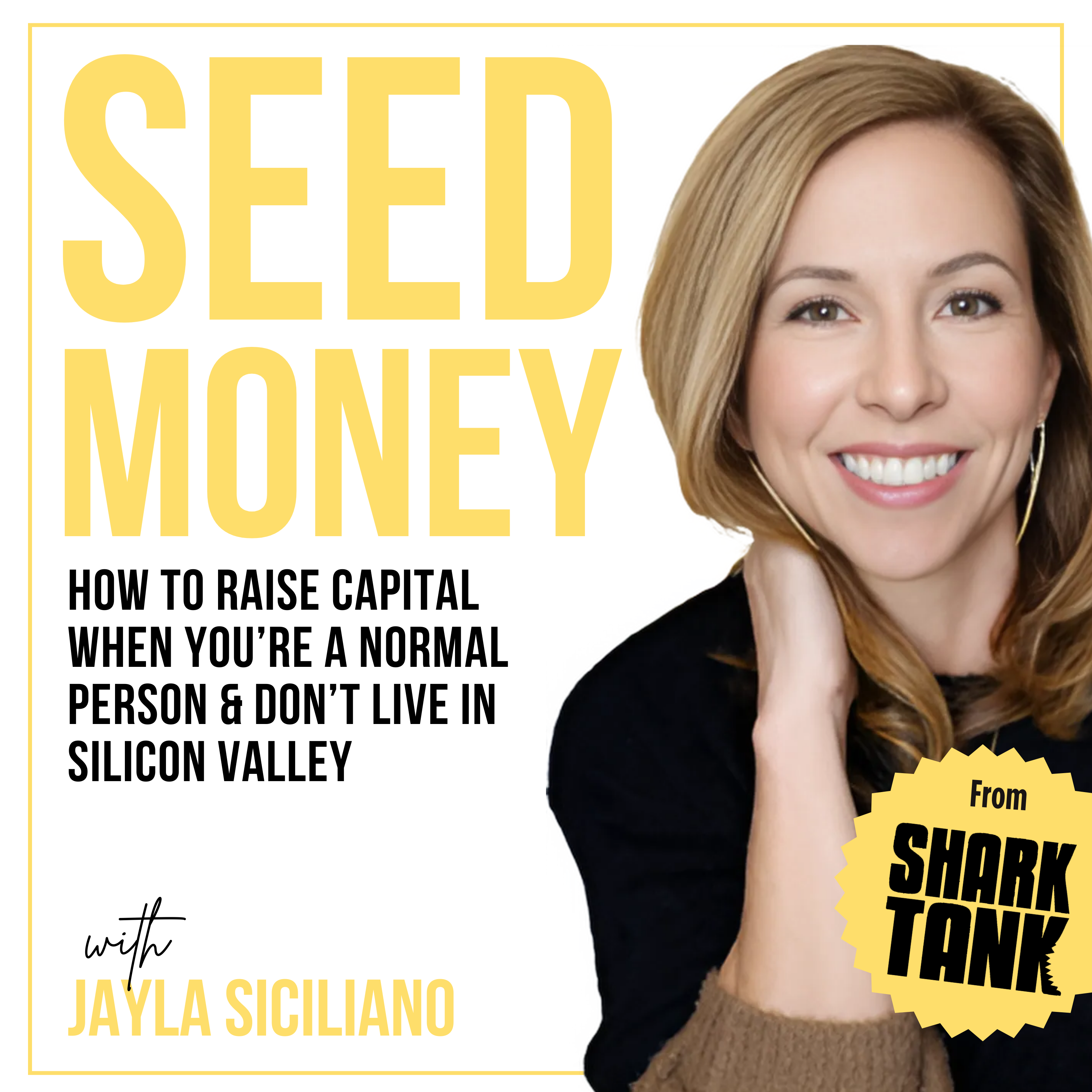
Seed Money
Hosted by Jayla Siciliano · EN
Welcome to Seed Money, this is the podcast for early-stage CPG founders who are looking to raise your first round of funding from angel investors, even with no experience and no connections.
If you are at the pre-seed or seed stage and need $100K to $500K to finally go all in on your company, this show is for you. Especially if you feel stuck, under-connected, unsure who to trust, or frustrated by investors who ghost you. Seed Money gives you clarity, confidence, and practical next steps so fundraising stops feeling mysterious and starts feeling doable.
Before going on Shark Tank and securing a deal with Mark Cuban, I raised $450K in angel funding as a first-time, pre-revenue, CPG founder. No industry experience. No network. No safety net. All during a recession. If I could do it, I know you can too. The tools and buzzwords may change, but the fundamentals of raising as a first-time founder have not.
For the past 15 years, I have helped founders prepare pitch decks, master investor Q&A, structure early deals, and raise capital with intention and confidence. Not by chasing investors, but by becoming fundable and finding partners who actually align with their goals.
Join my FREE Live monthly Office Hours Q&A call to get your burning questions answered.
https://seedmoney.mysamcart.com/office-hours
36episodes
Episodes
Newest firstAll episodes
75 | Angels vs. VCs vs. the Friend Zone: Who Should Fund You?
Feb 200:11:58Tap to summarizeYou've got the hustle, the product, and maybe even a pitch deck—but if you're talking to the wrong type of investor, you're setting yourself up for silence and wasted time. In this quick episode of Seed Money, I'll help you understand exactly how friends and family, angel investors, and VCs think—and why each one needs a different pitch. I've made these mistakes myself, pitching VCs way too early with nothing but a dream, and I want to save you from the same frustration. In this episode, you'll learn: Why pitching VCs too early is usually a dead end How to tailor your message to friends and family vs. angel investors vs. VCs What each group actually looks for before writing a check The #1 red flag that turns off early-stage investors How I burned time in the wrong rooms and what I'd do differently How to reduce ghosting by pitching the right people at the right time About Your Host Jayla Siciliano is an entrepreneur with 25+ years in consumer brands, product, and marketing. After raising her first angel round against all odds and later appearing on Shark Tank, where she closed a deal with Mark Cuban, she now helps founders become fundable, confident, and ready to attract the right investors. Entrepreneurship changed her life, and she's on a mission to help first-time founders raise their first round of angel funding and change theirs too. Get Jayla's Founder Resources: https://seedmoney.mysamcart.com/seed-money/ Disclaimer The information in this podcast is educational and general in nature and does not take into consideration the listener's personal circumstances. Therefore, it is not intended to be a substitute for specific, individualized financial, legal, or tax advice.
Transcribe →How an Accelerator Makes You Fundable Faster w/ Kevin Nesgoda
Jan 2900:48:37Tap to summarizeIf you're stuck between having a startup and having something investors actually want to fund, this episode is for you. Our guest, Kevin Nesgoda—CEO of OutPaged and recent Founder Institute grad—dives into the messy middle of startup life, where great ideas often die without the right pressure, feedback, and mindset shift. After years of daydreaming and building but still feeling stuck between "interesting" and "investable," Kevin joined an accelerator to stress-test everything. Hear what broke, what shifted, and what finally clicked—plus his advice on resilience, determination, and what's needed to push through. Topics Covered; Why most founders aren't actually fundable yet and how accelerators like Founders Institute expose the gap (and what they want in return) What surviving cancer taught Kevin about building a startup How OutPaged went from "cool product" to investable business The mindset change that happens when you stop pitching and start pressure-testing your model Why early founders misunderstand what investors are really evaluating The B2C vs B2B framing decision that can make or break your raise What mentors and investor reviews reveal that you can't see from inside your own startup Why the solo-founder myth slows momentum and increases risk How team design becomes a signal of scale readiness What rejection teaches you when you treat it like data, not failure How accelerators prepare you for capital, not just Demo Day The difference between building something exciting and building something fundable Guest Bio Kevin Nesgoda is the CEO at OutPaged and a recent graduate of The Founders Institute. OutPaged is the platform that turns books into living, breathing worlds. It uses AI to pull apart character arcs, emotional threads, and world logic, then rebuilds them into immersive experiences through AR and XR. Kevin has talked to over 100 publishers, authors, and media founders. Everyone feels the same thing: it is time for a new chapter in storytelling. Download the app here. About Your Host Jayla Siciliano is an entrepreneur with 25+ years in consumer brands, product, and marketing. After raising her first angel round against all odds and later appearing on Shark Tank, where she closed a deal with Mark Cuban, she now helps founders become fundable, confident, and ready to attract the right investors. Entrepreneurship changed her life, and she's on a mission to help first-time founders raise their first round of angel funding and change theirs too. Get Jayla's Founder Resources: https://seedmoney.mysamcart.com/seed-money/ Disclaimer The information in this podcast is educational and general in nature and does not take into consideration the listener's personal circumstances. Therefore, it is not intended to be a substitute for specific, individualized financial, legal, or tax advice.
Transcribe →Why Your Pitch Is Falling Flat: The Power of Story
Jan 2000:18:32Tap to summarizeNumbers won't make them care—your story will. In this episode, you'll learn how to grab investor attention with a pitch that actually connects. If you're tired of wasting time and getting minimal responses, this is your wake-up call. Hit play to learn how to stand out. Topics Covered; Why your founder story matters more than data at the early stage What investors are really evaluating when you don't have traction yet The three elements that make a founder story credible instead of pitchy How to tell a problem story that creates trust in under 60 seconds Why investors back conviction before they back certainty The biggest storytelling mistakes founders don't realize they're making How emotion builds credibility without sounding dramatic or rehearsed Why skipping your personal "why" quietly weakens your pitch How to structure your story so investors want the next meeting What makes an investor believe you won't quit when things get hard About Your Host Jayla Siciliano is an entrepreneur with 25+ years in consumer brands, product, and marketing. After raising her first angel round against all odds and later appearing on Shark Tank, where she closed a deal with Mark Cuban, she now helps founders become fundable, confident, and ready to attract the right investors. Entrepreneurship changed her life, and she's on a mission to help first-time founders raise their first round of angel funding and change theirs too. Get Jayla's Founder Resources: https://seedmoney.mysamcart.com/seed-money/ Disclaimer The information in this podcast is educational and general in nature and does not take into consideration the listener's personal circumstances. Therefore, it is not intended to be a substitute for specific, individualized financial, legal, or tax advice.
Transcribe →This Exercise Can Predict If Your Fundraise Will Work in 2026
Jan 1300:22:29Tap to summarizeIt's 2026, and it's a good time to refresh your fundraising mindset. Budgets are fresh, investors are considering where to put their money, and LinkedIn is buzzing about how "now is the window." If you position yourself correctly, you could have closed your funding round by June. But no matter how much motivation you have, or how fired up investors are, founders are still being held back by basic, really simple gaps in their approach. Gaps that seem minor but quietly cost you momentum, meetings, and ultimately the funding you need. Most founders don't lose deals because the idea isn't good enough. They lose them because of what's missing in their strategies (even if they have a great business or idea). So before you send another pitch deck or book another investor meeting, there's a simple exercise you can do to make sure you're not getting ruled out before the conversation even starts. What are investors noticing that you're too close to see? What might be quietly stopping them from ever responding? In this episode, we walk through a simple but confronting exercise every founder should do before sending another pitch. Topics Covered; Why most pitch decks fail before the first meeting even happens The exercise that exposes hidden deal-breakers fast Why paragraphs, jargon, and over-explaining silently kill investor interest How to clearly answer the real question investors care about The credibility gap founders underestimate and how to close it without revenue How unrealistic valuations signal self-awareness problems, not confidence The difference between how founders think investors evaluate deals and how they actually do The true barrier to fundraising (not market conditions) About Your Host Jayla Siciliano is an entrepreneur with 25+ years in consumer brands, product, and marketing. After raising her first angel round against all odds and later appearing on Shark Tank, where she closed a deal with Mark Cuban, she now helps founders become fundable, confident, and ready to attract the right investors. Entrepreneurship changed her life, and she's on a mission to help first-time founders raise their first round of angel funding and change theirs too. Get Jayla's Founder Resources: https://seedmoney.mysamcart.com/seed-money/ Disclaimer The information in this podcast is educational and general in nature and does not take into consideration the listener's personal circumstances. Therefore, it is not intended to be a substitute for specific, individualized financial, legal, or tax advice.
Transcribe →The Fundraising Advice Founders Never Hear (But Desperately Need) w/ Shefqet Avdullau
Jan 600:46:04Tap to summarizeGetting an investor to fund your business isn't just about your idea, industry, team, or even your business model. What can help or tank your efforts often comes down to how you show up in the room. Your mindset, how you handle the power dynamics, and whether you actually see yourself as the one offering value, not asking for it. The truth is that many founders operate from a place of desperation, and investors can sense it immediately. You lose sight of the fact that you and your business are the prize. You treat the investor like a boss, not a peer, or you say your schedule is completely open. You come across as overly eager or grateful for the opportunity. These are all things that quietly make an investor pull back, even if the idea itself is strong. If you walk into investor conversations acting like you're asking for permission instead of offering an opportunity, getting funding is harder. This is something founder-turned-angel investor Shefqet Avdullau knows all too well. As a super-connector with deep experience on both sides of the table, he brings a rare perspective shaped by building, exiting, and now backing companies. How should founders actually show up in investor conversations? How do you know when an investor will help you build something, or quietly make things harder? In this episode, we unpack the parts of fundraising no one puts on the pitch deck: why desperation is detectable (and deadly), why treating investors like they're above you destroys leverage, and why confidence is often what really moves a round forward. Topics Covered; Why fundraising fails before the pitch even begins How to avoid looking desperate to investors The subtle signals investors read instantly, including desperation and lack of leverage How to engineer FOMO using calendar density and scarcity Why "owning the elephant in the room" builds more trust than perfect metrics ever will The soft-commit strategy founders should use before officially opening a round Why a bad investor is often 10x worse than no investor The SAFE agreement mistake that can cost you your company Why easy yeses are a red flag, not a win The "two-week vacation test" reveals if you've got a company or a stressful job How founders accidentally become bottlenecks About the Guest Shefqet Avdullau is a founder, active angel investor, board advisor, and "super connector," primarily in the tech ecosystem. He has made 17 investments in the last four years, with two successful exits. Today, he backs advisors and mentors tech startups, using his experience to help new founders navigate the challenges with strategic funding and real-world guidance. Having started his career as a software engineer and later founding, scaling, and exiting his own ventures, he brings an operator-first perspective to early-stage investing. For more of Shefqet's insights, find him on LinkedIn. About Your Host Jayla Siciliano is an entrepreneur with 25+ years in consumer brands, product, and marketing. After raising her first angel round against all odds and later appearing on Shark Tank, where she closed a deal with Mark Cuban, she now helps founders become fundable, confident, and ready to attract the right investors. Entrepreneurship changed her life, and she's on a mission to help first-time founders raise their first round of angel funding and change theirs too. Get Jayla's Founder Resources: https://seedmoney.mysamcart.com/seed-money/ Disclaimer The information in this podcast is educational and general in nature and does not take into consideration the listener's personal circumstances. Therefore, it is not intended to be a substitute for specific, individualized financial, legal, or tax advice.
Transcribe →I Listened to 16 Founder Pitches: Here's What Most People Miss
Nov 2500:13:18Tap to summarizeWe spend so much time stressing about pitch decks…the formatting, the stats, and the perfect slide order. But honestly, that's not what trips most founders up. The real issue is way simpler: a lot of us just aren't telling investors what they actually need to hear. Not because our ideas are bad, but because the way we explain them ends up hiding the good stuff. Last week I listened to sixteen founder pitches in a row. Different industries, different personalities, and different business models. And while every single one had real potential, almost all of them shared the same 5 blind spots. What stood out wasn't the mistakes themselves, but how shockingly easy they are to fix. The founders who nailed just a few simple things immediately came across clearer, more confident, and honestly… way more fun to listen to. The difference between a forgettable pitch and a memorable one usually isn't a full overhaul. It's tiny tweaks, and once those clicks happen, the whole pitch lands differently. In this episode, I go through the 5 common mistakes I see in founder pitches, and why correcting them will get (and keep) the attention of investors. Topics Covered; Why most founders bury the most important part of the pitch How jargon kills investor confidence, even when the idea is great. The "single-takeaway rule" that instantly makes your deck clearer and more persuasive What investors actually want to know about your funding ask Invisible deal-breakers: lack of passion, weak projection, and low energy How to present traction even when you don't have revenue yet How to communicate a credible 18-month plan investors can believe in Verbal, visual, and emotional signals that matter far more than data points About Your Host Jayla Siciliano, Shark Tank entrepreneur turned real estate investor, excels in building brands, teams, and products. CEO of a bi-coastal luxury short-term rental company, she also hosts the Seed Money Podcast, where she's on a mission to help early-stage entrepreneurs turn their ideas into reality! Connect: Website: https://seedmoneypodcast.com/ Instagram: https://www.instagram.com/jaylasiciliano/ Subscribe and watch on YouTube https://www.youtube.com/@seedmoneypodcast/
Transcribe →Before You Raise Capital Know Your Strengths and What You Really Want
Feb 25, 202500:18:22Tap to summarizeWhen most of us are starting our companies, we’re laser focused on the financial goals, finding investors and getting start-up capital. Yes we might be passionate about the product, but we don’t necessarily take the time to consider if this business actually aligns with our personal goals, and what we want our lives to look like. But I’ve learned from experience that focusing on the business goals and not the life goals will come back to bite us later. We’ll build, build, build and then once we’re far down that path, we’ll realize “wait a minute, this isn’t what I wanted..” What if we could avoid this from the start, and build a business that intersects with our ideal personal life from day one? It’s much harder to switch gears down the road, so if we take tactical steps to figure it out on the front end, we save ourselves a lot of stress later. How do we answer that question, if we could do anything, what would we do? How do we avoid setting business goals that will negatively impact our personal goals? In this episode, I share the process and tactical steps that helped me figure out what I really wanted my life to look like, the strengths test I took to figure out what I’m good at, and how I built a business that works with my strengths, interests and most importantly, my life. Strengths Finder Test Dan Negroni -- Join the wait list for my spring 2025 Get Ready to Pitch workshop where you'll get the coaching, tactics, and materials to be ready to pitch any investor! https://www.seedmoneypodcast.com/waitlist2025 -- About Your Host Jayla Siciliano, Shark Tank entrepreneur turned real estate investor, excels in building brands, teams, and products. CEO of a bi-coastal luxury short-term rental company, she also hosts the Seed Money Podcast where she’s on a mission to help early-stage entrepreneurs turn their ideas into reality! Connect: Website: https://seedmoneypodcast.com/ Instagram: https://www.instagram.com/jaylasiciliano/ Subscribe and watch on YouTube https://www.youtube.com/@seedmoneypodcast/ Please rate, follow and review the podcast on https://podcasts.apple.com/us/podcast/seed-money/id1740815877 and https://open.spotify.com/show/0VkQECosb1spTFsUhu6uFY?si=5417351fb73a4ea1/! Hearing your comments and questions helps me come up with the best topics for the show! The information in this podcast is educational and general in nature and does not take into consideration the listener's personal circumstances. Therefore, it is not intended to be a substitute for specific, individualized financial, legal, or tax advice.
Transcribe →How to Use Foundersuite to Get Your Startup Funded Faster w/ Nathan Beckord
Feb 18, 202500:42:54Tap to summarizeGetting on an investor’s radar, perfecting your pitch, and ticking all the boxes to get funded feels like a tall order for early stage founders. You need to have a story that cuts through the noise of thousands of other startups. You need to build a network of potential investors who align with your business and industry. You need a competitive pitch that wows investors. Because there’s so much involved in getting funded, the earlier you can plan your approach, the better. It’s never too early to start looking at who can fund you and nailing your pitch…but where do you even begin? For a startup founder, it can be hard to figure out which facet of getting funded comes first. That’s where Foundersuite comes in. This platform pulls all the resources you need into one place, and makes each step of the fundraising process more efficient. In this episode, I’m joined by the founder and CEO of Foundersuite, Nathan Beckord. After raising $21 billion for other entrepreneurs, he knows a lot about what it takes to get funded. Nathan shares strategies and hacks that will help you get funding faster. Topics Covered; The current state of startup fundraising How to pitch your startup via Zoom Why you need to have a teaser pitch How to get funded before you even pitch -- Join the wait list for my spring 2025 Get Ready to Pitch workshop where you'll get the coaching, tactics, and materials to be ready to pitch any investor! https://www.seedmoneypodcast.com/waitlist2025 -- Guest Bio Nathan Beckord is an entrepreneur, CEO of Foundersuite and Fundingstack and host of How I Raised It. As a startup funding expert who has raised over $21 billion, Nathan has helped startups, VCs, and advisors raise capital faster. Visit https://foundersuite.com/ for more information, and listen to the podcast on your platform of choice. About Your Host Jayla Siciliano, Shark Tank entrepreneur turned real estate investor, excels in building brands, teams, and products. CEO of a bi-coastal luxury short-term rental company, she also hosts the Seed Money Podcast where she’s on a mission to help early-stage entrepreneurs turn their ideas into reality! Connect: Website: https://seedmoneypodcast.com/ Instagram: https://www.instagram.com/jaylasiciliano/ Subscribe and watch on YouTube https://www.youtube.com/@seedmoneypodcast/
Transcribe →Avoid Digital Chaos: Low-cost ways to stay digitally organized using Google Workspace w/ Adrienne Farrow
Feb 11, 202500:30:46Tap to summarizeIf you’re a startup founder, the last thing you need is a dumpster fire of a digital workplace. You can’t find critical documents. You’re missing important emails. You constantly find yourself double booked. A lack of digital organization isn’t just a minor annoyance, it can really slow your business down. How do you create a sense of digital peace and efficiency? The Google Workspace ecosystem is a low-cost way to solve our digital chaos. Most of us are familiar with the Google Tools that we use in our day-to-day lives, but we might not realize all the things Google can do for our startups. What are some Google tools that help entrepreneurs run their businesses efficiently? In this episode, I’m joined by Google Tools guru, Adrienne Farrow. She shares how to use Google to save precious time in our businesses. Topics Covered; How to set up your email for maximum efficiency The power of Google Workspace How to use Google Slides for pitch decks -- Join the wait list for my spring 2025 Get Ready to Pitch workshop where you'll get the coaching, tactics, and materials to be ready to pitch any investor! https://www.seedmoneypodcast.com/waitlist2025 -- Guest Bio Adrienne Farrow is a Google Specialist, Digital CEO and Digital Product Specialist. She is passionate about helping entrepreneurs and online business owners leverage technology to work smarter, not harder. Adrienne believes that with the right systems and knowledge, you can transform your Google Workspace from a digital jungle into a productivity powerhouse. Her mission is to ensure that you're not just working in your business, but letting your business work for you. Adrienne is here to help you systematize, optimize, and innovate using Google tools, so you can focus on what truly matters – growing your business and living your best life. Website: https://www.adriennefarrow.com/ Free Resource: https://shop.adriennefarrow.com/drivehacks/ About Your Host Jayla Siciliano, Shark Tank entrepreneur turned real estate investor, excels in building brands, teams, and products. CEO of a bi-coastal luxury short-term rental company, she also hosts the Seed Money Podcast where she’s on a mission to help early-stage entrepreneurs turn their ideas into reality! Connect: Website: https://seedmoneypodcast.com/ Instagram: https://www.instagram.com/jaylasiciliano/ Subscribe and watch on YouTube https://www.youtube.com/@seedmoneypodcast/ Please rate, follow and review the podcast on https://podcasts.apple.com/us/podcast/seed-money/id1740815877 and https://open.spotify.com/show/0VkQECosb1spTFsUhu6uFY?si=5417351fb73a4ea1/! Hearing your comments and questions helps me come up with the best topics for the show! The information in this podcast is educational and general in nature and does not take into consideration the listener's personal circumstances. Therefore, it is not intended to be a substitute for specific, individualized financial, legal, or tax advice.
Transcribe →Virtual Assistants: The Ultimate Time & Money Hack for Startup Founders
Feb 4, 202500:19:13Tap to summarizeRunning a startup? I bet you feel like a human Swiss Army knife sometimes—doing everything from marketing to operations, while trying not to lose your mind in the process. But here’s the thing: doing it all yourself? That’s a fast track to burnout city. Enter: Virtual Assistants (VAs). These people can help lighten the load, but there’s an art to finding the right one and making sure you’re getting the most out of them. So, how do you hire the perfect VA? How do you hand off tasks without feeling like things will fall apart? And, more importantly, how do you free up your time to focus on what really matters—like scaling your business? In this episode, we’re diving into how to build a killer virtual team that’s got your back. I’ll break down how to figure out what tasks to delegate, where to find the best VAs, and how to get them up to speed so they’re basically running things while you do the big picture stuff. -- Join the wait list for my spring 2025 Get Ready to Pitch workshop where you'll get the coaching, tactics, and materials to be ready to pitch any investor! https://www.seedmoneypodcast.com/waitlist2025 -- About Your Host Jayla Siciliano, Shark Tank entrepreneur turned real estate investor, excels in building brands, teams, and products. CEO of a bi-coastal luxury short-term rental company, she also hosts the Seed Money Podcast where she’s on a mission to help early-stage entrepreneurs turn their ideas into reality! Connect: Website: https://seedmoneypodcast.com/ Instagram: https://www.instagram.com/jaylasiciliano/ Subscribe and watch on YouTube https://www.youtube.com/@seedmoneypodcast/ Please rate, follow and review the podcast on https://podcasts.apple.com/us/podcast/seed-money/id1740815877 and https://open.spotify.com/show/0VkQECosb1spTFsUhu6uFY?si=5417351fb73a4ea1/! Hearing your comments and questions helps me come up with the best topics for the show! The information in this podcast is educational and general in nature and does not take into consideration the listener's personal circumstances. Therefore, it is not intended to be a substitute for specific, individualized financial, legal, or tax advice.
Transcribe →