← Self-Conscious with Chrissy Teigen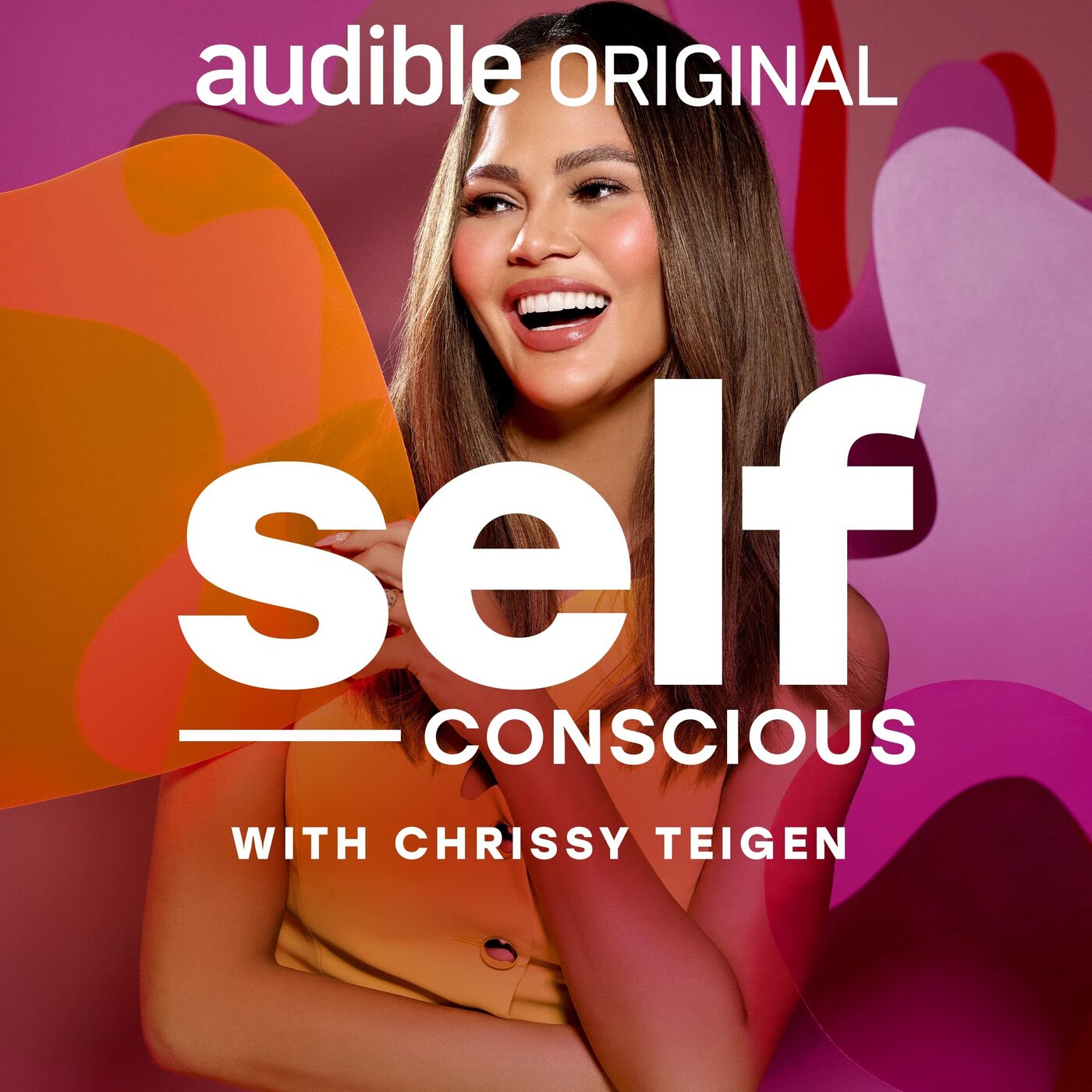
Self-Conscious with Chrissy Teigen
Erin Claire Jones: Unlock Your Human Design Type—And Finally Understand Why You Are the Way You Are
00:39:34
Loading summary
Transcript149 lines
- [00:01]
A
All right, everybody, keep your journey going and growing with all the experts on this podcast. From our guest bestsellers and newest releases to their podcasts and Audible originals, hear more from today's leading voices and well being. Go to audible.com chrissyonaudible you're listening to Self Conscious with Chrissy Teigen, an Audible original podcast. Join me as we explore the cutting edge of health, wellness and personal growth with the world's leading experts and thinkers. From inspiring stories to actionable insights, our conversations aim to help you lead a healthier, happier and more productive life. I'm a skeptical person by nature. I like things to make sense. I like evidence, a graph, a footnote, something I can point to and say, see, that's why. But I also know not everything we feel can be explained by data. There's something else at work too. There's energy between us that we may not fully understand, but we do feel feel it. We're talking about human design, a personalized roadmap for how you're built to live, make decisions, and interact with the world. It's based on your exact birth time, date and place, and uses a mix of ancient systems like astrology, the chakra system, and the I Ching. Along with modern science like quantum physics, it reveals how you're meant to make decisions, whether by your gut, your emotions, or something else entirely. What kind of work or environments energize you and how you're wired to connect with others. Human design isn't about fixing anything. It's about understanding your unique wiring so you can stop second guessing yourself and start living in a way that actually feels right for you. It's practical grounding and surprisingly accurate, even if you're a total skeptic. I know it sounds a little woo woo. I thought so too, but then I read how do youo Choose? By Erin Claire Jones and it landed in a way that felt really clarifying, like someone handed me an owner's manual to myself that I didn't know I even needed. In today's episode, Erin will show us how to uncover our human design type and how that type can help us better understand who we are, how we make decisions, and why certain things either energize us or completely wear us down. Erin Claire Jones, welcome to Self Conscious. Erin, thank you so much for being here today. I'm really excited to dive deep and learn a little bit more about myself, so thank you.
- [02:34]
B
Of course. I'm so happy to be here. Thanks for having me.
- [02:37]
A
This is really exciting because on this show we deal a lot with unpacking, trauma and how to deal with things from our past. But topics like this make me really excited because I can learn how to navigate the future. Can you explain to all of us who are new to something like this what actually is human design and how does it work?
- [02:59]
B
Human design is a system based on your time, date and place of birth. Like astrology that reveals how you are uniquely wired to operate in every area of your life, from career to business to parenting to friendships to relationship. It really gives us each our own roadmap to finding flow. And I think so often we see what has worked for others and try to emulate it, assuming it will work for us. And I think human design reminds us that we are all wired so differently. So how it works is you just need your time, date and place of birth. You can look it up@humandesignblueprint.com and it's a crazy looking chart that doesn't really make a lot of sense. But then there are some characteristics that you can start to break down. And I think one thing I'll just say for any skeptics listening is I think what matters most is not whether human design is true, but whether it's useful.
- [03:45]
A
So in everyday life for somebody, how is this useful?
- [03:49]
B
My favorite part about human design is that it's equal parts mystical and practical. It's obviously mystical in that it comes from our birth information, but it's incredibly practical because it really helps us know how to actually make decisions in clearer, more confident ways. How to communicate more effectively, how to find and create opportunities, how to navigate through the challenges that will inevitably show up. And the book I wrote is very much how can we actually make humans design practical and relatable to everyday life in a way that can really transform us. Because I think often we find systems that give us a lot of interesting information, like all the readings that you've done, but then you have no idea what to do with it. And I think human design gives us all this amazing information paired with all the tools to actually change our lives.
- [04:29]
A
I think it's also providing people with a lot of validation, which is something we seek for everything. Personally, I'm experiencing a lot of mysterious pain right now that I'm nervous to go find out that it's nothing. I just want an answer. Right. And so your book, I think it's really helpful for people to know that, oh my gosh, maybe there is an external reason why I do feel this way or why I am this way. And I think anytime that we get to look inwards to ourselves and be able to find a helpful tool that's always going to be really beneficial to us. So that's what's really fascinating about it to me. No matter if you believe in it being real or 100%, true or not, it's going to lead you down a path of wanting to discover more and wanting to be on this journey of understanding ourselves.
- [05:20]
B
Yeah. And I think a lot of us live on autopilot and don't really take the time to think about how do we make decisions, you know, how have opportunities come to me in the past? And so, again, whether or not you resonate with your design, I think it's such an interesting conversation around, yeah, who are we and how do we choose, and how can we do that in a more intentional way? So I think it's so useful, and I think, to your point, it's so permission giving. My experience most often with people is they feel just such a sense of relief. They're like, I've been spending so much of my life trying to be all the things that I'm not, and you're finally telling me I get to be exactly who I am.
- [05:54]
A
Yeah. Oh, that's so true. Because it's easy to go through the other types. Like, I'll let you talk about the types, and to be like, oh, how amazing would it be if I were that person? And I know you're a coach, too, which I think is so, by the way, do you still do that, or do you like.
- [06:06]
B
I guess so. Yeah.
- [06:07]
A
Just on a personal basis, I could use a life coach. So you've probably encountered so many different types of people. Are you able to be a judge of what you think they are before you've even read their chart?
- [06:22]
B
Well, it's funny you asked that, because I did a podcast yesterday with, do you know Gabby Reese?
- [06:27]
A
Yeah.
- [06:27]
B
And she doesn't know her birth time, and so I couldn't look up her design. And we kind of went through all the different types, and I had a prediction of who she would be, but I had no idea. And at the very end, she was like, absolutely. That one.
- [06:39]
A
Really?
- [06:40]
B
Which was so fascinating. So, like, she just, like, had a very clear sense I could really observe it. So I would say that I often cannot tell. But there's one particular type which is a manifesto in human design, which I know we'll talk about that. I can feel them so clearly that.
- [06:53]
A
You can pick up on.
- [06:53]
B
Yeah. But sometimes we're not living in alignment with our designs, you know, so sometimes it's hard to feel, but there are some types that are easier to feel than others.
- [07:00]
A
Yeah.
- [07:00]
B
Yeah.
- [07:01]
A
Okay, so go ahead and go through what the design types are. The different design types.
- [07:05]
B
Okay, so in human design, there are five types of manifesting. Generators, Generators, projectors, reflectors, and manifestors for listeners. You can look yours up@humandesignblueprint.com or you can listen along and see where you maybe might fall. I just want people to know that this is the first piece of the chart. It is such a useful piece and there's so much more after this. And you have an idea of who you might be. Right. But you're not gonna tell me?
- [07:28]
A
Yeah, Okay. I think so. And I'm just curious if John were to listen. I know for a fact, I think I know him so well that he's gonna hear one and he's gonna be like, oh, that's absolutely her. But he's gonna hear the other and then he's gonna be like, that's absolutely her. So we'll see.
- [07:41]
B
Okay. And I encourage you to also think about people in your life as we walk through this, like whether it's John or your kids or friends, because it's nice to kind of think about, oh, yeah, they might be this.
- [07:49]
A
Yeah.
- [07:50]
B
Okay, so let's start with generators. So generators in human design are very natural doers. These are people that have so much capacity to make things happen. When they feel genuinely excited by what they're doing, when they're lit up by what they're doing, their energy is boundless and they really lift up everyone around them. So often generators feel like, you know, making space for their passions is maybe a selfish choice, but it's the most generous thing they can do because their energy really impacts their environment. Then we've got manifesting generators. Manifesting generators are similar. Also very natural doers. The difference here is that they're quite multi passionate. These are my clients that are like, you know, I have a podcast. I'm also like starting a bakery. I'm wondering if I should practice law on this side. Like, they're just incredibly multidimensional and they can't really be contained and they tend to have quite non linear careers. They also move very fast, so they can be quite disappointed in the comparatively low capacity of other people because others are not moving as fast or doing as much much. Okay, all clear?
- [08:46]
A
Yeah.
- [08:47]
B
Okay, then we've got projectors. Projectors are very natural leaders, guides, teachers. They're so good at asking the right questions and really deeply seeing other People, their energy ebbs and flows. They're not really here to be kind of consistent creators and doers. They're really here to build space and rest and pause into their days. I'm a projector, and I think one of my biggest lessons was really allowing time for unproductive rest. I used to feel like even rest had to be productive. And so really allowing myself to not do anything, not listen to a podcast or take a course or do laundry, but really allow myself to rest. And projectors are really here to be invited in by people. They're kind of waiting for people to see them very clearly and invite them to share. So then we've got manifestors. We're getting down to types that are a little bit more rare right now. Manifestors are about 8 to 9%. Manifestors are very innovative people, people that are really good at getting things started. Their gift is initiating, but not necessarily doing all they're doing to keep an idea alive. They're not really great at following what others are doing. They're really here to tread their own path. They're not here to be told what to or managed or guided in any way. They tend to do best working for others or just having a lot of freedom. Wherever they are, freedom is a core value. They need to do what they want, when they want, and how they want, and their energy can be very bursty. What I mean by that is they might have periods where they're super on fire, followed by periods where they really have to kind of pull back and be alone. So really being in relationships where they can freely take that space without guilt, and they're really here to make the first move, get things started. The final type is a reflector. This is the rarest type, just 1% of the population. And these people are incredibly sensitive to their environment. They always kind of take in and magnify the energy that they're around. And so being a ruthless curator of where they spend time and who they spend time is so important. And they're also very fluid people. These people show up differently in different environments, in different seasons of life, around different friends. And so their job is not to try to be just one thing, but honor whatever feels like them that day. And they're incredibly wise. They really kind of see, sense and feel things that most people miss.
- [10:46]
A
That's so interesting that I think one of the top 1 was 30% of the population. Yeah, that's so interesting. Do you feel like it's kind of, I guess, by design a little bit, that the world is Kind of given the people that it needs.
- [11:00]
B
Yeah, like, I think that's so interesting. Yeah, I think the percentages make sense in many ways because generators and manifesting generators make up 70%, because, like, these are people that are, like, bringing everything to life. And then projectors are about 20%, and they're really kind of guiding the ship, asking the right questions.
- [11:15]
A
Yeah, it's, like, really well balanced.
- [11:16]
B
It is. And reflectors are 1%, because you need one reflector to kind of mirror back what's happening, offer their insight. You don't need everybody doing that. And also, it's a reminder that there's so much more nuance underneath it. So even though you might be a generator, your design is still gonna be so different than any other generator you meet.
- [11:33]
A
Okay, so who am I?
- [11:36]
B
Great question. Okay. And one thing I'll just say before we get into it is that I'm not trying to convince you of anything. I'm not very dogmatic about any of this. So what I share, if it feels useful, take it on. If it doesn't, feel free to let it. So in the world of human design, you are indeed a generator. And so let me speak about that for you, and we'll kind of talk about the other pieces as well. So again, that means that you are somebody that has pretty boundless energy when you feel genuinely excited by what you're doing. But like I said, a big lesson for you is boundaries. Because you're so capable, so much can be put on you. And I mean that both, like, work wise, but also friends can want a lot from you. Like, people can want a lot from you because they sense your capacity. And so there is a real lesson. Take it or leave it around, really getting clear on, like, what do I feel genuinely available for? What do I feel excited for? And you also, this other part of your design, beyond being a generator that, like, when your heart is in something, like, you can move mountains, you have a sense of will that few people have, which is amazing. But it requires you being very discerning about what you say yes to and what you say no to. And even though you have this kind of steady stamina as a generator, like, you do have a little bit of energy that kind of, like rises and falls where you can make things happen faster than most people. You can often make more happen in a couple hours than most can.
- [12:52]
A
I do notice that.
- [12:53]
B
Than in a day. And so, like, what I would say for you is that it's often really good to work in bursts, to kind of follow up A real period of creation with like a real period of like rest and pausing and waiting for the energy to naturally surge.
- [13:06]
A
Back when you first said the word boundaries, I was like, oh, absolutely. Setting boundaries is not a strong suit of mine. I've often felt like I don't really deserve to or get to because I've kind of chosen the life that I'm in and I'm just meant to be all things to all different people. But I think one thing that drew me to the reflector was that it seemed so cyclical and my body really feels that way, like I think a part of it. In the book you mentioned that, you know, it's a 28 day cycle and I've always felt really connected to the cycles of the moon, my personal body cycle. I've always gotten my period on the first of the month. It's just always felt very purposeful and very by the book. And my connection to wanting to say that I was that was a lot of that mentioning of. It takes a long time to make decisions for me, but I often don't get that chance. Yeah, I don't know the last time I was given 28 days to have an answer for something. Everything I do now is like eod, eow, like end of week, end of day. And I always want to sit on things longer and I'm never able to.
- [14:18]
B
So let's talk about your decision making. So again, if you guys look up your chart, you'll see your type, which we've talked about. But there's also a piece called Authority. The book goes into these as well, and it speaks to how we're wired to choose, which I find incredibly useful because we're making decisions all the time. Not every generator will have the same way of making decisions. So in human design, you're an emot decision maker. Basically what that means is you're somebody who's very gut driven. I feel like you even referenced that earlier around kind of that internal pull or push. But you are not somebody who's meant to decide in the moment. There are some people that are fast, instinctive, like first answer is the best answer for you. It's about sleeping on things and feeling into things and seeing what stays true over time. And it's not necessarily a month. It might be a couple days, it might be a week, it might be 24 hours. But there's something for you around getting space from your first instinct to see if you're still excited. You know, I'm a different type than you and I have the Same authority. But I often find that when I say yes in the moment, I wake up the next day and I'm like, what have I committed to? And so it is so helpful, I find, to kind of build in that waiting period, not because your initial instinct is incorrect, but because it's worth verifying it before you say yes. And it often takes so much more energy to then extract yourself from a commitment you didn't really mean. So when it comes to choosing, you are absolutely meant to take your time.
- [15:35]
A
Oh, my God. Is anyone from my team listening? Strand? Luke, Megan, Jimmy. I need time. Oh, my goodness.
- [15:44]
B
And I think that this is also why it's so powerful to not only understand your own way of making decisions, but your partners and your colleagues and your friends. I tell a story in the book of a couple where one was super fast and the other one needed 28 days. And they were trying to decide whether or not to move to the East Coast. And she was like, I know. And like, why is my husband waffling? And we looked at his design. I was like, like, he's just taking his time. Like, he's going through his process. So I think often we can make others wrong for choosing too quickly or too slowly when they're just wired to choose differently.
- [16:12]
A
Oh, John's quick. John can make any decision, and it's always the right decision. Too quickly. Yeah.
- [16:17]
B
Right. So it's just useful to be like. And you might need a little bit more time.
- [16:21]
A
Yeah. But then I'm like, oh. But I waffle back and forth, and sometimes it can be the wrong decision. Like, I remember growing up, I would take so long, I would be the last person to finish a test in school. I'd turn it in last, and I would often have the right answers. And then I would go back and I would scribble them all out and then put the wrong answer and then turn it in. So, like, I kind of use that example of, like, just because I take longer to do things doesn't mean I'm ever right about it.
- [16:47]
B
Well, let me give you another tool, because I think that also what I'm hearing is that it feels like when you give yourself time, you also get a little bit more in your head about it. And that's not the point. The point is actually to stay rooted in your body, but just to see how your response changes. So you are somebody who's very gut driven. It's like the visceral feeling in your belly that when somebody says something, it's like, yes or no. And so you're somebody who, according to human design, responds very well to specific questions. So what I mean by that?
- [17:13]
A
Yes. Oh my God. I tell my therapist this all the time. I'm like, ask me something and we can really get into it. But I'm not good with open ended business.
- [17:21]
B
No, and you're not meant to be. You're not meant to have somebody be like, what do you want to do next? Or even what do you want to eat for dinner? Do you want option A or option B? Do you want to go out or cook at home? Do you want to do this thing now or not? And so what I would actually have you do is when you're making a decision, and we can do this at the end with a toolkit, is have somebody ask you like, do you? And be like, yes. My instinctive answer is yes. And then have them ask you again the next day and the day after. So for you, it is about time. But I would actually have those questions be the anchor around making sure that it's still coming from your gut and not what you think you should do.
- [17:52]
A
Yes. Oh my God, that's so real. That makes so much sense. I would often have a different answer depending on the mood I was in. Or I often do an answer as the person that I want to be and not who I am.
- [18:06]
B
Well, and I think that's honestly the magic of specific questions because it bypasses your mind and just gets you straight into what you actually feel. I'll often talk with a client and they'll kind of be wrestling with a decision and talk through it for 20 minutes. Then I'm like, do you want to do it? They're like, no. And like they want to want to do it. But when they're asked in that way, it's actually incredibly clear that they don't want to do it.
- [18:25]
A
Yeah, it's like that. If it's not a hell yes, it's a no. That's basically where I'm at now. That's kind of the only way that I can help my body understand it. It's like, am I saying hell yes to this? And I'm excited about it. Then it's a no. It's hard polarization. Yeah, it's really tough.
- [18:43]
B
But hopefully also there's the acceptance that when you're saying yes and don't really have the energy, it just burns you out and it's not really great for anybody. So I think saying yes from a place of conviction is a thing that benefits everybody. And so I know that when People say no, and it's clear in their gut. It's like, oh, it's just not the right thing for them.
- [19:00]
A
Do people do well with people of the same design?
- [19:04]
B
I would say that I don't believe human design is meant to limit who we can be with. It more lets us know how we can best be with the people that we choose. I think if you're with somebody who wants you to make fast decisions, that will be hard, you know? But if you're with somebody who takes the time to really understand how you operate, anything's possible. I think that being around people with similar designs can feel really comfortable. There can be a sense of harmony. A lot of my friends are a similar type to me. However, I think we're also attracted to different. And so my husband is a totally different design. And it only works because we know how different we are.
- [19:34]
A
I would imagine John is a generator. He's gotta be right. I wonder if John Legend's birth time is on the Internet.
- [19:41]
B
Honestly.
- [19:42]
A
It might be right.
- [19:43]
B
Yeah. Yeah.
- [19:43]
A
It's definitely December 28th. It says 8:25am okay, we'll look it up. That's another one. That's all we had to do. We didn't have to call him.
- [19:55]
B
Oh, my God. That's amazing.
- [19:56]
A
That is so funny.
- [19:58]
B
Okay, so he is a projector.
- [20:00]
A
A projector.
- [20:01]
B
But what's fun. And we can. Yeah, but you guys have the same profile, which we can talk about.
- [20:04]
A
Wait, go through projector again.
- [20:06]
B
He is somebody who, according to human design, is a very natural kind of leader and teacher and guide. He's somebody who makes others feel deeply seen. He's really good at asking the right questions. In an ideal world, he is meant to take a lot of rest. You know, really kind of carving out space and time to rest. He is somebody who can make things happen incredibly fast. Like you. You guys share that.
- [20:26]
A
But he does need a lot more hibernation than I need.
- [20:28]
B
He does. He needs a lot of space. He takes in a lot from the world around him. But I think as projectors, we're often very susceptible to overdoing. So it can be a real lesson to allow that rest in. How does that.
- [20:40]
A
Absolutely. Yes. Cause he's like me, but the sleepy bear version.
- [20:43]
B
Yes.
- [20:44]
A
Like, he can do everything, and he's very on time, and he's very good about creating the right spaces and teams around. And he loves to do things, but he does need a lot of rest.
- [20:57]
B
Yes. And he's just meant to work in these really powerful bursts.
- [21:00]
A
Yeah, he's a napper in ways that he can be talking to you and fall asleep and then wake up 20 minutes later and feel absolutely refreshed and ready to go.
- [21:08]
B
Yeah. It's funny because I feel like a lot of people I know who are partnered with projectors, they really kind of learn to be like, oh, that rest is such an important part of who they are and not making them wrong for it. Because projectors often feel guilty for taking it.
- [21:20]
A
Yeah. Oh, he doesn't feel guilty. I do, though.
- [21:23]
B
So I just want to talk about decision making because we talked about how you're somebody who needs a lot more time. He's somebody who's very fast, and I love that you predicted that. He's somebody who's meant to make decisions in the moment based on an instinctive Just yes or no. It's super quiet. It's very instinctual. The yes disappears as quickly as it comes. So it's important to realize how different you are in this area, that he's meant to be spontaneous and you a little bit slower when it comes to deciding what to say yes to do. You feel like that's true.
- [21:50]
A
It's absolutely true. And I can't wait for him to listen to this and hopefully give me a little bit of time next time.
- [21:56]
B
Yeah.
- [21:56]
A
He's also incredibly patient person. I don't know if that is a typical characteristic of a generator, but we wouldn't work out as well as we did if he weren't such a patient person. So.
- [22:05]
B
Yeah.
- [22:05]
A
Yeah.
- [22:06]
B
Okay. So let's talk about a part of our human design called strategy. So your strategy as a generator is about letting things come to you. You're not somebody. I think you already said this really beautifully. You're not somebody who's meant to sit at home and be like, what is the next? And come up with it out of thin air. You are somebody who's here to pay attention to what shows up in your world and what naturally sparks your gut feeling, which means that something might show up and you didn't expect to be drawn towards it. But you're like, I can't help this, like, undeniable pull, I feel. So you are really here to kind of respond to life and see what sparks you. John is somebody who's meant to actually be invited into things. So that means, as a partner, it's really good to invite him in. Like, invite in his perspective, like, how he sees the world that often, like, gives us so much energy as projectors. But it also means how opportunities bring. And this might not be aligned with his life experience is that people really see that he's something pretty remarkable, and, like, invite him in to share it for you. It's really around recognizing his gifts, seeing him clearly. Words of affirmation are often really amazing for projectors and really inviting him to share.
- [23:05]
A
Oh, my God, that is spot on, too, because he really enjoys sharing that kind of stuff too, and I'm not particularly really good at it at asking those questions or being that person. In all fairness, he's not that way with me either, but I guess I don't need it in the way he needs it.
- [23:23]
B
Right.
- [23:23]
A
So, yeah, he does tend to get louder, more full of life. When he is asked about something personal or something that he's going through or something that he's tackling or a new project that he has, he gets louder and he gets more animated in a way that he really isn't ever throughout the day. So, yeah, that's. That's spot on.
- [23:48]
B
I want to talk about some areas in your design that might be more challenging, because I feel like it's really useful to know where we are challenged, because then we can recognize it when it comes up. One of the areas for you is that you're somebody who's very easily inspired. You might talk to somebody who's excited about a thing, and you're like, okay, let's do it. You know, and then you might walk away, and you're like, wait, I don't want to do that. But, like, their excitement was super infectious. So I think for you, I would remind you that, like, not every idea that comes is worth pursuing, which is why it's good to give yourself a moment and a beat to feel into it and that, you know, enjoy the easy inspiration without getting totally lost in it. A shadow element of this one can be feeling really scattered because you've just got so many things, and so you're somebody who really does well. According to your design, with simple to do lists, things that can anchor you throughout the day for you, if it's just, like, left wide open, you might end the day, and you're like, I don't totally know what happened. You know, I moved in a lot of directions. But having. I would ask yourself, at the top of each day, what are the two to three things I could do today that would give me the most satisfaction? That I would go into bed. I'd be like, God, I'm so happy, so glad I did those things. Do you feel that one?
- [24:53]
A
I do, yeah. I actually just downloaded an app yesterday, like, A motivation app that is very clear to do list. Like, it gives you three different categories. Basically, like, need to do, want to do, have to do something like that. And I haven't even set it up.
- [25:06]
B
Yet, but it's there. It's there.
- [25:10]
A
But, yes. Simple to do list. Absolutely. I really am that person that sees somebody, and I have every intention of being like, let's talk. Let's do this. Let's make it happen. Yes, absolutely. And then I go home and I'm like, I don't even know what that was about.
- [25:24]
B
Right.
- [25:25]
A
That happens all the time. Yes.
- [25:26]
B
Well, and it's. Again, we're all sensitive to other people in different ways. And one of the ways that you're sensitive to others is around their excitement, their inspiration, how they feel. So, again, if they feel excited, you're.
- [25:35]
A
Like, I feel so sold on other people. I'm in it with you. I love other people's ideas. I love their creations. I always want to collaborate with people, even if it hasn't worked out well for me in the past. I always think it's a. When I see people doing something that they love that they're very inspired by, that gets me so excited for them. And I jump into things that maybe aren't safe or good for me.
- [26:00]
B
Yes.
- [26:00]
A
Yeah.
- [26:01]
B
Something I would be aware of in your design is that you are somebody who's very sensitive to other people's stress. And where this can show up in a challenging way in your life is applying unnecessary urgency to everything you're doing. And kind of having that be your default of like, oh, I've got to make this happen right now. And so for you, it can obviously burn you out if you apply that sense of urgency to everything you do, whether it's like being at the grocery store going for a walk, or like, I gotta get this thing to them by tonight. And I would say for you, the lesson is really allowing yourself to slow down, making things happen fast when you wanna be fast, because you are very fast, but not having that be your default.
- [26:37]
A
So much of my life is really overstressing how I'm impacting somebody else. I went to the doctor yesterday and I did an infus, and I had woken up too late from it. And no matter how out of it I was, I looked down at my clock and I was like, it's 7:30. These people have to get home. And I'm like, vomiting. I'm on the floor. The experience of a lifetime. And I've always been very hyper aware of those around me and what they have to do and get done.
- [27:07]
B
And what I would say is that you do feel other people's stress in a really deep way and the pressure's not gonna disappear. The job is not like, how can I get rid of this? But it's more, how can I engage with it differently? And so that's why I. Having practices that kind of slow you down and let you unwind is often like, a really good sell for you. And I would say the question to ask yourself in those moments when you're feeling heightened stress is just, is this thing worth the hurry? And my guess is that question alone will reveal the answer where you're like, no.
- [27:35]
A
No. Oh, I often feel so jealous of people that don't feel that pointless stress all day. That is so, like, game changing to me. I'm like, how am I like this right now? I'm not normally like this person.
- [27:51]
B
Right. Cause it's not yours.
- [27:52]
A
Yeah.
- [27:53]
B
Yeah.
- [27:53]
A
Oh, yeah. Yeah. I feel. I feel other people. I feel their everything. I feel their, like, love huge. I feel their stress huge. I feel when they're sad, I'm so sad with them.
- [28:05]
B
Well, it reminds me also of the piece that I mentioned about your profile around being a fixer and a problem solver, because I think that's another question for you to ask yourself in those moments of like, yes, I sense they're feeling all these things, and yet is this really my thing to fix? And again, my guess is the answer in most of those moments is no.
- [28:22]
A
Yeah. Do you ever do this on celebrities?
- [28:24]
B
Yeah, well, actually, in the book, I begin each chapter with kind of how it shows up in some celebrities life, because it's a really interesting way to look at somebody. And so some examples are somebody that actually is a similar design to John is Taylor Swift, who's also a projector, also very fast, instinctive. I kind of talk about one of her decisions there. There are so many amazing manifester examples, people that are really good at initiating things. Gloria Steinem is one of those people. Maya Angelou, people that have been the first. That's what I mean. Generators are amazing examples. Beyonce, Oprah, like, people that really are so masterful, so steady, and really are so overflowing in their energy. The example for the manifesting generator I use in this story is the Rock. Because he's just done so many things, you know, and like, even the descriptions of him are like, he's up doing this and then this.
- [29:10]
A
And like, he's just like him and Kevin Hart, both of them. They have to have the same Thing, I mean, they just have a passion in them.
- [29:16]
B
I think. I find it so fun to kind of look at people through that lens because it does give us context. It gives us context into like where they're in their shadow, where they're in the wisdom. And I just find it's a really interesting way to kind of look at human design.
- [29:27]
A
What you said about Taylor, if you watch any of her films or anything too, you can tell that when something hits her and she is inspired, that's the time to do it. Like three in the morning, she's in the studio, She's a right. So yeah, you can tell.
- [29:39]
B
And she's got that same decision making as John, where it's like fast, it's instinctive, and her energy is meant to ebb and flow. Obviously Taylor Swift does an extraordinary amount of things, but you can see the ebb and where it's like these periods of creation and periods of pause. And so I actually feel like she embodies it pretty beautifully.
- [29:54]
A
Do you know what I really do love about her is that she could still somehow be doing so much more. She could have her lipstick line, she could have a fashion line, she could do this, that of course she has merch and things, but she could really be capitalizing so much more on things that she doesn't. She just wants to make music, throw amazing concerts, create a community around her where people are genuinely in love with being in the same room, not just with her, but as each other. And it's always been really interesting to me that she has been able to say no to the things that don't bring her joy.
- [30:35]
B
Well, and I think it's also a good example of like projectors. They're really here for mastery. And so like she has her thing, you know, the rock is here to be super multi passionate and do so many different things. So you also kind of see how different some approaches.
- [30:48]
A
Yeah, yeah. I often like, that's like my biggest compliment to her is like, I'm like, you do all these amazing things, but you could still somehow be doing a thousand more and you don't do it.
- [30:56]
B
Yeah.
- [30:56]
A
What if somebody's listening to this and they don't want to live inside this blueprint? What if it can feel limiting to them or even to be told this is who you are?
- [31:07]
B
It's a great question. So I guess the simple answer is that if you don't want to live by your desire, don't. If what you're doing is working for you, then do the thing that's working for you? I think of a relationship I had many years ago with a friend, and I remember sharing his design with him, and he was like, I don't want that. And I was like, okay, you're living opposite of it. Like, how's it working out for you? He's like, it's not working. It's terrible. And I was like, I can't really do anything here. So I think that, like, if you found a way of working that's working for you, do the thing. But I think human design, I don't.
- [31:36]
A
Think most of us are doing anything that works for us.
- [31:38]
B
I think human design reveals a way that often, often just feels better. And so I think to your question, I was very nervous early on that human design would feel overly prescriptive, that I would go and people would feel boxed in. My experience has been the opposite of that. I feel like when I share people's human design with them, it feels like I've given language to their inner world in a way that they're like, thank you. They already know it to be true, and I'm just affirming it. And so I would actually say the type that I would expect to be the most resistant would be manifesters, because they're not here to be told what to do. And yet I work with so many manifestors because they're like, thank you for giving me the permission to kind of be this powerful force that is here to initiate. I get that it can feel boxy, but my experience is that it just resonates so deeply that people appreciate having language and tools to work with it. But, you know, human design is one tool of many. And so, like, it might not be for everybody, but I do tend to find that the most skeptical, resistant people are the ones that fall in love with it the most.
- [32:48]
A
And now for the toolkit. Each episode, our guests distill their expertise into practical and actionable insights. Today, Erin takes us through an exercise focused on getting us unstuck and back in alignment.
- [33:01]
B
We're gonna do an exercise called Resistance to Flow. We're going to look at a question that you have about your life right now or a decision you're struggling with, and see if we can use your human design to move you from resistance to flow. Ok, so my question for you is, do you have a question right now around, like, a decision? Is there a decision you're having a hard time making? It can be small, too.
- [33:26]
A
Do I want to be doing more with my food business, or am I happy with just the way it's going being able to support a team and be in grocery stores, or do I want bigger?
- [33:41]
B
Okay. So, you know, everybody's gonna have different ways of accessing their truth. We've talked about this. But as a reminder for you and your authority, one of the best ways to access it is really specific questions. So I'm gonna ask you a few questions, and my encouragement for you is to do your very, very best to really drop out of your head and just see what your first visceral response is.
- [34:02]
A
Okay.
- [34:02]
B
Okay.
- [34:03]
A
Yeah.
- [34:04]
B
Do you feel content with where your food business is right. Right now?
- [34:08]
A
Yes.
- [34:09]
B
Does it feel right to keep growing it?
- [34:11]
A
Yes.
- [34:13]
B
Do you want to grow right now?
- [34:16]
A
No.
- [34:17]
B
Okay. How does that feel? First?
- [34:19]
A
I've never said that out loud, really, because I go by, like, expectations of others, and I know that not many people would be afforded the luxury of getting to say, I don't want to do this right now. I take my business more as, like, a fun life thing. I get to provide something cool to people. I also get to support a really cool team of creative people, and I love that. And I'm not necessarily into the sell it for a billion dollars thing that other people are into.
- [34:56]
B
It's so interesting, I think, to ask people those questions because often they might not get answers they expect or they might have to admit a thing.
- [35:03]
A
Yeah.
- [35:03]
B
But I feel like that was admitting.
- [35:04]
A
A thing for sure.
- [35:05]
B
Yeah. And for you, it sound. There's a satisfaction with where it is, and you might want to grow it in the future, but the timing's not right right now. And I think one thing around decision making is it's often, yes, what decision is right, but also when is it right? I can't tell you how often I sit with people and they're like, I do want to do this. Not right now. So I would say, like, based on your answers, that's kind of the answer for now.
- [35:27]
A
But it's hard because that's not really how the game works. Right. I could be kicked out of every grocery store tomorrow because I don't want to grow it more. And then the decision's made for me. Right.
- [35:36]
B
Well, the decision also might be, can somebody else take that over? And maybe you're not the one kind of day to day helping grow it.
- [35:41]
A
Oh.
- [35:42]
B
You know, and so then, like, you could ask more questions like, do you feel like you're the one to do it? Do you have the energy for it? Is this existing role the one that you want to fulfill?
- [35:50]
A
That's not even an option I ever.
- [35:51]
B
Considered, honestly, yeah, well, again, the answer is like you don't want to grow it. It doesn't mean that it's not meant to grow, you know, But I think it's also, it feels like a theme through this conversation has been taking really good care of your own energy and knowing how easy it is to distribute it across so many things and really considering what you actually feel most available for.
- [36:12]
A
How can our listeners apply this at home with questions they're asking themselves?
- [36:17]
B
Yeah. So let me just kind of briefly give a little tip for each different decision making authority. Is that cool?
- [36:24]
A
Yeah.
- [36:24]
B
So again, if you haven't yet looked up your authority, you can@humandesignblueprint.com and look at what's listed next to authority. There are seven. The seven authorities are, are sacral, emotional, splenic, self projected, ego, mental, and none. If your authority is sacral, I would encourage you to do the exercise we just did. Have somebody close to you ask you a specific yes, no question around the question you're considering. I would also encourage adding a question around timing because I think like we discovered with you, you might be like a yes pursuing this idea, but a no to doing it right now. If somebody is an emotional authority, so this is you, but I'm only with you for this one moment. I would encourage people to ask that question, but also ask it over a couple days. So I would say if you're considering something, write down your initial instinct and give yourself 24 or 48 hours and check back in and see how your feelings have changed. If you're splenic authority like John, I would actually encourage you to really take a moment in your day to do something that makes you feel very quiet. It could be playing music, meditation, nature, going on a walk and just see if any kind of instinctive feelings come up. It's often in the quietest moments they do come up. If your authority is self projected, I would sit down with somebody that you really trust and just have them ask you questions. Do you want to do this? Are you happy? Like what feels the most creative and inspired for you? When you have a chance to speak freely, often with open ended questions, you'll find your truth will just tumble out. If your authority's ego, I know there are a lot of them. If your authority's ego, I would ask yourself, do you really desire this? Do you want this? Do you feel like you, you must have it. Often the answer lies there. And then if you are a mental authority, I would talk the decision out with a few different people. You trust in a few different spaces and see what threads of truth remain. And finally, if your authority is none, I would give yourself a couple days a week, if you can, and see how a decision feels over time. The most important thing for these people is that they're not choosing from a hurried or pressurized place. So it's gonna be different for everybody. But I think it gives you a chance to tune into what actually feels good.
- [38:23]
A
Thank you so much for being here. This is so exciting and so fun for me because this is a world that I'm really excited about that I don't know much about. So thank you so much.
- [38:32]
B
Thank you so much. It was such a pleasure.
- [38:40]
A
Erin, thank you so much for joining me. Today on Self Conscious, how do youo Choose? By Erin Claire Jones is available on Audible. Until until then, tune in, turn on and feel better. This is Chrissy Teigen and you've been listening to Self Conscious, an Audible original podcast. This has been an Audible original produced by Audible, Q Code and Huntley Productions, hosted by Chrissy Teigen, written and executive produced by Jimmy Jelinek, Executive producers for Q Code Shen Yun Hu and Alexa Gabrielle Ramirez, executive producer for Huntley Prince Productions Chrissy Teigen, executive producer for Audible Stacy Creamer Recorded and engineered by Ben Milchev Filmed by Bridger Clements Production Coordinator Brian Coulter Edited, mixed and mastered by Ben Milchev Head of Creative Development at Audible Kate Navin Chief Content Officer Rachel Giazza Copyright 2024 by Audible Originals, LLC Sound Recording Copyright 2025 by Audible Originals, LLC, LLC.