← Self-Conscious with Chrissy Teigen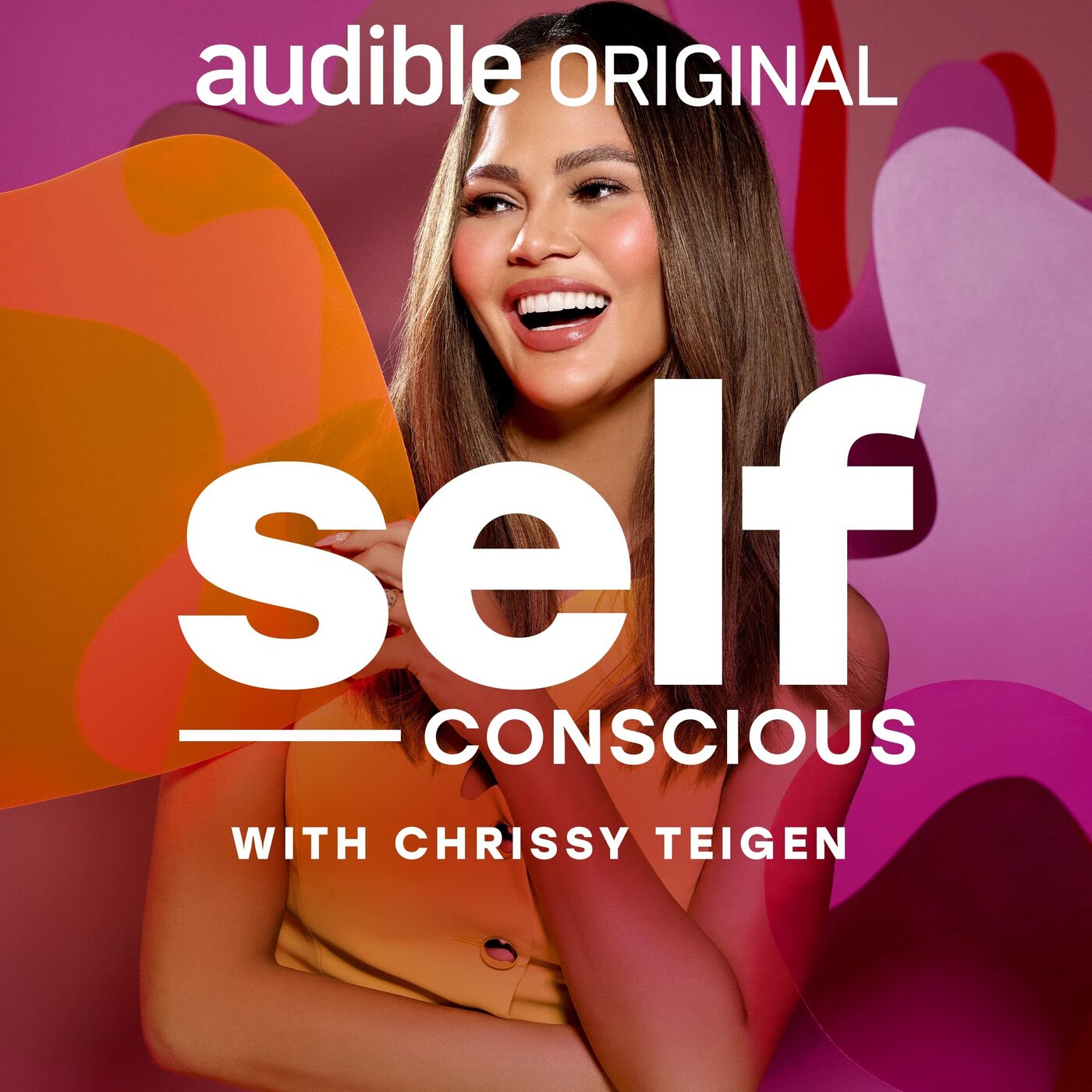
Self-Conscious with Chrissy Teigen
Oliver Burkeman: Why Embracing Imperfection is the Secret to a Better Life
00:45:22
Loading summary
Transcript63 lines
- [00:03]
Chrissy Teigen
You're listening to Self Conscious with Chrissy Teigen, an Audible original podcast. Join me as we explore the cutting edge of health, wellness and personal growth with the world's leading experts and thinkers. From inspiring stories to actionable insights, our conversations aim to help you lead a healthier, happier and more productive life. Anyone who really knows me knows that I love making lists. Write it down, cross it off, move to the next next thing. It's less about the task itself than the act of completion. Proof that I did something, finished something, earned a gold star. The list has become my yardstick for self worth. Every line crossed off whispers, you're good, you're worthy, you're in control. The problem is the list never ends. I keep chasing the fantasy that one day I'll finally get on top of everything, that the emails will be answered, the closets organized, and life will finally be in order. Spoiler alert. Never gonna happen. My next guest, Oliver Berkman, believes this isn't failure, it's freedom. In meditations for mortals, four weeks to embrace your limitations and make time for what counts. He shows how the endless chase to get it all done isn't a personal defect. It's the human condition. After years of testing every productivity hack, his startling conclusion is the finish line doesn't exist. Today, Oliver Berkman shows us how to embrace imperfectionism. The radical idea that life isn't meant to be solved or complet, but lived as it is in all of its messy, unfinished beauty. Because the moment you stop trying to finish at all is the moment you can finally start living. Oliver Berkman, welcome to Self Conscious. Thank you so much for being here today.
- [01:56]
Oliver Berkman
Oh, my pleasure.
- [01:57]
Chrissy Teigen
You call your philosophy imperfectionism? What does that mean in plain English for somebody just trying to survive their week?
- [02:07]
Oliver Berkman
I think we all, in very different ways, spend a lot of our lives with the feeling that we're working up towards the moment when everything will finally be sorted out, right? We've finally got everything in control and we're on top of everything. And that's the point at which real life can begin and we can relax. And people have this feeling like going way beyond their youth, right? This sort of accompanies you through life and you get older and older and start to think, hold on a second, it can't still be that the moment when life begins is in the future. I guess then imperfectionism is the philosophy that says we can live that life now, right? All we need to do is relax. The idea that it has to be perfectly in place There is a possibility to put into action right here and now the things that matter the most to us. Whether or not you've got to the stage with your finances, relationships, career, or anything that you sort of deem to be the place that I'm heading to. So it's really a philosophy of taking action, allowing the fact that it's not gonna feel or be perfect, but the big difference is it's gonna be real, it's gonna be in the world.
- [03:17]
Chrissy Teigen
Did you grow up in a household that really embraced perfectionism and this made you wanna go the other way? Or were you celebrated more when things weren't perfect? Which is like the way I'm trying to celebrate my children now. What was your childhood like?
- [03:34]
Oliver Berkman
You know, I don't think it was hugely perfectionistic in that if you don't get high grades, then we won't love you. But I think it did make me into what psychologists call an insecure overachiever. Right. Very common problem. Sounds to me like you might classify yourself in this bucket. Right. It's the idea of feeling the need to achieve and accomplish and to do things at a very high standard. Not because that's just fun and isn't it great to do really good work, but because you sort of need to. Otherwise you don't feel that you are enough. Right. You don't feel that you're good enough. One thing I had drummed into me from a very early age was that it's really important to do your best at everything you try to do. But given the rest of my personality or genetics or whatever, you know, I think it did lead to that feeling that I had to constantly monitor myself to make sure that I was doing my best. How do you even know when you're doing your best? You could always do better, probably, and, like, you never get to rest. So I definitely did grow up into a pretty good anxious person whose anxiety manifested itself wanting to be more and more productive.
- [04:41]
Chrissy Teigen
Is this book a reaction to productivity culture?
- [04:44]
Oliver Berkman
Oh, very much so, yeah. I mean, I think both this and the previous book I wrote, which is called 4000 weeks work, came out of this place where I had spent a lot of my own life and career trying to find the system and the level of self discipline and the life philosophy that would enable me to sort of get my arms around everything, do all the things, answer all the emails, fulfill all the obligations. And then I started to see that everywhere. It's certainly not just me. That sense of a sort of infinite amount of stuff that you've got to do. Otherwise you don't get to relax. And the more that I explored that, I mean, I originally explored this in a very sort of like, I want the productivity hacks, right? Because I wrote this column for the Guardian newspaper where I was testing them all out. And for years I thought it was just around the corner, this life philosophy or expensive planner notebook that was going to do it for me. And it was the realization that that wasn't ever gonna arrive, that there was no magic bullet. That was a big moment for me, a burden off one's shoulders to realize that you don't have to spend your life trying to find a way to be perfect and omnicapable at everything, because that's just not something that finite human beings get to do. I think there was a point at which I had tried so many of these methodologies, and I was still so desperate for this moment that I would get to when I could get it all done and finally feel good about myself, that then it sort of begins to feel hopeless. But the really interesting thing is that sort of hidden inside that hopelessness is the real answer. And the real answer actually is it is not given to us as finite human beings to do all the things, to feel like we're fulfilling every obligation, to get so optimized with our time that there's nothing that could be thrown at us that we wouldn't be able to do. And when you drop back down in that reality, not only is it quite relaxing, but that's also when you get to pour your finite time and energy into actually doing a handful of things that count. I got loads more done and accomplished in life after I'd begun to let go of that perfectionistic fantasy of productivity.
- [07:04]
Chrissy Teigen
What is the power of actually finishing something imperfectly compared to leaving it half done?
- [07:10]
Oliver Berkman
One of the arguments I make in this book is that there's all sorts of sneaky tricks that we engage in. We might be telling ourselves has some other reason, but the real reason is to make ourselves not feel like the limited finite humans that we are. One of those things is chasing the perfect productivity system. It's like, okay, right now, I might not be God when it comes to productivity, but I will be in six months as soon as I've put this thing into practice. Not finishing projects, at least for me, is actually a way of feeling omnipotent. It's a way of saying I'm important and I'm wanted and I'm necessary. But I rarely have to push myself through the difficult moment where you're like, okay, that is as done as it's ever going to be. And now it goes out into the world.
- [07:56]
Chrissy Teigen
Yeah.
- [07:57]
Oliver Berkman
So actually learning to finish things and to work sequentially, it's kind of painful. But what happens again is that it's more satisfying in the long term because those things go out into the world. And quite often you get positive responses.
- [08:08]
Chrissy Teigen
I think the hardest part is starting, but once I do get rolling with something, I can really churn it out and churn it out really well. But those emails and the end of day emails and end of week answers that you need and the constant approvals, we have to read a lot of contracts and scripts and approving of photos and approving of interview questions. And those things can be done quickly. And I love getting them off my plate. I love checking those boxes. I love a list and being like, okay, I nail those things down. I'm supposed to have started a children's book like ages ago to the point where my editors are checking in. I'm supposed to be done with the first draft and I have not started it. I'm praying this will come out in a few weeks at least to give me some time to catch up. But do you have any tips or tricks for getting started with something that you actually do want to do? Because I've spoken to people before and they've been like, well, maybe that's a sign that your heart's not really in it. This I really do wanna do. I just like to get started. When I have so many things on a daily that need tending to. How can I get started on my big project?
- [09:14]
Oliver Berkman
Yeah, it's such an interesting challenge. Cause sometimes there is something inside you and if you really sort of get quiet or journal about it, you'll realize it's not in integrity with what you're doing. You don't actually want to be doing this project. But other times it's the opposite, Right? Other times I think it's precisely the fact that you care about it and that it matters to you that is causing the obstacle. Like all those approvals you mentioned, very satisfying to check them off, but not inherently fulfilling activities for you to be doing the checking of the boxes, that's something that really reinforces that feeling of control. It's like, okay, did all those things. Got a long list in my mind of things I've accomplished today. Whereas any sort of big project you care about, you know, anything creative in that way, it brings you up against your edge that you want to do it really, really well. You may be on Some level are insecure about whether you can do it really, really well, and it's just like, easier to not focus on it. It's painful to push yourself into that. Plus there's this feeling that maybe you have a perfect image in your mind of how it's going to be. And due to being human, it's not going to end up perfect because there's no perfection in the real world. So all these different problems of being a human are facing you in that situation. And it's really easy either to just avoid it or to say, you know what? I need to be really refreshed and well slept. I need to have all these other things off my plate so I can just focus on this one thing. It's true for anybody, as I, I would suspect, especially for someone in your position, all the other things being off your plate is not a time that's ever going to arise, right? And so I think one of the things you have to do really, is just to recognize, first of all, that's what's going on. This avoidance, this discomfort I feel, this desire to postpone it till I feel ready. All of that is a testament to how much I care about this thing. The thing that matters more than anything else is going from zero to one, right? Having it in the world in any way whatsoever is what matters. And then it depends on your situation. If it's busy, busyness that's getting in the way, you have to do what my friend, the creativity coach, Jessica Abel, calls paying yourself first with time. You have to say, I'm just going to do it for 45 minutes at the start of the day, while all those emails are unanswered, while all those people are demanding my attention, I'm going to get better at tolerating that anxiety. Rather than wait for all the stuff to be done and to have the time. And then I think the other thing, which is a version of some very old advice, but it's good advice, is to bite off a chunk of it has a defined outcome. So I don't know what stage you're at with this children's book, but if it is something as simple as coming up with a one pager that states the overall story or coming up with the structure of chapters, something that has a defined endpoint, that when you have done it, you will know that you have done it, that is often a really powerful thing to do because that still will be imperfect. It still won't be the perfect story or the perfect chapter structure, but it's not the Whole work, right? So there's less at stake. And the fact that you are an imperfect human will be slightly less painful to address. There isn't a magic solution to this. And I think part of what I end up saying in my books over and over again is can you consider that the search for the magic solution is actually what's getting in your way here? You could do a perfectly good hour of creating this thing if you weren't tormented by that perfectionism.
- [12:46]
Chrissy Teigen
One of the craziest parts was seeing you frame our lifetime as 4,000 weeks.
- [12:53]
Oliver Berkman
The real message there, and this is the message that I talk about all the time, is the finite nature of it, right? It ends. And all the problems that we have with time, the sense that we haven't done enough with our lives, or the sense that there's too much to do to fit in, all of that stems from this basic fact that our lives are finite. If they went on forever, we'd have lots of other problems. But these problems of feeling overwhelmed and crammed, this wouldn't exist because there'd always be more time. What I'm trying to help people see, because I believe it passionately myself, is that when you come to terms with that finite fact, it's not depressing, it's a shock at first, no question. But what you get for sort of allowing that thought into your life instead of avoiding it, is that you get to really show up more intensely for life. Not in a high pressure way. Not like, oh my gosh, I've got to make the most of these days and these weeks because they're going to run out. But just in the sense of like, wow, here I am. This is what being human is. So what is there to enjoy and to create and to do in this world? Because now I don't need to chase this mirage of one day being able to do it all. We're just here, so let's roll up our sleeves and do some things.
- [14:05]
Chrissy Teigen
So then what is the danger of constantly deferring life to this future you?
- [14:11]
Oliver Berkman
I think it's just that you miss your life, right? Your life passes by. But you're telling yourself all the time that it's just a rehearsal, that you're not there yet. Obviously, there are cliched ways that people do this. Like, I gotta get a certain amount of money before life can really begin, or I've gotta find the perfect partner before life can really begin. There's another problem which I think besets people. And it's harder to spot because it looks like Virtuous behavior. Right. Deferred gratification. It's that idea of, I'm not going to enjoy life now because I'm a good student and I'm preparing and I will reap the benefits later. And all across the self help personal development literature these days, you encounter this message. Make a decision today that you, in six months time will be grateful for. You go to the gym, partly so that you, in a year's time or 20 or 30 years time is grateful that you made that decision. But it's actually really easy for a lot of us to go too far in that direction to spend our whole lives preparing diligently for a future. At some point you have to say, well, okay, I'm here now and this is my life. You know, there's this famous marshmallow study where kids were presented with a marshmallow and they were told that if they could wait another 10 minutes and get another marshmallow, they'd get another marshmallow. And the sort of received wisdom about this study is that the kids who could wait had better life outcomes than the kids who were so impulsive that they just had to take the marshmallow. Now, it's been contested in all sorts of ways and we can talk about that, but the point I want to make, and this is how I put it in the book, is it is good to accumulate marshmallows according to this metaphor. But at some point you've got to eat the marshmallows, otherwise why are you accumulating them? Right? Like going through life getting more and more marshmallows and then dying before having eaten them.
- [15:58]
Chrissy Teigen
No, we have plenty of billionaires that are doing that. Literally just collecting and never spending out. So. Right.
- [16:03]
Oliver Berkman
And you can see in the sort of attitudes and the behaviors of the really super rich, something strange is going on. These are not necessarily the happiest people. And this urge to keep accumulating for a rainy day, it seems to continue way past the point of having all the money you could ever need.
- [16:21]
Chrissy Teigen
This shouldn't have to require sacrifice is what you say.
- [16:25]
Oliver Berkman
I think sacrifice has a role in life. But that ethos of hustle culture, of grinding, of like, you've got to live a deeply unpleasant and exhausting life now because that's how you're going to succeed in life just goes way too far in the other direction. What it does is it reinforces in us the notion that happiness, fulfillment, enjoyment can never be. Now, all the evidence, and I'm pretty sure there's research evidence to this effect. But certainly all the anecdotal evidence from our lives is that when there is some space for rest, for enjoyment, for gratification in a day or a week, that's when you do the most useful work as well. Because you don't turn your life into this thing that only has any meaning from the perspective of some future moment when you finally get to the summit. And we all know that if you get to the summit, you just see the next summit anyway and feel like you've got to get to that one. So it's not that there's no role for sacrifice now for future benefit. It's that for finite humans, life is now as well. And I think we're really often in danger of forgetting that it is now as well. And if you're always banking on the future, eventually that strategy will fail because there won't be any future anymore for you.
- [17:36]
Chrissy Teigen
Yeah, I mean, and perhaps this is.
- [17:37]
Oliver Berkman
To put it rather grimly, perhaps this.
- [17:39]
Chrissy Teigen
Is like the worst comparison ever. But it reminds me how GLP1 drugs and Ozempics and Mounjaros and whatever, and it really is on par with how people taking those drugs or that have the desire to take those drugs. You almost want to punish people for achieving something, and offering those drugs isn't really punishing them enough. You should have to go through dirt and shit to deserve this amount of success. And to be someone that gets to be a creator, you have to dig through this shit. It's really not true.
- [18:13]
Oliver Berkman
One of the origins of this is that sort of deep puritan Protestant ethos that's so alive in some ways still today in certainly American and UK society. The idea that you've got to pay for your success. And the flip side of that is that if you're successful in the eyes of the world, it's because of your hard work. And this doesn't serve anybody. It makes people feel bad if they're not sacrificing and bad if they get success without sacrifice. It also implies that people who are not successful, people who are just deeply unfortunate because of their place in the socioeconomic system, must not have been trying hard enough. Right. And I think all of this has a very problematic implication societally. The fact is that luck plays a big role in anyone's success. Some things come easily to some people and don't to other people. You don't actually help anybody who is suffering by refusing to revel in your own talents or enjoy the good things in life that have come your way. You should do it in an unselfish way you should pay your taxes, etc. Etc. Etc. But yeah, there's no benefit in denying yourself pleasure because somehow that's inherently a good thing.
- [19:26]
Chrissy Teigen
You encourage setting quantity goals instead of quality goals. How does that help people stuck in perfectionism?
- [19:35]
Oliver Berkman
This tactic has really helped me now. All the techniques that I talk about in this book, I'm at pains to say I don't think one of these is the thing you have to do every single day and in every context for the rest of your life. But I think it can be very useful for those of us who have perfectionistic tendencies to take that quest to produce really great stuff and turn it into a quest to just produce stuff or just do things regardless of their quality. It's very easy to make clear in the context of writing. This is the difference between saying, I'm going to write that chapter and I'm really going to nail that chapter and it's going to finally work and make the whole book brilliant, and replacing that with 500 words a day, 2,000 words by the end of the week, three hours a day, whatever it might be. Things that writers have done with their daily goal setting since time immemorial. Because it works. It drains the drama and the psychodrama out of what you're trying to do. You literally can Chrissy, tomorrow get up and write a thousand words of this book. Now, in theory, they could be terrible words, but the whole point is, put that aside for a moment. To generate words on the page is something that anyone with a keyboard and hands can accomplish. And I think you find this in all sorts of other contexts. It turns out to be really useful intervention. Sometimes it can be deciding to reach out to one friend every week or do one particular activity with your kids for a certain amount of time each week. People tend to not want to focus on quantity because it feels very soulless and doesn't have kind of spirit and excitement in it. But actually, for perfectionists, it can be really useful to drain all the drama out of it. So in the early days of writing this book, I was opening up files on my laptop up and saying, for the next 20 minutes, I am taking this subtopic that I'm interested in relative to this book, and I'm just going to keep my fingers moving and the words coming out. And that's the only rule. And of course, 80% of what I generated that way was absolute rubbish. But 20% was the start of the good stuff.
- [21:35]
Chrissy Teigen
Let's talk about the done list. I like this list.
- [21:38]
Oliver Berkman
Already sometimes useful interventions. The idea that we tend to compare, even if subconsciously, what we've managed to get done in a day with all the things we felt we needed to get done that day, which is basically an infinite list. That comparison is never going to leave you feeling good about yourself, because even if you do 100 things in your day, there were probably a thousand crying out for your attention at this point in your life. The done list starts blank at the beginning of the day. You can do this as well as any task management system that you currently use, and you just add items to it as you complete them. So it gets longer through the day because you're completing more and more things. And what that causes you to do is to implicitly compare your work for the day not with all the things that could have been done if you'd been Superhuman, but with zero. Here are the 15 things that got done today, and the comparison is with, like, if I'd stayed in bed and done nothing, there would be nothing on this list. It shouldn't work. But people find real benefit from the state of mind that puts you into to keep some kind of record of what you're doing. If you find yourself at a very low place in life where you're struggling to do anything at all, you can lower the bar on what counts to put on this done list. You can put made coffee or took a shower on the done list. And you could find that if you actually note those things that you did, where you actually did exercise agency, it starts to snowball and you start to find yourself able to do bigger and bigger things.
- [23:10]
Chrissy Teigen
Yeah, we're big into reframing here, and I feel like that reframes it nicely because, you know, I'm so into checking off the boxes or scratching something off, but then also getting incredibly depressed by the amount of stuff still on that list. This one, you are only getting the positive of what you have done that day. You say that most people only have three good hours of focused work in them each day, which I love. How should we structure our days around that reality?
- [23:38]
Oliver Berkman
I'm not saying there aren't people who are outliers. If you go back through the record of the daily routines and rituals of many novelists, artists, composers, mathematicians, scientists, you find this number three or four hours of really deep, focused work occurring again and again and again. Often it's 6am to 10am in the morning, but sometimes it's even dotted throughout the day. There seems to be this principle that if you do the kind of work that involves your brain a lot. This doesn't apply to certain kinds of physical and manual labor. But if you do the kind of work that most of us do increasingly these days, knowledge work of some kind, there's a limit of about three or four hours that you can usefully do. It's not the only work you'll have to do in a day. And of course, a lot of artists and authors in history had multiple servants and people to do all the other stuff. So most of us have to do lots of other stuff beyond that three or four hours. If you have this degree of autonomy over your work in your professional situation, it's an argument for trying to ring fence three or four hours of your time, but importantly, also not trying to ring fence much more than that. Some people are very much into this idea that you should schedule every single minute of the day. And then they find that actually life doesn't work like that. You want to be interrupted by certain people meetings and encounters with people overrun, and it's actually a good thing that they did. And so there's all sorts of serendipity that you aren't open to. If you schedule every second of the day equally. If you don't schedule any second of the day, you find that just other people's agendas take over and you're just doing what other people want you to do and not making progress on the things you care about the most. So if you can do it, I think really trying hard to defend three or four hours of the day from interruption for focus and then not feeling bad. This is the important flip side, not feeling bad that the rest of the day is like a crazy roller coaster ride of disorder and chaos, because that's what life is.
- [25:38]
Chrissy Teigen
So how can we find that? Is that the window where we might feel mentally energized, or is there a best window to be this way? Is it something our body tells us, or is it something that science tells us? If we can't match that window because of kids, work, or other things, what can you do?
- [25:58]
Oliver Berkman
I think this is where it really is very individual and personal. Most people will have a sense of where they would like to put those hours, and they'll also have a sense of how far they actually can do that. I think ultimately it's much more important to find that time than to be perfectionistic about how refreshed and energetic you need to be for it. Okay, There's a lot of people writing about fitting in with your energy cycles, and they never seem to to mention that if you've got small kids. Those times may just be taken up. Something I found very useful when I became a father. Before that, I would always want to begin work. I'm like a lark. So I would want to begin my real deep focus work at 6am or even earlier. And that's just me. That's just what I want to do. Then becomes impossible with a newborn, it's impossible with school runs. So what I took to doing then was I had one of two different tactics. Either quite a lot later in the day, so maybe it's 10 that that starts and that's the time I ring fence or when life is quieter and I don't need to focus so hard on blocking interruptions or appointments. I would have this trick that I played on myself where I would set a no later than time. So I'd say something very generous. I'd say, I'm going to begin focusing no later than 11 o' clock today. And then most days I'd manage to do it by nine and I'd feel incredibly smug because I'd beaten my own standard by two hours. So you can play all sorts of tricks on yourself. I think the really important point is not to get perfectionistic about that. Don't tell yourself that you can't make progress progress on the things you care about the most just because your perfect energy hours of the day happen to be taken up with making packed lunches and driving kids to school or whatever it might be.
- [27:40]
Chrissy Teigen
Let's talk decision hunting. How can someone put that into actual practice the next time they are completely paralyzed by indecision.
- [27:51]
Oliver Berkman
So this is my personal take on the whole question of decision making. I call it decision hunting. We have this basic assumption that decisions come along, right? You're sort of going through life and everything's fine and then, oh, there's a decision you've got to take. And this could be a big one, like do I accept this marriage proposal or job offer or smaller ones, but they still come to you and the decision lands on your metaphorical desk and you've got to decide what to do with it. And some decisions are like that, right? You talked earlier about all sorts of things to approve or decide upon that your team presents you with. But I think it can be really useful, especially when someone is deeply stuck in any area of life, to see decisions as something you go looking for. If you find yourself feeling stagnant and stuck, a very useful frame is to say where in this mess is there some kind of fairly decisive, irreversible decision that I could make. And I'm very specifically not talking about huge decisions. I'm not talking about moving in together, getting divorced, or quitting a job. I'm talking about very small decisions that can change reality enough to indicate the next decision and the next. One example I give in the book is if you find yourself wondering whether you might want to change jobs, this doesn't require you to decide whether you want to stay or go. It might require you to reach out to one friend who you think has some useful information and invite them to coffee and reveal your doubts about your current position. That is, you have crossed a line then, right? Because you've gone from a private doubt to a shared doubt. And the world will change. Maybe the world will change in some specific way to do with what your friend says, but maybe it'll be the fact of hearing yourself put it out into the world. But you'll have gone and looked for something that you can't go back from, right? You sort of burn a bridge and once you've told a friend, you no longer can be completely private about your doubts. And there are a million different examples of this. The point is to look for some place where you could do something decisive. When you go decision hunting in this way, is that actually very small decisions like that, the agency that's involved in taking them in crossing those lines, even though they're little lines, they're not big grand gestures that moves you forward and leads to new small decisions. And eventually you can go all the way to quitting a job or deciding to stay in a job only on the basis of little decisions. You never need to make those huge, terrifying grand gestures.
- [30:26]
Chrissy Teigen
What does it mean to develop a taste for problems? And how does that change our mindset about obstacles?
- [30:33]
Oliver Berkman
So I think one way this feeling of finally getting to the stage when everything is sorted out in life manifests is this belief that eventually we're going to get to the stage of life where there aren't problems anymore. Where we've dealt with all the problems and now things are plain sailing. And I think it can be really useful and empowering to see that this is never coming to be a human doing interesting things or even not doing interesting things. But to be any human in the world is to encounter problems of some kind. And you actually wouldn't want it to be otherwise. People have difficulty with this notion, but a problem free life would be in some fundamental way meaningless. So I write in the book about a friend of mine who kept telling herself that she would be really good at the Job, she had high powered job. If only she didn't have to deal with all these problems that she was fighting every day at the job. And the dawning realization that came to her that actually no, the problems were the job. Right, the problems. Being good at dealing with the problems was why she was a good fit for the job. If there's a job that can be made so predictable that it involves no problems, then increasingly it's going to be one that is automated away in the environment we live now. I just think it's such a weight off. I don't know, maybe I. I've got a weird attitude, but to me it's such a weight off my mind to think I don't have to beat myself up, that I haven't got to the problem free part of life because there isn't one. All I need to do is get up each day and as creatively and in as good humor as I can deal with today's problems and things that I accomplish create new problems. And that's the way it should be. And I find that really liberating. I don't want to be told, one last heave of effort and discipline and in six months time you'll have no problems left. Because I don't have been in that.
- [32:20]
Chrissy Teigen
If somebody feels perpetually behind and overwhelmed, what do you think is the very first small step that you'd recommend they take today?
- [32:31]
Oliver Berkman
If you feel that you're someone who is very overwhelmed and heavily invested in that notion of a time that's coming when you're going to be on top of everything, as I definitely used to be, I would first recommend the deliberately counterintuitive thought of doing something fun, taking a break, putting aside an hour to go and read a novel on a bench in the park, whatever. I don't know, everyone is different. But to deliberately act against that kind of. Okay, how do I get going on the path towards total domination of all my to dos? By doing really the opposite. And then coming out of that experience, I would hope with the feeling of like, okay, well here are one or two things that I'm happy to do if that sounds too kind of perverse for the person in this situation.
- [33:20]
Chrissy Teigen
So are you telling people then to just never feel like they are behind?
- [33:25]
Oliver Berkman
No, I think that would be useless. Right. To tell people who feel deeply overwhelmed that they shouldn't do is deeply unhelpful. I do think that ultimately the state of feeling overwhelmed kind of makes no sense. This is not a reason why it should be easy to just Snap out of it or anything. But yes, we feel overwhelmed because we feel that there is more that we ought to do in the time available than we can do in the time available. Usually the amount that we think we ought to do is basically an infinite amount. And if you think about it, this doesn't really make any sense. Right. There's no such thing as the idea that you ought to do more than you can do. You can only do the amount that you can do, and then the rest is just not going to get done. Now, of course people will respond to that. Yeah, but I think I'm going to get fired if I don't do this impossible amount. The world is an unfair place. People face impossible demands, but nobody can do an impossible demand. So when I write about overwhelm in this way is I'm trying to ask people to see that, getting through it all and feeling like they've done everything they ought to do in a world that relentlessly tells them they ought to do more. That is not on the cards. That's not coming. And therefore the only meaningful question is, okay, I have half an hour now. What is one thing, two things that I would be willing to do with that half hour that would be meaningful to me that would make a difference, not as part of some project to finally get through everything, but simply because that would be a good way to spend half an hour of my life on the planet.
- [35:05]
Chrissy Teigen
It.
- [35:06]
Oliver Berkman
So it's a perspective shift, really. It's not an answer to the problem of overwhelm, because the answer is seeing that there is no answer. Understanding that you will die with a very long to do list of unfinished items is actually a very liberating insight. Because then you think, oh, okay, my job isn't to get to the end of the list. My job is to choose the very next thing to do. I think it's really important to remember that you are responsible for the very next moment. Right? The question is, what is, as Carl Jung puts what is the next most necessary thing?
- [35:40]
Chrissy Teigen
If somebody could only remember one practice from Meditations for Mortals, what should it be?
- [35:46]
Oliver Berkman
One practice that imbues all the chapters of the book is this idea of doing things daily. Ish. Which is a phrase that I originally got from Dan Harris, the meditation teacher podcaster, and he was talking about it in the context of meditation. But. But I realized that it actually applies across the board. We are so perfectionistic about changing our lives, about developing new habits, about meditating, about exercising, about journaling or paying good attention to our children or our Spouses, we come up with this sense that it only counts if it's done consistently from this day forward. And there's something so powerful about the idea of instead holding yourself to the standard of daily ish. If it's a daily habit, you come up with other versions of this for things that are weekly or that are meant to happen throughout the day. The point is, I'm going to do this and I'm going to demand of myself that I do it regularly and that it becomes a part of my life. But I'm not going to try to control reality to the extent that it has to be every single day or every single hour or every single week, and that if I fall off that once, then it's all over and I better hate myself and condemn myself and not want to get started again. There's something powerful in the idea that getting back on the wagon, the skill that we're learning in life, if I lose my temper with my son, that's a negative. But the real skill is in being able to accept that did happen and then move forward into a different mindset instead of dwelling on it forever. And that is its own version of Dalish that says, I'm going to attempt to be patient and focused on my son in a dailyish way. And falling off here and there is not going to sabotage the whole enterprise.
- [38:02]
Chrissy Teigen
And now for the toolkit. Each episode, our guests distill their expertise into practical and actionable insights. Today, Oliver takes us through exercises aimed at identifying how to live with more meaning and presence.
- [38:17]
Oliver Berkman
So I wanted to take you through a reframing exercise that targets this tendency we have to live for the future, for this future moment when everything is going to finally get started in our lives. I think of this idea as the difference between starting from sanity and striving towards sanity. Most of us have some kind of vague, at least, image in our minds of what a really sane life would be. Plenty of rest, opportunity to spend time with closest family and friends, or being in nature, whatever it is. We then set this up as something to strive towards. So we tell ourselves this is the future. We got to work really hard, and eventually we might get there. And this has negative consequences because it really reinforces the notion that that is off in the future, that that is not here now. First of all, you've got to work really hard and probably beat yourself up a bit in order to force your way through to that. Starting from sanity is the idea of finding ways to embody that way of being in some small and imperfect Way, like right here. So this is a really simple exercise and I suppose it begins by coming up with two or three words to describe what a deeply sane life would feel like to you.
- [39:40]
Chrissy Teigen
I will say quiet, humble, safe.
- [39:50]
Oliver Berkman
That's three words. Great. Just for people listening to give other ideas. I think if I was going to say mine, it would include include something like calm, similar to some of yours. It might be connected in a social.
- [40:04]
Chrissy Teigen
I like that one sense.
- [40:05]
Oliver Berkman
And it might be agentic or something. I would want to feel that I was effective in some way. And all of these things matter. The fact that you leave one out doesn't mean that that's not important to you too. But anyway, the idea here is to think of the words that matter to you and come up with one action you could take today, or if you're listening very late at night, then tomorrow. That would embody one or more of those feelings, not one that would help you move towards it in the future. This is where people often go wrong and they're like, well, this is the life I want. So now it's time for vision boards and long term goal setting techniques. I'm really trying to undercut that and say, what's one action in the real world that you could take?
- [40:56]
Chrissy Teigen
Those words were much easier to say. An action to make this happen. At some point in my life, I.
- [41:04]
Oliver Berkman
Would say specifically an action that embodies it. Something that comes from that place even.
- [41:09]
Chrissy Teigen
Though I don't do it.
- [41:11]
Oliver Berkman
Something you'd be willing to do in the next 24 hours. That would be living quietly, living humbly. Not just that would get you there one day. In the end, you know, I would.
- [41:22]
Chrissy Teigen
Say journaling, writing, meditation would help me incredibly to quiet down a lot of the anxious thoughts that make me feel unsafe all the time. So yeah, I would start with journaling. Meditation's my big goal. But journaling feels like something really right, right very quickly.
- [41:39]
Oliver Berkman
It's easy to generate all sorts of things that would get you there. The thing I really like about journaling or meditating is that they are not just stepping stones towards the future state of being quiet or safe, they are expressions of it. Right now, when you are journaling, you are already living a quiet life. If I were to choose walking in the hills around where I live because it makes me feel calm, I would be embodying calm, not working to get to a calm life. In a year's time, once I've finally done X, Y, Z, the biggest challenge that no technique can get you to is just to make sure that before 24 hours have passed, you've spent 15, 20 minutes, whatever feels right, journaling in a notebook or on a computer screen.
- [42:34]
Chrissy Teigen
Have you always been this thoughtful and mindful of a person, or did something happen to get you here?
- [42:43]
Oliver Berkman
No, no, I absolutely haven't. And journaling was a big part of it. Actually, as it so happens, the thing that's so interesting here is that when a person reads a self help book or listens to a podcast, it's so easy to be like, oh, yeah, that's a lot of good sense. I'm not actually going to do it, but it's a really good idea. So eventually, and I could well imagine in the position that you are as the host of these conversations, it would be very easy to think like, well, okay, we facilitated this interesting conversation. It'll go out to lots of people, but I've got a really big schedule today. I'm not to do it. So my challenge to you, Christy, is to actually do it. And the great thing about this is it can be imperfect and short and like, none of it needs to be the greatest act of journaling or still less the greatest act of meditation that's ever been undertaken.
- [43:30]
Chrissy Teigen
I've genuinely got a bit of a fire under my butt now. And even just from speaking to you, I do feel like it's achievable that I could lead a productive life that wasn't so full of punishment and constant insecurity. I'm ready to do it. I'm ready to start. I think you might. I might have to thank you in the book. Oliver Berkman, thank you for joining beyond the Self Conscious. I'm very grateful. Thank you so much.
- [43:56]
Oliver Berkman
I really enjoyed it. Thank you very much indeed. Chrissy.
- [44:05]
Chrissy Teigen
Oliver, thank you so much for joining me today on Self Consciousness, Oliver Berkman's meditations for four weeks to embrace your limitations and make time for what counts is available on Audible. Until then, tune in, turn on and feel better. This is Chrissy Teigen and you've been listening to Self Conscious, an Audible original podcast. This has been an Audible original produced by Audible, Q Code and Huntley Productions, hosted by Chrissy Teigen. Written and executive produced by Jimmy Jelinek Executive producers for Q Code, Shen Yan Hu and Alexa Gabrielle Ramirez, Executive producer for Huntley Productions Chrissy Teigen, executive producer for Audible, Stacy Creamer. Recorded and engineered by Ben Milchev Filmed by Bridger Clements Production coordinator Brian Coulter Edited, mixed and mastered by Ben Milchev, head of Creative Development at Audible Kate Nate, Chief Content Officer Rachel Giazza Copyright 2024 by Audible Originals, LLC. Sound Recording Copyright 2025 by Audible Original.