← Series 7 Whisperer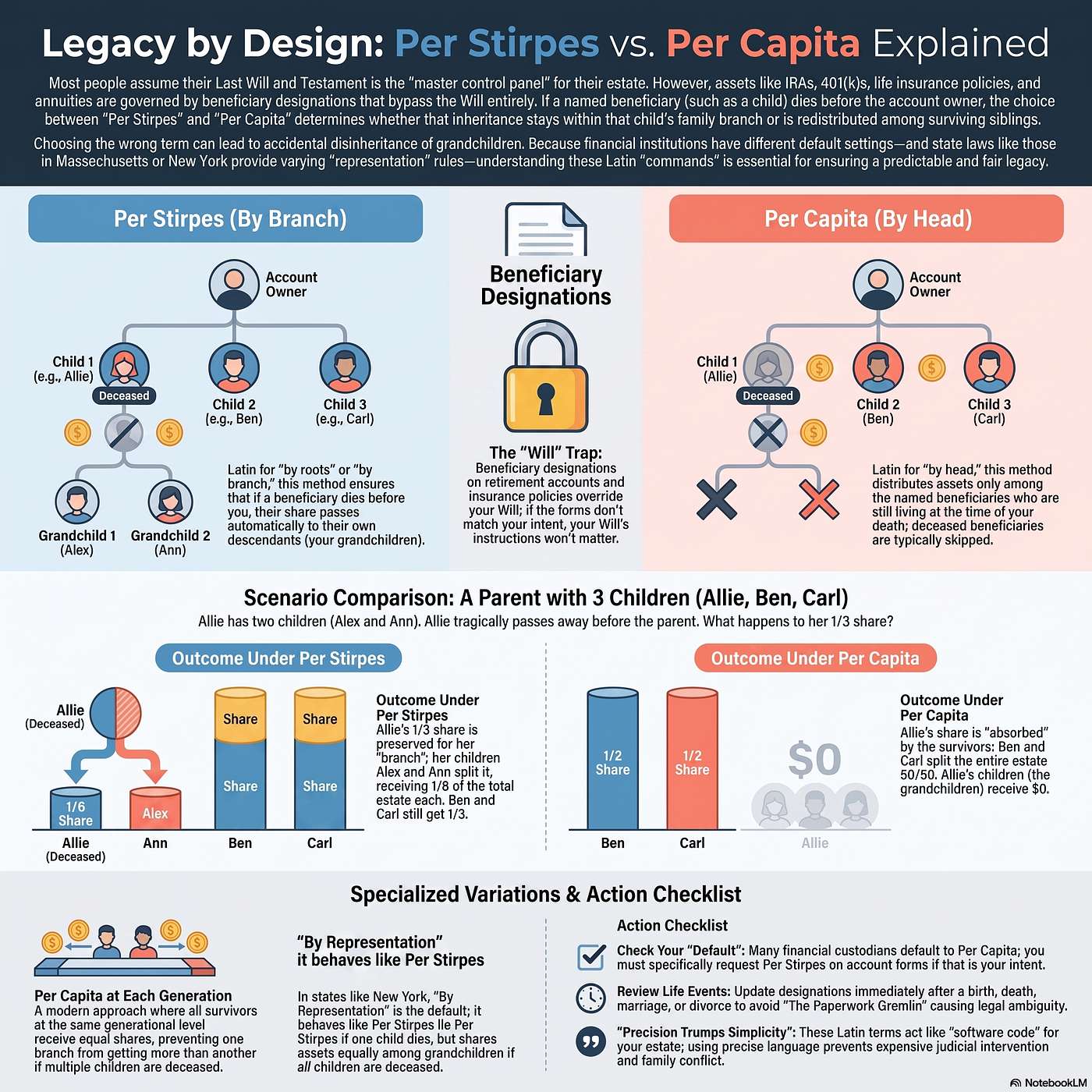
Loading summary
Transcript295 lines
- [00:01]
A
Hey, this is Ken Finnan, also known as a Series 7 whisperer. And my job is to get you passed the SIE exam. The series 7 exam, series 65, all the FINRA and NASA exams. So going forward, I'm going to be going a mix of like short little videos, long ones, maybe some podcasts about like interviewing some people who took the tests. But a lot of these are going to be where I use a external source to create a script and then I have somebody else read it because I stumble and mutter a lot and, and I think these are working really well. So let's get into it and we're going to have some fun here. And before we get into it, let's talk about one thing I do live Q and as every Tuesday night for the FINRA exams and every Thursday night for the NASA exams, 8pm Eastern on YouTube. Come have fun, ask questions about whatever you want, celebrate the wins, commiserate with the losses. But meet me every Tuesday night for FINRA stuff, every Thursday night for NASA stuff, live on the tube of you, and we can get this done, baby. Let's go.
- [00:58]
B
So imagine writing a check for $1 million to your grandchildren, right? You put it in a bank vault and then a corporate computer glitch just, well, it legally sets it on fire the exact moment you die.
- [01:10]
C
Which sounds completely absurd, right?
- [01:13]
B
It sounds like a dystopian novel or, I don't know, massive hyperbole, but it isn't. It is literally what happens every single day when financial advisors and, you know, just regular individuals misunderstand a two word Latin phrase.
- [01:27]
C
Yeah.
- [01:27]
B
So welcome to the Deep Dive.
- [01:29]
C
Yeah. We are looking at a legal landscape today that functions honestly like a financial trapdoor.
- [01:34]
B
A trapdoor, I like that.
- [01:35]
C
Because we all assume our final wishes are insulated from the chaos of the real world, right? Because they're written down, they're notarized, they have fancy stamps on them.
- [01:43]
B
Right. You pay a lawyer five grand and think you're safe.
- [01:45]
C
Exactly. But the reality is that the actual mechanics of estate planning, and specifically beneficiary designations, are incredibly, incredibly fragile. Like, shockingly fragile.
- [01:55]
B
And that's exactly why we're doing this today. We're undertaking a highly customized mission for you, the listener. Whether you're maybe you're currently grinding through flashcards, prepping for the series 65 or
- [02:08]
C
series 66 exams, or you're already a practicing fiduciary, right?
- [02:12]
B
You're out there trying to master the immense complexities of estate planning to protect your actual clients. This Deep Dive is built Specifically for
- [02:20]
C
you, because our mission here is to completely demystify the fundamental differences between two very specific asset distribution methods. We're talking about per stirpes and per capita.
- [02:31]
B
And let's just establish the stakes immediately because these are not just archaic terms that lawyers use at cocktail parties to sound sophisticated.
- [02:39]
C
No, not at all. These phrases are the plumbing of generational wealth. I mean, they dictate the flow of millions, potentially billions of dollars every single year.
- [02:48]
B
Yeah. And for the exam candidate listening, mastering the, you know, the mathematical differences between these concepts is just a core requirement for passing your test. You literally cannot get your license without this.
- [02:59]
C
And for the practicing wealth manager, I mean, it is the difference between executing a client's legacy perfectly and accidentally disinheriting their entire lineage, which is terrifying.
- [03:12]
B
Just a single checkbox on a standard form can literally erase a family line from an inheritance.
- [03:18]
C
It happens all the time.
- [03:19]
B
So to map out how this happens and more importantly, how to prevent it, we have assembled a massive stack of sources for this deep dive.
- [03:28]
C
We really went everywhere for this one.
- [03:29]
B
Oh yeah, we're diving into NASA, exam prep, analysis, state specific legal codes. We're going to look specifically at the statutory language in Massachusetts and Texas later
- [03:38]
C
on, which is fascinating. The differences there definitely.
- [03:41]
B
We've also got financial advisory case studies, insights from some really intense Reddit bar prep communities, and a highly critical sweeping
- [03:50]
C
study from the naic, the national association of Insurance Commissioners.
- [03:54]
B
Right. And that study details a massive structural confusion within the life insurance industry itself.
- [04:00]
C
It, it is a really dense set of data, but it highlights a critical reality for anyone managing money. I mean, precision is paramount. The law does not care what you intended to do. The law only cares what the document actually says.
- [04:13]
B
Well said. So before we map out the specific math of asset splitting, you know, calculating who gets paid and who gets cut out, we need to establish the foundational reason you are being tested on this so rigorously. Let's look at the licensing landscape.
- [04:28]
C
Right, the exam context.
- [04:29]
B
Yeah. If I'm sitting for the Uniform Investment Advisor Law examination, you know, the series 65, what exactly am I facing?
- [04:36]
C
So you're facing a pretty significant professional benchmark. This is established by NASA and administered by Fed and raised. And the series 65, I mean, it's a standalone beast.
- [04:47]
B
It really is.
- [04:47]
C
You are looking at 130 scored questions, a 180 minute time limit, and you have to get a 72.3% to pass.
- [04:54]
B
Which means what? You need 94 correct answers just to qualify as an IR.
- [04:58]
C
Exactly, 94 correct. And the series 666, which is the uniform Combined State Law Examination. That one is similarly demanding. It's 100 questions, 150 minutes, and requires a 73% pass. Pass.
- [05:09]
B
But the breakdown of those questions is what really matters for our deep dive today, right?
- [05:13]
C
Yeah. Because nearly 30% of the content on both of those exams heavily prioritizes laws, regulations, client investment recommendations, and fiduciary duty.
- [05:24]
B
And within that 30% block, beneficiary designations are just notorious. They are a massive, deliberate trap for candidates.
- [05:32]
C
Oh, absolutely deliberate. The test writers at NASA, they understand perfectly that these concepts are mathematically counterintuitive.
- [05:38]
B
Yeah. They want to catch you slipping.
- [05:40]
A
Right.
- [05:40]
C
They will absolutely test your ability to calculate distribution percentages when, say, a primary beneficiary dies before the asset owner. You have to know the mechanics cold.
- [05:50]
B
Because if you make a mistake in practice, out in the real world, you're violating your fiduciary duty and exposing yourself
- [05:58]
C
and your firm to massive litigation.
- [06:00]
B
Nobody wants that. So to avoid the lawsuits and to pass the exam, we have to translate the Latin. We need to look at the historical and legal mechanisms underlying these terms. So let's start with the first one. Per Stirpes.
- [06:13]
C
Okay, so Per Stirps translates directly from Latin to by branch or by root by branch.
- [06:19]
B
Got it.
- [06:20]
C
Right. Under this legal framework, you are fundamentally required to conceptualize the estate and really the family itself as a structural tree.
- [06:29]
B
Okay, so we're looking at a family tree.
- [06:30]
C
Exactly. The objective of a Per Stirps distribution is to preserve equal allocation across distinct family lineages. You are looking at the main branches of the family tree, regardless of how many individual descendants eventually populate those specific branches.
- [06:46]
B
Okay. Let me build a mechanical analogy for this to make sure I'm tracking. We shouldn't look at this like handing out slices of pizza to a room full of people.
- [06:54]
C
No, the pizza analogy falls apart quickly here.
- [06:56]
B
Right. So Purse d' oeufs functions more like a series of cascading waterfalls. Let's say the money is the water. It falls to the first primary ledge, which is the children.
- [07:06]
C
Right.
- [07:07]
B
And if a piece of that ledge is broken, meaning a child has died. The water doesn't just evaporate. Right. It doesn't flow backward up the waterfall favor backwards. No. It falls right through that crack to the smaller ledges directly beneath it, which would be the grandchildren. The water stays in its specific vertical channel.
- [07:24]
C
That is the exact legal plumbing of the concept. It's a great way to visualize it. We are fundamentally prioritizing the structure of the family over the individuals in it
- [07:34]
B
protecting the vertical geometry.
- [07:36]
C
Protecting the vertical geometry. And that geometry actually has its roots, no pun intended, in English common law. Because preserving land ownership meant preserving the family's political power and economic stability.
- [07:48]
B
Right? You had to keep the wealth intact within the specific bloodline.
- [07:52]
C
Exactly. You didn't want the estate fractured.
- [07:54]
B
So let's contrast that with the alternative method. Let's look at per capita.
- [07:58]
C
Okay, so per capita translates to by head.
- [08:01]
B
By head.
- [08:01]
C
And this method entirely abandons the vertical geometry of the family tree. It completely ignores it. It focuses exclusively on a raw headcount of living individuals within a highly specified group.
- [08:14]
B
Okay, so it doesn't care about the branches, the roots, the historical lineage.
- [08:18]
C
None of it. It only cares about the living, breathing heads that fit the exact definition of the class you named in your documents at the exact moment of death.
- [08:25]
B
Okay, so going back to my analogies, if per stir piece is a structured waterfall, per capita is just a census.
- [08:33]
C
A census? Yes.
- [08:34]
B
You essentially draw a circle around the defined group of people. You count who is standing inside the circle, and you divide the money equally by that number.
- [08:42]
C
That's the math.
- [08:43]
B
Yeah, but that immediately raises a massive liability question for, you know, an advisor or an executor who draws the circle and who is legally allowed to stand inside it.
- [08:54]
C
And answering that specific question dictates whether a family experiences a seamless transfer of wealth or a bitter multi year probate lawsuit.
- [09:05]
B
Right, because everyone wants to be inside the circle.
- [09:07]
C
Of course they do. So to understand who gets allowed in, we first have to pressure test the traditional highly protective method. We need to look at the strict mechanics of per stirps. The by branch method.
- [09:18]
B
Because it guarantees that specific flow of capital.
- [09:20]
C
Exactly.
- [09:21]
B
Okay, I want to bring in a concrete scenario from our sources. The Reddit bar prep communities use some really effective hypotheticals to drill these calculations into law students. So I want to borrow one to see how the waterfall actually functions. Let's introduce Grandma Sharon.
- [09:34]
C
I love the Grandma Sharon hypothetical.
- [09:36]
B
It's perfect. So Grandma Sharon has an estate valued at $300,000. In her will, she leaves her estate to my children. Per Stirrups. She has three children. Alice, Bob and Charlie.
- [09:49]
C
So if all three children survive. Grandma Sharon. The math requires absolutely zero effort.
- [09:55]
B
Right? Three branches, three living children.
- [09:57]
C
Alice gets $100,000, Bob gets $100,000, Charlie gets $100,000. Everyone is happy.
- [10:03]
B
But the series 65 exam, much like reality, is never that simple.
- [10:06]
C
No, never. The test writers will always introduce a mortality variable.
- [10:10]
B
Right? So here is the standard exam twist. Bob Predeceases Grandma Sharon, Bob dies before his mother. However, Bob had two children of his own. Let's call them B1 and B2. So the exact moment Grandma Sharon dies, Alice is alive, Charlie is alive, Bob is dead, but his two kids are alive. How does the calculation work under perstirpus?
- [10:32]
C
So under perhaps the estate is still divided at that first generational level.
- [10:37]
B
The children, Even though Bob is dead.
- [10:39]
C
Even though Bob is dead, the division happens regardless of whether all members of that generation are actually alive. We maintain the original geometry of the three branches.
- [10:48]
B
Okay, so the initial split is still strictly in thirds. Alice gets her $100,000 ledge. Charlie gets his $100,000 ledge. And Bob's share.
- [10:57]
C
Well, Bob's $100,000 does not return to the primary estate. It drops down his specific waterfall channel. Because Bob is gone, his $100,000 falls to the next level of his branch, which are his two children, B1 and B2.
- [11:10]
B
And they split it.
- [11:11]
C
They split Bob's share equally. B1 receives $50,000 and B2 receives $50,000. The grandchildren legally step into the shoes of their deceased parent.
- [11:20]
B
Okay, so the branch is totally preserved. But we need to look at who is potentially excluded here because this is a crucial exam fact and a vital
- [11:27]
C
real world reality for estate planners. Yeah, right.
- [11:30]
B
Spouses of deceased heirs received absolutely nothing under a per stirp's designation.
- [11:35]
C
Nothing. If Bob had a widow, she does not inherit Bob's share.
- [11:39]
B
Wait, if the goal is to protect Bob's family, why does his widow get nothing? I mean, she's raising his kids.
- [11:45]
C
Because the mechanism is designed to protect the bloodline, not the marital unit. The assets only flow down to genetic descendants or illegally adopted children.
- [11:54]
B
So spouses are just out of luck.
- [11:56]
C
Spouses, cousins, distant relatives. They are entirely invisible to a per STURPS calculation. The inheritance definitively stops at the first level of living descendants on that specific branch. The law assumes Grandma Sharon wanted her money to go to her direct descendants, not her daughter in law.
- [12:14]
B
Wow. Okay. I mean, I understand the protective intent. Grandma Sharon ensures that Bob's kids are financially secure, even though Bob couldn't be there to provide for them. Yeah, but if I run this math a different way, I see a massive built in structural inequity.
- [12:28]
C
Let's map it out. Where does the math break down for you?
- [12:31]
B
Okay, let's assume Alice also died before Grandma Sharon. But let's say Alice had five children.
- [12:36]
C
Okay? A larger family.
- [12:37]
B
Right? Under Presterps, Alice's $100,000 branch trickles down to her five kids. They split that $100,000 five ways, meaning Alice's kids get $20,000 each.
- [12:48]
C
Right.
- [12:49]
B
Meanwhile, Bob's two kids are still getting $50,000 each. So we have seven grandchildren in total, all from the exact same generational level. But simply because of the branches they were born into, these cousins receive vastly unequal amounts of capital. Where you're looking at $20,000 versus $50,000.
- [13:07]
C
Yeah. The resulting inequity is profound. And that exact mathematical flaw, the fact that cousins at the same generational level inherit wildly different amounts simply based on sibling headcounts, is the catalyst for the creation of alternative distribution methods.
- [13:22]
B
Because it just feels unfair.
- [13:23]
C
Exactly. Many test staters look at that outcome and find it completely unacceptable. They view their grandchildren as a single unified class of life loved ones. They do not want to penalize Alice's children simply because Alice had a larger family.
- [13:35]
B
And that desire for absolute head to head equality leads us directly into the strict per capita method. But as we look at the case law and the exam pro material, this is actually the most dangerous distribution method. If a professional does not understand the precise definitions involved.
- [13:52]
C
Strict per capita is incredibly rigid because per sturps creates those unequal shares for grandchildren. Testators pivot to per capita. But choosing strict per capita creates a massive and often entirely unintended consequence.
- [14:06]
B
And Finauer uses this specifically to filter out unprepared candidates.
- [14:11]
C
Without a doubt.
- [14:12]
B
Let's define the strict legal mechanism of per capita.
- [14:14]
C
The strict definition is the estate is divided equally only among the surviving members of an explicitly specified class.
- [14:21]
B
Okay. The surviving members.
- [14:23]
C
Right. Whoever fits the exact description written in the will and is legally alive at the precise moment the testator dies receives an equal share. If you are not in that specific class or if you died beforehand, you are legally invisible.
- [14:35]
B
Okay, let's run Grandma Sharon through this mechanism to see the damage. She has her $300,000 estate. Her will now says, I leave my estate to my children. Per capita.
- [14:45]
C
Same variable as before.
- [14:47]
B
Same variable. Alice and Charlie are alive, but Bob predeceases Grandma Sharon. Bob leaves behind his two kids, B1 and B2. What happens to Bob's channel in the waterfall?
- [14:57]
C
Well, there is no waterfall. Under strict per capita to my children, Bob's channel is permanently sealed off. Bob is dead, meaning he is no longer a surviving member of the class defined as children.
- [15:08]
B
So his $100,000 share does not fall to B1 and B2.
- [15:12]
C
Exactly. Instead, it is immediately reabsorbed into the primary estate pool. The executor looks at the surviving members of the children class, there are only two individuals left who meet that definition. Alice and Charlie.
- [15:23]
B
So Alice and Charlie absorb the entirety of the $300,000 they do. Alice receives $150,000, and Charlie receives $150,000. And Bob's children, the orphaned grandchildren, they are entirely disinherited. They receive absolutely zero.
- [15:37]
C
Zero. And this is the ultimate exam trap. Our sources from the legal prep materials highlight that this exact testing logic was required on the July 2019 MEE.
- [15:48]
B
The multi state Essay Examination for the bar, right?
- [15:51]
C
Yes. Test makers utilize the scenario because it tests a candidate's ability to separate their emotional assumptions from strict legal definitions.
- [16:00]
B
You can't let your feelings get in the way.
- [16:02]
C
Exactly. As a fiduciary, you cannot assume per capita is friendly to the next generation unless the surrounding language explicitly mandates it. On the series 65 and 66, if a Test question uses the phrase per capita without any other qualifying language, you must apply this strict or harsh logic.
- [16:21]
B
You have to select the answer where the surviving siblings absorb the inheritance and the grandchildren get screwed.
- [16:26]
C
Basically, yes. You select the disinheritance.
- [16:28]
B
Let's analyze the real world fallout of this, though. Because nobody drafts a will hoping their orphaned grandchildren end up destitute, while the surviving aunts and uncles get a massive windfall. I mean, that's Thanksgiving. Ruin forever.
- [16:39]
C
It's a disaster.
- [16:40]
B
So if strict per capita creates this horrific outcome, how do estate planners try to fix it?
- [16:45]
C
Why?
- [16:46]
B
While still avoiding the unequal cousins problem
- [16:48]
C
of presturfs, they attempt to fix it by altering the words that define the class. But as is incredibly common in estate law, trying to fix a rigid rule with broad language often makes the situation significantly worse.
- [17:03]
B
Enter the vague language trap.
- [17:04]
C
Enter the vague language trap.
- [17:05]
B
We are looking at the legal distinction between the word children and the word descendants.
- [17:10]
C
Precisely. A professional fiduciary reviewing a document must distinguish between a restricted class like children, which only includes the first generation, and an expanded class like descendants, which includes everybody. Right. Children, grandchildren, great grandchildren, and so on. If the will says to my descendants per capita instead of to my children per capita, the census circle we discussed earlier suddenly expands exponentially.
- [17:35]
B
It gets really crowded in that circle. Let's run the math on the expanded circle. Grandma Sharon has a $400,000 estate. Now her will reads to my descendants per capita. Let's assume a catastrophic scenario where all three of her children, Alice, Bob, and Charlie, die before she does.
- [17:53]
C
Terrible tragedy.
- [17:54]
B
Yeah, but they leave behind a total of seven grandchildren. How does the executor handle this?
- [18:00]
C
Because the Defined class is descendants. And all the first generation children are deceased. The surviving descendants are the seven grandchildren. Under the per capita mechanism, you count the living heads that fit the class definition. There are seven heads.
- [18:12]
B
Okay, so the $400,000 estate is divided equally by seven.
- [18:16]
C
Correct. Each grandchild receives an identical slice of approximately $57,000.
- [18:21]
B
Okay, mathematically that achieves the goal. It completely fixes the cousin inequality problem we found in presterpes. Every single grandchild receives the exact same amount of capital.
- [18:30]
C
It achieves the goal only in that specific highly symmetrical scenario where the entire first generation is deceased. But as an analyst, you have to stress test this language. What happens when the generations are mixed?
- [18:41]
B
What happens when the mortality isn't symmetrical?
- [18:43]
C
Exactly.
- [18:44]
B
Okay, let me map this out. Let's assume one child is still alive. Alice survives grandma Sharon. But Bob and Charlie both die.
- [18:52]
C
Okay.
- [18:52]
B
Bob leaves two children and Charlie leaves four children. So we have one living child and six living grandchildren. The will stipulates to my descendants per
- [19:03]
C
capita execute the census, count the heads in the descendants class.
- [19:07]
B
Well, Alice is a descendant, that is one. Bob's two kids are descendants, that is three. Charlie's four kids are descendants. That makes seven total heads inside the circle. So the estate is divided into seven equal shares.
- [19:18]
C
Look at the distribution. What does Alice get?
- [19:20]
B
Alice, the surviving daughter receives one seventh of the estate. She is reduced to a financial equal with her own nieces and nephews.
- [19:28]
C
Exactly.
- [19:29]
B
Under traditional per stirrups she would have received her full protected 1/3 branch share. But under descendants per capita, her expected inheritance is drastically diluted. She goes from expecting 33% of the estate to receiving approximately 14%.
- [19:44]
C
This is known as the dilution effect. When a document utilizes descendants per capita, every single living descendant across all generational levels receives an identical piece of the estate.
- [19:57]
B
It flattens everything.
- [19:58]
C
It legally treats a 60 year old surviving daughter exactly the same as a 6 month old infant great grandson.
- [20:04]
B
That is wild.
- [20:06]
C
And from a practical standpoint, this is an absolute disaster for most families. It devastates the financial planning of the surviving first generation. I mean, Alice is probably banking on that 33% for her own retirement.
- [20:19]
B
Oh for sure. It breeds massive resentment and it almost guarantees costly probate litigation as the surviving children attempt to challenge the validity of the document. This places estate planners and fiduciaries in an impossible binding. I mean prestirpes protects a branch but mathematically ensures unequal shares for cousins.
- [20:36]
C
Right.
- [20:36]
B
Strict per capita to children creates equality for the first generation, but completely disinherits the grandchildren. If a parent Dies?
- [20:43]
C
Yes.
- [20:44]
B
And per capita to descendants avoids disinheritance, but aggressively dilutes the surviving children's inheritance by flattening the generational hierarchy. All three traditional options contain massive structural
- [20:57]
C
flaws, which is exactly why the legal system was forced to evolve.
- [21:00]
B
They had to come up with something better.
- [21:02]
C
They did. To resolve the unequal cousins problem inherent in perps, and to simultaneously neutralize both the disinheritance and dilution problems of per capita, state legislatures engineered a hybrid statutory solution. This is the modern fix, and it is a critical concept for advanced wealth management.
- [21:20]
B
We are analyzing the concept of per capita at each generation, which, confusingly for test takers, is also frequently referred to in legal texts as modern per sturps, or by representation.
- [21:31]
C
Yeah, the overlapping terminology is a known friction point, but the underlying mathematical mechanics are brilliant. This hybrid model has become the statutory default in progressive probate jurisdictions like New York, New Jersey and Utah.
- [21:44]
B
And our sources specifically point us to analyze Massachusetts General Laws, Chapter 190B, Section 2709.
- [21:50]
C
Chapter 190B is Massachusetts Adoption of the Uniform Probate code. And section 2709 explicitly defines this hybrid process. It operates in three highly distinct sequential phases.
- [22:03]
B
Okay, let's break down the phases. If I'm looking at this hybrid model, the obvious first step has to be finding where the living people actually start. Right? You cannot distribute capital to a generation of ghosts.
- [22:15]
C
That is exactly. Phase 1. Identify the closest generation with survivors. The executor analyzes the family tree, top down, and stops at the very first generational level nearest to the deceased that contains at least one living individual.
- [22:29]
B
So in most cases, this is the children's generation. Yeah, if even one child is alive. That is your operational starting line.
- [22:36]
C
Correct.
- [22:37]
B
Okay, so phase one establishes the baseline. What is phase two?
- [22:40]
C
Phase two is calculating the initial shares. The executor divides the total estate into equal shares based on the number of surviving individuals in that baseline generation plus the number of deceased individuals in that same generation who left living descendants of their own.
- [22:53]
B
Okay, so you allocate one full share to each living child.
- [22:56]
C
Yes.
- [22:57]
B
Up to this point, the mechanism is completely identical to traditional pursed herbs. The lived children receive their designated protected cut.
- [23:06]
C
Exactly.
- [23:06]
B
But phase three is where the math diverges, because under classic percepts, the shares belonging to the dead children would drop straight down their specific vertical channels to their specific kids. But you are saying that does not happen under per capita at each generation. So where does the money go?
- [23:23]
C
It enters a collective holding pool. In phase three, the executor takes all the remaining shares the capital that belonged to the deceased children and pools them together into a single unified fund. Once that fund is established, the executor divides it equally among all the surviving grandchildren whose parents are deceased.
- [23:42]
B
Okay, I need to map this out with hard numbers to see how it actually resolved the inequities. Let's utilize the Texas case study from our sources. We have an estate valued at $800,000 in Texas.
- [23:52]
C
Good size estate.
- [23:53]
B
Yeah. The parent dies, leaving three children. Alice, Ben, and Clara. Let's assume Ben and Clara both predeceased. The parent. Alice survives. Let's run phase one and two.
- [24:02]
C
Okay, so Alice's generation is the closest with a survivor. The executor divides the estate into three shares. Because Alice is alive and both Ben and Clara left descendants, Alice receives her 1/3 share, which is roughly $266,667.
- [24:17]
B
Okay, Alice is taken care of. Now we execute phase three. Ben had two children. Clara only had one child. Under traditional per stirps, Clara's only child would receive Clara's entire 1/3 share. Meaning Clara's kid gets $266,667. Ben's two kids would be forced to split Ben's 1/3, leaving them with roughly $133,333 each. We are back to the unequal cousin problem.
- [24:42]
C
But observe the mechanism of per capita at each generation. Under the Texas probate code, the executor takes Ben's 1/3 share and Clara's 1/3 share and intercepts them before they flow down the vertical channel.
- [24:52]
B
They stop the waterfall.
- [24:53]
C
They stop the waterfall. They are pooled together. This creates a collective fund containing 2/3 of the total estate, which is approximately $533,333.
- [25:01]
B
And then the executor counts the heads of the orphaned grandchildren. Ben has two children. Clara has one. There are three grandchildren in total who require a share of. The executor takes that pooled 533,333 towers and divides it equally by three.
- [25:16]
C
Calculate the final distribution. What do they get?
- [25:19]
B
All three grandchildren receive exactly the same amount. They each receive approximately 177,777 tallers. That mathematically eliminates the cousin inequity entirely. It treats the grandchildren as their own distinct class of equals, completely divorced from the accident of how many siblings they happen to have.
- [25:37]
C
Exactly. By analyzing the mechanics, we can see exactly why this has become the model modern default in so many jurisdictions. It achieves two massive, previously incompatible goals. Right. First, it completely protects Alice. Her share is not diluted by the expanding number of grandchildren. She receives her full one third, just as she expected. Second, it guarantees absolute horizontal equality within the grandchild generation. David, Emily and Frank, the cousins, all receive an identical disbursement. There is no structural resentment.
- [26:05]
B
It is a really remarkable piece of legal engineering. It extracts the vertical branch protection from Per Stirpes and merges it with the horizontal equality from per capita.
- [26:16]
C
It really is the best of both worlds.
- [26:18]
B
And if I am taking the Series 65 tomorrow, I understand how to calculate the vertical branches. I know how to execute the harsh disinheritance for strict per capita, and I know how to calculate the holding pool for the modern hybrid.
- [26:30]
C
The theory is mathematically sound. You'd pass that section of the exam.
- [26:34]
B
Awesome.
- [26:35]
C
However, in the practical reality of financial advising, the mathematical perfection of these probate statutes is frequently rendered entirely irrelevant.
- [26:44]
B
Wait, really?
- [26:45]
C
Oh, yeah. If the paperwork is wrong, the law cannot save you. And this brings us to the most dangerous systemic liability discussed in our sources.
- [26:53]
B
Okay, so we are shifting from the legal theory of probate to the actual operational infrastructure of the American banking system.
- [27:00]
C
Correct.
- [27:01]
B
Because there is a fundamental widespread misunderstanding about how wealth actually transfers upon death.
- [27:07]
C
The misunderstanding revolves around the legal distinction between non probate and probate assets. The vast majority of the public operates under the assumption that their last will and testament is the supreme unassailable governing document of their entire financial life.
- [27:23]
B
It's what you see in movies. The reading of the will.
- [27:25]
C
Exactly. The dramatic reading. But it is not the supreme document. An overwhelming percentage of a family's liquid wealth is actually held in non probate assets. We are discussing individual retirement accounts, your IRAs, your 401k plans, transfer on death brokerage accounts and life insurance policies.
- [27:43]
B
So if the will doesn't govern them, what does?
- [27:45]
C
The contract does? Non probate assets pass completely outside the jurisdiction of the probate court. A will, regardless of how meticulously it is drafted by a premier estate attorney, is. Is legally powerless against a beneficiary designation form on file with a financial institution.
- [28:01]
B
Wait, wait. If your notarized will explicitly states, I leave everything to my children, per stirpas, but your 401k beneficiary form simply lists my children. What happens?
- [28:12]
C
The 401k custodian will execute the transfer based exclusively on the form, entirely ignoring the will.
- [28:18]
B
Hold on. You were telling me a standardized web form legally supersedes a notarized state sanctioned legal document?
- [28:25]
C
Yes.
- [28:25]
B
How does a custodian's terms of service Override a testator's explicitly written formalized intent.
- [28:32]
C
It comes down to the friction between contract law and estate law. When you open a retirement account, you are signing a legally binding contract with custodian, Vanguard, Fidelity, Schwab. Whoever it is, that contract stipulates exactly how they will distribute the funds upon your death. It is a private agreement.
- [28:48]
B
This introduces what the advisory sources refer to as the custodian default trap.
- [28:52]
C
Yes, the the default trap.
- [28:54]
B
Because when a client opens an account, they are prompted to list primary beneficiaries. They list their three children. 33%, 33%, 34%. But if they do not actively manually select a specific distribution method like Per Stirpas, the custodian automatically applies their own proprietary default contract language.
- [29:11]
C
And we have to ask why custodians apply these defaults? It is not arbitrary. It is an aggressive strategy for corporate risk mitigation.
- [29:19]
B
Okay, explain the mechanism of that risk mitigation. Why do custodians overwhelmingly default to strict per capita distributions?
- [29:29]
C
Because strict per capita shifts the burden of proof and minimizes operational friction. If a custodian defaults to Per Stirps and a primary beneficiary dies, the custodian is now legally obligated to distribute funds to that deceased person's descendants.
- [29:45]
B
Right. They had to find the kids.
- [29:46]
C
But the custodian doesn't know who those descendants are. They don't have their Social Security numbers, their birth certificates, or their contact information. To execute a purse Stirps distribution, the custodian would essentially have to hire private investigators to locate the grandchildren, verify their identities, and ensure there are no undisclosed out of wedlock or adopted children who also have a claim.
- [30:06]
B
That sounds incredibly expensive.
- [30:08]
C
It is an administrative nightmare. It exposes the institution to immense liability if they miss someone.
- [30:15]
B
So by defaulting to strict per capita, the custodian is simply saying, we only pay the people whose names and Social Security numbers are already explicitly typed into our database.
- [30:25]
C
Exactly.
- [30:26]
B
If one of the named children dies, the custodian's computer system simply redistributes that percentage to the surviving named siblings. They count the living heads on the form, cut the checks, and close the file. It is cheap, fast, and legally defensible. For the corporation.
- [30:41]
C
That's it exactly. But for the family, it is catastrophic. A client can spend $5,000 on an airtight Pers Stirpas s plan. But if that client logs into their 401k portal, types in the names of their three kids, and fails to locate and check a buried microscopic box that says Per Sturps or fails to Submit a custom corporate writer. If one of those children dies, the custodian's automated system will immediately disinherit the grandchildren. The custodian's risk mitigation software literally overrides the family's generational intent.
- [31:12]
B
This is a terrifying level of systemic fragility. It is a simple clerical emission that can vaporize a million dollar inheritance in a millisecond.
- [31:20]
C
It happens every day for the candidate
- [31:22]
B
studying for the series 65 or 66, or for the practicing investment advisor representative. What is the fiduciary mandate here? How do you prevent this?
- [31:32]
C
The mandate is proactive, relentless compliance. A practicing IR cannot assume the client's paperwork is aligned with their estate plan. You must conduct systematic, comprehensive beneficiary audits for your clients annually, every year. Every single year. You have to extract the actual finalized designation forms directly from the custodians and cross reference them against the client's estate documents. If the estate plan demands per Stirpus, you must secure physical or digital confirmation that the per Stirpas election is explicitly registered and accepted by the custodian's legal department.
- [32:06]
B
Don't just take the client's word for it.
- [32:08]
C
Never. Furthermore, you must verify the custodian specific operational definitions. Some institutions will not even accept custom instructions without a medallion, signature, guarantee or supplementary legal rider.
- [32:19]
B
So if an advisor fails to conduct that audit, they are breaching their fiduciary duty. They are allowing a corporate custodian's default settings to gamble with a client's generational
- [32:29]
C
wealth, and they could be sued for it.
- [32:31]
B
Rightfully so. And the danger of these default forms is amplified exponentially by another massive structural failure uncovered in our sources. It turns out that different sectors of the financial industry do not even possess a shared vocabulary for these terms.
- [32:46]
C
This is where the legal theory collapses into operational chaos. The national association of Insurance Commissioners, the naic, conducted a sweeping, critical study on consumer confusion within the life insurance industry.
- [32:59]
B
And why did they initiate that study?
- [33:01]
C
The study was initiated because state insurance departments were seeing a massive spike in consumer complaints regarding unintended payout distributions.
- [33:09]
B
The NAIC study highlights a fundamental language barrier between financial planners and insurance providers. They discovered that financial planners, the fiduciaries helping you map out your comprehensive retirement and estate strategy, generally interpret the term per capita to mean per capita by all surviving descendants, which, as we mapped
- [33:29]
C
out earlier with the expanded census circle, means if a named child dies, the financial planner assumes the grandchildren will automatically step up and receive an equal share alongside the surviving children.
- [33:40]
B
But the insurance companies, the massive corporate entities actually holding the capital and writing the death benefit checks utilize a completely
- [33:48]
C
different dictionary, a completely different operational definition.
- [33:51]
B
They interpret per capita strictly as per capita by surviving beneficiaries, meaning the capital is exclusively restricted to the specific individuals named on the policy. If a named beneficiary dies, their descendants are completely cut out. The death benefit is simply consolidated and split among the remaining named individuals.
- [34:12]
C
We have two massive pillars of the financial industry, the advisory sector and the insurance sector. Speaking entirely different operational languages, but using the exact same Latin phrase to do it. It is a recipe for systemic failure.
- [34:27]
B
Let's walk through the NAIC's primary case study to illustrate how this miscommunication destroys a family's financial security. Let's look at Melinda.
- [34:35]
C
Okay. Melinda.
- [34:36]
B
Melinda is a widow. She purchases a substantial life insurance policy, and her explicit intent is to designate her three children as equal beneficiaries. John, Betty, and Susan. 33% each.
- [34:48]
C
Okay. Straightforward so far.
- [34:49]
B
But before Melinda passes away, a tragedy occurs and John dies. John leaves behind two children of his own, Mary and Fred. So at the time of Melinda's death, she has two living children, Betty and Susan, and two orphaned grandchildren, Mary and Fred.
- [35:04]
C
So if a financial planner is advising Melinda and they establish the policy utilizing standard, unqualified per capita language, the planner is likely operating under their industry's assumption that per capita implies a distribution by descendants. The planner explicitly assures Melinda, rest easy, if John predeceases you, your grandchildren, Mary and Fred, are protected. They will step up and receive a share of the death benefit.
- [35:29]
B
But the financial planner does not adjudicate the payout.
- [35:32]
C
No, they don't.
- [35:33]
B
The insurance company's claims department does, based strictly on the language in their proprietary contract.
- [35:39]
C
And because the insurance contract rigidly defines per capita as limited exclusively to the surviving named beneficiaries, the claims adjuster looks at the policy. The policy names John, Betty, and Susan. John is deceased. Therefore, the insurance company takes John's 33% allocation and splits it between the surviving named individuals, Betty and Susan.
- [36:01]
B
So Betty receives 50% of the total death benefit.
- [36:03]
C
Yeah.
- [36:03]
B
Susan receives 50%. And John's children, Mary and Fred, receive absolute zero.
- [36:09]
C
Even though Melinda's fiduciary advisor explicitly promised her that the grandchildren were protected. The gap between the advisor's intent and the insurer's execution is a legal chasm.
- [36:19]
B
Why do insurance companies insist on this strict interpretation? I mean, they have to know it's confusing people.
- [36:24]
C
It returns to the concept of operational friction and risk mitigation. Insurance companies are heavily regulated by state entities that demand swift Definitive claims processing actuarially and administratively. It is infinitely faster and cheaper to divide a payout among surviving known entities than to pause a payout, launch an investigation to identify unknown descendants, verify their legal status, and expose the company to potential lawsuits if a descendant is missed.
- [36:53]
B
This raises a massive regulatory question. How can we possibly protect consumers when the industry itself cannot agree on the basic definitions of its own terminology?
- [37:02]
C
The NAIC study concluded that this specific inconsistency leads to unintended devastating distributions of life insurance proceeds every single day. Intended beneficiaries are impoverished, and the policy owner's fundamental objectives are completely defeated.
- [37:16]
B
So what did the NAIC suggest we do about it?
- [37:18]
C
The NAIC recognized that you cannot simply train consumers to understand arcane legal differences. I mean, they're not going to read the dictionary for fun. They recommended systemic structural reform. The NAIC is pushing for the creation of universal consumer guides for beneficiaries that must be legally mandated for distribution at the time of policy application.
- [37:39]
B
What would these guides entail?
- [37:41]
C
They would require mandatory illustrative charts, actual visual family trees mapping out the cascading waterfalls showing the consumer exactly how the proceeds will be distributed under various mortality scenarios. Furthermore, the NAIC is pleading for the standardization of definitions across all financial sectors.
- [38:00]
B
Yet everyone on the same page, right?
- [38:02]
C
Estate planning, financial planning, and insurance must align so that per capita dictates the exact same mathematical execution, whether you are looking at a probated will, a 401k custodian form, or a life insurance contract.
- [38:15]
B
But until that sweeping standardization is codified into law, it remains entirely on the shoulders of the advisor, the fiduciary, and the individual consumer to relentlessly double and triple check the fine print of every single account. It is the ultimate buyer beware scenario. It really is. Let's synthesize the core legal and operational mechanics we've uncovered today, specifically for the exam candidates who need to execute these calculations under pressure, and for the fiduciaries managing actual client wealth.
- [38:45]
C
Yeah. Let's bring it all together for the
- [38:46]
B
series 65 and 66 exams. If a scenario dictates per stirpes, you are protecting the vertical branch. The capital flows down the family line to the descendants, stepping into the shoes of the deceased. Surviving siblings do not receive a windfall.
- [39:00]
C
Correct.
- [39:00]
B
If the scenario utilizes strict per capita, you must execute the harsh headcount. You assume it means strictly the surviving members of the named group. If it is children per capita and one child is deceased, the surviving children absorb the entire share and the grandchildren
- [39:16]
C
are completely disinherited and you must memorize the modern statutory hybrid per capita at each generation. This model identifies the closest living generation, allocates the initial shares, and then pools the remaining shares of the deceased, splitting that collective fund equally among the next level of descendants to ensure horizontal equality among cousins.
- [39:37]
B
Per stirpes protects the vertical branch. Strict per capita executes the strict headcount. The specific phrasing of the class children versus descendants dictates the size of the census circle. And in the real world of wealth management, you must operate under the assumption that your client's will is powerless against the custodian's contract.
- [39:56]
C
A single unchecked box on a digital platform can instantly dismantle a lifetime of careful, expensive estate planning.
- [40:03]
B
Which brings us to a final lingering thought. Consider the sheer staggering volume of generational wealth currently sitting in passive 401k IRAs and life insurance policies across the United States. We are talking about trillions of dollars.
- [40:16]
C
Trillions.
- [40:17]
B
Now factor in the custodian default trap and the inter industry language barrier we just dissected how many millions, perhaps billions of dollars will be quietly, legally and permanently transferred to the wrong family members over the next decade simply because someone didn't fully comprehend the legal mechanics of a default checkbox on a standardized web form?
- [40:36]
C
It is an invisible crisis of wealth transfer. The digital ink on those custodian forms isn't just dictating a financial transaction. It is actively, permanently rewriting family histories.
- [40:48]
B
That illusion of permanence, that assumption that our wishes are safe once they are written down, is exactly what we have to fight against through continuous auditing and absolute precision. You cannot simply set it and forget it. I want to thank you for joining us on this incredibly dense, highly technical deep dive today. If you are taking the series 65 or 66 exam, remember the branches, remember the heads, and analyze the specific wording of every single question. And if you're managing your own family's wealth, log into your retirement portal tonight. Audit your forms because those tiny Latin words, they dictate everything.