← Service Business Mastery for Skilled Trades: HVAC, Plumbing & Electrical Home Service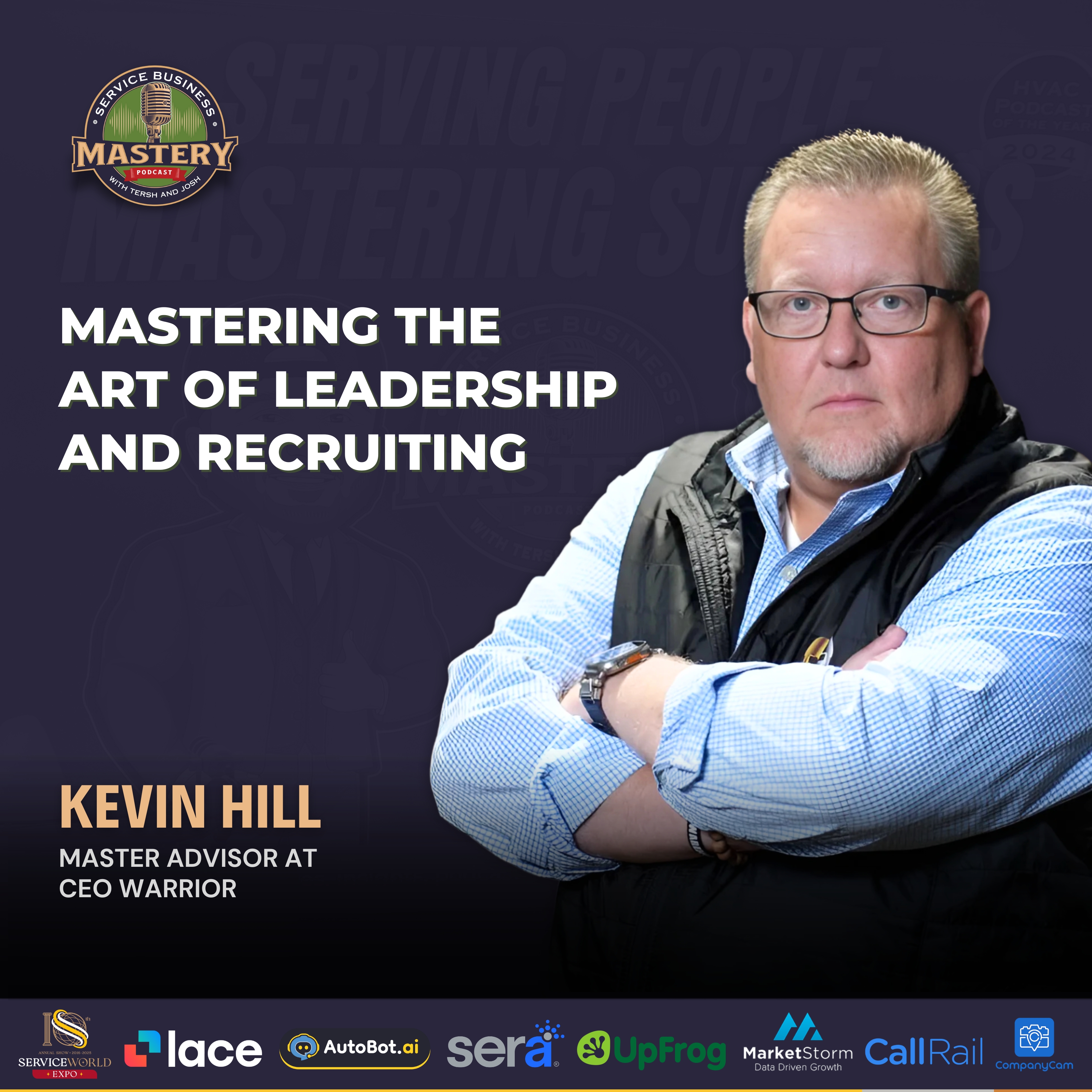
Service Business Mastery for Skilled Trades: HVAC, Plumbing & Electrical Home Service
The Accountability & Recruiting Blueprint for Trades Leaders to Build Teams That Stay - Kevin Hill
00:42:01
Learn how to automate tasks, save time, and increase your profit. No Coding required! 👉 Enroll Today - __________________________________________ Get Ready: TAP Into the Future | October 3-5, 2025 | Savannah, GA Don’t miss 3 dynamic days of...
Loading summary
Transcript130 lines
- [00:00]
Kevin Hill
You don't have a good culture. I don't care how good your recruiting is, those people will either not come or when they do show up, they won't stay. If you don't have good leaders, how many times have you heard people don't leave bad companies, they bad leaders, they leave bad managers, right? So you have to have good leaders that create a good culture that now creates an environment where people want to go work.
- [00:26]
Podcast Narrator
Are you looking for valuable business advice to reach that seven figure revenue mark? Do you want actionable tips to properly navigate through every business challenge you encounter along the way? Let Tersh Blissett and Josh Crouch be your guide in getting you to the top here at Service Business Mastery. Tune in as they sit down with world renowned authors in business leadership and personal growth who share valuable insights about management, marketing, pricing, human resources and so much more. Let their nuggets of wisdom gold guide you in owning a thriving, profitable and ever growing business. Here are your hopes hosts Tersh and Josh.
- [01:12]
Sponsor Announcer
If you're a contractor with multiple CSRs, check out this service Business Mastery podcast partner Lace AI Lace uses Cutting Edge AI to analyze your phone calls, uncover lost revenue opportunities and empower your CSRs to convert more leads. You can significantly increase revenue without spending extra on marketing or hiring. By using LACE AI to boost your conversion rates for the first time, you can gain deep insights into customer needs at scale with minimal effort. Elevate your call center to achieve industry leading booking rates and revenue. Visit www.lace.AI to book a demo today. Now back to the show.
- [01:55]
Tersh Blissett
Yo Joshua, really fast. I want to talk about online scheduling for the trades and how they should be affordable, effective and easy to manage. A really quick second here to share a little bit about the latest group of experts that we've teamed up with Autobot AI. Our team of industry experts has developed best in class scheduling of app that seamlessly integrates with your CRM. Every book job goes directly into your software and becomes one of our advanced marketing analytics which is really cool. We can automatically select the marketing campaign of your choice by based on how the customer came to your site.
- [02:30]
Josh Crouch
Yeah Tersh, those industry leading analytics tells you everything that you're going to want to know about your lead, where they came from, what they did before scheduling and what page they converted on other things. On average about 75% of people who started booking with our app completed. But we'll give you a more granular reporting that shows conversion rates based on marketing source and medium to help improve your marketing efforts.
- [02:51]
Tersh Blissett
So honestly, with no contracts affordable monthly rates and you really don't have anything to lose. And so it's, it's a great program to try out. And if you use SPM when you go to sign up for it, you'll actually save fifteen hundred dollars on the setup fees. Honestly, give it a shot. Tell us what you think. Hello everyone out there in podcast world. Hope you're having a wonderful day. You're listening to or watching the Service Business Mastery Podcast. I am one of your hosts, Tersch Blissett, sitting virtually next to my co host, Joshua Crouch. And today we have Kevin Hill from CEO Warrior on the show and we're going to talk a little bit about leadership and some good jazz about that. Fun fact. Josh and I actually met at CEO Warrior in person for the first time.
- [03:31]
Josh Crouch
If we want to consider it magic. And maybe it's not magic in Tertia's world, he probably thinks it's not magic. He's like, God, why did I ever get connected with this Yahoo. The everyday torture. And me blowing your phone up like I did yesterday.
- [03:43]
Tersh Blissett
It's funny. So yesterday I left the house, I got a new phone and I thought that it was finished updating. Well, it wasn't. It stopped updating whenever I left the WI fi. And so I was gone for like four or five hours. And I came back to a gazillion messages from Josh because I had no cell service the whole time I was gone. It sure is quiet. It's nice. This is a nice day.
- [04:03]
Josh Crouch
There's a reason that I called my marketing company Relentless Digital. It is a personality trait. If I need an answer, I will follow up until I get an answer one way or another. Sometimes it rubs people the wrong way. Most times, most people. I mean, ChatGPT has helped me like really reframe my messaging. So I'm not an a hole.
- [04:24]
Kevin Hill
Do you want your marketing company not to be relentless?
- [04:27]
Josh Crouch
Awesome, Kevin, you do a quick introduction on yourself for those that don't know who you are.
- [04:32]
Kevin Hill
Yeah, sure, absolutely. So again, my name is Kevin Hill. I'm director of training and master advisor at CEO Warrior. So I've been involved with CEO Warrior since 2016. As a member. I worked for a company out of Charleston, South Carolina that was an H VAC electrical and plumbing company. We also did some crawl space and some two day bath. A growing company. Well, let's let me start that over. We were a struggling company and then we met the owner of our company met Mike Aguilera, who was the founder of Seagull Warrior. And over the years we Grew the company. That company sold to a private equity firm. When my time was over with the private equity firm, I moved into a master advisor role with CEO Warrior. Prior to that, I had owned a couple other different companies, a recruiting company, which is, I think, the reason why we can talk about recruiting today. For 17 years I was in recruiting, and then prior to that I owned a recycling company, various jobs in between. But my recycling company was food waste recycling. So did that for a number of years and sold that organization for profit as well.
- [05:40]
Tersh Blissett
I just thought you just threw that in trash.
- [05:42]
Kevin Hill
What's that Involved large restaurants, restaurant chains, grocery stores. We would ask them to separate their trash and their food waste, their cuttings from making food that wasn't eaten at the table and or at the grocery stores. The meat trimmings, the food that wasn't made, prepared, food that wasn't used, was all dumped together. And then that mixed with some level of carbon tree trimmings, what have you at the landfills become compost soil. And then we sold the compost soil to the farms, who then gave the organic material back and fruits and vegetables to the restaurants. And it created this nice little green circle, if you will.
- [06:22]
Josh Crouch
I talked about Jared Williams, who has the wealthy plumber group. He had a plumbing company, sold it and he's in pressure Washington and he's growing that like crazy. And we. I met someone, I'm actually wearing my shirt today for the last spartan race. We did, built and sold a outdoor lighting company. That's all he did is outdoor lighting and like hanging lights for holidays and stuff like that. And really successful, profitable business. Now he teaches other people how to do that. It's wild. Like the things we're so inundated with. H vac, plumbing, electrical. It's like there is a huge world of service companies out there. We just have to keep our eyes.
- [06:54]
Kevin Hill
Open and be like, hey, I used to have people pay me for dirt. They laugh, but it's a true statement. They literally paid me really good dirt that made their vegetables and gardens grow and grass look really good. But they paid me for dirt.
- [07:07]
Tersh Blissett
So let's talk about leadership. How do you know if you're a good leader?
- [07:11]
Kevin Hill
I don't know. I think of leadership is. It's not just a title. A lot of people have the title of leader. And leadership takes action. Action every day. You have to lead. You have to lead by example. I don't know how many years ago there was this. I wouldn't even try to butcher who came up with it, but servant leadership was the mentality that came out, right? And a lot of people understand it, a lot of people don't.
- [07:35]
Josh Crouch
Can you explain it for a little bit more for people who haven't heard that, or maybe they've heard it, but they don't really fully understand what it means.
- [07:40]
Kevin Hill
And I'll give you my definition of what servant leadership is, right? So I think of servant leadership as everyone knows what the traditional org chart looks like, right? They think the leader sits on the top of this org chart, right? And, and often enough, especially old school home services. I jokingly say the old school service meeting, right? You come in Monday morning, you know, some gruff looking guy standing in front of the meeting, and it's this, you suck, you suck. You're cool, you suck, you suck. Go get me five stars. I need five stars. I need more revenue. I need happy customers, right? Then you were the leader because you were the ones literally sitting in front of the meeting, right? You were the one talking, giving the demands or the commands or whatever. And scratch all that. That's not a leader, that's a dictator. And there's no room for that. So the leader, I flipped that upside down as what I thought was a servant leader and what I defined as a servant leader was a person that I pretty much worked for my entire team. I was the resource for my entire team. Did I have slightly more authority than everyone else? Absolutely. But I was there to be a resource. I was there to make sure that they not only had clear expectation of what I expected them to do, ultimate clarity of their job, full expectations of what needed to be done, and then my job was to hold them accountable.
- [09:05]
Tersh Blissett
People say they want to be held accountable, but then once you start to hold them accountable, then they're like, oh, you're just a jerk.
- [09:12]
Kevin Hill
Tersh. You're 100% correct. I think. Funny, a lot of people in the CEO warrior world, they watch this, they're going to start chuckling right now. Because there is a term that I use almost every day, whether it's coaching, whether it's me on stage with that silly little microphone, but it's a little equation and it's clarity plus alignment equals accountability. And in my world, you cannot have accountability if you don't have clarity and alignment. Like, it just doesn't exist. It's like one plus one equals two. You can't get to two without one plus one. Now there's a bunch of math. People are going to say, yes, you can give me a whole bunch of argument about math. Let's just Say that one plus one equals two. You can't have accountability if there isn't clarity. The expectations aren't there. If someone doesn't know how, what's expected of them, how do you hold them accountable to it if they don't have clear expectations or a why? And don't get me wrong, I still live in a time where I, I grew up in a world where there was no participation awards. I didn't get a ribbon because I showed up.
- [10:13]
Josh Crouch
And those are called the good old days. Kevin.
- [10:16]
Kevin Hill
Yeah, right. I didn't get a second place ribbon because I showed up today. Right. It that wasn't the world I grew up in.
- [10:23]
Josh Crouch
Or you didn't get a tip because you went and did your job.
- [10:25]
Kevin Hill
Exactly. Exactly. So I'm going to trigger turf. I didn't have to be explained why. When I grew up, if someone told me to do something, whether it was a boss, a leader, my dad, an elder in my family's whatever it was right. They told me to do something, I just did it. Now there's a why. The next explanation, there's an alignment part. Why are we doing it? Everyone's on the same page. But here's the thing. If you have those two pieces, accountability becomes a little bit easier. And I think an upper level of leadership is when you get the person's buy in like leadership. 2013-01-1401 right. College level is when you get to say tersh. Doesn't that make sense? Or even better yet, terse. What do you think should be the what should what do you think you can be held accountable on a daily basis? What do you think your level of expectation should be when you're telling me what it is that I get to hold you accountable to your own. It's my plan to begin with. I just get you to say it like that type of level of communication. Unfortunately. Does it take you a little bit more time? Yes. Without that again, I just don't believe you can have accountability. And when you don't have that is when you get a lot of that. I can't believe you're holding me accountable. You're a jerk. You're micromanaging me.
- [11:40]
Tersh Blissett
I followed your steps actually with one individual. Take this with a grain of salt because that individual is a piece of shit. Start with but I gave them the option to let me know what they wanted, how they want to be held accountable. Because I was at wits in I was like I we, we've got all of the guidelines. Everybody else follows these rules and Process of procedures. What will you do? And I'll hold you accountable to that. And they're like, oh, well, I think that you should do this. I think that we should be doing this. And like, okay, I can agree with that. Held them accountable to that. And then they want to blow up. Like, they just didn't like being held accountable at all, no matter what.
- [12:18]
Kevin Hill
As leaders, we have a choice. We can create clarity or react to chaos. Like, there's a choice you have. I don't thrive in chaos. And there are. Some people thrive and live in chaos all day long. That's not me. It's too stressful for me. Make me work too hard. Right. I'd rather have ultimate clarity. And again, now you have someone who doesn't want to be held accountable. Well, then there's steps of improvement or steps of promoting them to the competition as well.
- [12:45]
Josh Crouch
That's what Tersch did with this individual. That person was released to new opportunities, and I got to hear the whole story.
- [12:53]
Kevin Hill
Some people don't deserve the opportunity to be at your company.
- [12:56]
Josh Crouch
Well, that could also come back, like, you know, in a certain point, and to be fair, like, you know, Tertia, we've worked on him and I work on a lot of other things outside of this company. So, like, he was essentially hiring warm bodies, too. Like, he's getting warm bodies in that could run calls and so some of that. And he knows, I'm sure if we held him to the fire, he would say, yeah, I could do better on the hiring process in the front end. But that's also an opportunity. For anyone listening to this, if those are the people you have in your organization, you feel like what Tersh did, in my opinion, you need to go back to the front of the cycle and figure out who you're hiring, because you're not hiring good people. You're hiring, and I've been there. The first H Vac company I worked at, anyone with a pulse that knew how to read a gauge was getting a job because I needed text and I had no idea what I was doing. These guys would come in and I said, one guy, remember, because we still had paperwork at this time, 2013, 2014, he come in and had his paperwork in. And the dude smelled like a freaking chimney of smoke. Like, literally his paperwork, he'd leave it on my desk and it would just stink up the office. It was so bad. He was just like a chain smoker. But like, people, like, we were letting people's house they were having conversations with three to five feet apart from Someone and imagine what the homeowner's thinking. Because we have this type of person in the home and we're letting them in their home saying, yeah, they're great.
- [14:14]
Kevin Hill
Texts, they're great people.
- [14:15]
Josh Crouch
They're going to take care of you. They're not going to steal anything.
- [14:17]
Kevin Hill
Yeah. And then a lot of business quality as well, by the way, while they're. While they smell it.
- [14:24]
Josh Crouch
He should have been our best salesman for indoor air quality.
- [14:27]
Kevin Hill
Yeah. Yeah, you would think, right?
- [14:28]
Josh Crouch
We've had some of that stuff. When I came over to the. The marketing side was we had some people come in and then within like four to six months, the alignment and stuff wasn't there. After we got them, we tried to get them on the same page and they were kind of lazy and weren't doing the things they were supposed to. So we put some systems in place. But then we realized, like, the hiring cycle needed to be better and it needed to be more thorough and we needed to really have people almost disqualify themselves through an applicant tracking system where it's like, here's the first step. If you don't do that, we're not even going to look at your stuff. Then once you do that, then we're going to review it. Then we're going to do a video interview. We're not going to waste a lot of time on people who are just literally going out there and throwing 20 job applications out there so they can collect unemployment.
- [15:11]
Kevin Hill
The three subjects we're talking about, right, we're talking about leadership, we're talking about culture, we're talking about recruiting. Well, they're all intertwined in a company. Absolutely. They're not three independent. They're super interdependent of one another and they're intertwined. If you don't have a good culture, I don't care how good your recruiting is, those people will either not come or when they do show up, they won't stay. If you don't have good leaders, people. How many times have you heard people don't leave bad companies. They bet they lead bad leaders, they leave bad managers. Right. So you have to have good leaders that create a good culture that now creates an environment where people want to go work. You can write a job posting, Terse can write a job post and I can write a job posting. Right. It might have different holes. It might look a little different, it might sound a little different. It's still a net that you cast out into the ocean and tried to bring people back in. It's going to catch the same type of fish, it's going to catch the same type of people. The same person is probably going to send their resume to all three of us. It's what happens after that which is the most important. What does that look like, sound like and feel like when they do send the resume? And that's where the win happens. Once you get them to say yes, what happens as soon as they say yes to you?
- [16:26]
Tersh Blissett
Hello home service professionals.
- [16:27]
Sponsor Announcer
Do you want to maximize your marketing budget? Then you need to be using call tracking from CallRail. Let's say you've noticed a spike in new leads this month. To find out what's driving them, you just log into your CallRail dashboard. Is my new Facebook ad outperforming my other ads or is paid search knocking it out of the park? Or maybe it's time to retire those newspaper ads. Since CallRail assigns a unique phone number to each of my marketing efforts, I know where my best leads come from and which efforts to scrap. CallRail shows you your most cost effective marketing channels so you can get back to business. Go to CallRail.com sbmpod and try it for free.
- [17:09]
Sponsor Announcer 2
Today's episode is powered by Ciro Systems.
- [17:12]
Sponsor Announcer
Sarah is all about removing the clutter.
- [17:14]
Tersh Blissett
And unnecessary touch points to run your.
- [17:15]
Sponsor Announcer
Home service business profitably.
- [17:17]
Sponsor Announcer 2
They use AI dispatching to get the right tech to the right call automatically and job time efficiency to ensure your entire team runs like a profit generating machine.
- [17:26]
Tersh Blissett
Get a tech upgrade for your business at Get Sarah Tech Service Business Mastery. Today's episode is brought to you by one of our show partners, upfrog.
- [17:37]
Sponsor Announcer 2
Upfrog is the OG when it comes to pricing transparency online. They find system replacement leads through paid ads and have developed an entire system to drive those hard to find system replacement opportunities, nurture the leads and book them into sold systems before your team arrives to help you grow your business.
- [17:54]
Tersh Blissett
Learn more @UpfrogIO I want to give a huge shout out to Marcus Storm for sponsoring today's episode.
- [17:59]
Sponsor Announcer 2
You've heard of Google Ads, Facebook ads.
- [18:01]
Josh Crouch
And SEO, but did you know that.
- [18:02]
Sponsor Announcer 2
There'S an entire ecosystem like 80% of the Internet that ads can be served on that you've barely heard about?
- [18:08]
Tersh Blissett
That's where marketstorm operates.
- [18:09]
Sponsor Announcer 2
They leverage data science and AI to build customer profiles for your ideal customers and get your ads in front of prospects before they are ready to hire a pro, planting your brand in their minds early and often.
- [18:21]
Tersh Blissett
To chat with a team about how they can help you grow your business, visit marketstorm AI, which is amazing because it automates most of those processes that I believe are extremely time consuming. I believe Josh feels the same way. What is the proper thing to do to make sure that they, they get the experience that they should get?
- [18:42]
Kevin Hill
So I treat, treated and would still do the same. If I, if I had an H vac, plumbing or electrical company right now, I would treat them like a Yelp lead. Right? Like speed to deliver. It would be my first thing and not, you know, if you really want to go down that route and catch that as a lead, then you have to be the first one. If not the first, you're the 10th. You just know that and you. So if you want to be the first. But it also. I love the automated part, but it's obviously automated, right? So I had a dedicated person that, yes, they got the automated message. Yes, they got everything. Then we use a little bit of AI, which is a phenomenal tool to communicate with that person. But then as quickly as possible, as humanly possible, person got on the phone and did the, what we used to call the sniff test. It was that initial conversation to make sure that person fit the bill for us and that initial reaction or interaction, rather what separated us. Because even a lot of people relied simply on the technology and assumed that was going to take all the weight off of the weeding through or getting through the weeds. And some really good people just didn't want to wait and they went to interview with the first person that actually picked up the phone and spoke to them and gave them a little bit of an interaction.
- [20:16]
Tersh Blissett
Especially in smaller markets like, like Charleston or Savannah, there's no waiting a week that like you, it's something that says speed to lead, like you mentioned.
- [20:25]
Kevin Hill
Right. And you know, in there's, there's certainly vendors out there hire buses and stuff like that that will literally go out and find these people for you. And there's a absolute value to those folks as well. But at the end of the day, being the first to speak to them and make them feel important and invite them into your office, in my opinion, the one that's going to win.
- [20:50]
Tersh Blissett
How do you recruit someone? Because typically, like, especially during the busy season, like if it's during the middle of summer in southeast Georgia and I have people applying for jobs, like freely, like willy nilly applying for jobs, that's usually a red flag in my opinion, because the good ones are already working somewhere. They're doing good stuff. Like if a company closes down, that's one thing. If they quit because of frustrations within the company, I Understand that. But a lot of times it's. They're kind of a diva if that's the case. I'm not saying that everybody's like that. I'm just saying there's usually a red flag. If it's during busy season, you don't have a job, how do you actually go after the, the people that we want to have.
- [21:33]
Kevin Hill
Unemployed, really good person in July in the Southeast, where, you know, we were in similar markets. My red flags flying. Right. Like I'm saying, what's going on here? This is going to sound a little egotistical, but I handled those myself. Like I did everything for those. I didn't have, you know, my CSR do the sniff test. I handled those myself because there was something wrong there. Potentially not. But for me, more often than not there's something wrong. And I brought them in and I talked to them. But every once in a while you just found someone that really just hit someone, that they got hit that one day that got asked to go up in 140 degree attic for the last time. They didn't want to write change a coil in the middle of the summer in the southeast at 4 o' clock in the afternoon. We just didn't do that. Right. But they got asked one too many times and they decided, that's it, I'm done. I can, I know I can go find another job. So you got those guys and I was, so I was willing to put the time into those folks. My team had a really good. Well, we had a really good referral program where we paid our current team members really good money to go find people. Okay. We would pay for critical hires, like really good service experts, technicians, plumbers, H Vac, electricians. If I needed them, I would pay top dollar.
- [22:56]
Josh Crouch
Why? What does top dollar look like to you?
- [23:00]
Kevin Hill
I mean, if I needed to pay 5, 6, $7,000, I would do it. Okay. And why would I do it? Because my time and other people in the company, I was paying that regardless. I was just paying it in labor by the hour.
- [23:13]
Tersh Blissett
What's your thoughts on like having a referral? I think at one time we were doing like 50 or 100 bucks per week. The employee that they recommended that they helped bring on, as long as they stayed on.
- [23:25]
Kevin Hill
Yeah, we just did it quarterly and they had us. And if they left, then it just stopped.
- [23:30]
Josh Crouch
Is that for like the first year?
- [23:32]
Kevin Hill
Quarterly? Yeah, yeah. That we would do it for a year.
- [23:35]
Josh Crouch
It's like a cap of like the one year.
- [23:36]
Kevin Hill
After one year, it's, let's say I did do the 5,000. Let's just say 5,000, right? So 1250 a quarter and maybe even I front loaded a little bit. Maybe I did like three grand in the first quarter if I used a recruiter to go do that. And that's what I used to do. I mean I was charging 20.
- [23:53]
Josh Crouch
They take like 20% of the salary and stuff like that. It's a lot.
- [23:57]
Kevin Hill
I figured it was money well spent and everyone was happy. We always had recruiter cards. They looked like business cards, but they little recruiter cards that we put in the windshields at the, at the supply houses, gas station, pizza place. Wherever we saw another vehicle, my guys were putting business cards or recruiter cards in. Always growing. We never really said always hiring because in our world that always meant we were always firing. You know, always growing was. Was a terminology we used. Always, you know, adding to our phenomenal team or something. Making it seem like we were always, you know, growing our team. That was even in a lot of our lead behinds that at one point when we really needed people, that was literally on our invoices.
- [24:38]
Josh Crouch
So you leave that behind for like customers and stuff too. Just base. There's anyone you run across that's.
- [24:42]
Kevin Hill
We would hire outside of the area as well. Again, we were in Charleston, South Carolina. I would look into the New York, New Jersey area in the middle of the winter and post pictures of palm trees and dolphins while, you know, especially if I knew they got a snowstorm. One of my guys in a shirt watching the Giants game with palm trees and dolphins on the and behind them. And like, I don't even have to say anything, just hey, you want to come work for me?
- [25:08]
Tersh Blissett
Pay for them, their moving expenses.
- [25:10]
Kevin Hill
It was a special case and I needed some backup that says they were good, right? We moved a few people out of the Northeast, a few people from Tennessee. I don't know that any of them still work at my previous company, but I know many of them still work at Charleston.
- [25:24]
Tersh Blissett
I've seen people, yes and no, that feel very opinionated situation.
- [25:29]
Kevin Hill
So I've been burnt by the paying out the referral fee. I've been burnt by the moving. I would do it again tomorrow if I just said to someone in an advisory call today, like owning a business is a contact sport. You know, this is not easy, what we do. You're going to walk away with bruises and that's okay.
- [25:46]
Josh Crouch
We talked about hiring unicorns, right? That's what everyone wants in quotations. Everyone thinks they want that until they get someone on Board that's a kind of a diva and kind of demands all these different things that aren't the typical course of action for a company. What about especially bringing in new techs? Because we, we all know that there is a tech shortage in the industry. You know, a lot of people in the trades, older people that have been in trades a long time have since retired, especially since COVID They've sold, they've retired. So even more people are out of the workforce, especially the experienced ones. We're strugg struggling getting qualified people in these various trade companies. So what kind of approach would you recommend or have you done personally to help get great people that had at least some of the mechanical skills but just didn't know how to read a schematic and do, you know, install and stuff like that.
- [26:37]
Kevin Hill
Encouraged one of our employees to go be an instructor at one of the trade schools.
- [26:42]
Tersh Blissett
That worked out pretty well.
- [26:43]
Kevin Hill
It worked out phenomenal. Every good person that he saw, he would just give them the detour signs. Right to C&T Mike's.
- [26:51]
Sponsor Announcer 2
Thank you to Company Cam for supporting today's episode.
- [26:54]
Tersh Blissett
These guys are changing the game for contractors with their smart photo app.
- [26:57]
Sponsor Announcer 2
Keep your projects documented and streamline your team's communication with even your most complicated jobs.
- [27:03]
Tersh Blissett
Try that for free for 14 days and get 25% off of your first two months at companycam.com forward/svm.
- [27:11]
Josh Crouch
Don't apply anywhere else. Come right and work for us.
- [27:14]
Kevin Hill
So and then anytime there was the opportunity for me or one of the senior service experts to go speak at the school or show up at a fair or whatever it was, we were there, man, we supported them well. That worked out really well. We also started an apprentice program for the state of South Carolina. So starting the apprenticeship program was, don't get me wrong, giant pain in the ass, lots of paperwork. There are incentives that go into that. There are tax incentives, there are payroll incentives that go into having an apprenticeship program. The biggest challenge with the apprenticeship program is the ability to get the people who start the apprenticeship, like actually show up every day and still fo because you want them to follow the same rules. Similar to what we started before. Like you have to follow the same rules as everyone else. Just because you're an apprentice doesn't mean you get to not show up for three days in a row and not call and just no call to show. Right? You have to follow the same rules. So, you know, a lot of those people weed themselves out very quickly.
- [28:16]
Josh Crouch
That's also how you find the people that actually are interested in that type of work. It's kind of like a filtering process for hiring, a little different way of going about it. But that filtering process alleviates a lot of those headaches later on after they're running their own jobs. And because then the type of people that get to that point are ones that want to do this, they see a career, they see the potential of the trades and you know, they've also had a chance to work on the equipment. Realize this is not me.
- [28:42]
Kevin Hill
Two places that were most successful for the apprenticeship program were. And this is going to sound weird, the local probation office. If. And again, that is a purely has to be a personal decision that the business owner makes. That is someone that has to be willing to look at that and say, yep, I'm in, I'm all in. Because you have to be all in on that. Like meaning you have to be all in with the mindset that you are going to. There's going to be people in your business that are going to ask you questions about why did you let this person into the business. I was one of those that said I was a believer that they deserve, that anyone deserves a second chance.
- [29:19]
Tersh Blissett
So with that being said, did you run into issues with insurance or like homeowners, like divulging that information like hey, so and so does it convict a felon or blah, blah.
- [29:31]
Kevin Hill
You practice your program. Okay. We didn't have to worry about an apprenticeship program, but if they were hired after the fact, if they were hired after the fact, then we had. Yes, there, there were certain steps you had to take with your insurance program.
- [29:45]
Tersh Blissett
And sometimes I feel like in the commercial world, if you do like commercial like that's. There's less issue there.
- [29:52]
Kevin Hill
Sure.
- [29:52]
Tersh Blissett
And like in residential, where they're going.
- [29:54]
Kevin Hill
In somebody's bedroom, every company typically has some level of ownership over that. Where, you know, if, if every company said if any. If someone had a DWI in their background, they're not going to hire them. A lot less people and you know, employed in the world. But you know, you, you get to that point where you say here's the line. People who broke the law above the line aren't allowed in their company. Below the line will look at it.
- [30:18]
Tersh Blissett
Where they will pay the salary of the technician as they're learning to become a technician. We actually, we went through that know that that's. Yeah, yeah, yeah. And some of them like it changes up. But whenever we, we last did it, they paid his salary for six months.
- [30:37]
Josh Crouch
How do you get involved or get information on A program like, especially around that, the eastern seaboard there. And some of the different. There's a lot of bases that are stationed around the area within, you know, 60 to 90 miles.
- [30:48]
Tersh Blissett
It was a DOD website that I came across one time. And basically they just have to get their commander to sign off on some paperwork. And as long as their commander is okay with it, I mean, and usually especially if there's a surplus budget, they're okay with it. They're fine with it. Every now and then they're, you'll run into a commander, it's like, nah, you're gone. Like you're dead to me.
- [31:11]
Kevin Hill
The state of South Carolina had a liaison that would put all these lines together for us. They were really pushing the apprenticeship program so that they didn't have to run it. We ran the program so they would do all the legwork behind just so that they didn't have to actually run the program. So it was, it worked out for both of us.
- [31:32]
Josh Crouch
So we talked about a lot of different ways to find people because I think these ideas are great. Like they're. There's stuff I've learned that I didn't, I had no idea existed. But let's say we find some people or we get some traction. We always have people coming in and applying. What does it look like after they join the company to really get them part of the culture, get them trained to the level that we need them at. Because I know trained. You know, there's the big shops that have like the really nice. Everyone thinks they gotta have like this fantastic looking setup for training and like a whole training room and a big warehouse and all this stuff, which is not the case, but I'd love to hear your thoughts on that and how, you know, you guys are teaching and coaching contractors to set up their training system.
- [32:13]
Kevin Hill
I'm going to take a step back from what you just said because I think that training, before training starts, onboarding starts, there has to be a plan of onboarding. I find it so interesting when we talk to our clients and we talk to our members and they get so excited that Billy's starting on Monday or Janie starting on Monday. And I say, okay, great. What does their onboarding plan look like? And they. Yeah, well. Yeah, well, I got them this notepad and this pen here. So is that good? Like, no. Like what makes them feel like they're part of the team, like today, Like I want them feeling like they are part of the family when they walk in the door. So I'll give you an example like at our company, when they walked in the door, they got. And this is. You guys may or not. Remember this. This. I'm not take. I'm not claiming it. See, a warrior can claim this, but Kevin Hill cannot claim this. The first dollar letter.
- [33:09]
Tersh Blissett
Oh, yeah, yeah. I. I wrote a bunch of those out with the frame and this. The frame. First dollar. Yeah. Oh, yeah. We have lots of people.
- [33:19]
Kevin Hill
And what does it cost you, a dollar?
- [33:21]
Tersh Blissett
I want a frame that's gonna last a long time, not something that's gonna fall apart.
- [33:25]
Kevin Hill
The concept is you make this person feel. Feel like they are so important and such an important part of the family from day one. And think about some of the jobs that you started where you walked in and like, the person who met you asks you a question like, who are you? What are you doing here? What are you doing here? And like, all that wind you had in your sails walking through is gone. And what's the first thing, man, did I make the right decision? You're already questioning yourself day one, whether or not you join the right company. And so I think a really good onboarding plan, and this is up for debate and arguing. An onboarding plan for us could go 90 days. And when I say that to some of our members or people that I'm talking to at conferences, whatever, their eyes get this big. They're like, wait, that person's not going to make me money for 90 days. I'm just going to have them on payroll for 90 days. Well, you can throw them out day one, but then by day 30, they might be losing you money, which is worse. A really good onboarding plan where you do the whole total immersion. They see what everyone does within the organization. They get a feel for what everyone does in the organization. They sit with each person. I had a plumber sit with my accounts receivable person.
- [34:40]
Josh Crouch
We all think that, man. These plumbers, these H Vac, all they do is make money. That's how they feel. They don't see who's actually doing the work behind the scenes to make sure that the business runs well.
- [34:52]
Kevin Hill
You know what? I never heard from my field. Our prices are so high because we have too many people in the office. Because they walked around and said, oh, wait a second with this lady right here. She's really important. She collects all our bills. This lady over here, she pays my check. I'm never going to give her our time. Right. She's the one who signs the check to make sure that we get paid right. And they. Everyone had. And sitting in that Office for a full day. They saw that it was a, I won't say well oiled machine. We certainly had our clunks, but it was a pretty good engine and they saw that and so they didn't question a lot of things in the office. But that day everyone has the BS first day HR paperwork. And anyone who's an HR is listening to this. Sorry, it's a BS day. No one wants to do that day. Right. They want to learn when am I going to get paid, how much is it going to be and do I get benefits? That's it. They don't read the book, they just sign the back page.
- [35:45]
Josh Crouch
That's why Church, he put his handbook into a Slack channel with a custom GPT. So anytime they have questions, I actually need him to do this for me because I've had team members.
- [35:53]
Kevin Hill
Do we have Memorial Day off?
- [35:55]
Josh Crouch
I'm like, are you serious? If they could have asked the channel, that would have been great because then it would be really easy for them. Just ask, get their answer and move on.
- [36:03]
Kevin Hill
Yeah, someone just asked me that today about Cor. Hey, are we off on Monday? Yes, yes. We're all coaches are ever off because of our clients work. We have to be available but you know, whatever. Yeah, I could be flipping burgers and still answer my phone. I'm perfectly fine with that. I think so. You know, having a really good onboarding plan is the absolute start. Now officially answer your question. You're absolutely right. A training program doesn't need. You should have that person. We did day one in the office. Day two and I tried my best to have people start, especially field start on a Monday, Tuesday, Wednesday. Thursday was with a different person in the field. A senior person in the field. I don't care how senior that person was at starting. They went out in the field and I had one question when they came back from my current employee, not the new person, but my current employee. Would you hire that person today? Here's the other thing. I wanted buy in from my senior.
- [37:00]
Josh Crouch
Guys because then they'll help train them. They'll pick up the phone when they need them at 5 o' clock on a Friday night.
- [37:06]
Kevin Hill
So what am I doing? I'm creating a culture of acceptance for that guy that just started. So now they're putting their arm around them. They're making them feel comfortable or her. Right. And then technical training. We did technical training once a week anyway and that was just on a regular basis. Once a week we do technical training. Now don't get me wrong, that technical Training was not done by me. I was not in the field.
- [37:30]
Josh Crouch
How did you guys set up a curriculum for that? Because I feel like that's where people struggle. Because one like we don't want to keep tripping over ourselves and talk about the same thing over and over again. We want to continue to learn and grow on that. Was there something that you used for that?
- [37:42]
Kevin Hill
We typically did. We just kind of followed a routine of if we needed to do something that came up in the field quite a bit. Like right. If it was kept coming up. I made a mistake with that. I will. I'll be perfectly honest. I would knee jerk react to that. Holy cow. We just learned about this X, Y, Z, high end Lenox and we might have two in the field and we would do a whole training. An hour's worth of training over that. That represented 0.0001% of my business.
- [38:11]
Josh Crouch
Guilty of that too.
- [38:12]
Kevin Hill
Yeah. If I could say anything and if someone just takes that one little thing out of this conversation, don't do that. How we came about curriculum usually came from my senior guys. What they're seeing in the field and what is trending. And I also leaned on my territory managers, my Lenox reps, my Bryant reps, my train wraps. What are you guys seeing? What's coming down, what's. And then Dynamic Air. And he would come in on a regular basis.
- [38:40]
Tersh Blissett
He's so quick to come and train too.
- [38:42]
Kevin Hill
If you ever get Brett Larson to be able to come on and do any training, that man is fantastic. We used to call him Shamwell Brett. But yeah, he was awesome, man. He knows his product left and right. But yeah, and so that we would do that and then we would get some of the folks from like HD Pro would come in and they would teach about a product. We did try and change it up. The one thing we would teach a service technical product. And we try and work that around because if you just came in and taught technical, technical, technical. Even the most technical guy is sitting in the corner sleeping.
- [39:14]
Tersh Blissett
Well, I haven't done this in a while, but I used to do it quite often and that is having a technician teach about a component and how.
- [39:22]
Kevin Hill
To diagnose the component when it was the technical training. I don't do it well, but I would sit in the background and keep quiet. I'm not good at it, I'll be perfectly honest. But I would do my best to sit in the background and keep quiet. Just facilitate questions and Right. Keep the conversation flowing.
- [39:37]
Josh Crouch
I think that's great for the Camaraderie and getting them all to interact. Like, we did something similar at professional and it was really great because then the guys that had seniority, a lot of experience are helping the younger guys or the technicians without a lot of experience, and then they feel comfortable asking them questions because they're actually all talking. We all know guys are not necessarily considered the best communicator. So forcing them to be in a situation where they have to talk and they have to ask questions and they have to interact that way, I think just kind of opens those. It kind of breaks down some barriers where it's like, oh, I just call them because they. We just talked on that two weeks ago and they.
- [40:11]
Tersh Blissett
I don't want to stand up in front of a classroom of my peers and like a complete idiot.
- [40:15]
Josh Crouch
So you will practice, train, learn, ask questions. Yeah.
- [40:18]
Tersh Blissett
One of the things was like, if we had someone get a call back on the same item twice, then we're like, all right, you're teaching the class next week or the week after or.
- [40:26]
Kevin Hill
Something, you take the potential negative and turn into a positive. I love that. That's a great idea.
- [40:33]
Tersh Blissett
We are coming up on the end of our time together, though. Is there anything that you'd like to share that we haven't talked about?
- [40:38]
Kevin Hill
I really appreciate you guys having me on. I love your guys podcast. I really do. I appreciate you. We were talking a little bit in the. In the beginning. Your guys journey is awesome. I love hearing about it. It's fantastic. It's hard to believe where, you know, looking at where you guys started, I love that your journey started here at CEO Warrior. I love that. That's an awesome model of your story.
- [40:59]
Josh Crouch
I wish I would have met someone else.
- [41:01]
Kevin Hill
You guys having me on today, it. This is a blast, man. I had a great conversation. I love it.
- [41:05]
Tersh Blissett
Absolutely. We appreciate it. If anybody has any questions at all, don't hesitate to reach out to Kevin and his team. If you have any questions for Josh and I, don't hesitate to reach out to us. We're more than happy to help out and guide you. You have any questions about AI or automation and trades, we're happy to help. With that being said, I hope you have a wonderful and safe week until we talk again next time. Thank you, guys.
- [41:33]
Podcast Narrator
Thank you for listening to this episode of Service Business Mastery. Now that you are equipped with essential business advice from this impactful conversation, you are one step closer to becoming the successful owner of your dreams. If this episode has been helpful to your business journey, don't forget to subscribe to the show, leave a rating and share it with other owners as well. Visit servicebusinessmastery.com to learn more.