
Podcast
Shadow Warrior by Rajeev Srinivasan
Hosted by Prof. Rajeev Srinivasan · EN
An Indian/Hindu nationalist perspective on world affairs; as well as on technology and innovation; conversations with experts and with people just like you and me.
rajeevsrinivasan.substack.com
rajeevsrinivasan.substack.com
15episodes
Episodes
Newest firstAll episodes
Ep. 188: The Iran war has no winners, only losers, and some more so than others
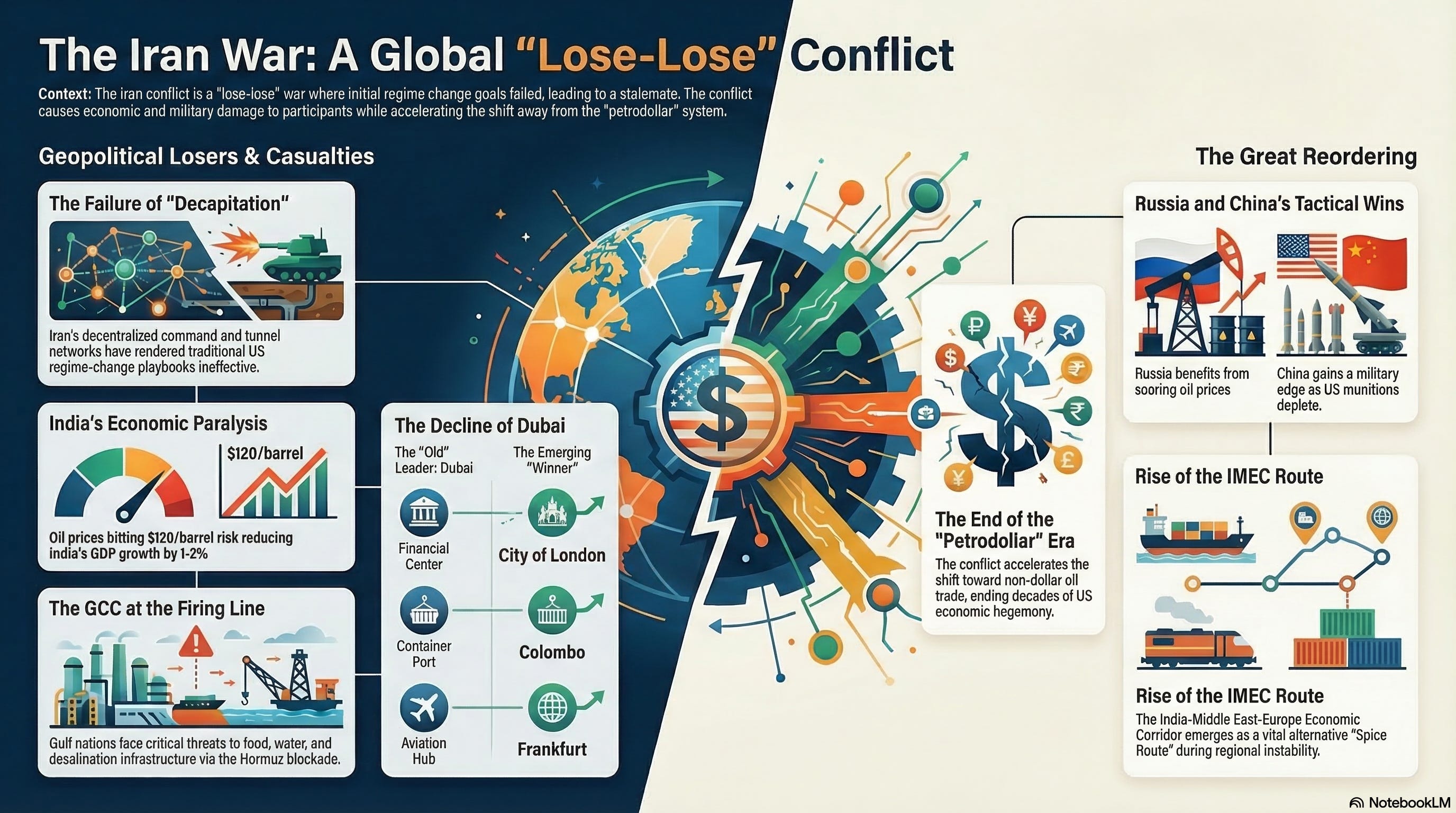
Mar 1800:02:37Tap to summarizeThis is a free preview of a paid episode. To hear more, visit rajeevsrinivasan.substack.comWar is hell, we all know, and it’s bad for everybody, but there is – usually – a winner. After more than two weeks of the Iran war, I am beginning to believe that there are no winners here, only losers. The principals are overextending themselves, and will suffer as a consequence. Innocent or not-so-innocent bystanders are suffering significant collateral damage.Some are getting hurt more than others, so it’s mostly a question of degree: but the bottom line is that this is war that is just not good for anybody. As usual, Henry Kissinger had a useful aphorism: “It’s a pity both sides can’t lose”, quoth he. (Hat tip to reader Sudarshan M). Well, Henry, both sides are losing this one, so take heart: your wish has come true.Someone made the analogy of going to Family Court with a dispute: there are no winners, as the father, mother, and the children, will all suffer, whatever the outcome. It is best in that situation to listen to a counselor and solve your problems amicably. Similarly, it would be good to find a neutral intermediary to help iron out a ceasefire in this war, too.In a way, this war is the classic idea of irresistible force meeting an immovable object, thus leading to a stalemate, as Walter Russel Mead suggested in the Wall Street Journal.First, the toll on the belligerents, in alphabetical order:* Iran. It is creditable that Iran has held out against the might of the US war machine for two weeks and more. My belief is that they can keep it up for a while longer, because they have been preparing for this eventuality for some decades, ever since the 1979 crisis in which they held Americans hostage for 444 days. They are taking, and will take, horrendous losses, but it will be difficult to completely overthrow the Islamist regime. Among other things, Iran is a large country, about half the size of peninsular India.* The US attack on Kharg Island’s military targets (but not its oil terminals) has shown that Iran’s oil exports could be in jeopardy, pushing global prices up.* Just like their proxy Hamas, it appears Iran has built extensive tunnel complexes, veritable underground labyrinths, where they are hiding all sorts of things, including fast patrol boats. Their military assets are doubtless ensconced in these tunnels which makes them hard to locate and possibly quite mobile.* Israel. Iran’s consistent rhetoric that Israel doesn’t deserve to exist leads to fears that Iran’s nuclear arsenal (if and when built) will be primarily aimed at Israel. This, and troubles with Iranian proxies such as Hezbollah and Hamas, have led to massive Israeli human intelligence penetration of Iran (as seen in the Stuxnet incident as well as the effective strikes on the Ayatollahs and Hamas, including the pager incident). But Israel is also believed to be taking heavy losses, which it can ill afford, although information has been tightly censored..* The US. The original idea of a decapitation strike that would lead to a rapid regime change as the Iranian public rose up and anointed a new leadership (one more acceptable to the US), was questionable, as I pointed out fairly early. It appears that the CIA and US intelligence have just one playbook, which they used more or less successfully in Iraq, Libya, etc. But that was never going to work in Iran, and now the US is stuck with a tar-baby and may be quietly seeking de-escalation and an off-ramp.* Talk of a Marine Expeditionary Unit of 2500 American soldiers re-deployed from Japan means “boots on the ground” followed inevitably by that dreaded word, “body bags”. The troops will be meant to keep Hormuz open, or perhaps to capture Kharg Island. Whether they can achieve these is unclear right now.* However, overall it appears that the US’ capacity to coerce other countries through economic means is declining, as suggested by the FT in “The era of US dominance in economic warfare is over” on March 17th.
Transcribe →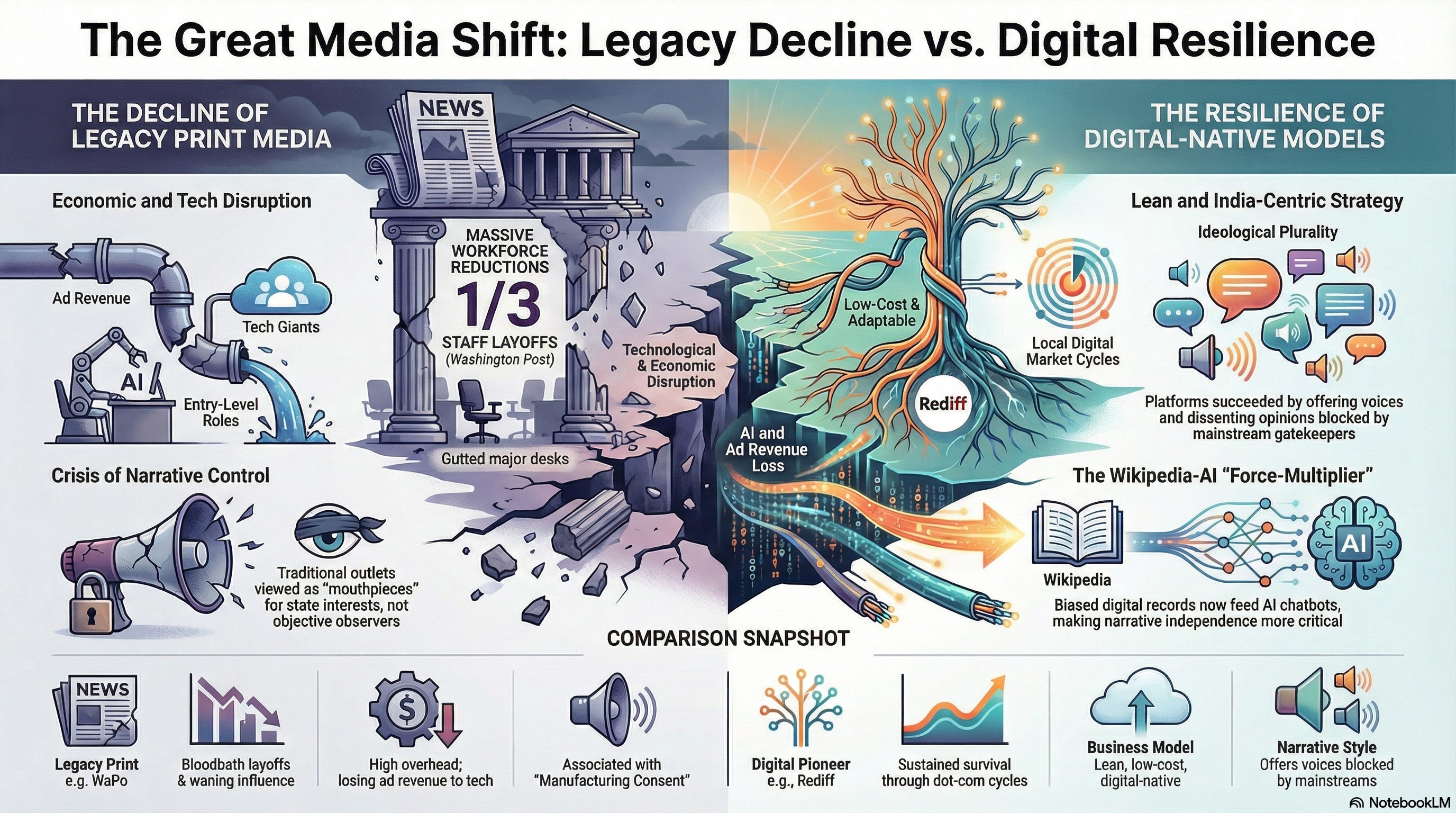
Ep. 187: Journalism, AI, Washington Post and Rediff.com
Feb 1300:16:12Tap to summarizeJust around the same time as the axe fell on Washington Post’s global staff, accompanied by much wailing and gnashing of teeth, I got a message from my Rediff.com editor, Nikhil Lakshman, mentioning it was the 30th anniversary of its founding. An interesting contrast indeed: the old Western flagbearer waning, while the Indian pioneer holds on, despite a plethora of competitors and copycats, including many pushing specific agendas.That also made me think of why there was a bloodbath at the Washington Post, where they gutted the foreign desks, sports, books, and some leading podcasts, and laid off a third of its staff. I suspect there are two reasons: one is the increasing insularity of the US, a retreat into Fortress America, and paradoxically a turning away from the rest of the world at the very moment the rest of the world should be looming more prominently in the rear-view mirror.And two, the economics and the technology of the narrative business have turned. On the one hand, print media have been retreating and losing ad revenue for years, and on the other hand, the rise of generativeAI has made it possible to eliminate entire layers of (at least) entry-level journalists, just as it is decimating paralegals, code-jockeys, and apprentice accountants. Only junior doctors seem immune so far, but we shall see how that goes. I must confess that there was a time when I consumed the Western narrative with gusto: reading Time, Newsweek, and so on, and listening to the BBC. In fact, I actually subscribed to the New York Times for years (ok, in my defense I was living in the New York area), and later The Economist for at least a dozen years. I still listen to some podcasts from the latter, but with considerable caution, as I am far more aware of their biases and proclivities.That’s where my concern about big-name Western media comes from. They are all somehow associated with the Deep State, that amorphous entity, the hidden puppet-master behind pretty much everything that goes on in foreign and domestic policy. For instance, an outlet that I considered the voice of NATO, turns out to be the voice of Whitehall, Britain’s bureaucracy.There has long been a truism that the Washington Post is the mouthpiece of Foggy Bottom, i.e. the US State Department, and the New York Times that of Langley, i.e. the Central Intelligence Agency (CIA). Noam Chomsky long ago made the insightful observation that they are both in the business of “manufacturing consent”, i.e. narrative-peddling to suit vested interests, specifically the Military-Industrial Complex, which likes, or needs, constant wars.The eclipse of the WaPo is not only a statement about the decreasing influence of the State Department on foreign affairs (in the wake of the decline of the “liberal, rules-based international order”). But it is also because the print media business is no longer lucrative, as the bulk of advertising revenue has now moved online, to the likes of Alphabet, Meta, Amazon et al. Large numbers of smaller US newspapers have closed down over the past few decades.I suspect also that gaslighting at scale is much easier now with the advent of outlets such as Wikipedia. Ashley Rindsberg, author of The Grey Lady Winked (an expose of the NYT), has been chronicling on Twitter how Wikipedia has become a handmaiden of the usual suspects. Editors are often paid agents provocateurs, and stories that do not serve their purpose are simply trashed. There is much that is subjective/motivated about the content.However, since Wikipedia has become the encyclopaedia of record, and generativeAI uses it unabashedly as a genuine source, the level of force-multiplication is immense. Every AI chatbot uses it, and of course all of us are using these chatbots. If it’s not in Wikipedia, it ceases to exist, and I fear this is happening to India’s Traditional Knowledge Systems.This level of groupthink, alas, is not unusual. That is where I applaud Rediff. When it appeared in the 1990s, the discourse in India was tremendously skewed to the Left. What was considered “Centrist” in India was, objectively speaking, “Left”, and what was considered “Left” was, in reality, “Lunatic-Fringe Left”. It was simply impossible to get a dissenting opinion published, especially because nobody would hire you if your views didn’t pass a test of fealty.But Rediff offered that possibility. Nikhil Lakshman, the editor, and Ajit Balakrishnan, the publisher, were willing to take risks with other voices, and I personally am grateful. Here I was, a non-specialist, a technologist and product manager in Silicon Valley, and also an unapologetic Hindu nationalist, which would have made me “Lunatic-Fringe Right” in the scheme of things.Rediff gave me a voice. Before me, it also gave a voice to my dear and late friend, Varsha Bhosle. We wrote stuff as we saw it, without self-censoring, and it turned out it resonated with a lot of people, especially in the diaspora, who at that time had much more Internet access than in India. I used to get hundreds of e-mails in response to my columns. Varsha got even more.We had the great advantage that, as non-professionals, we didn’t care about employment or income from journalism. Sun Microsystems paid my way; Varsha was the daughter of the celebrated Asha Bhosle.Conversely, that is a problem today for those JNU products who were planning to enter the field: USAID and Soros funds are down, and their proteges in the Indian online world (you know who they are) aren’t doing all that well. I have an old classmate, a journalist, whom I consider deranged and terminally anti-India, who makes a nice living off, I gather, funds from several countries inimical to India, but the outlook for his tribe is a little dim these days.Rediff was the only game in town in 1996, and it thrived. It was India’s pioneering internet portal with web news, email, shopping, entertainment, and it rode the first dot-com wave and survived multiple cycles (including the 2000 crash). It adapted from a pure portal to an aggregated and news-focused site, outlasting many peers by staying lean, India-centric, unbiased, and low-cost.Rediff represents a digital-native model that persisted through adaptation without the massive overhead of legacy print giants. More power to it! Thank you again, and best wishes!PostscriptThose tests of fealty to the ‘cause’ continue. I personally have been ejected from two op-ed columns because my thoughts were apparently impure. One, a few years ago, was at a prominent national daily. After writing occasionally for some time on invitation, my contact ruefully told me that I was persona non grata, in his words, not because my stuff was not good, but because the opinion editor did not agree with my perspectives.More recently, I had a regular monthly column in a well-known regional daily. After having my words over-edited repeatedly, I realized that their opinion editor, who had invited me on board, simply did not like my pro-Hindu stance. So I quit.The remarkable thing is all of the dramatis personae, including me, these two opinion editors, and the Rediff folks, are originally from Kerala. I wonder if this reflects some deep psychosis in the make-believe world in this last bastion of extreme Leftism. Tellingly, the ‘all-India strike’ called by left trade unions on the 12th of February was ignored everywhere except Kerala, where it was total.1075 words, 10 Feb 2026 updated 13 Feb 2026 This is a public episode. If you'd like to discuss this with other subscribers or get access to bonus episodes, visit rajeevsrinivasan.substack.com/subscribe
Transcribe →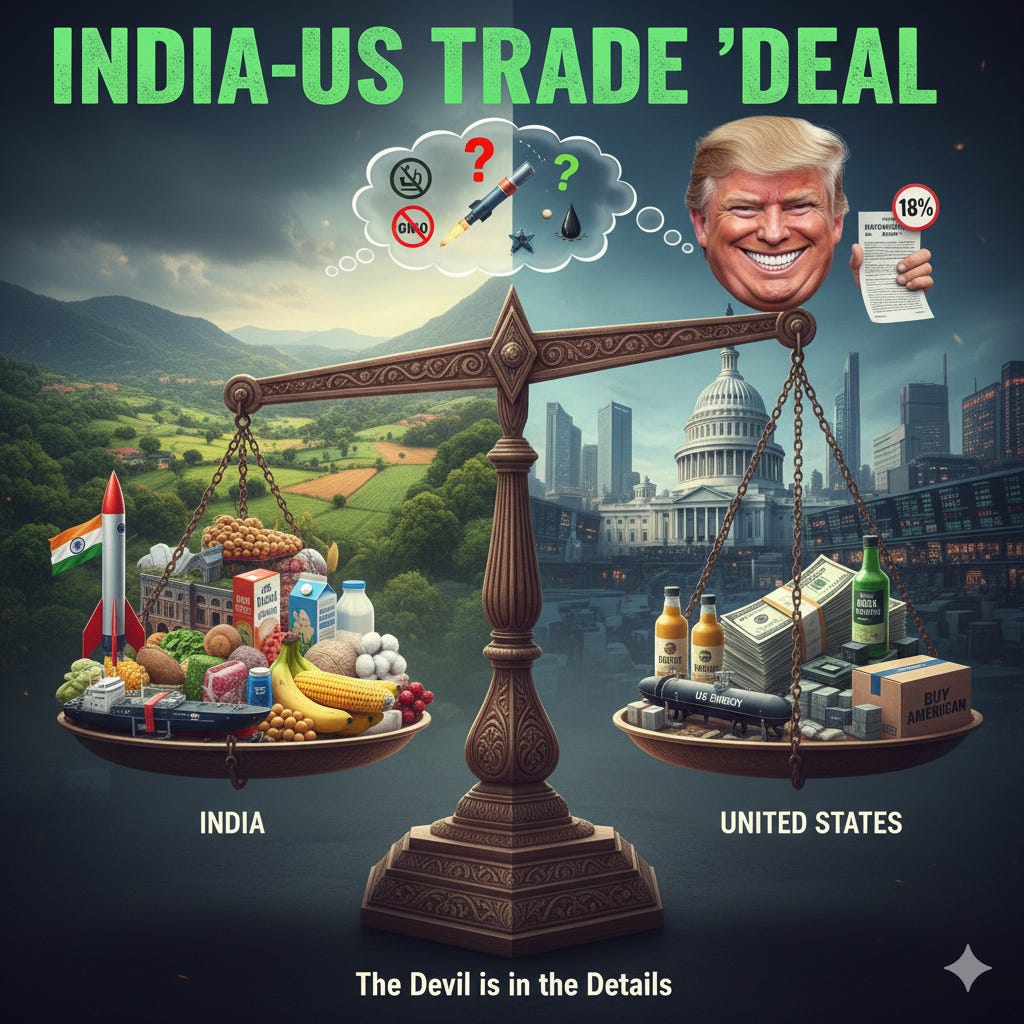
Ep. 186: There is less than meets the eye in the India-US trade 'deal'
Feb 500:19:45Tap to summarizeA version of this essay was published by firstpost.com at https://www.firstpost.com/opinion/india-us-trade-deal-trump-skepticism-13977047.htmlI am beginning to feel quite like ‘The Boy Who Cried Wolf’, who was destined to be ignored. Or maybe I am the boy who cried ‘The Emperor Has No Clothes’. For, I was skeptical last week about the India-EU FTA, which I called a triumph of hope over experience. Now I am equally skeptical about the so-called India-US trade ‘deal’, which in fact is not a deal at all, but a sort-of statement of direction about the way to an actual deal.The AI-generated video about this essay Google NotebookLM: I expressed my caution on a Malayalam TV program where the host was a retired Ambassador. He was less skeptical than me, but he understood where I was coming from: after all, a diplomat’s job is to put the best spin on the news (good or bad) from his country’s perspective. And I spent much of my professional career in marketing: I can tell spin when I see it. Reason No. 1: Trump is famous for exaggeration and U-turns.The very first reason for the scepticism about the Indo-US lovefest is that it was announced by President Trump, who, in the past six months, has, in his whimsical way, executed any number of U-turns, as well as Z-turns, and various other pretzel-logic twists, so much so that anything he says, and its opposite, can be equally true, in a quantum Schrodinger’s Cat sort of way. It is prudent not to take him at face value when he swears eternal allegiance to India. Again.Quoth he: “It was an Honor to speak with Prime Minister Modi, of India, this morning. He is one of my greatest friends, and a Powerful and Respected Leader of his Country. We spoke about many things, including Trade, and ending the War with Russia and Ukraine. He agreed to stop buying Russian Oil, and to buy much more from the United States and, potentially, Venezuela. This will help END THE WAR in Ukraine, which is taking place right now, with thousands of people dying each and every week! Out of friendship and respect for Prime Minister Modi and, as per his request, effective immediately, we agreed to a Trade Deal between the United States and India, whereby the United States will charge a reduced Reciprocal Tariff, lowering it from 25% to 18%. They will likewise move forward to reduce their Tariffs and Non Tariff Barriers against the United States, to ZERO. The Prime Minister also committed to “BUY AMERICAN,” at a much higher level, in addition to over $500 BILLION DOLLARS of U.S. Energy, Technology, Agricultural, Coal, and many other products. Our amazing relationship with India will be even stronger going forward. Prime Minister Modi and I are two people that GET THINGS DONE, something that cannot be said for most. Thank you for your attention to this matter!”Okay. Very interesting. There has been no Indian readout corroborating a number of these claims, especially on agriculture, which I imagine is a redline, a no-go, for India.Besides, these are supposed to be ‘reciprocal’ tariffs. If Indian tariffs go to zero on US products, why is the US imposing 18% on Indian products?Reason No. 2: Desperation of ‘jilted lovers’The ‘shotgun wedding’ vibe was present in the India-EU FTA as well: a sort of desperation. There is not much choice: you simply have to do this. I am not the only one saying this. Here is a tweet from a senior EU leader, former PM of Sweden and co-chair of the EU Council for foreign relations. Of course you could say that he would say this, wouldn’t he? But it happens to be true. The number of suitors is declining rapidly, so you compromise. But that is not a recipe for the longevity of the relationship, nor for faithfulness. You can expect er… adultery (early and often). The roving eye roveth.Reason No. 3: Agriculture and dairy red-linesWe really don’t know much about the fine print. I am aware that sales and marketing people tend to promise anything (even things they are completely aware are impossible) just to get the sale. Thus, when India diversifies away from the US market, and its Q3 numbers are not badly affected by the Trump tariffs, it is incumbent upon Trump and Navarro, Bessent, Lutnick et al to reverse their previous abuse, and be all milk and honey.The problem here, as always, is the agriculture and dairy product front. It is an absolute red line for India: no government can afford to piss off its farmers, nor to open up the country, home of much of the world’s genetic diversity, to Genetically Modified Organisms (GMO) including Terminator Seeds (that would forever put farmers at the mercy of Cargill and friends).Not only that, non-veg milk (that is, milk from cows that have been fed, among other things, ground-up animal bodies) is abhorrent to a large number of Indians. Not to mention the risk of things like Creuzfeldt-Jakob Disease or mad-cow disease (transmitted via feed that includes the ground-up brains of diseased cattle: see also the fatal brain disease Kuru, transmitted between cannibals in Papua New Guinea).The US rather urgently needs to get rid of its soybean and corn mountains and milk lakes (in contrast with the EU’s butter mountain and wine lakes) and in both, exporters salivate at the prospect of the proverbial billion-customer market. (The Chinese expertly used this rather illusory meme to attract foreign makers of consumer goods. That didn’t end well).In the case of India, there is no demand for soybeans, and the one place where I can see demand for corn is in ethanol, especially for blending into petrol. That would be a win-win, because it would reduce the need for India to grow highly thirsty sugarcane, thus drawing down the already alarmingly depleted water-table.Reason No. 4: Russian oil and energy in generalThe unseemly pressure over Russian oil raises hackles on the Indian side. After all, this is not the only time India has been pushed to the wall by American sanctions: there was the post-’Buddha is smiling’ period, and the prevention of the sale of ex-Soviet cryogenic rocket technology, as immortalized in Nambi Narayanan’s story in “Rocketry: The Nambi Effect”. Earlier, there was the embargo on supercomputers.In each of these cases, India rode out the sanctions and denials. But the question arises: why should India not use Russian oil if it makes commercial sense to India? Just because there is a conflict between Russia and Ukraine? That is really not India’s problem: India does not have a dog in that fight.Now there is the allegedly impending US attack on Iran. India has been denied Iranian oil for some time, and now under US pressure, it is being forced to ramp down its involvement in Chabahar Port in Iran that India built, and views as a gateway to Central Asia. Notably, China continues to import Iranian crude. Is India getting some relief there?It is not realistic to imagine that large amounts of Venezuelan crude will now flow to India if it abjures the Russian stuff. For one, even though Reliance’s Jamnagar refiner can process the heavy, sour Venezuelan oil, it is said that Venezuela will take some time and a lot of money to ramp up its output because of years of neglect, lack of naphtha to dilute and pump out the crude, and so on.Reason No. 5: Non-tariff barriers and subsidies.The US claims that India will drop all its non-tariff barriers, but what is the guarantee that the US will not raise an impenetrable wall on their side? It is a simple matter to impose difficult-to-comply-with rules that basically say “Your products are not welcome”. These may include environmental, carbon tax, quality, and various other demands.For example, there is the Merchant Marine Act of 1920 that insists that only American owned/built/crewed ships can transport goods between US ports. Then there are Buy American Act procurement restrictions that handicap foreign-origin products. Furthermore, quality standards e.g. on hormone-treated meat products, and on certification that seafood is tuna-safe have been used to keep out imported products.The US Farm Bill provides gigantic subsidies for five major crops – corn, soy, wheat, rice and cotton – amounting to $9.3 billion in 2024. Reports suggest that crop insurance and new benefits from the ‘bridge payments’ announced in 2025 may add another $10 billion+ to this sum. That is an enormous subsidy, pricing competitors out of the market.Reason No. 6: Loss of trustFinally, there is a sixth and critical reason: the loss of trust. For the longest time, India had convinced itself that it was an essential strategic partner to the US, if for nothing else to contain China. But that illusion is now gone, quite possibly because the US has decided to create a G2 condominium with China and retreat into Fortress America. The US administration now considers India, at best, a transactional vassal, and at worst, a potential rival to apply the Thucydides Trap to: and what better than to do war by economic means? India has to adjust.On the other hand, there are indeed positives. In the interest of fairness, here are the immediate views of Citibank and Bank of America, who both considered it a net positive for India.If you accept the tariff re...
Transcribe →
Ep. 185: The Epstein Files simply show elite depravity
Feb 300:16:12Tap to summarizeA version of this essay was published by firstpost.com at https://www.firstpost.com/opinion/shadow-warrior-the-epstein-files-expose-elite-depravity-13975791.htmlHere is the AI-generated video version of this podcast. I am not going to get into the political aspects of the infamous Epstein Files, nor so much into the morality thereof, but what amazes me is the fact that everyone seems shocked at the kinds of things that apparently went on in Epstein Island and elsewhere in his empire.I have long thought of the Epstein Files (and earlier Watergate, Wikileaks, Cablegate, even the silly Steele Dossier) as a mere sideshow, entertaining but hardly earth-shattering. To be candid, what they reveal is what we already knew: politicians and the rich are different from you and me, as Jay Gatsby might say. Yes, they can be vile monsters and get away with it.F. Scott Fitzgerald describes how extreme wealth fosters a sense of superiority, cynicism, carelessness with consequences, and emotional insulation: all qualities that make the rich operate by different rules, often viewing themselves as exempt from ordinary accountability. Extreme wealth provides insurance, or insulation, against consequences.We were warned with graphic images in cinema: “Eyes Wide Shut” by Stanley Kubrick was a revelation. It fits strikingly into the context of Fitzgerald’s “the rich are different” and the Epstein files, a cinematic bridge between literary critique and real-world revelations of predatory privilege.In Kubrick’s world of orgies where masked super-elites play, the victims are from lower strata (they are treated as disposable), while the elite retreat into impunity. The film was prescient about how money, secrecy, and impunity create inevitable nexuses of abuse. There was a dramatic and possibly relevant video of a young Mexican model, distraught, screaming, “They are eating babies!”, after attending one of the Epstein parties. She was, it is said, arrested, and ‘disappeared’, and was never seen again.Yet, it is “Salo: The 120 Days of Sodom” that I am most reminded of. This is quite possibly the most disturbing film ever made, at least among those that I have seen. Only “In the Realm of the Senses”, by Nagisa Oshima, a staggering tale of sexual obsession, comes close in shock value. A couple are caught up in a vortex or vicious cycle of increasingly dangerous sexual behavior. The unsimulated, explicit sex scenes in fact produce not prurience, but horror in the viewer.The film’s intensity peaks with its violent conclusion, where the female protagonist strangles her lover to death during erotic asphyxiation and then castrates his corpse, carrying the severed penis with her, blending extreme eroticism with graphic mutilation and murder in a way that challenged societal taboos on sex, obsession, and violence. Tellingly, it is based on a real-life story, but then it is a private tale, not one that involved powerful, public, men.“Salo”, by Pier Paolo Pasolini, is a loose adaptation of the Marquis de Sade’s 1785 novel “The 120 Days of Sodom”, relocated to the final days of Mussolini’s fascist Republic of Salo (1943–1945) in northern Italy. Four powerful libertines: a Duke (nobility), Bishop (church), Magistrate (law/state), and President (finance/capital) are the protagonists.They kidnap 18 young victims (mostly teenagers) and subject them to escalating cycles of sexual torture, degradation, humiliation, and murder in a remote villa. I remember the horrifying close-up of a young man’s eye being plucked out.This isn’t mere shock exploitation; Pasolini uses de Sade’s framework as a scorching allegory for:* Absolute power corrupting absolutely, where the elite treat bodies (especially vulnerable young ones) as disposable objects for consumption and control.* Fascism as the ultimate expression of capitalist/consumerist nihilism. The libertines embody the “anarchy of power” in a permissive, totalitarian system where rules exist only to protect the perpetrators.* Moral detachment and cynicism: the rich aren’t just wealthier; they’re philosophically and emotionally severed from humanity, viewing others as means to gratification without consequence.Is this how powerful men are? Is this how those with absolute power, especially men, have always acted? Or is it culture-specific? That’s a good question. But are elites generally debauched, depraved, and dissolute?There are several unconfirmed rumors that many of the rich and famous were associated with Epstein. But a certain royal was drummed out of the family and lost all his privileges for his (confirmed) participation in Epstein orgies. Others include captains of industry and political bigwigs, including US Presidents, a major leftist ideologue, and a film director.So it was apparently the in-thing in the US, sort of like the most sought-after restaurant in New York City, where the hoi-polloi were strictly excluded. This, in a country that allegedly finds its moral compass in the Puritans, people who were so religious that even Britain couldn’t stand them. And has been accused of being into moralization, not into morals.As of now, if you ignore the extreme claims (cannibalism) it is clear that the following happened:* Recruitment and grooming of underage girls* Sexual assault on minors* Distribution of Child Sexual Abuse Material* Trafficking across State and International BordersFrankly, this is probably just business as usual in many elite circles. If you have immunity, you tend to be very naughty. I expect this, too, will blow over, and public attention will move on. The apparent fact that many in political power in the US are part of the Epstein network is neither here nor there. This may be the way all powerful men work. Sad, but true.895 words, Feb 2, 2026 This is a public episode. If you'd like to discuss this with other subscribers or get access to bonus episodes, visit rajeevsrinivasan.substack.com/subscribe
Transcribe →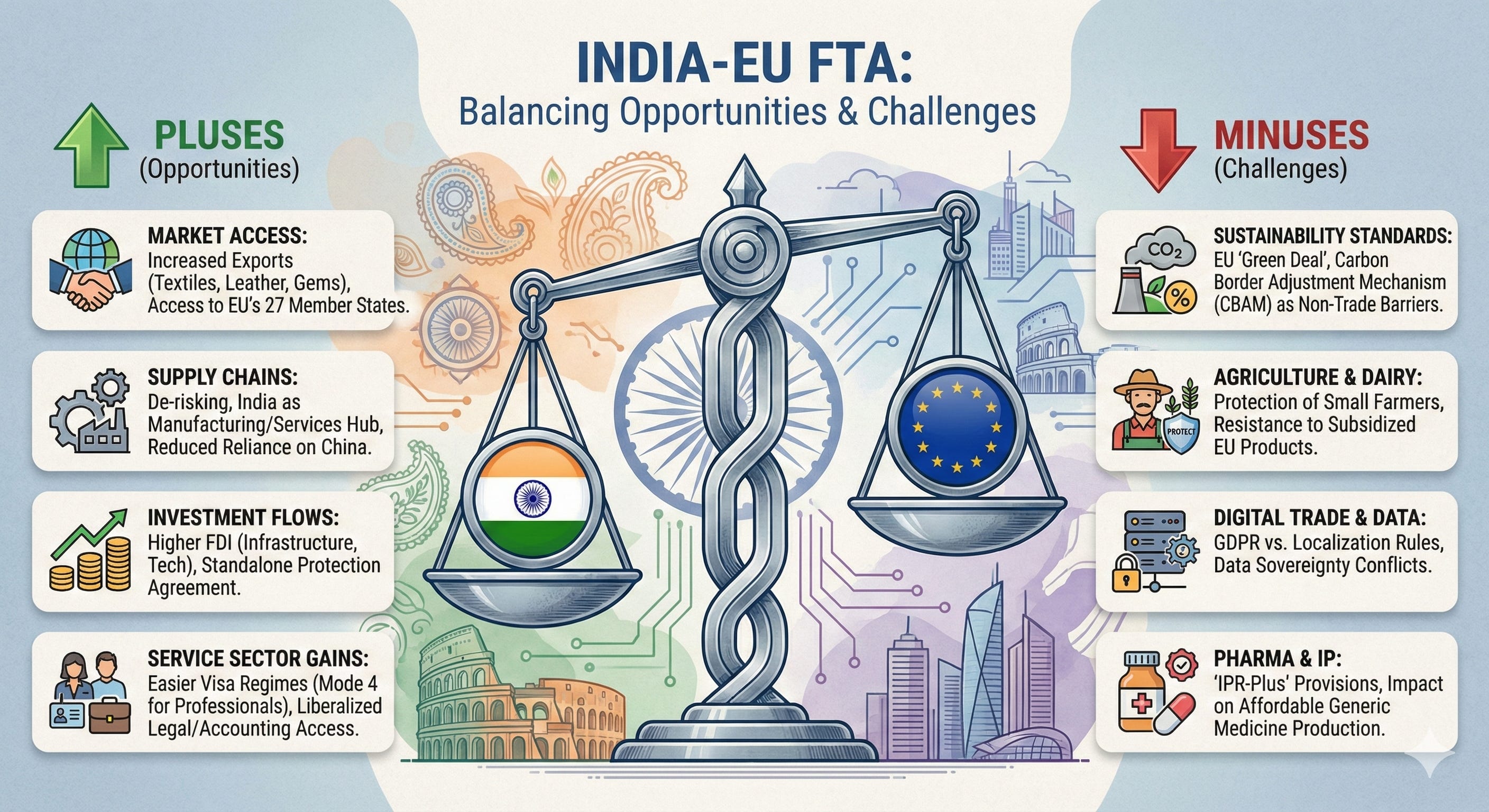
Ep. 184: The India-EU FTA: triumph of hope over experience?
Jan 2700:01:36Tap to summarizeThis is a free preview of a paid episode. To hear more, visit rajeevsrinivasan.substack.comI’m sorry to be so cynical so early, on the very day it was signed, but let me be honest: the much-ballyhooed (“mother of all trade deals”, quoth Ursula von der Leyen, boss of the EU) signing of the Free Trade Agreement between India and the European Union leaves me cold. Or maybe just underwhelmed. Because the words that come to mind are “desperation”, “buyer power”, and maybe “shotgun wedding”, or perhaps, as Hari, a friend, said, “rebound chicks”.Ok, so I am bad, but somehow, “revenge porn” also seems oddly appropriate. Are the Europeans now going to spill the beans about all their ahem… rendezvous with their erstwhile boyfriends?Bottom line, since I am a pessimist, I think this isn’t going to end well. If I were an optimist, perhaps I’d have said the inflated expectations will come to nought.The first clue is that India and the EU have been negotiating this trade deal for twenty, yes twenty, years. And now it’s a done deal in weeks. Did someone say, “shotgun wedding”?The second is that the EU has huge agricultural surpluses from coddling their farmers, referred to memorably by my favorite Whitehall simps, The Economist magazine, as the “butter mountain” and “wine lakes”. I really don’t think Euro-farmers are going to grin and bear it when India refuses their stuff, and worse, Indian agri-products start showing up there.The third is that it seems like it was only yesterday that the Europeans were, in their usual supercilious manner, scolding India for not following their edicts about cutting off all trade with, and in effect un-personing (or whatever the equivalent is for a country) Russia.The fourth is that their media, especially Deutsche Welle, has kept up a steady stream of invective against India, allegedly the epicenter of colossal Hindutva crimes against sundry cuddly minorities such as Kashmiri separatists, Khalistani splittists, Rohingya illegal aliens, und so weiter. (Of course the BBC, The Economist, The Guardian et al are in a different, exalted league altogether, but I guess after Brexit, I can’t blame the EU for their sins).I can sure I can think of several other reasons, which you, gentle reader, may or may not resonate with, but you get the drift.The good reasons, of course, are there:* Trump has basically abandoned the EU and hinted at winding down NATO. No more free lunch on defense. No more preferential treatment as good white countries.* The Chinese market has essentially slammed shut for Europeans. The perigee of this is the fact that Volkswagen is now planning to sell what in effect are white-labelled Chinese-designed and -built cars in China. To me that spells total surrender especially because Chinese EVs produced cheaply, at scale, are now eating them for breakfast everywhere. So now they need a new market. Why, India has 1.4 billion people! Bring on the BMWs! Because otherwise the crown jewels of German engineering, both the entire automotive industry and the famed mittelstand, are going to bite the dust. Hint to India’s 180 IQ mandarins: bone up on “buyer power”.* Europe needs a supply chain that is independent of both the US and China to the extent possible. India may well provide a good part of it. For instance, in computing, it needs to stop being so cruelly dependent on US Big Tech, as argued by a Lund University professor in Europe wants to end its dangerous reliance on US internet technology (https://theconversation.com/europe-wants-to-end-its-dangerous-reliance-on-us-internet-technology-274042). Amen, brother. Ditto India, and maybe a few EU GCCs in India will do the trick. Or maybe they could just phone Sridhar Vembu.* Europe is falling off a demographic cliff at warp speed. They simply will not have the manpower, especially as any growth there will be primarily from immigrants. India will not reach zero population growth for some time, and therefore skilled Indian migrants on short term work visas will be positiveAll of these are good for the EU, but what’s in it for India? As my friend Bapa asked, “So what is India getting? Are Europeans going to buy Indian shrimp?”
Transcribe →