← Shed and Shine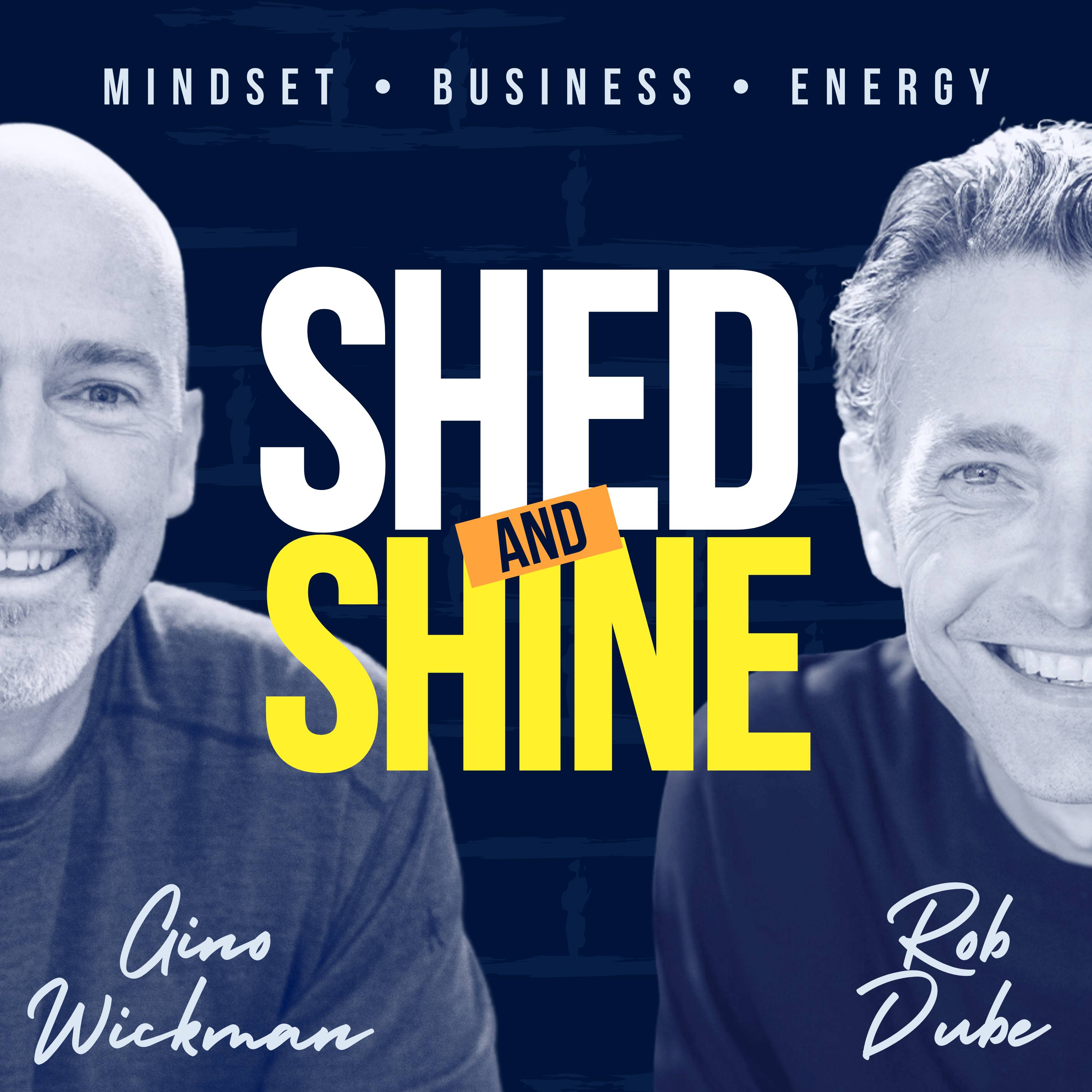
Loading summary
Transcript43 lines
- [00:00]
A
I believe it's freeing when you screw up to say, I screwed up.
- [00:22]
B
Hello, everyone. My name is Rob Dube, and I am here with Gino Wickman. Gino, how you doing?
- [00:29]
A
I am doing really darn good.
- [00:31]
B
Great. Well, today is a coffee shop episode.
- [00:35]
A
It is.
- [00:36]
B
So I'm going to turn it over to you.
- [00:38]
A
Let me explain it to you in the audience.
- [00:41]
B
Explain it.
- [00:42]
A
So again, for those that don't know, this is. Rob and I, for years, have been sitting in a coffee shop. A couple times a year, we spend a half a day and we just talk about whatever comes up. And so that's what this is, is Rob and I sitting in the coffee shop having a conversation. I have no idea what he's going to bring up. He has no idea what I'm going to bring up. And we're just having a conversation and you're listening in, and we get a lot of great feedback on these. So we keep doing it. And here we go. Rob, you said you're picking the first topic today. Floor Jordan.
- [01:11]
B
I'm picking Gino. You have done some business shedding this year. We talk about shedding. Shed your shit, shed your stuff.
- [01:25]
A
When you said that.
- [01:26]
B
Yeah, okay. I wanted. That's actually what I was going to ask you. How are you feeling? What can you share? What will you share? And what's life like?
- [01:34]
A
Oh, I'll zoom out. You pick and dig as much as you want. I'm going to give kind of context and try and share it and say it as fast as I can. But the two companies are entrepreneurial leap and 10 disciplines. So our business and another business, I wrote a book called Entrepreneurial Leap. I have a partner in that business, Ryan Henry. So roughly, almost the exact same time, I started both businesses with partners, and I have been, you know, more engaged in those companies than I wanted to at the outset. My deal was, I'm going to give you each 20 days of my time a year. And it exceeded that. And it's okay. I'm a big boy. I consciously chose to do that. 10 disciplines got up to like 45 days a year. It is what it is. And so, you know, we've been working hard, slogging busting our butts, building 10 disciplines. Same thing with Entrepreneur Elite. And I just decided, you know, in 2025, I decided this early in the year that, you know, it is time for me to get back to my commitment and even less, because the idea there was that was not a forever commitment. And so we did a nice little deal with Entrepreneur Elite. Where we brought in a 1/3 partner. We almost did that with 10 disciplines and that that deal died and we were thankful that it did. But we have hyper simplified the 10 disciplines business which you and I are excited about. And we've now turned, I've now turned entrepreneur leap off to this third partner and Ryan Henry and they're doing a masterful job. So that frees me up. So now with 10 disciplines, I'm just doing the things I want. So it's a very simple formula for me. All I want to do is three things. I want to create content, I want to teach content, and I want to provide navigation to the leaders in my life. And so said another way, I don't want to have any involvement in any of the day to day of any of my businesses ever again. And I'm done. I just drew a clear line. And so we had some great conversations. Sometimes it got heated, all that good stuff. But nonetheless, it's crystal clear as to my limited involvement in each business. And for 10 disciplines it's doing this podcast, which I love. It's doing our mastermind, which I love. And that's about it. Other than that, I'm a silent owner and we'll, I'll show up for owner's meetings and I'm just thrilled. I feel so good and so free and it's just, I'm ready after five years. So, yeah, some big, big shedding and then just again a learning opportunity. When we shed as beings, as driven people, we shed two ways. We're shedding the emotional baggage, the trauma, the ego layer. In addition to that, we're shedding the tangible things. We're delegating and elevating. We're getting, we're chopping off the tangible stuff in our life. And I've just been able to free up, you know, what's going to translate into, you know, 20, 30, 40 days a year of freedom going into 2026. That's going to create space for me to go where I'm going to go next. And some things are already brewing and I'm just feeling very excited about that.
- [04:38]
B
Where was the point where you were like enough is enough?
- [04:41]
A
It was SP 2025. I kind of knew, you know, it was coming in 2025, but it was, it was, it was spring that I fully committed to it. But it's probably the beginning of the year that I knew it was.
- [04:52]
B
What were you feeling?
- [04:53]
A
What was just overwhelmed, frustrated, you know, anytime I had to touch the day today, it just like energetically it was like, okay, I'm done enough. It's like it wasn't stimulating me. It wasn't, you know, it wasn't getting me excited like it was before. And so just my, my soul was screaming, it's time. Yeah.
- [05:18]
B
And then how did you mentally and emotionally move forward, continuing? I mean, is it just in your nature to just keep driving? Like, I'm, I'm a little done with this, but I'm still going to bring all my energy to it.
- [05:36]
A
Oh, that's interesting. So why did I muster it up or how did I muster it up into the finish line? Maybe both.
- [05:41]
B
Just because, I mean, I think we all find ourselves in that.
- [05:43]
A
Listen, that's a no brainer to me. A commitment is a commitment and I would never bail appeal. That's. I could not, my soul would not allow that. So when I make a commitment, I make a commitment. But just as quickly when I make a commitment that I'm going to stop doing something, I honor that commitment as well. So no, I was not going to leave anybody hanging out. And you know, there's an old saying that says you can live out of balance in life for a period of time as long as you know for how long and why. And so I have this salvation day coming on January 1st. And again, I don't give a fuck if both companies leaders run it into the ground. I don't care. I will not step in. I'm good, I'm good. I gave it all I could. Now you guys got to give it all you can. And so, but with that, so I will commit to leaving on January 1st, but I will commit to staying until January 1st. I can muster, muster up the energy and not break any commitments.
- [06:36]
B
Are you noticing any like sense of freed energy? Like are you running out doing snow angels in the snow or something?
- [06:42]
A
Well, I made a snowman two weeks ago, so that was fun. For the first time in 20 years we got our first snow. No. So I'm not doing that. But again, I feel it coming. Remember, I'm not done. I'm not out yet. I'm still in. But January 1st I'll be out. So I get excited. It's a freeing feeling knowing what's coming, but it ain't happening right now. You know, I'm at, I am at Capacity plus right now, both personally and professionally. So my capacity ball is very full. My personal life did not anticipate the magnitude of what's going on in my personal life right now. But nonetheless, the business life is full, personal life is full. So I'M not experiencing it or feeling it, but I feel what January 1st is going to feel like, and I
- [07:24]
B
look forward to that. This has been a week of last. Last. We had our last L10 yesterday.
- [07:31]
A
Yes, we did.
- [07:31]
B
And today is our last planning session.
- [07:35]
A
Yes, it is. Yes. And it feels so good.
- [07:40]
B
You will be free. Thanks for sharing.
- [07:43]
A
My pleasure. Yeah. All right, so my turn. So this. This topic came to me 14 minutes ago. Okay, that's awesome. So. Because I came in today having no idea what my topic was going to be, and that's typically what happens to us in the coffee shop. And we just go back and forth, and God only knows what's going to come up. And half of it is a surprise. So it's this thing I'm noticing. I've noticed it for a long time, but I want to confront it and see how the world reacts to this. And so I'm going to pose it as a question. Okay. And I'm going to pose as a question to you. So you and I are having a chat in a coffee shop, shooting the breeze, solving the problems of the world. So, Rob, why can't people admit they fucked up?
- [08:34]
B
The first place I went to is. Why are you bringing that up?
- [08:39]
A
Oh, I'm going to tell you why I'm bringing it up. So it's a fascination I've had for a really long time, but it's really coming to a head lately in the last two years, as our society has gotten ridiculously sensitive. Like, it's like. I mean, it was bad 10 years ago. It's worse, you know, so it keeps getting worse. So what? So it's what I'm noticing. And so I'm gonna tell two stories, okay? And the second story is why it's coming up in a big way right now. So I have a belief that it is freeing. And so I'm not gonna. I'm gonna trade out my language would be, I fucked up. If I use that. I'm gonna say that word like, 65 times in this episode, and I don't want to do that. So I'm going to say I screwed up. But you know what it means? It's effed up. I think the stronger the word, the better. Okay? So I believe it's freeing when you screw up to say, I screwed up. And I'm dumbfounded. I can't figure out why 95% of the Earth can't do that. What is at the root of that? What did your parents do to you? Because it's so, so freeing. I Love it. I love it when I screw up and I say I screwed up. I love telling the person that I screwed up, I screwed up, I screwed up. It's so freeing. It's like I feel free saying it right now. You out there, wherever you are, driving in your car, say I screwed up. Use the F word in my opinion. But say I screwed up. Think about something you screwed up and say I screwed up. So I just have a belief by doing that you will shed and you'll go to, why am I so. Why do I have such a hard time saying I screw? What's at the root of that? Because it makes no sense. And it's only, it's a simple answer. It's your ego. It's all fear based. It makes no logical sense. And it's a blocked energy in there. You got to release. Okay? And so with that belief that I have, which I'm willing to be wrong, this is just little old me. Works great for me. My assistant, I'm going to share a story. Karen, who has been with me for over 30 years now, okay, so three decades. She is the most incredible, honest, loyal, big hearted. I mean, it's like she has protected me from the world in business for 30 years and so hopefully I'm not going to get in trouble telling the story. I think she's okay with it because she's heard me tell it before. But this goes up to about maybe 10 years ago and she had such a hard time saying she screwed up. She resisted saying it. She was never deceitful because she's so incredibly honest. But she would sometimes just withhold because what's the point of telling it? And then so we had this great conversation and I said, Karen. And I'm just, since I'm now quoting a real life story, I said, karen, when you fuck up, just say you fucked up. It's so freeing. And so since that day, I'm not going to go into more detail in the conversation because you get the gist of it. For the last 10 years, whenever she screws up, she says I screwed up. And she likes the F word as much as I do. And so, you know, she said I fucked up. And it is so awesome because now all of a sudden we two human beings are at ground zero with each other and we can say, okay, why did it get screwed up? How did it get screwed up? How do we fix it? So it creates an opening for growth and great things to happen. And so now why it comes up for me now is in another business situation. I'm going to be very vague in this one because I have to be, but it's like, you know, something really got screwed up in this business for a couple years and I'm in a meeting with a handful of us and I'm like, did you look at why it got screwed up? Who is ultimately accountable? And that person happened to be in the meeting. And I said, okay, do you know how you fucked up? So now I'm quoting a real life story. Do you know how you fucked up? Do you know that you fucked up? Did you look at the reason it got so fucked up? And I said it like that, because how do you not get packed? Because there's magic in that. Go back and figure out exactly what happened because you're about to fix it and it'll never happen again if you do that. But let's not admit that in the society we live in. Oh, no, no, don't say that. That's not nice to say that you're missing out on the gold. You're missing out. So now is there a better way to say it? A healthier way to say it? Sure. But why do we gotta tiptoe around it? And so by not, it's just like we're hiding it now. We're not going. We're not going to the pain of it. So what is the resistance? Because my experience in all of the businesses I've been involved in, that I'm at the helm, we all say we fucked up because life's a hell of a lot better. So I would love to hear your Sherpa guru wisdom, because I'm expecting Buddha here to say gino, that word is. Anyway. So I don't know what you're going to say, but I can't wait.
- [13:44]
B
I have no problem with the word up. I think you know that the concept.
- [13:49]
A
I'm not about the. I can't wait to hear your response to the concept. Not about the word. It's the concept.
- [13:53]
B
No, no, I. I think owning it is always healthy. I like this. So I don't really have anything to add. I mean, always own it. And if you can't own it, there's certain. I mean, when you really asked me the first time, the first thing that popped in my head for real was ego. But then I turned it around onto you because I was curious why you were asking that. Where was that coming from? And why were you so passionate about it? I didn't realize you'd be that passionate about it.
- [14:17]
A
Hopefully that makes sense. It's like My, my. My passion and care and love for society and how we're being held back by this. Ugh, artificial. Anyway, so that's where it comes from. But let me ask you this and my last question on this and then we're done with our coffee shop conversation. But I just am curious. So why don't people own it? I want to use your words because these are your words you're saying. So I just curious if anything comes up for you. And let's bask in this for one or two minutes because hopefully there's a learning here. But in your opinion, why don't people own it?
- [14:51]
B
Well, I think it's complicated and I think there are lots of reasons people don't own things. So the practice for you and me, and maybe especially you, is to, you know, think about how you can let go to a certain degree. I mean, business, you. You have a certain intensity in business that I'll never, you know, I'll never match that, you know, my intensity. It only goes so high with most things anyway. But, yeah, so, you know, I think on one hand, your approach, like the story you shared, you know, as I'm listening, which I love the story, I'm trying to put myself in the person's shoes, which I don't know the person, so it's complicated. But let's just pretend I did know the person and they might be like, you know what? That was the, that those were the words I needed to hear in the way I needed to hear them. And that's your approach, and I love that. At the same time, maybe they were not the words they needed to hear and in not the way they needed to hear them. And that's discernment. And I, I think you have good discernment. So for whatever that's worth, you probably knew the person really well and you knew that they could handle that, that kind of delivery, right?
- [16:05]
A
For sure.
- [16:06]
B
So I think that's important though, because the way you share it, people listen to your words, and your words, you know, have great meaning to people. So the person who doesn't have discernment or doesn't have your kind of personality runs into a meeting and starts saying, you fucked up. Why can't you just fucking. Why you fucked up? You know, I don't think that's great advice because you got to know who you are and what your way of being is. What is your approach? Because your approach is exactly the way it is, exactly the way it should be. If you're being authentic and honest and super clear. To the person that you're speaking about about why they aren't owning it or why they up. So anyway, that's what came to mind.
- [16:54]
A
You know, love it. And I think we should just leave it right there.
- [16:56]
B
Let's do it.
- [16:57]
A
And go get another cup of coffee at the counter and call it a day.
- [17:00]
B
Let's go. Let's go. All right, my friend. And to you all listening, thank you as always, for joining us. We so appreciate it, and we'll look forward to seeing you next time. And in the meantime, stay focused and much love.
- [17:17]
A
Thank you for listening in today. We truly appreciate you taking the time to spend with us. And please tune in for the next episode. Until then, we wish you all the best in freeing your true self. Stay focused and much love.