← Shopify Masters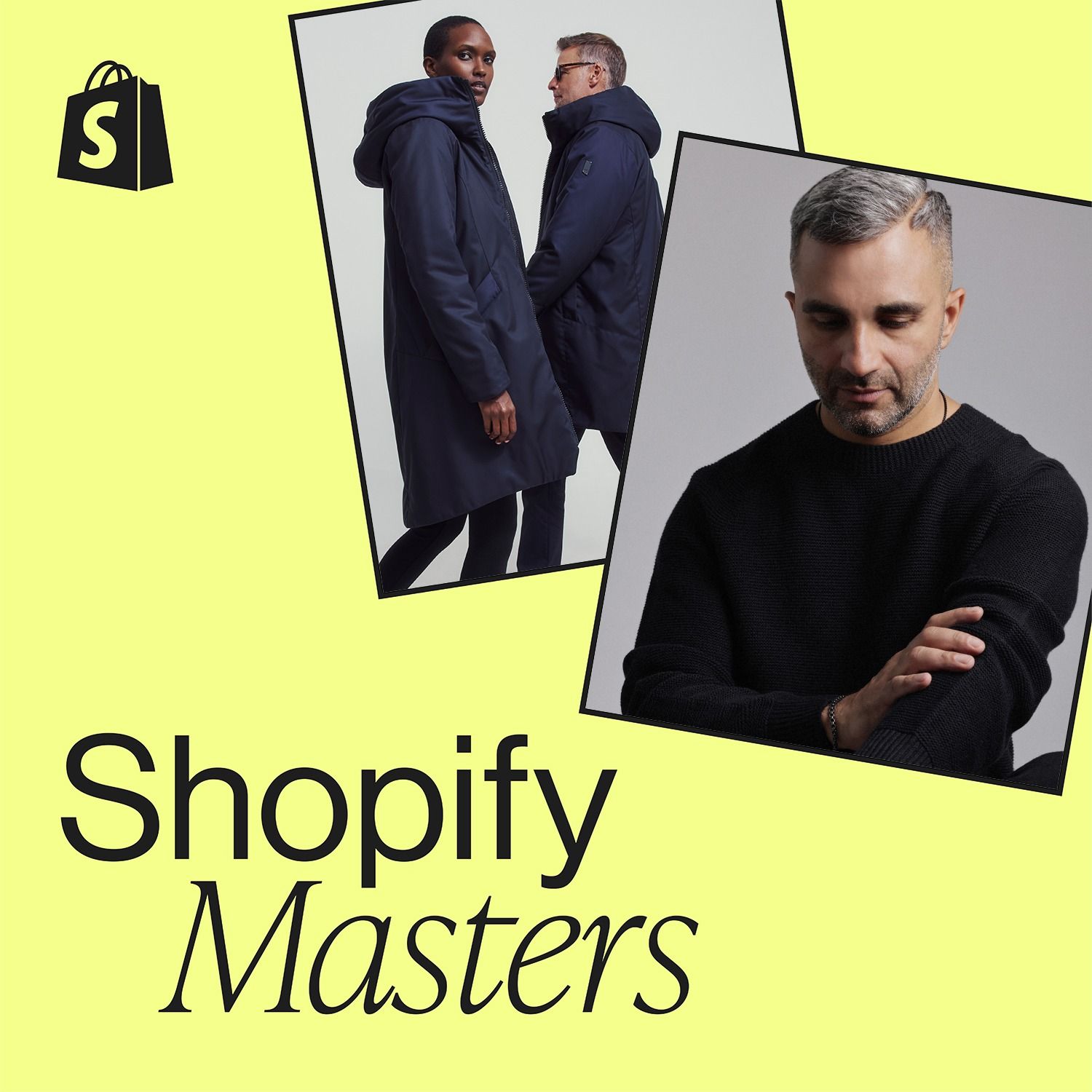
Shopify Masters
He Built One of Canada’s Biggest Fashion Brands—Then Walked Away to Start Over
00:36:28
Inder Bedi spent 18 years building Matt & Nat into a global fashion brand—then walked away. Burned out by offshore production and boardroom economics, he came back with a radical new vision: Bedi Studios, premium outerwear built from waste materials in Montreal and guaranteed for life.
Loading summary
Transcript77 lines
- [00:00]
A
I decided that if I'm going to do this, I'm going to guarantee everything for life to ensure that it goes against fast fashion, that it really ties into where I see sustainable design going in the future.
- [00:12]
B
Welcome to Shopify Masters, your companion for starting and building a business. I'm your host, Adam Lavinter. Inder Bedi built one of Canada's most recognizable fashion brands, learned a lot about
- [00:23]
A
entrepreneurship, myself, the industry, and then walked away from it.
- [00:27]
B
At the height of its success, Matt and Nat grew from a one man operation, Montreal, into a vegan accessories label carried in hundreds of stores across North America, the UK and Japan. But with scale came compromise and Ender wanted to build something new on his own terms.
- [00:42]
A
I had this yearning to get back to local production, to get my hands into things again.
- [00:47]
B
His latest venture, Betty Studios, is turning reclaimed textiles into premium outerwear and accessories. And it's all manufactured locally, backed by a lifetime guarantee and designed to never end up in a landfill. Inder, great to have you with us on the show today.
- [01:02]
A
Thank you for having me. Great to be here.
- [01:04]
B
I was living in Montreal 2009. One day my wife actually bought me a gift. It was a nice laptop bag. It was the first nice one I'd ever been gifted. And it was Matt and Nat actually. True story. That was circa 2009. But I was looking at the origin story of this. This goes back sometime now to the mid-90s. Does it?
- [01:27]
A
Yeah. Mat. Nat is based on a business plan that I wrote when I was completing my undergrad at Concordia in Montreal.
- [01:35]
B
And apparently this was a course that you were sort of wanting to. I read something. You wanted to actually drop this course.
- [01:43]
A
Yes. It was my last year at Concordia and I had plans to go to law school. I did a minor degree in corporate law at Concordia and I had to take this course called entrepreneurship just to, you know, complete all the credits. And I did try dropping it and getting out of it, seeing if I could replace with something else. I just, I don't know, for whatever reason, it didn't appeal to me. I don't come from a family of entrepreneurs, so there was none of that going on. But for this course, we had to start a make believe business and go to banks and try to get funding for it.
- [02:18]
B
This concept came from not two founders named Matt Nat, but this idea of marrying material and nature. Correct?
- [02:29]
A
Correct. Yeah. It was this idea that can we live in a world where we obviously have this desire for newness, to constantly keep updated with trends or whatever's going on in the world of design and be respectful of nature at the same time.
- [02:44]
B
So this concept of vegan fashion, I mean, I, I sort of feel like even today is pretty misunderstood or virtually unknown to the mainstream. I mean, it had to have been, I don't know, a bit of a challenge. Or did you see it as an opportunity at the time?
- [03:00]
A
I saw it as an opportunity and I think one of the things that was inspiring to me was I, I wasn't the first. There was a gentleman in the UK who had a brand called Vegetarian Shoes that basically was making vegan uppers for Doc Martens with the souls from Doc Martens. So I went to go see him. I was born in the uk, we still have a lot of family there. So growing up, we would go there every now and then. So I thought, I'm gonna go visit this guy and well, obviously I contacted him before just to make sure that he would give me the time of day. He had a shop in Brighton, so I went to go see him and he gave me some insight in terms of where to get materials from. The best vegan materials at the time were made in Italy and Spain and that's where I started sourcing this stuff for my bag designs.
- [03:50]
B
Was it completely self funded? At the time you mentioned, banks didn't want to touch it. But did you end up attaching a line of credit to the business or did you completely bootstrap?
- [03:58]
A
Bootstrap. Nobody wanted to fund it. After I graduated from Concordia, I worked part time for an engineering firm taking care of their marketing. And anything that I would make from there, I would put into Matt Nat. One bank manager told me, I'll never forget. He said, if you want a loan for a car, no problem. But your business, no. Good luck.
- [04:20]
B
I mean it, it's so interesting. I, I think today still. Right. Banks typically don't want to touch fashion brands. They don't want to touch, you know, food and beverage. To your point, restaurants, they just deem these businesses as, as high risk. But obviously, I mean, it pays off for you. You find product, market fit at some point. So I'm sure you remember that conversation very well given the success that the brand has had.
- [04:43]
A
Right? Yeah, no, for sure it was. I mean, that was definitely one of the frustrating things. To your point, I don't see much has changed today. I think it's still very challenging, especially if you're a startup, to get something funded. That's literally an idea on paper. Having said that, the advantage of that was I had to be very, very savvy with every dollar that I had and make sure it went a long way. So that was a good life lesson, I guess.
- [05:12]
B
How did you find those first early customers?
- [05:16]
A
So Matt and I was all wholesale based. I tried picking up customers in Quebec. People were not really receptive. They didn't understand. So everything was made. I had an atelier and well worked with local subcontractors in the beginning in Montreal. Everything was locally made in Canada, so the costs were obviously higher. I tried approaching stores and they thought the designs were interesting, but they didn't understand why somebody would pay so much for a vegan bag. So couldn't get any customers in Quebec. Drove out to Ontario, picked up a couple of customers there and thought New York always seems to be progressive and open to new and interesting things. And one of my first customers was a store in soho that was quite influential. And from there they took a liking to what I was doing and that opened up other doors for boutiques all over North America.
- [06:05]
B
But boutiques, I mean they like it because, you know, the positioning, the design aesthetic, ultimately they care about throughput sales revenue. That first soho store, are they selling through the bags? And you're having to restock on a pretty frequent basis. Like how did it take off?
- [06:21]
A
Not super frequent. And I think boutiques and chain stores, just to compare, have a different approach in the sense that chain stores, yes, they have to do certain number of dollars per square foot per shelf per department versus boutiques. If they find something interesting and the buyer kind of sees something in the brand that maybe the mainstream consumer base hasn't understood yet, they might carry it for a couple of seasons while it's still struggling because they feel that there's something there that they feel that this is something that eventually will catch on.
- [06:59]
B
So is it the US market that really takes to matinet first? I know you had some success in North America, the UK eventually Japan. Was it the US market that you sort of feel like found first early product market fit.
- [07:16]
A
New York was definitely helpful in influencing other boutiques and stores all over North America, mostly East coast, actually I should say to pick up the brand. And a lot of times in wholesale. The big difference comes from how strong a salesperson is in a particular territory. Atlanta, Georgia ended up becoming a huge hub for us just because we had a great sales rep there. He was a hustler. And that was probably our biggest territory in the time the U.S. and then West coast in Canada, B.C. again, we just had a great sales rep there. She really understood the brand had very good Relationships with all the stores out there. And so our territories and of course west coast culture being open to things that are sustainable, kind of new age ish, which it still was at the time. So I think a combination of just having the right reps in the right territories and it's interesting because you always think like, okay, New York, Toronto, but sometimes those markets are actually harder to penetrate just because there is so much competition in those areas.
- [08:30]
B
So you are at the helm of Matat for how many years in total before you decide to step away?
- [08:38]
A
That I stepped away in 2013. I wrote the business plan in 1995, launched collection 1997.
- [08:45]
B
That's a really good run.
- [08:46]
A
Yeah, it was great. Spent my 20s and 30s there. Learned a lot about entrepreneurship myself, the industry where I kind of wanted to go. So including writing the business plan, let's say from 95 to 2013, 18 years.
- [09:03]
B
So that's a hell of a run. What made you step away?
- [09:07]
A
That little voice that told me in university that there might be something here, explore it a little bit further, is the same voice when I was turning 40 that said it's time to move on to something else. I felt like mad Nap became a big machine. Um, we were no longer producing locally, we were producing it overseas. I had this year, I need to get back to local production to get my hands into things again. And I, I felt like, yeah, it just, it didn't resonate with me the same way it did when I first started it.
- [09:43]
B
So talk to me about that shift. So ultimately this achieves this level of scale such that you have to, say manufacture offshore, you have to have healthier unit economics. You have to find, you know, razor thin margins in every area of the business. What's driving that? I mean, ultimately, you know, you're the founder, you're the steward, you're the visionary. Is it outside investors? Is it simply what comes with the business that's of that size, of that scale?
- [10:16]
A
Yeah. I mean, I look at other brands today, there are some great Canadian brands that have kept all their production local. It's obviously a challenge, but at the same time, a lot of advantages to doing that for myself became very personal. I took on a business partner seven years. So in 2002, after writing the initial plan and we made a decision together to. There was a decision to go overseas, which for the brand, it was great. We got cut our cost substantially. We were able to open more doors, obviously attract a wider consumer base because of that. But for myself, it. It started becoming a company that was more Focused on numbers and economics and less about design and being innovative. And I think over time that that weighed on me. So we had a great run. We built it up to a very nice level. But when I left, I felt like I wanted to come back to design, come back to innovation, come back to values that were very close to my heart.
- [11:29]
B
Somebody shared with me once that it takes a very unique entrepreneur to be great at all three phases of the business. You know, starting something, scaling something, and optimizing something. It's rare to find an entrepreneur or founder that's sort of passionate or excels in all of those areas. It seems to me that, you know, you just at some point decide that your passion lies in, in, in the sort of first stage of that, in starting something, in seeding something. Does any of that resonate with, I guess, your transition into your next chapter,
- [12:02]
A
which was Betty, for sure? I think it was a combination of. And again, if I would have stayed at Matat, there were probably ways to reinvent what I was doing within the brand, whether it was a new category, new markets, maybe doing a combination of local production and production overseas, maybe taking a new look at sustainability. And what does that mean in 2012? 13, around the time when I was thinking that it was time to move on. But I very much get excited about the idea of taking something from an idea on paper and then seeing it actually come together. The, the concept, the first samples, the marketing strategy all just coming into place and how those things work together.
- [12:47]
B
When you left in 2013, you took some time off to explore. You got back into carpentry, tai chi, motorcycling, all noble pursuits, by the way. But, but did you intentionally. Yeah. Did you intentionally decide that you needed to take some time off to reset?
- [13:03]
A
Personally, I, when I left, I actually wasn't 100% sure that I would stay in this industry. I felt a bit jaded. I knew that I needed time for myself. I, you know, Matt, Nat, I was on a plane every two and a half to three weeks. I, I, my carry on would just stay in the corner and things would just get swapped out. So I think the idea of not having to do something for a couple of weeks or a month was alien to me, but very appealing. And yeah, I just kind of went with the flow. I knew that I might do something else, I might not, but I thought I would definitely take some time for myself to get into all these things that I hadn't been able to do since my 20s, like taking my carpentry course or jumping on a Motorcycle and not having to worry that I have to be at a certain place at a certain time. And I'm very appreciative and blessed that I actually had that time to be able to do that and just step back. And I think it's a rare thing that people get to do in their lives where you can kind of walk away from a career and have the opportunity to say, where do I want to go from here? So I do feel very fortunate for that.
- [14:21]
B
Yeah, no, I appreciate that perspective and I agree with you. I think it's tough. You do it after high school, maybe, maybe you travel a bit. You do it after university or college. You take some time off. It is rare that you do it sort of mid career. But I think it is absolutely valuable. At some point, though, you get back into the very industry that you started in. Right.
- [14:42]
A
With Betty Studios.
- [14:43]
B
How did that come about?
- [14:44]
A
Yeah, well, they always say do what you know. Right. I started slowly exploring, well, what could sustainability look like in the future? And I had this idea that could we create things with waste materials that already exist? So I was able to get my hands on Air Canada leather seats, basically seats that they chuck out when they refurbish the interior of the plane. So back in the day, Air Canada business seats were this black leather that they would use and they would just get rid of. All had to be cleaned up and then really looked at to see, can I actually make anything of this? So my first. So I started exploring things. I was able to get my hands on that. And then one of the issues that I had seen a lot in bags is that straps tend to fall apart. So then I thought, okay, what could I use that would actually last? That again, could possibly come from waste? And that's where I saw people have been making bags out of seat belts for literally decades. But nobody had really done it in a way that felt elevated because at the end of the day, it's a dirty seatbelt. So I thought, can we create tooling? Can I do something that would make a seat belt actually look like an elevated part of a bag? So the first collection that I ended up coming out with was a line of duffel bags and backpacks that were made out of recycled airline seats and then seat belts for the straps. I decided that if I'm going to do this, I'm going to do it all locally in Montreal. Hopefully that industry still exists, which it does. I'm going to use as much as possible materials that already exist, and I'm going to guarantee everything for Life to ensure that it goes against fast fashion, that it really ties into where I see sustainable design going in the future.
- [16:33]
B
So these values of created locally, more sustainable, guaranteed for life, how do you square those things with the idea that people are chasing something affordable?
- [16:47]
A
Right?
- [16:47]
B
They want to pay for something that they see value in. Do you think that these values just by default are going to have to be associated with premium or higher priced products? Like if you care about these things, you have to be comfortable with spending more.
- [17:02]
A
I think you have to be comfortable with initially investing more, knowing that in the long run it actually costs you less. So, you know, as I was looking into materials that are literally waste that I could work with, I also discovered econyl, which is this fabric from Italy that's made out of post consumer waste. You know, fishing nets, carpets, whatever else. And to this day, we still use materials for our outerwear that are made from post consumer waste, the premium materials. So jackets, outerwear became one of the biggest. It is the biggest category that I do. I took an interest in really doing something that again, I felt would be utilitarian, have an interesting aesthetic. And I felt like there was a hole in the marketplace and an opportunity for that. But the reason why I bring up outerwear is because I often give an example of somebody going out and buying a winter coat for 2, 250, 300 that lasts them a season, maybe two versus and they do that every year versus buying one of my coats that, let's say are in the 8, 900 range, but is guaranteed for life. And I always tell customers, you should get at the minimum, a decade out of this. So if you look at long run, what somebody will spend in a decade over winter coats versus having something that's made locally, premium is more comfortable, keeps you warmer, and ends up costing you less in the long run. There's that expression, I can't afford to buy cheap. And that's what we do. We're, we're often educating our customers on how, yes, you're spending a bit more, but you're getting a better product that's going to cost you less in the long run.
- [18:43]
B
Is it difficult for these products to remain in style in a world where people are chasing, you know, new designs, new trends, new silhouettes every two, three years?
- [18:57]
A
It's really carving out a niche for the brand that is more interested in buying something that's locally made, well thought out, and that's not driven by trend. So I'm not a mass consumer product the way what I do at Betty Studio is not mass appeal the way Matt now was. Having said that, particularly on the east coast, most people know you need a good winter coat like this is something that should be a staple in your wardrobe. So I think one of the advantages when you're in categories that have more of a utilitarian approach is that our community at least will tell us, well, that they'd rather have something that's a bit more minimalist, that has clean lines, that's not a pop color, that's trendy this year because it'll still be relevant in two, three, four, five years from now.
- [19:57]
B
You mentioned that you wanted to rethink sustainability in your next chapter. This is 2012. You start Matt and Nat in 1995. Fast forward, you know, we're sitting here in 2026. How do you think sustainability has evolved over the years? And what does it mean now, today versus what it meant, say, 2012 and back in the mid-90s?
- [20:18]
A
I think there was a lot of talk about sustainability in the 90s, and that led to larger umbrella terms such as veganism and other things, other terms that people will use just to associate with sustainability. So if you're vegan, you're sustainable. If you have a vegan product, you're sustainable. And what we've seen the last, let's say five to 10 years is that having an umbrella term, it's not enough and it shouldn't be enough. People have to ask questions. They, they, beyond just saying something is vegan or sustainable, well, where is it made? And beyond where is it made? Where are the materials coming from? Are they certified? Are they, Are they, is there authenticity and transparency in every component that's going into the production? Because you will see brands that make local, but there's no clue as to where all the materials are coming from, even though it's made locally. So beyond producing locally, it's, it's really looking at every aspect of production, from the outer shell to the thread to the insulation to the zippers and everything else.
- [21:40]
B
It's.
- [21:41]
A
It's getting more granular, as it should.
- [21:43]
B
Do you feel like a lot of brands peddle this idea of sustainability? But it's, I don't know, it's. It's misleading, it's false advertising. It's confusing. I mean, it seems to me that, you know, any brand that could attach itself to these terms, right? Local or sustainable or environmentally conscious or whatever it might be, they'll do so even though, you know, I think broadly speaking, there, there's not this. Maybe there is. I just don't know about it. There's not this governing body that's, that's saying, yes, you're allowed to use these terms in this particular context or you're not. You know, I see brands peddling the term all natural, all the time. I don't think consumers really understand what that even means. In some cases they don't.
- [22:37]
A
And organic is another one. You know, what does that mean? Like, it could mean so many things. What does free range mean? What is.
- [22:44]
B
It's.
- [22:45]
A
There definitely has to be some kind of governing body that if you're going to use certain terms, there has to be certain criteria that it goes behind it. And even saying that a brand is local, well, it could be that it's designed locally but made wherever, or it could mean that they just have a local store or they have some people that are employed in the country where they say it's local. It's, it became so ambiguous and it's so misleading to consumers. We are hearing of more things, especially in Europe. You know, there's going to be like, there's talk about the fashion passport, there's talk about taxes on fast fashion companies. You're already seeing that come about again. Europe has been more progressive in that end. But it's interesting, I guess, lectured a, A class, I think it was at the master's level for sustainability at U of T a couple of years ago. And the, the students were, they're almost being aggressive. Like they were upset and they were angry and they were like, well, what about this? And what about when companies claim this and what about this, what about that? And I had stopped and I second, I said, you know, I think it's great that your generation is one of the most outspoken generations and you have all these tools at your disposal, such as social media and this, that where your voice can really be heard. And you are, in terms of a group, you're one of the biggest critics of all these fast fashion companies. And then I asked them, I said, do you know who one of the biggest consumer groups are of these fast fashion companies? And they just went. So I said, you guys. So you're criticizing, but you're supporting them at the same time. And I said, if you want real change to happen, any brand you buy from, ask them questions at the store level, at the whatever, send them emails, support, thrifting, support local brands that are really making local. I mean, at the end of the day, I feel like a lot of this change has to come from consumers. They have to vote with their dollars. So, yes, there Are, you know, there's a lot of greenwashing going on, and it's very easy for companies to throw out terms like sustainability and organic and whatever else. And I think that's one of the positive things that we're seeing more in 2026 versus 1995. Consumers are no longer saying, oh, it says sustainable, so it must be great. They're actually asking, well, what does that mean? What does that actually entail? And we need to see more of that to drive the industry to be more accountable for what's going on.
- [25:11]
B
When you talk about this idea of durability, longevity, offering lifetime guarantees for your products, how does that philosophy fit into the idea of. Of creating better customer lifetime value from a revenue standpoint? And I'll ask you to put your marketing hat on for a moment. I mean, ultimately, you want, you know, repeat purchases. You want people to buy more from Betty Studios. How do you do that when you're offering these lifetime guarantees?
- [25:39]
A
Yeah, so it's. It's really expanding into other categories, especially if we have a customer that bought the long coat, the short coat, this coat, and whatever coat. We don't do a lot of styles. First off, it's really focused on what a consumer needs to brave east coast winter. But then I started offering a raincoat, which could be worn four seasons instead of, you know, two seasons, like the winter gear. So it's really getting into other categories to suit whatever utilitarian needs our customer base has. I also do bags. I also do knits. I would love to get into footwear one day. I think there's a lot of opportunity there to do something that's Japandi. So a mix of Japanese, Scandinavian aesthetic that's also sustainable. But beyond selling in Canada, we do ship to the US we ship to Europe. We're looking at opening up in certain markets in Asia, such as Japan. So you can still offer a lifetime guarantee and build a business that makes economic sense. It's really about, I think, looking at your customer base, seeing what other needs that they have. And then, of course, with the world being a smaller and smaller place, just opening yourself up to shipping to other markets. I might not have a set of niche customers that understand my brand all over North America, but I could definitely find pockets of them in Scandinavia, in Japan, in parts of the U.S. parts of Canada. So it's really, I think, taking that global approach.
- [27:09]
B
I was looking at your website earlier. It looks fantastic. People can buy products online. You're also sitting in your store today, Inder. How do you look at Those two channels. I mean, is this a brand that you drive higher average order value through your physical store, or does that AOV come online?
- [27:30]
A
It definitely comes online. And I would say most of our business is online. You know, Montreal is such a. As you know, Adam, because you. You've spent time here. Montreal is such a great creative hub in terms of whether it's fashion, design for furniture, food, you know, it's. It's a great place to just be inspired and create. So having the store brings another dynamic to the business in the sense that we get to have our ears to the ground. I get to have feedback from consumers that come into the store. There's a lot of information, data that you get physically that you still can't get online. And we're in what is considered one of the coolest neighborhoods in the world, which, as a brand, again, the word cool is not appealing, but cool in the sense that this neighborhood is all about local. A lot of local shops, a lot of local designers, a lot of local. You don't really see any chains here. So the store is a nice part of the business in that sense. But yes, most of the business these days is coming from Ecom.
- [28:43]
B
In addition to that positioning that the storefront has on St. Laurent, which is sort of the main drag of Montreal, it is a fantastic location. Totally agree with you. How has the marketing approach changed with respect to Betty Studios versus what you were doing at Matt and Nat? I read somewhere that in this particular case, you know, you're much more community driven compared to Matt and Nat. What does community building mean today?
- [29:09]
A
Yeah, Matt, Nat, we really built that brand on wholesale. So we. We had thousands of customers all over the world. So again, there's a disconnect between you and the end consumer. You're really working with reps, buyers of stores. At least it was that way when I left versus Betty Studios? The focus is working directly with the end consumers. We have the store here, we have our E. Comm, but we also do a lot of artisanal shows that we participate in. And to participate in those shows, you have to make local, either in Canada or the U.S. so we, we do these shows in Toronto, Chicago, Ottawa, Vancouver. Definitely open to doing those types of shows in Europe as well. And it's. It's easier to build a community in that sense because most of our communication is with the end consumer. We're literally building this brand one consumer at a time.
- [30:07]
B
What is the Second Life program?
- [30:10]
A
Thrifting is such an interesting part of sustainability, and I saw that earlier on with the brand. So I set up this section where customers, clients who are kind of tired of their designs, let's say after a couple of years can come, trade it in, get a credit for a certain amount, and then get something else. What I do in turn is we refurbish those designs and then sell it on our Second Life program. So we have a customer base of consumers that will only buy on our Second Life program just because they're thrifters. And those to me, are the real environmentalists when it comes to fashion. I've heard some of these people talking and they have competitions with each other. I haven't bought something in 10 years. I haven't bought something new in 10 years. I haven't Bought something new in five years. I haven't bought something New in seven years. They, their goal is to really just buy their stuff secondhand use, so that part of the brand caters to that consumer base. And it also ensures that if somebody is tired of the design, which we discourage them, trading it in before two years, we, we really don't like them to bring it in before two years. But for whatever reason, if they're tired or if they had a winter coat and that they're moving somewhere where they don't need a winter coat, instead of it ending up God knows where, we could ensure that it, it still has this life going on.
- [31:37]
B
Where do you think we are in terms of the life cycle of thrift shopping, second life, or secondary market consumption when it comes to apparel and fashion? Because it seems to me, I mean, we had a few, let's say 10 years ago that were front and center of TechCrunch, right? Rent the Runway was one. You had Gwynneby, which was another. I mean, these were very unique business models that achieved early venture capital, some level of product market fit and scale. But ultimately, you know, the unit economics just weren't there. When I think about my own personal experience with my closet in my house, my wife's closet, whatever, what do we do with the clothing when we're done with it? What do we do with our kids clothing when it becomes too small for them? There doesn't seem to be a mainstream solution to this problem that we all know is there, right? So I'm just curious, like, what is, what is your take? How do you see the industry evolving and what is, I guess, the next chapter of solution building for this issue?
- [32:37]
A
Remember, I read an article by a journalist during COVID who was now working from home, looked at his closet and realized that out of the 60 something T shirts he had sitting on hangers, he really only ever consistently wore about five or six of them. And Covid was very interesting in the sense that people started re looking at their consumer behavior, shopping habits and all that stuff. I, I think, you know, it sounds so simple, but we have to buy less and buy better. Just buy less of, kind of gravitate towards those goods that make us feel good because they're just well made with the right materials, whether they're made locally or even if they happen to be imported. But they're, they're made well made, you know, well thought out versus buying stuff for the sake of buying because it's trendy or on sale or whatever it is.
- [33:37]
B
One is one design principle that you never compromise on.
- [33:42]
A
The mandate has to be to work with waste first and foremost. And that's something that's interesting design because you'll often see designers will come up with these ideas and designs and then say, okay, what fabrics? What can I use to make this design come to life? I kind of do it backwards where I look at what junk is out there that I can use and then think, how can a design actually work with a seat belt or a fabric that's made out of post consumer waste or whatever.
- [34:14]
B
Okay, you teed me up perfectly for this next one. Okay, airline seats, seat belts, whatever. What is one material that you're super excited about right now that we haven't talked about?
- [34:26]
A
It's funny because I worked with vegan leather for so long and we were probably one of the first to really, you know, put it out there mainstream, but I would say upcycled leathers. You know, as someone who has been was vegan for a period in my life, I'm looking at materials that actually last versus just being put out there because they sound good from a marketing point of view.
- [34:53]
B
Looking ahead, what are you most excited about in 2026 and beyond?
- [34:59]
A
I'm most excited about balancing sustainability in an aesthetic that feels appealing to a mass market consumer base in the sense that it doesn't feel so niche, I'll often talk about a design aesthetic as being Japandi so which is a mix of Japanese, Scandinavian. And I feel like even though what we do is niche in the sense that we're not involved with the color of the year or trends or anything like that, I feel like there's a shift even within the mass consumer base that they're, they're willing to look at stuff that's more long lasting, more local. People are waking up and realizing that
- [35:41]
B
there.
- [35:41]
A
There's a lot of options out there beyond fast fashion, which is great for
- [35:46]
B
us, like carpentry and tai chi. Betty is a noble mission man. Congrats.
- [35:51]
A
Thank you so much. Thank you, Adam.
- [35:53]
B
That's Inder Betty, founder of Betty Studios. Shopify Masters is produced by Alicia Clark, Gogo Zogar, and Schwang Esther Shan. Our engineers are Matt Schwartz and Miko Betlam. Rachel Reich is our senior content lead. And I'm your host, Adam Lavinter. Come back every Tuesday and Thursday to catch a brand new episode of Shopify Masters. And be sure to check out our YouTube channel for video interviews. Until next time.
- [36:14]
A
Thanks so much for listening.