← Shopify Masters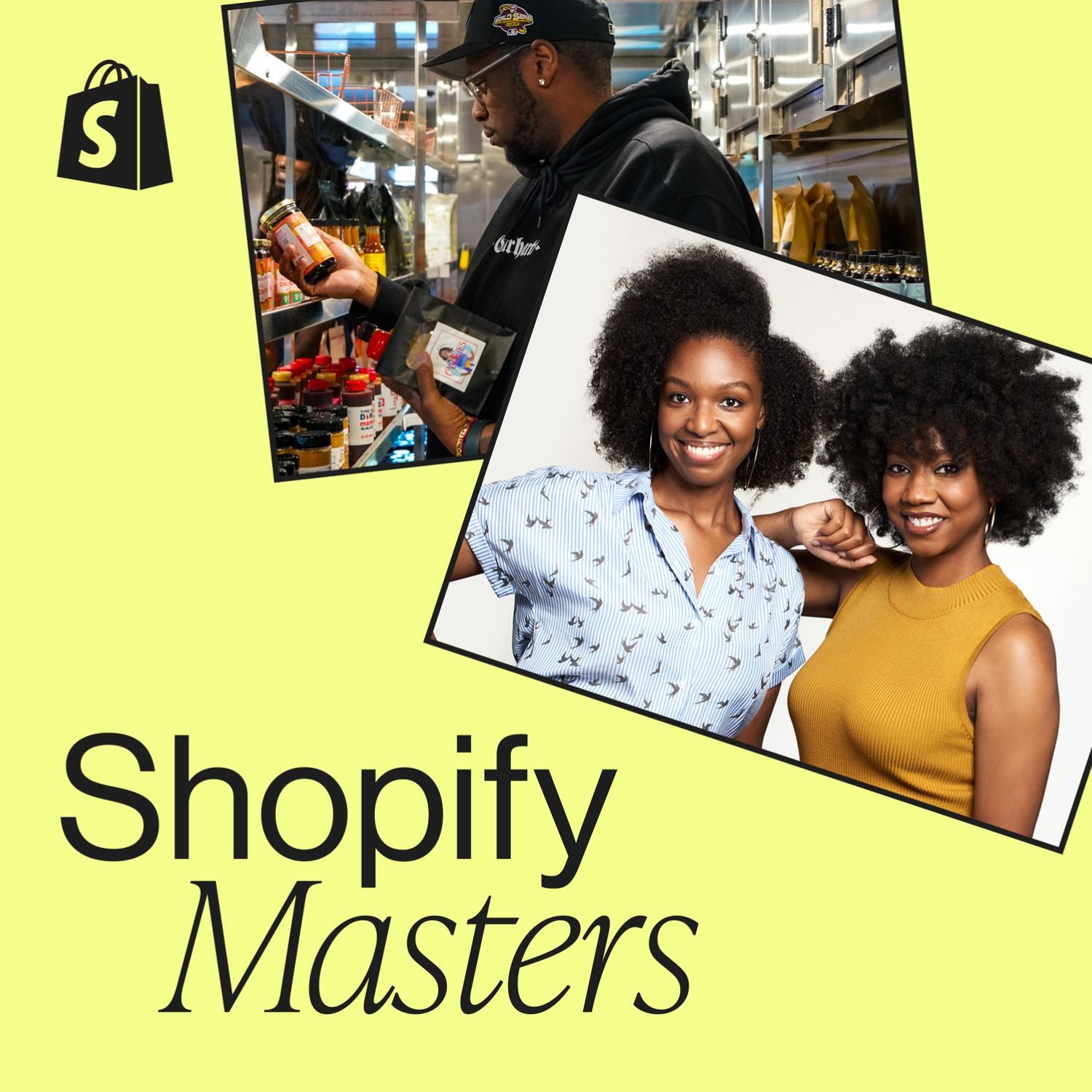
Shopify Masters
How a $5,000 Grant Snowballed Into a Dr. Dre Partnership
00:50:47
Carmen Dianne and Kara Still launched Prosperity Market during the pandemic to bring fresh food and economic power to Black communities in Los Angeles—with no background in farming, no trailer, and no blueprint. Scrappy pop-ups in church parking lots grew into an 80-vendor operation, a Good Morning America segment, and an unexpected partnership with Dr. Dre.
Loading summary
Transcript261 lines
- [00:00]
Kara
It literally said interest from Dr. Dre. We didn't think that was real.
- [00:04]
Carmen
Yeah.
- [00:07]
Interviewer
Carmen, Diane and Kara still founded Prosperity Market, an LA based mobile farmers market and online marketplace serving neighborhoods from Compton to Malibu.
- [00:15]
Carmen
We've had warm welcomes everywhere we went.
- [00:18]
Kara
People are interested and want what it is that we're doing.
- [00:20]
Interviewer
The company has grown from 15 vendors in a church parking lot to more than 80 vendors at major venues across LA.
- [00:26]
Carmen
Entrepreneurship really shows you yourself.
- [00:28]
Kara
The biggest challenge that I come up against on any given day is usually.
- [00:33]
Interviewer
Carmen and Kara join me today to talk about building a community first business, funding it creatively, and measuring success beyond the bottom line. Carmen Cara, thank you so much for being here today. Neither of you come from food or farming.
- [00:48]
Carmen
Not one bit.
- [00:49]
Interviewer
You are historically a makeup artist. You're a fashion designer. What was happening in your lives when the idea for Prosperity Market took shape?
- [00:59]
Carmen
The pandemic.
- [01:00]
Interviewer
Oh, it's a pandemic story.
- [01:02]
Carmen
It is a pandemic story. We were obviously not working and we took a lot of time to just hike because that was the only thing that we could do at the time. And we were just talking about the state of the world and how many businesses were closing, specifically black owned businesses. And we, at that time we were seeing a lot of support to shop black owned businesses. But for us, we dug a little deeper because we understood there's a step that even pre pandemic, that a dollar stays in the black community for just six hours.
- [01:34]
Interviewer
Whoa.
- [01:35]
Carmen
And this is pre pandemic. So knowing that seeing all the support that was coming into the community was great. But like, if it's going to leave by lunchtime, how impactful is it? So for us, we really wanted to figure out how to circulate the dollar longer and be more impactful for black owned businesses. And that boiled down to ownership of essential businesses.
- [01:57]
Kara
And then clearly the pandemic, the most essential thing is food. We were all in the grocery store lines. We all saw the weights, we all saw the supply chain shutdowns. Just like all of those things that we were all dealing with that in some ways created a more level playing field for essential items. But then there were also communities that had always been struggling that then it's exacerbated. Exactly. So, so we really looked at it kind of with a two pronged approach. So it's like, what does economic impact look like to support the black food producers and farmers and all of those people that are literally feeding us and creating food access for everyone? Whether you're in a community where you are underserved and are looking for that access and overlooked. Or you're in a community where you have all of the access, but maybe you want to be able to shop from more diverse businesses or shop your values or have the opportunity to discover things that you may not have been able to shop before. So we really said food is the basis because it's the most essential thing and creating an economic impact and food access. And that's really the table that Prosperity Market was built on.
- [03:12]
Interviewer
Totally. And I think about the conversations that are happening these days about how like, health is the real wealth. I was raised by a single mom. We did not have two nickels to scratch together. But something that she was like incredibly steadfast about was that she wanted me to have access to healthy food. And so she like took a job delivering organic food because it gave her enough of a discount so that she could provide it to me. And I think about how, how enormous an impact that has on someone's entire life, really. You know, you're saying one pillar was get healthy, high quality food to the people who need it, but also take the food purveyors from these communities and bring them into the communities that aren't being exposed to that as well. Both sides. Okay, so what was the early vision then, from a practical perspective for what Prosperity Market was going to be?
- [04:10]
Kara
Nothing about those is practical.
- [04:12]
Carmen
From the beginning, it was always, we want this trailer and it's going to be half food truck, half farmer's market, and it's just gonna go around town. And that was really feasible to us early on. And we thought, we, at least I'll speak for myself, I thought that thing would be ready in six months. Of course, it was not. Six years later, our trailer is now getting ready to launch.
- [04:33]
Kara
Well, in the meantime, you know, we came up against things that we didn't expect. So, I mean, surprise, surprise, we didn't have enough money to build a custom trailer from the beginning, which is why we started doing our pop up markets.
- [04:46]
Interviewer
Okay.
- [04:46]
Kara
And so we wanted to keep the mobile approach. So when we would do pop up markets, every month we would be in a different location. So we traveled from literally Compton to Malibu and everywhere in between. And we brought the farmer's market with us. It gave us a chance to experience lots of different people, lots of communities, neighborhoods, build relationships with people. So unknowingly, while we were not at all ready to build our wheels like we wanted to from the beginning, we got so much support because we were doing these pop up markets all over LA from the beginning, I could see
- [05:23]
Interviewer
how maybe you would be frustrated by things taking longer than you want. But sometimes that's like actually a blessing in disguise, right? It allows you to like to go out there into the world and engage in all this learning so that by the time you can afford the trailer, you're like, okay, we're like, we really got it now, right?
- [05:39]
Carmen
Yeah. And we had to build traction. We had to actually show people this is what we're doing, this is what we're about. And they've seen us from the very beginning so that they know we're serious about this and we really mean it. And we've done everything we said we were going to.
- [05:52]
Kara
No matter how long it's taken, we
- [05:54]
Carmen
don't count the time.
- [05:55]
Kara
No, we did it. Just count the words and the actions. That's it.
- [05:58]
Interviewer
What are timelines?
- [05:59]
Carmen
You know?
- [06:01]
Interviewer
Okay, so you started with these pop up farmers markets that you were doing all over the city. Given that part of the conversation started between the two of you about lamenting the dearth of black owned food businesses, how hard was it to find vendors for these markets?
- [06:22]
Carmen
That was our first, like each along the way we had little reality checks with every next step. And that was the first one, like, okay, we're going to find black farmers. And then it's like, wait a minute, where are they? But what we had to do was kind of restructure how we what we thought was a farmer. So instead of a farmer with a whole bunch of acreage and all of this land, we found community gardens, backyard growers, urban farmers that can still grow a lot of food and supply a lot of people.
- [06:50]
Kara
And many of them were actually feeding their neighborhoods during the pandemic.
- [06:54]
Interviewer
They were doing it anyway and we
- [06:57]
Kara
were really surprised to put numbers to it, to find out that in the entire country, less than 2% of farmers are black. So it's like 1.3%. And then in the state of California, that is one of the biggest agricultural states in our country, it's less than 1%. So it's like 0.7% of farms are black owned in the state of California. So it made a difference that we needed to shift our perspective to what our farmers were and who they were and how they grow food. And it's so much more abundant than you would think when you shift your perspective of what it needs to look like. And we also realized that you can grow a lot in a little bit of space.
- [07:41]
Interviewer
What was that unlock for you that helped you figure out like, oh, actually there's this guy who's kind of doing it in the community in these garden boxes. Makes me think of Ron Finley. Right? Like gangster gardener. Right? Like that kind of thing. Right.
- [07:55]
Carmen
He was one of our. The first people we reached out to. Cause when you're looking for farmers in California, in la, specifically, you get the gangster gardener, you get the farmer kin, and you get crop swap, la. And we reached out to all of them. Cold.
- [08:10]
Interviewer
Okay, so that was the first step. You were like, I can see that there's something here. And then that helped sort of build your network from there.
- [08:17]
Carmen
Yes.
- [08:17]
Kara
Yeah. And they all took our calls and it was really great. And we had amazing conversations and they referred us to other people and that's how we started to get connected to other farmers and other growers that we
- [08:30]
Interviewer
met step by step. Okay, so you put on your first pop up Farmer's Market in 2021. February of 2021. You've got 15 vendors in a church parking lot. Where, where in LA?
- [08:42]
Carmen
Inglewood.
- [08:43]
Interviewer
In Inglewood. Okay.
- [08:45]
Carmen
Which is actually where we had our last market.
- [08:46]
Interviewer
Amazing.
- [08:47]
Carmen
At the Intuit Dome.
- [08:48]
Interviewer
Full circle.
- [08:49]
Kara
Wow.
- [08:49]
Interviewer
Okay. We've come a long way, baby. Take me back to that first market that you got off the ground. How did it feel and what were the indicators to you that day that this thing had legs?
- [09:02]
Kara
I want to say, like, we met so many great people along the way that have already operated in the food space in various capacities and were so willing to lend us a hand or an ear or give us advice or mentor us for periods of time, which made such a big difference, because leading up to this first market, we were stretched thin. We had never done anything like this before. And I think one of the best and most unexpected things was that right before our first market, we had an LA Times article come out.
- [09:39]
Interviewer
Just by chance or had you courted it?
- [09:41]
Carmen
It was kind of by chance. I met a woman in clubhouse of all places, who heard me just talking about the idea at the time because that's all it was and thought it was really interesting. And her name is Danielle. She's like our PR fairy godmother. And she introduced us to the LA Times writer. And that was that first.
- [10:04]
Interviewer
And did you know that it was gonna hit right before that first market?
- [10:07]
Kara
No, no, that was not the original plan, but it ended up coming out days before the Sunday. It was the Sunday paper.
- [10:17]
Interviewer
So people showed up?
- [10:18]
Kara
Yes, people showed up and it felt good and people were excited about it. And so that let us know that this was something that people wanted one of the pastors from the church while the market was going on and everything. And he was talking to us, and he said he had a young daughter at the time. I mean, she's way older now, but at the time, she was, like, under five. And he. You know, it's been six years.
- [10:49]
Interviewer
You guys think it's been, like, 60.
- [10:51]
Kara
It feels like it's been a million years.
- [10:52]
Interviewer
That's probably. I think that's how it feels as entrepreneurs, right?
- [10:56]
Kara
I think it's been a million years. But at the time, you know, he said to us that we were the type of women that he would want his daughter to look up to and doing something that makes a difference for people, and that really meant something. And just all of the things that lined up to say, okay, people are interested and want what it is that we're doing.
- [11:20]
Interviewer
Oh, my God. It, like, reminds me of when you're throwing a party and you have that anxiety of, like, is anybody gonna show up?
- [11:27]
Kara
You know?
- [11:28]
Carmen
Right.
- [11:28]
Interviewer
Like, are we gonna have three people? Are we gonna have 30 people? Are we gonna have 300 people? And just, like, it seems like it doesn't matter how confident you are. Like, you really don't know. How many people showed up to that first one?
- [11:41]
Kara
A few hundred.
- [11:42]
Interviewer
Wow.
- [11:42]
Kara
A few hundred.
- [11:43]
Carmen
Even the vendors, this was our first time ever doing something like this, and they. They took a chance on us to show up and bring all their stuff and trust that we would get people there, and we did.
- [11:53]
Interviewer
Okay. So you start then popping up all over the city. And LA is beautifully, an incredibly diverse place. It also, these neighborhoods are kind of alternate universes, I always say, like, you could be living an incredibly different life if you're in Topanga versus Culver City versus Englewood versus Malibu. Right. Like, they might as well be different countries sometimes. What are you gleaning as you're going into these communities from, like, an Inglewood versus a Brentwood? Or do you find that the insights that you're getting are the same?
- [12:31]
Carmen
What's interesting? I mean, I think certain things take on in certain neighborhoods that we go to. But what's interesting is that everyone is always in love with all of the products. They're really excited. They're talking to the vendors. Like, we've had warm welcomes everywhere we went, and that's been amazing to see.
- [12:48]
Kara
And no matter where we've been, it's been a discovery for the people that are there. Everybody has had a great reaction to anything that we've brought into a community, a neighborhood, whatever it is. And One of the things, especially very early on, that I heard from multiple people, including a friend of mine, was when we come to your events, there's something about it that feels different. Like, when we come to your market, it just feels different than any other market or pop up that we've been to. I like to think it's the care that we bring to it. I mean, honestly, like the divinity of what we're doing. You know, this was an assignment. This wasn't something we expected. This was something that we were given to walk into and to build. And it matters to us. And we, from the very beginning, wanted it to visually look different and feel different and be an experience for people. So it's nice. I think people get that and get that we care.
- [13:50]
Interviewer
You both come from deeply artistic backgrounds. I have to imagine that that came into play as you were not just putting the sort of operational and logistical components together to pull these things off, but as you were sort of, like, world building around this. What did you want it to look like? What did you want it to feel like?
- [14:09]
Carmen
That's actually how we got the name Prosperity. Because I was talking to a friend, we didn't have a name for a long time, and she asked me, she was like, well, what do you want people to feel? What do you want the experience to be? And when she asked me that, like, immediately, Prosperity, Abundance. Yes.
- [14:24]
Kara
And it can look pretty, too.
- [14:27]
Carmen
And that was our thing also. We wanted to create a great experience for everybody. No matter where we're going, whether we're going to Inglewood or Congress or Malibu, we want everybody to still feel great shopping, you're getting quality products. So that is important for us to show up the same way everywhere we go.
- [14:45]
Interviewer
This, you know, you talk about the divinity of it all, but as two women living in human bodies, this was not something that you had planned for. Right. It was not something that you were like. You weren't, like, working your careers, saving your money, knowing you wanted to build this thing. It was like. It was, to some degree, an act of desperation. Right. As much as it was divinity. Okay, well, the front burner has cleared. Right. So now we gotta do this. So how were you funding this?
- [15:14]
Carmen
Actually, our first year, customers contributed to us on our website. They donated to us on our website before we even officially crowdfunded. And that LA Times article had a lot to do with that, too. I think we did eventually Crowdfund, which was its own journey with lots of lessons, but it was successful. And that's how we got the money for our first trailer.
- [15:36]
Kara
And I just want to say, like, I think also the LA Times article really helped. I think the fact that we created our mobile experience from the beginning because that first year, people contributed to us, and I think for the full year, we raised, like, they contributed, like, $19,000 or something like that. And that is literally the money that we used to function for our markets that we were doing.
- [16:00]
Interviewer
Oh, my gosh.
- [16:00]
Kara
Just because they believed in what we were doing. They didn't know us. That, you know, just. And. And many of those people have been along with us on this entire journey.
- [16:09]
Interviewer
There's something very, like, beautifully circular about it. It's like you were doing this thing to support the community, and then the community is also, like, supporting you back, which is what I think business can do when it's sort of, like, functioning at its. At its highest level, you know?
- [16:26]
Carmen
Yeah.
- [16:27]
Interviewer
Okay, talk to me about this crowdfunding campaign, because what year did you do the crowdfunding campaign?
- [16:32]
Kara
2022.
- [16:33]
Interviewer
2022. Okay. Which, you know, in so many. In, like, dog years, feels like founder years, feels like a million years ago. And the landscape has changed. But even in 2022, crowdfunding was not in that moment of its heyday where you could trust that the money was going to come rolling in. What did you do to create a compelling campaign?
- [16:53]
Carmen
Well, the first thing is, we did not intend to crowdfund.
- [16:57]
Kara
We kind of got to be in here.
- [17:01]
Interviewer
Yeah.
- [17:01]
Carmen
Are you seeing the pattern?
- [17:02]
Interviewer
Yeah, yeah, yeah, yeah.
- [17:04]
Carmen
We get tricked into all of this with the crowdfund. We won a grant, and we just thought we were gonna get the $25,000 that was the grant, but they put it in a crowdfund. Like, they matched $25,000 worth of a crowdfund.
- [17:19]
Kara
So we still had to do the
- [17:20]
Carmen
work to get the other money, but they didn't leave us high and dry. They gave us great training on how to run a successful crowdfund and speak to our customer and know about our audience. And that was key not only to the success of the crowdfund, but to the success of our business to this day.
- [17:37]
Interviewer
So you get this grant for $25,000, but it actually isn't. They're not handing you the money. They're saying, go and raise $25,000 of your own, and that will unlock the 25k that we're giving you, so to speak.
- [17:49]
Kara
So it was the Drew and Lauren Holiday social impact Fund. It was amazing. It was amazing. Everything that we got from winning that grant has stayed with us. And so, yes, they said, along with this training and the support, we will match 25k for your crowdfund. And then they connected us with fund black founders and with Crowdfund better. And they taught us how to crowdfunding. And within that, it's not just about crowdfunding. They taught us how to communicate with our audience. They helped us be able to tell our story. They taught us the importance of consistent communication and building those relationships. And that's really the basis of not just crowdfunding, but any fundraising. But the things that we learned from
- [18:42]
Interviewer
them, it's brand building.
- [18:43]
Kara
It is. And the things that we learned from them, not only did it help us to launch a successful crowdfund campaign, we but they were the foundation of our audience communication to this day. And so those are people we can still call, like, as mentors if we have questions, if we need things, those are people we still refer other businesses to if they need support in those areas. But crowdfunding is hard. It's hard. It's not a GoFundMe. It's not set it and forget it. Long before you ask anyone to give you money, you're having conversations with people. You have to connect with them. You have to fill in the blanks so that people don't feel like, I haven't heard from you and now you're just asking me for something. So this was months of preparation before we ever raised a dollar.
- [19:32]
Interviewer
We have a lot of people who watch the show who are either aspiring entrepreneurs or they're early on in their journey. Like, can you give us a few really key tips that you learned? You got all this great education from other people who were willing to grant it to you. What were some of the big takeaways?
- [19:51]
Carmen
Consistent communication with your audience. Like, we scheduled newsletters and what our posts were going to be just so that they're consistently seeing us. So like Kara said, it's not out of the blue that we're saying, hey, we're doing this thing. Support us. They need to know what we're doing and they need to see the process.
- [20:07]
Kara
So show the process and having a level of transparency. You know, when timelines shift, when things didn't go the way we expected, we let people know, like, hey, this is changing. Like, we didn't see this coming because especially when you're crowdfunding, people are choosing to give you their money because they believe in the thing you're doing. So if you go MIA then it's like, well, where did it go? How did it. I don't understand what happened. So it's really been important to share the process. I think that has made a big difference. And even though our timeline has shifted and it's been really challenging for us for people to be able to continually support us so freely and willingly.
- [20:52]
Interviewer
Has that extended to your social media strategy as well?
- [20:56]
Carmen
It basically is our social media strategy,
- [20:59]
Interviewer
just tell them everything.
- [21:01]
Kara
But we keep it, like digestible. Right. We keep it so that it's as easy to understand as possible and as, I guess, kind of succinct as possible. The thing is, we're really going through these things. We're really doing these things and we want to share it with you, but we want it to feel honest but not heavy. You know, it's like there's enough of that already.
- [21:22]
Interviewer
Totally.
- [21:23]
Kara
And so we want to show it to you, but we don't want you to feel, like, bad about it. We want you to feel like there's something you can do and, you know, you're supporting us in turn, supporting the farmers that we work with and the businesses, all of that contributes and makes a difference.
- [21:40]
Interviewer
It's like you want to share Black Joy, right? You don't want it to feel all doom and gloom. Like there's like. To your point, there is enough of that. But there is something so powerful about letting people in on the story and the warts and all of it. How do you find that balance?
- [21:59]
Kara
How do we find that balance? First, being okay with imbalance. Yeah, I don't know that we've found the balance, honestly. I'm sure there are times when people have maybe wanted us to share more, but we have to process whatever's going on over here. Or we may have to do the work behind the scenes. And then there are times when we're doing a lot of things, so we have to balance making sure that the things we're communicating are clear and make sense. Because on our end we're doing a lot of things, but on the outside, we don't want it to get confusing or muddied. So I think it's just like a push pull of depending on what's going on and what information we're trying to convey.
- [22:46]
Interviewer
I would imagine that this is a space among many where your partnership is also really important. You can sort of hold up a mirror to each other. Help gut check, right?
- [22:56]
Carmen
Yeah. And we have to talk about everything because by the moment, things change so fast by the moment. And sometimes maybe I want to share something and Kara doesn't, or vice versa. Or maybe we want to do different things. But I think because there's two of us to talk it through and weigh out the pros and the cons of this action, that really keeps us level. And maybe there's our balance, Kara.
- [23:21]
Kara
Maybe that's it. Maybe that's it.
- [23:22]
Carmen
There's two of us.
- [23:23]
Kara
Ultimately, we're. We're moving in the same direction. We have the same goals, but we're two different people. So sometimes it's like, yep, yep. And sometimes it's like, wait, we. Let's figure out what we're doing.
- [23:34]
Interviewer
It's a marriage.
- [23:35]
Kara
Yeah.
- [23:35]
Interviewer
Okay. So to that end, how do you move through conflict, talk about it?
- [23:44]
Kara
That really is it. At times when we feel like or don't feel like having the conversations, it really is just talking it through. And sometimes it's like, okay, let's put a pin in that and come back to it, because there's also a bunch of other things to do. Sometimes it's like, okay, we're staying this conversation through until whatever the completion of it looks like. But it's just talking about it.
- [24:05]
Interviewer
There's something you mentioned a little bit earlier about the grants, and I think a lot of people don't recognize that you can get grants as a for profit company. How did you discover this?
- [24:19]
Carmen
Also by accident, we received a grant. And with that grant, they didn't specifically ask that we were a nonprofit, but what came with the grant was fiscal sponsorship. So they were a nonprofit and they became our fiscal sponsors. So that when we applied for other grants that required nonprofit status, they would step in and be that partner. And at the time, we didn't know what a gift that was. And this was actually the very first grant we ever got.
- [24:47]
Kara
Yes, the very first grant that we ever got, we found because we were looking for it. And it was because the grant was for creatives doing social impact work.
- [24:58]
Carmen
It was written for us.
- [24:59]
Interviewer
Oh, my God. So niche.
- [25:01]
Kara
And it was $5,000 to do whatever we were doing. And we were doing prosperity Market. And then like Carmen said, they gave us the option to also have fiscal sponsorship. And it's been a blessing because part of our work is social impact work, not just with the community, but with the businesses that we work with and represent. And so being able to get NonProfit funding or 501c3 funding for some of the work that we do that in turn helps grow prosperity market, because we have a fiscal sponsor has made a huge difference. And we don't have to be the ones running the nonprofit part of things, because of our partner, they can essentially
- [25:46]
Interviewer
sort of like give you the designation in the moments that you need it.
- [25:49]
Kara
Exactly.
- [25:50]
Carmen
And that was a conversation where I'm glad there was two of us to talk about it, because at first we were looking into, okay, if we're a nonprofit, how do you become a nonprofit? That's a whole nother story. But then it's like, if part of our mission is to create economic impact in our community, then we have to have some autonomy over the funds that we take in and how we spend it. So we made a choice not to be a nonprofit so that we could keep that autonomy.
- [26:14]
Interviewer
I would imagine that writing grant applications is like a whole universe of its own.
- [26:21]
Kara
Very much.
- [26:22]
Interviewer
Do you have any keys to writing? I was going to call it a pitch. I'm so film and tv, but that's
- [26:29]
Carmen
part of it too. You're part of the artist.
- [26:31]
Interviewer
To writing a compelling application.
- [26:34]
Carmen
Bring clarity and be concise. And I think those are things that once we started bringing that into our grant applications, we started to see results. But it became more clear to me when I was a grant reviewer for a grant. Like, we weren't a part of this at all. But I volunteered to be on the review team because I wanted to know what it was like from the other side.
- [26:54]
Interviewer
Right. What does the competition look like?
- [26:56]
Carmen
Yeah, kind of. And, like, how are people writing? What does it look like? And it's very clear. Like, some things are beautifully written, but it's too flowery, and you don't know what are you actually doing and what's the actual impact. And then some people are very direct, and they're saying, we're doing this. It's going to impact this many people. It's going to cost this much money. And that clarity, those are the winners.
- [27:17]
Kara
I think one of the things that people don't do, and a lot of it is usually time constraints. But what would make a big difference is if you let someone else read what you're writing, because if they have questions, then the person reading it is gonna have questions. And that's another time, I think, when it's great because it's two of us, because anything that we're writing has to go through both of us. So if we read it, you know, and then it's like, oh, but wait, this piece of information, or if they're looking at it here, or those kinds of things. And I think that's something we got into the habit of very early. I remember when we were coming up with our mission and the way we were describing prosperity market, this was still very much during the pandemic. So we're like texting or screenshotting or talking on the phone to people we know to be like, okay, read this. What does it say to you? Like, what do you get from that? Because it makes such a difference. Like, you're knees deep into what you're doing, so you don't always see the holes. And then the other thing about grant writing is knowing how to tell your story as it aligns with what the grant is.
- [28:28]
Interviewer
Know your audience.
- [28:30]
Kara
Know your audience, because it could align perfectly. But if you can't draw the through line from what you're doing to why it makes sense there, it doesn't matter. It doesn't matter.
- [28:42]
Interviewer
You gotta connect the dots exactly.
- [28:43]
Kara
And you have to do it explicitly.
- [28:46]
Interviewer
Are grants still part of your funding mix?
- [28:50]
Kara
Definitely. Definitely.
- [28:52]
Interviewer
You're still writing them, you're still applying?
- [28:54]
Kara
Absolutely. Absolutely. Because there's so many different types. You know, there's private and philanthropic funding, then there's city and state. There's so many different options. And why leave that money on the table if it's going to contribute to the work that we are doing to support the community?
- [29:13]
Interviewer
It's really cool to hear this. I haven't. I haven't talked about grants at all on this show. And it's. I think it's like eye opening for people to recognize that if they're doing certain kinds of work, at least that this is like a whole avenue of money that is available to them that they might not have been considering prior.
- [29:31]
Kara
For one grant. We use to put together vendor workshops, photography workshops for the farmers and businesses we work with, because why? They need good photos of their product. We need good photos of their product on our website and to be able to sell. So we had food stylists come in, we had a photographer come in. They got lessons on how to take different types of product photos with their phones. We also had the photographer take professional photos. So they left with their own tips and professional photos that they got to use and we get to use of their product. And, you know, like, that's just one small thing, but impacts your business in a huge way. But that's not something that we could directly fund from Prosperity Market. But if we have funding to create support for the businesses we're working with, we can do things like that, and that helps move everybody forward.
- [30:25]
Interviewer
You ended up raising $100,000 for the crowdfunding campaign, right. Which gave you enough money to bring your first baby into fruition. The first trailer. Can you help us understand, like, what it looks like and how it functions.
- [30:42]
Carmen
Yes. So our trailer is a huge 48 foot trailer. The back is a farmer's market. You can actually come inside. It's like an aisle in a grocery store that you can shop. The front is a kitchen. So it is a food truck. And we rent that out to chefs and food entrepreneurs. So it is half food truck, half farmer's market. And it's pink and beautiful and we're so proud of it.
- [31:05]
Interviewer
Did you have to have this thing custom built?
- [31:07]
Kara
Absolutely. Oh, yeah, absolutely.
- [31:10]
Carmen
You should see our sketches. We had our hand sketches that we had to give to the builder.
- [31:16]
Interviewer
What was the process of finding the builder? Who could pull this off for you?
- [31:19]
Kara
Lots and lots of research. Lots and lots of research. Because it's bigger than most things get built. It's not a standard thing. We had ideas that we wanted to fulfill and bring to life in ways that have never been combined before. Research and trial and error.
- [31:36]
Interviewer
It exists now.
- [31:38]
Carmen
It exists.
- [31:38]
Interviewer
Is it on the road?
- [31:40]
Carmen
It is, it is. So we're having our kickoff event for this trailer. We've kind of been in a soft launch era, so we've been bringing it out here and there, testing it, using it to its full capacity for the first time. And now this event that we have coming up is gonna be at Earl's on Crenshaw, which is one of our favorites and a great partner.
- [31:59]
Interviewer
Iconic.
- [32:00]
Carmen
Iconic. And this is really letting, like introducing the trailer to the community and letting people know that this is gonna be coming through your neighborhoods now weekly.
- [32:09]
Interviewer
How does it feel?
- [32:10]
Carmen
I don't know if it feels real right now.
- [32:13]
Interviewer
So many years in the making.
- [32:15]
Kara
There's the relief that the part of getting the trailer done is done because that took so long. It was just such a process. So many unknowns. And then there's the all right, new business again, you know, and that really is what it is because we were doing pop ups at first. We were doing just everything that we were doing looked totally different. And even though having the trailer was the original vision, it's a reinvention.
- [32:44]
Carmen
It's.
- [32:45]
Kara
It's completely new. So now, five years into Prosperity Market, we're starting a new business. We have a lot of learning behind us, a lot of information, a lot of support, and it's still something that's completely new.
- [33:02]
Carmen
And to be honest, I feel a little anxious about it. Like this is what we've been working so hard for this whole time. And it's really here and now. It's, I wanna say, do or die, but I Don't wanna say that it's do or do.
- [33:20]
Kara
There's a lot of feelings that come along with it because everything from logistics and operational changes and hiring and trailer route building, all of those things that we've been talking through and planning for, we really have to implement now. So there's a lot of feelings behind it. A lot.
- [33:45]
Carmen
It's easier to talk about when it's saying, we will do this in the future. This is coming soon.
- [33:51]
Interviewer
Theoretical.
- [33:52]
Carmen
Theoretical, that's my favorite word. This whole thing is just a theory that we have.
- [33:58]
Interviewer
Yeah.
- [33:58]
Carmen
And now it's here and it's like, okay, we're testing this theory.
- [34:02]
Kara
Yeah.
- [34:03]
Interviewer
What's the hardest learning curve that you're coming up against right now?
- [34:06]
Kara
Myself, throughout this experience, actually. So, I mean, of course neither one of us knew what to expect when we were starting this thing. We had no idea what the journey would look like. But I think my personal experience is the most challenging thing that I come up against. I knew myself to be someone who, when I put my mind to something, if that's what I decide on, I'm gonna do it. I keep my word with myself. By no means perfect. But I have challenged me in ways through this process that I didn't expect. And then there's to keep going. And some days it doesn't look or feel like my best. And some days I don't wanna. And some days I'm super excited. But the biggest challenge that I come up against on any given day is usually me.
- [35:03]
Interviewer
Has that provoked any kind of different practices or exploration? Like, you guys have been talking about mentors this whole time. Right. That's another big theme, it seems in your journey, like, asking people for help when you're coming up against yourself in the mirrors, being held up, like, how are you working through that? Where are you turning in the personal area?
- [35:26]
Kara
Probably nowhere. There's been a lot of prosperity mentorship. But in terms of, like, my personal. I haven't had many conversations with people who may have had similar experiences, but now are beyond certain points. Yeah. I think for me, the exploration is like figuring out what works. Because like Carmen said, with prosperity market, sometimes things move and change so fast. So personally it's the same thing. It's like, oh, okay. Like something that worked for a little bit no longer works because now we are doing something different. And so now life looks different. And for me, it's been the balance of not neglecting the things that need to get done at home or personally. Because there have been different levels of, like, going all in with prosperity.
- [36:15]
Interviewer
Right.
- [36:15]
Kara
And so continuing to check in on that for myself.
- [36:20]
Interviewer
Right. You both built careers that are really craft oriented. And it's not to say that you can't continue to be challenged, but it's like you were probably both really in the pocket. Right? Like, you were like, I'm a sick makeup artist. I'm an amazing fashion designer. Like, you knew what you were doing. And then you get into this position where the goal post keeps moving, and every time you feel like you've mastered something, you're like, oh, well, now there's a whole other bunch of things. Right.
- [36:49]
Kara
But we're the ones moving it at the same time. The goalpost keeps moving, but we're moving it.
- [36:54]
Carmen
I definitely can agree with what Kara said myself. I think that entrepreneurship, I say this all the time, but entrepreneurship really shows you yourself. It holds the mirror to you, and it's all you. You know what I mean? As a leader, it's all you. There's no things don't happen to you. So how do you handle it? And what can you do better? And you have. It's like a self awareness that you have to have, and it's not comfortable all the time when you're looking at yourself and seeing things that you want to change. This is like real time things that we're grappling with. But I just, you know, yesterday was yesterday. Today is today. You start over a lot. Every day. Every day.
- [37:36]
Kara
Sometimes multiple times in a day.
- [37:39]
Interviewer
Okay, you have to tell me how you got on Dr. Dre's radar.
- [37:45]
Carmen
Good Morning America. We were. And like, how did we get on?
- [37:49]
Interviewer
I'm like, dre is watching Good Morning America.
- [37:52]
Kara
Yes.
- [37:54]
Carmen
Because of our. Our PI fairy godmother. She introduced us to our publicist, now, present day, who has been just instrumental in all of the press we've received.
- [38:03]
Kara
Shout out to Skylar.
- [38:04]
Carmen
Skyler.
- [38:04]
Interviewer
Shout out Skylar.
- [38:06]
Carmen
And she got us on Good Morning America somehow, which Dr. Dre watches, apparently.
- [38:12]
Kara
Wow.
- [38:13]
Interviewer
People surprise you.
- [38:14]
Carmen
Yeah. And he actually, his team reached out to us. I mean, we hadn't even made it home yet. We filmed early in the morning because it airs on east coast time. And we went to breakfast, and we're at breakfast, and our web developer, Mallory, who's like monitoring our emails and stuff, texts us. And she was like, you guys should check your email.
- [38:33]
Interviewer
Did you think it was real?
- [38:34]
Kara
No, no. It literally said, interest from Dr. Dre. Oh, my God. I didn't think that was real.
- [38:42]
Interviewer
Wow. Okay, so what was the interest? What's been the upshot?
- [38:44]
Carmen
He wanted to see how he could support. And that turned into two more trailers for Prosperity Market.
- [38:52]
Kara
Yeah.
- [38:53]
Interviewer
Wow.
- [38:53]
Kara
Yeah.
- [38:53]
Interviewer
So you're gonna have three on the road.
- [38:55]
Carmen
We're gonna have three.
- [38:55]
Interviewer
Three on the road. Two. Sponsored by Dre.
- [38:58]
Kara
Yes, sponsored by Dre. Wow.
- [39:00]
Interviewer
That's amazing. What do you think, like, beyond the monetary component of it, what does support like that from somebody who is that deeply influential and also that deeply embedded in LA do for a company like yours?
- [39:13]
Kara
You know, he's done a lot of philanthropic work that people don't know about. And. And for us, not originally being from LA and then being so embraced by communities throughout la, to then have the work that we're doing, get the Dr. Dre stamp of approval has been tremendous. It's been enormous. It very much validates that what we're doing is wanted on a large scale. And we would have never in a million years thought that that was from Good Morning America. That's the outcome that we would get. Never. We would have never guessed.
- [39:52]
Interviewer
Yeah. It's wild. You don't know what's on the other side of each door.
- [39:55]
Carmen
You never know. That's why you just have to show up and tell your story and just keep showing up.
- [39:59]
Interviewer
Right. And even if something doesn't happen in the short term, it's like these things, sometimes months, years down the road, something will come back around in ways that you don't anticipate.
- [40:09]
Kara
Well, there have been so many things that we've had conversations about and discussed, and at the time, it's like, oh, we want this to happen, or this could be cool, or whatever it is, and it's just like, it's just not the right time. But there have been so many moments, even just small things, where it happens. It just needed to happen at a different time. So whether that's like a connection to a community partner or a location we want to put on an event or whatever it is, it's just, I think, just trusting in the process and having faith that if, like Carmen said, you continue to tell your story and we continue to do the work and continue to show up, that the things will happen that we don't have control over. Right. Those things in the background, those things that if we just put one foot in front of the other will show up for us when it's time.
- [40:59]
Interviewer
Has that changed your relationship with being told no?
- [41:02]
Carmen
I think no is just. I don't register no. No is just like, okay, well, how else can we try? How else can we. Which way? How do we get around the no
- [41:13]
Kara
and I feel the same way. I think it's really interesting because early on, I think both of us were not phased by no. We just go about it differently. So, like, I think with Carmen, when she gets a no, she'll ask it a different way.
- [41:29]
Carmen
You didn't hear me. Let me say it this way.
- [41:31]
Kara
And for me, when I get a no, I immediately go into, okay, how else can we get this done? But I think that no's were not a problem for either one of us to begin with.
- [41:42]
Interviewer
Growth mindset, Right.
- [41:43]
Carmen
But the funny thing is, asking it a different way works sometimes.
- [41:46]
Interviewer
It really can. It really can. I'm an interviewer. I know that.
- [41:50]
Kara
You know, And I mean, even with things like that, sometimes we get the no, we ask it a different way. Maybe we still get the no right now, but so many of those moments have shown up later, right? It's like, all right, well, there you go.
- [42:03]
Interviewer
Sometimes a no is just a not right now.
- [42:05]
Kara
It's just a not right now. And for me, I'm always prepared to, like, figure out a no other way. I'm always looking at, like, all right, how else can we get this done then?
- [42:13]
Interviewer
Do you have any examples of that
- [42:15]
Kara
that you can share the rain out?
- [42:18]
Carmen
Oh, yes. So speaking of Good Morning America, we had a market plan that they were going to come and film. And this was February 2023, and it was raining, like, that whole week. It had been raining, like, torrential downpours. And any other time, we would have just canceled the market, because that's what you would do. But Good Morning America was coming to film, so we couldn't cancel. I mean, what do you do? We still had the market. We pared it down. So we told our vendors, you don't have to come. You know, your safety is first. You don't have to come. But if you do want to come, we're gonna have one big tent. We're all gonna have tables under this tent, and we're gonna make it a rain party. And that's what we did. And we got just enough footage for Good Morning America. The sun came out and let us get a good, you know, some good
- [43:05]
Kara
shots before the RA and so many of the vendors. I mean, you know, Good Morning America was gonna be there, but so many of them came anyway. They were like, no, we're sticking with you guys. We're gonna do this. We're gonna come. The equipment rental company that we were working with, it was just like, literally, how can we combine all of these tents to, like, create a big canopy of things. Line everybody up underneath. Customers still showed up and came. People still had a wonderful experience. But we were on the. It was probably like three in the morning. We were on the phone. We're like, what are we going to do?
- [43:42]
Carmen
My apartment was flooding. Like, it was just. It was not a fun time.
- [43:47]
Kara
At one point, we were on the phone, and Carmen was like, kara, what are we going to do?
- [43:52]
Carmen
Mm.
- [43:52]
Kara
And it was just like, okay, we're gonna figure this thing out. Let's make some calls. Let's email every vendor. Let's call the equipment company. Let's just figure it out. And had we not figured it out, we would have never had the chance to meet Dr. Dre.
- [44:09]
Interviewer
Right. It really is a testament to the loyalty of what you've built among your vendors and also with the people who show up. Because we all know nobody leaves their house in the rain.
- [44:20]
Kara
And it was raining so hard and customers came.
- [44:23]
Carmen
It wasn't even just the vendors. Like, people actually were there shopping, taking
- [44:26]
Kara
pictures, being excited with us.
- [44:28]
Interviewer
Carrie, you've also said that this journey has changed your perspective on money.
- [44:33]
Kara
Yes.
- [44:34]
Interviewer
What shifted?
- [44:35]
Kara
So I'm very aware that the experiences that we have had and are having with the money that we are using to grow prosperity, market, to do the work with the community members, all of these things. Most people in my life will not experience money in that way. Those kinds of funds will not come in and out of their possession in that way. You know, you get grant funding in chunks and amounts to be able to do certain things, have certain deliverables. That's not the way most people get their money. So I've really gained an understanding of how much and how little a big amount of money is all at the same time. And it's been really interesting because it's like what could be considered a really large amount of money in someone's everyday life when you are operating a business is not. And figuring out how to make it stretch and how to make it grow and where you need to put it. And at the same token, I think that both of us have kind of learned not to blink an eye when we need to ask for large amounts of money for grant funding. So things that really might make the average person nervous, it's like, no, Do. Do we need to pad that number so that if they say no, we can get what we actually need. And so I think that's really where the shift happens. It's like, I don't flinch about it, and I understand how far a dollar can go in a very unique way, and it just. It doesn't translate regular life into building a business.
- [46:10]
Interviewer
Yeah. Your understanding of scale has completely shifted.
- [46:13]
Kara
Completely.
- [46:14]
Interviewer
Yeah. But you still have a connection to the smallness of things. From the beginning.
- [46:21]
Kara
You can sort of hold both. It absolutely has not diminished my appreciation. And if anything, it's contributed so much more to the fact that it's a tool and it's a resource. You know, money is a tool and a resource to get the things that we want. And personally, and also in business, even in the moments where we don't always have the money, there's looking at, okay, how else can we make this work? Are there ways that we can get the money or still get the tools and resources, even if we don't have all of the money at that moment,
- [46:55]
Carmen
such as our trailer? I mean. Yeah.
- [47:00]
Kara
And honestly, a lot of requests and favors along the way, especially early on, people were willing to do things for us because they believed in what we were doing, and we were not always able to pay what they're actually worth. And. And those things were such a big help in the beginning.
- [47:19]
Interviewer
There is so much power in just being willing to ask for help. And you've spoken about these, like, various mentors that have come in and really either unlocked a path for you or helped teach you something, a skill set that you didn't have prior. I think a lot of people are looking for mentorship, and it can be a kind of, like, nebulous thing. Do you have any advice in terms of how to identify those people and how to reach out to them and how to have a successful relationship with them?
- [47:50]
Carmen
Well, the first thing I would say is you don't actually have to know them. I have many mentors in my head that I just. I consume their. Their content and I read what they write.
- [48:00]
Interviewer
Right.
- [48:01]
Carmen
And I learn from it. So that's the first thing I would say. And you can do that while you're, you know, pursuing meeting a person.
- [48:10]
Kara
And I think that along the way, we've not been afraid to ask for a conversation. Not for a favor, not what can you do for me? But a conversation. And I think that's gotten us pretty far. And also understanding, like, all of these people have not mentored us through the entire process. And some people we just call mentors because they have so much more experience than we do, and even a few interactions with them has made a big difference.
- [48:37]
Carmen
They don't even know they're our mentors.
- [48:39]
Kara
Right, Right. So it's not like, oh, we've talked to this person once A week for five years. It's just that we take the opportunity to learn from people whenever we can. And I just, I think it's just the willingness to ask for a conversation. And sometimes I think you don't even realize you're in the moment of a conversation and just be like present to it and ask the things or say the things that are there. But you need to be aware that like maybe that moment is like happening right now.
- [49:15]
Interviewer
It's a beautiful perspective on it, I have to say. Just like the sort of willingness to also just like give people their flowers, you know, we had this one conversation with this person and it helped us and we're gonna call them a mentor, you know, it's lovely.
- [49:28]
Carmen
Before we had our first market, I mean this was still 2020. We talked about to Arlen Hamilton, who is a incredible investor and she has a fund. And we had a 30 minute conversation with her that changed the trajectory of prosperity market. Because in this conversation we were telling her about the market we were planning and she was just like, what about COVID And in my mind I was like, oh, it'll be over by then, we'll be fine. But she planted that seed and that's what started our online marketplace. So we did a pre order, a 24 hour pre order where folks could shop online. And we had to do all of this from scratch, by the way. So we had to then build a website that could list products and sell products, but it was a 24 hour shop. And then they would pick up their orders with contactless pickup at our market. And then that has now turned into what is our online marketplace.
- [50:22]
Kara
Wow.
- [50:22]
Interviewer
One conversation.
- [50:23]
Kara
One conversation.
- [50:24]
Interviewer
Thank you for this conversation.
- [50:27]
Kara
Thank you.
- [50:28]
Interviewer
Really appreciate you guys being here.
- [50:30]
Kara
It's a pleasure. We'll do it anytime.
- [50:31]
Interviewer
We'll have you back for sure. And thanks to all of you for tuning in. If you like what you saw, be sure to hit the subscribe button so you never miss an episode. We'll see you next time.