← Shopify Masters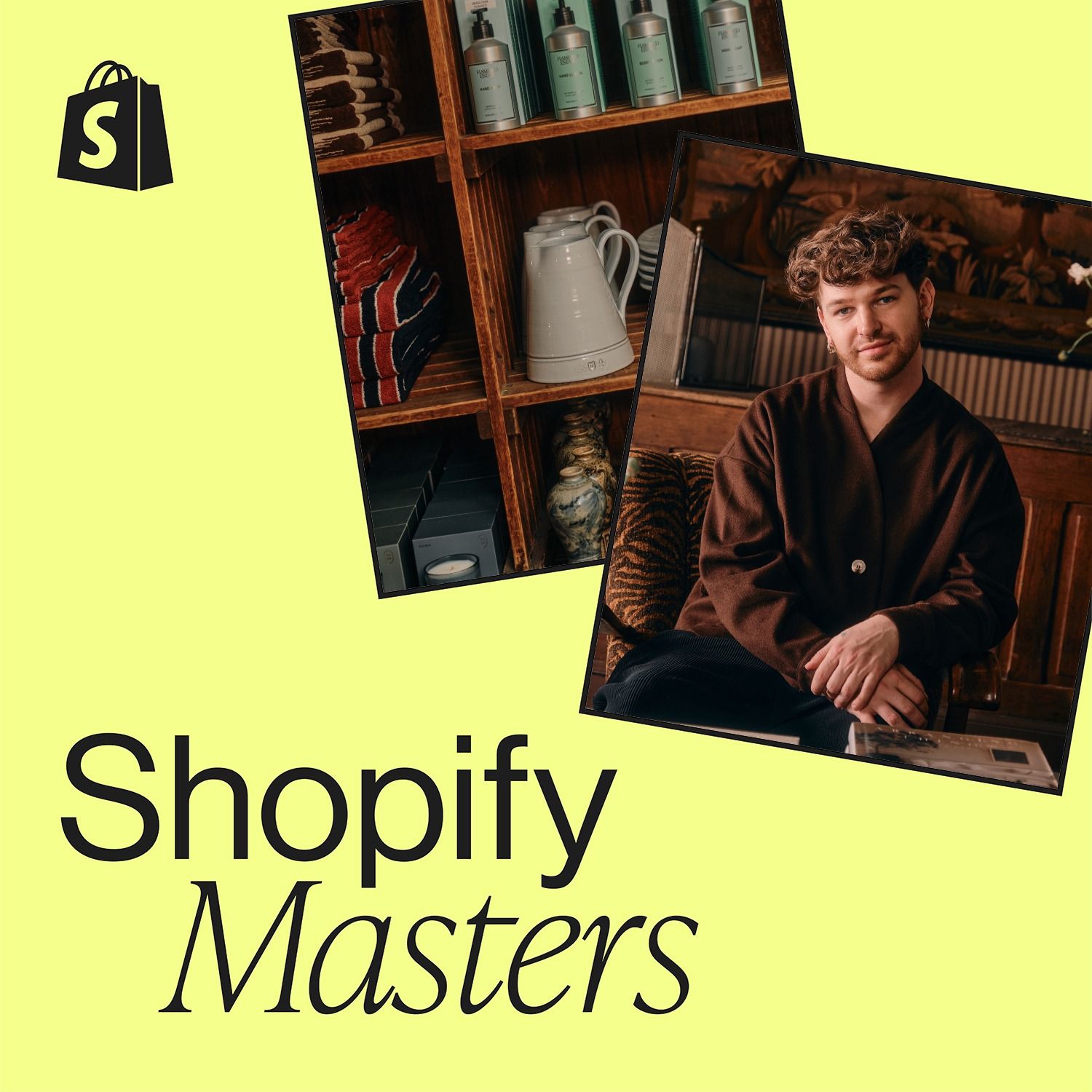
Shopify Masters
How a DIY YouTube Channel Became a Multimillion-Dollar Home Goods Brand
00:45:45
Lone Fox’s Drew Scott on the vintage pivot that doubled revenue, building two million subscribers without ads, and why his business model can’t be copied.
Loading summary
Transcript203 lines
- [00:00]
A
No one else is doing it for me. If I want to turn this brand into something, like, I have to do it.
- [00:08]
B
Drew Scott tried everything. Fashion lines, cooking, blogs, six different YouTube channels before lone Fox became his breakout hit.
- [00:16]
A
Everything that we sell on the website is, like, one of a kind, vintage pieces. We'll, like, upload 100 products, and by the next day, half of them are gone.
- [00:24]
B
Today, he has nearly 2 million subscribers. A curated home goods brand doubling sales year over year, and he's now opening his very first retail store.
- [00:32]
A
I'm the one that literally sources everything for the shop.
- [00:36]
B
Just heard a gas.
- [00:37]
A
I heard a gasp from a Shopify member.
- [00:41]
B
He's here today to talk about the power of the pivot, what it really takes to break through as a creator, and why quitting isn't the same thing as giving up. Drew, welcome to the show.
- [00:50]
A
Thank you so much for having me so excited.
- [00:53]
B
Okay, so let's go back to the beginning. As with most things, I hear that this all starts with your mom.
- [00:58]
A
Yes, it definitely does. My mom was my first inspiration to, like, have an online store. She was like the person that I saw having a store when I was younger, and I saw her being able to sell and make additional income for our family. And I always thought it was such, like, an interesting way to make money. Like, I saw my dad working a full time job, but then I also saw my mom being able to make money from home, and I loved that kind of aspect of it. And so I started to dabble in the realm of making my own store and started small. And over the years, I've definitely, like, picked up a few different tips and tricks. And I've done like 10 stores over my time as well. So it's been, like, such a journey.
- [01:34]
B
What was the first thing that you were selling?
- [01:37]
A
The first thing I sold was, like, lanyard string, that kind of plastic string that you would use in Boy Scouts. I was a boy Scout, so I was using this, like, plastic lace to create these keychains. And the thing was, is that with these keychains, you could only buy the string in, like 100 yard sections. But everyone wanted so many colors, but you couldn't buy that many. So I decided to buy the. The rolls and sell them in smaller increments so that people could choose their colors and s. And it actually did pretty well. I was selling it online. I just kind of took that money that I made from that business and invested it into what I wanted to do next. So next it was Beanie Babies. I was like, let's sell Beanie Babies. And so that's kind of how I've started in the realm of business. I started with something small when I was really young. And since then I've been able to kind of learn something from each business I've done and injected in the next one that I try to create.
- [02:26]
B
How old were you when you started selling the lanyards?
- [02:28]
A
The lanyards? I was probably like 11 or 12 at this point.
- [02:31]
B
Oh, my God. Came to this very early. You're like, forget the lemonade stand.
- [02:35]
A
Literally. I was like, mom, how are we shipping these? Mom? It was definitely like a journey, but she had already previously done a lot of it, so she really helped me with the process of starting my own store.
- [02:47]
B
So incredible to have that early example and influence. Right. Like, it's one thing to, as a young kid have the idea of like, oh, I want to sell things online, but she was actually really able to help you from, like, an operational perspective.
- [03:00]
A
Yeah.
- [03:00]
B
Oh, I can help you with the shipping. I can help you with the logistics of this.
- [03:04]
A
Absolutely. And then, because I will say, when I got into high school, that's when I started my first, like, kind of larger business. It was an Etsy shop and it was a jewelry supply store. It kind of took off. Actually. That's when I started my YouTube channel at the time. And I was like, I think 15, 16 years old, going to high school, and I was making videos on how to scrapbook and how to make jewelry and how to craft in general being very hands on. And so I started selling the supplies I was using in my videos and it just kind of really blew up and started taking off. And there it was a really small platform at the time. So I started to just buy more product and invest more and it just started doubling and things took off from there. So that was my first kind of larger business, which was called discount charms at the time. It later turned to hopscotch crafts, but on Etsy, we got it to like 160,000 sales over the course of like, 10 years or so. It's since gone away, but during the time, it was such a great financial thing as well. It put me through college, so. And it was something that I started and then my mom was able to kind of do fulfillment for the store while I was going to school.
- [04:09]
B
In those early days, when you were experimenting with these different kinds of businesses, were you at the time calling yourself an entrepreneur or did it not even strike you that that might be what's going on?
- [04:20]
A
Yeah, I would definitely say I did not know I was an entrepreneur. Like, I didn't really know. I just love to buy and sell. I didn't know exactly what an entrepreneur was, but I definitely would say that I feel like I am an entrepreneur. I do love starting businesses. Like, I love being able to see something and then create something out of it, you know, mood board it and then do the photos for it and then do the logo and the branding and the marketing. I love every aspect of like creating a brand and building a brand. So I definitely think I'm like an entrepreneur at heart. But I've found sort of my niche, which is home decor and interior design.
- [04:53]
B
And we will make our way on the journey to that and the incredible success of Lone Fox. But you said that the scrapbooking channel was your first YouTube channel. Do you remember the first dollar you made on YouTube?
- [05:06]
A
Funny enough, I actually thought the money I was making on YouTube during this time was like fake money. I did not know it was real because it was accumulating in like an earning like a little bank on my channel. But I, like, I would just see the number go up and up and up, but I never got the money. So I was always like. It basically got to like $2,000 over the course of, I think like four or five years on YouTube. Because I was pretty small when I first started. I a couple thousand subscribers, genuinely. It just always sat there. I didn't even think about it. And then one day I got a check from Google and it was for that $2,000. And I was like, what the heck? This is real money. And I had no idea that you can actually. You would actually make real money. I thought I could maybe like, use it on the platform to buy something or. I didn't know it was real money.
- [05:47]
B
Right? Like, it was like, it was like YouTube bucks.
- [05:49]
A
Yeah. And I was also like 16, 17 at the time. I didn't know people were making money from YouTube either. So I just didn't put the two things together. I was just having my own store and that's kind of how I made money on the side.
- [06:01]
B
When you did realize, because that check showed up in the mail that you were inadvertently monetizing your YouTube channel, did it change your perspective on things? Were you like, oh, okay, now I should think about this as a money maker.
- [06:15]
A
Not too much, honestly. It was $2,000, but it was also over the course of like five years. So like, for me, I was like, it's not like an actual, like, income maker at this exact moment, you know, like, maybe I can make some extra money from it, but it was definitely more of like a passion. Like, I loved editing videos, I loved filming videos. It was favorite thing. So I was just looking for what I wanted to film and what I wanted to edit, like what was a topic. And it just happened to always be crafting. But then I would switch it from scrapbooking to interior design to. Well, then I did fashion. Like, I've done so many different realms and kind of each time I've tried to reinvent myself a little bit as I've gone into the next one.
- [06:51]
B
The fashion channel that you had was quite successful.
- [06:55]
A
That was the first time I would say that I made money from YouTube. Like, and I realized I could turn this into an actual job. And that's because I was going to school. I was going to fidm, the fashion institute, and I was going for product development. So I was kind of planning on getting a job in fashion. But I had already had a YouTube channel on crafting and I had a YouTube channel on scrapbooking. So I kind of thought, why not have a YouTube channel on fashion, even though I don't know much about it. So I kind of started to wear more clothes because I like the technical side of it. I wasn't super fashionable myself, if that makes sense. But then I started getting more fashionable. Cause I was like, I want to make videos about fashion. I'm going to school for fashion. So I started making fashion videos. And men's fashion at the time was a more niche subject. So my channel started to gain some traction. And over the years of going to college, like towards the end of my college career, my parents were like, basically, you have to find a job by January. Or like, you have to move back home because we can't support this. Like, Los Angeles is expensive. FIDM's expensive. So I ended up basically telling myself, like, I have to make this YouTube channel work. So I had like eight months to really, really invest myself in the channel. I think I had like 200,000 subscribers. But over that eight months, like I posted every other day. I was trying to make high quality videos. I was just trying to make it a successful channel to where when I did get out of school, I was able to do that full time. And I got a job at West Elm, started working at West Elm for a little bit, and simultaneously working at West Elm. I got out of school. And then, right. Honestly, like a month after I got out of school, my YouTube channel was generating enough for me to start paying my rent. But it started off very Very slow. It was like a very slow start. And then it kind of started increasing a little bit more and more as then. Then brand deals came to be and you started making money from brands. So it was like very early on. I started making money from social media before it was like even a thing to do it.
- [08:44]
B
You had this successful fashion channel that you built up. You're making money from YouTube, you're making money from the brand deals, but somewhere along the way you decide that you also want to start posting DIY and home design content. How did that come to be?
- [09:02]
A
I had my fashion channel. It had like 200,000 subscribers. Got the job at West Elm and decided I want to create some home content now because I had done the fashion for a couple years. It just seems like every few years I want to do something new. And so you get the itch. Yeah, I do. And so I decided that I was going to start making some interior and like DIY based content and making over my room or like my roommate's room. And the videos performed really well on my channel. And I was like, oh, what the heck? Like these are doing so good.
- [09:29]
B
Better than the fashion stuff.
- [09:30]
A
Way better. Like right away. Yeah. Would get like a million views in like a couple of weeks. And my fashion videos would like cap at 30,000, 40,000 views. So I was like, oh, wow. There seems to be like a people really like these videos. But the audiences were completely different. It was a 95% subscriber base of men. But all my viewers in the DIY and interior videos were women, like 95%. So none of my subscribers were watching. So I made a separate channel called Lone Fox.
- [09:56]
B
What was your leggings line with the fashion?
- [09:58]
A
Lost Fawn.
- [09:59]
B
Lost the Lost Fawn to Lone Fox Pipeline.
- [10:02]
A
When I had my fashion channel, I was like, oh, why don't I have a legging line? Because I wanted to have like another store. I just loved having stores making stores selling things. So I started a legging line called Lost Fawn. And it was like photographs that were printed on leggings. They were kind of cool. Actually at the time I think I only sold a few pairs of them, to be honest with you. But that name is kind of what guided the Lone Fox name. When I came to create the new channel for interior design, I was like, what should I name it? And I was like, maybe should I name it Lost Fawn? And then I was like, nah, that's kind of sad. We'll name it Lone Fox. So I just kind of switched it around.
- [10:36]
B
You're now out of school. At least you're working at West Elm still.
- [10:41]
A
Yeah.
- [10:42]
B
And now you're managing two YouTube channels concurrently. some point in the game, you decide to give up on the Fashion Channel. Like, what was your decision making process around that? Deciding to pivot and go all in on the one thing. And was it hard to say goodbye to the other thing?
- [10:59]
A
It kind of was. But honestly, like, I'm very much the kind of person that kind of just dives all in. That's just my mentality and kind of who I am. If I feel good about it, then I just will do it. So I remember I was with a manager still, my same manager that I have today. And I was like, oh, I think I'm gonna stop my men's fashion channel. And she's like, well, that's like where you're making all your money. Because I only had about a hundred thousand subscribers, the Lone Fox channel at this time. And it was just starting to get some interest from brands and I was making some money from AdSense, but I think I was probably making just enough to get by. But I definitely did take a big risk stopping that fashion channel because I really wanted to go full on with the interior channel. I just felt so much more passionate about it. And the videos were doing better, but they also took me so much more time. The time that interior content takes compared to like putting on an outfit and like posing around. Not saying that that isn't good because outfits do take time to put together, but you know, painting walls and putting up sconces and lighting and paintings and moving furniture, it just like to really get that full picture sometimes it's challenging. And so it was starting to take a lot more of my time. That's what I really invested a lot of time into. The Lone Fox Channel.
- [12:09]
B
You've gotten the itch every couple of years, but you have not, it seems like you have not gotten the itch on this one.
- [12:14]
A
It's very true. That is very true. And I. My mom's the person that's always like, oh, what are you gonna do next? Because she's always seen me stop and start things. Yeah. But I just don't see myself stopping and starting this. I feel like this is just such a part of me now that I feel like I can only add to or like maybe start something in addition to this, if that makes sense. Like I don't see myself being like, oh, gonna go move on to being a fitness influencer, you know.
- [12:39]
B
Well, famous last words.
- [12:40]
A
We don't know Nope, can't do that. We don't know.
- [12:43]
B
You had the cooking blog for a little while.
- [12:44]
A
I had a cooking blog. I don't even cook. Like, I don't know why I had that.
- [12:48]
B
Okay, so this is really interesting because I think so often, whether as a founder or as a YouTube creator, it's like the thing that you're doing is your identity in many ways. You weren't like, oh, I'm a scrapbooking guy and that's who I am. Or like, oh, I'm a fashion guy and that's who I am.
- [13:05]
A
Yeah, yeah.
- [13:06]
B
It feels to me like you had this sort of looseness around it where you were like, it's not my identity, it's just kind of like the thing that I'm doing and I'm interested in right now.
- [13:13]
A
And also my first few channels were the same channel, but they were just kind of like a self name channel. Like, I was just like Drew Scott. And so I kind of just posted whatever I felt like I wanted to post there. But honestly, throughout doing those few different kind of brands or different versions of myself, I guess when I was younger, it made me realize that when I created Lone Fox, I wanted it to be an actual brand. I didn't want to be Drew Scott or like, yeah, I knew right away I wanted it to be more of a brand that I can like build something around in an image and then people can like envision themselves investing in as well.
- [13:47]
B
And what was the vision in those early days? Like, what did you think you wanted the brand to be?
- [13:52]
A
Well, I just wanted it to be more elevated, upscale, but still attainable, everyday kind of heritage brand. That's what I wanted, like in the home world. But I've definitely kind of dabbled more in the vintage realm lately, which I think is so fun because vintage I find so much joy in. And it's something that I realized I wasn't using my product assortment for so long that I was selling and I was like, why am I not using? Like, I'm selling all this stuff on my site, but I'm not using any of it. And it was because I was always gravitating to the vintage in my projects. So I've now switched our assortment and that's really what like took off on our website. It has been like such a fun journey to be able to incorporate that
- [14:29]
B
for a long while. Lone Fox wasn't selling product at all. Right. You were just building it as a channel, as a creator showcasing home design and like DIY content, right?
- [14:42]
A
Yeah. I probably would say about, like, six months into Lone Fox, I did start selling some stuff. Like, because I've always been, like, someone that likes to sell something.
- [14:50]
B
You're a shop guy.
- [14:50]
A
Yeah. Even if I. That's maybe the identity, gajillion dollars from, like, something else, I'd still have a little shop on the side. Like, I just love the essence of a shop. Like, I love having to take the photos. I love putting the listings. I like writing the descriptions. I like everything about a store. It's just like playing shop. Yeah, he's a shop boy. Yeah. Sometimes it gets more serious than that, too, but, like, that's also fun.
- [15:11]
B
Were there some lessons that you took from your earlier experimentations and building earlier YouTube channels that you brought into Lone Fox that helped set it up for success?
- [15:21]
A
I would definitely say that building a community is such a great, strong way to build a brand. Like, I. I would definitely say that I started a lot of my brands from my YouTube channels. You know, like, not a lot of my brands, but, you know, I started my brand from my YouTube channel, and it was first me connecting with an audience and, like, kind of seeing what they were looking for. And that's what guided me to then create the products and the assortment that I do.
- [15:44]
B
I think it's really interesting that you did this in the directionally opposite way than a lot of other entrepreneurs do. Right. Like, a lot of entrepreneurs, they have an idea, they have a product that they want to launch, and then they, like, try to build the community to support it. Yeah, totally works. It's a great way to do it. But you did it the opposite way. Like, you spent the time building the community first.
- [16:05]
A
Yes.
- [16:06]
B
And then launched the product.
- [16:07]
A
Yeah. I think for me, like, it was. It was the first thing that I started doing was making my YouTube videos and connecting with an audience and reading their comments and seeing what they liked about my projects and like. Like, maybe what I could inject in my own brand or, like, what I would maybe be able to sell in the future. And I started noting those things down on the back end. And over time, I was able to build a community and then start really sharing with them some of my ideas as well. For, like, a product line. It kind of just was like a. A really, like, natural evolution, I'd say. Like, it was kind of a natural building of the. The community and me sharing my projects and then really being able to also showcase, because I know a lot of people don't also want to make those projects. It's hard. So I wanted to be able to share finished materials and finished products for people to be able to purchase as well. Because not everyone has that, like, crafty nature. So I wanted the people that watch the videos, but still wanted that. That item in the end to be able to purchase that. So that's where I kind of thought the store idea could be great to kind of inject in as a supplement to the DIY element.
- [17:08]
B
Right. If they don't want to figure out how to do like DIY fluting on the front credenza.
- [17:13]
A
And that's something I do with my videos is like, at the forefront of every video is really trying to keep as little amount of power tools, the least amount of like, involved nature in the project. I try to keep it them as easy as possible because I really want people to be able to imagine themselves doing it as well. And so I think that's what really makes the content strong is when you could keep the. Like, no one's going to be like, oh, let me get my saw and my drill. Am I this? Am I that? Like, they just want to get out like a paintbrush and some paint and like create something really beautiful. So I think thinking outside the box in ways that are really, really effortless and easy for people to kind of pick up on a project is really strong.
- [17:50]
B
I mean, obviously the YouTube landscape has changed dramatically since you started the channel. It seems like it changes every 12 days. Yeah, but are there things that you did in that first year of Lone Fox that you would still recommend to people today?
- [18:03]
A
I would definitely say consistency. During that last eight months of my parents telling me I had to like, amp up, I was posting so many videos. And sometimes that's like, not really the strong suit is like, you know, posting quantity. It's really about the quality and also the consistency. It really is kind of like a TV show. They like to come back and to
- [18:20]
B
the point they want to know.
- [18:21]
A
They want to know. And they also, if you keep them on a cadence, like if you post every Thursday, it kind of does get into their repertoire and like, kind of into their mind. And then also YouTube does tend to, once they start engaging with those videos, YouTube does tend to suggest your videos more often to the viewers as well. So I think just consistency is really strong at the beginning as opposed to, like, sometimes you can be super excited and post three videos in a week and then, you know, take three weeks off because you don't have any ideas. But if you can space them out over those three weeks as opposed to taking off the three weeks I think in the end it could be a little stronger for the brand.
- [18:55]
B
When you decided to first start selling products, what kinds of things were you selling?
- [19:01]
A
My first products were just like kind of things anyone could buy and sell. Like I was just reaching out to wholesalers that I was able to easily find online and that's why I wasn't using my product assortment. Like it wasn't anything I was too excited about. So that's when I realized I really want to switch what I'm selling. So that's when I switched to doing primarily vintage. So now almost like everything that we sell on the website, a mass majority is like one of a kind vintage pieces that we like go out and find and get their provenance and origin and like all the different bits and bobs about the vintage.
- [19:32]
B
As somebody who likes to shop vintage myself just for my own small home, like it's like an insanely time consuming process. The whole very nature of vintage is that it's unpredictable and it's hard to scale. You're trying to find one of a kind pieces, you don't know where or when they're going to show up.
- [19:53]
A
Exactly.
- [19:54]
B
How is it that you've taken something that feels so unscalable by its nature and managed to scale it?
- [20:01]
A
I think I just have the drive to find the pieces and I also, it's what I kind of do. I'm already designing a lot of projects and I really, I go out and I'm sourcing for my own projects all the time. And that's where I, I kind of dabbled into the realm of vintage is I was finding so much, but I had nowhere to put it. I was like, gosh, I, I love this vase, but I have nowhere to put this vase. Like, so I started collecting more vintage and it just started piling up. And over time I was like, I should really start selling some of this because my followers, they like I mentioned, they really guided me. They're like, why don't you start selling some of that vintage we see you have sitting around in your house? So that's when I started to like post the vintage and start sourcing more of it. And now I just, just, it's just like second nature to me. In my free time, I'm scrolling on Facebook Marketplace. I'm looking everywhere, anywhere for a deal, like for a good deal and a vintage item.
- [20:48]
B
Facebook Marketplace is such an addiction. Oh my God, I'm in so deep right now.
- [20:53]
A
I know, it's crazy what you could find on there. And the thing I Love is. You don't know what, like, you can be like, oh, what am I going to look for? And you scroll. It's like, oh, ping pong table. Didn't know I needed that, but need that one.
- [21:03]
B
Definitely need that one.
- [21:04]
A
Yeah.
- [21:05]
B
I mean, initially you were selling the vintage pieces via a drop model, right?
- [21:12]
A
So we started doing our vintage in a drop model where we would drop, like, every Thursday, our vintage collections. But then after a while, I started collecting things a little bit more frequently, so we started photographing them more frequently. And I was too excited to, like, not get them on the website as fast as we photograph them. Cause I'm just so. Every time we shoot something, I'm so excited for people to see it or be able to, like, purchase it and put it in their house or style it. So I try to get things on as quickly as possible. And so I started just a little bit more frequently posting the items to the site.
- [21:43]
B
Where on earth are you keeping all this inventory at the time?
- [21:46]
A
So I ended up buying a duplex. I was like, I'm going to buy a duplex. I'll live in the upper unit, and I'll use the bottom unit for storage. So that's what I did. I actually used the whole bottom floor, like, all the bedrooms, all the bathrooms to store all my vintage that I was selling, like, from little things to, like, massive bookcases and, like, hutches that we were, like, maneuvering down the hallways of a 1920s home.
- [22:08]
B
Do you sleep?
- [22:10]
A
No. A little bit. Just. Just a bit. But it's fine because we have this, you know,
- [22:17]
B
I mean, it just feels like you've been going, going, going, going, going, and you're so passionate, so I can see what's driving you. But, like, have there ever been moments where you're like, oh, this feels like too much. I'm overwhelmed.
- [22:28]
A
There definitely are. I just recently got an opportunity to fly somewhere, and I was like, oh, is this. That's like. It's such a great opportunity, but I have so much stuff that I'm doing right now that I feel like I can't even go on this trip, but I want to go at the same time. So I'm someone that likes to say yes to everything, and I try to do everything. I definitely am trying to say a little bit more of no to things. Yeah. I think that's my resolution this year.
- [22:50]
B
The vintage stuff that you're selling is beautiful. It's also at a very different price point than the things that you were selling initially. Like, a lot of which you said, you know, you could find on Amazon or on other places. Right. Have you found that the audience that you're speaking to has changed or that, like, your original sort of OG audience has sort of grown alongside you?
- [23:14]
A
I do always talk about how vintage and antique typically is more expensive. So that's really why I also love to showcase and highlight, like, the aspect of DIY so that maybe if you do spend more on, like, a dresser for your bedroom that is vintage, you can then DIY a headboard. And I just recently shared, like, a tutorial on how to make a $200 headboard where you can save money in that realm, but maybe invest a little bit more a vintage lamp or a piece like that, because vintage does cost more, but there also is always the opportunity to go out and find it yourself too. I think, like, with our website, we're. We're doing a sense of a service of curating it and really trying to find and. And also find the origin and, you know, what the designer is and where it's from and supply, like, the customer with all that information. And we also do rework a lot of our pieces, too. Like lamps we get. We do new shades on them and we reupholster vintage pieces all the time and, like, rework and reimagine them just for moder living as well.
- [24:08]
B
What does your team look like these days?
- [24:10]
A
I have four additional people on my team other than me, but two of them have been added in the last, like, three months. The other two that I had have been with me for, like, seven years, one of them and like, five years, one of them.
- [24:22]
B
And what do they do? It's like, do you guys have a division of labor? Is it kind of like everywhere?
- [24:26]
A
We kind of all do a little bit of everything. Yeah, we kind of do a little bit everything. I'm definitely like, the director in terms of, like, the creative and, like, what we're going to be filming. And I'm the one that literally sources everything for the shop. And then my employees, they help with photographing it and uploading it online and emails and my brand projects and just all of those other things because we do a. I do a lot of content outside of my store as well. Like just interior content. That's my bread and butter. So, like, you know, this is just on the side.
- [24:55]
B
One of many side hustles. And you have yet another in that now you're opening your first retail store. So exciting.
- [25:05]
A
Kind of scary, but kind of fun.
- [25:07]
B
Scary fun for sure.
- [25:08]
A
Yeah. It only just dawned on me that it was scary, too, recently, because I was like, gosh, this has been so fun, like, setting up. But then I realized I have to keep it going. I'm like, oh, no. I have to keep the stock flowing, and, like, I have to keep it or hope. I have to upkeep it, like, you know, And I realized that recently. I'm like, oh, my gosh, it was so fun setting up, and now I have to make sure that everything stays up and beautiful and running and properly done. But. But I'm excited for the challenge. So, yeah, it's just different. Again, our customers let us. Like, it was them all. A lot of customers emailing us and designers emailing us, like, I want to sit in this chair. My client wants to see this. I want to check this out and see if it will work for my house. And we never had a space for people to do that, so now I want to be able to have people come and look at pieces before they invest in them.
- [25:51]
B
You were selling vintage online. You're storing the inventory on the bottom floor of your duplex?
- [25:58]
A
Yes.
- [25:58]
B
It's very cute, but it sounds like maybe you're outgrowing it.
- [26:02]
A
I was outgrowing it. I did actually end up moving into, like, kind of a warehouse space, and quickly, which was supposed to be a showroom, I was like, this is gonna be a beautiful showroom that people can come to. It turned into, like, a stacked warehouse very quick because I just kept on buying things, and so I just kept on stacking up. And so then I was looking for a new space, and we were consistently still selling our, like, photographing and selling items, but I was just accumulating more than I could even sell. And so I started looking for a new space, and I just kept driving by this coffee shop that was right by my house and seeing this banner on the side of a building that was for retail space with warehouse for this much money. And I was like, gosh, that's such a great deal. And I saw it a few times, and then I finally called and toured it, and I. And I didn't even, like, jump on it for a month after that. I was in, like, New York. And then I called them again, and I was like, I think I need to tour the space again when I get back from New York. And they're like, okay, it's still available. So then I got back on Monday, and I think I, like, signed the lease on Wednesday for the space and then started, and I was like, oh, I'm gonna turn it into a retail Store, I think, because I just. I don't know, I just wanted to do something new and like.
- [27:08]
B
And you've been selling things for years.
- [27:11]
A
Yeah.
- [27:11]
B
Online. And now you're like, oh, I can make this like a real, physical, tangible thing for myself.
- [27:18]
A
It's just like every year I want to just like challenge myself to something different or new or like I do the different businesses. And now with this one, it's like, oh, I'm just going to do the retail side of it now. Then we'll see what happens in the next couple years.
- [27:29]
B
Does fear ever crop up for you?
- [27:31]
A
Not really, no. That's something my mom always says too. She's always like, aren't you like, worried? And I'm like, no. Like, you don't worry. No, not. I don't know. I've always been. Been like a go with the flow, we're gonna figure it out kind of a person. Yeah.
- [27:46]
B
And so far it's working.
- [27:48]
A
I've had this mindset too since I started social media that I'm the only one that can do it. Like, I'm the only one that could post on my account. I'm the only one that can make the videos. I'm the only one that could edit them. I'm the only one that's gonna the caption. Like, no one else is doing it for me. So I have to, like, if I want to turn this brand into something, like, I have to do it.
- [28:04]
B
Are you still doing most of the work on your own channel?
- [28:07]
A
Everything.
- [28:08]
B
You're one man banding.
- [28:09]
A
Yeah, I don't have an editor or anything. I even upload all my, all my items on Shopify. Like, all my items. I sell every single item.
- [28:18]
B
We just heard a gas.
- [28:19]
A
I heard a gasp from a Shopify member.
- [28:23]
B
Truly, I think you don't sleep.
- [28:26]
A
I go in my bed at night and I like, I'll look for auctions for a couple of hours and then I'll do some little listings for a little bit and then I'll go to bed, wake up, and then repeat. Like, fill my content in the day. I also am someone that loves staying busy. I've been an anxious person in the past. So, like, I've learned that staying busy and like just filling my day up with things to do actually is better for me than like kind of like not having anything to do. I just start thinking more and like, like get a little anxious.
- [28:54]
B
You are not on the stillness train.
- [28:57]
A
Yeah.
- [28:57]
B
No, no. Do you ever try to create that space for yourself?
- [29:01]
A
A little bit. But I can Never. I really can't. Like, I just like I'll try, even try to watch a movie and I can't even find myself. Like I need to check my store. I need to list something. Like I, I always feel like I need to be multitasking or doing something like productive alongside, which is probably not like the best thing. But it's just like how I work.
- [29:19]
B
I mean it's working for you.
- [29:22]
A
Yeah, it works.
- [29:23]
B
You don't feel burnt out?
- [29:24]
A
Exactly. Yeah, I don't feel burnt out at all. Or like I need time off or anything like it, I just like being, I like being active and busy all the time.
- [29:32]
B
You did say though that opening a store is maybe the hardest thing you've ever done. Yeah, I mean you've done so many things. What makes it harder than content creation or interior design or running a DTC business?
- [29:47]
A
There's just so many elements, first of all that go into it. Like there's really so much from like just like the stock to like the flow of the space. Like can people walk around? Are they able to walk through it? Are you going to have a barcode system? Are you going to be writing down the prices? Do people need to know the price? Like are they going to be like how much is this? Are you going to tell them? Like there's so much you could think about beforehand with a, with an in person store. And also it's like I feel like too because I'm kind of an influencer and like I, I feel like I have to also.
- [30:16]
B
I think you can remove the air quotes around that.
- [30:19]
A
You know how like people are gonna come in and like really like look around and like I just feel like I want to make sure that it's done really well and I'm the only one that can do that.
- [30:28]
B
So is your intention to be in the store?
- [30:32]
A
Definitely not. I still need to make content for everybody. Like I'm gonna need to be creating design projects and stuff but like, for, for like the opening and like for. Of course I'll be popping in now and then. I literally live so close by and I'm gon going to be closed like I think two days a week where I'm going to be the one kind of restocking and like doing the visuals in the store as well because I'm very hands on with that too. So I want to, I'm planning on being there but I don't know how much in terms of like every single day because I still do want to be able to create my content and My. My videos.
- [31:02]
B
There comes a time in every entrepreneur's journey when they're successful enough where doing it all literally just becomes impossible.
- [31:11]
A
Yeah.
- [31:12]
B
Are there places where you've been able to, like, release the reins. Yeah. And. And give it up to somebody else?
- [31:18]
A
Yeah, I would say so. And that's been the biggest thing for me. That's hard is like, I've had a small team because I've been. It's been so hard for me to give up, like, stuff for other people to do. I'm always like, I can do it, I can do it. Just let me do it. And it adds up. And I'm a big procrastinator. Like, I'll proc. Which isn't.
- [31:34]
B
You can do both.
- [31:35]
A
Yeah. I'll just like, push it off until the. I'll get it done, but I'll procrastinate until the last second. Yeah. But I have a full photographer now that is, like, full time that does all the. All of our photos for online, for, like, catalog and also for, like, our E. Com photos as well. So that was something that I was doing before and I really, really, like, was a stickler about. Like, I was like, I need. These photos have to look a certain way. Like, we're trying to sell this image and this look. So I've handed off that and we now have a warehouse manager. So I'm definitely starting to learn a little bit to, like, not outsource, but, like, you know, like, get more help within. You're building a team. Yeah. I think it's good, though, also at the same time to start, like, a little smaller, you know, so, like, you are. You really know everything. Because I think too, if you start and you build the biggest team and you don't know anything about, like, the different facets of your team, like, if someone leaves, it's not going to function the same way.
- [32:25]
B
Totally.
- [32:26]
A
So I think it's good to know, like, the. The fundamentals of your business.
- [32:30]
B
It probably also conjures a different kind of responsibility, respect for you also, because the jobs that you're asking other people to do, you've been doing them.
- [32:36]
A
Yeah.
- [32:37]
B
They know that, you know.
- [32:38]
A
Yeah, right. Yeah. Yeah, exactly. It's a little bit more reassurance, too, because, like, I can also step in and help and be like, oh, I think we should, like, tweak it this way, or maybe try it like this. Because we're doing a campaign that's coming out that's going to be in this style. You know, I'm very, very, like, hands on with everything that we that comes out from the brand.
- [32:55]
B
How do you think you are as a leader? Like how do you think your staff would describe you? You?
- [33:00]
A
I am so easy to work for. Like I'm just a very, very easy, chill person because I don't want it to feel like work. I don't want to walk in and have people behind like their desks and like everything like that. Like everyone has, it's like a free for all. And it's also like we have like hours, but they're kind of like loose hours. Like if you get your work done outside of your hours, like you could take the day off if you need to. So it's very casual. They, they don't say call me like boss or anything like that. I hate that I won't call my assistant. Assistant. I hate that, that I hate the word assistant.
- [33:34]
B
I'm glad I have to say I'm glad they're not calling you boss.
- [33:36]
A
No. Yeah. It's so funny though because sometimes we'll meet people and like I'll be with Justin. He's like my right hand man that we, I do everything with and they'll be like, oh, who is this to you? And he'll be like, oh, it's my boss. And I'm like, no, I'm not like. But we're like, we just say friends. Like I'm like, oh, that's my friend. It's my friend Justin. But we just work together.
- [33:53]
B
Your sales double between more than doubled actually between 2024 and 2025. Looking in hindsight, was there like any strategy or something specific that you put in place that you think contributed to that kind of growth?
- [34:10]
A
Honestly, it really was like the switch in my product collection like it was before, like a lot of contemporary products or things that you can buy wholesale and then you resell. But the thing I noticed about that is like anyone can buy those and anyone can resell them. If you have a, a wholesale license, like you can buy from anybody, you know. So I really wanted to create or have product that was like not Google Lens able or you couldn't find for cheaper somewhere else. Because I feel like that's what a lot of people I noticed on TikTok started posting. You can find these products if you use Google Lens or if you use this or if you do that, you can find these products so much cheaper. And I would like look at my 30 vase and find it for 21 on Amazon. So I started to realize like I need to change my product assortment and, and people Were loving the vintage I was using in my projects, but I didn't know how to get that to them. So I was like, why don't I just start selling it on my website? So we actually kind of had to figure out how to start shipping that because before everything was pre packed for us, kind of like the items were boxed and we'd buy it wholesale, It'd come to us, we'd just leave it in the box, put it on the shelf, and then ship it when the customer bought it. But now we were buying like vases that we now have to like pack in like full on like bubble wrap and you know, like the proper packaging. So that was like a learning curve when doing the vintage. But now we like it so much more because everything's just so one of a kind and unique. Like we don't sell the same product twice. We do still have a range of contemporary goods, but they're much more thoughtful and like, they're more a contemporary range of like, not designer, like expensive, but like more artisan contemporary goods.
- [35:39]
B
I mean, I imagine it also feels really special too, to know that you're sending something off to somebody that you specifically sourced by hand. There's only one of them potentially in the world. Old.
- [35:51]
A
I mean, it is insane to see when we do, when we put our vintage online, how fast it sells, like still, still. Oh my gosh, like we'll like upload a hundred products and by the next day half of them are gone. Like every single time. If it's like smalls and art and like lamps, if it's furniture, it's a little bit more of like, it's more expensive, you know, so sometimes and people have to measure and things like that. So furniture typically, but we. Furniture does so well for us too. People love a vintage vessel and a vintage little knickknack. And so I really try to find like the cutest one ones. Like I go out and try to find like what I would put in my room and what I would put in a client's space and then just sell it on my website.
- [36:29]
B
What are you most excited about for the store actually opening?
- [36:32]
A
Ooh, for the store opening, I'm actually really excited to see what people are gravitated towards in terms of like, product. Because online we have a really vast, primarily vintage, but actually in store we have like half vintage, half contemporary. Because I really want people to be able to come in and leave with something too. Because not everyone wants to come in and spend $600 on a vase, you know, like we also do have a bunch of like really great glassware that's like $10 a glass or we have like candles and things like that that are easy grab and go, like kind of gift items which are great.
- [37:02]
B
It feels very fitting with your brand overall. Right. Like you're selling these high end vintage pieces. You might have a $6,000 hutch.
- [37:12]
A
Yeah.
- [37:12]
B
Right. But you're also giving people DIY content.
- [37:15]
A
Yes. And then I'm showing like, like you have a $6,000 hutch, but I just showed you guys how to do a DIY lime wash where you don't have to Pay your painter $6,000 to come Lime wash your dining room. So now you can buy the hutch. You know, I gotta watch the DIY lime wash. So that's what I try to do is like really give people like the, the budget friendly ways to do things differently. So then maybe they can invest a little bit more in like something that they're really excited about or like a statement piece or something that is. Has. Adds character to their home. Because vintage really does add so much to a house.
- [37:44]
B
House. Totally. I have to ask, while we're on the subject of money, have you been completely bootstrapped this whole time? Has this all been. Have you ever taken like any outside money or is it all yours?
- [37:53]
A
All mine.
- [37:54]
B
How have you funded each phase of this growth?
- [37:58]
A
I've always been a pretty good like not saver, but I'm not a huge spender on like things outside of what like I. I'll spend on vintage furniture all day long, but it's all to resell. Like, you know, it's all for the business. So like I'm not a huge spender on myself. Like I'm not going out and buying cars and like random things like that. So I find my just reinvesting, like kind of reinvesting and saving. And then each business I was able to make money from and kind of reinvest into the next one. And also from doing my social media, I was able to use some of that money as well to open up the retail store.
- [38:31]
B
When you first started selling the contemporary goods online, you were using the money that you'd made from YouTube creator and like my.
- [38:40]
A
I had multiple other businesses between Beanie Baby and you've been working for a long time. Yes, there were some other ones in there, so I definitely made some other income sources. I had a, I had a stamp club, like where I would make little because I had. I like scrapbooking where I would make like a stamp set And I would send it to people every month and it would like auto charge them every month if they were subscribed in this club. And I would like design them and then have like a stamp manufacturer make them. I had so many different things that I've done.
- [39:07]
B
How did these ideas come to you?
- [39:09]
A
Just all from my community. Like, I literally was like, what do you guys want? And they're like a stamp club. And I'm like, okay, let's do it.
- [39:14]
B
They said they wanted to, wanted a stamp club.
- [39:16]
A
So it was a thing in the scrapbooking world. Like it was like, you know, like stamps that you can like stamp on a paper with ink. They like. In the world of scrapbooking there was different brands that did like these monthly clubs where you would pay $10 a month and each month you would get sent like a sheet of stamps that you can use on your projects, but you didn't know what they were. So like people would subscribe to them. But I, during this time too, I was like a 14 year old boy in the realm of scrapbooking, which is like primarily older women. So people just thought it was such a cute thing. So I think they were also just buying into my cuteness.
- [39:49]
B
It is a cute thing.
- [39:50]
A
Yeah.
- [39:50]
B
I mean, with all of your different evolutions of YouTube channels and the cooking blog and whatever. I mean the stuff where you're forward facing, like, have you ever changed like your Persona at all? Like, was scrapbooking drew any different from. From Fashion Channel Drew from Lone Fox Drew?
- [40:14]
A
No. No, definitely not. I definitely would say that they've all been like the same kind of Persona and person. I don't even know how to like really change myself too much. I know what you mean though. But definitely I've always just been kind of the same Persona behind the brand. Each of each kind of, I guess, phase I've gone through.
- [40:33]
B
What you see is what you get.
- [40:34]
A
Yeah, I love it.
- [40:35]
B
Yeah. Like actual authenticity. Right. Which is what people are attracted.
- [40:40]
A
Yeah. And connect with. And I think that that's sometimes hard now with short form too, like with the rise of short form is like that authenticity and like really creating that strong connection. So that's also. I think YouTube's really great to come in and like create that longer form connection with your audience.
- [40:56]
B
Yeah. I mean, is that still a path that you would recommend to other entrepreneurs and also other creators to like. Yeah. Really invest the time and the resources in something that is a little bit longer form, like YouTube versus short form?
- [41:11]
A
For sure. I also think that YouTube videos are great for you to like put on your website. So like if you can embed them in your website, like they're a lot more viewable than like a mobile, like a TikTok embed or something on a website. So like I think too, if you could think of it like that, like I get a YouTube video out of it, but I also might be able to put this on like the blog page of my website. Maybe it's like gives you a double boost to make the video. The thing about YouTube that I tell everybody that they don't realize is like, it's so searchable. Like you can go on YouTube and type in like how to paint wood to look like stone and you're gonna find videos on it. But if you go on like Instagram and you type that in, you're never gonna find anything. Or if you go really anywhere else, like it is just such a searchable platform. So if you really are doing something niche or kind of like different and you want people to be able to search and find what you're looking for, I think YouTube is also a great place for that.
- [42:01]
B
Right. And so in that way platforms like Instagram remain like really ephemeral because if you're not seeing something in the moment, chances are you're not going to see it later because you can't search for it. Whereas with YouTube it feels like something can have a life.
- [42:15]
A
Yes.
- [42:16]
B
Many months or years down the road. Right?
- [42:19]
A
Yeah.
- [42:19]
B
I would imagine you've experienced this, right, where like a video performer forms initially and then it gets some kind of like second win later on down the line.
- [42:27]
A
Yes, exactly. That I've had that so many times. The video where I shared with my landlord, my apartment is one of like my most viewed videos on my channel. But I still get like notifications every single day of comments being left on that video. Like them popping down. It's like I love this video so much, but it's. I made that video like six years ago and it's just, yeah, YouTube definitely. Like the videos have longevity and like even, even I can search up my scrapbook videos from 16 years ago. It literally shows 16 years ago. And if I search lion scrapbook page, mine's on the first page from 16 years ago.
- [43:00]
B
You heard it here first. But like you can go see Drew scrapbooking days.
- [43:03]
A
But that's crazy, right? Like a 16 year old video is still within the, in the search engine.
- [43:09]
B
Totally. It's like it still really lives on forever there.
- [43:12]
A
I think that I found myself really liking to create content on YouTube, too, because it did live there. I never liked the story aspect of, like, Instagram stories and things, how they're. How they go away so quickly. I'm like, I need my stuff to live. Like, I'm not putting in the work for it to, like, vanish.
- [43:28]
B
Totally, totally.
- [43:29]
A
Yeah.
- [43:29]
B
I'm with you. At the same time, like, I've heard creators say, in order to put yourself out there in this way, you kind of have to be willing to be a little bit cringe. Like, you have to be willing to do something that later on you might look back on and be like. Like, oh, you know, but that is maybe kind of a sign of success. Like, is there any stuff that you look back on where you're like, oh,
- [43:51]
A
my God, it's more like, cringy. Just like, the way that I would, like, do my projects and stuff. I wouldn't say, like, the actual videos themselves are, like, cringe. And I didn't really do anything that was, like, too crazy cringe. But it would be like, the projects are, like, not anything I would make to this day. You know, in my first, like, six years on YouTube, you never even saw my face because it was, like, very, like, hand projects, you know, so. So I think I had, like, a different kind of experience with it.
- [44:16]
B
When you reflect on your whole career, starting with the lanyards to today, I mean, what do you. What do you make of it? What do you think of what you've built for yourself?
- [44:27]
A
I mean, I'm, like, so excited and happy with the direction of this brand because I think it's, like, something I've always really wanted since I was so young. I always wanted a successful brand that people like and that they want to, like, incorporate in their. In their life. And so I didn't know it was going to be this one. And so, yeah, I'm just. I'm. I'm so excited by it. It makes me happy every single day. And I look forward to creating content and, like, engaging with the community and, like, thinking of new ideas. And I don't. Like, I've never wanted to do client work, but now I'm like, oh, should I do client projects? Should I, like, start taking on, like, a client and, like, doing, like, their house and, like, what can we do with their house? Oh, my God.
- [45:07]
B
True.
- [45:08]
A
I'm crazy. So I'm just, like, like, thinking of next steps all the time.
- [45:11]
B
Maybe, like, see how you feel after three months of the shop being open,
- [45:15]
A
you know, like a New York location, maybe.
- [45:18]
B
Oh, my God, 2027, you're listen. God's ears. I don't. I don't doubt it for an instant. I'm so excited for you. Thank you so much for being here.
- [45:27]
A
Oh, thank you so much for having me. This is so much fun.
- [45:29]
B
This is wonderful. And congratulations on the store. And thanks to all of you for tuning in. Be sure to subscribe to Shopify Masters so you never miss an interview. And we'll see you next time.
- [45:38]
A
Time.