← Shopify Masters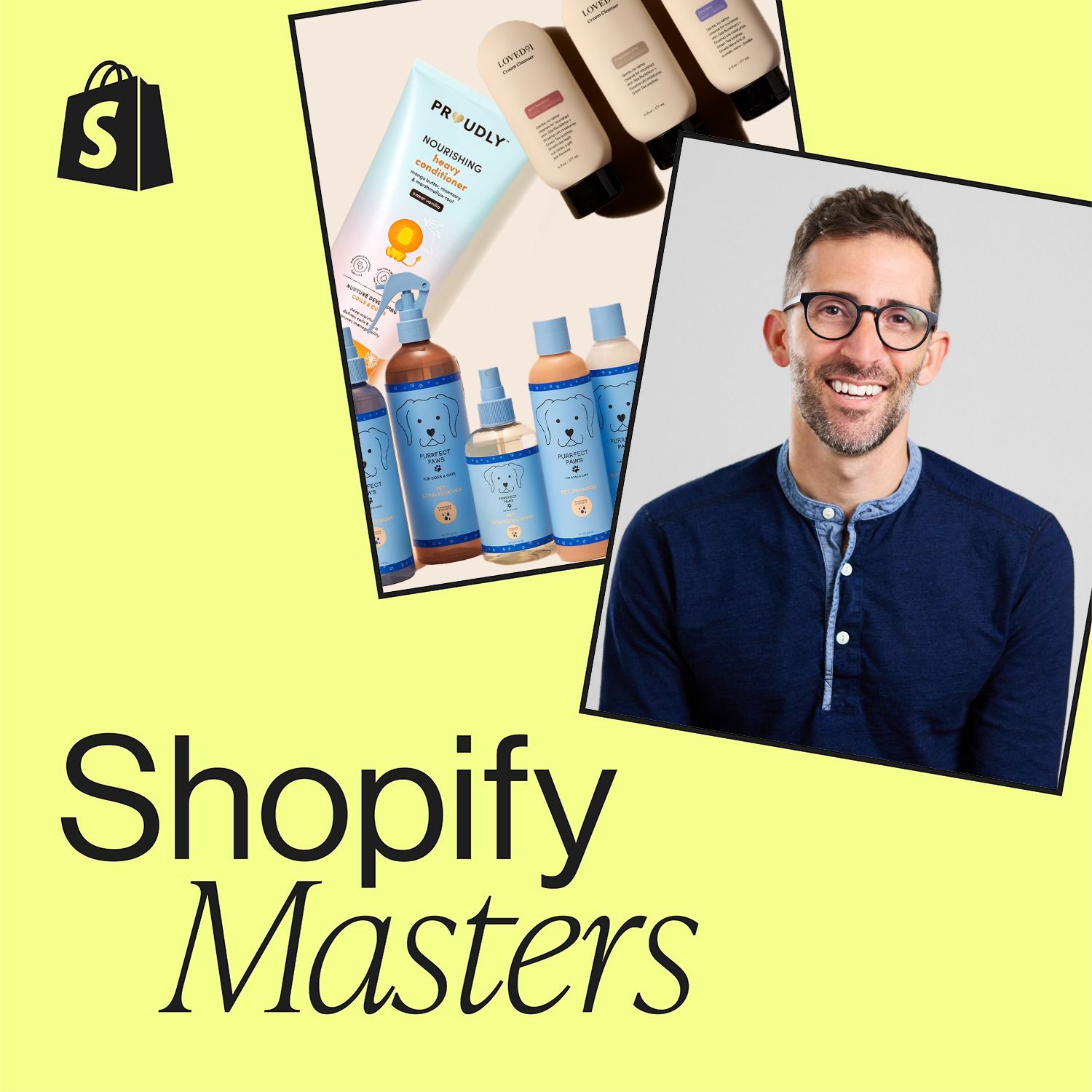
Shopify Masters
How A-Frame Builds Celebrity-Backed Brands That Thrive in Retail
00:38:35
Ari Bloom has launched multiple eight-figure brands into more than 10,000 retail stores by building products that reflect the people buying them. The founder behind A-Frame Brands breaks down his problem-first framework and why long-lasting brands are built around purpose—not trends.
Loading summary
Transcript52 lines
- [00:00]
A
It presents a market opportunity, a social need, you know, doing well, doing good, all those things. When you can wrap those up into one thing, I think that's a beautiful thing.
- [00:08]
B
Welcome to Shopify Masters, your companion for starting and scaling a business. I'm your host, Serena Smith. Today's guest is Ari Bloom, founder and CEO of A Frame, a brand building incubator that brings celebrity backed socially conscious product lines to major national retailers.
- [00:23]
A
They may be on QVC or in Target or in Walmart.
- [00:26]
B
A few of A Frame's brands include Naomi Osaka's Kinlo and Proudly by Gabrielle Union and Dwyane Wade.
- [00:31]
A
Certain celebrities like they touch something and there's an immediate response.
- [00:35]
B
But before launching several eight figure brands into more than 10,000 retail doors, Ari cut his teeth in merchandising at Gap and led venture backed tech companies in Silicon Valley. Ari's here today to share what he's learned about navigating retail building brands people truly care about and raising the right kind of capital. Ari, thanks so much for being here.
- [00:53]
A
It's great to be here. Thanks for having me.
- [00:55]
B
Serena, it's really lovely to have you. Looking at your history, some of which we just enumerated in the intro. Like, you have some really heavy winners on your cv, right? Harvard mba, merchandising director for Gap. Running and selling a successful startup in Silicon Valley feels like there's a fair amount of zigging and zagging. What did you take from your experiences in both retail and tech, which are sort of universes unto themselves in many ways that led to the genesis of Aframe?
- [01:30]
A
Yeah. Thank you. And by the way, when somebody else talks about your accomplishments, it's sometimes it's nice to hear. So thank you for saying that because when you're in it, the road is winding, but when you're at the finish line and you look in the rearview mirror, it looks a lot prettier sometimes. But yeah. Yes.
- [01:46]
B
And it often looks like a highlight reel. Right. When of course, the path to success
- [01:50]
A
is just the 20 year overnight success.
- [01:53]
B
Yes. And we'll dig into that. But I'm happy to validate you.
- [01:57]
A
Thank you. Thank you. I'm a founder. We need validation sometimes.
- [02:01]
B
That's right. That's right. Don't we all?
- [02:02]
A
You know, funny, I'll start with that. Like, I don't think I knew I was a founder for a long time. I think it took me until I was more mature. Maybe I'll say without putting numbers on the board. I started out in retail straight out of college. I got into this retail management program at Gap, which was phenomenal. I don't think I knew what I wanted to do. I was setting to be a hospital administrator, so if that gives you any sense of what direction I was heading in. But I knew that I was a good business person or I had a business mind, but I was really interested in doing something good. And so my dad was a family physician. And I just really kind of liked the idea of running an organization that helped people. I did not have the stomach to be a doctor, otherwise I probably would have been a doctor. But that was not for me. And this Gap program that I found was actually a great combination for me. And it was a retail management program that was for folks who wouldn't necessarily normally go into retail. They were going to go into banking or consulting in my case. I actually didn't see any great jobs jobs at my college at this point. This was the dark ages. So they just put the career centers on the Internet. And I figured out that they actually didn't put passwords on all of the like, really good school websites, which mine was a good school, but maybe not the best. So I was on the Harvard and Yale and Princeton and Stanford sites looking in their career centers, finding out what jobs they had available because nobody realized that people from other schools might actually use those career centers. So I thank you, Ivy League, for helping me find my job, which is pretty incredible. And so I actually ended up applying for this job. And I think they were very impressed. If you talk to some of the recruiters from that program, they were like, who's this kid from Brandeis that's applying for the job that we don't recruit for? And well, that's interesting. So I think I talked my way into a job, which is not the last time I did that. And it was a year of essentially transition from college into professional setting. You don't get opportunities like that because it does take a while to figure out who you are and mature. And I had a great experience in retail and I really liked merchandising. That's where I ended up getting placed. And I think it was a perfect combination of art and science for me. I think at some point in my late 20s, I started to realize this doesn't feel like it's the right journey for me to kind of keep going straight up. I wanted something different. I just didn't know what it was. And luckily I applied to one business school, High Risk. I got into hbs and I went and it was great. And I think I started school on my 30th birthday, and it was like I was the tallest kid on the hockey team. There were a lot of 24, 25, 26 year olds that were brilliant and great people. And I'm friends with so many people that I met during those years, but I think just had a lot more time under my belt at that point than most students. And I really understood also what I was getting and what I was sacrificing and all the things that matter when you go someplace like that. And so the experience was incredible, and it gave me the confidence to become an entrepreneur. Unfortunately, I graduated in 09, which was a really tough year to be looking for a job. It was the, the worst of times. And so I actually had started consulting while I was in business school and I was working with small retail brands and fashion designers. And when I graduated, essentially I had like five or 10 different clients I was working with. And I created a consulting company at it. So it was really my first entrepreneurial journey. And I did that for six years. And I realized if I wanted to be a good CEO, I probably need to understand technology a little bit better. And so I made a very intentional move to Silicon Valley. I worked on a startup that was. I was one of the first 10 employees. I was there for about a year and a half as the cmo. And then I became a CEO of a tech company that was a retail technology company. And I had 25 engineers reporting it to me. So that was fun. And I learned a lot about problem solving. And that was this thing that I took from tech that was very valuable. Start with a problem, work backwards, just like you're a computer programmer.
- [05:37]
B
How do those things coalesce to bring you to a frame?
- [05:41]
A
Yeah, it's a winding long story, but I think the short of it is all of the experiences I had brought me to this place. I think there's the. The understanding of how to build products and how to anticipate what people want before they know they want it. And I think you have to have that, but you also have to think about the problem solution set. And I think there's a stat that I've been thinking about a lot lately, which is about 40% of growth in the consumer industries comes from new things, comes from new brands, new product lines. You know, innovation does drive a lot of growth, not surprisingly, but about 90% of new brands fail. And so there's this clear disconnect between opportunity and solution. And a frame for me was like, what are the problems? That I personally know a lot about that I could be an expert in. Hill and I first started out just talking about being dads in our families, and both of us have very kind of beautiful, diverse families, different religions, different ethnicities. He's a single dad. He's got a son that he adopted. We just, you know, we knew that the. The experience we were having personally was very disconnected from the experience we had professionally. And we talked a lot about what the solution to that would be. And that led to the Proudly brand, which is a brand that we built between Wade and Gabrielle Union. And it really is centering the needs of diverse families. And, you know, we looked at the stats, and over 50% of the babies born in this country since 2014 have one parent who's black, brown, or Asian. Right. So you've got, like a majority of kids of a certain age now that have diverse families and have different skincare needs. And so it presents a market opportunity, a social need, you know, doing well, doing good, all those things. When you can wrap those up into one thing, I think that's a beautiful thing. That's where I want to operate just as a person. I'll also say behind the scenes, it was important to Hill and I that we hired a team that reflected the customer we served, the communities we lived in. And so we've been very intentional about that as well. And I think we have a really great team. And it's, well, representative of so many different backgrounds and ages and gender and sexual orientation and everything that's important so that you get a lot of voices in the room that have life experience that's different than yours, that makes you a better leader, and it makes your company better. And so we've really tried to focus on making sure that we continue that no matter what. Right.
- [07:53]
B
And there's a difference between satisfying those diversity quotas for the sake of ticking boxes versus a deep understanding that diversity of thought will actually lead to better brand building and a more robustly operating company. Right?
- [08:06]
A
Yeah. Good leadership, really, it requires you to have perspectives that are different. You have to be a good listener. You have to be the person that can synthesize all the different perspectives and make smart decisions. But if you just surround yourself with people that have the same life experience as you and they kind of think like you, you won't get a lot of innovation and you get stuck in a certain tunnel, and that's not the best way to run a business. But this is my perspective, and I think that's the beauty of being an entrepreneur and having a company and an organization that you build, you do it your way and that's what works for me. So I do feel very good about the strategy and obviously we've done okay with it.
- [08:43]
B
You've been mentioning your partner, your co founder Hill, who for the audience is Hill Harper, who most people may know as an actor first, but I would say maybe he considers himself an activist. Even before being an actor, I worked with him years ago and it was just like very clear that this is a man who's very clearly guided by his own sense of integrity and decency. And you're talking about wanting to build businesses the right way. We're talking about socially conscious brands. A lot of this can feel sort of nebulous in the conversation from a practical perspective. What does that look like for you?
- [09:23]
A
Yeah, it actually manifests in different ways, depending on the brand and the product line. So some of our businesses currently, we do what we would consider operated brands, which are your traditional brands. These are brands we see an opportunity, like Proudly Loved One is another brand that we have with John Legend. And those brands are built based on what we see. You know, the problem in the market, we work backwards. We develop the brand usually in partnership with either an existing brand or an established person, and we'll build those brands to go to market and they'll sell wholesale. They may be on QVC or in Target or in Walmart cvs. We've also worked with those. Brands tend to have social missions and I think that's important. And it's because it's a market need. And I think I'm not doing it to make a point and to make a statement. I think that's actually the wrong reason to start a company. If there's a market need and there are customers that need something that you can deliver, you should do that and you should talk about it and you should be consistent about it. And I think great brands know who they are. They're focused on a specific customer. And a lot of people can enjoy it and utilize the product because they identify with that core customer or they aspire to be that core customer. And this is what brands have been doing for generations. Ralph Lauren did a great job of that. He embodied a certain customer, a certain look, and people aspire to that. I think you can do that with any brand. And I think that's actually the strongest brands, when they have a point of view and they kind of stick to it and they're consistent. There's also the work behind the scenes and that's really important. So, like we talked about earlier. Making sure that the team is reflective of the communities that you're working in, I think is really important. But also how you, how you treat your employees, you know, it's. What benefits are you giving them? You know, flexibility for parents, I think that's a big thing for me too. I mean, of course we also started a baby brand as our first brand.
- [11:09]
B
You better be walking the walk.
- [11:11]
A
That's right. That's right. No, it's true. Like I'm a dad, you know, and I, you know, my wife was for a long time was a CEO of her own company. And I understand that people need flexible hours sometimes and they need just flexibility generally. So I also try to build a company that is going to be accommodating for folks so that they can still do the things that they need to do. And if like they have to take their kid to the doctor, we understand that. We get that. You know, in the past we had veterans on our team and thinking about like things that they may need and you know, what benefits we offer. I just, I think it's really important to just build a company that is going to be fair and good to its people and that goes all the way to the partners too, that you choose to work with. Because very few companies at any size, but especially small businesses, do the work all themselves. They always have outsourced partnerships and contractors and consulting and all the things that allow us to do the things that we need to do because you can't have full time employees doing it all, especially when you're small. And so also choosing partners that you feel like are consistent with your worldview is really important.
- [12:12]
B
Well, to that end, do you have any advice for early stage founders or entrepreneurs in terms of how to build a value system within a company that will also allow it to sustainably scale?
- [12:26]
A
So I will say to any founder, early stage company, the best manifestation of the values for your own company live within you. I think this is incredibly important for people to just not try to build something that is not authentic to them. And you are an individual and a unique person and what matters to you is going to shine through. And so just trying to pretend like you care about something that you don't care about or hide something that's important to you, that never works. And so I think the value system really has to start with you. And I would encourage everybody to really think about what's important to them and then you embody it in your business. And then as you grow your business, you need to think about where are the gaps. That's something that becomes increasingly important as. As you start to grow. In the beginning, you're just trying to plug the leaks, but eventually you're getting to a point where you're like, okay, listen, for me, I'm not super organized. I'm not structured. I need a good COO who's going to keep me structured and who's going to also instill structure in everybody else that we hire. Then it's, I need somebody to work on product development because they have more sourcing experience in personal care and beauty than I do. You think about those skill sets that you need, and you look for more subject matter expertise to kind of fill in the gaps. But I think putting those gaps on the table is really important in the early days as well. Just admit what you don't know. It's okay. Yeah.
- [13:49]
B
It seems like there's such deep value in terms of also being a strong leader in wearing as many of the hats as humanly possible, so that you have an understanding for what the experience will be for other people when you bring them in. But it also requires a really rigorous honesty at a certain point about what you're just not that great at doing and hiring for those things and allowing somebody else to be the smarter person in the room.
- [14:15]
A
Yeah. I was telling somebody the story recently of how I started a frame, which isn't the story I talk about publicly. So everybody's getting a really great exclusive here. But one of the first things I did, and this was early, early days, we had decided to start this holding company in 2019. And so we were working on the baby brand. But in the meantime, we had this thing called Covid that happened. And I had been working on one of the first concepts we were going to do, which was a refillable, sustainable soap brand. And it was very well timed for Covid, obviously, But it was one of those moments where everybody was on lockdown. And so I launched it in April of 2020 out of my garage. We got the whole thing done. I literally managed all the orders. I packed all the boxes out of my garage, I put them in the basket in my bike, and I wrote them over to the post office. I sent them all out. I had a big wholesale order. It was like, I think I got a 2000 unit wholesale order. I had to actually reduce the order because I couldn't physically pack enough boxes because it was so overwhelming. It was just me in my garage, and my kids are like, whatever, one and four at this point. So I'm like, come On Help Me out, they couldn't. They were too little. Their hands were just too little to get the boxes. But anyways, this order was just so big, I literally, I think I shipped it at 1200 units, which was a lot. I spent three days packing these boxes. And so I think I used Shopify. I built the Shopify site with this little tiny agency. That was great. Ludlow Kingsley, thank you so much for your help. Early days, they were amazing. We did a really nice job of building this little soap brand, but I had to do every single job. And I had to manage the website and manage all the customer service and respond to the emails and the social media and everybody take all the photography. It was great. And so I did wear all the hats, but I also realized what I wasn't good at and where I needed help. So it was a great experience and I wouldn't have traded it for anything. And it helped me to do everything after that, even sourcing the soap. Like I learned about. I'd met some contract manufacturers and I went through the process of how do they fill, where do they fill it on site? Do they send it to someone else? What are the right bottle shapes? Is there a size that fits in the machine that doesn't like stuff you just cannot learn without doing so it's great. Really good experience.
- [16:31]
B
The devil in the 12,000 details. Now, at this place in your trajectory, you have the privilege of working with these celebrity led brands. And oftentimes it sounds like you're not even the one seeking them out. They're coming to you, but you don't partner with just anyone. So what criteria are you using to vet potential collaborators and their ideas, especially when they're this high profile?
- [17:03]
A
You know, it's interesting because in 2019 and 2020, we were just getting started. It was 21 as well. Like a great time to be doing celebrity brands. It was a lot less saturated at the time and it was integrated into the culture and it was new. We hadn't had so many out there. And then this other thing that I think people don't talk about during COVID is that a lot of celebrities were out of work, right? And so they were not touring or playing sports or filming. And so there was a combination of some folks were bored and were looking for something to do and now had the bandwidth to be like, I want to start a brand. Which was like, that's great. Some folks were like, I actually need to make some money because I'm not doing my day job right now because everything's Shut down. I think I always look for a really good problem to solve, as we talked about earlier, and then the solution. And I think starting with the I want to do something because I like it and I'm passionate about it is good, but it's not necessarily what's going to be successful. And I think I've had a conversation with a number of celebrities where they say, well, listen, I really want to do a men's fragrance. And I'm like, cool. What else? Well, I think there's nothing out there like this. And I'm like, that's definitely not true. Would you fund. Probably costs 3 to 5 million dollars to get the brand, like, really to be successful. Are you willing to spend that money? And inevitably, a lot of folks are like, no, I'm not. And I think these are important questions. And sometimes you just have to be like, listen, this is a lifestyle brand for you, and if you want to do it and fund it, you should do it, and maybe it will be successful. I can't tell you yes or no it's going to be successful or not. But I think if you're really passionate about something, go out and do it. That's what any investor would tell an entrepreneur. They say, go get this started and come back to me and show me what you can do. And so I just try to. I try to level with folks and be honest. And also because I have no horse in the race with them, and usually I really like people. So, like, I meet a celebrity that I admire and like and I'm a fan of, and I say, listen, I think you're great. I don't think you should do this. I don't think this adds anything for you. Or why don't you spend the next year, like, building up a presence for this thing that you want to do, and then let's talk, and then we'll see if it's the right time for you. And maybe it's me that will work with you, and maybe it's somebody else. But, like, I want you to be successful, and nobody benefits from us building something that probably won't be successful. And you've got to think about building your brand, and everything you do has got to be accretive to that brand. And so I'm a big fan of saying no impulsively to everybody in a kind way and obviously kind of a constructive way. But I think it's important to hear no a little bit. And some folks just don't hear it that often. And so if I have to be that person, I don't mind that job. It's enjoyable sometimes. Yeah.
- [19:46]
B
I think like the landscape vis a vis celebrity backed brands has changed really dramatically. Right. There was a point at which it felt like it was an instant win if you had a celebrity repping your product or founding the brand. And now it's obviously much more complicated and it's the, the assumption of success is no longer there. So what do you think celebrity is doing for brands in 2026 and what do you think it's not doing?
- [20:14]
A
I think celebrity can still work. I do think that it's a powerful mechanism to go. If your scale of success is 1 to 10, it can take you to 4 or 5 real quickly. There are different, I would say, stratospheres of celebrity. Certain celebrities, they touch something and there's an immediate response and it's going to get a lot of attention. John Legend always says to me, I can get the first sale, but you have to get the second. And I think that's a great mentality. Just think about what it is the celebrity gets you, it's attention. You know, it helps you when you launch a product to get people's eyes on it. They might try it. John goes on QVC fairly frequently and he's an amazing partner and he does such a great job. But the thing is, he's able to describe what he loves about the brand and why he built it and he can do the storytelling. But once that bottle shows up in the customer's hands, they've got to love that product as much as the way he's describing and then they'll keep buying it. So I think celebrities actually behind the scenes do a lot of work. And in fact, if you're working in a celebrity brand and your partner celebrity is not helping you get retail meetings and showing up to the retail meetings or showing up to meet with partners or social media companies, that's actually a miss because those meetings can be really effective when the talent is engaged and sometimes even helping you get the meetings because, you know, somebody reaches out to them about something unrelated and they say, well, I'd really like to talk to you about my brand.
- [21:34]
B
Yeah, These relationships are really specific. I mean, whether it's more traditional celebrity or influencers. Right. Something that separates them from a lot of founders is that this isn't their sole focus. They have other irons in the fire, sometimes multiple. So do you have any tips for other entrepreneurs in terms of assessing how they might figure out at the onset whether a partner will actually be engaged and show Up.
- [22:02]
A
Yeah, that's a, it's, it's a great question and it's something that I think you should assume that they're not going to show up until they prove otherwise. I think the default is you have a meeting and then you're not going to hear from them. So if I have a meeting with somebody and a they're not either. It's usually I like to do in person if I can. I know sometimes that doesn't work. But in person meeting, if it's going to be virtual, at least they're on camera and within a couple of conversations I have their email or phone number. And if I don't have those two things directly with them, I know that it's not serious. And so even just the level of access, if there's people in between you, that's a problem. And I would definitely always red flag that. And then if folks are asking for money before they're doing anything, I think that's another thing. I definitely have had meetings where they're like, okay, well to work with this person you're going to need to pay X amount of money. And I said, okay, not interested. So those are kind of my hints. I think what people react to is founder led brands are generally, they can be really successful and it doesn't have to be a celebrity. People can become a celebrity through their brand. We've seen that over and over again. But also some celebrities build credibility instantly. They are a credible founder, they're engaged. That's great. I think Jessica Alba did a great job with Honest Company. I think that she was a great founder. Using brand equity is a smart formula and you can use it in various different forms. And that's something we're looking at a lot now is how do we use existing brand equity? Whether it's a person or an existing brand or some kind of mark that we can then figure out ways to expand that brand. So there's just, there's different ways to play it. I think we've learned a lot from working with celebrities that are applying elsewhere
- [23:36]
B
to that end, you know, you can have a celebrity who is maybe garnering initial interest or an existing, an existing brand that has a lot of equity in it, but the product has to be good and work. Are you leveraging your background in retail to validate before partnering with somebody?
- [23:58]
A
For sure. So the triangulation for us is like we need to get multiple data points. And so coming from retail, I think I will actually utilize, I think retailer feedback maybe as strong as anything in my equation. And so I like to actually have that conversation with a number of retail partners before I get into market just to express what I'm doing and see if there's interest. And when I start to get responses like oh my God, yeah, could we do that? Would you work with us? You know, how many stores would you want those kind of responses? I'm like, okay, I've got something here. And I hear that consistently if I'm not getting folks that are interested in really investing in something and, and, and they don't validate it, I actually think that's important feedback. So I've definitely had ideas where I'm like this is the best idea. We're going to do this, we're going to get a great partner and I'll talk to a couple of friends that are retail executives and they're like, yeah, we wouldn't do that or that's not for us. And that you got to listen to that feedback because sometimes they're seeing things that you just don't. And I do try to get multiple sources to validate or invalidate my thesis.
- [25:03]
B
Speak to the retailers if you have the access before you go to market.
- [25:07]
A
Absolutely, yeah. And if it's not retail for you, it can be some, you know, you have market intelligence in some other way. People use focus groups. I don't particularly love that for a new brand because sometimes it's hard to explain to people kind of something that doesn't exist yet. But I think the idea of getting feedback is great. There's AI based focus groups which are incredible. You can do it in seconds. So there's ways to validate. I think I'm a little bit old fashioned and because my brands eventually or at launch will need to go into retail. It's a really important proof point for me and I've definitely had a lot of brands that I was passionate about that just did not resonate with folks and we just didn't pursue them.
- [25:48]
B
What do you find that retailers are looking for from founders beyond just the product itself? What makes for a good relationship?
- [25:57]
A
Yeah, so there's a clear dichotomy between a couple of different types of retailers. So there's the kind of we'll say traditional multi brand retailers. These are your Walmarts targets, Ulta, Sephora, you know, they kind of span qvc. They're different channels, different price points and I think in a lot of cases they go through very big pendulum shifts and their business is to bring in brands, a lot of established brands, but some new brands as well and to make their shelves as productive as possible. There's just an increasing amount of expectations on the brands to be doing a lot of marketing in store fixturing social media advertising. There's a lot of internal platforms that they want you to advertise on. So I think it's just investing in your brand. That's really what the multi brand retailers tend to look for and to a certain extent it works. That's a very clear formula. It's harder for small brands to do it because the budgets require are very tough. So you mentioned earlier, I launched in over 10,000 stores. In some respects I wish I had gone a little bit smaller to start in some of my brands because we would get offers to launch full chain in some of these companies and it was great. And of course as an entrepreneur I'm like, of course I'll figure out how to do that. Yeah, great. But there's also something to be said for going a little bit slower and kind of making sure that you nail it in a smaller group of stores before you expand out. And it's very expensive to be successful. Retailers kind of love you to death and that, that's real. I've experienced that. So from that perspective, they're definitely looking for engaged founders, engaged bank accounts where you're really supporting with the right financials. But also social media is something like, we can't overlook how much people look to social media just to see how engaging you are, how engaged your audience is. Follower counts do still matter. And they want to see that if you had a celebrity founder, that they're posting a lot and very engaged because they're going to expect that out of them. The other piece of it is vertical retail. And these are companies, Gap Inc. Who else? Knitwell Group, some of these bigger companies that have a lot of different brands that they own. And we're seeing that those companies can be very successful right now. And they're looking at how they're expanding the existing portfolio by getting into new categories, thinking about new real estate, thinking about new channels for sale. A lot of them are starting to get into wholesale themselves. They may sell on Amazon, but in their stores that they own themselves, which they can be hundreds to thousands of stores. These are big chains. They are still doing, you know, overwhelming majority of their own brand in the stores. And so there's opportunity there as they're thinking about new expansion into new categories. And so we really like that business as well. So we do have a lot of private label business where we develop beauty, personal care, fragrance products. For existing vertical retailers. And that's a great business because they know their customer really well, Their customer loves the brand. And these are categories that are trending in most retail companies. And instead of going to a Sephora to buy their fragrance, personal care, there's opportunity to actually buy it out of the same place that you might buy apparel or accessories or footwear. So we do really like that space and we've been doing a lot more business there as well.
- [29:13]
B
This point that you made about starting smaller then might be appealing to your vision and bank account is an interesting one. As a founder, if I'm in talks with, let's say, a Target and they want to launch my product line in a thousand doors, do you think that I have the leverage to say, hey, can we actually scale that back? Let's start with 101st.
- [29:41]
A
Yeah, I think it's a smart move not to get over your skis, as they say. I think you're going to find that if you have that conversation and say, listen, I really want to be successful, can we like, maybe dial back a little bit and focus on like, what are the top stores that I want to be in that will tell the best story, but also give me the ability to focus my resources? I think that's good. Once, once a retailer is interested in you, I think, you know, that's the first, most important test that they want to purchase your product and put it in stores. It's okay for you to say, I want to do this right and win with you long term. I'm in it for the long term. And I think they actually appreciate that. And most of them are kind of starting to optimize for that, especially for smaller brands. But eventually, obviously, if you're successful, you will roll out to more and more stores.
- [30:22]
B
I want to talk a little bit about funding. A Frame has raised more than $13 million over a couple of rounds. Impressive in its own right. But it seems like so often founders are sort of having to adhere to the criteria that the investors have. I understand that you and Hill had some very specific criteria for the investors that you'd partner with.
- [30:44]
A
We did. It was important to us that we took our platform and the kind of privilege that we had to make sure that we were surrounding ourselves with investors that were like minded and it would be consistent with us and our values. You know, the investors are part of the team. They're going to be in your boardroom, they're going to work on all of your strategy with you, and they're also going to be there when things are not good. Because I will guarantee you, no matter who you are, there will be bad times, there will be challenging times, There will be things that don't work. There will be bad quarters. There may be bad years, There may be people that have to get fired. Like, it's. It's never a linear journey. It's really important that the people that you select to be around the table are going to be there with you and really not only partner with you, but empathize with what you're going through and be there as a resource to help you get through it. I've seen a lot of investors that just kind of like, as soon as things aren't good, they just kind of run for the exits. And that sucks because it happens to everybody. And so when we were thinking about investors, we also were like, if we can have an impact on B.C. by just saying, we're happy to talk to any firm, but if you're going to send somebody, let's just make sure that there's some diversity on the team, that it reflects our team, too. So we'd really love if a woman or person of color is a part of the investment team. And I think that was just something that was important to us because we knew it was not a very diverse industry. And it takes folks just saying, hey, we'd like something different. And I think people were responsive to it. I loved that about it. It wasn't like that was a hard conversation. It was like, okay, yeah, we get it. I felt really good about doing that. And we ended up really focusing on investors that I felt like were very consistent with us. We have investors of all backgrounds and all walks of life, but it was just something that mattered, and I think that that worked out well.
- [32:34]
B
What considerations should founders be making as they weigh whether or not to take on outside capital?
- [32:39]
A
It's a very personal decision. I don't think that there's any one right answer. I think you have to understand what's important to you. Are you comfortable having other folks in the room that have control and may have a say in decisions that you make? Do you care what percentage you own and how fast do you want to grow? Because I think if you get institutional money, generally, the expectation is you're going to grow. And it's a very. VC is structured in a way that they're just betting on winners, and they'll put money into things that win. And if it's not winning, they just move on to the next thing they assume they're going to. I Think strike goal one out of ten times or so. So I think that the expectation is that if you're successful, you got to keep growing, and if you're not successful, then go try the next thing. Those conversations are actually fascinating to me. Like, I've had investors say, like, hey, this is cool, great job, but if it doesn't work out, it's okay. I'm sure you'll do something else great and we can talk then. It really is about growth and success, and so you have to know what game you're getting into. When you get into institutional capital, most people that invest in you know, you. Whether it's going to be friends and family, money or vc, relationships matter. Trust matters. Track record matters. So just make sure that you're thinking about that when you enter those conversations.
- [34:01]
B
For so many years, it felt like the role of brands was to be entirely apolitical, right? And then we had this sea change where it felt like it became very in vogue, even trendy, for every company to have some kind of a political stance. And now it feels a little bit like the pendulum swinging back again. And there's been a bit of a chilling effect given what a frame's value system is like. What is your stance right now on speaking out as a brand and having values that you really stand by?
- [34:38]
A
My values haven't changed. Till's values haven't changed. Our team's values haven't changed. I think it's important to be consistent. I said that earlier, that great brands and great companies are who they are. I think every company needs to think about how they're expressing themselves and then reexamine that every year or two and just think about, what language am I using? What is the world like? Because the world changes. It's dynamic. And so I think if you have a mission and a message, you need to make sure that the mission is getting through to people. And sometimes they need to hear it differently depending on the time. And we are certainly in one of those times now where things are a little different than they were three years ago. And three years from now, they'll be very different, too. So I think it's important to stick to your values, but sometimes you have to express them differently through different channels and different ways. Sometimes you need to be louder about it, sometimes you don't. It depends on the moment that you're in. I think the values cannot change, though. That has to be something that's incredibly consistent. I want to do great things for the world. I want to do great things for my community. I want to do great things for my employees. I want to do great things for my family, for my neighbors. That's important to me. And so I'm focused on that. And I will not stop doing that because political climate has changed. And I actually think, for the most part, the sentiment and the spirit of what we're trying to do and what we're trying to build, it still resonates.
- [36:04]
B
Yeah, it still resonates. And it may actually resonate even more, even if that's with a slightly more niche audience.
- [36:11]
A
Yeah, it's possible. I also think it can really backfire for people who don't stick to it. We have seen that with plenty of companies that just don't have the backbone to stick with any messaging. We talked five years ago. We're like, this is a unique moment in our culture. We knew that, you know, five years ago, every big company was hiring chief diversity officer and now chief AI officers, right? And so, like, we see these cycles where, like, things get popular, and it's like, hey, you've got to go invest in this now, because you're in a board meeting. And they're like, what's your policy around this? We better figure this out. Go hire somebody. We're in that cycle right now with AI, and I actually think we're not even taking the lessons we learned from five years ago and applying it to AI, which is we're somehow again, outsourcing the responsibility of learning this incredible technology that is going to change everybody's lives over the next few years. It already is. That's not something you can outsource and just kind of have some superficial department or person that's running it. Every CEO needs to be AI literate, if not AI expert. That's got to happen. And that's not something that happened five years ago with the Eye, actually. And it was just because people treated it as a fad. I think that was part of the reason why it just kind of evaporated very quickly. AI is here to stay, and it is going to change the way we do business. It's going to change the way we live. And so my message to folks is you've really got to lean into it. If you're a leader, you need to figure this out. Don't outsource it. Don't hire some person that you're like, they probably won't be here in three years, but great, we'll have them now and they can handle all of it. Learn this stuff, master it. And anybody who doesn't know AI in a couple years. AI is not going to replace them, but people who know AI will replace them.
- [37:50]
B
Yeah, 100%. We could have a whole other 45 minute conversation about that alone. But thank you so much for this. That has been so wide ranging and insightful. Really appreciate you coming on. Ari.
- [38:05]
A
Thank you for having me.
- [38:06]
B
That's Ari Bloom, Founder and CEO of Aframe Brands. Shopify Masters is produced by Alicia Clark, Gogo Zogar and Schwang Esther Shan. Our engineers are Matt Schwartz and Miku Beitlam and Rachel Reich is our senior content lead and I'm your host, Serena Smith. Come back every Tuesday and Thursday to catch a brand new episode of Shopify Masters and be sure to check out our YouTube channel for video interviews. Until next time, thanks for listening.