← Shopify Masters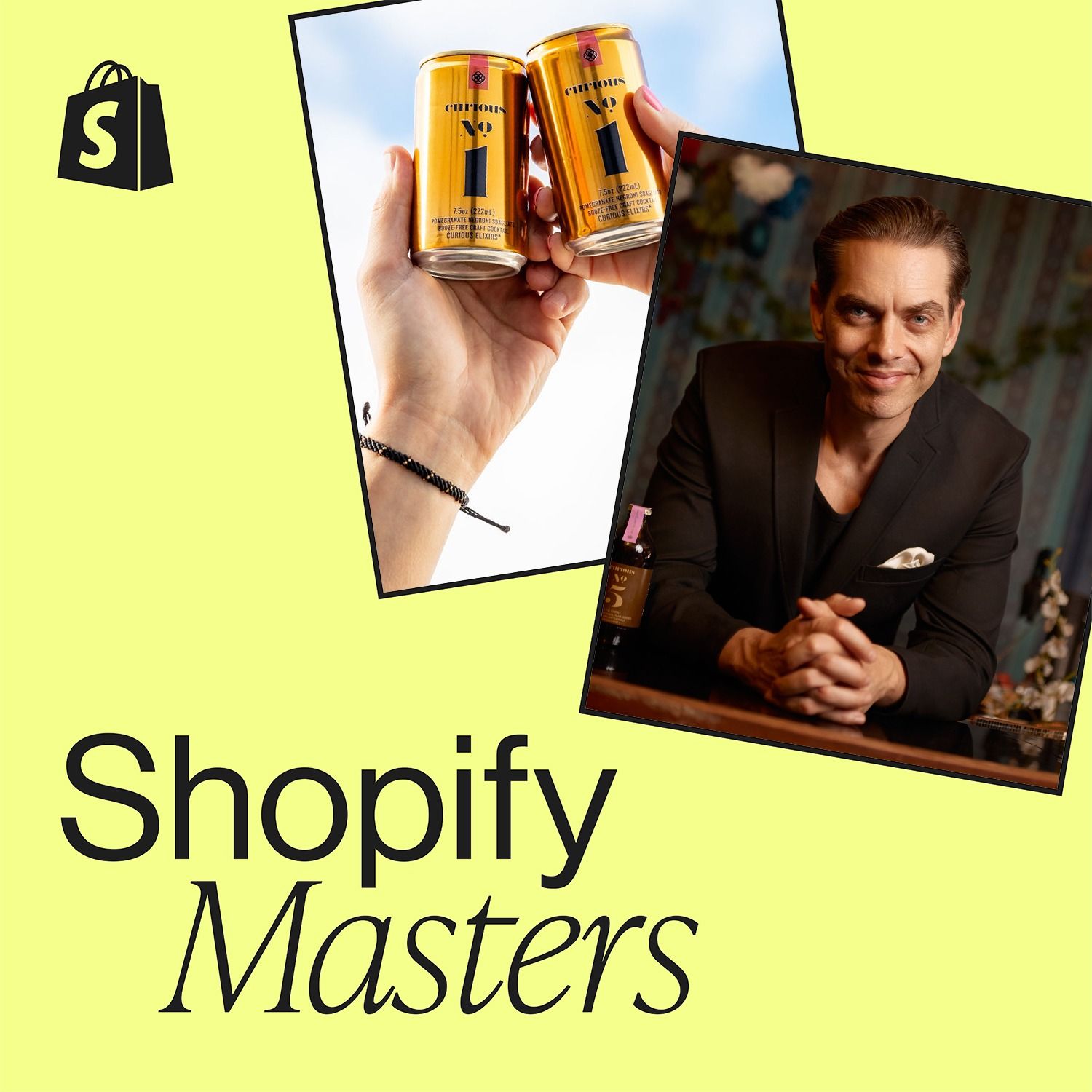
Shopify Masters
How Curious Elixirs Reached Eight Figures in a Market That Didn’t Exist
00:38:33
JW Wiseman built Curious Elixirs before a non-alcoholic cocktail category even existed—and grew it without outside investors. By spotting overlooked demand and building real community around the brand, he turned a personal pain point into an eight-figure business.
Loading summary
Transcript70 lines
- [00:00]
A
You need cash to survive as a business. It's oxygen. But if you have a mission that's sufficiently underserved, good things take time.
- [00:10]
B
Welcome to Shopify Masters, your companion for starting and scaling a business. I'm your host, Serena Smith. Our guest today is making a major splash in the beverage industry with Curious Elixirs. This line of non alcoholic craft cocktails is made with premium ingredients and a mission rooted not just in consumption, but in connection.
- [00:27]
A
People are getting just more and more tapped into what makes them feel good and we, we just love making options for them to do that.
- [00:34]
B
Since launching in 2015, Curious Elixirs has earned the New York Times best non alcoholic drink title five years in a row and is sold in more than 2,000 retail locations. As well as showing up on the menus of hospitality heavy hitters like Alinea and the French Laundry. The brand has grown from $176,000 in first year revenue to a thriving eight figure business. And all without raising any outside funding. Founder J.W. wiseman joins me today to talk about bootstrapping a brand, building community through creativity, and why going against the grain can lead to breakout success. Jw, thanks so much for being here today.
- [01:04]
A
I'm thrilled to be here, Serena.
- [01:06]
B
It's a pleasure. Take me back to 2015, which in some ways feels like the olden days.
- [01:14]
A
It was, wasn't it?
- [01:15]
B
Yeah. Your career had taken you to Thrillist as employee number three for a great many years. You had started your own marketing agency. What was the aha moment that led you to thinking that you wanted to start a non alcoholic beverage brand?
- [01:35]
A
The aha moment came on a dark winter's night and the morning after. And I had 20 drinks in one night. You know, at this point, I was working at Thrillist. I had opened a whiskey bar with my brother in Brooklyn and had just a crazy amount of alcohol. Just trying to see like what my limit really was. And I didn't even black out, but the next day I didn't really have a hangover. And that's what was scariest. And that was really the aha moment for I should drink less, but I still want to go out and party. Right. And because I love going to restaurants, I love going to bars, I love going to comedy, I love going to theater, I love going to weddings, you know, whatever these moments of celebration are. And every time I was going to one of these and I didn't want to drink, it felt like there was nothing sophisticated for me to have, you know, And I want a flavor experience every Day of my life. You know, it's one of life's great pleasures is to have something delicious and unexpected. And that was kind of the aha moment came from that, that crazy night of 20 drinks and then getting really bored when I was going out, you know. So it was a bunch of aha moments after that first one of like, another club soda? No, thank you. Maybe I should make something in my kitchen, right?
- [02:57]
B
For a long time, if you were going down the path of sobriety or even just cutting back on your drinking, it almost kind of felt like you were being treated a little bit like a second class citizen. It was like, okay, well, now you get water, you know, or now you get like a super sugary drink, which for a more sophisticated or adventurous palate, obviously is just not going to cut it. You have been sort of hospitality adjacent, at least for parts of your career. But you're not a distiller or a cook or a beverage master by trade. So where did the process start for you and what was that early experimentation process like?
- [03:37]
A
You know, I only unpacked this probably recently, but I really feel like it probably started with making beer with my dad. And I was a cook from a young age. I was in my kitchen, you know, at age six, like making hamburgers with my own blend of meats and stuff. Like, I was, you know, kind of a nutty kid. But, like, I think it started with brewing beer with my dad. And he was always interested in making, you know, both things that were refreshing and then sometimes like very out there, you know, like, he was really into making porters and stouts and stuff like that. And that really is where I think it rooted. So I was kind of like, oh, well, if I can't find something, you know, that is to my taste, you can always make something. So. So I think it probably started there, but, you know, then just also being a big cocktail nerd living in New York City in the, you know, 2006 to 2015, like, I went to every major cocktail bar and chatted up as many mixologists as I could to try and learn from them. I had a crazy home bar during this time of like 70 different alcohols and different spirits and shrubs and stuff, and a cocktail diary for many years. So I just adapted that, you know, kind of love of making drinks to trying to do that with non alcoholic stuff, you know, getting real nerdy on cardamom, you know, like whatever it is at the time.
- [04:56]
B
In 2015, what did the white space look like in the industry? Did it feel like there was an appetite right away for a high end non alcoholic drink.
- [05:12]
A
No, there was nothing really going on. This was the age, you know, before athletic brewing and like good quality craft beers. But I felt like somebody would come in and, and crack that. So I was like, that's not really calling to me. Cocktails and wines are like my first loves when it comes to drinks. And so I really went down that kind of lineage and just saw that non alcoholic spirits weren't around yet right when we were first developing these. Because the night that I'm talking about of the 20 drinks, that was in the winter of 2012, 2013. So it was a couple of years in the wilderness of me experimenting at home before I turned it into a business. Going to all these different restaurants and bars. There wasn't anything outside of a like, oh, I can make you something with fresh juices and they'll make you something on the spot. Great hospitality. But you're not getting bitterness or smokiness or herbaceousness or you know, mouth feel in the same way as you get in a proper cocktail or wine when you're making kind of like a glorified Shirley Temple. So it's just a different thing. And so we had to create it. And that was a lot of the early obstacles was figuring out how to make some of these things that are like bitter or smoky and not using an alcohol based extract. Like a lot of this stuff didn't exist in the early days. We had to work with food scientists to make them. But that was some of the early obstacles for us was like, oh, gentian, one of the key ingredients in Campari, right? Like we want to make something that's like a non alcoholic Negroni. So we need to have some bitterness. But the only gentian root extracts that we could find were alcohol based. So you have to go and you have to do that first and make alcohol free extracts. So that's like early stuff that we had to get over. But in hospitality, nothing was really happening yet in non elk in 2013-2015.
- [06:59]
B
What's your mindset in those years Going in, are you like, I'm just tinkering and I'm seeing what's possible. Maybe I'll make some batches for my friends. Or are you immediately seeing this could potentially be a massive business opportunity?
- [07:13]
A
There's a moment where I realized this could be a business possibly. And that was when we were opening our third venue. So we had the Whiskey Bar, we had a nightclub called Output in Brooklyn. And then we had this small artist designed hotel, like, 12 rooms in Rockaway Beach. And opening weekend, I make a batch of Curious number one prototype, and I just put it in a giant party carafe on the bar because it's all friends and family, and so we're not doing, like, proper bar service. And there was a boozy punch right next to it and just said curious number one. It didn't say anything else. And so people who were not even sober curious, necessarily, they were just drinking it, and they drained that sucker way more than the boozy punch. And I was like, okay. So it's not just the people who are cutting back that are, like, wanting to drink this. There's a lot of bigger opportunity here than maybe I thought. And that was kind of like the moment where I was like, so Friday night at Playland Motel. That's where it happened.
- [08:14]
B
Wow. I hear that Martha Stewart played a role in your early journey as well. Is that true?
- [08:19]
A
Yes. Martha's been an icon to me since I was unemployed, watching her show, learning how to make, like, an iron skillet pizza in New York City many years ago. But you Fast forward to 2015, and I was like, I think I want to make Curious a business, but I don't know if I can do this or not. And I was at a thing called Summit Series, which is, like, 2,000 people on a boat listening to incredible icons from various different industries. Martha's there, and she's being interviewed, and I'm up in the upper balcony, and the interviewer asks her, was there ever a time when you were down on your luck and you felt like this just might not work out? And she was like, nope, never. Not once. Immediately, just instant confidence, like, pure Martha. And it just struck me like a lightning bolt, you know, I was like, oh, I can borrow that confidence. And now is the time to start this business, so get off your tuchus and go make something, you know? So that was, like, the moment that Curious, like, actually started as a business was directly inspired by Queen Martha. You know, you fast forward and like, nine years later, our team is serving Martha a glass of Curious number seven at a different event where she's speaking. And it's just kind of like this full circle moment.
- [09:39]
B
Wow.
- [09:40]
A
Where, you know, she's having, like, our elderflower champagne. And I'm like, oh, this is great. This is the drink I, like, made for my mom. You know, it's like, in honor of, like, her favorite cocktail flavors and the fact that Martha herself liked it, I was kind of like, oh, we're doing it. We're doing it Only 30 more years to go. Only 30 more years to go.
- [10:01]
B
Why 30 more years?
- [10:03]
A
Well, because we're 10 years in now and you know, for true generational change, I think it's going to take 40 years to kind of like truly transform how we drink socially so that people who are drinking alcohol and people who aren't drinking alcohol are all like celebrating together. And it doesn't matter. That's the vision is just that however you decide to celebrate, there should be options for you. Whether you're gluten free or you eat meat or whatever your choices are for you and your body and how you like to celebrate life, there should be good options for that. And so I think it's going to take 30 more years to achieve that vision. I think we're on our way, but it's still a long way to go.
- [10:43]
B
Did you have the sense when you started this that this was gonna be a 40 year play?
- [10:49]
A
Yes.
- [10:50]
B
And now a decade in what changes have you seen in the past 10 years? And is it sort of tracking to what you anticipated?
- [10:59]
A
You know, like it's always different than what you expect. I would say the general arc is what I was expecting, but in terms of like it being recognized that there's a huge number of people who either don't drink or are drinking less, you know, that's still true and continues to be more true every day. And then I also kind of anticipated that there would be lots of entrance in this category because like any new sector, like, look at when green juice first became hot or kombucha or any of these kind of nascent, functional drinks, you know, there's going to be a ton of people who are like, wow, this is amazing. I want to do that too. And I think that's great. It dramatically increases innovation and kind of verifies that this is something that can have legs. At the same time, most of those companies are going to go out of business. That's just kind of doing business in America is true of any business sector. I heard a stat recently that only 6 out of 100,000 companies make it to $10 million in annual revenue a year. 6 out of a hundred thousand. And I think that one reason why we're one of those six is because there's so many millions of people who care about having a great time without having alcohol. And they're just like, you know what? I would like to have something delicious and feel really sharp the next day, you know, or one of a million reasons. So I think that's why, like we're seeing that happen.
- [12:30]
B
Yeah. I think there's something to be said for, I think what can be on a societal level a little bit of a disconnect because we still live in a culture that is really alcohol fueled and alcohol soaked. And I think it's very easy to have the idea that virtually everybody is drinking. Right. And as you found out, even in the beginning of things, that's not the case. Right. Like what were the numbers that you were seeing in 2015 even?
- [12:57]
A
Yeah, yeah, this blew my mind, you know, like 2015, I saw an IWSR report and it said that 75 million adult Americans don't drink alcohol at all. And another 90 million, 90 million have two or fewer drinks per week. And like that's usually like my bucket. I maybe have one to three drinks a month and they better be something like spectacular. That's like world class that I've never had before. Like I'm not going out and having something basic because it's just, it doesn't do anything for me at this point. I've tasted it and it's not functionally fits with me. But that's a crazy number. 165 million people total there, adult Americans who don't drink or are drinking less. And that's numbers from 10 years ago before the term sober curious even existed, you know?
- [13:50]
B
Right.
- [13:51]
A
So it's a big number.
- [13:53]
B
Being an early player in the space. And a true disruptor has its advantages in that you don't have any other competition really. And it also has its disadvantages in that first to market means you don't have anybody else's path to mimic or follow. So can you talk to me a little bit about what being an early player, maybe arguably the earliest player player allowed for from a pro perspective and also where it led to some hard lessons learned.
- [14:27]
A
Yeah, I mean, being early definitely means that we had an opportunity to kind of grab mind share of the people who were really closely aligned with our mission. So that's why we launched on Kickstarter. We launched on Kickstarter because we figured that we would find people and we found our first 700 customers that way. And a lot of them been super loyal over the years. And that's amazing. So that's definitely helpful where it hurts you. In other places, hospitality took us in some ways no time at all to crack. And in other ways, like years to crack. What I mean by that is some of the Michelin star places and places where hospitality and being whatever you need to be for the guests that you have that you host. If you have a sober guest, they're going to go to the ends of the earth to make it an incredible experience for you no matter what. And so at the highest end, they got it right away and they were calling us, you know, like the French Laundry called us. Like we're like, yes, of course we will sell you some curious number two, please.
- [15:29]
B
The French Laundry called you.
- [15:31]
A
They emailed us, they saw an Instagram ad. It was like that, wow. And I was like, wow. They really pay attention to sommelier at French Laundry is like, oh yeah, we should have high end stuff for our guests. Yeah, that's just kind of like being right place, right time and I guess good Instagram targeting.
- [15:48]
B
Seriously.
- [15:49]
A
Yeah. So that worked well in the early days. But you can't scale fine dining very easily. It's a relationship business. And all due credit to like our incredible team who works with them, you know, incredible places, you know, like with Daniel Boulud and Jean Georges and you know, and now we're the official non alcoholic drinks of the James Beard foundation. And that's incredible. But I'd say that in the tier of restaurants maybe a little bit lower in price point it was they didn't understand us for the first few years and a lot of those places got left behind with their non alcoholic menus and they're bleeding money because even more people are drinking less and they haven't filled their revenue gap with stuff like curious elixirs. A lot of them have gotten hip to non alcoholic beer now. But in terms of like beer and cocktails having a few different options, like a tight list, a lot of places kind of like a little bit less expensive places. There's still a long way to go in terms of serving people with hospitality that are your guests, that are your customers that are already coming in. So that's more a lesson that we're still learning and learning how to help these businesses to grow. And we do a lot of that, like direct to wholesale, on shopify to these restaurants. A lot of places do get it also. So I don't want to undersell it. It's just that when we're talking macro level, Maybe there's like 20% penetration in the restaurant industry in America. There's so far to go. That's why it's going to take generations.
- [17:18]
B
I think the psychological component of this is a big one too. Right. It's one thing to master the non alcoholic drink space from a flavor profile perspective, but there's also this other component which is just like that Sort of ineffable behavioral fizzy looseness that a drink or two can provide. Whether that's real or not or sort of psychosomatic is up for debate. But to me, it feels like that's the other really difficult gap to bridge. Right. How have you worked to shift the psychology for people? Because, like you said, you wanted to pull back on your drinking, but you didn't really want to pull back on your social life. And there can be this feeling if you're going out to a restaurant or to a bar or whatever, and if you can't have a cocktail, you're not really going to be able to let loose. So how have you approached that part of the equation?
- [18:13]
A
Part of it is through the formulation of the drinks themselves, too. Like, we have herbal social lubricants, you know, these handy different ingredients called adaptogens, you know, infused right in. And so if you are craving something that you want to give you a boost, you know, so that you are more social with your friends, then you might have like our spritz, you know, like Curious number four. And so, and that's something that we tell, you know, our customers when we have direct to consumer customers or our wholesalers, is that like you can kind of choose the mood you want to be into. If you're feeling, like, overwhelmed, there's a curious elixir for that. If you want to feel a little bit more social, you have Curious number nine, our rose. And, you know, it kind of has that social lubricating effect for people. And they also, the ritual of it really ties people together. Like when you can pour something, you know, beautiful and then hold it up to your friend's beautiful drink and clean glasses and cheers to their health, it kind of settles your body into that space, even without the alcohol. And the adaptogens certainly don't hurt.
- [19:19]
B
Totally. When you look back at the trajectory of Curious, does it feel like there have been tipping point moments where the company's success shot up because of a co sign, a retailer that signed on, whatever? Or has the story more just been slow, steady, consistent growth?
- [19:45]
A
There's definitely been some inflection points where things really accelerated quickly. So around 2019, dry January really started to catch on in the States in a big way. And so we started seeing a lot of inbound requests from people just trying something new. And they're like, you know what, maybe I'll try that. So it's kind of like we were in the right place to capitalize on that Trend. And then 2020 was really fascinating because two things happened. One, a bunch of people started drinking more. Two, a lot of people started drinking less. Two different cohorts. But the group that started drinking more in 2020, at 2021 dry January was bigger than it's ever been. A lot of people were like, I overdid it. I need to course correct. I need to have something. Let's try this curious thing. And the people in 2020. Our business started exploding in 2020 because of the people who were like, you know what? I need to prioritize my health. I'm shut in. I can't go grocery shopping. Send it straight to my door. And so that was also really good for our business. Where it gets even more complicated, though, is that supply chains tightened up around the world. So we're trying to expand to serve these new people. And all of a sudden, I can't get enough elderberry. Because in countries throughout the world, they're using elderberry as a Covid cure. And so I'm like, okay, fascinating. It is good for immunity. And that's one of the reasons why we wanted to put elderberry into our drinks, is to help give people a way to boost their immunity. So that's just a couple of the ways that Covid was like, best of times, worst of times, business wise, it was kind of like this incredible reset for everyone and ultimately so tragic for everyone that, you know, that lost their lives. And the supply chain disruption was crazy for everybody. I mean, it was just. It feels like a decade ago, even though it was only six years ago.
- [21:47]
B
And you probably have a few more gray hairs on your head from it. I would imagine I do.
- [21:53]
A
I mean, the entrepreneurial roller coaster is real.
- [21:56]
B
Yeah, yeah, let's talk about that. Because in the world of entrepreneurism, you're like an elder statesman at this point and certainly in the non alcoholic drink space. How does JW the entrepreneur in 2015 compare to JW the entrepreneur in 2020 compared to JW the entrepreneur in 2025?
- [22:19]
A
So I would say that as an entrepreneur, I am working on fewer things. When I first launched Curious, the first few years, I was also still doing marketing for Daily Harvest and for a handful of, like, clean food companies to pay for my life while I was bootstrapping this company. That's another reason why, like, the start was so slow is because we're like a ragtag bag of scrappy people doing this in our spare time. So now I've been full time on curious since 2020. Like January 1, 2020, I went full time on Qrius. So it was five years of building it slowly before saying, this has got to be full time from now on. And I think I'm a lot more fulfilled from it because the power of focus is immense. It's immense. And if you're always chasing side quests or you're working on other companies, it's hard to be as effective as you can be when you just focus on the one thing you need to do today.
- [23:26]
B
You know, you mentioned that you have been bootstrapped since Jump and you remain that way, which is something of a rarity. Right. Has that always been by design?
- [23:39]
A
Yes, yes, that has always been by design. The feeling was we were pretty early to this and the market is going to need to develop. And it didn't feel to me like the right strategy to make this company about money. First, you need cash to survive as a business. It's oxygen. But if you have a mission that's sufficiently underserved and you're the ones who are going to serve it, good things take time. And I'd rather build a really strong root system for this business than to try and grow a whole forest at once.
- [24:17]
B
What is the mission of the business?
- [24:22]
A
The mission is 30 years from now I'm going to a wedding for one of my daughter's friends or for my daughter, and that everybody there is raising a glass of curious right next to the Dom Perignon. That's just natural. That's where our culture has become, you know, more inclusive and more unified around celebrating together. Um, however you want that to look is good by us.
- [24:46]
B
As you've seen this sector of the industry absolutely explode in the last few years. I mean, it's crazy how many brands have come into the market, some of which have already disappeared. Right. What does it signal to you? Does it feel like it's representative of where society is at large or does it to some degree give you pause? Does it feel like it's getting oversaturated too quickly, for instance?
- [25:16]
A
I don't feel like it's getting oversaturated too quickly. I think that there's incredible people innovating all the time and I think that that's wonderful. You know, we went to this great festival called Drinks with Benefits and you know, our team was pouring there and there were so many non alcoholic brands I'd never heard of or seen before and that was really exciting. Will all of them be around five, ten years from now? Of course not. But I think that's true of any kind of amazing new sector in business. So I'm excited for it. I don't think it got too saturated too quickly. I think that we're kind of in a low key recession right now and not every brand is going to make it just because of timing. Also it's going to be tough. But I think that overall I'm very optimistic for the future. I think people are, are getting just more and more tapped into what makes them feel good and we just love making options for them to do that.
- [26:11]
B
And what's your super non. Pr. Very candid relationship with the competition as a business owner and as somebody who is alone in this space for a little while?
- [26:19]
A
Yeah, you're not alone anymore. It's kind of like Sam Walton. It's like shop your competitors, you know, and see what they're doing really right, and then let it inspire you to do even better. And I think that's kind of our relationship with it. There have been brands who have gone out there and done a much better job than us at retail distribution. They also have like tens of millions of dollars in funding, so it's not really a fair comparison. So I don't really consider them like apples to apples, but we can also learn from them and learn how they've done some things right. And so that's what I would say is like, there's a lot of companies that are doing a lot of things right right now. And so we just, we look forward to learning from them.
- [27:02]
B
Where do you think they're learning from you?
- [27:04]
A
Oh, I mean, I think it's pretty obvious that like most of them have copied something from us at some point. I won't mention which one, but I mean, we've even had some of the bigger brands like approach our food scientists to try and copy recipes. And the food scientists told us and they were like, we didn't do it. And I'm like, of course you didn't, you're an ethical person. But like, I think they look at what has done well for us over the years and they emulate. And I think that that's totally fine. I mean, we expected that. You know, that's why our drinks are so insanely unique and very specific. And they're not trying to be anything other than curious. Like that's why they're all numbered. They're a little bit more mysterious. Like when I was first making this, that's an homage to cocktail culture. You know, like drinks like the Corpse Reviver Number two and Pimm's Number one and stuff like that. And, you know, so what we're doing is an homage To a lot of the people that have come before a lot of the craft distillers. And I think that we're doing that in a way that nobody else is doing, especially not doing it with functional ingredients or like the best ingredients in the world. No one out there outspends us on ingredients for sure. So I challenge anyone to spend more on ingredients than we do.
- [28:17]
B
You heard it here first. I mean, have there been moments in your journey, given that you have always only ever been bootstrapped, where you have felt like the growth of the company was being hamstrung by the lack of infusion of outside capital?
- [28:38]
A
100%. I mean, so many moments. So many moments, you know, and you know, whenever I've seen people do like big airline deals and stuff like that, I'm like, oh man, I want to do a big airline deal. But we also had just have a rule of business where we don't do business unless we at least make a tiny bit of money on it, like the tiniest bit. You have to, you have to, you know, and a lot of other companies are like, oh, you gotta lose money for three years in this area in order to make money in year five. And I'm like, I totally hear that. And that is a way of doing business. And that's where we've been hamstrung before is like the really capital intensive way of building a beverage business. That's something that hasn't been available to us because it's going to take longer. We're still going to end up doing the same stuff, but it's going to take us an extra 10 years. Does that make sense?
- [29:33]
B
Totally. In those moments when you could see the way that you could grow a lot faster if for outside capital and you'd long since established yourself in a way where I'm sure the capital was available to you, what keeps you on the path of not taking it?
- [29:51]
A
Yeah, that's a great question. And I think that for me the answer is it's got to be more about the long term mission than it is about the money. And once you take the money, it by definition changes things. You know, you can't really be loyal to two missions. Is it the mission or is it the money? And I think that there are paths forward for us to have partners in it. We've had alternative financing partners and things of that nature before to fund production runs and things like that. And I highly recommend that to anyone who's listening, who's like, but I don't have $30,000 to do my first run. You can find it. You can find it in alternative financing partners. We've even used Shopify Capital before and things of that nature. Because there are alternate ways of doing things than taking on equity investors which might jeopardize your mission. So what keeps me stuck on this particular piece of like, bootstrapping is that most of all, and maybe it's not the smartest way to grow fast. I just think that it feels like the smartest way to grow those roots and those root structures. And we have a lot to learn along the way. This is still a pretty new segment of the industry. It's not that old, 10 years old. It's like it took Coca Cola 20 years before it was regionally dominant.
- [31:14]
B
It feels like a very hospitality oriented approach in that if you're beholden to anybody, it's your customer, you know?
- [31:22]
A
Yeah, yeah.
- [31:23]
B
Be akin to the person sitting, sitting at the table in your restaurant versus being beholden to your stakeholders, your investors. It makes sense. It makes sense given your background. Your background is also as something of a marketing guru. Right. You were leading marketing at Thrillist. You then had your own marketing agency alongside building Curious in the beginning. How did you take those skill sets into building the brand at Curious?
- [31:51]
A
Yes. So, yeah, I mean, certainly the scrappy mentality of building a startup certainly came across. When we were first working on Thrillist with the founders there, there wasn't a lot of VC money. They raised $300,000 the first round. And this is like post.com crash years. So it wasn't flush with cash the way that it would be in later years. So it was that scrappy mindset. Where do you have relationships that can get your word out there for no money? That's a good place to start. Like just going through your network. I went through my network and I was like, oh, I know the guys at Refinery 29. Okay, so maybe they can send it to their editors that were doing this booze free Kickstarter. And that got our first press. And then that press led to other things with Vogue and Wall Street Journal and focusing on PR in your early days. When you have something really new and innovative, you can get to anyone in the world if you follow up with gentle persistence and you offer them something that they don't have. And in the case of us, we had a story. We had a story that tapped into some people's needs and luckily that story resonated. But I would say that's the first place that people should also start when they're, when they have what they want to put out into the world. Put it on your calendar like four times a week an hour of just reaching out to people to tell your story. In the early days, it's so important and it's kind of old school, you know, pr, but you got to tell your story. I think it's really important to do that consistently Right. Right from the jump.
- [33:27]
B
It seems like no matter how much the industry changes, there are certain things that remain true. Right. You, you cannot replace the value of good pr and it doesn't necessarily need to cost a lot of money to get that. It's just gentle persistence, like you said. And I think another piece that keeps coming up time and again, and I know it's big for you, is the power of in person community. Can you talk about how you've really built real non digital community for Curious?
- [34:01]
A
Sure. And I think it is, it's both in real life and it's digital as well, you know, because there's, there's online community and there's in person community. One of the ways that we've done it from the start is to put hospitality first, you know, in terms of like our outreach and working with places that already get that and live and breathe that. So we did something, you know, here at our little speakeasy in Brooklyn called a bartender's brunch. And it was partnered with Apollo Bagels, this incredible bagel brand out of New York City. And we just had like a free brunch for them to come for some of our best customers to come and like kind of shoot the before they have to go into Friday, Saturday, Sunday service and kind of a place to unwind and connect with no sales pitch, no nothing. Just come have some lox and have like this incredible bagel from Apollo's. And that's one example, you know, and we've done that a number of times for just kind of industry events for our best customers. But another way that we've done it is on the consumer side is like the great Curious cocktail party. And that's where we, every year we get together and we have the biggest decentralized party possible. So what the hell does that mean? That means we had 173 parties in different cities all on one night. And just the outpouring of people coming together and having these wildly different party types all over the country. That's been really special because people are so creative and so thirsty for connection that it's just such a, it's turned into a really beautiful annual evening.
- [35:37]
B
And you see that resulting in greater brand awareness, greater brand loyalty, more impressions online. What's the upshot?
- [35:48]
A
A lot more voices telling their own story of how to like, party with less booze. What you see, you know, every year is hundreds of different people. And these are just the people posting, not to mention all the attendees, but the people posting stories from, you know, a beach bonfire in San Diego or like a Bollywood movie night in Brooklyn or like a rapid fire dating event, you know, in Atlanta. People are really creative in how they bring the great Curious cocktail party to life. And I think that it's all those different stories that really break through the clutter each year because there's like, as you mentioned, there's 500 different brands making non alcoholic drinks. You know, part of what makes ours so special is that it's kind of built from moments of connection, you know, like, ooh, I had this drink. What does it taste like to you? Oh, this reminds me of like, you remember, like when you were getting a, a creamsicle from the ice cream truck when you were a kid, like one of our drinks, we've had people be like, oh, this reminds me of a creamsicle, you know, and other people are like, wow, this reminds me of being on a boat in Venice. And people being able to share those moments over something curious is really, really special. And I think that's the thing that really stands out when people get together in real life. And the great Curious cocktail party is like kind of an amazing way that we've been able to do that each year. And it's really community led, you know, like they're coming up with their own ideas for parties. We just send a box of Curious. That's it.
- [37:17]
B
That's beautiful. Okay, take us out by giving us a sense of what's coming down the pike. What's next for Curious?
- [37:25]
A
Yeah. So very exciting things coming. We're going to be bottling our next elixir, so I'm really excited for that one. This is our 11th year and this will be our 11th Elixir. But the numbers are done. We have curious zero through curious number nine. So this will be something completely different. So you'll have to stay tuned for the mystery presale.
- [37:50]
B
Thank you so much for being here and sharing your story with us, jw. It was lovely.
- [37:55]
A
Thanks for having me. This has been a real pleasure. Serena.
- [37:59]
B
That's J.W. wiseman, founder of Curious Elixirs. Shopify Masters is produced by Alicia Clark, Gogo Zogar and Schwang Esther Shan. Our engineers are Matt Schwartz and Miku Beitlam. And Rachel Reich is our senior content lead. And I'm your host, Serena Smith. Come back every Tuesday and Thursday to catch a brand new episode of Shopify Masters. And be sure to check out our YouTube channel for all of our video interviews. Until next time, thanks for listening.