← Shopify Masters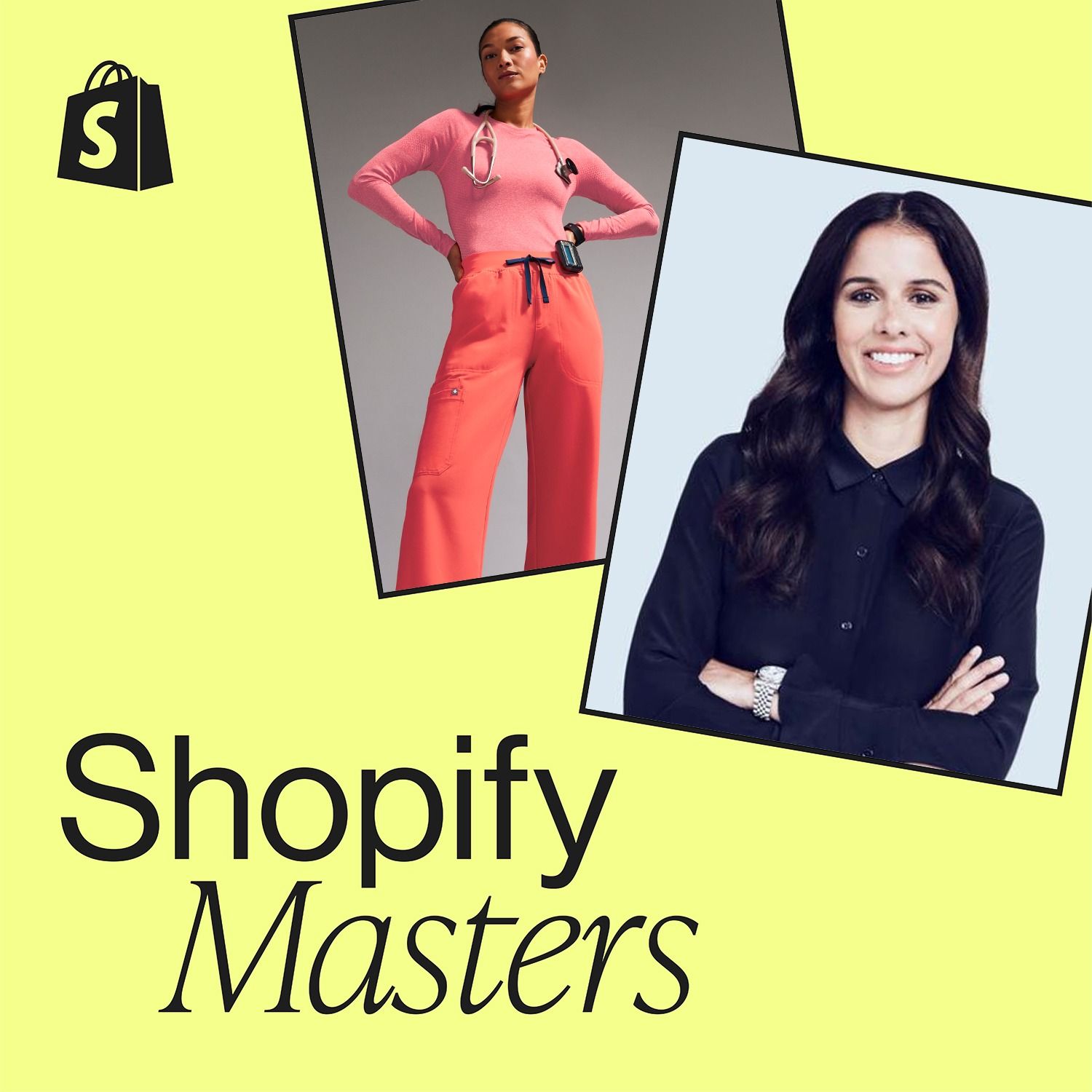
Shopify Masters
How Figs Built a Billion-Dollar Brand for the People Saving Lives
00:49:38
Trina Spear left Wall Street to build a billion dollar brand serving the 18 million health care workers no one else was designing for. Figs started out selling scrubs on sidewalks and grew into a NYSE-listed, 90% direct-to-consumer powerhouse.
Loading summary
Transcript105 lines
- [00:00]
A
When I was like, okay, I'm thinking about leaving to disrupt the scrubs industry. Most people in my life, my friends, my family, were like, what's a scrub?
- [00:10]
B
Scrubs on sidewalks, doctors on billboards. And two founders who turned rejection into a billion dollar brand. FIG started in 2013 with Heather Hasson and Trina Spears selling scrubs out of a car trunk. A grassroots gamble that sparked a movement.
- [00:23]
A
What company, what brand was focused on the people saving lives. We knew that's the type of brand we wanted to build. We knew that that's what they deserve.
- [00:31]
B
In 2021, they made history as the first company led by two female co founders to IPO on the New York Stock Exchange and closed off 2025 by generating over $600 million in revenue.
- [00:41]
A
It's kind of cool to take your company public. I'm not going to lie.
- [00:44]
B
Today, CEO and co founder Trina Spear joins me to share how Figs overcame critics and lawsuits to put health care workers center stage and transformed an overlooked uniform into a badge of honor for a global community. This is Shopify Masters, your companion for starting and scaling a business, and I'm your host. Sponsors. Trina, thank you so much for being here.
- [01:01]
A
Thank you so much for having me.
- [01:02]
B
I'm so stoked to talk to you. The story of Figs is a remarkable one. I want you to take me back to the year of 2013. You'd had stints in banking and private equity. You'd recently gotten out of business school.
- [01:18]
A
Harvard.
- [01:19]
B
No big deal. How is it that you set your sights on scrubs?
- [01:23]
A
I was, you know, working in a finance job, wasn't, you know, really feeling that fulfilled every day. Felt like I was kind of moving money around a table. And met Heather, my co founder, through a mutual friend, and I had learned about her idea and her vision for creating better scrubs and better medical apparel for healthcare professionals. And I just thought it was really interesting and, you know, kind of dove in for about six months while I still had my job at Blackstone and learned more about the industry and thought, like, this could be something really cool and could change how, you know, healthcare professionals felt and how they looked and how they could perform in their jobs.
- [02:05]
B
What was missing for those of us outside of the industry, what was missing from scrubs in those days?
- [02:11]
A
Yeah, I mean, they were really bad. I mean, it was ill fitting, uncomfortable. Like, looked like you were wearing like a garbage bag to work every day. It's not anything that you or I or anyone would want to wear. Harsh fabrications, you know, Heather kind of came up with this idea sitting with a friend of hers who is a nurse practitioner at Cedar Sinai. And she was just complaining, like, this is, you know, this is what we wear. And Heather was like, there's gotta be something better out there. I'm the best shopper in the world. I will find you something better. And went around to these stores and strip malls where there was just like a rack of black and a rack of navy and a rack of white, and there was a box in the middle of the floor to find a size. And she was like, wow. Not only is the product really bad, but the experience is just really subpar. And that was, you know, 14 years ago. And so really set out to make a better product that's functional and comfortable, tailored fit. Well, you're not kind of holding your pants up in a surgery. You're not pinning your.
- [03:10]
B
Oh, my God, you need that hand.
- [03:11]
A
Yeah, exactly. Exactly. You're not pinning your wedding ring to your bra strap, which is what doctors and nurses were doing. And so, you know, how do we, you know, create a great product that has pockets for your stethoscope and your alcohol swabs and all the stuff you're carrying around as a healthcare professional? It seems pretty obvious now, but at the time, it was not at all obvious. And it took time to create Fine X, which is our proprietary fabrication that you take it out of the dryer, you're not ironing it right. It's not fading after a few washes. You know, it's really durable, it's really technical, and it really helps you do that job. You know, you're not working out for an hour. You're not doing a yoga class. You're on shift 12 hours, 16 hours, sometimes double shifts, 24 hours. You need a product that's gonna help you do your job at the highest level.
- [03:57]
B
What did that early product development and iteration process look like?
- [04:02]
A
Oh, it was intense. And Heather's a perfectionist, and she really focused a lot on the product, but it was, you know, iterating and iterating and making sure that it was really technical and durable and could withstand all the crazy things that you're doing as a healthcare worker. But it was also super comfor, right, because you're on your feet, you're seeing your patients, you're running around a hospital. You're literally saving lives, which is insane. And so you need something that had both. And so really focused on the hand feel, really focused on all the properties. Antimicrobial wrinkle resistance, stain repellents and so getting that right, it took about two years to fully perfect just the fabric alone. And then, you know, construction and fit and all that came even after that.
- [04:46]
B
And did you guys spend all of that time iterating before actually taking it to the consumer, or did some of that iterative process happen as you were already selling to nurses and doctors?
- [04:58]
A
We're iterating now. Right. I think that's the beauty of building a business, is that you can keep evolving and making it better and better, and you have to. Right. We live in the age of AI and technology, and the world is moving so fast. And so, yes, we make a physical, tangible product, but you always have to be innovating and changing the game. And that's with new fabrications as well. I mean, we have a new fabrication called Formex, which has even more stretch and can do even more for you, depending on, you know, your profession and what environment you're working in. But I do think even Fine X has come a long way since the early days in really getting that right for what healthcare professionals are doing now. Right. And how they're treating patients and how they are doing their jobs has evolved. And so everything we do has to evolve alongside them.
- [05:44]
B
You mentioned that the model was like putting a box in the middle of the room that doctors and nurses and vets had to rifle through for these scratchy, uncomfortable scrubs. I can't imagine that that's how you were getting them into their hands. How were you getting your scrubs to people initially?
- [06:03]
A
Yeah, no, I think that was, like, really the issue with the industry. It was so outdated. You know, it was really made of licenses. So all these companies were just licenses of other companies like Dickies and Cherokee. Those were really construction companies. And then you had like, Grey's Anatomy Scrubs, which is a license from abc, the TV studio. Oh, wow. And then, yeah, and then those companies were really manufacturers of scrubs, were selling to distributors. And these distributors were really mom and pop scrub stores and really medical supply stores around the country or where they would be in strip malls. You would walk in, there would be, like I said, a rack of black, a rack of navy. You would have to sift through scrubs to find your size. They would be next to bedpans and knee braces and just a really awful experience. And I mean, it literally looked like 1950, but it was 2011, 2012, when, you know, Heather was really iterating on this. And so we said, okay, yes, create a great product, but then go direct. Go direct to healthcare Professionals really understand them. And we were selling scrubs out of her car at 7am and 7pm when all the doctors and nurses were changing shifts, right? And we would say, what do you love? What do you not like? You know, we're collecting cash on the sidewalk and selling our scrubs, you know, the first iteration of what that was. And you know, nowhere close to what they are now, but way better than anything out there. And people are like, these are great. And also this would be great if you had this pocket that, you know, inside that held our money and all these different aspects. So we built that in over time. But it was really about that direct relationship. And it started truly direct to consumer. Truly direct to consumer. It started on the sidewalk and then, you know, over time we built our website, wherefigs.com to this day, we'll do close to 700 million in revenue. This year. To this day, the majority, 90/ percent of our revenue is all our e commerce experience.
- [07:54]
B
Wherefigs.com and the other 10 is retail.
- [07:57]
A
So we have some retail stores which I still think is direct to consumer, right? We're selling directly to healthcare workers in our stores. We have five today. And then we have a teams business. I actually still view that as direct to consumer cause we're not selling, selling through anyone. We're selling to the institution to outfit their team, right? So an administrator, the head doctor of his private practice, concierge clinics. So that's our team's business. That's the B2B side of what we do. And so you could say actually 100% of our business is direct to consumer. And the vast, vast majority is on our e commerce experience. Where figs.com?
- [08:30]
B
it seems like this direct to consumer element is so baked into the ethos of figs, like in everything I've read from you and other podcasts, like, it's so clear that you are keeping the healthcare professionals front and center in every decision you make. It's not just about making a pair of scrubs. It's about what for you.
- [08:55]
A
You know, our mission is to serve those who serve others. And our mission is to support and help and celebrate the people that have dedicated their lives to helping everyone else. I mean, it's unbelievable to choo to be a doctor, a nurse, any type of healthcare worker, and literally sacrifice so much for all of us, all of us lay people, right? And it's unbelievable. And so from day one, it's like, how can we serve you? The only way to serve anyone at a high standard of excellence is to understand them. And so that direct to consumer relationship, really, it's like a real authentic relationship. Like we, you know, know these people in some ways, maybe even more than they understand themselves. And that's our job, to reflect the world, the best of them back to them. And that's what we do in our campaigns. But that feedback loop is the business model. That's the business. How do we understand you so that we could serve you better with incredible product, with an amazing experience and an incredible infrastructure and backend to even make that, you know, it's like a self fulfilling prophecy. It just makes it better and better and better so that we can get you what you need to go to work. This isn't like I said, this isn't like a. I have so much respect for athletes and celebrities and you know, most companies create gear so that you can score more goals or run faster or swim across a lane. You know, we're literally supporting the people saving lives. And that was Heather's question to me when I was still at Blackstone and thinking about doing this. It was like, what company, what brand was focused on the people saving lives? And I couldn't think. And she's like, there are none. And I couldn't think of one. And that just seemed not right. It didn't seem. It seemed like there should be a brand, there should be a company that existed solely focused on the people saving lives.
- [10:45]
B
Was that the light bulb moment for you?
- [10:47]
A
Yeah, it was. Yeah. That was the aha moment of like, wow, if I could, how lucky would I be if I got to do that every day? If I got to spend my life showing up and serving this group of people, the most amazing people in the world, we call them awesome humans, doing really the world's most important work and are the backbone of every functioning society. Like, they are the backbone. And so we get to be that brand for them and we get to support them. That's pretty cool.
- [11:12]
B
Your passion is beautiful and infectious and it's nice to see you still have it after all these years.
- [11:20]
A
It's the best. I mean, you know, Heather used to say to me, she was like, you can make money selling pens, you might as well do something you're passionate about. Right? I don't know, maybe, maybe I would be passionate about selling pens, but it's a really good pen. Yeah. And I do care a lot about the, you know, the glide of a pen. But this is way better, right? Because this is about people. Our whole business is about people. The people we work with. I'm super excited and passionate about everyone we work with. And it's infectious, even amongst the team, of what we get to do and how we get to show up. And it's, you know, it's awesome.
- [11:56]
B
I heard somewhere recently somebody say, like, if you tie yourself too tightly to a company, a project, a product, you're much more prone to burnout. But if you tie your career to a mission, you'll kind of always be okay.
- [12:11]
A
Yeah. And people always say that, like, oh, what do you do with burnout? And how do you balance? And, you know, I do think a lot of it is that concept. Like, I actually don't get burnt out. Like, I get. I'm tired sometimes, but, like, I definitely don't get burnt out from my work with figs. Other things are tiring, but that's, like, the most fun part, you know? Like, that's the most fun part. And yes, it's hard and stressful at times, and we're facing different challenging things. But that's also exciting because how can you navigate the different challenges that come your way? And, you know, ups and the downs are what. The part of what makes it great. We always say it's the hard that makes it great. If it was easy, everyone would do it. Like, that's our number one core value. Like, we want it to be hard. Like, that's like, you know, that once you break through and get to the other side, like, that's the most fulfilling thing ever.
- [13:00]
B
Totally. And it feels earned.
- [13:02]
A
Right. And, like, be the person that, like, does the things others aren't willing to do. Like, there's so many people in life that don't show up. There's so many people in life that are, like, taking that easy path, sitting on their couch, being like, some, you know, it just got too hard, or, like, you know, they, like, let everyone else do that. Like, be that person that, like, does the things that others aren't willing or aren't able to do. And that's like, 90% of it showing up. In having that attitude, it's possible that
- [13:27]
B
you're just constitutionally built this way. It seems like you might be, but do you have any advice for other founders out there in terms of maintaining that kind of commitment and resilience, especially in the face of what is. Can seem like an endless number of setbacks on. On the entrepreneurial journey?
- [13:45]
A
I think resilience is, like, the number one thing. And, I don't know, part of it. You're born with it. I do think you could build it over time. And and build that muscle. Like, I wasn't this resilient day one. I think enough bad stuff happens every single day that you start viewing it as like, that's just part of it. That's part of the journey. Well, even in the last number of years, prior to going public, after going public, where you could argue, okay, this thing didn't work out. A company came in to buy us before we went public, and part of us didn't want that to happen. And then actually about a year ago, a company tried to buy us again. Both of those things didn't work out, and it was for the best. We should build this company for the long run as a standalone entity. And it's incredible to be able to do that. And so these setbacks or challenges are just kind of the universe, like shifting, you know, what you should be doing and reminding you it's not the shifts that make you who you are. Reminding yourself that the original vision, the original path, the original thing of how you're gonna go forth in this world and with this business is the right thing. And I would say, like, that's been more of our story is just like reminding ourselves who we are. Staying true to the original mission and the vision and continuing on.
- [15:04]
B
Have there ever been moments where you lost sight of that vision and had to recalibrate you or Heather?
- [15:10]
A
There's definitely been those moments. But I think even having each other as partners in this, having an incredible team that is so fully locked in to who we are, who we're serving, like, that really didn't change. There's been some iterations, like coming out of COVID We accelerated massively during COVID and then we had kind of in 2324, we had a bit of a Covid overhang and even part of 2025, so we had excess inventory along with every other consumer brand in the world. And so we were leaning a bit more into conversion based tactics, bottom of the funnel type marketing to move through that inventory. It wasn't a massive shift, but, you know, it didn't feel as amazing as when we do our big storytelling campaigns, like what we just did. I don't know if you saw our international Women's Day campaign. Love it. Unbelievable cry.
- [16:02]
B
I mean, a lot makes me cry
- [16:03]
A
these days, but it made me cry. Yeah. And like that, you know, telling those types of stories about women in medicine and the triumphs and the challenges and, you know, like the moment where she says I believe you to her patient. And after all of these, all of these men, like, didn't and like what that means and then showing that not just to our community but like to the broader world, like this is the change that's coming, like that is where our sweet spot is. That is what FIGS is all about. And so yes we do paid social and paid advertising and that's an important part of the engine and the funnel if you will. But the more we could just level up and keep leveling up to what this brand is about and it takes a real successful business model, be able to do that because you need to have capital because that return on that top of funnel investment takes a longer period of time. And so I'm super proud of where we are today. But there were were moments throughout our history where we leaned more into the bottom of Funnel. And you know I, I would say the most success and where I want to live going forward is, is the types of stories, is the type of top of funnel marketing if you will, that really changes the game and gets into the hearts and minds of healthcare professionals. That's what we're here to do.
- [17:21]
B
The stuff you're talking about top of Funnel, like the stuff that is driving initial awareness, awareness, not the thing that's converting somebody.
- [17:29]
A
That's right.
- [17:29]
B
Sale.
- [17:30]
A
That's right.
- [17:30]
B
I want to talk a little bit about, about these anthemic films that you make because they are so incredibly poignant and heart stirring and high production value and we're living in a world where, and this is, this isn't a knock to anybody, this really works for a lot of brands also. But where like a lot of like very lo fi unpolished content is what's working for people. And you guys have stayed so committed to something that is, I can tell, intensely expensive and very time consuming and laborious to pull off. Right. And as you said, it's top of Funnel. You're not going to see the impact of that for a long time. What sparked that idea? Why did you know that that was what you had to invest in?
- [18:10]
A
Yeah, I mean I think that's just the most, I mean common sense wise and like thinking about like really what changes the conversation, right? What changes paradigms. And it's not just the anthemic films, although that's part of it. It's also we put real healthcare professionals on billboards in Times Square in 2018. That was kind of this like first like okay, that's expensive, you can't really measure it. Same thing with these films, like real health care professionals in our films telling the stories about them, showing them that we got their back and we understand them. That was really important. And so, like, your question is, like, how did I know? We didn't know, right? Like, that bet, if you will. Like, we didn't know, but we. We knew that's the type of brand we wanted to build. We knew that that's what they deserve, Right? Like, Nike did it for athletes. Right? Like, and I would argue a lot of other great brands tried to kind of replicate that, but I think we've done it differently than a Nike, and we've done it with the best people in the world. Still can't measure it perfectly, don't care. But in our gut, and I think gut is, like, totally underrated. Like, we know that those are the things that really change perceptions. We just had international Women's Day event Friday night with a panel of all the women that were in our campaign. And one of the women stood up during the Q and A, and she said to Nalie Crawford, who's a IVF fertility doctor, and she's incredible. She just wrote a book. She said, you know, when I saw you on the figs billboard in 2018, which was our Think outside the Boxy Scrubs campaign, I didn't know before that that a woman could be married with kids and be a physician. I actually didn't know that could happen. Wow. And then I saw you and I said, wow, if Natalie Crawford could do it, I could do it too. And they had never met each other. Okay. And then Natalie, like, started crying, and
- [20:07]
B
they hugged, and it was like, were you crying?
- [20:08]
A
Yeah, everyone was crying. Everyone was crying because, like, wow, for us, I mean, it's not really about us, but for us to be a part of that, inspiring the next generation, inspiring women to enter this profession and dedicate their lives to serving patients and serving people, like, to be a part of that. Wow. And I have to even remind myself to say, like, this is what it's about. Because, like, those TikTok or lo fi or, you know, that does work. It works for a time. It doesn't have legs. How many people are gonna remember that two years later? Probably nobody. But, like, that is the world we're living in. Like, this. You know, we have no attention span. I don't. You know, like, nobody does. But, like, how do you break through? It was in 90 seconds. And I know that sounds like, oh, it's 90 seconds. No one watches 90 seconds anymore. Everyone watched, like, 90 something percent, some crazy stat. We have over, like, 4 million views. It has only been three days since we launched that film. Like, and it's not just, oh, I watched three seconds and bounced out. I watched all 90 seconds, which is insane. On TikTok and Instagram. That's insane. No one has 90 seconds anymore. It's really good. It's really good because you want it. You want to know the story.
- [21:23]
B
Yeah.
- [21:23]
A
You want to be a part of that. You want to feel something again.
- [21:27]
B
In those early days before you had this absolutely stratospheric rise and you were selling scrubs during shift change out of your trunk, were there pieces of feedback and insight that you gleaned in those early days that really helped shape the trajectory of the company?
- [21:44]
A
Definitely on the product, like, I think there was, you know, very key insights. You know, where are you holding your surgical scissors? Like, where are you putting your wedding ring? Like, what type of zippers do you need to hold and secure your tools? So that was a key one, I think, on the fabric side, like, you don't have time, right? You're. When you're not working 12 hour shifts, you. When you're not working 4, 3, 4, 5, 6 days a week, you know, these shifts are long. You're with your family and your friends. You're not wanting to drive to some random store in the middle of nowhere. Like, you don't want to do that. So, like, you know, time was a really big thing we needed to solve for. So, you know, everything, even on our e commerce experience, it needs to be fast. We're not solving for you like, scrolling. That's not our person, right? Like, some companies, they're solving for, like, we want you to scroll and have fun and, like, discover. Like, we're not solving for discovery. We're solving for you getting your uniform so that you can go to work and do your job. And how can we make that as easy and as quick as possible? So it's a different thing than other companies. And then just this concept of celebration. The biggest celebration from their job is like someone bringing pizza to the break room. Like, that's it. Like, pizza in the break room. That's like, oh, we got your back. And so we knew that we just needed to, like, up that to, like, the. The sky. Like, how do we take that? Like, who's really showing up for you and celebrating you and inspiring you and reminding you that you're badass. So that even went to, like, you know, we have inside of all of our product, we inspiring quotes that say, like, just saving lives, nbd and things like that and so remind you, like, you're a freaking badass and like, we're going to tell you that till the end of time, like during COVID everyone like clapped at like 7pm, right? And then they stopped, they stopped clapping. And so it's our job to like clap around the clock for the rest of time.
- [23:38]
B
It's one thing to speak about this in a sort of like theoretical high minded way, right? About keeping the spirit of community alive. Initially you had it in this very direct one to one fashion. Then the company scales in this enormous way and it can be harder to retain that one to one connection. You're doing it through the films for sure. You're doing it through the small touches. How else are you reflecting back to this community that you are really connected to them?
- [24:06]
A
You gotta be on the ground. We do activations and events and we have a 600 person ambassador program on the around the world. These are like real relationships. You know, people joke like that. I don't have many friends, but all of my ambassadors, all my healthcare professionals are my best friends. Like they're calling me when they're like getting a new job, when they're breaking up with their boyfriend. Like it's real. Right? And so I think it's that, it's the authenticity. Like you can't pay for it, like you can't buy it. Like you can't, you can't replicate those 14 years of getting to know these people on a really deep level and then continuing that. And it's conversations, it's like continuous conversations. Yes. How can we show up and how can we serve you from a brand perspective? Sure. But it's like, what's going on? How are you doing? Are you okay? Especially post Covid, like the mental health strain and the PTSD that this community went through. These are my friends. Are you okay? It's like, okay, you need ppe, you need more protective equipment so that you can do your job. But we worked with a partner to get therapy for all of our healthcare workers and now we have an advocacy group and a lobbying group in D.C. and partnered with the Lorna Breen foundation fighting for better mental health support. Like, so it's like really holistic. It's like, what's going on? What do you need? I'm talking to you all day. I mean I also do my job, but a part of my job is like this and it's really fulfilling. It's like my life's work. Right. So how do we understand at that level so we can continue to show up?
- [25:43]
B
I think that's the thing that's like been coming up as you're talking about this, like, you're speaking to it so beautifully, and it's inspiring. And I'm like, okay. I feel like we're also, like, bearing the lead a little bit here and that, like, you're the CEO of the company and you are handling so much of the tactical details. Right. That are required to actually make a business a success. Success. And to scale it.
- [26:07]
A
Right.
- [26:07]
B
And to keep it successful. But you have this sense of purpose that's a big ask. How are you portioning out your time? How do you balance that?
- [26:16]
A
Yeah. And I think they're, like, totally intertwined and, like, serve each other. Like, you can't have, like, an operationally excellent business without fully understanding what your customer needs. Right. So, like, I think they're like, one informs the other, one informs the other. And so we have strategy and we have strategic pillars and we have goals and metrics. And we, you know, we're a public company, we have shareholders, we have all of these things. But. And I would say a bit compartmentalizing and saying, okay, now I'm doing an investor call, or now we have earnings. And it is a little bit of a different headspace. But at the end of the day, like, first and foremost comes healthcare professionals. If we get that right, everything else works. And you see that even in the last few years of, like, how we have continued to grow and scale the company and do it with a disciplined approach around growth and profitability. You can't do that without putting health care professionals front and center at every seat at the table and then building around them. So building the strategies around them, building a product innovation strategy around them, building a marketing engagement strategy around them, and building an infrastructure operationally excellent pillar around them. And so that's how I think about the business. Everything flows from that. And being super clear about what we do, I would say a lot of businesses get unfocused. Right. And I think what's been a part of our success is that it's such a beautiful business because it's so simple. Really hard to replicate, but incredibly simple. We make one product line, the Figs product line. We sell that all direct to consumer. Whether it's on our site or in our stores. We focus obsessively about this community and serving them once again with great product and great campaigns and storytelling. At the root of it, it's simple. Whether it's investors or whether it's even some people on the team, whether. Whenever anyone tries to kind of sway us from that, it's just about getting Back to what this is all about, who we're serving and then how we're going to do it, which once again is super simple product storytelling. Simple.
- [28:21]
B
You could see early on that there was a community in dire need of being serviced in a different kind of way. That there was a distribution model that was ripe for disruption, that you could decommoditize commoditized industry. Right. But I would imagine also that whenever you're trying to do something new that's truly disruptive, there's pushback. So who in your life was telling you this was crazy?
- [28:46]
A
Oh yeah. I mean, early on, you know, I was, I had a really good job. I was working on Wall street, one of the most prominent, you know, asset management companies in the world. Blackstone. You know, I went to Harvard Business School as you mentioned. So when I was like, okay, I'm thinking about leaving to join Heather to co found this business to disrupt the scrubs industry. Most people in my life, my friends, my family were like, what's a scrub? And like what do you. Wait, you're going to leave Blackstone to go sell scrubs? Like that's insane. And so that was the initial pushback, I would say on the investor front. Like it was really hard to raise money. I went back through some emails recently because I was like, oh, I think I met this person and I found like the amount of no's from the investment community was pretty. I mean it was a lot. I mean people talk about a hundred no's to get to yes. I mean I think it was like a thousand no's to get to yes. Yeah. And we were, it was just really hard. But I think that's also what drove us to be incredibly capital efficient and build a real company that's super profitable. It wasn't like, oh, we'll just go back to the markets and raise money if things don't go well. And so that forced us to be to build a real business.
- [30:00]
B
When you are out there and you are trying to raise money because you need the capital to be able to scale in the ways that you want and need to be able to, and you're getting no after no after no. Did you ultimately in that moment give up on trying to raise money and decide we're going to do this another way?
- [30:17]
A
No. I mean we raised, we've raised a few million dollars and we did that, but at the same time we knew how hard it was and like we needed to focus on the business. Like if you're spending all time raising money, like it's a, it's a huge time suck. Like you have no time to like build a business. We had people that believed in us, right? But they weren't, they didn't believe in the industry and what we were doing. They just believed in us, which is amazing. Like people I'd worked with in the past at Blackstone and City and people that Heather had in her network. And so we had that. Right. But at the same time, like we had only raised about $10 million of capital. I mean, at this point we've generated I think over 3 billion in revenue and 400 plus million in EBITDA. Right. So very quickly in our journey, we're break even. I would say like year three, year four, year five, and then by year six, we were like off to the races from a profitability standpoint. So we did raise some money, but like not in the way you think about all these VC backed brands that raise hundreds of millions of dollars. We only ever spent $10 million to get to where we did. We had an investor who bought out our other investors in 20, 2017, 2018, and then he put $50 million of capital on the balance sheet. We didn't touch that. So that was just there and we could sleep at night. Right. But that's what that did.
- [31:36]
B
This culminated in some ways in your 2021 IPO. You and Heather were the first two female co founders to IPO and the new York Stock Exchange, right?
- [31:51]
A
Yes.
- [31:51]
B
I mean that's like at once like a really incredible feather in your cap and also like a little frustrating to hear, frankly.
- [31:59]
A
You're like, yay. But also like the first. Really? Yeah. Yeah. Okay.
- [32:02]
B
Can you take me back to that day?
- [32:04]
A
Yeah. I mean, it was really, it was really exciting, you know, and I think what made it the most exciting is that we brought about 150 healthcare professionals to the New York Stock Exchange. They were on the podium with us ringing the bell. And so it wasn't really about us, it was about them. And that was the culmination of, of putting this community on the map in this way. And it was during COVID and so, you know, it was May 2021. So they were going through so much and the company, we had to reset the bar to another level to show up for them. And so there was so much happening at that time. And it was a really exciting moment of all the hard work of this team over the previous, you know, eight plus years to get to that point. And so it's kind of cool to take your company public. I'm not gonna lie. People always talk about the stresses of that, but pretty exciting. We had a huge party and with all of our healthcare professionals. So that's what made it so special. Like, it was us and them together in front of the world in that way was pretty awesome.
- [33:05]
B
On a personal level, were there things that you had to do to level up as a CEO, as you prepared to take this company from its own private venture to being public?
- [33:17]
A
I would say, like, that's just been part of my journey since day one. Like, I love feedback. Like, I love criticism. I don't view it. I don't internalize all of it, because some of it's bull. So you gotta, like, be like, nope, that's not real. That's not true. But, like, oh, that's interesting. Or, like, there's a nugget there that's like, really? I'm gonna take that and I'm gonna internalize it, and I'm gonna get better. And so, like, my whole thing is, if you can get 1% better every single day and people talk about this, it's not new, but, like, imagine what you could do in the next 20 years. And so I'm maniacal about, like, continuously improving as a person, as a CEO, as a leader, like, making people feel like they can do anything. Like, how do you believe in someone more than they believe in themselves? I think we did do that for this community, but we also do that. My job is to do that for the team. How do you continuously show up and get better? And there's so much stuff that happens that you're really able to do it at this insane rate. So I would say the ipo, in the months leading up to the ipo, you have all these people around you, bankers and lawyers, being like, no, that sucks. That's great. Like, you're able to really hone in on the story and, like, what this was all about. But I, even through that process, got more convicted because people were trying to tell us what this company was and who we were and what we were all about, because they were just, like, slapping other S1s and other business models on us. And I was like, nope, nope, nope, nope, nope. This is who we are. So actually, during that process, it wasn't just like, how do I get better? It was like, how do I remind all these people that don't know us who we are, what we're all about, and how we're gonna go change the world? And so that was like, an extra boost of, like, you guys don't really know, so you'll teach me some things, but I'm gonna teach you some things too.
- [34:58]
B
I mean, okay, where do you think, where do you think that conviction and self possession comes from? I mean, do you never suffer from self doubt?
- [35:11]
A
I think when you work as hard as I have, right? Like I'm not married, I don't have kids. Like, I work really hard and like when you work really hard at something in an obsessive, crazy, maniacal way, and you prepare, like, you prepare for the opportunities that come your way, like, you are pissed when people doubt you. You are pissed when somebody tells you that's not the way it should be. This. And you're like, and you firmly know it, like, in every sense of your being, like, you know that they're wrong. You're not going to let them come into your company and do something the way you don't think it should be done because you know with every ounce of your being that like, you're wrong, right? And so, like, and I founded this fricking company. Like, I'm not gonna let you come in and change what we're doing, given how big our mission is. Like, I'm not gonna let you do that. We have work to do. We have to go change this industry. We gotta make sure that everyone's focused on these people so that we can get more healthcare professionals involved and in this profession so we can all be healthier and live longer. And this is big. This is big stuff. You sit at a desk and run some numbers. You sit at a desk and make some documents. You're not saving lives. You don't know what this is all about. So, like, yeah, I know more than you about what I do.
- [36:31]
B
CEO meets motivational speaker.
- [36:34]
A
I don't know about that. No, I love it. No, I'm like, I forgot I was interviewing you for a second.
- [36:38]
B
I thought I was just like an audience member.
- [36:40]
A
I'm like, yeah, wow. Gas me up. This is actually a good interview. I don't think I've shared like 80% of what I'm talking about with anyone in the, in my life. So you clearly know what you're doing and are doing something, right. Like, I don't think I've ever said any of this to anyone. Oh, God. Oh, music twin interviewers ears. Thank you so much. It's definitely you and not me.
- [37:01]
B
As you were moving toward the ipo, you also had this other insane thing going on, which is that you were in the midst of what turned out to be a four year lawsuit. It was essentially More or less a false advertising suit that was levied against you?
- [37:16]
A
Yeah, yeah. I mean, in the end of it, it was basically like they were suing us for the whole basis of the company. It was almost like they were suing, like everything that we had done was a lie. I mean, that was essentially the lawsuit. There was so much more to it than, oh, it's just this lawsuit. I mean, you know, people get sued a lot, all the time, but this was way deeper and truly personal because they were suing us for hundreds of millions of dollars. Not just the company, but also myself and Heather personally. And so this was a four year lawsuit started in 2019. It was through the IPO, actually. They threatened to put an article in. Very high profile. I won't say which one. It was a very high profile newspaper. The morning of our ipo, right as we were going to ring the bell and, you know, we were able to not have that happen, but it was super stressful. I mean, changed the course of my life in the best ways.
- [38:10]
B
But what did it teach you about yourself and your mettle?
- [38:15]
A
I think, you know, it's. There's so much pressure when you're in these situations to settle. Actually, you know, companies are sued all the time and there's this pressure that you're gonna spend all this money and you're. It's gonna take so much time. And I would say up until that point we did, when things come up, you're like, okay, you let the lawyers deal with it and you settle. And I think what I learned about that is that you shouldn't settle and that you should fight for what's right. And when you haven't done anything wrong, which we hadn't, you have to stand up for yourself. And integrity isn't just like standing up for yourself when something's not right, actually standing up against when someone's doing something wrong so that that doesn't happen to somebody else. Right. And this company had sued a whole slew of companies before us, and many of them went out of business. I mean, it's actually devastating. All these littler scrubs companies went out of business because this company was a bully and used litigation to take companies out. And we were the first company to say, that's not gonna happen. You're not gonna bully us. And thank God we had been successful enough to fight it. We had enough resources to actually fight them. Spend four years in an incredibly intense and, you know, insane lawsuit that ended in a three and a half week trial. We were able to do that and go up against the Goliath of the industry and fight them and win so that somebody else wouldn't have to have that happen. They went bankrupt after that and the CEO got fired. So, so much had happened post that where it was like, like, yeah. Like you can't just do that to the startup, to the company trying to innovate and disrupt an industry because you took your hand off the wheel. You were on the back porch collecting checks, not actually serving people you didn't even know that your customers names. Yeah, you didn't deserve to be the leader in the industry.
- [40:13]
B
Was there any piece of you or your team that did want to at any point go in the direction of settling versus fighting this thing out?
- [40:22]
A
Oh, yeah. And there were times that I was like, this is too hard. I won't go to all the details of how they tried to really hurt us personally. Like with our company, with our team. I was on the stand for three days. Like this was insane and intense. There were times all the way leading up to jury selection where we were like, maybe we should settle. But I think in the end, like credit to my board, my board was like, no, we know we didn't do anything wrong. We need to go up against this to prove for the rest of time that you can't with figs. And so that was like this moment of like reminding yourself who you are, what you, you're made of, what you stand for. Not letting this happen, not just to us, but to anybody. It wasn't right.
- [41:07]
B
It strikes me that there's another component of this whole journey that seems like it has to be so incredibly important, which is your relationship with your co founder, Heather.
- [41:17]
A
Yeah.
- [41:18]
B
You didn't know each other prior.
- [41:19]
A
We did not.
- [41:20]
B
She came into your life with this idea. You were connected by a mutual friend. Any co founder relationship, good or bad, somewhere in between is like a marriage, right? Like, yeah. What made you feel like, okay, I'm gonna hitch my wagon to this woman?
- [41:35]
A
You know, I think Heather's a true visionary, creative genius person. But like, I didn't know all the things that we would go through together to get to this point where it is, to your point, a marriage. It is this incredible relationship, incredibly impactful. I don't even know how to describe it. There's not even words to describe this dynamic of for many years it's us against the world and how are we going to do what we believe is right. And this litigation, was that on steroids? But even we have similar values. We have this mission and we are Fully, fully aligned on going after it. Not to say that over the years, there haven't been disagreements or things that we aren't aligned on, but at the core of how we show up is this concept of Ubuntu, which I don't know if you know about, but it means, like, I am because you are, or I am because we are. And, like, our success is, like, inextricably linked. And I think you have to have that mentality of, like, if you're not good, you're not happy, you're not successful, you're not all the things that you need to be. I can't be what I need to be. And now that's actually a value within the company, and it's really powerful because it's like, I don't have kids, but congratulations. I don't know if that's, like, public.
- [42:57]
B
Oh, you noticed. Thank you.
- [42:58]
A
But, like, they say you're only as happy as, like, your most unhappy kid. And that's, like, real. Like, I'm not happy if Heather's not happy. I'm not happy if someone on my team isn't good. We need to make sure that, like, everybody is working together, and you're working at your highest potential, your highest level, so that I can do what I need to do. And she's just been such an incredible support. Like, I remember during the lawsuit, like, we were sitting there, like, for hours on end, and Heather has, like, add, like, she's like, cannot sit still for that long. And so she's, like, drawing during, like, the closing argument. And she turned to me, and she's like, chisel. Chisel. And I was like, what? What do you mean? And she's like, this is like Michelangelo. He chiseled to create the David and this. And in the end, it was, like, a masterpiece. And that's what's happening right now. We're just being chiseled. And what will come out on the other end. We're gonna win. And I was like, that's just such a beautiful concept. And I think people should think about that. When bad, bad stuff's happening, you're just being crafted into who you are meant to be on the other side.
- [43:57]
B
Do you think figs is still being chiseled today?
- [43:59]
A
Yes, we're gonna be chiseled to the end of time. Well, it was funny. Cause we had this event on, Heather and I, after the event, and I was like. And, you know, you notice things that weren't perfect. And I was like, do you ever. Do you think anything is ever gonna be like, you know, the perfect vision of what you think about. And she's like, no, that's like our story. Like, it's always a bit imperfect, but that's what makes it so beautiful. The sound wasn't right at the beginning and we were talking to our community and I was like, yeah, but that's what makes it like, awesome, right? Because people come up and, you know, and interact in a way that, that's really authentic. There's no space between us and everybody and. And that imperfection is what creates that space. And you know, this company, I was thinking about this too. Like, this is a company in our industry. They've relaunched their Instagram like 10 times because, like, they changed their collection and then they. And it's like, no, like, you can see all our flaws. Like, go back to early days. Like, it is not beautiful. Like, it is not perfect. Right? Like, and I think that's just the story of, like, you continue one foot in front of the other, like, and it's never going to be perfect. But that's the beauty of it. And that's what makes it so. It's messy. It's like, you know, it's a little unhinged at times, but that's what makes it so great.
- [45:17]
B
Can you speak to one of those, like, early days, like, let's say first year mistakes that ended up being kind of transformative for the company?
- [45:25]
A
One that like we've talked about is like the. We swapped the women's and men's inseam and so we got all these emails that came in that was like my package. And it was from men being like, you know, their pants were too. The inseam was too short, which we were like, oh my God, this is crazy.
- [45:41]
B
And you were like, oh, no, just go find Karen in radiology and you guys can swap.
- [45:45]
A
Exactly, exactly. And that was like a huge production issue, right? And it taught us about, you know, QC and ensuring our quality control. And now that was a huge learning that now we've implemented at the highest, highest level to make sure that never happens again. But that was a big mistake. And it was early on where we didn't have the capital to have that not be a little mistake. And we ended up having to donate product and re engineering the product from there. But every day it's a little off, it's a little messy, it's a little this, it's a little that. But that's what makes it so great.
- [46:18]
B
Given that you're talking about how limited people's schedules Are right. The fact that you need to be actually operating at a very high level of excellence so that you can get these healthcare professionals what they need in a timely fashion. These inseams show up, they're wrong, they can't wear them. Did it harm customer relationships or were you?
- [46:37]
A
Well, luckily we didn't like have many at the time. This is like 2013. Like, we were very, very, very small company and benefits. And I think that was like, you know, we were also selling scrub that collection out of our car. And so we're like, oh my God, you know, so we were able to make it right and build those relationships literally one to one, because the company was so small at that point.
- [47:01]
B
What's an imperfect thing about you that you would never change?
- [47:04]
A
Oh, there's so many imperfect things. You know, people think that I'm like stubborn, right? And that I'm like pretty hard headed, hard headed about things. And some people say that I don't listen. They don't realize I listen more than they think. Like, I really listen. But like being convicted on a mission and a vision. And I'm super proud that we haven't pivoted 10 times. Some people come are proud of the pivot. I'm super proud that we haven't pivoted. So I would say like, that's an imperfection and sometimes it probably crosses that line. But I'd much rather live in myself, my own skin, and be able to look in the mirror and be like, yeah, I believe that. Not let people drive my decision making too much and be a pushover. I don't know.
- [47:51]
B
The pivot or the lack thereof is like part science, part art. Do you have any advice in terms of an internal or external rubric for figuring out when to stay the course, when to recalibrate?
- [48:07]
A
I actually do have a framework because the why and a lot of the what can't change, but the how can. So, like the why, like why we're showing up every day, why we're doing this, who we're serving, and the who can change. This is what we need to do, right? This is what we need to do. How we get there, I'm actually pretty flexible on. So here are the things that like, we won't change because I've hired new executives, right? And they're like, you know, I want to do all these things and I need to give them a framework. No, like, you can never touch these things. Like, these are fixisms. Like, we actually put them on the board. Like, these are fixisms. Like, you cannot change them. You know, we've had a designer come in and say, oh, like, I'm going to change how we do color drops. Like, no, you're not. That's like a fixism. Right. But on the margin, that's an interesting idea. That's the how you can modify the how, how we get there, how we implement, how we execute. I'm always looking to get better. Bring me new process that can shift the why never and a lot of the what.
- [49:13]
B
I love that.
- [49:14]
A
Yeah, that's a great answer. Here's the light. Thank you for being here. Oh, my God, this is awesome. Thank you for having me.
- [49:21]
B
And thanks to all of you for tuning in. Make sure you're subscribed to Shopify Masters so you never miss an episode until then. See you next time.
- [49:31]
A
Sam.