← Shopify Masters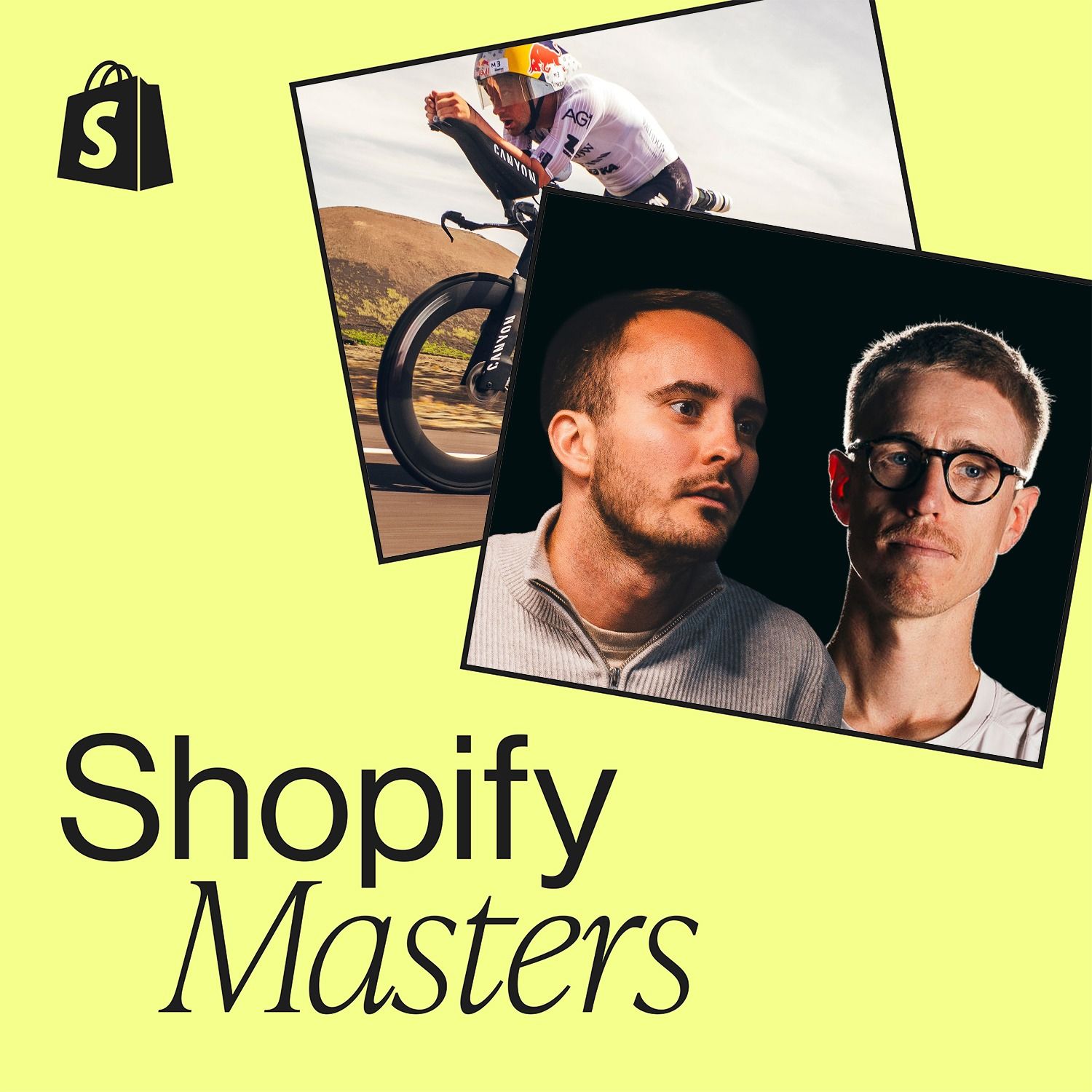
Shopify Masters
How Fusion Achieved a 101% Sell-Through Rate by Owning Its Supply Chain
00:30:26
By owning nearly its entire supply chain and leveraging AI raw-material forecasting, Danish endurance sportswear brand Fusion managed to sell an impressive 101% of the product it produced last year. The company achieves this near-perfect sell-through rate with a nightly ecommerce inventory sync that directly dictates what its sewing factory produces the very next day.
Loading summary
Transcript52 lines
- [00:00]
A
If you really want to be scientific, you have to go to your data, try something out, do some adjustments, try it again and again and again and again.
- [00:10]
B
Welcome to Shopify Masters, your companion for starting and scaling a business. I'm your host, Adam Lavinter. In an industry built on trends and overproduction, Fusion Sportswear is playing a different game entirely.
- [00:23]
A
Feedback is a big part of how we are perfecting the products with the return rate being so low that also because the satisfaction is very high. But we listen a lot to the demands out there.
- [00:36]
B
The Danish endurance brand outfits some of the world's best athletes, including four of the last eight Ironman world champions. And last year they sold every piece of product they made and then some.
- [00:48]
C
The whole thing about having the production and development so close nearby our headquarter is just optimizing the products.
- [00:58]
B
Eddie Christensen and Jacob Beck join me today to talk about how Fusion's obsession with precision and performance is quietly rewriting what a sportswear company can look like from the inside out. Eddie, Jacob, welcome to Shopify Masters.
- [01:12]
C
Thank you.
- [01:12]
A
Thank you so much, Adam.
- [01:14]
B
I think it might be helpful to start back with a brief overview of the origins of Fusion, because this company's been around for the better part of 25 years. So let's rewind back to 1999.
- [01:26]
A
So back in 1999, the founders started a little shop very focused on triathlon sports. Fusion became this go to for triathletes early on because it was really the products that was in demand, some high quality materials that could resist the endurance that triathlon is taking on. And then throughout the years, more and more professional athletes used Fusion products and they were in the feedback loop to perfect the products and make them better and better and better. We are a performance first brand. Functionality and the technical side of the products is really what's in focus and not seasonal drops as you would see it from other fashion industries. And that kept on back from 1999. It's the same tights back from 1999, but of course it has been updated. When newer technology has come around, we have perfected our products.
- [02:35]
B
Sure. So products and performance has been this cornerstone of the company the entire way through. Eddie, how did you come to Fusion?
- [02:43]
C
Yeah, I joined Fusion five years ago as the head of E Commerce. Fusion also started as a distributor themselves. So they sold other products and what they saw was that it was hard to forecast nine months ahead and getting the right piece of goods and the right amount of goods. So the forecasting part of their business then was pretty hard to do and they were left with some stock that could not be sold. And that's pretty much how the idea of starting their own manufacturing brand was founded. From 1999 to when I got on board, it was pretty much a retail focused brand. And when I came aboard, it was just after Covid. So we started focusing more on selling at our own webshops. That was how I got into Fusion and started here five years ago.
- [03:41]
B
Was Fusion online selling products direct to consumer before COVID or was Covid the first entry point into E commerce?
- [03:50]
C
We were online before, but it was much more of like a shop for our dealers where they could see the full range of products. I think it was three or four months before COVID closed down Denmark. We actually got on Shopify. So it was pretty easy back then to start advertising on Meta and pushing people inside our websites.
- [04:16]
B
So let's talk about the product itself and what makes it unique. When consumers think about performance wear or athletic wear that skews toward performance or high performing athletes, what separates products that say Lululemon or aloe versus you know, what you're doing at Fusion? How should consumers understand what the product differentiation is here?
- [04:39]
A
I think the big difference would lay in not the seasonal drops, but the more consistent product that has been developed throughout the years with a technology perspective always to perfect how the sweat wicking is done, how the fabric stress testing is done. And we have our our own textile lab in house which is running all the time with a lot of operators in there because they're testing our products all the time. And what also sets us apart from a lot of other brands in in the industry is our way of how we produce everything. We are very much in demand of of the whole supply chain as we own our sewing factory in Lithuania, everything is made in Europe and we have a knitting and dyeing facilities that we own here in Denmark as well. So we can test, tweak and do a lot of stuff because we are in control of the whole thing. We have different categories because triathlon, that is running, cycling and swimming. Of course we are not in the swimming, we are in the cycling and running optimization. So we work very specific with, with these categories. So for instance, in cycling we also have a wind tunnel. I think we will discuss this a bit later. But again we are very dedicated to
- [06:18]
B
each of the categories with respect to product development. The fact that you are manufacturing some of this or most of this product in house and controlling everything from a vertically integrated perspective, does that mean that pricing is what it is? I mean Consumers are not that price sensitive and they understand that they've got to pay more for product that you're producing.
- [06:44]
C
Yeah. I also think that what differentiate us from a lot of bigger brands like Lululemon is that if you could say they are lifestyle led, you're speaking to a specific lifestyle. We are more like product led. Everything we do in our business, from marketing to R and D to supply chain, it's focused on getting our products out the most efficient way.
- [07:10]
B
From a manufacturing perspective, are you 100% vertically integrated at this point or do you have any outsourced manufacturing whatsoever?
- [07:20]
C
We have like our sewing factories in lithuania. We own 50% of that and we own it together with another Danish guy who lives in Lithuania and runs the whole thing. And we also own part of our dyeing factory in Denmark here as well. And then we work together with fabric manufacturers throughout all of Europe in developing these fabrics for triathlon and cycling and running.
- [07:48]
A
Yeah, yeah, exactly. It might seem a bit complex, but it's actually the opposite. A lot of other ways to produce, to sell products, you will maybe have some manufacturers overseas you can communicate with, but you are not entirely sure. The fabric in a jacket, for instance, where each part actually comes from. And that's what sets it very much apart because we have really taken and integrated everything.
- [08:19]
B
Yeah. I think, you know, the default is that you have a third party manufacturing product and that could be completely divorced from the company's interests. Right. For example, you could have a North American domiciled company that manufactures product in China. Yes, it advantages the end consumer from a pricing perspective, but from a company perspective, the interests aren't aligned because that third party manufacturer in China is, is supplying product to say 150, 200, 250 plus other companies, they have absolutely no vested interest in the long term interests of the company they're producing for. Whereas in your case, if you own the manufacturing facility, they are completely invested in the product that they're producing for the company. Right. And that benefits the end consumer. The downside is price. Obviously your consumers are, let's assume, paying much more for this type of product, but they're getting a better product. The outcome is different.
- [09:19]
A
Exactly. The outcome is very different. And the pieces of clothing that you own, the lifetime value of this product is way longer. So again, is, is the higher price a downside? I don't see it that way because I think you are paying for a longer lifetime span for the product.
- [09:42]
B
Yeah, that makes sense. From a loyalty perspective. You see this in the numbers, right? Because Fusion has deep customer loyalty. You've got a 40% repeat customer purchase rate. So in terms of customers understanding the lifetime value they get from these products, it seems to me that they do. Right.
- [10:02]
C
We see online that when we get people to buy the first time they oftentimes comes back. The quality is, is something that you can like marketing and communicate about, but the real quality you really feel when you wear it, we have good confidence. And if we get to get people to try it out, they most likely come back for something else. Being it we're running tights or running T shirts or cycling bips.
- [10:31]
B
Yeah, that makes sense. And last year, what remarkable is that Fusion also achieved a 100% sell through rate. Which means in a nutshell, you sold every piece that you produced. You have no excess inventory on hand whatsoever. Talk to me about how you achieve that.
- [10:51]
C
I think it's actually 101%. So we sold more goods than we actually produced last year. And the year before we sold, I think it was 98.9% of, of the products that we produced. Our production and our chain is very effective. We're good at producing the right amount of products for the right season. And we also sell it without giving discounts. We run like one sale throughout the year, Black Friday and we have one or two archive sales during the year, but it's only for the products that are or colors, which is, yeah, getting discontinued. So I think the whole thing about having the production and development so close nearby our headquarter is just optimizing the products. We also only got a warranty rate of 0.2% so there are not that many remarks on, on the products.
- [11:56]
B
99.8% customer satisfaction rate.
- [11:59]
A
Yeah, exactly.
- [12:01]
B
On the flip side, Jacob, talk to me a little bit about the forecasting of how you're able to get to that 100%. Are you using, you know, specific tools to predict demand? Have you built AI enhanced tools or systems that you leverage? How does this all work in order
- [12:20]
A
to have this sell through rate? It is a system that we have been building throughout the years. It's very much attached to the lean optimization thinking. The way our system works is that we have some bigger ERP system that is integrated with Shopify and then we know everything in our inventory and it syncs up every night at midnight. So we know everything that has been sold. And the production in Lithuania, they know what to do the next day. We also can go one step back again because we actually are doing the forecast of sourcing the raw materials. This is the first step in everything. And that is a French partnership that is an AI forecast partner. We have been working with them before AI became a more mainstream word because it is on machine learning and a lot of stuff that these guys are working with. So you can see raw materials. When is the best time to invest and buy these materials. This gives us a very accurate scope on what we are going to produce and that can forecast everything that we sell.
- [13:45]
B
Do you think it's possible for companies to achieve this type of lean startup success if they are not fully integrated on the manufacturing side? In other words, they have an outsourced manufacturing partner that is overseas and they're having to place purchase orders. Like, do you think it's even possible to get anywhere near 100% sell through?
- [14:12]
C
No, I don't think so. It certainly gets a lot more difficult and a lot more complex. And probably you would also have to discount a lot of your products to sell them.
- [14:24]
B
What have you learned about the importance of customer feedback and how has it impacted the way that Fusion develops products?
- [14:36]
A
Feedback is a big part of how we are perfecting the products. With the return rate being so low that also says it because the satisfaction is very high. But we listen a lot to the demands out there. We are sponsoring and helping a lot of athletes, pro athletes, and the feedback that they give us is golden feedback. Because that is people that are testing this and using this in their competition and in training, they are really testing this to the fullest. I just think that is very important to say because we are talking a lot of the professionals, but the biggest market for us is the D2C or regular customer that that is very into training. They are a big part of our our companies and it's very important to make products that is important for regular people.
- [15:27]
B
Eddie, I would assume that you treat E Commerce as an accelerated feedback loop, right? You can get that feedback way quicker through E commerce than you could say through a retail channel.
- [15:38]
C
And we take that into account. Every review is put in a feedback loop which is shared with the head of R and D here. We value both the positive feedback, but also like the complaints. A low complaint rate is important because quality should be measurable. It's not enough for us to say that we make durable products. We need to see it in the data. We see the complaints as a quality signal. So if something fails, it's not a case for the customer service. It's product data that we need to learn from. Quality is something that we need to track, test and improve. And the feedback we get from all our customers online is very important to do that.
- [16:22]
B
Jacob, you mentioned the wind tunnel earlier on. People are scratching their heads probably. So let's just double down on that. Describe what is the world's first apparel only wind tunnel?
- [16:35]
A
Yeah. So that's very interesting. We can see a lot of others have really started to take the question to us, what is going on? Why do we have a wind tunnel? What, what is it? A wind tunnel is a very unique instrument when it comes to creating the fastest clothes in the world. When it is on triathlon suits or if it's on cycling jerseys and cycling speed suits. We are sponsoring a cycling team that is on the Tour de France and the big world stages around the world and with the world champions in Ironman. These guys, they need the marginal gains and the marginal gains you can find in working with aerodynamics. You want to make wind go around you and not stop you. Everyone, I think, have tried to ride a bike going against the wind and of course that really sets you back. How can you make like a float through the wind and how can you manipulate the fibers and the patterns and the materials that you're working with? How can you do that? So you go through the wind very fast and those things you can test in a wind tunnel. It's a very good indicator of how we actually work. Here at Fusion. We don't only want to be the best in the world at something, we also want to revolutionize because a lot of other brands are very good at aerodynamics as well, and they can rent a place in a wind tunnel somewhere in the world and then they have a few hours to test something. But the capacity for all these wind tunnels, it's very occupied because also windmills and aeroplanes and Formula 1 cars. There are a lot of other industries that also wants to come to these wind tunnels and try to test and optimize on aerodynamics. If you really want to be scientific, you have to go to your data, try something out, do some adjustments, try it again and again and again and again. You need to have this at hand. Otherwise we don't think that we can revolutionize anything. We want to go the step further. We want to bend all the things that have been said and done about aerodynamics. So we also here at Fusion have, have some of the best operators, some, some engineers working with, with also the best in the world also around building the wind tunnel. This is not a template that we just like a copy paste of the wind tunnel. This is a very customized wind tunnel for specific purposes. And this Is this is very unique that we have it here at the headquarters. Because when we have professionals here, they can sit in the wind tunnel, they are sitting on the bike and for instance, they are testing if the position when they are going at x kilometers per hour and the wind is blowing, they would be sitting in some kind of position. What difference does it make if they change the position a little bit, how will that affect the wind on the suit? What if we make some patterns that it will go in another direction? We can take this and then go 20 meters to our prototype sewing facilities here, change something, go back and then run another test. So this is back to the question, what is it and why do we have it again? It's because we want to do it better or revolutionize, if it makes any sense.
- [20:24]
C
I also think the wind tunnel is a good example of how we think. We do not just want to say that a product is fast. We want to test it, measure it and improve it. Like I just said, with the quality, we are living from feedback from customers and from data and producing products and developing products.
- [20:44]
B
Yeah, let's shift to the marketing side for just a moment. So listening to the story, I mean, it's clear that the company absolutely obsesses about product, about technology, about operations, supply chain manufacturing, all these things. It's almost like marketing is secondary. And I mean, we're sitting here in 2026. I would say the general consensus is that marketing is everything and a lot of founders place very little importance on the list that I just went through. How does Fusion think about marketing and how do you measure it as a company and what sorts of marketing tactics have been effective for you?
- [21:22]
C
Yeah, of course, marketing is still extremely important for us. We also see the products as the biggest lever in our marketing. Marketing is not something that we add afterwards to make the products more exciting. So all the testing, all the way, we producing, the forecasting, the data, the decisions behind every product. That's a big part of the marketing. We use primarily Google and Meta right now. And in terms of trying to reach more audiences, we've the last five years gotten into more countries in Europe right now. The Danish one where we come from is around 50% so we're scaling more internationally. And the things Jacob spoke about earlier about the wind tunnel and. And our cycling team, Unox and the Ironman World champions are a big part of us reaching new audiences in other countries.
- [22:36]
B
Yeah, four of the last eight Ironman world champions have worn Fusion products. You've had some of these sponsorships where you're sponsoring a World Tour cycling team, you've got, you're outfitting Ironman world champions in your own right. How are these partnerships coming together? And is it the case that some are paid sponsorships and others are actual, you know, end consumers that just obsess about Fusion and want to wear those products anyway in the absence of a sponsorship.
- [23:06]
A
If you were into the sport and then you see Sam Laidlow, one of the world champions, winning again, then you would go and find out what is he wearing, how is he doing this? And the same goes for the cycling. Okay, so they're cycling in these jerseys then I think it's a natural thing for the human to be inspired by others that are doing something remarkable. Then you would by nature start to figure out how is he doing this? How can he be so good? And I think that's, that's also like a classic word to mouth marketing. And I think again that is something that is naturally born out of the inspiration from other athletes. So of course the world champions, these are some and where the sponsorships is paid and working together. And then we have an athlete manager here at Fusion because we are getting so many that are contacting us for wanting to be sponsored. And he has a very good sense of, to predict if someone is maybe the next big world champion and we, we should maybe work with this and build up a relationship and maybe he can be the next world champion. So we have a lot of consumers that are buying the stuff because they are seeing of course the world champions.
- [24:25]
B
The market adoption for Fusion, is it different in the EU versus other markets that you've expanded into, such as North America and what have you learned about the consumer bases in these markets?
- [24:39]
C
Well, we're not that big in North America and don't really market ourselves there. We sell worldwide and actually get orders from just organic demand that coming from professional athletes. For our legacy in the triathlon industry. I think the way we try to approach go to market strategy is to see our E commerce set up not just as a sales channel. It's part of how we understand demand, product performance, customer behavior. So it's not only about conversion rate for us when we speak about ecommerce, it's also about connecting the product story within the world behind it. If we claim that something is durable, responsible, performance oriented or fast or something like that, we need that the customer journey documents that very clearly. So that's why we're also working on putting stuff on our website that documents all that we can forget from aerodynamic tests to where is a Product produced and also why we just launched a digital product pass which is something that we have to do from the EU law. So that's something that we're working a lot on right now. And for us that's, that's great because we have like the local sourcing and we have everything close together. We, we know where all the stuff comes from and it's also from, from our perspective a good way that marketing is moving away from from claims to actual product information. Customers should be able to see more about materials production and impact directly when they make that buying decision just as well as they can see the different maybe tests on durability and stuff like that.
- [27:03]
B
Guys, what are we most looking forward to this year and what does the next chapter of Fusion look like?
- [27:10]
C
A personal thing I'm looking forward to. Right now we're running Shopify expansion stores. So we got five different stores in the EU right now and that.com site selling worldwide but we actually moving to Shopify markets after summer. So, so that's a, that's a good thing for us in E commerce side of business. And then I just, I think a lot of brands, when they grow, they also become less precise in production. I know it's a bit nerdy to say, but I actually, I'm excited about building a brand where growth does not have to mean more waste or more. No. So yeah, I, I think we got all the foundation to build such a quality super brand in, in the endurance world and I'm just, yeah, I'm very excited to like follow that through. Not, not just, not just this year, but the years going forward.
- [28:20]
A
Hopefully again winning a lot of the big events both in the cycling world and in the triathlon world. And we are very confident that we will send a clear signal that we are really working hard on everything that we do. I'm really looking forward to contribute with is spreading the culture of Fusion out in the world even more because if people could see what was going on inside the walls here at the headquarters that we've been talking a lot about, the facilities that we have here and how nerdy that we are. I think it comes down to the culture. Everyone out here has something to do with sport or a sports background. Everybody out here, we have this competitive mindset but in a very healthy way because it's in a very team spirit way. I really just hope to spread a bit inspiration also for, also for all the startups out there. I know there's a lot of startups listening also to this part. So I hope this can also be something that we will be opening up on so people can have a look inside of Fusion.
- [29:35]
B
A bit more health and wealth. We can wrap there. Guys, great to have you. Eddie and Jacob, thanks so much for being here.
- [29:42]
A
Thank you so much for having us.
- [29:43]
B
Adam, thank you, Eddie, Jacob, thanks so much for being here. That's Eddie Christensen and Jacob Beck of Fusion Sportswear. Shopify Masters is produced by Alicia Clark, Hyacinth Parker and Schwang Esther Shan. Our engineers are Matt Schwartz and Miku Bedlam. And Rachel Reich is our senior content lead. And I'm your host, Adam Lavinter. Come back every Tuesday and Thursday to catch a brand new episode of Shopify Masters. And be sure to check out our YouTube channel for video interviews. Until next time, thanks so much for listening.