← Shopify Masters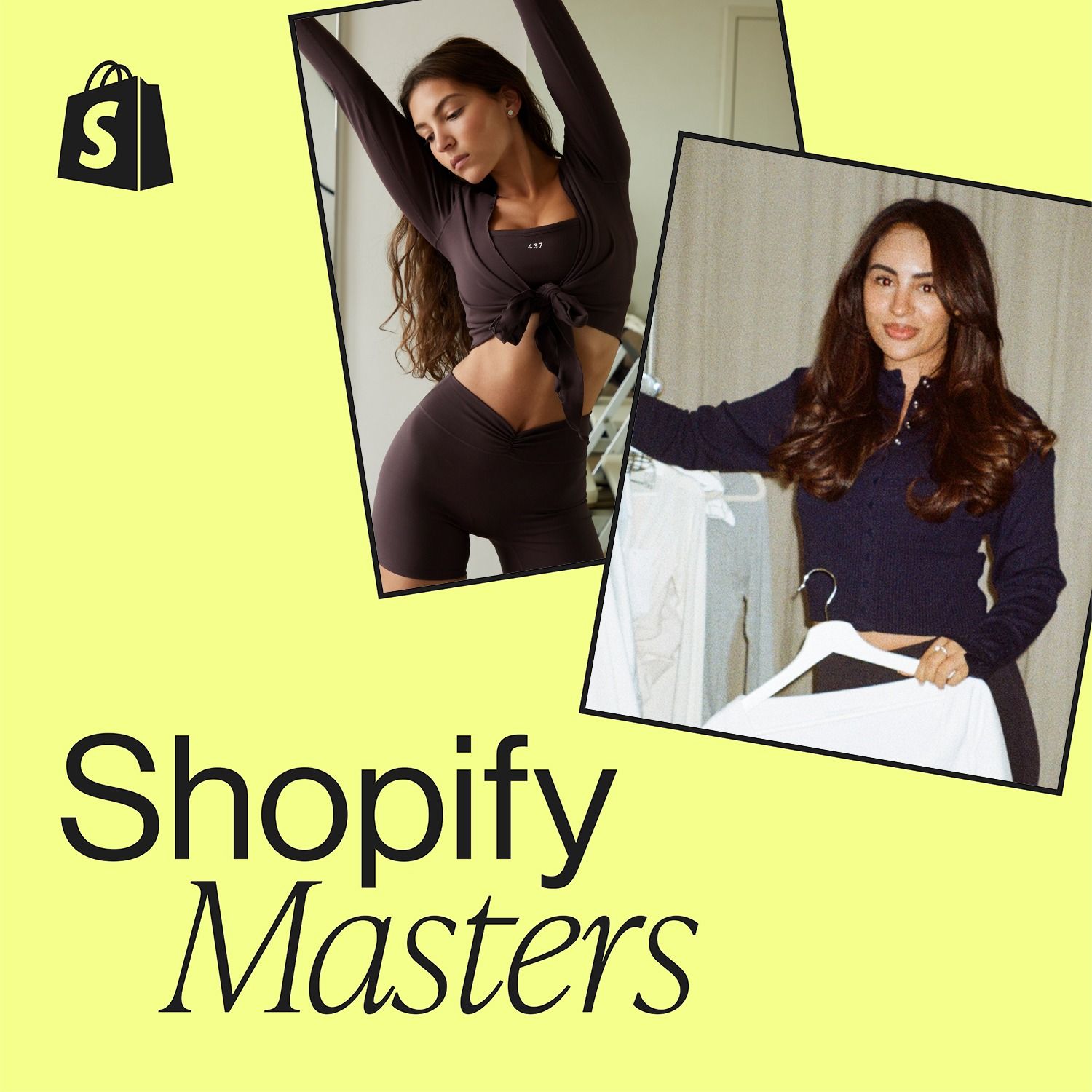
Shopify Masters
How Getting Back to Basics Turned 437 Into an 8-Figure Brand
00:41:37
Hyla Nayeri co-founded 437, a bootstrapped activewear brand, into an eight-figure business— and she did it by simplifying ruthlessly, betting on organic social and influencer marketing, and protecting a culture that includes a four-day workweek.
Loading summary
Transcript74 lines
- [00:00]
A
If you as a business believe you can create strong content and then amplify that and then when you pair it with validity from influencers, I think that's like a beautiful combination.
- [00:14]
B
Welcome to Shopify Masters, your companion for starting and scaling a business. I'm your host, Adam Lavinter. Some of the most iconic brands in the world started as a simple idea between two friends and 437 is yet another example of that. Bootstrapped from day one, Hyla Nyere and her co founder Adrienne Betio launched 437 from their business school campus in 2017.
- [00:35]
A
I refuse to have a brand that doesn't have a community.
- [00:38]
B
Fast forward to today and the brand has gone from a swimwear startup to a global women's activewear label that's growing 300% year over year.
- [00:46]
A
The company hits the eight figure mark. All of a sudden the pieces of the puzzle started fitting.
- [00:52]
B
Co founder and co CEO Hyla Nyere joins me now to talk about building from zero the ever changing landscape of influencer marketing and why protecting your energy is just as important as growing your business. Hyla, thanks for being here. Welcome to the show.
- [01:07]
A
Hi Adam.
- [01:08]
B
Two Toronto people talking today. Although you're in Vancouver.
- [01:11]
A
I'm currently in Vancouver, yes, but born and raised in Toronto.
- [01:15]
B
Nice. Is Toronto still home for you?
- [01:18]
A
Toronto is still my home base, but lately I've been spending quite a bit of time in Miami. I found that it's been really good for 437 just being in different markets. We typically see that when I'm based in different cities. We see almost like this halo effect of the business growing even further somehow, even though it's not always very clear as to the why. It's not like I'm specifically out here, you know, promoting 437 on the ground every single day when I'm in a new city. But like do see a correlation and so it's been a strategic move.
- [01:53]
B
Rewinding back to the origin story of437, you start this in university, correct? With your. Is it your roommate and best friend?
- [02:01]
A
Exactly, yes. We were at Queen's University and I met Adrian, who's my co founder. She is and was my best friend. And when we were in first year of university that's when her and I met and we became best friends right away and we always were like coming up with conference ideas and just always brainstorming and we were doing internships. She was at Hugo Boss in their corporate office and I was doing a business incubator At Queens, where we had to start a business and learn about funding, investors and growth. And we were just both unhappy with what we were doing. And the business that I was building I was not passionate about, but I was learning a lot. And so was she. And so we decided to kind of bring together, you know, my love for, you know, startups and tech and then her love for the creative side of things, fashion. But then with this underlying thing that we were in business school but we weren't really drawn to the investment banking, consulting, you know, finance, accounting world. And so we said, you know, let's start this side project. Like that's really. It was never like, we're going to create a business plan and become a multimillion dollar business. Like, it was never like that. It was girls saying, can we make some money to go on a trip? And so we read the Four Hour Work Week.
- [03:26]
B
The Tim Ferriss book.
- [03:27]
A
The Tim Ferriss book, yes. And he's talking about E commerce a little bit and just that you can work from anywhere in the world. You just have to have a virtual assistant. And we actually, we were like, you know what, let's try this out. And we started selling some cheaper bathing suits in our fourth year of university. So in between classes we would get up early, book breakout rooms at university. You know, it was actually the perfect time to take such a big risk. We had the wi fi, the breakout rooms. Just like we were already in that business mindset, being at school with less risk. Right. We already had our school and accommodations. And we're like, let's just take a risk. We don't have these bills that were, you know, we haven't graduated yet and have like more risk in our lives yet. And so we started selling cheap bathing suits. And maybe in our first year we made, I want to say 10 or $15,000.
- [04:21]
B
So you're selling them online?
- [04:23]
A
Online, okay. Yeah.
- [04:25]
B
Was it under the 437 moniker? Was it via Instagram? Like, what was the setup back then?
- [04:31]
A
Yeah, we were 437Swimwear. We went to a McDonald's and made a logo on Canva, like just this purple logo. And we had some bathing suits that we just sourced overseas. It wasn't like a full design process, it was very cheap. Like this was just probably a six month duration of finding cheap bathing su, grabbing them, getting content, Instagram. And it was like we were dming potential customers or, you know, popular girls and saying, hey, do you want 50% off your order? Like we were chasing any sale that we could make. We Were like, as long as we
- [05:06]
B
break even or like, it sounds like very scrappy, right?
- [05:11]
A
It was very scrappy. Every morning in the line at Starbucks in our business campus, we would tell ourselves we had to DM. I think it was 20 girls or 30 girls each. When we were in line at. This was apparently one of the longest Starbucks lines that actually exist in Canada is at Queens. And it was just every morning, like we had these, like, we were just grinding and we were like, let's sell this inventory that we have. And we were selling bathing suits for like $50 a set. And the branding wasn't strong and the quality wasn't like all that because it was a test. It wasn't like, we're starting this big brand. There was like this distinct point, probably halfway through fourth year where we said, we just had this Black Friday where we made probably a thousand dollars that day. And we were like, wow, this is incredible. If we can do this every single day, the business is going to make $365,000 a year. This would be an established business. And we were like, screw recruiting. We don't need to go to the recruiting events happening on campus. We're taking this full time. When we grad, we were so naive.
- [06:25]
B
So you, you, you knew that. I mean, you had some conviction leading up to graduation that you would take an entrepreneurial path, that you wouldn't go to your point into banking or into consulting. You had full conviction.
- [06:38]
A
Very naive conviction, yes.
- [06:41]
B
I mean, you sort of need that as a founder. Right. You do have to have some naivete built into the business model because the statistics work. Like, frankly, they are what they are. Right. Like, only 1% of startups ever get north of a million dollars in top line revenue. So the failure rate in terms of entrepreneurship is quite high. So you have to have that naivete. So in a way it benefits you.
- [07:05]
A
Yeah, absolutely. Looking back now, it's like a thousand dollars on Black Friday. Like, you know, of course that's something to be proud of when you're like three, four months in. But it was like, so naive. And, and, and that's like on your day where you have the most inflated numbers that do not tell a full story of your business whatsoever. But like, we're just going to take this and run because we were so desperate to not do the alternatives, where we were like, we want to be our own bosses. And so like I said, I actually think it was maybe $10,000 in that year that we made through selling these cheaper bathing suits. We then decided for our graduation Trip when all of our peers were doing, like, their really fun overseas, we said, we're gonna go on a manufacturing trip. So the 10 grand that we made, we put towards, obviously, some flights overseas. We did China, Hong Kong and Bali. And in China and Hong Kong, we were essentially meeting with different manufacturers. And at the time, we were a swimwear brand. So the. For the first five years of 437, we were an only a swimwear brand. And we. So yeah, we wanted to sell like, $151 piece. Like, we wanted to be on celebrities. We wanted to have a brand that we were of, but that comes with a really high quality product. And so we went on this beautiful sourcing trip, and we did not know a thing about design, the thing about tech packs, a thing about any of that, but we found ways to make it work. I was just putting on the bathing suit and it. We were just like, telling the manufacturer, hey, like, bring this tighter here. And we just tried to explain it with normal people words, and somehow it worked out. Um, and I think bathing suits are a lot less fussy than, like, a dress with a specific zipper and, you know, certain sizes. Like, you know, a lot of women in a certain range of size could probably fit into one size, right? Like, it's stretchy, it's. It's moldable to the body, so it's an easier category, probably.
- [09:07]
B
So when you come back from that trip, do you have your manufacturer picked out?
- [09:11]
A
Yes, yes. We actually had it already pretty lined up. We just had to go to, like, confirm and to get everything going quickly. And I think there is a part of, you know, when you're starting a business and you're like, we get to go to China. How cool. And meet manufacturers. And, like, this is what everyone says you need to do. And it's just funny because maybe in the first four years of the business, we went twice to China. And ever since, I haven't had to go back. It's just one of those things.
- [09:37]
B
So over time, does that relationship evolve? Do you change manufacturing partners at a certain point? How did this work?
- [09:45]
A
As the business grew, we kept the same manufacturer for our entire swimwear days. We did test other manufacturers all at the same time. So our core collection, core fabrics, was with the one manufacturer. It was a female owned. It was a beautiful story. Like, we really built a beautiful relationship with her. Her family, you know, they were very hospitable every time we went to visit them. But it's interesting, actually. We're so in our heads about it. We're like, we should produce and the US So we actually started talking to a manufacturer in New York and we actually went out and visited them with. Again, we're talking with the finite amount of dollars that we had that we're not even paying ourselves. For the first two years of this business, we were taking like this little bit of money and we're staying at this, like, borderline hostel in New York with no windows. We walk by it now and we're like, you know, we've come a long way, but we were those scrappy founders. Still to this date, it is just wild scrappiness. And we went to this manufacture. We saw a couple big brands that they were working on. Like, you see their racks and you're like, oh, this is an established manufacturer. So we're like, amazing. We're going to do a swimwear line here. And so we put a $30,000 deposit down. Again, this is about one year into the business now. Very slow beginnings. Like 437. Once we rebranded and we launched as a premium swimwear brand, all of that $10,000 we made from the. A handful of customers gone. Like, it was actually a difficult time when now our price points are like 2 or 3x. And it made us question if we were doing the right thing. But we had that conviction of, listen, we're not going to make $10,000. The previous $10,000 dictate what the business
- [11:27]
B
we truly want, which is what? More. More premium, more up market.
- [11:32]
A
Yeah, like, okay, we do want to build this, like, real business, premium business, multimillion dollar business. So there was some learning from that. We understood a little bit about the market, but we weren't going to let that dictate the conviction we had of the type of business owners we wanted to be in the business we wanted to be proud of for ourselves. And so we had a very, very, very slow start. We had two orders on launch day when we relaunched the premium swimwear brand. And it was like one order a month. It's like pulling teeth. It was very difficult to grow. And so we put $30,000 to this manufacturer and then all of a sudden their response times start going from fast within hours to like two days to a week. And just we're feeling like we're getting breadcrumbed here a little bit. And all of a sudden they stop responding. They're not answering their phone. And I remember calling up one of my friends in New York and I said, do you mind going to this location? Like, this is where they're manufacturing is and see what's going on? And he goes and he calls me and he says, hila. Like, there is no one here. It's like in the movies where you have, like, an abandoned space where the. The windows are open and there's a wind flying and paper flying on the ground. It was like, it seemed like they fleet overnight and they were bankrupt. And we never got that order. We never got our $30,000 back. In that moment, I remember that we had two choices, and it's such a vivid memory of. We looked at each other and we just started laughing. We were like, what? We are constantly getting all of these challenges, all of these fires every single day. Like, it just feels like it's like just punch after punch. And we looked at the inventory that we currently had with our Chinese manufacturer and. Which wasn't selling, and we looked at each other and we said, okay, well, we don't have this new collection anymore. This crazy thing happened. We're not going to get a lawyer for this U.S. manufacturer as a Canadian company. God knows what that looks like. We're going to spend more money there. I think a lot of business owners get really caught up in those things, like, let's lawyer up and whatever. We're like, this is the cost of being an entrepreneur.
- [13:46]
B
I mean, it would. It would cost you $30,000 to pursue them. Right. Then you go back to Toronto. At some point, the PO gets formalized and no response. And then they disappear from this site you visited.
- [14:01]
A
Yeah, like, we actually confirmed the samples with them. There was a back and forth, and then it just got slower and slower as it was time to start getting into production. Then we just didn't get any responses.
- [14:14]
B
Okay, so what gives you the conviction to keep going? And what, you go back to the original manufacturer in China and you tell them, look, we're going to work with you now.
- [14:26]
A
We were still working with them on our core line. This was just a unique, like, ribbed swimsuit, unique look that we started promoting too, by the way. And we had all these, you know, a couple influencers excited about, but we just had the conviction of, listen, you know, we've been one year into business now. We saw a little bit of a glimpse of that this could be, we're on to something. We don't want to give up. We love what we're doing. And we just said, this is probably part of it. Like, let's just laugh. Like, we're going to be okay. We always had this belief of every hardship we had. We were just like, we're going to make it out like a year from now, we're going to look back and say, this was just supposed to be part of the journey. And we looked at what the bathing suits we currently had in inventory. We took one of our top, it was called the Kenzie top. And it was like a bow tie in the front. Like you tie it up as a bow in the front. And we said, well, because we won't have a new collection this year, what do we do? So we took the top and we're like, can we wear it backwards? And we realized that, oh, you can wear it backwards. And then we're like, can you tie the bow in the back instead of the front? Can you crisscross it? We found that you can wear this top 12 different ways. And so we just promoted that. We just became the 12 in one Kenzie top. And that top ended up bringing in millions of dollars over the next few years because of that moment.
- [15:50]
B
That's a key breakthrough for you guys, right? Do you feel like that's the biggest turning point in those early days?
- [15:55]
A
I've never thought about that. But now that you bring it up, it probably could have been. It could have been one of them. Absolutely. Because the, yeah, the, the functionality that came with that, the uniqueness that came with that.
- [16:11]
B
There's another big growth moment that comes from an Instagram post by Tammy Hembro.
- [16:17]
A
Yep, exactly.
- [16:18]
B
Is it Tammy that promotes the multi way bikini top or does she gravitate to another product? You guys have.
- [16:24]
A
This was a few months prior. I sold my Jeep Wrangler and I just had this belief that I had to move to LA to grow this brand. And I lived in an attic for three months. And there was a meet and greet that I saw that she posted on Instagram that she was doing North LA and getting Ubers was just very uncomfortable for me at the time. It was just like, it's like it was a reach. And I was like, do I take this Uber $40 to North LA to to meet her? And I was like, you know what, let's do it. And I wasn't there, like fangirling. Like a lot of girls in line were like, can I just take a selfie with you, Tammy? For me, it wasn't like that. It was genuine. Like, as soon as I got to her, I said, hey, like, I started the Swimmer brand. I really think you'd love it, but no expectations whatsoever. I just want to give you this gift. So nice to meet you. Then I see her handed to an assistant and I had no expectation I was like, oh, it's probably getting lost. It is what it is. And to our surprise, the next day she wears it by the pool and she tags us. And I think it's a very common misconception in influencer marketing that, you know, all of a sudden someone tags your brand and like you, you and you know, whatever. Especially today, it's just so saturated. Back then, even then, it wasn't like this, all of a sudden we're swimming in orders kind of moment. It wasn't at all like, I think maybe there was like five, ten orders that came from it, which was for sure great at the time. But it was more about some of the people, the influencers we DMed at the time responded. Now like all of a sudden people are, oh my God, that's amazing. You guys are killing. Like, it was finally some people took us more seriously. It was almost like a, like a nudge from maybe the universe to keep going or that's how we looked at the situation. We needed that. We just weren't doing well. We were crying when I was in LA and would FaceTime Adrian and crying or like, is this going to work? Like, what are we doing? Should we get full time jobs? Like what's. We literally were like getting our alcohol liquor license so that we could become like servers or work at a club so that we could make money to fund this business. Like, we had no money, no funding. And so to be able to post that on your Instagram and leverage the fact that this really popular influencer is wearing your brand, other people then want to wear your brand. Now customers, there's validity. People trust your business. Now.
- [18:47]
B
How do you think that that sector of the market has evolved? So you know, there's the, the Tammy Hambro post. Fast forward to today. You've had celebrities wear this product. Kendall Jenner, Bella Hadid, Alex Earle, they've all had a relationship with 437. You've watched this industry grow over the last decade. How do you think influencer marketing has changed over the years?
- [19:11]
A
Oh, drastically, because back in the day I remember like if we had an influencer 8 years ago post a story of us. There was a moment where we had like 2000 followers of growth from a girl with 60,000 followers and she posted a story of us like that that doesn't exist today. That I've, that I've witnessed. With the amount of influencer marketing that we do, it's a lot more saturated like right now. For a brand to succeed in influencer marketing, I find that you have to have a lot of repetition. Like you just have to constantly be on a lot of influencers and multiple times on the same influencer. Right. Because when they just wear it one time and they tag, it could look paid, it could look like a, they got a free product and they're wearing it and consumers are just a little bit over it.
- [19:56]
B
Well, they're skeptical because they don't know what's authentic and what isn't. Right. Did you pay this influencer? Do you not? Is this authentic and organic? Is it not? Right. That's why.
- [20:08]
A
Exactly. And so I think nowadays I would rather have 5 really high converting influencers with a lovely community that I am their go to activewear brand. Like they, anyone that follows them knows that when it comes to activewear, this is her favorite brand. She wears them all the time like a genuine ambassadorship that doesn't look like paid. And for us, we never want it to be paid. We want it to be real. I would never want to work with someone that doesn't genuinely love our product. I think it costs a lot more now to have larger influencers. So I think that the micro and nano strategy is an actually incredible strategy, is to work with smaller creators that they, they are organic, it feels more organic. Or you know, they like, a lot of everyone's an influencer, everyone has influence. And, and you know, if it was a guy with 2000 followers, but his group of friends think that he's really well dressed and, you know, they trust him, I think that that's an incredible person to send a product to because if they get three people to shop and you send them one T shirt like that is a huge return in my eyes. Right? And that's exactly how to grow the brand, especially in the earlier stages. Right.
- [21:19]
B
Unbelievably impressive. You hit the 1 million, you know, top line revenue marker within two years. But you're still describing those early years as a real struggle. So when do you and Adrian feel like this is a real business that you could, I don't know, pay yourselves or you could build a career from?
- [21:36]
A
We first started paying ourselves a thousand dollars a month, but I think it was around the time where the business was doing about half a million dollars a year. We were like, okay, we're onto something here. And we saw that it was quickly growing. I think when you look at the month over month analysis and you're like, okay, like things are pacing up. But when, when you, when you hit that million dollar mark, I think that there's a level of Confidence that it brings that, you know, it's not, it's very difficult. I think it's that to get from zero to a million dollars, it's almost
- [22:05]
B
the hardest phase, right?
- [22:07]
A
Actually, now that I think about it, zero to a hundred thousand probably is even harder. Just that initial validity, that we're onto something and that people want to pay for our product or our service. And we were very clear that we don't count the friends and family orders, which we didn't have many by the way. Sometimes I've worked one on one with a lot of business owners throughout the years now and one thing I've always heard was, you know, well, you know, on launch day I had like 30 orders and then you ask a little bit more and it's their friends and family. And I think that's beautiful. And I think that says so much about the people in their life. But I think that it doesn't say a lot about their business and their product.
- [22:51]
B
I mean, a million dollars in top line revenue. There's lots of definitions around finding product market fit. But I would say, you know, if you're a D2C E commerce business and you've sold a million dollars in one year worth of your product, you've got product market fit. Now it becomes a real business, right now it becomes a different game, which is more of an optimization scale, supply chain sort of game versus, you know, can we find some sort of supply demand fit here? As you've grown on the marketing and customer acquisition side, what channels have worked for you? We've talked a little bit about influencers. Organic versus paid. How has paid social played a role? How has community played a role? Which channels have been most profitable for us?
- [23:39]
A
100%. I would say organic influencer marketing, which we talked about. Because even like from an influencer marketing perspective, 99% of what we do is organic and not paid. And then when it comes to social media, organic social media has been a huge part of the business. I think there's been different phases, right? Like when TikTok first came out, we got to it pretty early because my sister is 14 years younger than me. So she was like, you need to be on here. So, you know, there's been different phases. When we first started the business, Instagram was a different beast, right? So we were doing really well and growing very quickly there. But then we've had some lull periods where it was more difficult to stand out on social media. And so today, today's growth, I think organic social media is a big part of it. We did start running ads probably two years into the business. I think that that is an incredible play. I think if you as a business believe you can create strong content and then amplify that and then when you pair it with validity from influencers, I think that's a beautiful combination. And oftentimes that's part of the creative. If you have those usage rights and events and community has been a big part of the business. I. It's hard to know if it's a part of the growth. It's really hard to track. But for me, I refuse to have a brand that doesn't have a community.
- [25:05]
B
What does that look like? Like, are there pillars of your community that you think about methodically?
- [25:10]
A
There's never been like a conversation where like, let's talk about community and what are the pillars and what do we want to build for each pillar? It's been more just this ingrained ethos at 437 where this business has been built by two best friends. We've run this business with an incredible group of women. Community has been just so such a big part of our lives. Early on, it was always like in Toronto, we always had these events for our anniversary and we'd have like, we'd invite our community and then we'd. When we turn into an activewear brand, we're constantly doing Pilates tours where we invite our community to workout classes. We did a lot of pop ups throughout the years. We. And the community to me is very much like when I'm out and about and I'm grabbing a coffee and I see a woman wearing 437, I love to go speak to her and get to know her. And I, I think that those small things builds a huge part of community. It's. It's the conversations.
- [26:04]
B
Isn't that the coolest feeling in the world? Seeing your consumers and you know, out there in the ether just wearing your stuff?
- [26:13]
A
It's so cool. Yesterday I was in Vancouver and seeing a girl wearing one of our tote bags that was part of an order from five years ago. It was pretty cool to see. I was like, wow, she still has her tote bag. And you know, and also another part that I would say, if we did have pillars, this would be one of them is a lot of the community stuff that we do is from doing the podcasts and the panels and you know, I love just posting a story and saying, hey, like I am putting together this event. If anyone wants to come and hear about our journey, whether you're starting A business or you want to work at a, you know, a business like this, I'm very passionate about that because when I Even look at 437's COO, Monique, I love her story because she also went to business school, she has her CPA, she was working at a big four and she saw this role open at 437 about five years ago called business manager. Typically when someone goes through the accounting route, they never would assume that they're going to end up being the business manager turned COO of a fashionwear e commerce brand. Right. But we were looking for someone who thought very numbers and analytical and was organized and she has been incredible.
- [27:28]
B
I would imagine that this has enabled you to step back from the weeds a little bit to create some balance in your life. You've spoken openly about burnout, which has impacted the way that you've operated as a founder and obviously had an impact on the business overall. Would you mind sharing?
- [27:47]
A
Absolutely. Hiring is so make or break to the business. When we were 22, 23, and we were so young and naive and you don't know necessarily what to look for, it can be very challenging, especially when you don't have leadership skills yet. And I really do empathize. When I look back and I'm like, we had no idea what we were doing about like building systems, building a team, hiring what to look for. Should we get the experienced person who's double the cost of someone who just graduated, but they don't have experience yet? That was a very interesting journey to navigate. But I would fully say, like to get someone with professionalism, someone with some level of experience who's worked in a, whether it's a corporate setting or startup setting, someone who can come to your organization and build the systems. Especially if you're a new entrepreneur like Adrian and I were, it's best case scenario to learn from someone who has the systems already and can bring them into your team and say, hey, this is how we set up, you know, pos. Or this is how we set up influencer marketing, or this is how we set up the spreadsheets. Because we, we're not, we were not that. And to know what your skill set is and isn't and to hire into those. That's exactly why I feel like I'm bringing up Monique, for example, because Adrienne and I are such creative visionaries and Monique is an incredible integrator. She's an incredible operator. And it really balances us. I will say it's such a challenging situation for new business owners when they don't have the funds yet to hire what might be best for their company. So it's a challenge to navigate a hundred percent.
- [29:32]
B
Do you feel like she's responsible for shaping some of the new cultural structure at the company? Like437 now operates on a four day work week, which seems impossible for an E commerce business of your size, but good for you for executing on that. Is it largely stemming from you and Adrian or is it coming from Monique or a blend?
- [29:55]
A
I mean, I think the underlying ethos of the, you know, us caring so much about the balance of women and what they go through and what we've been through, I think that's a very personal thing to like Adrian and I, but I think it's that without Monique, we wouldn't be able to integrate some of these desires that we have and the business that we envision to build. Monique is able to hear that and says, okay, well, let me look at this. Let's figure it out. Okay, let's pilot a four day work week and then we're going to audit it six months later and see how it goes. Like, she's very on top of it. And we, you know, we bring up six months ago that we wanted to do RRSP matching for everyone on the team through wealthsimple and free promo.
- [30:36]
B
Shameless plug.
- [30:37]
A
Shameless plug. I'm not working with them, but I think that without that structure, it's kind of like in relationships and polarity where like without that masculine structure, then maybe the feminine can't be her most. Like, you know, the creative, the wild, the expressive, like the ideas, the color. And I think that, you know, Monique has been able to keep us grounded and the finances organized and future thinking so that Adrienne and I can come bring our grandiose ideas and say, hey, can we do a pop up? Da da, da da. And she's like, let me look at the numbers. Let's see if we can make this happen. Whatever stage of a business someone is in, if they are like the creative visionaries, as soon as they can afford to have this analytical, responsible, organized person to keep them grounded and to keep the finances in check, it's a very, very necessary hire.
- [31:36]
B
What's it been like to manage and grow a business with your university roommate and your best friend? And what have been the challenges along the way?
- [31:44]
A
It's truly the greatest gift I could have ever asked for. I cannot do this without her. And we laughed about this yesterday. We're like, I don't know if I would recommend it to anyone to go start a business with their best friend. We just got really lucky. We've never had issues, we've never argued, our friendship hasn't altered because of it. But we're also like. Our mindsets are so similar of the. You need to have complementary skill sets to some degree, but you need to have a similar moral compass and you have to have a similar level of goals for your future. Our friendship is more important than the business. Our health is more important than the business. Our mental peace is more important than the business. When we are so clear on that, then we're building that together. And hence the four day work week. Because we were so burnt out and it was impacting our mental state, our physical state, it was impacting my relationships. We were so burnt out three and a half years ago where we were just desperate to get ourselves out of the business. We hired any consultant that we could to like, hey, like we had all these things, you know, in your head of like when the same people who get your business to like 10 million can't get it to a hundred million, we would take that and we would run. We were like, yep, see, we gotta be out, we gotta not be involved as much. And we need to bring on these, you know, just this belief of we need to bring on these guys or these women that like, we're just really experts at scaling and. But when you make choices out of a negative mindset, a desperate mindset, a really unhappy mindset, anything that comes from that energy is probably not a good idea. And so we saw that not only were we already burnt out, then we attracted the wrong group of consultants. And it was not great because we essentially almost went bankrupt about three and a half years ago. And not in the sense that we weren't doing well, but we were spending far more than we were making and just essentially we were running out of cash. And being a bootstrapped company, that was a real challenge. And it was because we also lost our ethos. We lost the brand that made the business special and our connection to it. We hired so many top level strategists, consultants, and internally that we were just not involved at the thing that made 437 as special.
- [34:14]
B
Two important questions about the burnout experience. First, how are you experiencing burnout versus how Adrian is experiencing burnout? And are you both self aware enough to know that, that you each are burning out? Or do you have to call out Adrian and say, I don't think you're operating at your best self and vice Versa, like, who identifies it and what does that experience look like as best friends?
- [34:40]
A
It's typically at the same time, even if it's not talked about, it's because it's the same things that are probably keeping us both up. It's an accumulation of business issues. Whether it was the drama, whether it was like an employee challenge. It was always around the same time. And we never kind of talk about it. And if we do, sometimes I'm like, Adrian, like, I'm, you know, this. This video that went viral that was, you know, not really positive is really bothering me. And I'm really heartbroken about this person who's, you know, talking about this. This one design that they didn't like or whatever. And it's nice. We get to pull each other out of, like, very specific situations where she's like, kyla, like, no successful business doesn't have someone who doesn't like their product. Like, that's just gonna be a part of it, you know? And, yeah, like, I remember we had one video like a year ago where someone took one of our bras and flipped it inside out and said, like, this stitching is like, not the way you're supposed to do it. 437 is the worst quality, like, worst design, whatever. And it was shocking because say anything you want about 437, but I do not know an activewear brand, our size that has this much resource and this much attention, this many fittings, this much process into the design than 437 does. And when we flipped over the bra and we talked about it with our design director, she's like, we specifically do that because we want to bring this beautiful feminine silhouette to have a square neckline, which is something you don't see in activewear wearing. She's like, the person talking is not a designer and doesn't know what she's talking about. But that video went viral and it really kept me up because. And then you know what? I was like, well, that's on us that we don't communicate that the design process is something that is such an integral part to the business, and that's something we do so well. I said, that's actually shifted our whole social media strategy a year ago. And we're like, we need to show more of the behind the scenes because that's exactly what we do and what makes us Special at 437. And no one knows it, but it's crazy. As soon as we got ourselves out of that burnout stage probably two and a half years ago, Two years ago, everything changed. It was because we were about to go bankrupt. And I remember both of us being like, we love 437. This is our baby. Like, we started this to have these freedoms and to have a career we love. And we, like, we, we didn't want 437 at the time. We were about to lose it. We were like, this is not making us happy anymore. We don't have the freedoms we wanted. We don't love what we do, we don't feel creative. And we said, you know what, if we're about to lose this, then let's give it a real shot and let's make this the best workplace for us and our team.
- [37:25]
B
So if you could pinpoint the three things that you do to save the company, what are they?
- [37:29]
A
We rebranded number one because we were feeling really disconnected to the brand. And because we couldn't afford all these agencies at the time, we just, just turned everything off. All the email flows, all the extra stories, all of the email templates. We just got rid of everything. We went on. Canva created one template for our emails, simple branding, and we just use that as a base for everything. Turned off all the extra things, stopped running ads for a little bit and just made them super simple. That was number one. We simplified. We stopped spending money on agencies and this and that. And we're like, we can do this ourselves. And, you know, in that we found efficiencies. And then when we eventually got into a better place and we rehired or we were able to grow our team again, that was a great learning. Cause we're like, listen, we already did this, now we just want to amplify it. So that was number one. Number two is, well, obviously that year we couldn't give our team raises, so we sent them a form and said, you know, fill this out and tell us, like, what would make this your dream career? Because we were starting to ask ourselves, what would make the 437 our dream jobs again? So we asked them the same thing and a lot of them said they want more free time or, you know, travel more, whatever. And so that's what prompted the four day work week. And we have never looked back since. And then number three is we decided not to do everything. Part of simplifying. But we said, what are the actual important things that a437 actually make impact on revenue, right? And we said, let's not be a brand that's doing everything and saying yes to everything and doing it half assuming. So we just said no. To everything except the influencer marketing and our own social media.
- [39:01]
B
It's amazing. It's almost come full circle, right Hilah, like you were going back to your roots in a way.
- [39:07]
A
And then literally within maybe six months from all the decisions we made, like the company hits the eight figure mark and then we quickly scaling from there. It was like it just all of a sudden the, the pieces of the puzzle started fitting and we fell back in love with 437.
- [39:29]
B
Love it. It's a great place to wrap. What are you and Adrian most looking forward to in the next chapter of 437?
- [39:35]
A
Probably experimenting with retail, like pop up strategies, being more in person with our community and we've been established in activewear for about four years now. We're really excited to now grow a little bit into more of the athleisure, more lounge, more, you know, everyday, you know, sweats and joggers. I'm honored to like continue to build a team where women love working at 437. And we constantly like, how do we make this the best workplace while still growing quickly? And of course it's something that we always navigate because it's like, yeah, another business day could be great to get all this stuff done. But it's always like, okay, well then let's look at AI, let's simplify it, let's find efficiencies. Who needs a virtual assistant? Like we're starting to look at all of these things. So yeah, I'm very happy and just in love. And it has nothing to do with like the business revenue or the metrics anymore. That's, I think is a really important factor is there was a lot of parts of my burnout period that the company was doing very well and I was very unhappy and I wanted to get rid of it. Now it's like the company could be half the size. I don't care. I love what I do.
- [40:45]
B
You found alignment. Congrats. Thank you so much for the time. Thank you for being so open and really enjoy the conversation and wishing you all the best.
- [40:54]
A
Thank you so much. Absolutely.
- [40:56]
B
That's Hyla Nayeri, co founder and co CEO of 437Shopify Masters is produced by Alicia Clark, Hyacinth Parker and Schwang Esther Shan. Our engineers are Matt Schwartz and Miku Bedlam and Rachel Reich is our senior content lead and I'm your host, Adam Lavinter. Come back every Tuesday and Thursday to catch a brand new episode of Shopify Masters and be sure to check out our YouTube channel. For those video interviews. Until next time. Thanks for listening.