← Shopify Masters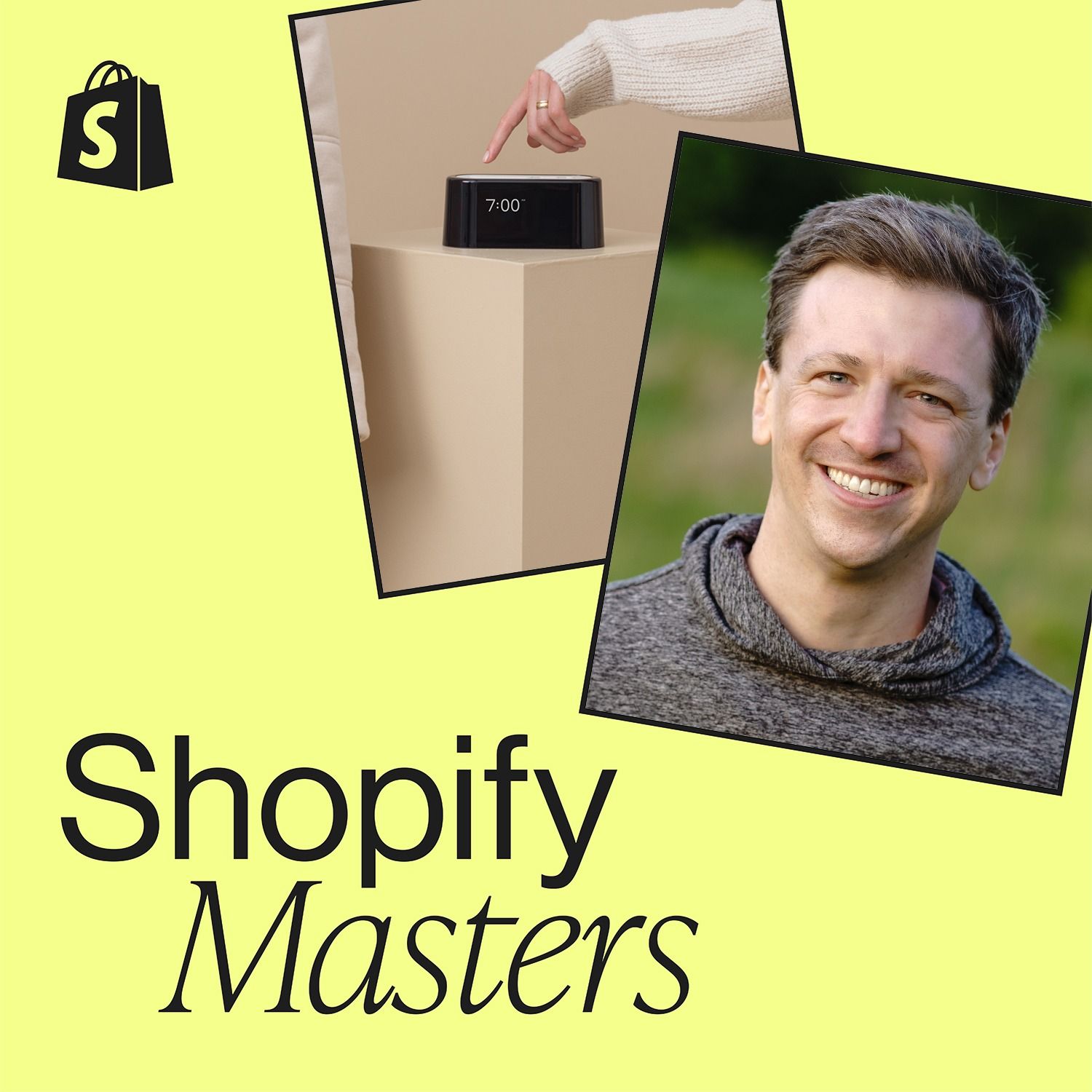
Shopify Masters
How Loftie Sold 200,000 Alarm Clocks Without VC Money
00:35:11
Matthew Hassett noticed that smartphones were ruining sleep, so he built Loftie, a screen-free alarm clock, to fix it. Without venture capital or paid press, he grew the brand to more than 200,000 units sold, and earned Wirecutter’s top alarm clock pick six years in a row.
Loading summary
Transcript78 lines
- [00:00]
A
That's been one of our superpowers, is that everyone cares about sleep and a lot of people care about screen time.
- [00:09]
B
Is your screen time embarrassingly high? Don't worry, you're not alone. On average, people spend about a third of their waking hours on their phones. This really disturbed Matthew Hassett, so he created Lofty, a wellness company designing products that help people disconnect, unwind, and recharge.
- [00:25]
A
The alarm clock needed a reinvention. It needed a modernization. We are offering something that helps sub in the phone so you don't have to go, you know, cold turkey.
- [00:34]
B
Their hero product, the Lofty Clock, helps build better sleep and life habits. And now over 200,000 people own one. Today, we're breaking down the design process that turned Lofty into a cult favorite and a wire cutter. Top pick for alarm clocks six years running.
- [00:49]
A
So many people Google you know, best alarm clock, and then the first hit is the wirecutter story that we've been in for six years.
- [00:57]
B
I'm your host, Adam Lavinter, and this is Shopify Masters and your companion for starting and scaling a business. Matthew, welcome to the show.
- [01:04]
A
Thank you for having me.
- [01:05]
B
I can't believe 200,000 people have bought a Lofty product. That sounds like an insane number.
- [01:11]
A
It sounds like an insane number. I. I wish it was even more because, you know, I think the biggest constraint has just been funding enough of them. So our demand is amazingly high. And so it's just been an amazing journey from the first one to 200,000.
- [01:27]
B
But when you started this in 2018 or 2019, this wasn't a product yet. Right. Didn't it start with an app?
- [01:36]
A
Yeah. So we started with a completely different problem, really, than solving getting better sleep. We started with how can we use our phones less? I was around the kitchen table at this design firm. I was an entrepreneur in residence at Ideo, which is a legendary design firm. And I was very lucky to be there as an entrepreneur in residence. And I just noticed people around me doing things like getting off of Facebook entirely or deleting Instagram for the weekend and putting it back on Monday. And I knew there was something there. And so I started this app called Deliberate. And it was all about being deliberate with your screen time taken from Thoreau's. I went to the woods to live deliberately as a history guy in college. And so that was the original concept, Deliberate. And you basically set a screen time budget. And if you stuck to your screen time budget, you got points, then you could redeem them for prizes, like a smoothie or a Soul Cycle class. Soul Cycle was very big in 2018, and so that was the original concept. We got pretty far down the road. We did a prototype at Ideo. There were some power users who were redeeming all kinds of rewards. But at the end of the day, two things. One, Apple made it pretty hard for one app to know what the other apps were doing at the time. There was no screen time SDK, the software development kit, to know what screen time looked like. And then the other thing was, I could just foresee sort of going down the guilt or the Groupon world of just having to get more and more rewards. And so I pivoted and decided to make a physical product that would help change our decisions just in the environment and just kind of subtly nudge us to make better decisions. And so after thinking a long time about what would help with a sort of digital detox diet, doing some prototyping, doing some research, getting Sakara, you know, meal kits to say, hey, this is what you do for your body, for food. What would I do for my brain for social media Detox? And so one of the things that would definitely be in that box was an alarm clock. And it's this obvious thing which we've mostly all chosen to bundle into our phones. With the 2007 introduction of the iPhone, it was just, oh, of course, of course I'll use this as my phone. I'll use it as my everything. But some things really deserve to be unbundled and taken out because they come with all these side effects, and they come kind of leaving this window open to your bedroom, and you just think, oh, I'm just gonna take my phone in, I'm gonna listen to my headspace meditation, or I'm going to listen to a story. But then, you know, you get a text message from your boss, you get. You see a tweet, and you get lit up. And so it's just kind of the wrong thing to have in the bedroom, even if it's to wake you up later. So the alarm clock needed a reinvention. It needed a modernization, and that's what the lofty clock is.
- [04:26]
B
What type of user were you before you invented this product? Were you bringing the smartphone into the bedroom, or were you always a sort of traditional alarm clock guy?
- [04:37]
A
I think the last alarm clock I had was probably high school. It was a great Sony alarm clock. I woke up to the radio, but then I definitely used my phone for a long time and then started to realize how nice it was to leave my phone Outside my bedroom. I luckily wasn't one of those people who. And I think there are a lot of you out there who are, you know, wake up in the middle of the night and look through your phone like that's really, really bad for your sleep. But even just seeing it before you go to bed and the blue light is sort of. There's some doubts about whether that's really the cause or not. But one thing scientists are sure about is just that flood of information, all that novelty. What you need in sleep is, you know, to relax and to just kind of be in this sort of default mode of your brain. And so getting all this new stimulus is just the worst thing.
- [05:27]
B
I was looking at some data on this. So one in two adults actually have trouble falling or staying asleep. One in four adults actually don't get enough sleep at all. So there really is this sort of sleep epidemic happening in the US and more broadly. Do you feel like it's Lofty's mission to help fix that?
- [05:47]
A
It's absolutely our mission. And I think the thing about us is with that origin being in the screen time world, we actually have a unique advantage for helping solve that sleep epidemic as it exists in 2026. Because I think it's as much about screens as the other factors. And we talked about them a little bit earlier, but you know, cold, dark, quiet are the typical environmental factors you think about with sleep. But then there's this new one that we have to deal with in our 2026, which is screen time. And if we don't get that under control, we can't have good nights. And so there's a graph. You can look at how much people spend on sleep and it's been going up and up and up over the years. And then how much sleep people actually get, it's been going down. And so we're trying to pay more. And you know, I'm self interested. I have a sleep company. I want to sell you more things to help you sleep. But what we really need is just more time for ourselves. And that's kind of the opposite of what the attention economy is all about. It's let's keep people scrolling, let's keep people autoplaying the next episode. And we have to get minimum 7 hours of sleep if we want to maintain our basic functioning. I mean, you will kind of lose it if you don't sleep for a long time. And it's associated with so many very serious health conditions, from cardiovascular health to Alzheimer's. There's just so many bad things that happens when you don't get enough sleep.
- [07:16]
B
What about people that say, you know, I have my phone in my bedroom, but I put it on airplane mode and I stick it in my night table drawer, for example, and that's sufficient? What would you say?
- [07:31]
A
I think if you can really stick to that, then great, but I don't think most people really can stick to that. And when they wake up and their brain is kind of flying around the room, they're going to grab their phone and start checking their Instagram. So I think the physical change of your behavior to actually leave your phone outside your bedroom is the key. I mean, if you could just do that, you could save money and not buy the lofty clock. Like, if you can just commit to that. Please just go ahead and do that. We are offering something that helps sub in the phone so you don't have to totally sort of go cold turkey. You can access certain features that you liked on your phone, like you can listen to white noise, you can listen to a story. There's a lot of wellness content on our device. And it's a smart device, but it's not too smart. It's not bringing in all of your news feeds.
- [08:18]
B
Let's go back to the product design phase. So the initial product, when you moved from app to prototype, you started on Indiegogo. Correct. Was that the first sort of product run that you had? And how did you know how much product produce? And I guess you knew based on how many folks were coming through the Indiegogo front door.
- [08:41]
A
There was a moq, a minimum order quantity from the manufacturer. So that first run was 8,000 clocks. I think we sold about 2,500 on Indiegogo. And then we started selling pre order on Shopify in June of 2020. So between Shopify and Indiegogo, we had sold most of them by the time they arrived late in 2020.
- [09:05]
B
And you're still with the same manufacturer today?
- [09:07]
A
Yeah, we are.
- [09:08]
B
How did you find that first manufacturer?
- [09:10]
A
So we worked with a company that a lot of Shopify merchants have worked with, probably it's called Taurus Dev. And they helped to take products from concept to production. And so we didn't have to hire tons of engineers to, you know, in house, and we didn't have the money to do that. And so they were able to help us get a little bit further along.
- [09:33]
B
It feels like crowdfunding has had its day in a way. I don't know. Do you feel like if you were going to do another big campaign that you would jump back onto Kickstarter Indiegogo.
- [09:45]
A
I wouldn't. I wouldn't do it because, unfortunately, that's kind of a very tough customer to please. There's a sense of ownership and investment. There's. You're not nominally actually investing in the company, but because it's such an early decision and you're following it along for so long, a lot of the buyers feel like they have a kind of an outsized say, and you can honestly really never make them happy as a. As a. As a product. And so it's a tough customer to have. I'm grateful for those that really enjoy the product, you know, but that was a whole nother story of trying to ship a product during COVID That's when we were, you know, launching our first product, and we managed to deliver it pretty much right on time. We were one month behind, which on Indiegogo, customer support is a anathema. But they, you know, a lot of indiegogo pledgers never see anything. So I felt very proud to deliver something during COVID and I spent a fortune on air freight to make sure we got it to our customers in time for the holidays.
- [10:57]
B
How did you come up with the brand? Lofty. You were deliberate at one point. That was the app?
- [11:03]
A
Yes.
- [11:03]
B
You launched the product. It's called Lofty. How did you come up with it?
- [11:06]
A
Deliberate to Lofty. We incorporated it as Deliberate Digital. We're now Lofty Inc. Deliberate. I loved it. It's a great word. I really do love Thoreau a lot. So there's a new Thoreau series coming out. I'll plug that for npr. But one of the problems with Deliberate is that it could also be read. And a lot of people did read it as go deliberate. I kind of liked that. I was like, this could be the website for jurors. Go deliberate. And it's funny because right now, a lot of my team has been pitching me on this new version of the app, and it's pretty much what I started out with with Deliberate. So it's so funny. I was like, it's interesting you say that. And I brought up go deliver it to them. And they were like, oh, yeah, this is exactly what we were thinking. So only seven years later, but lofty, the word itself we got from the loft of a pillow, like the sort of the softness, plushness, density of a pillow. We wanted something that was short enough, cute, fun to say. We didn't want one of the sort of ly kind of startup words or, like, removing vowels. We did change the spelling, but it's worked out really well as a name because it is unique enough for your SEO that you know you can get your customers there. The original lofty.com is still owned by a developer who loves Python coding and rock climbing.
- [12:34]
B
So have you tried to buy it back?
- [12:36]
A
I did a long time ago and gave up. He was not interested in selling his last name. One of his names is Lofty. But if you're listening to this, I would still love to buy it.
- [12:47]
B
Okay, so the Indiegogo campaign sounds like went well. 2500 pre orders. You have this manufacturer from there. Was there a particular turning point that you think drove the next cohort of customer adoption?
- [13:06]
A
That's a very good question. I mean, we really had to roll right into kind of typical media advertising. I think we did benefit a lot from a wave of PR coverage as well. That's been one of our superpowers, is that everyone cares about sleep and a lot of people care about screen time. And so it's a perennial topic to write about. And daylight savings time drives the second biggest peak of searches for alarm clocks, right behind Holiday. It's a big present for Holiday. I think people are also the New Year, new me. There's, you know, people are thinking about, how do I change my habits, how do I be on my phone less, how do I sleep better? So there's a lot of peak times of the year. But what we had to really hone down was why this product and why something, frankly, so expensive versus an alarm clock you could find in the drugstore? That's kind of the biggest question. That was the biggest objection early on is price. And how do I know that what you're selling me is actually going to improve my sleep? And so we had to really tie together problem and solution. Luckily, that works very well for direct response ads on Facebook and Instagram. And so Instagram ads have been a huge driver for us of customer acquisition.
- [14:27]
B
How do you communicate that value proposition? Like, how do you get over that barrier? Is it those additional features that come embedded in the device itself?
- [14:35]
A
I think it's about selling, getting off your phone and getting better sleep rather than anything about the product. Because if you just think alarm clock, you're sort of anchored to this outdated concept. So we're really selling you better sleep and better screen time habits.
- [14:52]
B
Okay, so you mentioned pr. Big, big topic. Is this earned media? Is it organic? Are you paying for ad spots? We got into Wirecutter. I mean, you've been in Wirecutter six years in a row now. How does that all work? I mean, are they a paid influencer?
- [15:10]
A
They're not. Yeah, you have to have a really good product. It's an awesome award to have in our pocket. But yeah, so many people Google, you know, best alarm clock and then the first hit is the wire cutter story that we've been in for six years. And we're probably, I would say we're the most unique option there. And so it is a really good looking product. The lamp and the clock are both sold by the MoMA Design Store as well. And so we early on, you know, kind of cleaned up in the creative field. So a lot of our buyers were graphic designers, creative directors. I mean it's a beautiful object and that's. And one of the reasons many people buy it is just I don't want one of these ugly alarm clocks in my bedroom right on my nightstand, seeing it all the time. But going back to media, I think that Wirecutter has been just incredible for us. We don't pay for media. These are all organic articles. Writers like to write about sleep. It is often affiliate. So if it's a product recommendation article, you know, all those products, they can get an affiliate commission. And so there is like a symbiotic world for them. But outlets like the Wall Street Journal, the Financial Times, the New York Times, they're not paid. So you have to have a great product A and then if you do click, they can earn affiliate. But the actual like choosing the products is organic.
- [16:34]
B
So is there a particular pitch process? Like have you had to refine your pitch to the New York Times to make sure that you get them interested?
- [16:43]
A
No. They reach out, they email and say, I'd like to try the lofty clock. And most journalists will keep a product. But one thing about Wirecutter is they're very, very strict, they have excellent ethics. So they send it back to us when they tested it. And so the writer has changed over the years for both the clock and the lamp and we've been lucky to stay a favorite of theirs.
- [17:08]
B
Are these lofty clocks guaranteed? Do they have a lifetime guarantee?
- [17:13]
A
They have a one year warranty in practice where it's effectively guaranteed for life if there's any issues with it. We've always helped people. We're extremely customer focused, we're a family owned company and so we don't have these same pressures that a VC backed company might have to, you know, eek every dollar out. I, I'm really in this because I care about the issue and I care about helping people sleep and get off their phones.
- [17:41]
B
Although you're working with Supermoon, we have one investor. So you do have a vc.
- [17:46]
A
We have one VC investor after years of no outside investors.
- [17:50]
B
But they're different.
- [17:51]
A
They are different because they actually are super mission oriented too. It's a, it's a small fund. The founder of the fund was a William Sonoma executive for I think 33 years. And so he was there when it was a tiny company. And towards the end of his time at Williams Sonoma he realized the bedroom is this kind of unaddressed part of their assortment. And so what does the future look like? Whether it's mattresses or accessories like lofty makes. And so they are focused very much on sleep. And now they're raising the second fund and it's very interesting. They're focused on what do people do if AI has freed us up from a lot of the kind of more boring parts of life. So what is, what is the leisure world look like?
- [18:38]
B
Oh, that's interesting.
- [18:39]
A
It's a very interesting thesis.
- [18:40]
B
What do you make of finding the right VC nowadays? And is this idea that your VC should be hyper niche? For example, you know, if you're asleep brand then you should work with an investor that invests only in that particular niche because it seems to me that a lot more like vc, the industry is becoming that much more specialized. Right? It used to be they were just looking for the right deal and their portfolio was across a wide var variety of industries and categories.
- [19:15]
A
I mean I'm the last person to ask about how to get VC dollars because you, you know, I've only raised a small amount of money and from this one VC that only focuses on sleep.
- [19:24]
B
Oh come on, don't be so modest.
- [19:26]
A
I've pitched so many VCs and they all said no and they still say no. And you know, I think that if I had done certain things that wouldn't be good for our customers that they would have probably said yes. Like if I pursued the Ring model and had a fairly low priced hardware component with a big subscription component and you had to buy the subscription, that would be very appealing to VCs and that's what they want. But for customers they're outraged by that. So I've never wanted to do that. And it's kind of against the ethos of the, of our, the industrial designer behind the clock as well, who is a real purist in terms of a product should last for a lifetime. So it's a tough balance to sell great products and court VCs and so I, not greatly by choice, have gone without VC money other than the small investment from Supermoon pitched a lot of them. They really hate hardware products. They generally don't want to touch hardware. It's very scary to them. It's nicely a moat for us in that they're not giving anyone else any money either. Sure.
- [20:36]
B
But they're allergic to it because there's no obvious recurring revenue attached to it.
- [20:42]
A
They could be okay with it if there was a lot of recurring revenue. But the other problem is that it's very expensive to make. High quality hardware like our lamp here is quite expensive. There's 120 lights inside of that. There's a computer chip inside of that so we can update it with an app. There's a lot of tech in it. Expensive. And so someone has to finance that. And so we have to get debt to pay for this five months before it could even be sold. Not even before it's sold, but could be sold like it's in our warehouse. And so there's just a lot of financing. And I was reading this book, Apple in China recently and read a Tim Cook quote that I've been repeating a lot. I think he says something like inventory is fundamentally evil. And that is definitely true for consumer products. Even at Apple scale. They try not to have inventory because it is just so expensive and there's never enough financing. If you're growing, and we are always growing, we've always gone up over the years. You're just always breaking at the barrier of having enough inventory. So many years we went through just literally me being at jfk, begging the airline to release our air freight inventory that we're trying to, to bring in before the holidays because we have more demand than we expected.
- [22:12]
B
Let's go back to that. That remark that a typical VC made, which is that they don't want to touch hardware, is incredibly difficult. There's no obvious recurring revenue attached to it. In your case, what does generating lifetime value look like? If you assume somebody buys one lofty alarm clock and they're satisfied, they're happy. Right. Is it that you've got to just horizontally expand your product line into lamps and other devices? Is that where the LTV or the AOV goes up?
- [22:48]
A
That's what I thought at first and that's why the second product we made, second big product was the lamp. The lamp is very expensive to make. And I think in retrospect I probably would have focused more on digital products as our second product. We have made a host of other physical Products from sleep masks to sleep supplements to it's a, it's a long list. Nightlights are another big seller. Nightlight sweatshirt that says amazing sweatshirt. You get a lot of like fun reactions to the sleep sweatshirt. But I think when you're so focused on getting your first product to market, I think this will be applicable to anyone just starting out. You think you've done it when you have this bestseller product, like wow, amazing. We went through 1,000, 10,000, 100,000, but it's not enough for a sustainable business. You have to have repeat revenue. And so I think that has been my, my biggest learning. And you know, something I think should come in a pop up you have to accept on your first Shopify store is like, what's your next product?
- [23:56]
B
What is your thesis now? Where does that recurring revenue come from on a go forward basis?
- [24:01]
A
Because it has become so difficult to predict what it is like to make physical products and sell them in the United States, we have focused increasingly on let's, let's focus our physical products outside of the United States and let's focused on our digital products inside the United States. And so we are really focused on our app. And our app has changed over the years. It has become many things. Originally it was just to set an alarm on your lamp or your clock, change the brightness, change the volume, that kind of thing. Then it had our audio as well. So you could listen to a story or meditation on your clock, but you could also listen to it on the app on the go. And so what we've now done is added another feature, our app blocker, getting back to that original deliberate mission. And so at first you could schedule when you don't want to be on your phone. So there's a relax phase, a sleep phase and a wake up phase. And so sleep you can't open in ear apps. The other phases you can open for certain amounts of time. So there's lots of little rules you can put around it. It really comes back to the classic behavioral economics example of Odysseus tying his hands behind the mast trying to avoid the sirens. And so the modern day of that is trying to avoid opening Instagram or whatever it is that you are addicted to on your phone. So how can you put little rules in place so that you can tie your hands behind your back and kind of box yourself out of doing the thing that's just too addictive to stop to let your willpower be the arbiter of. There really have to be other things other than your willpower because no Human has great willpower.
- [25:49]
B
Gotcha. So digital penetration domestically inside the US market, product penetration outside the US market.
- [26:00]
A
Yeah.
- [26:02]
B
What does product expansion look like on an international scale and which markets have been most attractive to lofty?
- [26:11]
A
So in 2025, Europe became our biggest market. So it went from being, you know, 2% of our sales outside the United States to the vast majority of our sales of physical products on Shopify being outside of the US we still have a Amazon business and a wholesale business and a Shopify business in the us but it is too volatile day to day to make that the mainstay of our business. And we've found that there's a huge amount of demand for our products outside the US particularly in the uk, in Europe and in Canada.
- [26:44]
B
Okay, let's talk marketing. So we talked about pr. But PR aside, let's compare that as an acquisition channel to some of your other acquisition channels. Let's say Meta Celebrity Influencer. If you've experimented there Google Paid. What are the channels that have been successful from a return on ad spend?
- [27:06]
A
Well, celebrity wise, we were surprised and very grateful that Kylie Jenner apparently loves the clock and told everyone about it in her sister's guide in Poosh's holiday gift guide a year and a half ago. And so that was amazing just to be able to say that and grateful to her for that. And then in terms of the day to day the meta ad side of the business, which is critical for any scaling Shopify business. We've gone through many, many paid agencies. We're now with one that's been transformative for our business. You're welcome, Taylor. It's ctc. Their name is Common Thread Collective and they have a very outspoken, you know, Twitter famous founder who's always tweeting about the latest stuff. And so we found them about two years ago now and so they have really put us in a much more stable place. It was very up and down, just way too unpredictable. And they're very different in that they are a really more of a CFO style marketing agency. It's all about planning. It's ruthlessly around contribution margin. They have their own ad attribution and platform to track analytics called Statless. And right up there at the top is contribution margin. And that is the key business metric. I mean if you think it's about revenue, you could quickly drive your company out of business because it's about how much do you have left over after you've gotten the product to your customer and after you've paid, you know, Meta. And so that's what you have left to pay your employees, to pay the rent, pay whatever else. And so being focused on contribution margin has changed how we operate. And getting to a stable CAC customer acquisition cost has been the most important part of having a sustainable business where I don't have to check shopify every day and I don't have to be anxious about whether we can pay our bills.
- [29:11]
B
What's your average order value to CAC ratio? And what do you think would be a healthy AOV to CAC ratio for a product company that's shipping D2C?
- [29:25]
A
We're in the 4x LTV CAC ratio. 3x is what business school tells you you want to clear. Yes. So we're in a healthy LTV CAC situation. I think as we increase our MRR or monthly recurring revenue with our app, that'll be going up further. There's just much lower costs when you're making a digital product. And so I think over time, I'm hopeful that we'll be in a place where we don't even need to borrow money because we'll be able to finance our products ourselves. But we love physical products and we want to keep making more of them. And so we are really just going to be able to hopefully do more of that. But it's a passion project, more so than something that every VC is going to knock down our door to do.
- [30:20]
B
I read somewhere that when you were at. And it was at the Entrepreneurial Residence program in New York, and you were doing research early on for Lofty, you were going into people's bedrooms.
- [30:32]
A
Yeah, yeah. I mean, so Ideo is a legendary design firm. They do all kinds of design, whether it's organizational, brand, product. And so I had the privilege of being an entrepreneur in residence there for two summers. And before that I was a client of ideo. But a lot of our team has come from ideo. And so the industrial designer of the clock followed a typical IDEO research process. And we met our customers, you know, where the problem is happening in their bedroom. So we posted Facebook ads saying, you know, we want to learn more about sleep and screen time. And we, we picked people that we thought might have outsized kind of interesting cases. Like one person, she had never bought a phone, so she used subway maps. And another person was a trainer, and he probably slept three or four hours a day. So going into people's homes and really seeing what they're actually experiencing is just invaluable. And actually, there's a clock behind me that's on blackout mode, where you black out the face of the clock. That's actually based on that research. And so a lot of people would have like a T shirt over their cable box because there's a bright LED on that. So we made little stickers called dark dots that are thick vinyl. You can buy those on our website. But then for the clock itself, you hold down the snooze button and everything turns off so there's no light.
- [32:00]
B
What's the most underrated sleep habit or hack?
- [32:05]
A
I think probably either an eye mask or blackout shades. I myself need to get some blackout shades installed. They're decent, but I need full blackout. I just find I sleep so much better with a sleep mask. So remember, just cold, dark, quiet. That's what you want for your bedroom.
- [32:25]
B
Give me another feature that every bedroom should have. And you can't say anything really. No lofty products.
- [32:31]
A
I was going to tell you about the bed signal, but keeping a routine is really important. Going to sleep at the same time, I think an air conditioner unit, I think, you know, people probably don't have their bedroom cold enough. You want sort of mid to high 60 degrees in Fahrenheit for your bedroom. That makes a world of difference for me.
- [32:55]
B
What do you think people misunderstand about wearables or things that track your sleep or your sleep metrics?
- [33:01]
A
Don't get me started about wearable. I've tried them all. I think there's great value in them. But I think a lot of people do have a condition that scientists, sleep scientists have started to call orthosomnia, which is just an obsession with tracking your sleep. There's a lot of pressure that comes from that. And you wake up and you say, oh, my God, what's my OURA ring score? And if you don't meet that, you're kind of kicking yourself all day. So track your sleep. Figure out what cause and effect is for your sleep. You'll be able to quickly see what changes your sleep and then do little experiments. So no coffee after noon, no coffee after three. What's the difference on your sleep? And use your whoop or your aura and use those numbers, but don't get obsessed with them.
- [33:51]
B
I would obsess about the sleep score. When you look back, what's one big mistake you made early on that you wish you could have reversed, let's say in the first year or two of your business?
- [34:04]
A
That's a great question. I think one thing is just not really pricing your product right. Like, I think we could have had the price be a little higher on our product because this is a real, you know, business podcast answer. It's not something glamorous, but just make sure that you're able to deliver the experience you want at that price. Because we were just always just straining to keep production going because I think we underpriced our product. And if you have something people want, you should price it at a at a price that lets you stay in business and keep selling it. So that that would be my major learning.
- [34:47]
B
It's a great takeaway. It's been great chatting with you today, Matt. Congrats on all the success.
- [34:52]
A
Thank you, Adam.
- [34:52]
B
Thanks so much, Matt, for being here and thank you for tuning in. Don't be shy. Let us know your screen time in the comments below and if you enjoyed today's conversation, subscribe so you never miss an episode and I will catch you next time.