← Shopify Masters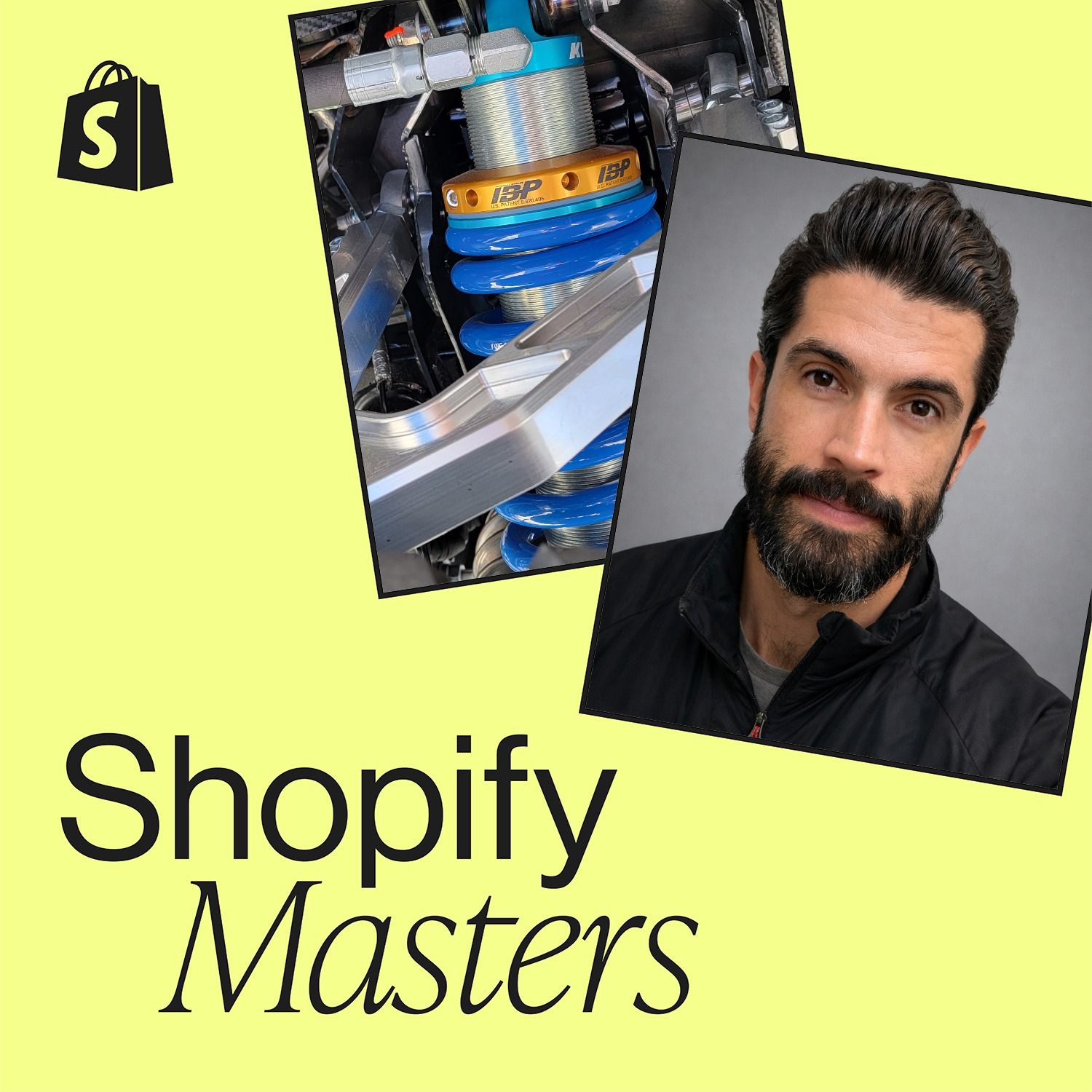
Shopify Masters
How Giving Away Free Knowledge Built a Multimillion-Dollar Car Parts Business
00:41:05
Sean Reyes noticed that every shock absorber looks identical from the outside—and none of the automotive brands detail what’s actually inside. So he built ShockSurplus, an education-first automotive parts company that turned that information gap into a bootstrapped, eight-figure business.
Loading summary
Transcript110 lines
- [00:00]
A
We are doing eight figures in business, giving away all the knowledge we can. That's what helps us stand out from, you know, everybody else.
- [00:10]
B
John Reyes and his self funded team at Shock Surplus have turned a dropshipping experiment into an automotive powerhouse headed for 40 million a year, sustaining growth long after the COVID boom faded.
- [00:21]
A
If you can help out way more people and grow a way bigger business, why wouldn't you?
- [00:25]
B
They're winning by focusing on profitability, hands on customer service and content that actually converts.
- [00:31]
A
If you're not like gaining your audience's attention in some form or fashion, you're dying every day.
- [00:36]
B
I'm Adam Lavinter and this is Shopify Masters. Sean, welcome to the show.
- [00:40]
A
Hey, thanks for having me. Excited to be here.
- [00:42]
B
What started you down this road of automotive?
- [00:45]
A
I was a video game nerd at heart, kind of still am, but my, my stepdad Bill was running a, you know, a 4x4 shop in the middle of Orange county and kept asking me to come help him out. And I had this small business bug I guess and knew I could help him out, build a website and came on board and you know, we exploded the ebay business, built him a website. But just before the recession that, you know, crushed not only our business but everybody else's and, and so, you know, through that transition I realized that this automotive niche and this kind of suspension specific category that we're in, it's such a black box of just like unknowns. Every single shock absorber underneath the car all looks the same and you can never tell what any of them do. And so I really, you know, thought about it and helping customers already with this problem, you know, all day long in the, in the job. And I figured there's so many brands out there, there's so many different vehicles out there, I'm fielding these same questions all the time. I just realized just how many people out there like needed help with the most basic thing I can help them with. And so, you know, I started Shock Surplus as like a education first company.
- [01:58]
B
Where were you sourcing these shocks from early on?
- [02:01]
A
Nowadays it's a lot different. But back then there was a key, a few key suppliers, you know, the brands in our industry, the aftermarket automotive industry, it's, you know, brands are manufacturers, they give to the distributors and then there's key distributors across the country with their own warehouses and then those kind of distribute to all the small automotive shops. And so we had a, one of our key distributors back then and they basically allowed us to drop ship to the customer and that was one of the magics of the business that I discovered in 2007 or 2008 with my stepdad. And so realizing that opportunity, I figured, there's no limit to scale this thing. I don't have to have a lot of capital up front. A partner in that distribution center, you know, helped us out with this arrangement. And so it was literally, how fast can you make listings online and how fast can you make bundles on the website is how fast we can grow bundles of shocks.
- [03:00]
B
Shocks, Yep.
- [03:01]
A
That sounds so like, you know, obvious at this point. But back then and even to this day, people shopping for replacement automotive parts, you have to go to a catalog, a specialized catalog to find a part for the front driver side, a part for the front passenger side. You know, you had to find the part numbers for all four corners in a catalog or through some kind of, you know, filtering system. It wasn't very obvious to just say, I need a, I need a set of shocks for my 2005 Tacoma. It wasn't a one click buy back then. It was very much find everything you need and make sure it fits correctly. And some of these gaps in the knowledge and the data on these automotive catalogs that we solve that issue to make it an easy purchase for the customer. And that was really just like a kind of a search arbitrage on Google that benefited us tremendously.
- [03:53]
B
So let's double click on the drop shipping thing for a moment. You saw it as a major opportunity. So how did you come to drop shipping?
- [04:00]
A
As a seller, you send your customer information to the distribution warehouse or the brand, they ship the product to that customer and then bill me for the shipping charge and the cost of goods. And then you take the cut between the retail price and the invoice price from your distributor. And so you're just drop shipping out of a distribution warehouse or out of the brand directly. And you're kind of the middleman. It's pretty ubiquitous in our space. Lots of companies do it. Small automotive shops, four by four shops, they'll have a website and they'll service a lot of vehicles on site and sell retail on site. But also they're helping out all of their E commerce customers internationally or the ones that aren't locally. And so they'll drop ship parts to those customers. And so we're just kind of a scaled up solution to that as well. We found out about it because our distributor just said, oh, we can ship those parts directly to your customer without you having to touch it. And so this was back in 2006 with full rail parts. So back then it was very new and novel. Nowadays a lot of distributors will just open up anyone to allow it. And so I found out about it back then just through a lucky relationship, you can say now it's a little bit more ubiquitous for the E commerce and aftermarket automotive space to where like I'll set up a store, I'll get a, I'll get a relationship with a couple suppliers and then they'll be able to dropship parts to my customers for me. And maybe these stores have a shop themselves that they do work at, but their whole E commerce front is going to be kind of out of the dropshipping, you know, relationship in nature.
- [05:40]
B
And with this model you can actually create an unlimited amount of SKUs.
- [05:45]
A
That's right, yeah.
- [05:46]
B
Or listings as you put it.
- [05:48]
A
That's right, yeah. That was the original idea. And there was a lot of company models that, you know, had early success during the 2005-2015 era of kind of E commerce boom, which was, you know, list literally everything and see what sticks. But, but nowadays that kind of works against you because now all the data management and actually how do you deliver eyeballs to that massive amount of catalog to make it worth it, you need a lot of ad money. A lot of these businesses don't really have that capital to make that happen, which is where like content comes in and, and audience, you know, building comes into play. And so naturally, yeah, you can create unlimited SKUs, but nowadays it kind of works against you.
- [06:32]
B
You've done a fantastic job.
- [06:33]
A
Thanks.
- [06:34]
B
With content to drive impressions. But when you started 10 plus years ago, did you see that as sort of a major gap?
- [06:43]
A
You know, I'm not sure if I saw it specifically, but I knew that there's no roadblock to getting your catalog up on Google Ads. Right. You can. And we being in the retail space, we're essentially selling commodities. And so I knew there would be unlimited competition. Every single day there's a new competitor and there would be someone new coming online that has the same arrangements as we have with suppliers to drop ship. And so the, the bottleneck to compete with us there it was like essentially removed with all this technology that kind of came out. And so, you know, how do you differentiate yourself? And that's why we kind of went, you know, started with education in mind because giving away all the knowledge we can, I always felt that it would just come back to us in the form of business and sales and goodwill. Gary Vaynerchuk very much kind of Set me on that path. And nowadays, where are we at now with AI Right? You can connect your catalog to Shopify. You can sync it automatically with Google, sync it automatically with Facebook. And that's been the case for a number of years now. But it's going to get even easier than that. And so in the commodity space or this kind of space where we're all competing to sell the same parts, it's going to be even easier than it was a year ago to just go out there, spend money, capture attention and make sales. Right. But essentially everyone doing that is going to drive up the cost of the normal way of doing things. And so how do you differentiate yourself? Right, you got to, you know, do things that are unusual and extraordinary compared to the rest of the, of the market.
- [08:19]
B
So say more about the Gary Vee thing. So his approach was what? Build an audience first and build the business second.
- [08:26]
A
He wrote a book back in 2009 or 10 called a thank you Economy. And it's all about basically just delivering an overwhelming amount of value to your audience. And then you become the authority. And then, you know, as an authority, you just benefit from audience trust. And trust is the biggest, I mean, one of the biggest factors in business. Right? So like when you build immediate trust because you gave a ton of value, then you can ask for that customer's money in the form of a purchase, whether whatever you're selling. So that's kind of how I, you know, integrated it into the business in terms of how we're going to go about this thing.
- [09:03]
B
I mean, it's worked brilliantly for you guys have checked out your socials earlier. You know, 80,000 plus followers on Instagram, 50,000 followers on YouTube, 21,000 plus followers on TikTok. The content, I mean, it's incredibly entertaining, but it's also, to your point, very educational. I learned a lot about shocks in 20 minutes that I was watching your videos.
- [09:22]
A
Yeah.
- [09:23]
B
What types of content do you feel like work best on these channels?
- [09:26]
A
We never really coined it, but the, the, the early in our space and in a lot of the aftermarket space, I, I mean, try in retail in general, it's like, do I, am I buying this or am I buying that? When you're on a, when you're on a journey of product discovery, whether it's for a mattress or car parts or new shoes, you always come down to a few opt like, I'm gonna, it's either A, B or C. And so that's the same case for, in our category. And so we're always lining up, you know, is the best option for you, Bill Stein, or is it Eibach? Is it this brand or is it this brand? And so we kind of coined it as manufactured controversy because putting those, putting brands head to head in the content, you know, helped brand loyalists from one discovered the other brands. And then you also kind of pitted brand loyalists against each other in the comment section. And so basically manufactured debates online, you know, through all this content and kind of stuff. And it definitely helped explode a lot of our content in the early days. We don't really take that approach too much anymore. Product discovery is one of our key tenants because there's a lot of product out there that is not well known, but we've tested it ourselves. And so we're trying to like get that in front of new, new audiences. Because our real product and our only value is knowledge and experience, which kind of drives our recommendations. We're not manufacturing any of these products ourselves. So our value is like learning exactly what it does for the customer and being able to give that information. And so, you know, that, that just filters through all the content that we do. That deep, deep knowledge and that deep customer understanding. That's where we kind of like to play because that's what helps us stand out from, you know, everybody else just selling parts out of a catalog.
- [11:13]
B
As you're learning, does that inform your catalog assortment in any way? I mean, if you discover something about a product that is a shock that you like or dislike, does that influence how you're showcasing stuff on the website?
- [11:30]
A
It does, yeah. Over the past few years, we've made some, I won't say discoveries, but I like to think we've shifted some of the market sentiment towards certain product lines. You know, we'll discover that this product line is actually way more appropriate for what certain customers are looking for when most of those customers were just defaulting to this other brand. You know, there, there are certain brands that have just so much mind share and so much brand share just because they've been in the industry for the past 10 or 20 years. And so now when we discover a new product coming on the market or coming into the segment, we definitely shift a lot of our customers that direction because we know it's a better, it's a better solution for them. And so then that naturally, you know, waterfalls down to, you know, landing pages, landing page design, blog post on the website. When you're on a landing page on our Shopify site, it'll say like top recommendation or top staff pick and some of those are surprising to people that have been following us for a while. And they'll be like, well why is that? Like oh, we'll check out these four blog posts that we did all this in depth testing on. And that's why. So every single video has a blog post associated with it, usually has a vehicle journey associated with it. And so it really kind of cascades down to like all sections of the business when we're, when we're going through these like product testing, you know, journeys.
- [12:54]
B
Let's talk about the industry. I was reading something on your profile that said something to the tune, you correct me if I'm wrong. It said something like this is an old boys industry that needs a modern day reinvention or something like this. Say more.
- [13:09]
A
I, I guess it's, it stems from technology. I'm very kind of a, you know, a tech, tech nerd and always being on the cutting edge of like technology and use cases and whatnot to like gain all advantage. And I only have experience in, in this industry. I was never really in corporate America and any other industry whatsoever. You know, a lot of these brands are engineer led. It's a guy at the helm that figured out a really great product and he built a business around it. And that business has been maybe capped at a certain level. They like to do the things their way because they've been doing that way for 20 years. But they also want to grow and they also want to do all these other things but they're just allergic to adapting to the new way of doing things and technology specifically. And so I just see a lot of legacy thinking and not adapting to the times. So many shops out there and businesses out there, the founder will not jump in the front of a camera. Like they won't, they don't have anyone in staff that'll get in front of the camera to start creating a relationship with their audience. And I think that's even, that's more important now than ever with AI content coming down pipe. Right. You can't. The one thing that AI is not going to replace is the human on the other side and the relationship on the other side with that brand. And so you know, I think we got to wear. Got a pretty big head start there. There's a lot. We're not the only ones doing that. There's so many other businesses in our space that are doing it Well a lot of the times it's all young founders and then the old, the older legacy businesses are wondering why they're losing ground and wondering why they can't move product. It's because they have no content plan. The audience doesn't know anything behind the scenes about what's going on. They don't know the founders, they don't know anyone on the team. It's just a website and a customer support email and a phone number and that's all they know about the business. It's tremendously huge market. And so I guess I always focus on what the young blood can come in and do and all the ways that we can, you know, take advantage of the massive gaps in, I guess, attention nowadays.
- [15:17]
B
You know, it used to be the case that the company was divorced from the C suite. Like the customer never really knew slash cared about who was the face of the company. Right. And one layer deeper could be like, and what do they care about? Or what are their core values? And do I as a consumer or resonate with that now? You know, to your point, we're at a moment in time where trust is everything, authenticity is key, and people do want to know, like, who is the face of the brand, who is the face of the company. It's sort of like that old adage of if you don't know who your head of sales is, it's you.
- [15:52]
A
Oh, yeah.
- [15:52]
B
Kind of thing. It's like if you don't know who the face of the company is, it's you.
- [15:56]
A
Like, you've got to be like, all these big businesses every. Even us, we're dying by a thousand cuts because of the attention economy. And like everyone's on the phones on YouTube, Instagram, TikTok and whatnot. And so if you're not there and if you're not like gaining your audience's attention in some form of fashion, you're, you're, you're dying every day. Sooner or later you won't be able to just go on Google and meta, spend money on your catalog to get sales. Like those days, that's just getting harder and harder every single day.
- [16:27]
B
You talk a lot about content driving not only impressions or views, but actual revenue for the business.
- [16:34]
A
Yeah.
- [16:34]
B
How does that work? And how do you track things on the back end?
- [16:37]
A
Back to. I learned this from Gary Vaynerchuk as well, which is we integrated our content team in house. So we, we never, it was never an outsourced thing. We started doing that ourselves back in 2018. 2017. 18. And so we would just run constant organic media, Instagram and YouTube and whatnot. And whenever something disproportionately did. Well, you know, disproportionate amount of likes or it went mini viral for us or there was a ton of comments that blew up the, the comments section. We would, you know, we take that content piece and either reframe it into an ad or just make it, make it an ad directly. And we're not talking about boosting it. You know, that's the old way of doing things. But when you know that this piece of content did 20x better than the, your usual stuff, there's something about it that's going to, that, that resonated with the audience. And so we would turn that into ads that would deliver to landing pages or a blog post and then we would get a disproportionate amount of email signups as well. All of those email signups then, you know, converted over the course of three, four, six months as sales in the store. And so that pipeline has, has been one of our keys to success in a big way.
- [17:54]
B
Where does email fit in the funnel and how do you leverage it? I think, you know, email's kind of gone through this cycle of sort of love, hate, effective, ineffective. Do you find it to be productive for you?
- [18:07]
A
Yeah, it was one of those things where at the beginning we were, we did a lot of heavy testing and you know, depending on the mood that I'm in when I'm browsing around the Internet, I'll, I won't even. Someone could say, you could have this entire website for free and I'll click the X and close the option box. Other times I will take, I will take up the offer on the 10% off coupon. And so we all have these kind of, these stereotypes about email signups. But you know, the truth is they produce real money. You know, we are doing eight figures in business and we have a very, very tight attribution on Klaviyo. And even then we do about 18 to 20% of our revenue through email. And so you can't, it's like you can't ignore it. There's no replacement for it still, even with everyone's crowded inboxes. And so for us it serves as bottom of funnel for people, you know, looking for discounts so that they could buy from us compared to competitors, but also middle of the funnel or even top of the funnel where they have no idea what we're talking about. They're just getting into this category of aftermarket or off roading or performance driving and they want to know more. And so that's where our kind of email program comes into place. We built out flows for all Segments, all education. It delivers all of our content that we've been doing over the years on a specific vehicle, a specific brand line, type of driving all edges of our, of our audience. And so we're, you know, we're talking to very, a lot of different segments and back to the content. When, when content and education is at the core of your business, it's easy to really start talking to all these different core customers of yours and really deliver like information that like literally no other store has. And so, you know, Alex Tremozi create an offer so good you can't ignore. Like I, we, we really took that to heart and deliver a lot of that stuff inside these email platforms or email flows, I guess you can say, because once again, no one else has done the very, very hard work of discovering exactly what these products do because once again all these products that we sell, they all look the same, they're just different colors. And none of the brands will tell you what's in the shock and how they behave. It's all marketing speak. And so for us we have to do the work, discover exactly what these products do and then deliver that information. And so that's, that's our value. And so that, that gets distributed through email, you know, for the most part and it comes back to us in lots and lots of revenue.
- [20:39]
B
As an operator that's so focused on the metrics, the profitability, the ins and outs of the business, the content piece of the business seems so robust on its own. So how are you focusing on the content side in addition to running this day to day?
- [20:58]
A
I'm lucky enough to have a couple people in house that they're an encyclopedia of the knowledge and they're also able to be very comfortable in front of the camera. And so I'm not the key man there anymore to, you know, get the knowledge out there. It was pretty important for me to not be that key man. You know, I don't, I don't mind being on camera and it kind of comes natural and it's worked well. But like education distribution can't only be, can only rely on Sean Reyes being available. Right. The business model is education, distribution. And so we have numerous people on the media team that have that as their priority as well. And so, you know, having having the team who also has the same mission as I do is a, is a tremendous help. And so I still play a part in some of the content, but I think, you know, 75% of the, of what's happening now happens without me. And I project manage And I give direction and I, you know, help out around the edges. But the core model is now, you know, being kind of administered by like our in house media team.
- [22:06]
B
What is the core customer avatar profile look like? Are these automotive enthusiasts, are they, you know, they own multiple vehicles and they're obsessed with parts? Are they refurbishing aftermarket vehicles? Like what is the core customer?
- [22:22]
A
Yeah, that's a great question. The core customer is, I want to say, an automotive enthusiast. I will say it's more of. They are like not even, not necessarily an adventurer, but they do things. They are using their trucks to tow their RV or tow their motorcycles or tow their side by sides or they're using their trucks for camping adventures over landing, you know, a lot of people say, or just weekend adventures, you know, they're using their vehicles, go do a thing, right? And so you just kind of need a little bit extra from your vehicle, whether extra handling or comfort for drives or adjustability for all the loads. And so, you know, we're really talking to the customer that wants just a little bit extra from, from their vehicle, you know, and so that, that kind of plays out across all, you know, whether it's a Subaru outback or Ford F150 or a heavy duty truck on the, on the farm that needs to tow a bunch of stuff. It's, it's people that, you know, need a, need a solution that stock parts aren't delivering. One thing I will say for everyone chasing big numbers is do not because it's just more problems. It's, it's, it's more money, more problems because a lot of people lose track of the bottom line, which is really what creates quality of life. The bottom line does.
- [23:43]
B
Right, to be clear, chasing revenue versus chasing profitability.
- [23:47]
A
That's right.
- [23:47]
B
Okay.
- [23:48]
A
Yeah. And it's easy in our space, especially when you get into dropshipping because of the timing of everything. People see numbers and then they get ambitious about it, but then they lose track of the bottom line, which is really what creates quality of life for you and your team.
- [24:04]
B
Where does this philosophy come from? Is it the fact that you're completely bootstrapped and self funded to this point,
- [24:09]
A
it's that and I've made like tons of mistakes, you know, and so realizing that these big numbers, they solve issues in the short term, but in the long term you still have to make sure you've got a profitable business on the P and L. Right. And so, you know, I've seen this in other, in other businesses as well. You run Extremely hot. And then when, when the COVID boom runs out, like, you just get crushed and you are not around any longer. So I'm sure, you know, businesses that. That didn't last beyond 22 or 23, but they were crushing it in 2020, 21 and 22. What is that? The heart of that is because you don't have. You don't really have a profitable business, even though your top line numbers are growing 25% month over month or whatnot.
- [24:57]
B
Well, also market timing and market favorability. Right. I mean, in that period of 2020 through 2022, you had a massive E commerce boom. So you've got a lot of liquidity flowing into the space and a lot of investment coming in and folks chasing the top line at the expense of the bottom line. But at some point the gravy train stops.
- [25:15]
A
That's right, yeah.
- [25:16]
B
For you. Have you ever thought about outside capital or outside investment and what would you do if you. If you attract adventure?
- [25:24]
A
I mean, we've used Shopify capital a number of times to help take advantage of numerous opportunities at our size. It's gotten to the point or gets to the point where, you know, do I want to take that risk myself to go get capital? Do we want to partner with someone bigger to make moves? If we did do that, there's a number of opportunities, but at the core of what we're doing, it's all about product margin. And so a key partner would be unlocking that margin through whether it's a distributor or distribution network, an amazing YouTube channel could even unlock a lot of growth for us because of a brand new audience and extremely inexpensive eyeballs. Right. And so there's all sorts of different ways to. To, you know, make partnership happen.
- [26:12]
B
In your opinion, where do you think the obsession with vanity metrics comes from? Like when you look at founders who are chasing that top line.
- [26:20]
A
Yeah.
- [26:20]
B
At the expense of watching the bottom line of road. What do you think's driving that?
- [26:25]
A
Yeah, I don't know. I think it's our obsession in America with. With money. You know, it's the obsession with. With money being a key to happiness. Right. I think here it's not. That's just not the case. And you know, a billionaire won't tell you that they're any happier than where they were just a millionaire. I don't really have the answer there, but I think there's plenty of research out there that more money does not make you happier beyond a certain income level. Right. But it's one of those things that like people will say, still, I want the money anyways, and then let me find out for myself. Right. And so I think that there's always that pursuit, pursuit of it, or I can do it better.
- [27:06]
B
The media driving a lot of this too. The source celebrating the amount of money raised versus the amount of money made.
- [27:12]
A
That's right.
- [27:13]
B
It's what you read on the front page of TechCrunch, for example.
- [27:15]
A
Yeah.
- [27:16]
B
Oh, you know, XYZ startup raises, you know, 10 million in series A, whatever it is. I think a lot of people just simply don't understand what that means from a business standpoint.
- [27:28]
A
Yeah.
- [27:29]
B
I mean, oftentimes, you know, it's money chasing an idea, not necessarily a business.
- [27:34]
A
You're also selling your business when you're raising that money and you're giving away a lot of equity, you're giving away a lot of control. You know, sooner or later you might have way less control than, than you expected. One thing that, you know, I kind of took to heart from Alex Homozy was that you should always take profits. The mantra out there is like, oh, we're just reinvesting our profits. And that's just like an excuse to not even track your Prof. And so you're seeing this in the business, seeing this in other businesses, and they're like, oh, we're just reinvesting all the profits. And we're like, wait a second, how profitable are you? Are you tracking that actual investment into your company to see if it's producing, you know, more business or more profit? Or is it just like a blank check for any profit to just get rolled back into your cost of goods and there's no tracking of it. Right. And so going through your P and L with the fine tooth comb to really, truly understand your business, a lot of founders do not want to do that was one of them. And now when I talk to other founders or other businesses, it's like, how much do you truly understand the bottom line, especially on a fast growing business. And you know, there's businesses out there, lots of businesses out there now that are growing, you know, 25 to 50% in, in our space, month over month or year over year. And their P and L and their accounting is still not up to snuff because revenue and growth of top. Right. Revenue always mask problems. Right. The, the delta of issues can be solved by just growing another 25 month over month to take care of last month's.
- [29:07]
B
You can find more Runway.
- [29:08]
A
Yeah.
- [29:09]
B
If top line is growing, that's a good way to. Right. Even if you're needing more money.
- [29:13]
A
Yep.
- [29:13]
B
You can just use a little bit more Runway.
- [29:16]
A
Yep.
- [29:17]
B
But you're kicking the can down the road, so to speak.
- [29:19]
A
That's right. But then when you have a slow month because of, you know, a geo, geopolitical issue or a, you know, an economic issue, and even just one, a one or two month slowdown, now you're stuck in to go, you know, finding another loan, another situation. You have to raise equity, you have to do some of these things that like, at the core of it, you don't have a business that's making money.
- [29:43]
B
This focus on profit helps increase the quality of life of not only you as a founder, but your employees. Your team is 25.
- [29:54]
A
That's right.
- [29:55]
B
this point.
- [29:55]
A
Yeah.
- [29:56]
B
Which if you just do the math, you know, if you've got tens of millions of top line revenue, anyway, you slice it, that's a very productive company. Still operating quite lean, I would say.
- [30:06]
A
Yeah.
- [30:07]
B
What's the culture been like at Shock Surplus as the business has grown? And what do you mean by quality of life vis a vis your employees?
- [30:16]
A
You know, we were built with remote in mind so like we, our business can run with or without an office, but we got an office in LA before COVID and we have the type of team that, that I shut down the office and in March and two months later they were like not begging, but they really, really wanted to come back into the office and work together with the team. And so that, you know, I'm extremely grateful for having a kind of team that like has that as their just general mentality of coming to work. Lots of the employees have expressed to me that they love coming to work. Like what they do, you know, it overlaps a lot with their own passion. Culture is one of the most important things for me and the business mainly because want to go to work, to work with other people that are, you know, into the same hobby you're into or also want to help out people as well. And so you're kind of all on the same wavelength. I always like to say I'll, you know, I'll sacrifice the, the top salesman if the culture isn't right. You know, I'm, I'm very much like that's the most important thing to me because the vibe in the office, like that'll, that'll make or break, you know, someone's day, you know, and every single day.
- [31:22]
B
Right.
- [31:22]
A
So I, I always take that, you know, very seriously. You know, it's important for me to like keep that in a positive place. Transparent place, lots of communication, keeping the activities going. You know, some of our team, they go out for mountain bike rides together during the weekend or we're all going camping. So it's, it's that kind of workspace that I, you know, I'm grateful that I've got a lot of team members that are, are into all that. But to the profitability aspect, you know, we spend a lot of money on snacks and food and drinks at the office, but there's also, you know, unlimited PTO kind of stuff. We're going to events, we're going off roading, we go to the King of the Hammers and work remote off the Starlink. You know, we've, we've been at off road events and the work StarLink and there's six guys sitting around the campfire in the morning doing sales calls and answering, answering sales emails. And so it's that kind of, of, you know, culture that like I'm super grateful that you know, we have at, at the, at the business.
- [32:24]
B
What have you learned about yourself over the years? Anything surprising?
- [32:28]
A
I can eat a lot more than I expected. Yeah. When we were growing this thing originally, I had no number on my radar whatsoever to do. I was, it was a very much a lifestyle business. I'm very selfish with my time and I just wanted to take credit card orders on a chairlift, you know, in, in Mammoth. You know, that that's how this business started and that's kind of just what I expected to keep doing. But you know, as it grew, serving more and more customers every year. One of our, my previous partners, you know, he basically said, he's like, if you can help out way more people and grow a way bigger business, why wouldn't you? And I was like, that's a good point. And so, you know, we're at this stage just because it was kind of the pursuit of helping more and doing more.
- [33:15]
B
Just going back to what you were saying about being hyper focused on delivering value.
- [33:18]
A
Yeah.
- [33:19]
B
And building that trust.
- [33:20]
A
Yeah. I found myself helping more and giving more of my time to help out and not only in the business and with employees, but also just like the industry in general when I, you know, and talking to more people and you know, helping out any way I can a lot more often. I guess, you know, that's, that goes against my kind of selfish nature of like I'd rather be spending my hour, you know, on the trails or doing A, B or C. And so, you know, I've kind of come around to have value, to help out others and improve, you know, their business or their, their little aspect of, of life that they might be struggling with. And you know, I'm only here because I've made tons and tons of mistakes. And you know, what's, what's the biggest
- [34:06]
B
one, do you think, like looking back, could you highlight one or two key mistakes?
- [34:10]
A
No one's going to watch your money as much as you will. When your business is growing, you know, 150% year over year, all sorts of problems just balloon. You know, we were growing extremely fast during COVID and also at the same time the sales tax nexus laws came into place. And so, you know, you compound extreme growth with sometimes an unprofitable business with sales tax nexus laws that are very ambiguous. It was a disaster for a couple years. Watching the money and watching the bottom line back, back to that point is, you know, I'm on shop, I'm on the Shopify subreddit almost every day helping people out. And I see this problem pop up every single day of being like, I'm doing this, I'm doing this. But for some reason we're still cash flow negative. We're like, okay, well you're pricing your product completely wrong, you know, and so there's these things where like we all get into business because we, you know, we want more freedom. Right. Or people want to get rich, one or the other. But a lot of the times it's the freedom and they want to be in control over their own destiny. Made tons of finance mistakes on the other side of it. And the more optimistic side of it is what's really worked well for me is giving a lot of trust up front for employees to do their best work and let them run. And so I think that's worked out well for us incentivizing partners. Maybe I haven't done so well on, on that front, but that's all hard because never done this before. We've never built, We've never built 100 million dollar E commerce business before. Right. So it's going to be a learning experience. Especially when you're bootstrapped and you're not. You don't have hired guns to come in and do the job right?
- [35:56]
B
No. Well, you're that person.
- [35:58]
A
Yeah.
- [35:59]
B
Shock Surplus is on track to hit 40 million in top line revenue this year. Could you point to a couple of things that you feel like have helped drive that growth?
- [36:09]
A
A lot of it comes down to building audience over, over the years and better understanding how to convert that audience because we've gotten tremendous amount of Organic traffic, you know, through from our YouTube channel, through our blog posts, our, our social media stuff is all gaining a little bit more traction. But you know, right now our conversion rate not the best because we're, we're constantly, you know, we deliver a lot of customers a lot of knowledge, but then do they forget about us after they are get educated and then forget that they actually got educated on our website and now go shopping on Google at some other point and now we're not bidding for the correct keywords or we're not bidding enough for that customer. And so what's really, you know, being able to close the loop on understanding the customer life cycle is what's really allowing us to like continue the growth, you know, getting much better return on, you know, return on ad spend or mer, what people kind of more, are more familiar with. But it's understanding that all the metrics don't lie inside of a 30 day attribution window. And so how do you, how do you track your audience in a 60 day, 90 day or even 150 day like timeline when they're researching a $2,000 set of shocks? Right. That is extremely hard. And you know, it's been the marketing problem for decades. What's attribution? Is it the ad they saw on YouTube? Is it their organic piece they saw on Instagram? Is it the email they saw 45 days ago? Right. And so with all these new tools like we use prescient AI now to better understand our mixed, our mixed media kind of spend. And so a lot of these tools coming online, a lot of the tools out of Meta now, Google, you know, all these things are getting better to better understand attribution and then also, you know, better understand audience signals. And so we're just getting better at converting all of our organic traffic that really stems from, you know, education.
- [38:15]
B
So to sum up content attribution, return,
- [38:18]
A
roi pretty much, yep.
- [38:20]
B
Look, it's been phenomenal to watch the success of this thing. Congrats on shock surplus and all that. You guys are building anything that you're really particularly excited about this year.
- [38:29]
A
I woke up this morning at 3am thinking about Claude AI and how it can duplicate my entire site in 22 seconds. And so that is both incredible and also scary. And so the whole AI thing happening right now is just such a massive, massive opportunity. Infinite intelligence in our pocket. It'll enable anyone to just become a superhuman if they want to use it for, you know, business. You know, I'm not saying that everyone should be using it, but if you want to help more people or if you want to make way more money or if you want to impact the industry. You know, we're trying to impact the industry. Like these are incredible tools that you can take advantage of now. And so I think I've been thinking about that a lot and you know how we're going to be using that. We're already using some kind of some of those tools in house. What was once a work week long wire framing project that you go back and forth with a Design team on 14 seconds in Replit will get the whole thing done and you can live iterate like. And so for a scaled up E commerce business or even just, you know, a fledgling E commerce business that you don't even know what you want, just go talk to the AI and be like, give me three options on the design and it's done. This will be thousands and thousands of dollars and you know, dozens of hours or hundreds of hours of time with back and forth between you and your team. Now that's all eliminated. So speed has been a huge factor I think in, in our success because you know, I'm not nitpicking what we're putting out there. We're just, we're run the camera. Whatever happens on video, that's just going, that's just going to social or that's just going to YouTube. Like we're not, we're not trying to script a bunch of stuff. And so, you know, speed need in this industry I think will get you a long way because you can't be the judge of, of your own quality. The audience is going to be the judge of that in my opinion.
- [40:29]
B
Oh, the market decides.
- [40:30]
A
The market decides, right. Yeah.
- [40:31]
B
Whatever you think is good is exactly not really relevant.
- [40:35]
A
That's right. Yeah. And so that's, you know, for us we're just putting out, you know, we're just trying to be natural and put out what we think is going to help and let the market decide, you know.
- [40:44]
B
Great place to wrap. Sean, great to chat with you today.
- [40:47]
A
Thank you.
- [40:47]
B
Congrats. Thank you, thank you and thank you for tuning in. Hit that subscribe button so you never miss out on a new episode. Leave us a comment below on what you liked today and I will catch you next time.