← Shopify Masters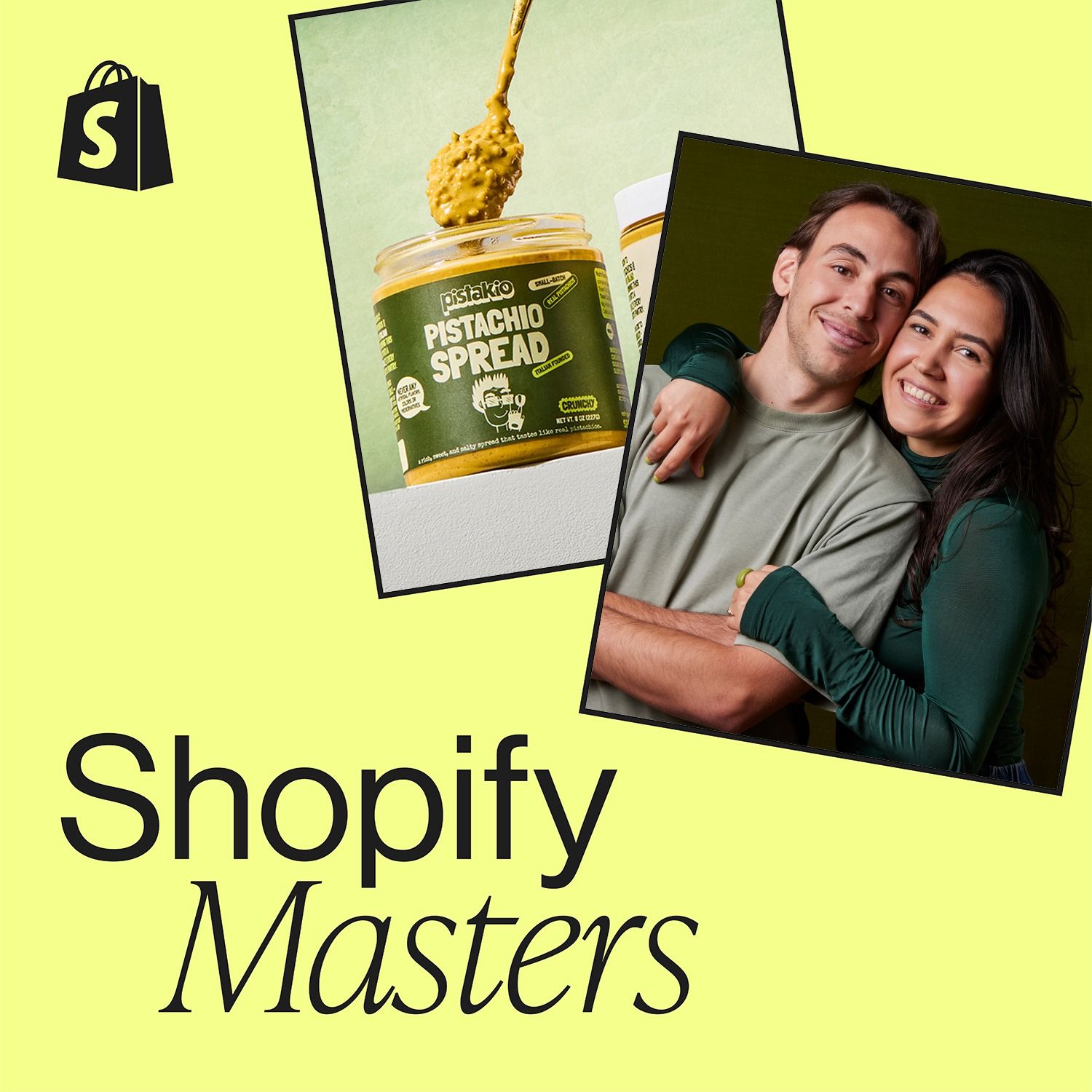
Shopify Masters
How Pistakio Grew 10x by Letting Customers Build the Brand
00:47:06
Two recent grads built Pistakio by letting their community decide every product and turning down Shark Tank and Target. Founders Nicola Buffo and Francine Voit share how they turned a dorm room idea into a fast-growing brand by treating customers like co-developers.
Loading summary
Transcript92 lines
- [00:00]
A
We realized that it was really starting to take off and that we didn't have much time left at our day jobs.
- [00:09]
B
Pistachios deserve more love. That's at least the founding mission for my guests today. Pistachio founders Nicola Bufo and Francine Voigt said no to Target and Shark Tank early on and still 10x their business.
- [00:20]
C
We knew that we would be out of stock if we got on Shark Tank.
- [00:24]
B
What started as a college project sparked a passionate following. We who urged Nico and Francine to scale and make more pistachio based products.
- [00:31]
A
People's eyes were lighting up when they were seeing pistachios reimagined. They were like walking on the farmer's market and they would run to us.
- [00:37]
B
They're here today to talk about turning their side hustle into an all in business and the truth about growing in lockstep with your community. I'm your host, Serena Smith and welcome to Shopify Masters, your companion for starting and scaling a business. Franonico. Welcome to the show.
- [00:51]
C
Thank you so much. We're so excited to be here.
- [00:53]
A
Great to be here.
- [00:55]
B
So excited to have you. I love that this started as a college project.
- [01:01]
C
What was it?
- [01:03]
A
I think the main reason was that when I came over to the US From Italy and Fran also went to culinary school there, we had this like moment in which we saw how much people in the US love pistachios and how pistachios are different than any other nuts in a way that you don't see people loving almonds or loving, you know, macadamena. But with pistachios people have such a strong feeling. And then I remember we were looking through Reddit and there were whole threads with tons of messages of people being like, oh yeah, I just go through a whole pack of pistachio a night and I don't feel bad about it. I love them so much. And that was probably not enough to start a business, but it was definitely enough for us to start a school project off of it. And that's kind of like where the inspiration came from. And then as we grew up and started getting to the project, the more we started getting into it, the more we realized how we were onto something and how really people love this special nut.
- [01:59]
B
God, the things that you learn on Reddit, it's actually a really excellent place to do some ideating around business ideas. I applaud you for that. So what was. You knew that there was this passion for pistachios. How did you get to the notion of making a Spread. And how did your backgrounds contribute to that?
- [02:19]
C
When we first started, I think what we actually were thinking was, like, how can we merge our skill sets and the things that we like to do so that we can continue to do it after college? And I was doing design and Nico was doing marketing, so we were like, well, I also went to culinary school in Italy, so I loved food already. And we were always making dishes at home. And so that, like, intersection of design, marketing, food, let's start a CPG business. And that's kind of like where the idea came from. And when we thought of, like, what's kind of the most underrated ingredient that we can use and really, like, shine the spotlight on. And then pistachios immediately came to mind. Just coming from Italy and seeing how much they are used in Italy, but then seeing that in the US There was nothing other than wonderful pistachios that was making, like a snack out of a bag. So we wanted to take that a step further and create a brand around pistachios and really showcase how you can use them in sweet and savory, like, in all of these different places. So that was the first initial idea,
- [03:20]
A
even before having the brand itself. Our first idea was to create this food truck that was supposed to be green, serve all pistachio infused dishes, and we were planning on traveling around the country. We saw a movie that was about this chef that was traveling around the country with limited edition items. And that's our inspiration. We noticed that there were a lot of one ingredient restaurants that were popping up. There was an egg restaurant that was just making stuff with eggs. And we're like, what if we were to do the same thing with pistachios? Making pistachio burgers, pistachio sweet treats, and all of this kind of stuff. And then we realized that we didn't have the $70,000 to buy a food truck and renovate it and everything. So we're like, why don't we just start making a little product and by the time we recoup the money, we'll buy the truck. Little do we know about how expensive CPG is, but I feel like that's a story for another day.
- [04:11]
C
Yeah, we learned that the hard way.
- [04:14]
B
Okay, so the initial offering was you make this kind of pistachio spread and you take it out into the world and you're sampling it with people. Right. What is the response that you're getting?
- [04:28]
C
Oh, people were shocked the first time that they tried it. I mean, the first time that they saw our brand at the farmer's market, we had a little stand that said pistachio our logo, and then under it said, pistachios reimagined. And it was our first time going to a farmer's market. There was around, like, 200 people that stopped by our booth, and they were like, how are you reimagining pistachios? Please tell me. And we showed them, like, all these little samples that we made at the time. We were kind of, like, ideating and making these prototypes. So we made a savory pistachio mayo, and then we also made a sweet pistachio spread. And we had them try both, and they were like, wow, I have never had pistachios like this. And I would put this on everything. And that was the first response that we got for our product. So we were like, wow, there's more demand for this than we could have ever anticipated.
- [05:14]
A
I feel like the biggest proof point to me was actually seeing how people's eyes were lighting up when they were seeing pistachios reimagined. Like, they were, like, running. They were, like, walking on the farmer's market. And they would run to us and be like, I love pistachios. Like, what's this? You know? And I feel like that was the first. That maybe if you go out and you try to raise money off of this, like, thing, they would laugh at you. But that was kind of the first moment that we realized, and we're like, wow. Like, this really feels like it's something special, and it really feels like it's something that people are resonating with. And it was kind of hard for us to put into word what it was, but you could really see that people were excited about it. They were really looking forward to it.
- [05:56]
B
Take me back into that moment, you know, that you've made a product that you're proud of, but then you go out into the market and you get this sort of overwhelming feedback. Were you shocked by them being so shocked?
- [06:09]
C
I think we were. We were a little bit shocked. I mean, we had given it to friends. We tasted it ourselves, and we loved it. But we were already eating pistachios, like, in a dish all the time. And when we went to, like, an ice cream shop or when we went to a pastry shop and got, like, something pistachio, it never tasted like what we were making. It was completely different. It was artificial, super green. And, like, that's what we expected for people to expect. And there obviously was that type of consumer. But then when people actually tried it, they were like, wow, I never thought pistachios could taste like this. And I feel like we were just so excited that we were able to showcase that to people that pistachios should taste like that. So I think we were really shocked at the fact that people loved it in a good way.
- [06:51]
B
Did you know then right in that moment, like, oh, this thing has legs and we should build this into a real business? Or was there still a piece of you that were like, this is a college project and then we're going to go and pursue our other careers after this?
- [07:04]
C
I mean, that was still the mindset, right? We knew that we were doing a college project, but we were wondering if this could be something we could do in the future. Although we were looking for other jobs at the same time, because we knew that this was maybe a project that we could do for a couple years outside of school and then maybe get a job to make the bills. But we didn't think that we would actually go full time in this.
- [07:30]
A
And I feel like a part of us was very hoping for this to work out because both Farah and I were looking through jobs application and we had this feeling of almost being unemployable in a way. All the job applications that we were looking at, we were looking at, nothing really spoke to us. Nothing really felt like a place where we could put all of our passions together. But Pistaku was these beautiful things in which I was getting to do what I loved and Frank was also getting to do what she loved. So it was kind of like this perfect dream scenario in which both of us were doing something that we loved for something that felt special to us. And so I feel like that's why, like, we were looking for other jobs, but outside of us, really was hoping for this to work out because it felt like the right thing for us to be pursuing.
- [08:17]
B
So at some point you make the decision, okay, we're going to. We're going to go for this, at least in a sort of side hustle capacity.
- [08:24]
C
Right.
- [08:25]
B
The two of you moved to Portland. You take on day jobs in part to help support the building of the company. You're not all in yet, but it sounds like the hope and the dream is that it will pave the way for that, which, of course it did. Did you guys make any commitments to each other in those early moments? In terms of. This is what we're willing to put in. This is the timeline that we're going to be on. If it's not working by X, we'll Abandon ship. What did it look like in those early moments?
- [08:53]
A
Sort of, I think, going back a little bit, like a month before we decided to move to Portland. After college was over, we went back to Europe where we were living. And over the summer we were there for like a couple of months trying to figure out what to do next. And we kept getting DMs from people that were like, guys, I don't see the farmer's market anymore. Like, where are you? I still want to buy your stuff. And that's kind of like the thing that really pushed us to be like, okay, we should be trying to give this a shot. And we were in Italy, so we went down to Sicily trying to find our first pistachio farmers or our first, like, you know, supplier partner. And while we're doing that, we also were trying to figure out, okay, where do we go next? And that's when Portland came to the picture. We wanted to move to the West Coast. We felt like it was more open minded and more like receptive to something new. And yeah, after two months in Italy, we pretty much went, drove across the country, we flew back to the US drove across the country and we kind of gave ourselves a year. We were like, let's try to get the jobs for a year, get this thing off the ground. And Portland was a new space to us. We've never been. So we were like, let's give ourselves a year, see if we like it, see if it's a place for us, see if the business takes off and after a year we'll reevaluate if we should continue doing it or if we should look at something else.
- [10:11]
C
It was an unspoken year, but we both knew that, like, we signed a lease for a year and if the business wasn't going well, if we hated our jobs because we had day jobs when we first moved here because we needed to pay the bills somehow. So we kind of told ourselves, like, we will have one year and if we're still working, like, I don't know, 40 hours in our day jobs and we want to leave, then we'll just move back to Europe and figure something out there. But obviously it didn't go that way, thankfully, so that's why we're still here.
- [10:42]
B
How quickly did you recognize that the path you were on was one that you could stay on?
- [10:50]
C
Right?
- [10:51]
B
Like, how, how quickly did you move into the realization of, like, oh, actually this is working and we're going to be able to continue to build this thing.
- [10:58]
A
I feel like it took very little. We got to Portland at the end of August and we took a community college class to figure out how to actually launch our product because we were making a dorm room before. We had no idea how to make it like FDA safe and all that fun stuff. So it took us three months to do this little class and at the end it was a pitch to New Seasons, which was, it's the biggest local retailer here in Portland with 20 stores. We pitched to them and they loved the product. They were like, we want it in in all the 20 stores. And then around that time we also soft launch around Portland and we saw that we're getting like a very good response from people that were trying it, people were loving it, people were resharing it. And at the same time we started going viral on social media and we were not shipping nationwide yet because we didn't have the capacity to ship nationwide. But we were already getting requests from people asking us, oh, I'm a little store in Phoenix, Arizona, can I buy it? Oh, I live in New York, can I buy it? So although we are not selling to all those people yet, we realized that there was demand for it. And I would say soon after we launched nationwide In April of 2024, we realized that it was really starting to take off and that we didn't have much time left at our day jobs.
- [12:15]
B
It's an exciting feeling to have.
- [12:17]
C
Yeah, I guess it didn't take that long, but it feels like it took longer than, than what Nico was saying. Like we did move here over the summer. I think it was like mid August and we didn't have a product still, still until like mid January pretty much because we were just trying to figure out like what were the next steps to take. Where do we, what do we do next? Where do we go next? What's our first sales channel like? We were looking for a co packer in September and we hadn't even did any R and D yet so there was nothing to really make. And we were looking for this co packer. We found we stumbled upon that, that course, the get your recipe to market class, which is what kind of helped us figure out what these next steps were to take and like how to make our product FDA approved and how our nutritional label should look cause we didn't have any of those things in college. So those first couple months, they probably went by quickly, but it feels like they took an eternity because we just had nothing and nowhere to go.
- [13:13]
B
Such is the case in founder years. I always joke that it's like dog years, you know, it's like a year is like seven or a decade. Right. A few months feels like when you're looking back on it, you're like, weren't we in that for so long?
- [13:25]
C
I know. And now it's the opposite.
- [13:27]
B
Now it's hyperspeed.
- [13:29]
A
Yeah.
- [13:29]
B
I think in those early days when you, you are trying to figure out how to wear so many hats and to some degree you don't even know what you don't know. Right. And so you make a mistake and you go, oh, I didn't even know that that was like a thing that I was supposed to be considering. Right. Like, silly me. What were some of like the biggest challenges in those early days between, you know, adapting the recipe for scaling, finding a co packer, the intricacies of manufacturing. What were the biggest challenges you had to overcome?
- [14:03]
C
Oh, I think it was when we first took that class. It was like a three month course and we had just come out of college and we were trying to just repeat the same thing that we were doing in college in the dorm room and make the pistachio mayo, because that's the one we eventually landed on in school. But then as we were trying to make it, we were getting stuck because it's like you have to emulsify a mayo. It has to be refrigerated, it has to be made in this facility. And like there's, there's water activity, so it has germs, like it could grow mold. And we were like, I have no idea what any of these things mean. I'm not a food scientist. But we just wanted to make something that tasted good. So then in like week, I think it was like the 9th of 10 weeks, we heard somebody came in, a food scientist came in and they basically told us that we needed to scrap the mayo because it's never going to work unless we spend $100,000 to go to a co packer and do a first run. And then we don't even know if it's going to sell. So that's kind of when we just like completely pivoted our plan. Instead of launching this May and presenting that to New Seasons, our first grocery store, we decided to completely scrap it and try the sweet spread that we now have. So we had like a week, a week and a half until our presentation. And we made all new labels, a new recipe, ordered new jars, got like an entire new product and presented it to them and they, and they loved it. And I think like, part of the reason that we did so well is because we were just like Working on it for two weeks straight and, like, could not think of anything else. So it was top of mind when we had that presentation with them.
- [15:35]
B
Wow. Do you still dream about the mayo?
- [15:40]
C
Yeah, I definitely do dream about the mayo, and I think Nico does, too, in my opinion, because it was more his baby. I really liked the sweet spread, and I thought, like, this is kind of like Nutella. Like, people will understand this better. And honestly, I wasn't thinking about, like, the research side of it that actually, consumers do understand that much better because it's like peanut butter. I was just thinking about it through, like, this is a good product, and I think people will resonate with pistachios as a sweet condiment instead of a savory one. But Nico loved mayo, so we decided to do the mayo because we had this food truck idea, and mayo is a neutral condiment that Americans use, and you could kind of, like, infuse it with flavor. So the pistachio mayo was just delicious. And we had, like, a bunch of different recipes for it. We had a cheesy pistachio mayo, like, a spicy one, and then just, like, the regular pistachio mayo. And it was doing really, really well. And I feel like it added flavor to so many things, so it was so good. I think we should bring the mayo back.
- [16:41]
B
I'm Canadian, and one of our stereotypes is that we love mayo, and it's a stereotype that is, like, absolutely true. So I'm, like, listening to this, like, oh, my God, I hope that the mayo makes its way into the product lineup at some point in the future.
- [16:55]
C
Yeah, I know. I agree. And I think, like, something that we didn't realize is that Americans don't eat, like, their fries with mayo, but Europeans do. So we were always telling people, like, try it with fries, and, like, people would always get ketchup instead. But we were like, trust me, this is so much better. So I feel like there was a lot of education around it where we were like, this is how you use it. And I think the spread that we have now, it's just a lot easier to explain. And you can't really buy that education in the beginning, so we'll definitely try to bring it back when we have a little bit more capacity and budget.
- [17:28]
B
But similarly, with the spread. Right. Like, we were talking about this before we started rolling. It reads as a nut butter, but it actually has so much more utility than a nut butter. In the early days, you're at farmer's markets, you're sampling with people in real life. They're getting to experience the product, then you launch in a DTC universe, you no longer have that capacity. So how are you bridging that gap for consumers and allowing them to A, like, buy into something that they can't taste first, and B, have an understanding that maybe their psychology around it being, oh, like a peanut butter or like a cashew butter isn't quite right.
- [18:08]
A
I think you touched on it and it was definitely doing sampling, as many sampling as possible. And I think also social media played a huge part in it as well. When we developed pistachio, like our first product, we were trying to build on top of the traditional Italian pistachio creams, which are very thick, very sweet, almost like a Nutella. And we didn't want to just launch what was already out there, what you could buy imported from Italy. We're like, how can we improve upon it? And that's where our pistachio spread came around, because we wanted to create something that was more drizzle, more pistachio forward, a little less sweet for you to use in a lot of different applications beyond just the spreading. And I think in the beginning, it created a little bit of confusion with people because they were expecting something very thick, something more like a Nutella, like a peanut butter. And that's where I think really being out there talking to customers, explaining what the product was like, explaining the use cases, and at the same time, showing all these use cases on social media really helped. And I think something that was super important for us was understanding which one were the top use cases, which one were the things that we could reattach to a point of the people's routine. For example, after a few days of sampling, we realized that people love the idea of putting into coffee and everyone drinks coffee in the morning. So as soon as we started telling people, put into your coffee in the morning or like add it to your espresso, Their eyes were like, that didn't happen. Was like, I love coffee. Like, I drink coffee every morning. Like, I'm going to try that. So giving them something specific to use, I think was super helpful.
- [19:46]
C
Yeah, we always talked about the Mike's Hot Honey example with that. Like, Mike's Hot Honey became popular because he told everybody that, like, this goes so well on pizza. This is the pizza con. Condiment. And then we, when we were thinking about, like, what can pistachio be? And maybe it's like the pistachio latte. So the way that we were also showing people that outside of everything Nico just said and like social media has played a big role in it. But it's also partnering with like food service accounts, collaborating with a bunch of different menus and doing like a pistachio latte in, I don't know, a place in Idaho, and then doing like a pastry somewhere in Florida. Like finding all these different places where people will be able to try pistachio risk free almost, because they can get it on top of their ice cream for like a dollar instead of buying a $15 jar. And then once they try it, they are hooked. So that is the easiest way is just getting them to try it somehow and then definitely, like showing them through these social media collabs or through these food service collabs. Even if they're not able to go, they're able to see like, we did a matcha toast collab with someone or we did a latte, like, this is how you make it. And I feel like they get inspired from that and they're like, oh, this is how I can use this product. So I'm going to buy it so that I can try making this recipe at home.
- [20:59]
B
This is a really cool part about your business that you partner with these cafes and restaurants throughout the country that are doing these sort of bespoke, pistachio inspired recipes to open you up to new consumer markets. And something that I find very cool about it is that it's not like you're taking like one pistachio latte and saying like, okay, this is the recipe that you're going to use. Like, I was looking, looking at the map and it's like every, every cafe and restaurant has its own take on what they're putting out there. How are you forging these relationships? Are you going to them? Are they coming to you? And what does that collaboration look like?
- [21:39]
C
Yeah, last year it was just, I mean, it was just me and Nico last year working in the business. We were the only people that were full time. So I reached out to every single one of those coffee shops. We've made a list of like 200 of them and just like DM them or sent them an email and then basically told them, like, we'll give you some samples and like, you can do your own R and D. You can figure out whatever it is you want to make. Like, we want uniqueness. We want each coffee shop to make their own spin on the pistachio latte. And. And then this year we knew that it was doing really well, so we hired someone that was already on our team to just reach out to these coffee shops again and Basically do the same thing. And we got a lot of the same ones that we had last year, and then we also had a lot of new ones that started reaching out to us because they saw the map or they heard about it the year, and I feel like a lot of them just wanted in on it and they wanted people to be able to find them and try pistachio in these other places. And then we would also pitch them to like retail the product and of course, like, they get profitability on it and we get another location on our map that we can say, you can buy pistachio here. So that always does really well too.
- [22:40]
A
And I think our community very super helpful in this because we're like, you guys tell us where you want us to see. So all of our community were tagging all these coffee shops, and then the coffee shops were seeing people that they were getting tagged on this thing and they were like, oh, I want to be part of this. And then it's kind of like this noble effect that the more people get excited about it, the more people want to join and also kind of fill in that fomo. Because if you see the coffee shop next to you that is doing something special, you're like, oh, I want to do that too, you know, so kind of we're always trying to create that foam and try to make it feel special. And that's why we always leave it like open ended to the coffee shop. We give them like the pistachio latte recipe, but then we always tell them, this is a starting point. You can do it as simple as possible and stick to the recipe, or you can get creative and do a pistachio tiramisu matcha or a pistachio spumoni cake topping. So it's always fun to see how all this coffee shop can get creative and come up with the craziest ideas.
- [23:39]
B
Yeah, it's really cool and I love how much both of you are referencing how much you've built this business in lockstep with your community to some degree. Irl, right? With like the sampling in real life and getting feedback from people in real time. But also it seems like on social media as well, you really have a connection with your audience. Is it true that you were initially reticent to post on Instagram?
- [24:05]
A
We were. When we started in college, Pistaki was born as a social media project. But in the beginning we were living in a dorm room. The lighting was terrible, like the utensils for cooking were even worse. And we didn't want to start Instagram until after college. But my professor luckily told us that if we were not going to start posting, he would have failed the class and I would have to stay an extra year. So that was kind of like the kick in the butt to, okay, let's start posting on Instagram so that we can get out of college as soon as possible. But that was super helpful because we started building the community since the early days. And we took them along the journey, developing the product, developing the labels, understanding what they wanted to see from us. And to these days, our community is an amazing resource for us. They help us guide us through what's next. For example, we just launched Apistachio Date Bark. It's our first limited edition sku. And that came out of our community because we started seeing so many people using pistachio with dates, like date barks, cutting a date open and putting some inside and just like how many people were tagging us in recipes with dates. So whenever we started thinking about what can come next, what's the next product, and we had this idea for a date bark, it was kind of like a no brainer because we already knew people love pistachio and dates. And this collab is doing amazing, is so beyond our expectations. So it's been doing super well. And it's because it was something that was coming from our community and it wasn't something that we just came up out of the air, but it was something that people were asking for, you know, and I feel like that's been kind of like the trend since our early days, like really making products that we already know someone will buy instead of coming out with a product and then hoping for someone to be interested in it.
- [26:01]
C
Yeah, I feel like our community from the very beginning when we opened our Instagram account was literally just our friends and then our social media, like the social media professor that Nico had, and then like peers. Like I had graphic design people and we had like interior design friends. And then it was just like us asking people what they wanted to see. And I think we never strayed away from that too much. And we started kind of like building this brand in public because we had to, because part of our school assignment was like to make this account a conversation instead of us trying to sell something because we had nothing to sell. So us continuing to do that kind of helped build this strong community of people that always felt like our friends and we always respond to them, we always answered the DMs. We're always trying to build this conversation because we genuinely want their help. Otherwise we wouldn't be able to do what we're doing. It's hard to say yes to this label without getting the confirmation from our community or getting the confirmation from your co founder. But I think it's like, it's already lonely as it is to be a founder. So having that community to lean back on and then having your co founder to lean back on, those are all things that, like, we'll never take for granted.
- [27:08]
B
And it's free.
- [27:09]
C
Yeah.
- [27:10]
B
And it's mutually beneficial. Right. It's like you're serving them and they're serving you to that end, like, are there things, elements of the product perhaps, that you too have felt particularly connected to that because of the feedback of your community? It's steered you in a different direction.
- [27:27]
C
I think Crunchy came from our community. That was the first product that, like, genuinely came from people's comments, people's emails that we were getting. People were telling us that when we were first making our product, we had, like, these little bits of sugar inside. And it was because we couldn't find powdered sugar that was organic and, like, good for you. So we were just grinding it ourselves in a little Vitamix. And, like, sometimes it wouldn't come out perfect. So there was, like, little bits of sugar. And we were getting these comments and these DMs and these emails from people saying that they like that there's a little crunch in the product, but they don't like the fact that it's sugar as the crunch. So we were like, okay, maybe there's something we should do about this. And then we eventually found a supplier for powdered sugar, and we made our creamy as creamy as possible without any of those, like, bits of sugar. And we were like, well, what if we take away all the crunch that people are literally telling us that they like, then we should just do something with it. And that's when the idea of Crunchy came out. And it was kind of perfect timing because it also happened at the same time as Dubai chocolate. So everybody thinks it was a Dubai chocolate pistachio spread. And we're like, no, this is Crunchy. She's here to stay. It's not a trend.
- [28:35]
B
She's here to stay. I mean, I think there's also something that I'm always curious about when it comes to feedback like this, which is that it's so valuable. Right. And also, you have to be careful not to listen to, like, absolutely everything that's coming your way. And sometimes you can be dealing with something that's kind of just like a loudest voice in the room scenario and shouldn't necessarily mean that you should pivot. Do you too have a process for assessing, okay, this is feedback that we really ought to listen to and maybe this is stuff that we should let fall by the wayside.
- [29:07]
A
I feel like we always try to listen to all the feedback that we get. We write it down, we take notes of it, and then we try to see patterns with it. And I think also all this feedback really helped us make some of the biggest decisions. For example, when we launched, we were originally selling in glass jars and we had hit a point in which glass jar was getting impossible to ship, all the jars were breaking, and we wanted to pivot to plastic. And we didn't want to because we felt like our customer would not have understand the switch to plastic because it would have felt almost like a downgrade or something like that. And then we put out a survey and we got like one out of like, I don't know, 200 responses of people saying, I would not buy pistachio if it was in plastic and 199 people were going to buy it anyway. So I think our community also helped us, made some decisions that for us seemed like super big and super important, but kind of pointed us in the direction of like what really mattered to them. And what really mattered to them wasn't that we're coming in plastic or that we had a little bit of of sugar or that we had a little bit of salt, but was it a product tasted amazing. And I think that's kind of been our North Star since the beginning. And since we really understand what our community values and people buy us because we taste delicious. They don't buy us because we are low sugar. They don't buy us because we are no seed oil. They don't buy us because of other things. They buy us because of taste. After we understood that, we were like, okay, let's really hone in on being the best tasting pistachio products and how can we continue being the best tasting pistachio product?
- [30:43]
C
Yep, I think that's exactly what I was going to say. Like finding your sort of like writing down your core values like from the beginning as a business and then like not steering away from it based on the feedback that you get. Like this feedback that people were telling us that there was like bits of sugar didn't have anything to do with our mission or our core values. So of course we were going to implement it if there was a problem for a lot of People. But sometimes we get the comments that, like, we should make a product with no sugar. And we're like, yeah, sure, we can do that, but it wouldn't taste good. And our whole thing is that pistachios are supposed to taste good. So we can make, like a different product, but we have to make it taste good. And if it has to have, like a little bit of sugar, a little bit of fat, then so be it. Like, this is an indulgence. It's not supposed to be like a keto, healthy diet food, but if you want that, you can get it somewhere else.
- [31:31]
B
It sounds like the core value to end all core values for you is it has to be delicious. Are there other core values that you're living by?
- [31:38]
C
It's like taste, flavor, innovation. What else, Nico?
- [31:43]
A
I would also say surprise and delight our community. We always try going back to the community aspect. We're always trying to, like, surprise and delight them, whether it's like a new product, whether it's like a little extra mini jar that we throw it on an order, whether it's answering to DMs, or if someone sends us an email, like, I'm responding within 24 hours. I'm responding with exclamation marks. I'm not responding like, I'm a bot. So I feel like that trying to be human, trying to be a friend more than a brand to people. If someone DMs us on Instagram, we don't have an automatic respond that is like, oh, our team got this, we'll get back to you within 24 hours. No, we just respond to them. So I feel like that, like, human touch is something that we always try to, like, bring forward and we try to be people's friends, almost like, you know, a brand that they rely on. And it's almost, I feel like we're trying to be what Nutella was for us when we were kids. You know, that special treat, that moment of joy, the little kinder surprise that you have. We're trying to bring to be that for adults. So be that, like, you know, that spoonful that you have before going to sleep, that little treat that you have whenever you feel a little down or whenever you wanted to treat yourself, you know. So trying to be a companion, a delightful companions in people's lives.
- [33:02]
B
The two of you got very early offers from both Target and Shark Tank. Can you tell me what they were and how you navigated that?
- [33:13]
A
Yeah. Shark Tank reached out to us before we launched and we had a few posts that went viral before Launching, and they reached out to bring us on the show, and it was like an amazing opportunity for us. Obviously, we're watching Shark Tank since college, and that's where we were learning everything about business being to art school kids. But I think another common theme of our journey has been learning when to say no or what to say no to and what to say yes. Because we knew that we were not ready for it, and by the time the show aired, we would not have been ready. So, yes, it would have been an amazing opportunity, an amazing experience, but it would have probably put us in a very bad position if not had put us out of business. So I think something that was super important for us was learning what to say yes to and what to say no. I think when you're starting out, there's so many shiny things and so many things that you can pursue. You're so new, so young into the business. There's so many opportunities to grow. And I think something that. One of my biggest advice that I always give other founders is really learning understanding where you are in the journey and understanding what you can say yes to and actually go through. And we're a big fan of yes and figure it out. But I think there's like, you can figure it out to a point. So try to always say yes. It pushes you to get better and get better faster. But be mindful of where you are in your journey and not put yourself in a situation in which you say yes to something that you're not able to follow through with.
- [34:51]
C
Yeah, I think it was just a part of our scrappy beginning. We couldn't launch on Amazon, on TikTok, on Instagram. We couldn't launch everywhere at once because we knew that we didn't have the foundation built yet. It was just us two, and two people can only do so much. So we decided to start on Shopify because it was the least expensive option, and we could do it ourselves. We could fulfill it from our apartment like we did, and we could kind of, like, manage the amount of orders, track all the inventory, and make sure that, like, we were not going to sell out or have any out of stocks. Because we knew that in retail, that can really hurt a business. So for us, that. That was our capacity. That was, like the bandwidth that we had. And then we were like, let's figure it out. Maybe, like, expand gradually as we get more funding or as we improve our cash flow. And the thing with Shark Tank was that we knew that we would be out of stock if we got on Shark Tank. So it didn't make sense for us to say yes. And the same with Target, we wouldn't be able to say yes to that because we didn't have the capacity. We still don't have the capacity to launch in any national retailer like that. So I feel like you as a founder, have to know when to say no, because there's so many flashy things that are going to come at you in the beginning. And if you say yes, it can put you out of business. Unless you have millions of dollars invested in your company or you come from money, then you can probably say yes to everything.
- [36:19]
B
Right. You were working with really Minimal Runway at the time, very much bootstrapped. I think this is also a place where having a co founder can be really helpful. Right. It's like one of you might be like, oh, you should say yes to the, like, the shiny thing. And the other person can kind of hold up the mirror and say, we're not. We're not quite ready yet. Were the two of you in sync in those moments?
- [36:41]
C
Yeah. I feel like we had to talk to other people about all of this too. Like, it was hard to know what the right step was to take since we were still so new at this. So I feel like we started reaching out to people that had gone on Shark Tank because we were afraid of saying no. And then, like, them never reaching out again and being like, okay, you're done. I'm gonna find another Pistachio brand. So we talked to, like, a couple other founders that went on there, and they told us that they also, like, they went on the second time that they had reached out or they went on the third time they would reach out and, like, this is how the sales went for them. And then we kind of laid out all the pros and cons, and we both kind of came to the decision that it didn't make sense, but if they really wanted to have us on the show, that we could reach out in the next year, in the next two years, because one year still wasn't enough since we were pre launch. And yeah, we'll see how it goes.
- [37:29]
B
Are there things that you have either said yes to that turned out to be mistakes or things that you look back on that you said no to that in hindsight you wish you hadn't?
- [37:41]
C
I think the agency was just, like, wrong for us at the time. I don't think it was a wrong decision.
- [37:47]
B
Do you want to just expand on
- [37:48]
C
that a little bit?
- [37:49]
B
I think that's fine. An element of it didn't Feel quite right.
- [37:52]
C
Yeah. You kind of have to think about what. What channel is going to be right for you. So we did say yes to a TikTok shop agency last year, kind of like right before the holiday season. And what happened was it was the wrong agency for us and they were making videos that were completely different than the stuff that we post and the stuff that works for us organically. So it wasn't working well. And we pretty much lost $20,000 because of this agency. But when we realized that this was wrong and that we knew that we could find someone that could help us do this better, we switched agencies. And it's been doing really great so far in the past month that we have switched. So I feel like there is some trial and error around saying yes and no because it could have been right for us. If we had gotten that agency, the one that we work with now in November of last year, maybe we would have sold out of like all of our inventory that we had over the holidays, or maybe we would be at a different place at the end of the year, revenue wise. But I feel like you live and you learn as a founder too. So we had to have some mistakes to get the right one, and now we do have the right one.
- [39:06]
B
The two of you are life partners in addition to being business partners. My husband and I work together. I get it. When it works, it works. In what ways do you feel like it serves Pistachio and in what ways can it be challenging?
- [39:22]
A
I think it's. There's a level of trust that you have with your partner that sometimes you wouldn't have with a co founder if it was just another co founder, co founder that you find, like online on LinkedIn. So I think that, like, we both have, like such a level of trust in each other that. And we also have like our kind of area of expertise. So if Fran makes a decision, I might not be 100% agreeing on it and I'll tell her that my point of view is a little bit different. But ultimately I trust her that she's making a decision for the good of the business and she believes that that's the right decision to move forward with. So I think the level of trust is something that you don't really find elsewhere. And I also think that being in this together and living and breathing Pistachio together really makes it easier to not having to explain yourself too much. If I was in a different relationship with someone else and I would be working on Pistachio on the side, I think someone would not really understand what it is to be a founder, what it is like to be a founder, and why sometimes it's 11pm and you're sending an email and why sometimes it's like a Sunday and you need to stop somewhere to do something. I feel like the fact that we are so deep into it makes it easier and we have to do less of explaining to each other because we're growing a business together.
- [40:47]
B
He did it. There's something that the Duplass brothers, the filmmaking duo, the Duplass brothers, Mark and J. Duplass, said that I always thought was so interesting, which was like, you know, sometimes one of them will be the director and someone, the other one will be the writer. Sometimes they're both producing. Right. They wear different hats depending on the project, but they decide who the ultimate decision maker is for each project. Do you guys have spaces like that where you're like, okay, if we're disagreeing, one of this person is the one who has the veto power here?
- [41:17]
A
No, but I feel like we kind of have it in a way. Like, I feel like I know what you're in charge of and you what I'm in charge of. So I feel like maybe it's not like written down like, this project is your project and this project is my project, but I feel like we have an understanding of where our expertise falls into and who will kind of make the decision in which area.
- [41:41]
C
Yeah, I mean, I think it's about also keeping each person in whatever they're doing, keeping them accountable for that. So if I trust Nico as my co founder, then, and he's doing all of the operations, then why would I have any say into, like, how our relationship with the supplier is and vice versa? Like, if I'm doing all the social media, why would he have any say on, like, what time I can post my reel, you know, like, so I think we do have it. It's not like higher arching. Like, it's not about maybe investors or things like that where it can be like a little bit more like the higher level sort of things. But I feel like for the things that we do for the departments that we're kind of like working, we do have like we're our own bosses for that. And I feel like that level of trust works because if we were both micromanaging each other, then I think it would be really hard to get anything done.
- [42:31]
A
I think that came after. In the beginning, we were like always taking meetings together, always doing everything together, always sending emails together. And I feel like it was great in the beginning, because I feel like we both got to really understand the basis of all these different areas of the business. But as we started growing, we realized that we needed to really divide our areas. And one of us took over one side and one of us took over the other side. And there's always things that we come back together and talk about it. We kind of have our one on ones every week in which we talked about how the week before went, what we can do the week ahead, and all of that kind of stuff. But I think it's super important both in the early days to do as much as possible together to really understand each other and to really get a sense of how the business works in 360 degrees. But also once you start growing a little bit, for each to have our own area of expertise and for us to focus on what we do best.
- [43:30]
C
Yeah, I mean, we were coming from art school too, so we have to think about the fact that neither of us had any experience even with an outside job or with. With operations or with business and like any of those things. So we kind of had to learn it together because we didn't have a choice. Like, one of us, like, had a degree in business management. Like, nobody had that. So it was just both of us trying to figure it out together. And I feel like that helped us be like, oh, okay, maybe I like this part of the business a little bit more. Maybe I'm really bad at this. So, like, you should try and take it over. And that's kind of how we started. I definitely wouldn't recommend it to everyone because I do think we lost a lot of time, like taking these meetings together in the beginning. But if someone has like, already the skill set for one part of the business, like, why wouldn't they just take that over and the other person take over the other part?
- [44:18]
B
You guys started with like the. In the humblest of fashion, right? Sampling at farmer's markets. Then you launched D2C, which is thriving. You have these wholesale accounts throughout the country. You're popping up in these bespoke fashions in cafes. You launched your first limited edition SKU recently with the Date Bark, which I'm going to go by as soon as we are done recording what's next for pistachio.
- [44:45]
A
I think Continue growing. Continue. Our mission is trying to make it easier for people to shop us. Right now our distribution is still fairly concentrated in the Pacific Northwest, aside from the few independent stores. But we really want to grow Pistakio to more stores nationwide to make it easier for people to shop us and while we do that, try to make it accessible to as many menus as possible. We see the food service and the grocery channel growing together hand in hand. So we really want you to go to your grocery shop and find pistachio on the shelf and then go to your local cafe and find pistachio there and then go to your local ice cream and find pistachio as a topping. So we really want to be there for people at all these different touch points and really make it easy for people to eat more pistachios.
- [45:35]
B
Yeah.
- [45:35]
C
Outside of just needing more product too, because we have been kind of going at the limit every single month with the amount that we're making currently in our space. We just need to continue growing and being in a bigger space. And we're probably going to start working with a couple of co packers too to help us like, meet the demand that we're having. But. But we're looking forward to like being in all of these coffee shops and all these food service accounts because I feel like that is where people are really looking and that's where they find us the easiest. So it's doing really well just like that. Because people can taste pistachio literally anywhere they go.
- [46:09]
B
And the mayo.
- [46:12]
C
And the mayo. Yeah. We love collab skews. So if AO is listening, we would be happy to do a collab skew.
- [46:20]
B
There you go. You heard it here first. Molly. Thanks to both of you, Fran and Nico, for being here. This is so lovely.
- [46:29]
C
Thank you.
- [46:30]
A
Thank you so much. It was great being here.
- [46:33]
B
Our show is produced by Shuang Esther Shan, Gogo Zoeger and Alicia Clark. Our engineers are Matt Schwartz and Miku Bedlam. Rachel Reich is our senior content lead and I'm your host, Serena Smith. For more Shopify masters, hit that follow button. We drop every Tuesday and Thursday and be sure to follow and subscribe to our YouTube channel so you can catch our video interviews as well. Thanks for listening. We'll see you next time.
- [46:59]
C
Sat.