← Shopify Masters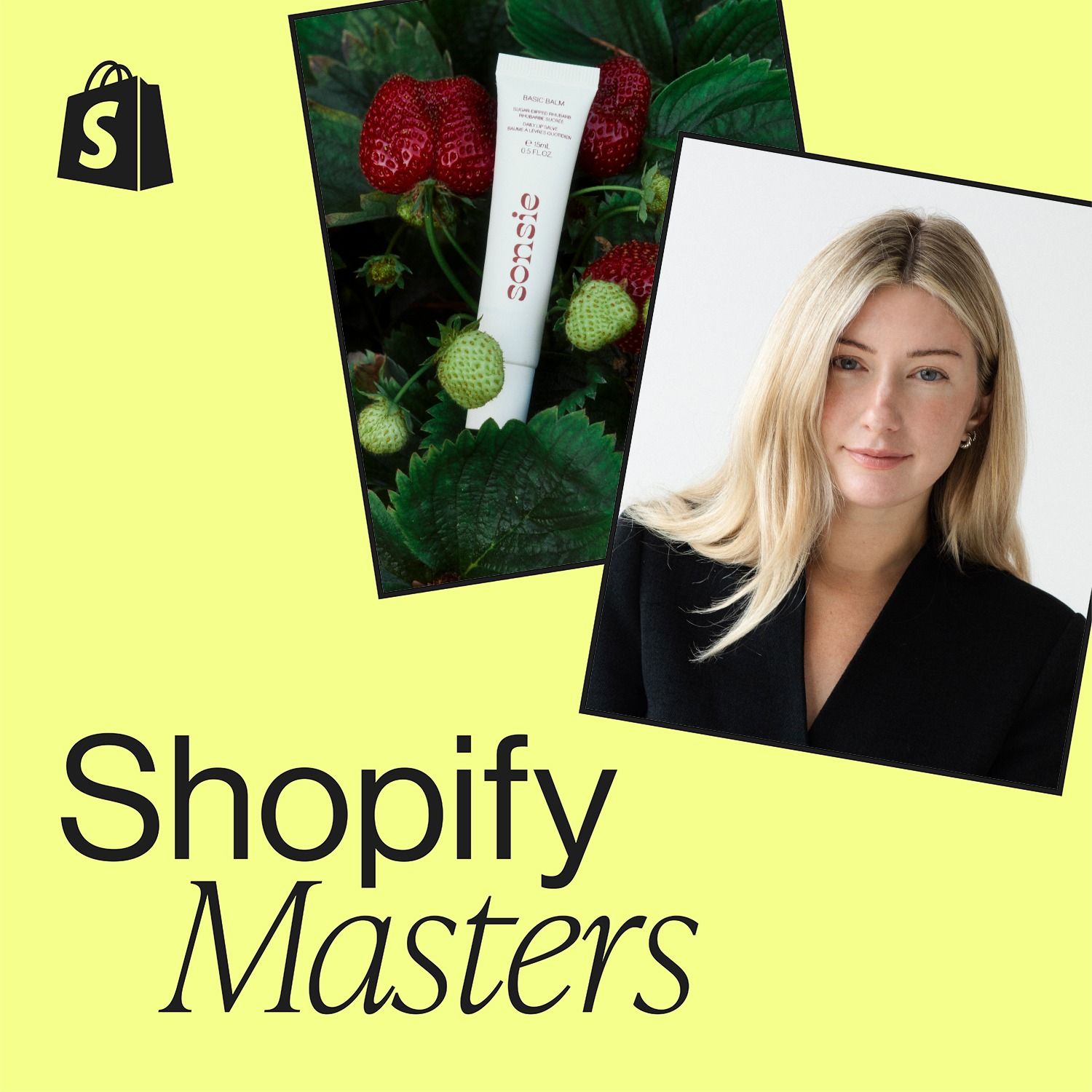
Shopify Masters
How Sonsie Skin Breaks the ‘Clean Beauty’ Mold
00:46:59
Sonsie Skin's CEO turns customers into brand advocates through community-first strategies, from garden girl activations to in-person events. Discover how to create your own viral moments that drive real connection.
Loading summary
Transcript114 lines
- [00:00]
A
You really have to operate out of this place of I can change the world with this brand or this product.
- [00:12]
B
What happens when Hollywood icon Pamela Anderson teams up with a trailblazing scientist? Meet Sansi Skin, the sustainable and conscious skincare brand rewriting the rules of beauty.
- [00:21]
A
We can open up what we're doing about sustainability, but it has to be fun, it has to be entertaining.
- [00:27]
B
Today we're joined by Kayleigh Bratt, a chemical engineer with a track record of turning fresh ideas into multimillion dollar brands. In her new role as CEO, she's the expert Pamela is counting on to take Sansi's skin to the next level.
- [00:39]
A
Because of my background and my relationships and my experience, I'm able to bring something new to market that people haven't seen before.
- [00:45]
B
Kayleigh's here to pull back the curtain on what it takes to launch sustainable products and turn first time buyers into devoted fans. I'm your host, Serena Smith, and this is Shopify Masters, your companion for starting and scaling a business. Kayleigh, thank you so much for being here today.
- [01:00]
A
Thank you for having me. I'm so excited.
- [01:02]
B
Before Sansi, you were the founder of a sustainable hair care brand called Sesto that made very innovatively waterless shampoo and conditioner. Why waterless?
- [01:15]
A
I learned liquid shampoo and conditioner were 80% water on average. And that really blew my mind that we were packaging and shipping water all over the world. So that fundamentally made me think about how much waste is in beauty beyond water because there's so much impact across the supply chain. So I really dug in and I was like, what can I do to solve this? And that was my response.
- [01:40]
B
How intensive was that development process?
- [01:44]
A
Well, I went to a lot of labs, contract manufacturers. I was calling everyone in Los Angeles. I was living in LA at the time, and. And no one would make it. Some people told me it was impossible. I also heard like, oh, that seems obvious. If it was possible, it would have been done before. So I got every answer that you can imagine and I really was like, okay, well, I guess I'll just do it myself. And I did. It was my first formula I ever made and I took it, you know, from my bedroom floor to Sephora shelves. So, wow.
- [02:20]
B
Truly made in your own kitchen.
- [02:23]
A
Yeah.
- [02:23]
B
And how many iterations did you have to go through before you nailed it?
- [02:28]
A
Oh, my gosh, I probably did over 50. I mean, first of all, it was my first product I had ever formulated. So it's kind of like, okay, you know how to bake a cake. Right. But to make like the best version of that cake. How many cakes do you have to make? And I wanted it to work across all different hair types. And I had friends trying it. I actually used to go to the Sephora in Beverly Hills and hand it to the employees working there. Smart. So I did a lot of iterations and it took a lot of time. But it was also the time when I got really interested in like what is in our products, where do they come from? And really understanding like how we didn't actually know, even when we were ordering something what the origin of that ingredient was unless we went digging.
- [03:13]
B
I mean, when you hear the term waterless for shampoo and conditioner, even now it, it's like kind of a tough thing to wrap your head around. Do you feel like Sesto was ahead of its time?
- [03:23]
A
For sure, I think it's still ahead of the time. It was a very forward thinking, innovative brand that I think is built for like the future of where beauty is going. And I was hoping it would move a little bit faster in terms of the industry, but there's still a lot of work to do.
- [03:40]
B
What did that experience teach you about consumer education? And also both the benefits and sometimes the pitfalls of introducing really innovative products to market.
- [03:55]
A
Of course you have to do what the customer wants. And I think at the time I had a really cool concept for a product and a product line. But to your point, consumer education is so, so incredibly important and just getting past, you know, the how to use it kind of unlocked something for that brand. But there was still so much of the story that needed to be told. And at the end of the day, people like, especially in this time period, which was 2019, 2020, 2021, they really just wanted stuff that worked. A lot of people were trying new things during that period because they were home more, which was fun, but fundamentally like they wanted to look their best. And we were marketing a lot on sustainability versus performance and that was a big learning for me. You know, people aren't going to buy something just based off of sustainability.
- [04:48]
B
It's got to work. Yeah, it's got to work. Have you been able to take those learnings into product development at Sanzi?
- [04:56]
A
Of course, definitely. I think in terms of brand, especially when you're thinking about sustainability, so many people want to kind of like compromise performance or aesthetics. And we are actually finally getting to a point where material innovation has caught up. So I'm really excited about what we're doing at Swansea.
- [05:17]
B
Okay. But that's a really delicate balance to hit There's a reason why most beauty brands aren't clean. There's a reason why most beauty brands aren't sustainable. It's more expensive to do so. It does impact the performance. So how are you thinking about that matrix at Sanzi of performance versus cleanliness versus sustainability versus the aesthetics versus price?
- [05:42]
A
The answer is no. Compromising. So I will not compromise. And I think what that also forces me to do is behind the scenes. We're doing the work, you know what I mean? We're actually working with our partners to develop and to bring something new to market. It's actually a whole team of people sometimes behind a single ingredient or a single fragrance, the single packaging solution. If we just took what was on the shelf today, I don't think we'd even be able to do what we've done so far. But because of my background and my relationships and my experience, I'm able to leverage kind of the behind the scenes people and bring something new to market that people haven't seen before.
- [06:27]
B
Okay, take me into the behind the scenes a little bit. Like when you first joined Sansi, you are a newly minted CEO of the company now, but when you first joined it was to develop products. What was the first product that you were working on? And tell me a little bit about that process of bringing it to life.
- [06:44]
A
Yeah, absolutely. So the first thing was a cleanser and it's a foaming cleanser. I don't know if you've used foaming cleansers. I didn't like a single one. I tried.
- [06:55]
B
Yeah, I haven't either.
- [06:56]
A
I find them really tricky. And I, again, I kind of challenged this. I was like, okay, is it the fact that it's a foaming cleanser, we have to use so much water for it to foam. Is this something that I won't be able to make? One that we all love? And what I do when I develop a product is I pull benchmarks, which this is like the starting point. You find things that you love, punch. But for that cleanser, I think I pulled 12 different benchmarks. I picked benchmarks from, you know, everything from appearance, smell, feeling on the skin, how my skin looked after I used the cleanser, the foam density, the lather, like all of these things are incredibly important.
- [07:39]
B
And you weren't relegating yourself just to the clean universe of brands. No, you were looking across the spectrum.
- [07:44]
A
Yeah, exactly. And I think that's a mistake that's commonly made is when you go to make a clean product, basing it on a clean product that already exists as well because there's material innovation that happens behind the scenes and you're kind of limiting yourself to what ingredients you're able to use because there's kind of stigmas around where certain things come from or how they're made that aren't necessarily true anymore. So it's very fascinating. But what I will say around benchmarking is if you went with one or two products, you're likely to get something that's very similar to what already exists on the market. So with our cleanser, we developed a cleanser that is foaming and also hydrating, which I had never experienced before and again, I wasn't sure it was possible. But I actually took the lab a paper formula and gave them a really good starting point, called out what actives we wanted and it came out beautifully.
- [08:43]
B
You were saying just a moment ago that there are some misunderstandings or misconceptions about where things are sourced or things that seem like they're bad and maybe aren't. Can you give us some examples?
- [08:55]
A
Absolutely. So I think fragrance is one term that has just been constantly kind of fear mongering in this space. I'm afraid of fragrance. Yeah, fragrance has been demonized and unfortunately there's a lot of misunderstandings around fragrance. So a lot of natural fragrance, for example, essential oils, contains tons of allergens. So now that because under Mokra new regulation in the U.S. it's required that beauty brands label allergens, you're going to see a much longer ingredient list when you look at those products. Now, synthetic ingredients can actually be really safe because you can avoid having those allergens. So there are safe synthetics and there are also, you know, good, good natural extracts and essential oils can still be good, but they have to be at a low quantity. So for a cleanser formula we really kept it simple. We put a rose essence in there and it's super low allergen and it was tested safe for sensitive skin. So we kind of checked the box on that. But I also think when you look at products that are clean, they usually either don't smell good or, or they really smell heavily of an essential oil or you're getting kind of like the clinical smell. So this is like a really nice subtle fragrance and I think that's what people love about it. It's non irritating but still has scent, which is a big unlock for the brand as well.
- [10:26]
B
Given that your consumer base is, I would imagine, primarily people who are interested in clean beauty and probably know a thing or two about it. Those of us who are interested in it, we have kind of been trained on the like, fragrance is terrifying model. So how, how do you effectively message to the consumer that it's safe?
- [10:45]
A
I mean, honestly, the. All the testing that you can do, just starting with a safe for sensitive skin claim is really important. Most brands don't have safe for sensitive skin. And also when you think about where these women are coming from that are moving towards clean, like there's periods of life where you think about switching up your routine. And for us, our customer is actually 80, 45 plus, which is incredible, a really fun market. And they're coming usually from luxury brands. They're used to something that's actually very heavily fragranced and at a much greater price point. So Sonzi offers something that's super accessible but still gives the feeling of luxury. And I do think fragrance plays into that where it needs to. So some of our products are fragrance free. Other ones do have a subtle hint of fragrance, but it's not overwhelming. And then our other custom, which are coming from brands that maybe they've outgrown, they're growing up a little bit, they're maturing in the market and they want something that works, but they don't want to jump into a doctor brand or a clinical brand. Sanzi has kind of been a good response to that because it balances clean with efficacious.
- [11:58]
B
I had read that that you. That your demo is a little bit older than one might assume. My. My assumption would be that most of the audience engaging with clean beauty is on. On the younger end of the spectrum. Like, to what do you credit capturing that audience and how are you doing it? Is it the, is it the Pam effect? You know, is it your social media strategy? I would imagine at the age range, it's maybe not so much that. How are you doing it?
- [12:25]
A
Yeah, it's a combination of everything. Obviously, Pamela's audience is all ages, it's global, so that's helping. But I think what's resonating with the older demo is just this like honesty and transparency that we have. We're really good about answering questions. And as you'll see the brand change and evolve over time, we're going to be offering more and more transparency. And I think that's something that as the older demographic has gotten more interested in what's in their products, those legacy brands are not interested in responding to that.
- [13:00]
B
Transparency is a term that gets spatted around a lot these days. What does it mean to you at Sansi?
- [13:06]
A
It's not only saying you know, these are our ingredients. Right. With our fragrances. For example, on the cleanser you won't see fragrance on the label, you'll see that rose extract and all the elements that are inside of it. We did a limited edition rhubarb balm which is really fun. And we worked with a small woman owned business out of Canada which was actually a company had advised in the past that built a completely transparent, fragrant supply chain. So we can actually go and create these really luxury smelling fragrances. But we list every single ingredient and that's kind of the first step. I think the second step is education. Like once you open that up then you have to explain what it is. And so we're going to be doing a lot more of that.
- [13:52]
B
There is the clean side of things and then there's also the sustainable side of things. And they are not the same thing though. People sometimes use them interchangeably.
- [14:04]
A
Yeah.
- [14:05]
B
How hard is it to do both?
- [14:07]
A
I don't think it's difficult. One, I think, I think you should ask questions. Right. We only know how sustainable we will be if we do have that transparency. I don't think they should be used interchangeably because I think all brands should have access to, to the information that they want. Right. You should know where your packaging's coming from, you should know where your product's made, you should know where your ingredients are coming from. But we don't always ask those questions as brands and now it's becoming more standard. Are we getting the answers we want is the question. And so at Sonzi, we've been able to do that behind the scenes when it comes to sustainability. Again, I think it's about education. Like we can open up what we're doing about sustainability, but we have to explain every step along the way. We can't just introduce a new material. For example, like we did with our Adapt Cream, we did a home compostable material that looks and feels like plastic. When people get it, if they haven't read that it's not plastic, they think it is. And so there's just so much to talk about there. But we have to be really mindful about how we are educating and how we are articulating what we're doing differently. Because if we don't, then it'll just seem like greenwashing. And that's what a lot of brands have gotten themselves into. So we see a lot of backpedaling in this space right now as it relates to sustainability. Right.
- [15:35]
B
It feels like a lot of brands are actually moving away from Sustainability. And what the statistics are showing is that there's potentially waning consumer interest in that. Does it feel that way to you?
- [15:50]
A
I think it depends on what generation you're talking about as well. And geographically, I think there are shifts. I think from the brand side, we haven't done the best job at saying what it is that we're doing. In the same way that clean is kind of fading, right. We're seeing this kind of movement away from clean because now consumers want to know, like, okay, what makes this clean different than that clean? And so we really have to talk about what we're doing better and get people interested in again. But it has to be fun, it has to be entertaining.
- [16:26]
B
Totally. It can't be spinach.
- [16:27]
A
Yeah, exactly. So I think there will be an emergence, maybe in a more creative way, especially with where storytelling is going for a brand. I think we'll see more opportunities, but I do feel like it's been pulled back a little bit.
- [16:41]
B
Tell me with specificity how you're tackling that at Sanzi.
- [16:46]
A
I think packaging, like I said, that's an easy one to talk about because it gives people a tangible thing. They can see it, they can feel it, they can experience it. And that's really easy to explain. So we're starting our kind of education around this with packaging. Where we're going is into formulations and ingredients, and also not just sourcing processing, but how things are actually made and how that impacts the environment. And I think it's also been glamorized a little bit behind the scenes to either be like a brand that is harvesting something from a garden or from synthetics in a lab. Like, there hasn't really been an in between, but there's an emergence of new innovation in biotech with where we're actually growing naturally derived ingredients, essentially. So those lines are starting to blur and I think there's a lot of conversation to be had. But when you see, okay, we can produce something that has lower environmental impact, take like a rose oil, right? Rose is something that it takes a lot of time to grow. It's seasonal. You can't get it all times of the year, and you get such little output from each petal, which has been a marketing story in the past. But if you kind of think about it from this new perspective, it's actually like a lot of natural resources going into that. So if we can grow it in a tank, just the part of it that we need, it's lower environmental impact. And you still get this amazing ingredient. So you get the best of both worlds.
- [18:25]
B
I mean, I think something that I struggle with as a consumer is that it feels like so much of the onus is placed on us.
- [18:32]
A
Right.
- [18:33]
B
And obviously, like, as human beings, we're all inundated with so much information. We want to be able to construct, like, binaries or rubrics for ourselves. Natural good, synthetic bad, you know? Right. Fragrance bad. Unscented or fragrance free good.
- [18:49]
A
Right.
- [18:50]
B
And then, as it turns out, it's not that simple. Right. So for you, as somebody who's on the inside, who knows this stuff inside and out, where are you finding the biggest, like, growth edge and challenges at Sansi in terms of getting that information to the consumer in a way that feels good to them and not overwhelming and is helping the bottom line of the brand, but isn't an oversell?
- [19:18]
A
We are definitely leaning into the storytelling element, so. So you'll see it more next year. We just did our first campaign in October, which was really fun.
- [19:28]
B
Yeah. The garden core of it all is so fun.
- [19:31]
A
Garden core. We love it. We actually put that compostable packaging in the video, and you can see Pamela kind of pulling it up from her garden bed, and we have photos with the flower in it and all of this. And it makes you think, like, why would they be planting plastic? Right. So. So you're sparking curiosity. And then someone has to go further. They have to go to your website. They have to learn more. So I think we can do it through storytelling. It will definitely be a slow roll because we have to do it mindfully and playfully and have fun, and that's who we are as a brand. Like, we're a lot of fun, but I think when it comes to how we're educating, we can't veer off of who we are. So we need to keep that resonating with our audience in the same way that, you know, they come and buy a lip balm because it smells like rhubarb. Right.
- [20:24]
B
What, from a storytelling perspective on social, do you feel like is really working for you guys right now?
- [20:30]
A
Well, our garden girl Persona, who I'm sure you've seen, resonates with all of our demos. Like, everybody loves the garden girl. And that was something we actually did. We did a pop up with Shopify and. And we thought, okay, how do we tell everyone that we're taking the garden and bringing it to life in New York City? And we just thought, oh, what if the garden girl was, like, going around New York doing silly little things? And then we were like, what if she was Duplicated. What if there were a bunch of her? Like, it might seem crazy. And we, we did, we lined up a bunch of girls, we handed them a garden hose, watering cans, baskets, like gardening shears, and we just like released them into New York. I don't know how else to say. We literally just released them and we didn't even really give that much direction. We were just like, oh, these are kind of the scenes. And, you know, three of the girls took the garden hose and started doing jump rope. We were like, okay, this is great. Like, it was amazing. We didn't even tell them what to do.
- [21:37]
B
So you saw the impact that that had on social and the digital realm, but what impact did it have in real life for passersby on the street?
- [21:48]
A
As soon as the, I guess, crowd of girls left, we actually staged them out of my apartment in the West Village. So my friend texted me two minutes later and was like, is this for Sansi? Like, it was actually funny that people knew it was our brand, which is so amazing because that's where, you know, you're building this world and you realize that people connect to it and relate to it. So, I mean, this whole Rules of the Garden campaign has really brought the brand to life for the first time.
- [22:23]
B
Tell me about the at Home compostable packaging that you've introduced with your Adapt cream. And I have to, like, I have to specify that the at home component of it is big because like, for instance, you get a lot of these like compostable bags that your clothing gets sent in in the mail, but they have to be composted at commercial facilities, which then like leaves you in this position all the time where you're like, just like ending up in the trash. You know, it's like it's kind of halfway to the solution, but not all the way there. And then sometimes just gives you more anxiety. Yeah, this is at home compostable. Like, yeah, how watershed is this for the industry and what does it signal to you?
- [23:05]
A
I mean, it's huge. First of all, this material innovation. I have been following the company for over three years, just waiting to bring it to life. And I had pitched it to Sanzi, I guess it was over two years ago now. And I had brought it to some other brands as well. I was like, hey, like founder friends of mine, you guys should be using this. You know, it's really, really cool. Everyone was like, oh, how much does it cost? You know, oh, like, is it reliable? Do they have the testing? And of course they did. But the response from the Sansi team was like, how quickly can we get everything into that packaging? You know, So I think first of all for us it was really important to bring this with the Adapt cream, but also see where else we could take it. So it's in our cleanser refill now as well. And when we talk about compostability again, it goes back to this education, sustainability. What does compostable mean? And to your point, home compostable is a huge deal. So that's why I was so excited about it. I mean, I literally was shouting about this material and I was hoping like we would see so many brands adopt it and maybe even after this episode, you know, people will be like, okay, I need to go check that out. But it is a huge deal to have something home compostable that, you know, can have a water based material in there. Because that's something that we've seen some home compostable things and it's like, well, you can't use it with a water based cosmetic.
- [24:35]
B
It's like because it'll cause it to degrade.
- [24:37]
A
Yeah, yeah. So this is stable until it gets to the soil. And these microbes essentially that made it take it back, they view it as food. So really cool thing. Industrial compostable materials. I feel like they were an interesting solution, but to your point, consumers were so confused about what to do and how to use it. And the good thing about this material as well is even if it ends up in a landfill or an ocean, it actually still breaks down. It's also certified biodegradable. So if you don't home compost it, you know, you don't have to worry about what happens to it. Although of course we want to encourage home composting. We realize like, it's maybe not available to everyone. Maybe you have an apartment and, you know, your city doesn't have composting. So what's the next best thing you can do?
- [25:29]
B
You know, should we anticipate that the entirety of the Sanzi line will at some point be in this packaging?
- [25:35]
A
That's the dream. That is truly the dream. It's going to take a lot of development work, but I'm hoping that honestly we can bring a group of brands together to develop more molds for this material. You know, it's really a case by case, new material. And the jar was a really easy thing. Bottles were kind of the second easiest. I really want them to do tubes. So if there's any brands out there that want to do tubes with us and experiment with them, I'm this is an open call. You heard your first.
- [26:06]
B
There's so much innovation happening. Right. The technology is changing quickly, which must be incredibly exciting for you. Where do you feel frustrated? Where do you want the industry to get from an ingredient perspective, from a sourcing perspective, from a packaging perspective, where it hasn't landed yet.
- [26:24]
A
Yeah, honestly, it's adoption. It's really at the point where innovation has come far enough. We need brands to take it into the world, to educate on it and to use it. Without volume, these things will never become like, flow fully commercial and become a standard. You know, you can think of like these dental flossers. There's like a cornstarch version that's fully home compostable. Those are kind of mainstream now. Like, you'll find them discounted in TJ Maxx. You know what I mean? So to me, that signals, okay, this is something that we have seen everywhere. People are using it. It's at an accessible price point. Can afford to be in a TJ Maxx. Are people buying it? Are people not buying it? That's what we're not entirely sure of. But I can tell you that I buy them, so hopefully someone. But I think we need to get to that point with beauty. Like, we need more brands to say, okay, I have a jar. Glass is also expensive, you know, and it has a pretty large distribution footprint. It's probably coming from overseas.
- [27:34]
B
And the vast majority of them still have plastic tops.
- [27:36]
A
Yes, and they have plastic tops. So why not switch to a home compostable jar that's lighter. It'll be less shipping weight, lower environmental impact overall. But there's just not really an excuse. I think it will be harder today for like mass brands to adopt them just because of the price point. The material is still quite expensive, but it takes one big brand or even 10 small brands to drive down the price, you know, and then that's a universal effect with the exception of the
- [28:07]
B
big legacy brands, which you just explained. Why do you think adoption has been so slow?
- [28:11]
A
I think it's awareness. I think Sanzi doing this was a really big deal. I actually expected it to go viral. I was like, oh, my gosh, this. Everyone's going to be talking about this once we do this. And it hadn't really gotten super picked up by the press. Like, it wasn't something that was really highlighted. I'm hoping in the next coming months, you know, maybe some beauty awards or something will win for doing this and taking this risk. But I think we have to make it cool. Right? Culture kind of has to influence this movement. And if it's not cool, then it doesn't really take off. Right. So hopefully we can make it cool.
- [28:50]
B
How did stepping into the CEO role come to be?
- [28:53]
A
I don't know if I should say I'm a bad advisor. I'm a really good, maybe too good advisor because I love working with founders. Honestly, for Sanzi, it was like a team I fell in love with and I just kept getting more and more involved. I was so excited about how passionate they were about sustainability and doing things differently. And also Pamela's vision for the brand. You know, this whole idea that beauty is the freedom to be yourself, like how beautiful. And I was like, okay, this actually feels different, you know, So I just became more and more invested and just was like, hey, how can I help? What else can I do? And then we kind of looked around and it's like, oh, should, should I be CEO? Like, okay, let's do it.
- [29:39]
B
What's the transition been like?
- [29:40]
A
Amazing, Fun, challenging, exciting. It was great going into it. We were launching our first campaign. So we had the Rules of the Garden campaign. We had our Adapt Cream launch which I had been working on for almost two years. And that was something really exciting. It was our first product that kind of took us out of the maintenance products, I would call them. Kind of developed for dry, sensitive skin, but then moved into something that would give you long term skin benefits. So that was really exciting to kind of take that step as a brand. And I think it was also the first time people really saw who we were. So it's so much easier to talk about the brand because before we wouldn't have been able to talk about this world of the garden and all of this coming to life around these Personas of the garden girls and where we're building from that. So it's been just a very exciting time for the brand. We had the Shopify pop up as I mentioned. That was incredible. Just really having that volume of people interacting with the products and, and asking questions. It's so educational for the brands as well. You know, I went on our website right after and I was like updating the way we talked about things and really can you talk about some of
- [30:54]
B
those learnings, like what we hear this time and again, that like you really can't compete with the power of in person feedback and interaction.
- [31:04]
A
Yeah.
- [31:04]
B
What did you take away from that?
- [31:06]
A
Honestly, I loved it. It was good. You know, people come up and they'll just, without even thinking, ask questions. Right. So it's not like they're going to your webpage and thinking a question in their head and maybe it's answered, maybe it isn't. You don't know where it's answered. A big thing with GEO right now is to have FAQs on every webpage instead of just on a page of your website. So I had already kind of updated the website for our frequently asked questions of what I thought based on all of these emails we had received and comments on social media. But when people are there, they see the product, they experience the product. You kind of get a different phase of what they're thinking because they're interacting with it. They're not just seeing an image online or seeing a video. So you get these first impressions that actually more so happen when someone opens something and you're never there when someone receives their package right when they, like, unscrew a cap for the first time or take out the dropper of the serum. So it's just a completely, I don't know, very honest and genuine interaction. And just like observing is so fundamental to learn about your customer. So I loved it. I mean, literally couldn't replace it. I guess I experience it on my own a lot too, because I still give people product and I'm like, try it right now, you know, so it's a lot of fun.
- [32:30]
B
What's something about that feedback that has surprised you? Anything in particular stands out?
- [32:35]
A
The lip gloss? Well, it's a lip balm. People were calling it a lip gloss, so that was the first thing I was like, oh, it's a lip balm. And, you know, all of these balms are packaged now as like a squeezable balm. And the older demo has only seen a lip gloss in that package. So that was like. For me, I didn't even think about it because I'm so used to seeing all of the lip balms in the market packaged that way, but the older demographic is not. And then there was this idea that all of our lip balms in this squeezable format are like, sticky. And everyone's like, oh, my gosh, it's not sticky. You know, they were like, swatching it and they were like, this is the best lip balm product treatment. I don't know what to call this. I love it. You know, and it was like, yeah. Because that was another thing about our products that were important is like, we have this multifunctional approach to everything.
- [33:29]
B
So.
- [33:30]
A
So our balm is meant to replace your gloss as well. It's also very softening so you could Argue it's kind of like a lip treatment. And so people were just so impressed with that. I think that product was the easiest to use in person. Some people were literally just slathering their face and stuff. In Soho. I was like, oh my gosh, this is amazing. But so many people interacted with the lip balm because it was the easiest thing to use.
- [33:54]
B
What's the price range of your products?
- [33:56]
A
The lowest is the lip balm, which is 22, and the most expensive is the serum, which is 64.
- [34:01]
B
I mean, in the grand scheme of things, that's. That's still kind of on the. It's like luxury, but sort of like lower end luxury.
- [34:08]
A
Yeah.
- [34:09]
B
How are you delivering on all of these things and still keeping the products at that price point? Are you sacrificing on margin right now?
- [34:16]
A
No, I think beauty margins are crazy. Like, if you're doing your products right, beauty has a lot of margin. And that's why you can see brands selling things, you know, for $2 in some cases. That's really, really high volume. But when you talk about luxury and you think about luxury marketing conventionally, they always had these big campaigns. Like, think about fragrance, right? Fragrance was like this amazing world. I used to love watching fragrance commercials or seeing the ads in the print magazines and getting the little samples. Like, fragrance was kind of that thing that you reference when you were talking about luxury beauty. Even if it wasn't a fragrance product, you kind of look to those brands of how they marketed it. When you think about how much money that used to cost, like production is much more affordable now, I think, you know, creators are doing things at a lower price point. We just didn't have all of this when luxury was first established. So I think they needed more margin to spend on marketing. Arguably it's gotten more affordable. And so I think it's given an opportunity to have these accessible luxury brands like Sanzi.
- [35:29]
B
Is that a piece of advice that you would give to other fledgling or aspiring founders as well, who want to do something in the clean or sustainability space, that it's actually more affordable than maybe we've been led to believe or it's been historically?
- [35:42]
A
Yeah. I mean, even when I think about when I started a brand new, I mean, brands weren't even on Shopify yet. You know, like we were learning to code, we were hiring developers. Shopify has made it so easy to like put up a website and start selling something. So definitely a lower barrier to entry. But there's significantly more competition than there's ever been. So you really have to have like a reason to exist and believe in that more than anything, that you need to be there and need to be a brand. But I think it's like, it's so much easier to start a brand today even than it was five years ago.
- [36:21]
B
You have really lived this. Yeah, you did it. Have there been habits or founder mindset elements that you've had to shift as you've moved from founder into CEO?
- [36:36]
A
I think more so learnings than like mindset shifts because when I was 23, writing my first pitch deck, which I had never done a pitch deck before, but it was one of those kind of like the more you see, the less, you know. So I went in feeling like I can just do anything. And then I had all of these learnings and I was like, wow, I didn't consider any of these things. So my mindset hasn't changed. I think you really have to operate out of this place of, okay, I can change the world with this brand or this product or this team, you know, this campaign, whatever it is that you're doing, you really have to believe that you're going to create the change you want to see. I don't think that changed within me at all. I think my approach and my execution strategy, I never even had a plan. I think with my first company, I didn't know what a P and L was when I started, you know, So I go into this one much more prepared, really, having taken all of those experiences, but with the same mentality that, like, we can conquer the world.
- [37:44]
B
You are young, you are female, you do not look like the picture of what historically we may conjure up when we think of a CEO of a rapidly growing CEO CPG brand.
- [38:00]
A
Yeah.
- [38:00]
B
Are you seeking to lead differently?
- [38:05]
A
Yeah, of course. I think, you know, with purpose and intention and these things might sound cliche, but when it comes to decision making within the company, those are what I lean back on. It's like, why did we start this? Why do we want to be here? What kind of brand do we want to be? And I do think that translates outwards as a business as well. You know, of course we want to remain profitable and we want to build a successful company, but not at the risk of our intention and our integrity. So I think that's really important to keep in mind. Like when you're building, you know, you go off of passion a lot of the time, especially for an early stage business. And it doesn't matter if you're growing from zero to a million, a million to 5 million, 5 million to 50 million. You know, there's going to be different challenges along the way and it's always a journey. So you have to remain like, leading the way that you led from day one or how you envisioned yourself leading. That's so important.
- [39:08]
B
Know your North Star? Yeah, I think it's super important. And I think sometimes the assumption can be that the North Star for brands is growth. But it sounds like you're saying at Sansi, it's not that first.
- [39:21]
A
Yeah, I mean, we've existed for two, two and a half years already and just I think with our first campaign, you know, we've really opened up to the masses for the first time. And we have to remember that we did that intentionally because we were still finding who we were as a brand. And I think now we've found ourselves, we're like, okay, it's time to grow up.
- [39:44]
B
Okay, can you show off a little bit? Because you're talking about, you know, also, I think people don't know this, but Pam wasn't a part of Sansi since its inception.
- [39:52]
A
Yeah.
- [39:52]
B
Founded by somebody else, a powerhouse in her own right. And then Pam came on in 2024 as majority owner. First of all, what's it like to work with her? How hands on is she and how have you been able to leverage her to help grow the brand?
- [40:08]
A
Well, first of all, she's incredible. She's like, obviously iconic, but also one of the most inspirational people I've ever met and really re inspired and re motivated me to like, go back to the brand side. When I had first started working with Sansi, I was kind of like, okay, I'm going to help this behind the scenes kind of area, like help brands adopt innovation. But I really fell in love with what Sansi was doing and what Pamela stood for. So, you know, she really just has changed what beauty means to me. And I've always seen it as this kind of, you know, outward facing, you know, how it's been marketed. This idea of it's about appearance and how you look. And she's really brought it back to, like, it's how you feel, which I think is so, so meaningful. She's really incredible to work with. She loves working on product, which is great for me. She really shares her feedback on everything. Like, as soon as she gets it, you know, there's no waiting. It's not like I'm waiting for a zoom call that we scheduled or anything we text. Like, she'll send me photos of stuff she likes and she'll send me feedback right away and she'll send me photos from her garden. And it's honestly just a beautiful relationship.
- [41:26]
B
Oh, it's so nice to hear. And I would imagine that, I mean, for people of every age, but also, I would think for women who are a little bit older in her generation, there's something really inspiring about seeing this sort of reinvention that she's gone through, you know, this like very sort of like classic Hollywood bombshell into this very garden core, makeup free, you know, fully embodied in her garden aesthetic. Not just aesthetic, but full identity.
- [41:56]
A
Yeah. I mean, it's who she really is. You know, I remember one of the calls we had. We were going through some concepts for where the brand was going and we're in the middle of a conversation and like you hear her oven go off to pull out her loaf of bread. Oh, my God. It's really like that. And I think it's also, you know, if you had to relate it back to yourself or your own personal journey, like sometimes it's like going home and having that like, dish that your, your mother, your grandmother cooks. You know what I mean? It's just that feeling of like, oh, yeah, this is who I am and this is where I'm from. And for her to be able to do that and translate it into an entire brand is just like such a fun and beautiful thing to work on.
- [42:39]
B
What a gift. You're making it look pretty effortless. But, you know, you've. You founded a company in 2017, you're now CEO of Sanzi. That is growing at a pretty fast rate. Have you had to deal with burnout and how do you stay mindful of that and combat it?
- [43:00]
A
Company one. Absolutely. Sanzi, it's so different. I don't know if it's just because, you know, one, I'm older and more experienced and I kind of have a confidence that is so different from when I was young. But I think when it comes back to like, why we're building and what we're doing, like, we have to lead by example. If I was like marketing this brand that's mindful and intentional and I was feeling burnt out, like that just wouldn't feel genuine at all. But because this brand really was built as kind of like a friends and family business in that way, like, we're such a tight knit team, it just kind of feels like there's always someone to call or someone to lean on. And coming from a brand that I founded completely on my own, it's such a different experience and it really makes you value you know, like the people that you're working with, that's the most important thing. Like, at the end of the day, you're doing it with the people you want to do it with. You're doing it for. For the people that you want to build for. And you just have to remember, like, so much is about that intention, like, why we started and that's how we'll move forward. So not saying it's easy, but I definitely don't want to lead by something that doesn't feel genuine to like, what we're doing with the brand.
- [44:19]
B
You've been through it. You had the burnout experience. For founders who are having to do it on their own, what advice do you have so that they can help protect themselves?
- [44:28]
A
Honestly, like, if you're feeling overwhelmed, just step away. You know, it sounds so difficult, and it really is. Like, sometimes you're like, oh, I just need to finish this email or respond to this, or, you know, check this one thing off my to do list. It's like, literally just go for a walk. I mean, lay down. Even if you want to go on TikTok and brain melt for like, 15 minutes, it's fine. You know, just like, get out of your head is so, so important because your decision making when you're tired or overworked or you have so much going on in your brain, like, it's. It's just not good. And I find, like, writing as well is really helpful. Just sometimes, even if I have an idea I'm really excited about in the middle of the day, which I do because I have a crazy brain that's always giving me new ideas, I write it down and I come back to it just so it doesn't distract me. So that's how I stay focused as well.
- [45:21]
B
Before we wrap, tell me about this Mindful Beauty Award.
- [45:25]
A
Yeah. Oh, my goodness. I'm so excited about it. I feel like, to your point, you know, we're talking about being a female founder and being just in this position of kind of, you know, it's not easy necessarily. I really want to see more companies and more businesses, like, encourage more women to start businesses that they believe in. And it doesn't have to be this huge thing, but you need that first step. So when we partnered with Shopify, the Mindful Beauty Award piece was so big and meaningful to me, mainly because. Which a lot of people don't know is I started my business with a $10,000 grant. So, you know, it's not even. Of course the money is. Is so meaningful, but having strangers believe in you for the first time, that validation that, like, oh my gosh, someone else sees my vision is so impactful. And then to have Shopify and Sanzi, you know, as mentors through the process and the award, like, I think that's just, it's going to be so exciting. I'm very excited about it. I love, I love working with founders.
- [46:34]
B
So it's lovely to see you paying it forward.
- [46:37]
A
Yeah, and you guys too.
- [46:39]
B
Thanks. Thank you for being here. Kayleigh. This was such a delight. Thanks for tuning in today. Be sure to like and subscribe and drop us a comment below with what you would like to see from Clean Beauty next. We'll see you next time.