← Shopify Masters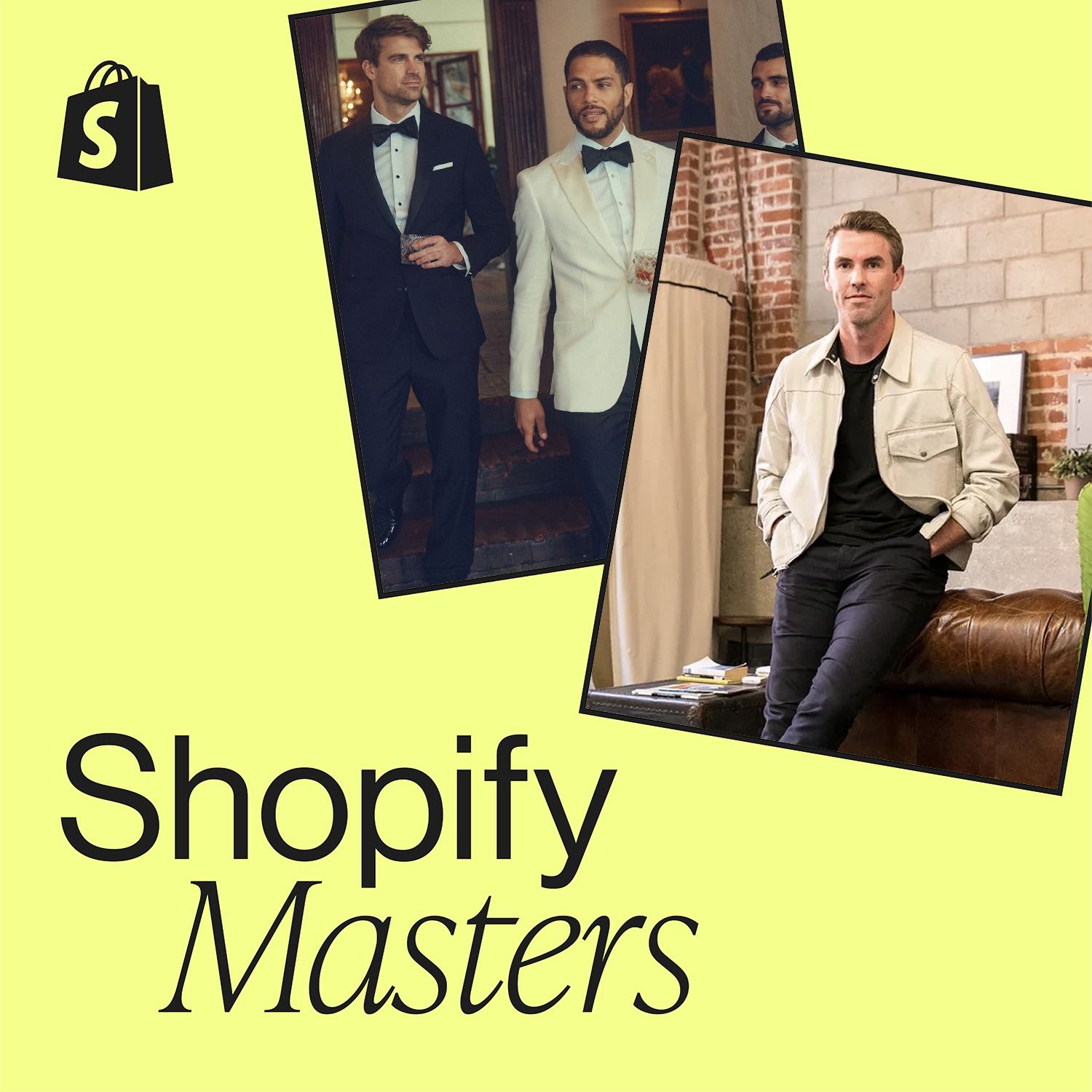
Shopify Masters
How The Black Tux Solved Formal Wear's Biggest Problem
00:34:23
When Andrew Blackmon couldn’t find a rental tuxedo that actually fit, he didn’t just start a company—he rebuilt the entire formalwear supply chain from scratch, turning a strip-mall industry into a nine-figure business with seven flagship stores and showrooms in more than 40 Nordstrom locations.
Loading summary
Transcript139 lines
- [00:00]
A
I do think this is a really, really hard business. This is like six businesses in one.
- [00:07]
B
For decades, renting a tuxedo meant settling for an ill fitting polyester suit with little to no style. Andrew Blackman rebuilt the formaware rental experience from scratch.
- [00:17]
A
We actually manufacture really high quality garments at a great price, like better than anyone in our segment.
- [00:22]
B
As the founder of the Black Tux, you grew it into a nine figure business with with seven flagship stores and showrooms in over 40 Nordstrom locations.
- [00:31]
A
The conversion rate of the stores is so high, we gotta open more.
- [00:34]
B
Andrew is here to break down how he disrupted the men's formal wear category and is tailoring the Black Tux for the future of retail. Andrew, welcome to the show.
- [00:42]
A
Thank you for having me.
- [00:43]
B
What's the origin story? You were at a wedding or.
- [00:46]
A
Yeah, so I had been in so many different weddings, been to prom a bunch of times and basically like in all these experiences I showed up in a suit or a tuxedo that was like two sizes too big and it looked like something that maybe I took out of my dad's closet or something like that.
- [01:01]
B
Which you could have done.
- [01:02]
A
Yeah, which I could have done, but I didn't want to. No offense to my dad, but yeah, that was like the industry. It was go to a strip mall, you know, try on something from a guy who smells like he just smoked some cigarettes and you're left like either on the altar or as a groomsman or at prom. These days that, you know, when you're young are like so important to you, I guess always are important to you and you're just left like not looking your best. So that was the inception of the idea is for such important days, your clothing should help you to feel confident, not work against you. And that was everything we wanted to change. And you know, we set out to do it and change the delivery method. Like originally the business was totally online. Now we have a bunch of locations, as you mentioned. But really it was about the feeling, like I really wanted myself and other people to feel confident for those important days in their lives.
- [01:53]
B
Did you tackle rental first? Because you can purchase, right these tuxedos online now.
- [01:59]
A
We only went off to rental at the beginning, but the idea was to expand after. But at the beginning that's where I really kind of saw like the missed customer experience was on the rental side. So that was how we launched. And then only probably in the last three years have we started to sell clothing. But that was more because customers were asking us, they were saying like, hey, this Thing fit me well. I really like the process. Can I just keep this one? Or more likely, can I just buy a new one?
- [02:25]
B
Going back, what is it, 12 or 13 years now that you've been in the business?
- [02:28]
A
Yeah.
- [02:29]
B
At the beginning, what was that first rental experience like that was different from what was on the market.
- [02:34]
A
On the market was kind of like I was saying, you go to a strip mall, someone measures you, and then you pick it up the day before your event and then you drop it off. So with us, the disruption was a lot around, obviously the Internet. So people would submit their sizes online. They'd submit like height, weight, body type, a bunch of different questions. We would send them the suit or tuxedo about two weeks before their event. So, like they could make sure that it fit well and felt nice and then they would send it back after. So the disruption was like in the delivery method, but the bigger disruption was in the clothing itself. So all these rental tuxedos were made in the same places. They were all polyester garments. The shirts were made out of microfiber. The shoes were literally plastic. And so we reinvented the whole supply chain as well. And our idea was like, we want a suit that feels like. Or a tuxedo that you would buy it for $1200 rather than this kind of like cheap garment. The value prop was the ease of use, but then also like the physical garment itself.
- [03:31]
B
Was there anybody else attempting to do this at the time?
- [03:35]
A
No, not on the rental side for sure. There were some other brands kind of direct to consumer brands, like Bonobos or there's a brand called Indochino that were kind of doing custom suiting.
- [03:47]
B
Yeah, they weren't rental though, right?
- [03:49]
A
Yeah, nothing rental. We were the first ones to do the rental. But at least at scale, there were some tiny players kind of dipping their toe in. Like they. It was like a mom and pop shop that would have a store and kind of try to rent it out. But we were the first ones to like raise capital and, you know, try to create this into a bigger business.
- [04:06]
B
Did you raise capital before you officially launched?
- [04:10]
A
So it was, it was kind of like a long journey. We raised some friends and family capital, and then my co founder, Patrick and I, you know, kind of we put in whatever we could and then we actually went and pitched in Silicon Valley and we, we were a little like different than most entrepreneurs. We didn't have like a 10 slide deck. We created a business plan that was like 50 pages. And we were like super methodical about this, which is funny. In hindsight, but I think was good for us to think through all the risk. And so we went to all these people, anyone we could get connected to in Silicon Valley and pitch them, and everybody said no. They're like, you know, this is an interesting business, but you guys are really young. You haven't done anything. Which is true. Like, I had. I barely even had a job before. So we got a bunch of no's. But then about nine months later, like, we decided, okay, we're just going to launch the business anyways. Let's do what we can with the capital we have. We had some really fortunate things where a bunch of, like, influential people that wrote for GQ and the Wall Street Journal used our service. Like, we really hustled our way there, and they loved it and wrote about it. So we had this really long waiting list. And then we went back to all these investors who had liked us in the first place, and we said, like, look, now we have a lot of demand. We need to raise capital to finance the supply side of the business. And a lot of them were like, yeah, you know, we're in now. That went from like, a moment where we wanted to cry to a really gratifying moment six months later.
- [05:31]
B
Yeah, I read that about GQ capturing you guys very early on and driving that demand.
- [05:36]
A
Yeah, yeah, it was super.
- [05:37]
B
I mean, what does that do to the business? Do you feel like that was like, a huge initial turning point?
- [05:42]
A
Yeah, totally.
- [05:42]
B
Because it's.
- [05:43]
A
You know, GQ would never even tell anyone to rent a tuxedo. They would be like, you should avoid this industry as a whole. Like, the industry kind of had a stigma on it. So to get a stamp of approval from them really early on. And it wasn't for nothing, like, you know, they came and they saw the garments that we were making, or actually, we were in New York. And so it was like a methodical approach. They wanted to also make sure that they were recommending something that's valuable to their customers. It's not like, overnight success, but it really gave us a stamp of approval in an industry where you need to, like, trust whoever you're working with or whoever you're renting from.
- [06:16]
B
Yeah.
- [06:17]
A
So it was really valuable.
- [06:18]
B
Did you have enough product on site after that? Gq?
- [06:21]
A
No way.
- [06:21]
B
Okay.
- [06:23]
A
Not even close.
- [06:24]
B
So, so what happens then?
- [06:26]
A
I mean, we were still also figuring out how to operate the business when that happened. Because rentals is not just you have a garment and you give it to them, it comes back from the customer, and you have to like, sometimes retailer things, we have cobblers. It's like a whole process. We have dry cleaning. Like, now we have these big facilities that do that. But at that time, we were still figuring that out, and we didn't have the capital to buy, like, that many different tuxedos. It was only tuxedos at the time. So basically it created a waiting list. Like, we put on our website, like, do you want this? But you can't get it. And so we would collect email addresses from people, and then, you know, if we were able to get more inventory, we would let them know. But it gave us a good way to figure out, like, and I don't remember how many people were on the waiting list, but there was a lot, like, thousands. And so it gave us a good way to say, hey, a lot of people like this concept. You know, we need to, like, figure out a way to get it to them.
- [07:18]
B
It feels like this business, even from the beginning, is so unbelievably complex from an execution standpoint.
- [07:26]
A
Yeah.
- [07:27]
B
Like, fast forward to today. You're in 40 Nordstrom's. You've got seven flagship stores, you've got an online business. Yeah, it's still operationally complex, but at the beginning, what did you and Patrick bring to the table? You've got the logistics piece, you've got the manufacturing, you've got product design, you've got fashion aesthetic.
- [07:45]
A
Yeah, tech.
- [07:46]
B
Like, who's tackling what?
- [07:48]
A
So we. We probably just brought, like, a lot of vision to the table and a lot of. What's the word? Like, tenacity, like, the willingness to, like, just push through when problems arise. Patrick brought a lot of value through sourcing. Like, he would go to different countries and, you know, like a bull in a China shop, try to figure out, how are we going to make this stuff? And it was so valuable to the company. I was doing a lot on kind of the brand and I was even answering phones, like, under a customer service alias. We both were cobblering shoes. Like, we're just doing, like, everything we possibly could to make this business work. Like it really was us. And then slowly we would bring on a few people. And we had this little place in Santa Monica that was basically an old garage, and we ran the whole business out of there until we could get the capital. You know, you have to kind of prove that, like, people want this service and they want to do it from you, and then you can get the capital to kind of stair step your way to where we are. I have great memories of those days. We were Just doing whatever we possibly could. And I hired all my friends, like a bunch of guys who just surf normally and at that time didn't really have a job. And so they would come and they would, like, pack boxes with us and, you know, fix shoes and fix garments and all this weird stuff.
- [09:04]
B
How does the Nordstrom partnership come together? And was that the first physical presence that Black Tux had? Or did you have a flagship store before that?
- [09:13]
A
I wouldn't call it a flagship. We had a makeshift store in that same warehouse, which was like in the back of like a little thing in Santa Monica. We started having friends and friends of friends come by and they were like, you know, I want to do this with you guys, but I kind of want to see what you have to offer. I want to try it on. Sometimes they come in, like with the bride, because it's a pretty wedding focused business. So we outfitted like this little thing into a showroom and took appointments and just became so popular. And then we, we realized that literally almost every single person that came in to try it on ended up using us. And so we're like, okay, the conversion rate of the stores is so high. We got to open more. But we were also like, we don't know how to run a retail business. We don't know how to open stores and do build outs and all this. And so I had a connection to somebody who had sold their company to Nordstrom, and we always were like, Nordstrom would be the perfect player to partner with. In fact, this is a funny story, but like, maybe one or two years prior to getting a deal with them, we put on our site, like, just go get measured at Nordstrom. Because the tailoring department would measure people in the Nordstrom locations, but we didn't get their approval on that and they sent us a cease and desist letter and we had to remove that. But two years later, we were there pitching their corporate team, the CEO and a bunch of people that we got connected to about, like, why this makes sense for us and them. And so we did a pilot in 10 stores and it went really well. And now we have a lot more. So it's like another stair step. Some luck, some good introductions. In that time, they were really active in the D2C space.
- [10:52]
B
Yes.
- [10:52]
A
But I think our model makes the most sense because, you know, they want people coming into their stores of a younger age, our customers fairly young and fairly affluent. We need a place to send people. So it's like really like the perfect value add for both parties.
- [11:06]
B
We talked about gq. But what else has been effective from a marketing standpoint?
- [11:11]
A
For the first couple years of the business, we didn't spend much on marketing. Our perspective was like, let's let the customer experience drive the marketing. And we're lucky that we're in an industry where, like, you know, you're wearing this thing to your friend's wedding or to a wedding you're in, and people are often asking about the clothing and the attire. And so it really did spread without spending a lot of money. Like, we kind of spent money on PR and stuff like that, but that was it. Those are also the days where I think you could get a lot more value with a PR firm. Once we got past that and we're like, okay, we want to grow a little faster. For us, it's a lot of the normal channels you got to think about for this industry, like, where is there some intent? Like, where does the customer need a suit or a tuxedo? Because you can't just like, blast your name out there. I mean, you can, but it's not the most effective way to do it. So for us, AdWords is really effective. Social is pretty effective because you can get really targeted and you can know when person or people are going to have a life event. Anything with like wedding partners is pretty effective for us historically, where, like with the knot or something like that, where they have like a big, like a mass of engaged people who are planning their weddings, there's like a bunch of different ways in the process to get in front of them. And then we had a lot of luck with podcasts in the past. I think that's a more efficient market now. So it's a little bit more expensive to advertise on podcasts. But, you know, when podcasts were first increasing in popularity, like I don't know how many years ago, six or seven years ago, it was almost like you got influencer marketing because you would get the podcast host to do a read.
- [12:44]
B
Yes.
- [12:44]
A
And we would always make sure that they wore our stuff before so they really understood the product and it was really cheap. And so we did that, like, as much as we could for a while.
- [12:53]
B
When did you introduce the one time purchase where people could not rent but could buy?
- [13:01]
A
We had been planning on that for a while. We were going to introduce it in Covid, but Covid introduced a whole bunch of stuff to us that we didn't want, like just a bunch of problems with our industry because there were no, you know, much fewer events during that time. So I believe it Was like about a year after Covid. Then we launched that. And that's actually the fastest growing part of our business right now. Like, I truly believe we have the highest quality suiter tuxedo at the price points we offer because we spend a lot of time on production and have a really talented team. And so also that has spread word of mouth. Like, people have started to say, for a relatively affordable price, I can get a pretty good suit or tuxedo from the black tux.
- [13:41]
B
So is that side more profitable?
- [13:43]
A
You know, the margins are pretty similar, actually.
- [13:45]
B
Are they?
- [13:45]
A
Yeah, yeah. Without divulging the whole business, like, margin profile is pretty similar between rent and buy. It just depends on the price point at which we're selling the garment.
- [13:53]
B
But you don't have the reverse logistics at play.
- [13:56]
A
You don't have the reverse logistics, but you have a higher average order value on. On a purchase. So it just. It really depends how you look at it. But we are very happy with either. Like, whatever the customer wants. We also want to meet them there. Like, if somebody wants to buy, we want to offer a product that they want. If somebody wants to rent, we want to offer that to them too.
- [14:17]
B
What happened in 2023 when you gave out your cell phone number to like 10,000 customers? Is that a true story?
- [14:24]
A
It's a true story. I don't recommend it. Actually, I kind of do if I'm honest. So at that time, you know, we were thinking about how do we reward our best customers? Basically, you know, a lot of companies will do this handwritten card that really isn't handwritten. A machine's writing it and it looks handwritten. And this was also when like, AI was kind of. Or LLMs were kind of like increasing popularity and people were using them, but people were really skeptical. Is this AI? Is this not? It was new. And so we decided, okay, let's do something where we give all of our best customers $50 to the black dot or whatever amount. Maybe it's $100, I don't remember. But let's, like, do it in a really human way and let's see how people respond. And so the human way was like, I wrote all these cards and literally my cell phone number was in there. And there was some cheeky line that was like, hey, this is actually from the CEO. Like, don't believe me, Send me a text. And so, I mean, I got thousands of texts and I responded to every single1. I FaceTimed people sometimes, and it was fun and it was interesting and people loved it. People were like, this is really engaging. And it was helpful for me because every single time I asked the customer, like, what do you think about our business? Like, what do you think about our brand? And, you know, tell me the good and tell me the bad. Like, I want to learn. And I think people appreciated that so much. And I did too. Like, I learned a ton about, like, what was landing with people, what wasn't, what they liked, where we could improve. So it ended up being this, like, big customer feedback thing for me that I could then share with our team. And then those loyal customers, like, really loved us. I still randomly sometimes get people texting
- [16:03]
B
me, like, hey, because you haven't changed your phone number.
- [16:06]
A
Yeah, I haven't changed my phone number. They're like, hey, we talked a year ago, I got to rent something. Or a couple years ago, I have another need. Can you hook me up? And I always do. So it was, like, fun. It was interesting. And I think we also wanted to prove or tell people there are real people behind this. In this age of AI, like, there's real people that think about every word we put on the site, everything we put into the garment, every point of the experience, where it's cleaned. I think it's really easy to forget, but I think consumers really like feeling like they're part of something with other people. In the end, did any of the
- [16:41]
B
feedback fundamentally change how you were operating the business? Like, could you pattern match and then say, look, this feedback is over, indexing, whatever, I don't know. And we've gotta move in this direction.
- [16:55]
A
Yeah, we have a period of time in which you need to send the suit or tuxedo back to us, like, after the rental. Oh, gotcha. It's like three days. And I don't remember what it was then, but some of the stuff that people told me is like, hey, you guys are a little too strict on when you need to return it. And even the language you use in your emails is too strict. It creates, like, a sense of kind of like, do this now or there's impending doom. So that was very actionable. There were other things, like, around the fit of the garments. That's mostly what people would talk about, like, hey, this thing fit really well. This thing didn't quite as well. So I think, like, a lot of the feedback that I got was around how to actually fit our garments, but most of the feedback was pretty positive. Granted, these were like our repeat purchasers. So these were the people who already loved the Blacktox, but most of them were like, no, I love the business. Like I use it all the time.
- [17:47]
B
How do you get people to come back? It seems to me that these events are few and far between.
- [17:54]
A
Yeah.
- [17:55]
B
So I don't know what the repeat purchase behavior looks like in the context of this type of business model. Is there a repeat purchase strategy of any kind of.
- [18:04]
A
There is, but you're right, like fundamentally it's not like a T shirt brand where you can convince somebody to repeat with you three months after you sold them the first garment.
- [18:13]
B
Right.
- [18:13]
A
Like they have to have a need and the need for like a suit or tuxedo is less frequent. So we look at it as like we're playing the long game. I think over a five year period, the likelihood for people to repeat is very high. And in any given year, approximately 30 to 40% of our orders come from repeat customers from the past. So it does drive a lot, but it's just you need more patience. Like I said, you can't acquire the customer. Expect them to rent from you day one and then expect them to rent from you again in 90 days. It's so need based that you just have to wait basically.
- [18:49]
B
Can you incentivize them through some kind of referral strategy?
- [18:53]
A
Yeah, we do have a referral program that we launched last year. We're still kind of working out how that goes. But again, even incentivization, if they don't have a need, like if they don't have an event where they need a suit or tuxedo, it's a little tough. I will say though, now that we sell garments, like that's where we can get people to repeat. And we're trying to do that by changing sort of the perception. I think a lot of people think of us as, this is just a brand that has like this rental wedding platform where you can use us for that event. And people are starting to learn like, oh, we actually manufacture really high quality garments at a great price, like better than anyone in our system segment. And so that gives us the ability to drive more repeat because you might need a shirt. Like we sell a lot of shirts or slacks more than you need a suit or tuxedo to rent. We have shirts, ties, some more casual suiting, sport coats, slacks, things like that. But they're not on site yet. That's one of our goals for this year right now. If you want to buy that stuff, you have to do it online. But we're going to implement that midway through this year. It's a huge opportunity for us. We see so many People coming into our stores so saying like, hey, I need a tie last minute. Like, guys are so last minute. I need a tie last minute, I need a shirt last minute, I need a tux, last minute, I need a bow tie, suspenders. And always we're having to say sorry because we have, you know, this fulfillment that is via our warehouses. So we're going to carry inventory in the store starting this year.
- [20:19]
B
Yeah, the last time I bought a tie was last year. I waited till the day of.
- [20:22]
A
Yeah, exactly. I mean, we literally have multiple people coming into every one of our stores every day asking for these things. It's a little bit complex when you're set up with these two big fulfillment centers to move that inventory into stores and make it available.
- [20:38]
B
How do you see the positioning of this company relative to the competition? Like you talked about Indochino, which felt early on like they weren't a competitor, let's say. But now you've got stores, you've got your omnichannel, you're selling product. Like, what does the competitive landscape look like for. For the brand for rental?
- [20:57]
A
It's pretty straightforward. You know, it's like these big box retail locations where you can rent and then a bunch of mom and pop shops. There's not a lot of competition for where you can buy. There's a lot more. I think of it as anywhere you can get a custom suit for that price range, like under $500 or maybe call it under $750. So the big competitors are like Indochino suit supply, honestly, like Macy's sells a ton of suits, Nordstrom sells suits, Bloomingdale sells suits. So there's not a ton of like singular brands that have a lot of scale. The ones I mentioned do have a lot of scale. Suitsupply in particular, that's a big competitor. The competitive landscape has. Has widened. But one of our big advantages is we bring in the customer for the rental. And so we bring them in at a young age. We know their sizes, they have a good experience with us. So in some ways our goal is to upsell our original customer rather than stealing customers from other people.
- [21:53]
B
Yeah, I think that's really smart. I was going to say they're not in rental.
- [21:57]
A
Exactly.
- [21:57]
B
You are. Yeah, that's a great entry point for the company.
- [22:00]
A
Yeah.
- [22:01]
B
And the upsell or cross sell is into a larger scale purchase at some point.
- [22:07]
A
Exactly. But we have the relationship with them. And I know from experience the rental business is what's really hard to build. Like now that we're building the Retail business, like there's merchandising and a bunch of new questions in design and things that we haven't done quite as much. But like the rental business requires tens of millions of dollars of capital to invest in the technology, the warehouse, just the sheer inventory. Retail business is so much, so much more straightforward. And so it's nice to, you know, start moving into that.
- [22:36]
B
What is the average age of a customer that rents for us?
- [22:40]
A
It's in the low 30s. Yeah, it kind of tracks to the average age of somebody getting married.
- [22:45]
B
I'm asking that question because I think like as parents you sometimes ask like, hey, my child has a graduation coming up. I don't want to spend money on a suit that they're not going to fit into. Yeah, you know, in six months we
- [22:57]
A
would like to do a little better in that area. To be honest, we haven't spent a lot of our marketing efforts there. We spent it more towards the wedding because it's a group purchase with a bunch of groomsmen typically. But I have like anecdotally, just a ton of friends in LA who use it for that exact reason. They're like my kids in high school. And I don't want to take him to this, you know, kind of mom and pop shop. I would rather use something that has higher quality and more stylish options. So I think it's a kind of like untapped market for us going forward.
- [23:25]
B
Okay, let's talk about the venture capital side of the business. So you raise a seed, a series A, a series B, Series C, I think was 2018. And you've not raised since then?
- [23:38]
A
We have raised a little bit of money since then.
- [23:39]
B
Okay.
- [23:40]
A
Not a ton, but yeah, that was basically it. We raised a seed which was from probably like five to eight different groups like First Round Capital, Menlo Ventures, like a lot of kind of well known Silicon Valley investors. And then the two biggest investors in the company since then have been Stripes Group out of New York, who are great, and tzp, also out of New York, who's a little bit more of private equity than venture, but has a growth fund. And so we've kind of stuck with that same group since we started the company.
- [24:12]
B
What makes for a good venture partner?
- [24:15]
A
I was going to say trust when you first said that, someone who trusts management. But I think trust is earned. Like I don't think a venture partner would be smart to just trust any entrepreneur. Like there's a back and forth between you and the venture partner that creates that trust. So I think Trust is important. I think honesty and directness is important. So understanding sort of what the goal of the investor is, what their timeline is, how they're going to act on your board, if they are on your board. Just like being straightforward about what their goals are so that you are their partner as the company, you can help them meet their goals with the company. So I think being honest is really important.
- [24:54]
B
Are they looking at your business and saying, this is unbelievably complex?
- [25:02]
A
For sure.
- [25:03]
B
Yeah. I just think of all the layers and it just makes my head explode.
- [25:07]
A
Yeah.
- [25:08]
B
The manufacturing, the logistics, the reverse logistics. Right. Products going out, products coming back, the dry cleaning. Have you made it all work?
- [25:18]
A
Grit, you know, basically. Like, I do think this is a really, really hard business and sometimes my partner who started it with me, he and I would laugh like, wow, we, we like bit off a lot here. This is a really difficult business. And recently I was talking to another entrepreneur who's in the same space and we were just commiserating like this is like six businesses in one. Like to your point, we have a huge logistics business. You can't use a 3 PL in this business because none of them do reverse logistics and none of them do dry cleaning. You have a brand, you're manufacturing your own products, which is unique to us. Most people in the rental and sales market are not. So it's just, it's so much that to me, it's kind of interesting because I'm very naturally curious and so I like learning about all this, but it takes a lot of grit.
- [26:04]
B
So if there's no 3 PL, then what? You are storing product in your own warehouses.
- [26:11]
A
Yeah.
- [26:12]
B
And they're physically going out from that node.
- [26:15]
A
Yeah.
- [26:15]
B
And then coming back to that same node.
- [26:18]
A
Yeah. And we manage that. Like everyone in those warehouses on our payroll, they're employees of the Black Talk.
- [26:23]
B
So how many nodes are in the US we have two.
- [26:26]
A
That's all that we need right now. So an east coast and a west
- [26:29]
B
coast basically, which is enough for all 50 states.
- [26:32]
A
Yeah. Yeah.
- [26:33]
B
That's wild.
- [26:34]
A
It didn't used to be that way. I think in this industry you needed to have a much more bespoke approach where, you know, you could have a lot more nodes, but two is sufficient when you're shipping it to the customer.
- [26:45]
B
Okay. So going back to the three day penalty or whatever it is, what happens if the product doesn't come back within three days? You find them.
- [26:53]
A
Yeah. So we've elongated that just to create a good customer experience. And we send a lot of Reminders and we're fairly lax. But at the end of the day, if you don't return it, we gotta charge you for. For it. Like, we got to assume that you decided to keep this garment. And so we charge you the price that we would sell it for. And some people actually just decide, I'm going to do that. Like, I'm not even going to tell you, but I want to keep it and I want to wear it more. Just charge me whatever.
- [27:15]
B
Is it generally a reason, like a reasonable price that you would.
- [27:20]
A
Yeah, if I step back a little bit, we have a rent to keep program, so you can tell us. I want to keep the one that I rented. So it's a little bit cheaper than purchasing new because this is a garment that has potentially been worn before. So if you don't return it, we just charge you the price that we would charge someone to keep one of the used garments.
- [27:38]
B
Where are you sourcing and manufacturing suits and tuxes and product?
- [27:44]
A
So literally all over the world, from the beginning of the business, we have sourced fabric from Italy, from Asia, from Mexico, all over the place. It just depends on the style, and we still do. We've done the cut and sew in all those countries that I mentioned, minus Italy. So it really depends on what we're making and what scale we're making it. So it depends on what is the minimum order quantity that we're trying to buy something. Do we need a more bespoke factory that can make 200 of something, or do we need a factory that can make 5,000 of something? And those are typically in different places. So I would say it's really global right now. We're making some stuff in Mexico and we're making some stuff in Vietnam and some stuff in Indonesia and some stuff in Italy. So again, just depends on the price point that we're offering it.
- [28:32]
B
How did you find these partners?
- [28:34]
A
That was a struggle. My partner did a lot of that early, early days of the business. And he, he did an extremely good job just like going to these places, pigging, backing on purchase orders of other brands, just trying to figure that out. That was tough. Over time, when you develop more scale, you have a lot of leverage. And so we have people reaching out to us now who want to work with us in this business. So we have like a lot more ability to figure out who we want to work with, which is a much different place to be in.
- [29:03]
B
If you were to source a new manufacturing partner today, how would you go about doing it? Would there be a more efficient way, assume there would be a more efficient way than having your partner just travel all over the world.
- [29:15]
A
Yeah.
- [29:15]
B
Trying to piggyback onto other purchase orders.
- [29:18]
A
Yeah. Now we have like somebody who runs this part of the business for us, who has a lot of existing relationships, has a good purview on, you know, where is a lot of tailored clothing being made and if it's not tailored, like shirting, where is that being made? When you have someone who kind of knows the ecosystem, when you figure out what you want to make, you can reach out to a lot of the potential partners, figure out costing, you know, tour their facilities, figure out what the quality looks like. So it's a process that takes time to onboard a new manufacturer. Like a lot of time. But now we kind of like know at least who the manufacturers are. Like at that time I would say we didn't even know like the realm of possibility. Like we were like, you know, like in the dark trying to figure it out. And that was difficult.
- [30:02]
B
The multi channel side of the business. I just want to understand the difference between the experience online versus in store. So for this particular business, what are some of the perhaps not so obvious or surprising ways that the in store experience has contributed to the growth of the brand? Brand? I mean, there's the touch and feel that seems obvious, right. You can't really touch and feel anything online, but you can do that in store. But besides that, what else have you learned?
- [30:30]
A
So the social element is one that I was pretty surprised by. Like I kind of naively thought we're going to be able to do this online and no one's ever going to need to go into a store. But I think because it's like a wedding, people often want to come in with the mother of the bride, the bride, the groomsmen, and they literally have a social experience in our store. And you can see like it's fun for them. They're like really enjoying it. So I think that's one thing that's really like particular to our industry though. The other is like a little bit more esoteric but like the brand experience. So we find that all the metrics in our own stores are better than online or even in our stores with Nordstrom, because I think we can control the brand. So we have like the music, the art on the walls, who we hired and how they speak to the person, what clothing they see. Like we can control all that to basically like tell them whatever message we want to tell them through kind of like all that activity. And so, and we're really Thoughtful about that. So I think that's the other thing. Like when you're in a store, you can create a feeling in someone that is a lot more like intense or evocative than just being online. Like online people are distracted, they're in their room, they're looking at a bunch of other stuff. You have only so much real estate, but when you're in a store, you have like this container that they're in. And if you do it well, I think like, that actually results in like a lot better business performance.
- [31:49]
B
It's been 12 plus years now that you've been running this.
- [31:52]
A
Yeah, we launched in 2013, so yeah, like 12 years.
- [31:55]
B
What have you learned personally through the process?
- [31:58]
A
Oh my gosh. That's a really interesting part of the journey. I mean, I've learned my weaknesses, my strengths. I've learned how important it is to look at both and to grow as a human at the pace that, you know, the business is growing. I've like learned the importance of like having support, like whether it's through like coaching or psychologists, things like that. I feel honestly like the business has changed me by giving me this kind of platform for growth. It's probably for another entire discussion. But like, I really actually think that to me, that's one of the more interesting things that I've personally gone through is like, how do I look at myself to continually challenge myself and be a better leader for the company over the 12 year period?
- [32:43]
B
Yeah, I think I did read somewhere that you said that therapy has really helped you become a better CEO.
- [32:48]
A
Yeah, for sure. Like hands down, because you don't know what you don't know about yourself. And everyone has an experience working for a leader that they kind of sort of hate or sort of don't like. And it's probably because of some unconscious behavior that leader's doing. And so I think like in therapy, trying to understand more about why you do what you do and grow out of some of that, you know, kind of young behavior is really helpful.
- [33:13]
B
Do you have any advice for early stage founders or advice for early stage Andrew? Starting a business for the first time,
- [33:20]
A
oh man, it was so fun. I think the advice I would have is like, trust yourself. That sounds so nebulous. But I, I often think like, the person who's starting the business really does understand, like what needs to be done. And when you go out into the world and you raise a lot of money and you get so many people around. For me, it was easy to like, listen to so many different voices and sometimes like, lose the center of, like, hey, this is why I had this idea. This is what this idea was. I need to trust, like, xyz or even trust myself about people and leadership and things like that. So that would probably be what I would tell people. It's a weird piece of advice, but that's what I would say.
- [34:03]
B
Well, it's great to chat with you today, man.
- [34:06]
A
Thank you.
- [34:06]
B
Thanks for being here. Andrew.
- [34:07]
A
Thanks so much for having me. I enjoyed it.
- [34:09]
B
And thank you for tuning in. If you like what you saw, be sure to hit that subscribe button below so you never miss an episode and I'll catch you next time.
- [34:18]
A
Sam.