← Shopify Masters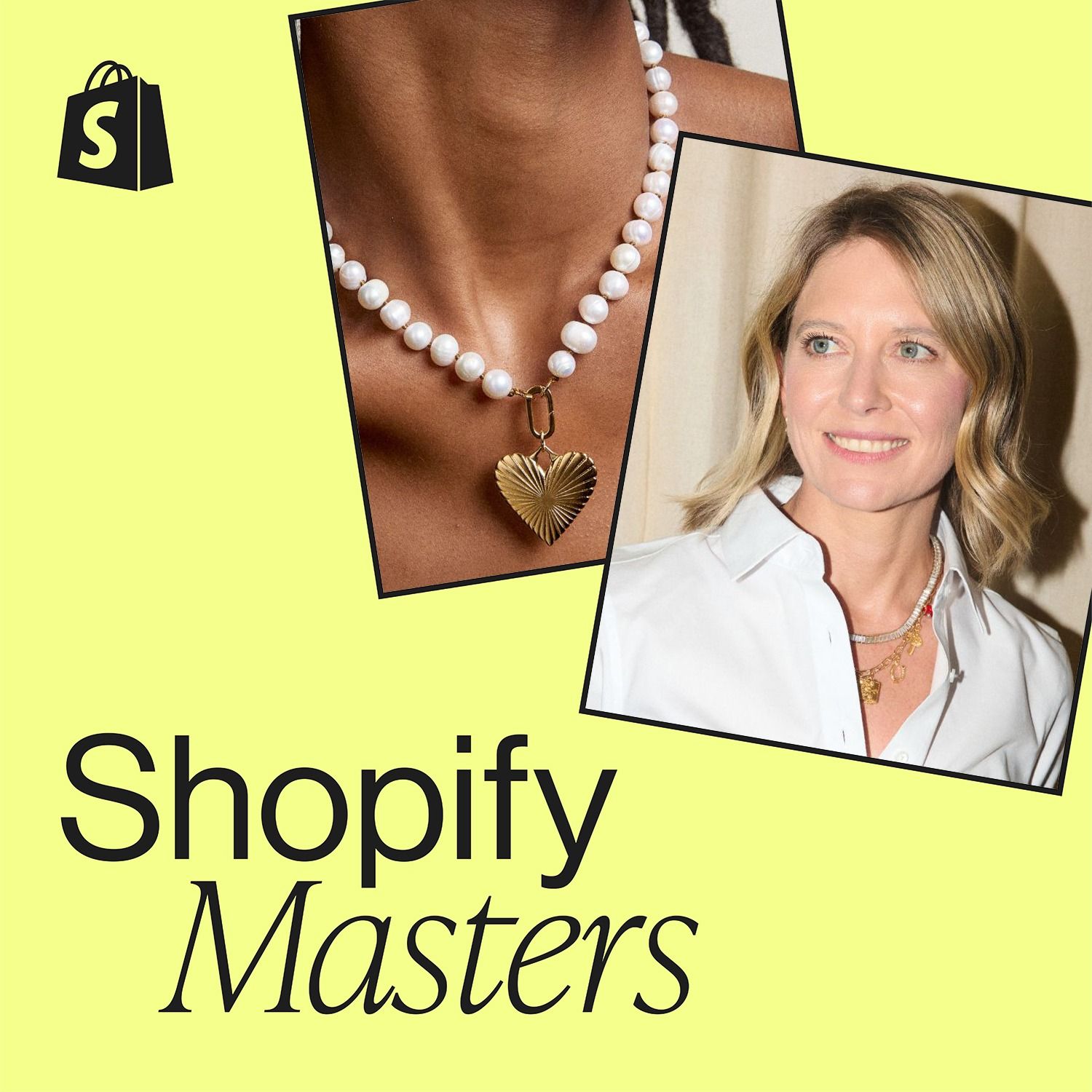
Shopify Masters
How This Jewelry Brand Charmed Its Way to $20 Million
00:29:35
When Curry Hagerty joined her sister’s jewelry brand in 2020, it was generating about $100,000 a year. By clearly splitting the founder and CEO roles and stepping out of the day-to-day grind, they scaled Hart Jewelry to a projected $20 million business with more than 100 employees.
Loading summary
Transcript48 lines
- [00:00]
A
Gigi Hadid came to our Charleston store last summer and she was photographed wearing her charm necklace with Taylor Swift. That was just amazing.
- [00:10]
B
Welcome to Shopify Masters, your companion for starting and scaling a business. I'm your host, Serena Smith. Since joining her sister's jewelry business in 2020, Curry Haggerty has helped it transform from a boutique studio to a fast growing brand known for its meaningful designs and personalized approach. With retail stores in Charleston, New York and Nantucket, and hundreds of pop ups and wholesale partners nationwide, Heart is on track to surpass, surpass $20 million in annual revenue this year.
- [00:35]
A
We can't do it without building exceptional teams and staying really true to the integrity and quality of the product.
- [00:40]
B
Heart's partner and CEO Curry Haggerty joins me now to talk about scaling with purpose leading versus founding and what it really means to begin with the end in mind. Curry, thanks so much for being here.
- [00:51]
A
Thank you, Serena.
- [00:52]
B
Heart launched in 2016. It was just your sister's business at the time. She launched these tassel earrings that went very viral. You decided to enter the equation in 2020, which we will remember is like, you know, early days of the pandemic, a transformative time for businesses both for good and bad. Where was Hart in that moment and why was that the time for you to come on board?
- [01:21]
A
So the year before, in 2019, Hart had just started the custom charm jewelry and she recognized that there was a white space in the after creating all these incredible ready to wear tassel earrings, she wanted to take the business to the next level. And she noticed that there was some amazing storytelling and meaning and quality and fine jewelry. But then when you went all the way down to the fashion category, there was just a lot of crap. And she was like, I can make something that is soulful, high quality and beautiful in this space. And so she started designing the custom charm jewelry. And in 2020, Covid came. And that time I was head of marketing and PR for an incredible luxury hospitality company on the east coast that owns hotels and restaurants and vineyards. And it was a dream career. But during COVID with all of the different guidelines and changing regulations, we were shutting down concepts and reopening and it frankly was exhausting. And my dad had always given both Hart and myself the adv that if you can be your own boss, find a way to do that. And so during 2019 and even before that, I had had access to Heart's back in Shopify. At one point I was running her distribution for her beautiful textiles when she had a different line and I told Heart, like, when you are ready to formalize this and, like, scale and build a business beyond just yourself and your assistant, let me know because I want to be a part of that. And during COVID it was April of 2020, 2020 is when she had her daughter Huguette, and she had just launched the new Mama charm, and it was exploding in popularity along with a lot of the other intention coins. Because people during COVID I think they were slowing down their spending and really being intentional about their purchases and about making these investments into modern heirlooms. So we're best in class fashion jewelry. Fully loaded necklace like mine might run between 3 and $500. So it's a splurge, but it's also something that is. It can be an impulse purchase if you want. It can be for the everyday. You know, we're not trying to be evening wear. We're for the everyday. So during COVID people were wearing a lot of jeans and T shirts, and then they could just put on a necklace that had a lot of meaning and intention. So it was 2020 that I told Hart, like, let's do this. And she was ready. And we really formalized our operating agreement. We were very intentional about where we wanted to take the business and had no idea how we were going to do it. But we definitely are a great partnership. There is an undeniable beauty to a
- [04:14]
B
business that is run by two people who are family members, whether that be like sisters or romantic partners or whatever. And there are also their fair share of challenges. Were there some growing pains when you first entered the equation?
- [04:30]
A
Heart and I are really complimentary partners. We haven't had any major tiffs. We definitely operate differently. So here's an example. We'll be launching a new charm. Let's say we're deciding between charm A and charm B. My instincts and my marketing background and just like kind of having this Rolodex of data, knowing our customers, I know what they're going to want. I can immediately just kind of decide. Heart has to go around for two weeks. She goes to the store, she asks the customer, she asks her friends. She loves to crowdsource, she loves to chat. And then we come back to the table most often or not with like the same conclusion. So we just operate differently. And I think part of being successful is just knowing each other's operating manuals. There's a fun podcast that I listen to about, like, how you can write your own operating manual and how it's best to, like, work with me or how it's best to work with Heart. And so I know as her business partner and as her sister, like how she's going to come to a conclusion and just to give her that space. And most of the time, I like to think that we're aligned.
- [05:40]
B
I've heard you say in the past too, that every visionary needs an integrator. What does that mean?
- [05:45]
A
The idea is that Heart is the soul of the business. Heart is the founder. She's the chief creative officer. She distinguishes the point of view of the brand, the product DNA, the culture. She is the heartbeat. On the other hand, my job as the CEO is to integrate. My role is to define leadership, accountability systems and operations. I like to think of myself as the engine and I can take her vision and then figure out how to scale it. So Gina Wickman wrote Traction, which is a book about the entrepreneurial operating system. And the main premise is every visionary needs an integrator. So Hart likes to think of herself as Dennis Rodman and then myself as Michael Jordan. And I love that analogy because she's like, she's just fun and can show up and have this wild style and ideas. And here I am getting up at 6am for practice. And it's different, but I have two kind of fun stories or anecdotes about that. And one is, you'll find Heart is the founder and creative director. She's on Instagram. She has this incredible world that she's building through her ideas, through her creativity, through her writing and her style and aesthetic. And she also has a wonderful substack, whereas I'm the dorky sister on LinkedIn. Like, that is my. That is my social media platform. Like I'm out there sharing white papers and job listings. Another fun story is Hart went to Marrakesh by herself for 72 hours. So she went to go get inspiration, to go source new ideas and new materials and take pictures and kind of just disconnect to be inspired during the exact same timeline. I went to Austin and Dallas to go scope out, like Hard Hat construction projects. And both of those trips are completely different. But Serena, they have the same amount of value and impact on the business. So that I think really highlights just how we're different and kind of our different roles and personalities.
- [08:11]
B
God, your parents raised you well or
- [08:14]
A
via some sort of kismet.
- [08:17]
B
It's fascinating that you guys have come to this place where that when you are separating out the founder and the CEO from each other and they're not embodied in the same person, that division of labor is so incredibly Important so that you're not stepping on each other's toes, but also so that the rest of your team has clarity around who's doing what. Right when you joined the company, it was doing about 100k a year in revenue. You're now projecting $20 million for this year. That is absolutely astronomical growth and cannot get there with a Dennis Rodman alone. What were some of those early systems and structures that you put in place that has allowed you to scale in this massive way?
- [09:05]
A
The systems that we've put in place have really been inspired by talking to other entrepreneurs. Hart and I had almost a crisis in the business in say, 2024 and the challenge was we were both wearing way too many hats. We were the bottleneck to scaling. Like we had to physically get out of the way and delegate certain jobs so that we could grow. An example would be up until last year I was doing the graphic design, the copy and sending out all of our Klaviyo emails. So I'm a true marketer at heart and I really, really love that. But that wasn't giving me time to lead and I wasn't able to work on the business. So we made a really conscious decision to take a step back, evaluate all of the different seats in the organization and where we needed to bring in more senior leadership. And my role has really evolved since joining Hart. I really feel like I had to earn the CEO title and I now go to. I'm probably in 10 to 15 meetings a week and I'm not proud that we have that many meetings. But I don't bring my laptop anymore. I used to be the person who would come into a meeting and I would be firing off a slack, responding to an email, downloading a report. And now I really feel like my job is to listen and support. And so any advice I might give to other leaders is just like when you have FaceTime with your employees, really be conscientious of that one on one or those group meetings to listen. We run our business like an inverted pyramid where all of our employees are at the top and then our managers and directors are at the bottom so that we could really help them find ways to get their job done in more effective and frankly, fun, creative ways. And one thing that I learned from working in this hospitality company is in order to scale, in order to have a lot of different teams and especially as we open new doors in our brick and mortar expansion is you have to have really strong SOPs and scaling creativity is really challenging. And one of the ways that we do this is through hiring smart. So the way that we hire is really based on our values. And our main values are being curious, having integrity, having respect, and being proactive. And the way that we've been able to scale creativity that way is if we're able to hire on that, that we can train everybody on the different systems and SOPs and how to check out an order. But you can't teach a lot of those values and you can't teach emotional intelligence. And that intelligence is so important to our brand because we're not selling a commodity, we're not selling a product. We're selling a connection to our customer. We're selling storytelling and meaning and personalization. And at the end of the day, if a customer walks out and they don't buy jewelry, that doesn't matter to us. How we measure success is how we made the customer feel.
- [12:20]
B
I love that. And it's a really fascinating thing to hire for these sort of more intangible, what I would call like, softer skill sets versus necessarily like the deep tactical experience. How do you assess that in the hiring process? Is it intuition?
- [12:36]
A
There is a lot of intuition. I mean, we think of it a lot as if you were casting somebody for a role. And we're looking for somebody who has, especially on the retail side, somebody who has a lot of authenticity, who has a lot of individual personal style. We're looking for people who are really creative, who are good conversationalists. So on the retail side, you know, we are a southern brand with global aspirations. And that nature of hospitality is just so inherent to our brand DNA. So that is first and foremost, like, so important. And I think once you hire on those values, everything else can fall into place. And if not, you have at least have a candidate or an employee who you can invest in. And we really believe in on the job training. One of the interesting things about running a business from Charleston is we don't have a large E commerce talent pool to pull from. There are a few incredible brands that are based here, but we don't have the same market for talent here. And so we're so proud too, that a lot of our senior directors have been homegrown. I'm just thinking about our director of operations. Maria started as a manager and she's like now leading a team of 30 people. Or Audrey was working at the store and now she's head of HR and a shout out to Bea, who came in as a jewelry assembler and is now as head of our national retail expansion. So it's really, really Cool. And I think that part of that too is that because we don't have experience, we don't have any of these like outside expectations or biases. And it's allowed us to really create our own path and not be ashamed of, scared to just try new things.
- [14:32]
B
It's gotta be really gratifying too, to be able to take people on the journey of lifting them up and really helping them develop careers that they might not have had otherwise.
- [14:43]
A
Well, I think it just goes back to the jewelry. You know, we're all about empowerment. And I think that we, that our people are way more important than our product, but they go hand in hand. And if we can translate our values into the way that we run our company, that will show through authentically through the charm Jewelry.
- [15:04]
B
How big was the team when you first came on board and how big is the team now?
- [15:10]
A
When I joined, it was heart and one person who was managing wholesale and operations. And so there were three of us. And Hart and I literally shared this like dining room table that was put into a 300 square foot office and we had all the inventory there. It was wild and we are so proud. Today we have over 100 employees. Wow. Okay.
- [15:33]
B
Yes. That is transformational growth. It will also very much change the structure of a company. I think hiring is one of these, like incredibly difficult things to nail. And the path to success is paved with a lot of mistakes. What were some of the mistakes that you made about hiring in the early days that you've learned from the biggest mistake?
- [16:01]
A
And it probably was more of something that small businesses have to do to evolve. But we were having a lot of multi hyphen position, so sales and retail manager or inventory and fulfillment manager. And it was really challenging because we were asking people to do so many different jobs and it kind of didn't allow us to hyper focus on the candidate. We needed a one size fits most applicant. And as we've grown, the job descriptions in and of themselves have become a lot tighter. And so we have a lot more clarity on our needs and we have a lot more clarity on what skills we need to support that role.
- [16:51]
B
Something that it seems like is very clearly of paramount importance to you guys is this like deeply personal connection with your customer. But you've also grown from feeling like a really homegrown mom and pop or sister and sister business to now something that has a global footprint. How do you retain that personal connection with your customers wherever they are, whether it's on the retail floor or via a WholeSale partner or D2C on your website without it becoming diluted as you become massive.
- [17:25]
A
I think at the end of the day, the jewelry is all about the customer's personal story. So as long as we can be a vessel for her to self express or to have her storytelling on her necklace, then I think that we can continue to stay really connected. We want her to put on her necklace and feel her highest sense of self and charm. Jewelry is inherently the system that you add to over the years. And one of the coolest things is we have a really high customer return rate. And when a customer comes in, it makes us so happy if she just even buys one charm and then continues to build as her life builds. So we have a lot of women come in and they start with a heart and then they come in and add a husband's initial and then they add the mama charm. And it really grows with them and it's really fun to be a part of that journey.
- [18:23]
B
It sounds like you see that sort of sense of evolution also reflected within the structure of your business as well.
- [18:31]
A
One thing that we're really proud of is the custom charm jewelry look. But we've also really expanded our ready to wear collection and that has become a testament to our customers looking to us for the full look. So we just launched this incredible bezel collection. So we have these beautiful earrings and tennis necklaces and tennis bracelets and we want to be the everyday jewelry for the modern, chic woman.
- [19:01]
B
As I mentioned, when you joined 100k in revenue a year, now you're on track for 20 million. Has it felt like a somewhat linear upswing in growth or have there been some really profound inflection points over the last five, six years?
- [19:22]
A
So when Hart founded the company, it really was intended to be a direct to consumer e commerce brand. And we ended up signing an office lease on Upper King street, which is the retail corridor of Charleston. And we're pretty far north on it. We're somewhat of a destination and it's actually great because it's for really high intention shopping. Like people come in and we get great conversions. But one of the really big changes and swings was when we opened retail. And retail has really surprised us. Retail may outpace e commerce this year. We're really bullish and it also has the halo effect. So when we're able to open in these new markets, it's a plus effect of having e commerce exposure. But opening the Charleston flagship was a huge pivotal point. Another major moment for us, we're so proud, is Gigi Hadid came to our Charleston store last summer and she was photographed wearing her charm necklace with Taylor Swift. And that was a total like I'm dead moment. That was just, just amazing. And sales that summer really showed for that. And so we're continuing on retail. I mean we're so excited to be testing new models. We're opening in Nantucket, which is a seasonal model. So the stores on the island are typically only open six months out of the year. We're trying to get to Charlotte this year and also Texas. So retail has been an incredible opportunity for growth for us and we definitely have seen incremental revenue from that investment.
- [20:59]
B
I understand that you have a somewhat unconventional retail model in that you don't necessarily invest in long term leases and expensive buyouts and build outs from jump. What is it that you're doing to baby step your way in?
- [21:15]
A
Well, there are three phases to get to the long term lease model and I feel like this could really be replicated for small businesses. And we still feel really small and we're still packing suitcases and doing shows and events like that. So the first phase is what I call just local events. Hart and I would set the alarm for 6am we would go hit like concrete and like selling custom charm jewelry and spreading the word. Now we say Hart and I joke that like we don't do events on concrete. Like we just like that's where we graduated from that. And the second one is we do a ton of trunk shows. So we have an awesome team. Grace, Jillian and Erin. And they travel full time across the country for pop ups and basically shop in shops. And this allows us to support our wholesale account. So they're going to graduate Sloan and Oklahoma City or to Oliver Boutique in Wilmington, North Carolina. And we have really strong relationships with these boutiques. And our most successful boutiques are the ones who are often women run and they invite their friends and they have community. So it's a lot different than popping up at a Reformation or a Cezanne, which we also love to do. But these people like really bring in their friends to shop. And then the third approach is these short term leases. So there are a few companies out there like Leap and Parasol Projects that allow young growing businesses to kind of get their foot into retail. And the way that we got our start into retail was through WS development. They're based out of Boston and they have a concept in Seaport called the Current. And it's basically a series of 300 square foot containers and they invite brands to come and it's like a Retail incubator. So we were invited to go for three months and it really forced us to learn. Okay, we had our Charleston store, but how do you hire out of state? How do you get a business license? How do you open a store? How do you merchandise a store? How do you take something that feels so personal? Because we're literally sharing office with the flagship and like let it grow. And so that was just such a great opportunity for us. And we're continuing to explore short term leases because the reality is if you're not signing a short term lease, the alternative is a 10 year lease. And that's when we're putting our personal like mortgages on the line. But there's so many great models for brick and mortar and there are a lot of ways for small businesses to explore it without making it a huge investment.
- [23:57]
B
Has the brick and mortar in Charleston versus New York, for instance, taught you something different about your customer?
- [24:07]
A
Yes, the customers really vary by location. And the Charleston woman loves to get dressed up, she loves to go out, she loves to make a statement. The New York woman loves the gemstone collection, she loves the bezel collection. We definitely, definitely buy deeper into certain styles for certain markets. The Nashville customer loves color. And also markets have different price points as well. So we're constantly re merchandising the display in stores to speak to the location and the woman shopping there.
- [24:42]
B
You said that you took some time to take on the CEO title, that you wanted to feel like you had earned it. What made you feel like you'd gotten there?
- [24:52]
A
Even to this day, I feel like I'm still proving my value as CEO or proving my title because I do think it is such a big responsibility. But I'm really proud of it. And it felt right as soon as we had signed a 5,000 square foot lease for our headquarters and our fulfillment, which we all do in the same building. And that was the moment where I put on my CEO hat.
- [25:19]
B
What does it mean to go from working in the business to working on the business?
- [25:24]
A
I like to think of myself as a full time integrator right now than a taskmaster. And working on the business means I'm looking at our three to five year plan. I'm spending a lot of my time thinking about the future and I'm thinking about systems and thinking about processes or even as small as marketing campaigns and how they can live three to five years later, how we can duplicate them down the road versus being a taskmaster and being in the daily grind and working on the business really is kind of a zoomed out focus and I think it's main responsibility is just supporting our leadership team.
- [26:09]
B
When you are somebody who has built your career being deep in the details and in the trenches and you have to make that transition to that more zoomed out, deeply strategic 30,000 foot view, how do you get there?
- [26:24]
A
The Vision Traction organizer has been really integral for us to map out where we see ourselves in three to 10 years. So Hart and I have a annual leadership meeting where we write down all of our goals and usually have about 10 objectives for the year. And a lot of that might be on fine tuning supply chain, diversifying supply chain, signing new leases. So that vto, which is again also part of the entrepreneurial operating system has really given me a template and structure to think about that.
- [27:03]
B
You said something to me in another conversation that really struck me which is that at heart you always begin with the end in mind. What does that mean both in your day to day decision making and what
- [27:16]
A
does that mean for the long term
- [27:18]
B
trajectory of the business?
- [27:20]
A
I have a sticky note on my computer that says begin with the end in mind. And I don't like to start any meeting, any marketing campaign without really understanding what is the purpose, what are the objectives and how do we measure success. And I feel like when we come together in our marketing or operations meetings with that mindset, we're so much more efficient and everybody is aligned. Like what is the actual goal? The irony is that with the business heart and I don't know what our goals are, we don't know what the end is. We just know that what we're good at right now is creating best in class fashion jewelry with high quality and personalization, meaning, storytelling and intention. And we're really passionate about creating awesome teams to help us grow.
- [28:10]
B
To finish this off, what are some of the mantras that you're living by these days?
- [28:15]
A
My favorite right now is leap and the net will appear. It's all about taking risk and just going for your dreams and not worrying about the safety net like you'll figure it out. Some other ones that I love are Amor Fati. We have a new charm coming out and that translates to Love of fate is a literal translation. But the idea is just to love your life and accept your fate. And I think there's something really powerful about that. And oh my absolute favorite one is Life is the best party I've ever been invited to. I love that. I will be thinking about that for
- [28:56]
B
the rest of today. Thank you so much for being here, Curry. This was wonderful.
- [29:01]
A
It was really fun to chat with you.
- [29:03]
B
Shopify Masters is produced by Alicia Clark, Gogo Zogar and Schwang Esther Shan. Our engineers are Matt Schwartz and Miku Beitlam and Rachel Reich is our senior content lead lead and I'm your host, Serena Smith. Come back every Tuesday and Thursday to catch a brand new episode of Shopify Masters. And be sure to check out our YouTube channel for video interviews. Until next time, thanks for listening.