← Shopify Masters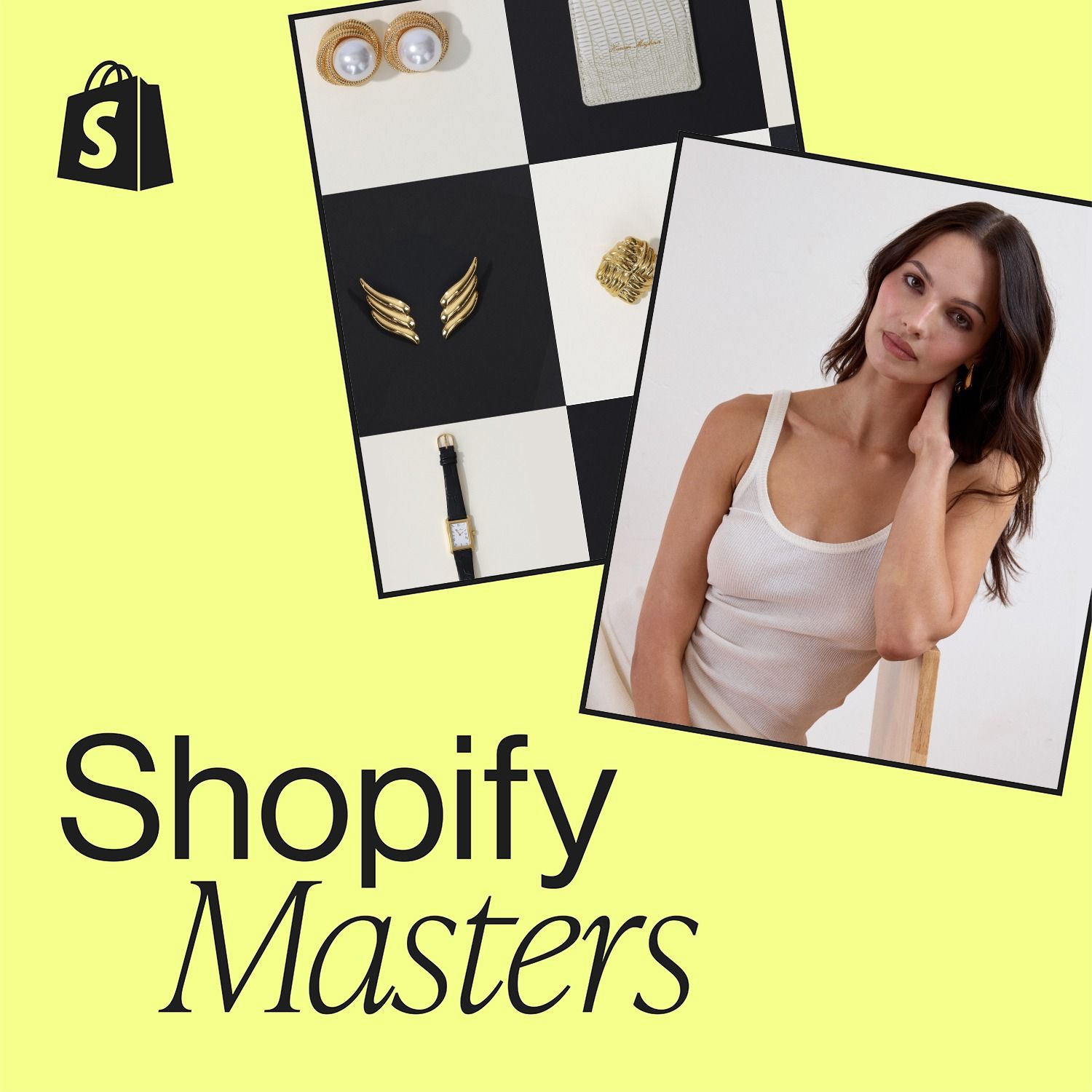
Shopify Masters
I Scaled From Handmaking Each Piece to $10 Million in 3 Years
00:32:37
Heaven Mayhem founder and creative director Pia Mance built a $10M accessories brand by turning customers into co-creators with a bold community strategy.
Loading summary
Transcript94 lines
- [00:00]
A
When I feel like a mess, that's Mayhem. When I add jewelry, it's heaven.
- [00:09]
B
Heaven Mayhem is turning heads in the fashion world. In just three years, PM Mance has grown from hand making jewelry to building a $10 million accessories empire.
- [00:17]
A
We're designing for the people that are buying the brand, so why not listen to them to inform our next designs?
- [00:22]
B
With celebrity fans like Hailey Bieber and Sydney Sweeney, Heaven Mayhem's community isn't just loyal, they're die hard devotees.
- [00:29]
A
Influencers would buy it, we went on retailers, we a couple of good press articles, every tiny bit helped a lot. But I wouldn't say one single thing was our silver bullet.
- [00:37]
B
Each time Heaven Mayhem launches a new collection or hosts a pop up, lines overflow with eager fans and their social media lights up with viral excitement. The success is thanks to Pia's talent for building an immersive brand experience that connects deeply with her fan base. Today we're going to unpack it all and learn how Pia built a brand that's truly beloved by a new generation of consumers. I'm your host, Adam Lavinter and this is your companion for starting and building a business. Welcome to Shopify Masters.
- [01:04]
A
Pia, thank you for having me. I'm so excited.
- [01:06]
B
So take me back three plus years ago when you have this idea, this isn't just about the product, right? You have this whole vision for a brand, for a whole world really.
- [01:16]
A
I grew up modeling and I was always on set with founders, creative directors, all of that. I also grew up, me and my husband have been together since a really young age and he had a business. So I would sit at his family table, dining room table, listening to them talk about business and all of these things. And I would constantly have these thoughts like that's what I want to do for myself and this is how things I would do differently. And I wanted to create this world where you would step into and you're not just getting a product, but you're getting an experience. It feels like something you belong to. And I know the word community is thrown around like a buzzword and everyone has to say it these days, but it truly feels like a community that you're a part of and belong to. And you get access to events and content and styling advice and friends and all of it. So that's kind of what I wanted to build and I always wanted to have this brand and world of my own. And then ultimately I started having.
- [02:03]
B
Do you think about specific pillars when you think about the brand overall? So there's product, of course, there's the community. Then. Do you have these other pillars that you think about when you're sort of like putting this on the back of
- [02:16]
A
a napkin when you put it like that, when you say pillars. No, I don't. But then when you actually dive into it. Yes, of course we have pillars. Content for us is huge. Events for us is also huge. And then community, I think, like I said, it's thrown around, but we really try and dive into, like, what can we provide for our community? How can we give back to them if they're liking and commenting on our content? If they're purchasing our product? What more can we give them? So I think they're our real pillars is product, content, community, and events.
- [02:45]
B
What makes the brand so distinct? Everyone knows that these earrings, for example, are Heaven Mayhem.
- [02:52]
A
Yeah, but there's no logos.
- [02:53]
B
Okay?
- [02:54]
A
That's a tiny little logo on my watch. But often people be like, oh, Heaven Mayhem. People will DM me and say, oh, I met a girl in a Pilates class yesterday because she was wearing. They know the name, the baby, not earrings. And I brought it up to her. So I think it's just our content and our distinct brand. We've really carved out this distinct way that we take content. And I couldn't even put it into words for you or replicate it myself. Like, if I was to start another brand tomorrow, I don't know how it would replicate that. But it's just that distinct brand identity that we have that we just don't veer from, and people just know it's us.
- [03:27]
B
Where does the brand name Heaven Mayhem come from?
- [03:31]
A
So when I was starting this brand, I was thinking of a million different things. And I think often people get really stumped with starting a brand name. I always say, once it's a name, it's a name. Like, if you told me you wanted to start a brand called Peaches, I'd be like, I don't know about Peaches, but Apple's the biggest company in the world, so I was really open to, like, any words that I liked, and I was writing down a bunch of things. And then obviously, you have to make sure it's available. So I found a couple of combinations that I liked. And the reason I liked Heaven Mayhem is because I personally felt when I feel like a mess when I'm. My hair is messy, I just, like, feel not great. That's Mayhem. When I add jewelry, it's heaven. I felt like adding jewelry was my final step to feeling ready for the day. And even, like, your wife probably and people listening would understand this. You're not wearing a big necklace and big earrings around the house to lay on the couch. Like you're just not, it's like not super comfortable. But you add that final piece when you're ready for the day. It's like heaven and you're ready to go. It really shows the world you're showing up for yourself. So that was the meaning behind the name and it's an oxymoron. I think. It works really well and like represents the brand.
- [04:32]
B
And you started with earrings?
- [04:34]
A
We started with necklaces. Okay, so necklaces was our first product. That's what I was hand making. I went all across L. A, Went to flea markets, went downtown, found some on ebay. And I was handmaking these vintage pendants that I was kind of like recreating using pliers a little bit, and then hand tying suede cord and then packing all of the orders myself. And I did drop 1, 2, 3, maybe even drop 4 with 20 unique pendants. They were all one offs. And then finally for drop five, I got my hands on some dead stock product which was one circular pendant. And then that ended up taking off as a bestseller. And from all of the revenue that I made on that product, I was able to put it into a PO overseas. And then we started on earrings, and now we have like a whole plethora of products.
- [05:15]
B
How did the first cohort of consumers, specifically let's say online consumers, how did they first become aware of, of this brand? Do you remember like the first month, first two months of this business, what that looked like?
- [05:28]
A
So I was posting it myself on my personal socials. I think I had around 45,000 followers. And then I'd made her have a mayhem brand account, but I didn't even follow myself. I didn't want anyone to know it was my brand. So I think that's a good lesson of people listening. Like you don't necessarily need to have a following. And I was just wearing it and promoting it. Yes, with my following. But my following wasn't like a die hard like converting following. They were just interested in these one off necklaces. And as soon as someone clicked on the and like to post, I would DM them straight away like, hey, so you liked it? Are you interested in purchasing it? I was after every sale, like really wanting to connect with every single person. And then that's how it slowly grew.
- [06:07]
B
Do they begin to talk about it with their friends? Do they post on socials? Is that important to get some of
- [06:14]
A
that word of Mouth going, yes, that is beyond important. So I launched the brand in June. It started, you know, slowly picking up a little. A little. And what I found was myself as an influencer for the brand didn't necessarily drive sales straight away, but it drove other people to become interested in the brand. And so, of course, I had a couple of people who were then interested in purchasing it straight away. But I also had other influencers and creators who would message the brand and say, oh, I love it. May I have one for free? And then I'll post. So I would gift them out as well. And then that is how I was able to get a network of people to start organically posting and talking about the brand, which helped unbelievably.
- [06:51]
B
Going back to what you were talking about at the very beginning, when you were thinking about the brand, the world, the community, the content, the product for you, what was your strength? Are you a design person? You design first. Are you content first. Like, how do you think of yourself as an entrepreneur?
- [07:11]
A
My strength of an entrepreneur is, and I hate to toot my own horn, but ideas like, if you tell me, oh, I want to start this business, I would love to sit with you for an hour and think of a million ideas and what you should do. And that is my strength. Content is my strength, and branding is my strength. Right now in my business, I have to do everything. So I do do majority of the design, majority of the content marketing, branding. But if I had it my way, and I think in a perfect world, in a couple of years, I will fully just focus on branding and the
- [07:41]
B
ideas talk to me more about community. So as the brand grows, the community grows.
- [07:47]
A
Yeah.
- [07:47]
B
And to your point, yeah, that term has become a little bit buzzy, but still, I think an important pillar of one's brand strategy. So for you, how do you think about community now and the next phase of it for Heaven Mayhem. And what do you think is important for founders to learn when they're thinking about building a community under their own brand?
- [08:05]
A
Yeah, I think community is everything because community is essentially just the. The people around the brand, and that's who's engaging with the brand and the customers who are buying it. If you don't have these people, you don't have a brand because no one's buying it. So I think it's really important to list customer service, feedback to social media, comments to everything. And we've just taken it a step further in that we invite our community to our office to try on the product first. We do a little coffee Catch ups and matches so that we can connect with them. They can meet me as the founder, they can meet other girls on the team and we can all just kind of like be friends and they can feel closer to the brand. And we like to kind of provide them this experience with free coffee or matcha or we've done girls nights out where we invited I think 150 community. We had some influencer, some customers and we just had a huge girls night. Like drinks were on us, we had pizzas, we had fries, we had loads of content opportunities, we had a photographer, we had like cute little details so they could do their lip gloss and take photos and it was just such a cute vibe. But that's purely just like to give love to our community. We don't ever sell a product but then in turn they then hopefully in the future want to buy our products but then help us choose what to release next. Help us choose like, hey guys, do you like this shape of sunglasses? Do you want more earrings like this? Like we're designing for the people that are buying the brand, so why not listen to them to inform our next designs? So I think it's like a very two way street. And while we're trying to provide the best experience for our community, they're actually also helping us a ton as well so that we can provide a good experience.
- [09:32]
B
So you're in a way using these events or these live moments as almost like customer feedback opportunities. Yeah, to inform product development or process.
- [09:41]
A
Process and content. And what influences should we work with? Or for example, when we launch specific products, we'll do a lead up like a Runway of teasers and launch. So we might do some teasers for five days. We might announce it on the 20th. Hey, the drop is watches. And everyone goes, oh my God, I can't believe it. And then on the 30th, we release the product. But then we talk to our community like, hey guys, what do you think of that Runway? Like, was it too long? Because some people just want to see it and buy it or other people want to plan their purchase because they wanted to know exactly how much it is and they want to get paid. And so we get really helpful insights across all these different aspects of the business. And you know, then we can apply it. And we also do, as well as our community events, we do a monthly concept that we call Conversations in Heaven. We always going back to the world, we always like to relate things to heaven. So we'll say like angels or we'll use angel numbers like 2 to 2. When every single tiny piece of content or even the mugs in our office are branded in a way that you kind of is stepping into this world. That's what we mean by world. But we do conversations in heaven once a month. We sign up, they sign up and they come to this zoom. We go through our recent launches or what's coming up and kind of show them like special information and then we ask for feedback, like, what can we do better? We always say, whenever I ask for feedback, I say what can I do better? Rather than what did you think? Because I find like if you say what did you think? People aren't willing to offer up constructive feedback as much as if you say, what can I do better? And we always ask so that we
- [11:04]
B
can improve these ideas for these community events, these activations, is it coming from you specifically? Is there like a defined process now or blueprint for putting on these types events?
- [11:19]
A
There is a blueprint now, but I am always changing the blueprint as well. And I would say 99 of it comes from me. And that's what I'm saying. That's my superpower of like, let's do this, let's do that. And it really like, I know what to do, but you know, sometimes when we run into operational issues, that's where I'm like, please can someone help? But these ideas is where I love to play. The blueprint is we do event concepts, so we'll do Heaven Bar. And that's popped up in London, Australia, Melbourne, Sydney, Austin, New York, Louisiana, a couple of different place, Dallas. So we take this one concept to a lot of places. So now, for example, if we're planning one next week in la, I don't really need to be involved. We have all of the products. We have branded coasters and mints and matches and a sign and all of these things that can all be handled without me. And it's like a rinse and repeat process. But now we want to change up the blueprint and make it even better. So then that's when I would step back in.
- [12:14]
B
Gotcha. Okay, let's shift to the design and quality of the product, which to this point, I mean, it's obvious that you spend so much time thinking about design and design quality and manufacturing and you had your hands, literally had your hands on this product for so long. And then the business grows to a certain point where it doesn't make sense to have you as the founder continue to sort of like tie the necklaces or the bracelets or whatever you're doing by hand. You've got to outsource. Talk to me about that evolution, that process, and how you've been able to maintain the quality of the product as the business has scaled.
- [12:50]
A
So it wasn't really a problem of maintaining the quality. The original pieces were vintage, inspired, and so they were kind of secondhand in nature. So, you know, with that can come some tarnishing or something. So then when I was to move to a factory, I wasn't really worried about the quality, you know, changing at all. I also lived in China for a couple of months at one point. I'm aware that the factories there are really good. It's their specialty. They can do it better than me. So I wasn't really worried about that, but I was worried about, you know, my ability to continue the product line myself. Like, there was no way I was going to be able to weld earrings and do that. So it was just time to switch to a factory. And it was like the best decision ever because I could start putting these ideas in my head into actual products.
- [13:32]
B
Do you source from one specific manufacturer?
- [13:36]
A
We did at the start. We have one, and now we have maybe 10. But we have so many different product categories, like, for example, our earrings and our watch factories. Completely different. It probably could be the same, but then we have book boxes and laptop cases. So all of these product categories have one or two core factories. And then we also have a couple of other different factories we'll play around with.
- [13:56]
B
What's the story about the laptop case and this influencer named Becca Bloom, was it?
- [14:02]
A
Yes. Beck, do you know Becca?
- [14:04]
B
I mean, I don't personally do a little bit of research. She's a famous TikToker or something like that.
- [14:09]
A
You live on LinkedIn. So let me tell you about Becca. Becca blew up last year or the year before. She lives in San Francisco. She's the sweetest girl, and she is one of the wealthiest people on TikTok. So she'll do day in my life of what my cat is eating. First up, caviar for the cat. For the cat. Or, for example, let's open my new china or, look what my chef's prepared. But she's the sweetest girl. So people aren't going like, what the hell is this crazy world you live in? People love it. People absolutely adore her. And she did a TikTok saying, hey, guys, I wanted the Heaven Mayhem laptop case so bad, but it didn't fit my laptop. So I had to buy a new laptop, and it went viral. She grew so fast. I think she maybe had half a million followers at that time. And it went so viral.
- [14:53]
B
So.
- [14:54]
A
So then obviously we jumped on it, and we said to her, let's do a giveaway. She replied, and then we did a giveaway. So from that. And also, our laptop cases were already taking off, but it just, like, blew them up, and we honestly still can't keep them in stock.
- [15:06]
B
Wow. But she was not the first celebrity or influencer that got involved with your brand.
- [15:12]
A
We've had so many amazing celebrities wear one. Like, I guess, famous story, but I feel bad because everyone always mentions it, and Hayley's not the only person that's worn it. But Hailey Bieber wore the brand early on. I actually saw her at a coffee shop, and her friend had bought. Bought a pair. So I went and said hi. And then I said to Hayley, like, have you ever won anything? And so she ended up wearing the brand, which was amazing. She was wearing the earrings I'm wearing, but the bigger size. We've just had so many people like Emily Ratajkowski, Sydney Sweeney, loads of celebrity stylists, loads of huge influences. Alex Earl wears it all the time. Like, in loads of her Dancing in the Stars vlog, she's wearing our sunglasses. So we see celebrities wear it again and again and again, and it's so exciting.
- [15:50]
B
What do you think is the role today of celebrity influence on one's brand trajectory? And I ask you the question, because I think a lot of founders out there think that, look, I've got this brand, I've got this product, and if only I have this big celebrity to, I don't know, do a post or help see the product or whatever, then I can 10x my business. And so they're. They're almost thinking about it as, like, a necessary requirement for scale or for growth versus something that happens organically.
- [16:24]
A
Yeah.
- [16:25]
B
Like in your case, I don't think you were thinking about, like, I must have Hailey Bieber wearing my product for this to be successful. You're just thinking about the brand, the products, the experience of the community, and
- [16:35]
A
if it happens, it happens 100%. I definitely wasn't thinking I have to get on Hailey Bieber to be successful. But I did think, I'm sure Hayley will love these because the earrings are perfectly suited to her style and they're super cute. I think often people think getting your brand on a celebrity is your golden ticket and it will change everything. But I can tell you, even today, the biggest celebrities in the world wear our product, and we don't even see one extra unit sell that day. You know, we have some units online that are slow movers and we might sell like five a week and the celebrity wears it and we still sell five a week. So nothing is that crazy about celebrity. I think it's a really nice halo effect. Same as press, same as influencer. And I think if you're doing everything all at once, which we did, we had it on Celebrities organically. We seeded to influencers, influencers bought it. Our price points are really sweet. Price point where if you love the product, you can buy it. It's not like $2,000, it's under a hundred dollars for most products. So influencers would buy it, they would link it. We signed up to affiliate network so influencers would get commission. That helped a lot. We went on retailers like Revolve. That helped a lot. We had a couple of good press articles that helped and then every tiny bit helped a lot. But I wouldn't say one single thing was our silver bullet.
- [17:46]
B
There's so much there. Let me try and nitpick out a couple of points. So the first is press. So you guys have been in Vogue, you've been in Forbes, a ton of earned media. Do you think of media is just like a happy bonus or are you pursuing these outlets and trying to get pressed that way or how's it working
- [18:06]
A
for a product launch? Like hey guys, we're just like a quick blast like here's our new product launch and hopefully it's in some shopping roundups. That's a way a lot of these publications make money is by linking a product and earning commission. So with in their best interest to link a product that is going to sell well. And it's in our best interest to be in a roundup in Vogue. So it's like a nice win win. But apart from that, that's just a quick, you know, send out. It's like take it or leave it and I mean sure fingers are crossed but like we don't really give it a second thought. We don't chase after anything. To be honest. Everything has become such a like nice progression with the business. We're not chasing after any of it. But I will say every tiny bit helps. For example, I got Forbes 30 under 30 last year and thank you. It didn't change the business. It doesn't change anything about my business. But it just slowly I noticed in my inbox people reaching out, hey, I saw you on Forbes 30 under 30. So my sales don't skyrocket. But slowly this Perception of your business starts to shift and you become more legitimate. So I think after all of this time, sure, a little bit celebrity Haley B. But press this, this, this tiny things multiply for your sales, but also just your brand perception.
- [19:15]
B
So there's no intention to then capture or leverage a piece of virality, let's say. So if a celebrity say is like Hailey Bieber is seen wearing your earrings in a coffee shop, you don't feel the necessary need to then sort of like capture that in some way or leverage that moment in some way and take advantage of it or do you?
- [19:38]
A
We do. Because if Hailey Bieber or Kendall Jenner or whoever is wearing the earrings, we want to post about it because we're so excited. Like everyone in the office is obsessed so we want to post about it. But it's like a double edged sword. One, we don't want to become reliant on these things. We want to stand on our own two feet going back to the world we're building. So we don't want to become that like Hailey Bieber's favorite jewelry brand. Yeah, of course, that'd be amazing. But you know, we want to stand on our own two feet firstly. And then secondly, it's also illegal. Like you can post the celebrity wearing it but like we can't, you know, run a ton of ads and make all these claims and have them all over our website. Like it's just not legal to use their name and likeness like that. So I think it's like a quick post and people can resonate with it or not, but then we kind of move on.
- [20:23]
B
Let's talk about product extension for a moment. So you started with necklaces and then earrings and you've now got a bunch of accessories, laptop cases. I mean it's a very long list. I'm not going to go through the whole.
- [20:34]
A
It's a very long list.
- [20:35]
B
But do you think about product extension as a way to increase average, average order value? Do you think of it as a strategy to increase customer lifetime value because you're going to generate these repeat purchases which in general if you're selling one sku are harder to do. Right. So you've got to extend the product line. I guess the question is what metric in this case is most relevant for you when you're thinking about accessory? X, Y or Z?
- [21:00]
A
Yeah, I think every product we have is an accessory. So that is a book box. It's an accessory for your home and a place to keep your jewelry. A laptop case is an accessory for your laptop and your work life and, you know, you're working at a coffee shop. So I think before metrics, the number one thing I think about is, is this an accessory? If yes, it fits into Heaven Mayhem, and we would do it in our own cute, gorgeous, on brand, Heaven Mayhem way. When it comes to actual metrics, I think we play around a little bit. Like laptop cases are flying off the shelves at the moment and it's bringing in a ton of new customers. So we're getting a ton of new customer acquisition, but the price point's lower on those, so our AOVs dropped. So I think it's like chicken or the egg. Which problem do you want to have? And then, for example, eyewear that is a great product to have. For someone who's bought earrings, of course you need a pair of sunglasses. So you're increasing the LTV for that customer. The price point's higher, but now the price point's higher. It's a little bit of a barrier to entry when you're first seeing the brand. So it's like, it's kind of. I weigh it up from like a decision in my heart, do I like it? Will it look good? Does it go with our product offering rather than all of the other metrics? But then when we're introducing something, I guess we do think about the price point and how many SKUs we have in that price point and what our customers are typically shopping for when we then bring out another category.
- [22:17]
B
Pia, when you think about product line extension and driving this repeat purchase behavior from your customer base, talk to me about how you think about driving actual customer loyalty and getting a shopper to come back and make that second or that third purchase.
- [22:32]
A
I think for us so far it's been our new product drops. Every single time we drop a new product, our returning customer rate is, is through the roof. It's like way, way, way, way, way higher than any new customers. And I think that's because we invest so much in building this community and giving back to this community that they want the new things because they've kind of been involved in the design process in a way, or they're just like super excited about having something else from the brand. So that's how we're thinking about bringing people back in. And then another way as well is recently, the past couple of months of this year, we've done gift with purchases that are amazing. They're not like your typical quick freebie. There's something like really intentional limited edition. You can only get it as a gift with Purchase, it's not available anywhere else and usually for a limited edition time. So it's kind of like if you know, you know. And if you have that sheet comb from Heaven Mayhem, you must have ordered it like on this specific time period so that we're kind of doing stuff like that too.
- [23:24]
B
Let's talk about channels. So Heaven Mayhem online first, Right. You're also in retail.
- [23:30]
A
Yeah.
- [23:31]
B
At this point you're a big omnichannel brand. Is that the way you think of yourself?
- [23:37]
A
Well, not really, but I'm glad you think of it like that. DTC is 80% of our business. Retail is 20%. And to be honest with you, retail, while 20% is like amazing. We generally look at retail as marketing. It's amazing to reach new customers and being in those channels, especially with these big online players and then the customer gets visibility into Heaven Mayhem. So it's actually worked really well from a marketing perspective. We also recently did a huge pop up with Selfridges in the uk. We did a photo booth with them. We had this amazing build out, we did an event, we did all of this incredible content that went viral. So not only did we get a ton of new customers and eyeballs on the brand, but then the fact that Selfridges is like the best store in the UK and is such amazing brand credibility really gave us brand credibility. So it wasn't really a sales play. It was like a true marketing brand awareness and brand alignment play. So I think we kind of think about retail in a few different ways, not just sales.
- [24:30]
B
Is DTC more profitable?
- [24:31]
A
Yes.
- [24:32]
B
Okay.
- [24:33]
A
Much more profitable.
- [24:34]
B
And has been even going back to the beginning when you were doing your own online media buying.
- [24:40]
A
When I was doing my own media buying, my cost per acquisition was $3.
- [24:44]
B
Wow.
- [24:44]
A
Just so you know. And now God knows what it is with every age ad agency I'm using. I think obviously it was different time. My business was so much smaller, so naturally the CPA would be lower. But I do think I was pretty good on the ad account. I must have been. And I think our content was great and the product really hit. But yeah, D2C is lot more profitable than wholesale, just in terms of the product margin. And there's marketing fees associated with wholesale too.
- [25:08]
B
You said agencies. And rewinding back 10 minutes or so, you were talking about also affiliate networks.
- [25:14]
A
Yes.
- [25:14]
B
In affiliate marketing. So those are also channels of acquisition for you?
- [25:18]
A
Yeah, we work with like meta ads. Obviously we do ad buying. We work with an agency that does that. I really want to restructure the way we spend on marketing, I personally want to lean more into influencer and community rather than ad buying. I think it's a better way to acquire a customer. And I personally would rather buy something from an influencer talking about it, because I associate them with knowing good things. And then I kind of have more attachment to the brand rather than just seeing an ad. I'm not very connected to it, so that's the way I look at it. But we are part of Shop My, which is an affiliate platform. So it's amazing and it's really nice because I'm an influencer on it. My brand's on it. And then I liked it so much, I invested in it. So I kind of get like the 360 approach with shop My. And. And it has changed our business. And the metrics are amazing because you can really see who's driving the volume, like, instantly. And you can message them and chat with them right there and then.
- [26:09]
B
What does the team look like? Now, you started with just UPIA. Now you are approaching 10.
- [26:15]
A
Yeah. So it started with just me and I was making it uploading the Shopify's descriptions, ads, filling the orders, everything. And so we kind of passed off a few things like customer service. I passed off. I passed off a warehousing, moved that out. So once we kind of moved a few things like that, then we could build the core team. Right now we have a wholesale arm and operations arm, N E Comm. And then a branding and marketing area. We don't actually have one key marketing hire. Everyone's kind of like content or influencer. I think maybe next year we're looking to hire an actual marketing role. And then I kind of spend my time mainly in the marketing and content side. However, at my office, I sit on the operations table. I sit with them just so I can be across that because I always talk to the marketing side and I don't want to neglect operations because I feel like if something goes wrong, it goes really wrong. So I'm across that every day. And then I do a lot of wholesale selling as well.
- [27:11]
B
And it's female only.
- [27:12]
A
Yes, all female. And like, we're a small team, but we're very nimble. And I think people would think we're bigger than we are, but, you know, we're very nimble and we get a lot of stuff done.
- [27:24]
B
It's been a wild three years for you.
- [27:26]
A
Yeah.
- [27:27]
B
This is your first entrepreneurial venture.
- [27:30]
A
Yeah.
- [27:30]
B
It is like you're. You're north of 10 million in three years. I mean, it's astounding. The percentage of businesses that even get to the $1 million revenue mark is like under 4%. So it's a huge milestone. When you look back, is there anything that you would do differently? Were there any major mistakes along the way?
- [27:49]
A
I mean, I make mistakes every day. I think I always say, like, done is better than perfect. Get it done, just do it. And that has helped us so much and moving quickly and taking loads of opportunities has helped us so much. But I think in the, at the moment I'm looking to slow down my decision making. I want to like be very, very considered, especially when it comes to signing on new things or hiring. And like sometimes I make mistakes. For example, it was my fault. I messed up. Something to do with our sunglasses packaging. All the units arrived for our Black Friday sale and for holiday to Atlanta and our best selling eyewear. I think two and a half thousand units arrived all wrong, packaged wrong. So someone from our team had to fly there. She took her sister on like a vacation and they sat there for three days unpacking and packing two and a half thousand units. So like that was my mistake. But it is what it is. You learn from it.
- [28:39]
B
How do you personally manage all of this? Have there been moments where you as an entrepreneur or founder have felt like burnt out or felt like you've reached your max?
- [28:51]
A
Yeah. Oh my gosh. Especially this year. I think in the second half of this year, I'm not sure if it's burnt out in a way, but I'm just like, how could I possibly know what to do next or possibly keep going or, you know, I don't even know where to start. Most days I'm like, where should I start? Because I literally have 10 problems that are all really big and I need to somehow fix them all and also deal with the team and make sure everyone else is okay. And I don't want anyone else to be stressed. I always would prefer to take on their stress myself. So I think kind of figuring out a way to deal with all of that. But ultimately I always remind myself, although I've built this amazing business and I'm so proud of it and I want to keep growing it to infinity and beyond. It's not that deep. We're actually not saving lives. And so if I am going to be tearing my hair out all night over this shipment that hasn't arrived yet, I actually can't do anything about that. And it's not really going to change if it arrives tomorrow or three days later. So like it's not that deep. And I just kind of remind myself, like, wait, chill, we're not saving lives.
- [29:53]
B
That's great perspective, actually, for fellow entrepreneurs that are listening, that are perhaps struggling with their own motivation to keep going. Is that the self talk that you'd recommend that they follow?
- [30:03]
A
Yeah, that's the self talk. Like, I also think I always imagine myself in times where I'm really stressed and, oh, my gosh, I have the busiest, busiest, busiest week. This is going to be so hard. What's my other option? To not do it. Like, you have to get through it. And then I always find two months later or the week later, you look back and you're like, that was kind of easy, it was fine. So I always remind myself, if I'm really stressed right now, think to a moment six months ago when I thought I couldn't do it and I did it it. So I'll be fine.
- [30:31]
B
What about the connection between productivity and place? So that's something that I've been thinking about. We're sitting in la. You're Australian, I'm Canadian. You're here now building a business. Do you think about what role your place plays in the trajectory of this business? And do you think if you would have started, I don't know, Heaven Mayhem in London prior to la, that it
- [30:55]
A
would have been the successful LA is weirdly, the place to start businesses. It is funny because you'll go to a coffee shop at 11am and I'll be there because, you know, I'm justifying it, but I'll be there because I'm in between meetings and I'm rushing to the office and I'm getting another. My fourth matcher of the day. I'm not there relaxing. It's the busiest coffee shop you've ever seen. So it's wild to me because, you know, in Australia or in London, a coffee shop would be dead at that time. Everyone's in the office. Yet LA is the place where businesses flourish. I think being able to get in these celebrity stylists and on these celebrities and on these influences and in these opportunities has only been possible because of this city. And then there's just a certain energy here that you can't quite put into words. And it's kind of the opposite of what you would think because you think, like, no one works and everyone just chills in the sun and the weather's so amazing. But no, there's such a underlying hustle and drive that, like, a lot of businesses really propel in la.
- [31:52]
B
Awesome. Well, it's been great chatting with you. What are you most excited about?
- [31:56]
A
We are releasing product categories that going back to the community have asked for again and again and again. We've done like several surveys. All these focus groups, I told you, they've been asking for them. So they're finally coming and I think that's what we're really excited about.
- [32:07]
B
That's awesome. Pia, thanks so much for joining me today on Shopify Masters. And thank you for sticking around till the end. We'd appreciate a follow. If you haven't already subscribed, drop us a comment right here below. Maybe let us know who inspires you these days. Tune in every week for brand new episodes, episodes of Shopify Masters. You know the deal and I'll catch you next time. Thanks.