← Shopify Masters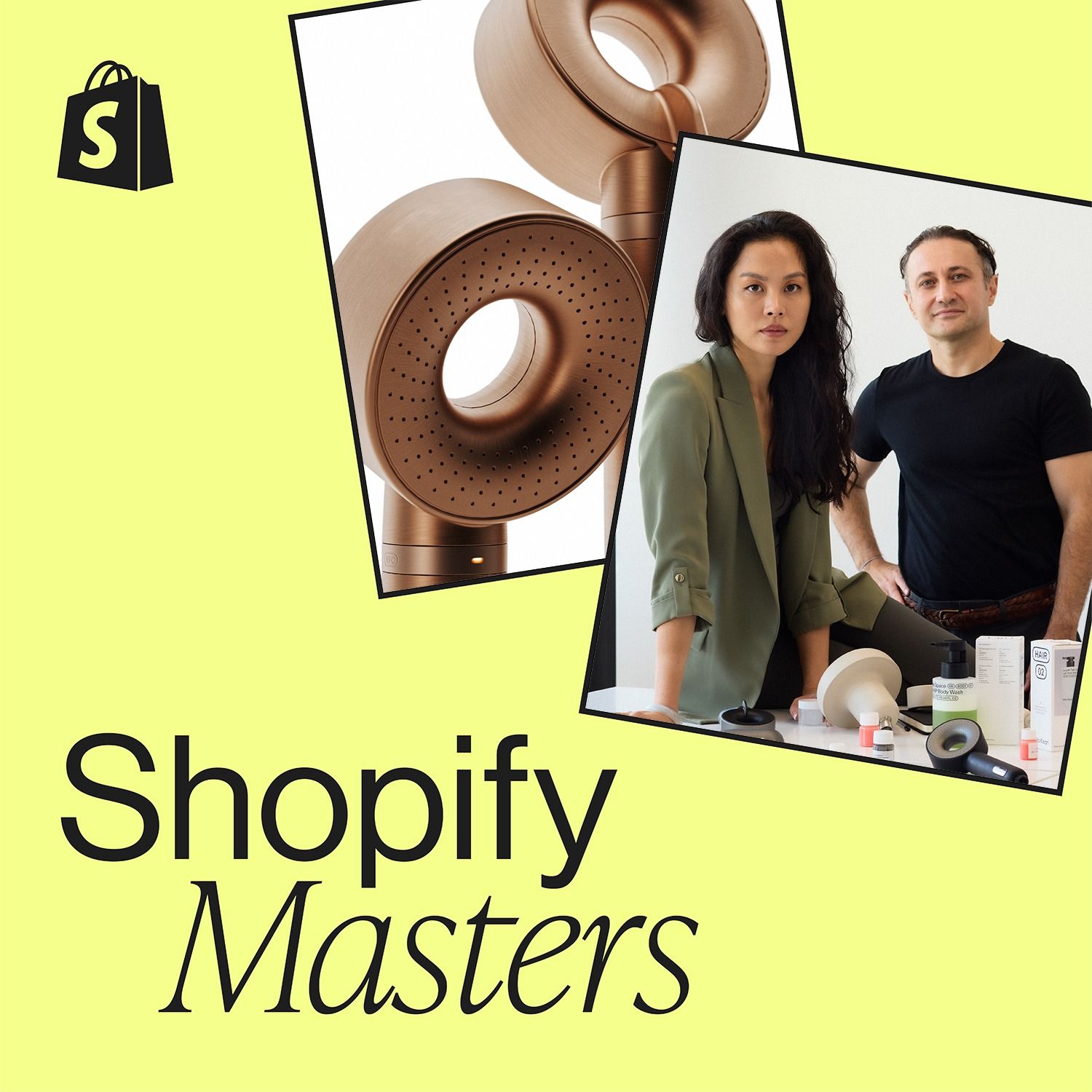
Shopify Masters
Inventing “Shower Care”: How Hello Klean Turned a Hidden Problem Into a Global Business
00:33:40
After tracing her own chronic skin and hair issues back to hard water, Karlee Zhang partnered with Omer Ozener to build Hello Klean on just £60,000 of personal savings. By educating consumers on an invisible problem and leveraging a “free trial” strategy, they created a new “shower care” category that now boasts more than 90,000 active subscribers.
Loading summary
Transcript74 lines
- [00:00]
Carly Zhang
If I hadn't met Omar, I probably wouldn't have suffered. With so many hair and skin issues,
- [00:09]
Adam Lavinter
what if the most important step in your beauty routine starts in the shower? Carly Zhang and Omar Ozener built hello Clean by tackling a problem millions of people were experiencing, but completely ignoring the devastating effect of hard water on both hair and skin.
- [00:23]
Carly Zhang
No one has the exact same symptoms, but you are able within our collection to find the solution you're looking for.
- [00:31]
Adam Lavinter
Starting with a single sleek shower filter. They didn't just build a hardware startup. They invented an entirely new category called Shower Care.
- [00:39]
Omar Ozener
I think a lot of the first time founders underestimate the marketing needed to educate the customer and really to get the initial reach they need.
- [00:48]
Adam Lavinter
They're here today to share the realities of managing high profile investments, selling over a million units and closing a landmark partnership. Welcome to Shopify Masters, your companion for starting and building a business. I'm your host, Adam Lavinter. Carly and Omer, welcome to the show.
- [01:04]
Omar Ozener
Thanks for having us.
- [01:05]
Adam Lavinter
You know, it's a pretty unique product. It's a unique category. Before you jumped into hello Clean, what were you both doing professionally?
- [01:14]
Omar Ozener
My background is actually in more technology. I was in different tech startups from E commerce to marketplace, mostly around product management. And just before starting hello Clean, my last job was at one of the largest e commerce players in Europe, mostly around fashion and beauty when we first had the idea to start hello clean back in 2019.
- [01:44]
Carly Zhang
So for me, my last role was social media manager at Huda Beauty, a color cosmetics company based in Dubai. And before that it was just various roles across marketing.
- [01:57]
Adam Lavinter
When you founded the business, how did you and Omar connect?
- [02:00]
Carly Zhang
Well, so Omar and I connected back in 2015 and I would say that if I hadn't met Omar, I probably wouldn't have suffered with so many hair and skin issues because we met in New York when I was living there, he was in Istanbul, met at a bar and decided a long distance relationship. So all of these years was us just constantly trying to move closer to each other and eventually build a life together. And it's throughout all of these moving that I also experienced what hard water firsthand does to my hair and skin. But you know, it's been like 10 years, 11 years now and Omar and I are partners in life, business partners, but we are no longer married anymore in terms of like the business. He umer is good at everything I'm not good at. Like he's amazing at finance, he looks after operations, he's super reliable and he's like Very analytical. So he takes over the entire performance finance operations of the business. All the backbone that keeps us standing. And for me, it's very much about, like, the look and the feel and the product development within the business.
- [03:23]
Omar Ozener
Yeah, I would say that's one of the key things. Why our partnership was successful is really, like, this amazing distinction of our skills and how they are very distinct so that we trust in each other in our own field. So there is not too much of involvement in each other's area. And also, you know, like, there is so much trust to each other. I leave everything to creative, and I have full trust in her. And the other way around, was this
- [03:53]
Adam Lavinter
a product category that you were personally experiencing a challenge with, or were you addressing a market challenge more broadly? How were you thinking about evaluating the problem?
- [04:04]
Carly Zhang
So it stemmed from my own personal struggles because for the last 10 years or so, I kept moving around, you know, in different places. I was living in New York for a bit and then moved to London, Paris and then Istanbul and Dubai and eventually Berlin and then back to London. And I found that every single time that I had moved, I was suffering, like, hair and skin quite a lot. And what was really very interesting is that the symptoms were quite different. For instance, when I was living in Dubai, I was experiencing a lot of hair loss. Well, as when I was studying in Paris, I had a really dry patch on my leg that wouldn't go away. So I think, you know, for, like, most of our customers experience this too. The first place I looked at is changing my beauty products. So I tried to change my lotions, I tried to change my serums. And then eventually I went to a dermatologist, and I was like, oh, my God. Okay, something is maybe wrong with me if I'm losing that much hair every time I shower. And, you know, eventually, after doing research, and it was actually on Quora that I had learned that it was the water composition, which was varying between the different places and hard water in particular, that was causing all of these hair and skin issues. And that was an aha moment for me because I found, like, okay, there is an answer to all of this, but it's also, like, coming from, like, marketing and also working in beauty, I was like, there's so much opportunity to really address this problem because I can't be the only one who's suffering with this.
- [05:56]
Adam Lavinter
Omer, for you, were you evaluating what other products were on the market that were addressing this?
- [06:02]
Omar Ozener
When we first had the issues ourselves, the struggles ourselves, our first reaction was to go down, look for other products in the market. So we realized actually in Korea, shower filters were quite popular products for years. Talking to labs, talking to manufacturers there, trying to understand how this product works, how the filtration works and how it is used in Korean households.
- [06:30]
Adam Lavinter
Carly, you're, you're the marketer. So part of marketing is just the ability to educate the target market. Right. To educate your consumer. In this case, you have, I would describe a problem unaware market versus a problem aware market. Right. So at least in North America, it seems to me that consumers don't even understand that this problem exists and or how to think about addressing it. So when you say things like hard water versus soft and filtration and shower systems, generally speaking, the average consumer is just taking a shower. Wherever they are, they don't think about the problems this way. So has that been a challenge as you grow the business to actually educate your target market?
- [07:15]
Carly Zhang
For sure. I think for us as a brand, what makes it quite unique and also quite challenging to do marketing is most traditional beauty brands, they talk about the outcome and what you going to get out of using a certain, you know, topical product. Well, as for us, I would say most of our effort is educating people. What does water do to your hair and skin? So once people understand that then it almost becomes like a no brainer that it's like okay, I need this in my life because it's the foundation.
- [07:46]
Omar Ozener
It's almost like aha. Moments we hear, you know, people when they understand, they're like, of course it makes so much sense. If you are filtering your drinking water, of course you should filter your shower water as well. But getting to that stage takes some time.
- [08:03]
Adam Lavinter
Yeah. And you've both compared the awareness of water filtration today to the early days of sunscreen. That is to say that the science or the culture hasn't quite caught up to the science. I would say that's 100% accurate. Is that what you're seeing?
- [08:16]
Carly Zhang
Yeah, I think it was more of a challenge in the beginning when we first launched and now it's definitely a lot easier for us, I think for us trying to make this like really easy and to spoon feed and not overwhelm people by getting into limescale, water hardness levels and all of that technical stuff is actually just asking them a really simple question. Has your hair and skin felt really different when you were on vacation? Because most of the time it's yes. They would notice that for instance, if they were living in LA and they went to New York for a weekend. The way how the Frizz reacts. And the way how the hair feels after each shower, even though the product remains the same, is completely different.
- [09:04]
Adam Lavinter
Okay, let's double down on that example. So New York versus la, what are the differences here in terms of the water and what people would be experiencing?
- [09:13]
Carly Zhang
Yeah, so New York is a softer water area, whereas LA and California is harder water area. And with hard water, it is essentially water that is loaded with minerals such as calcium, magnesium, as well as heavy metals such as iron, copper, etc. And you know, even though with hard water it's not unhealthy for you to drink and it's not like bad or contaminated in any way, but it has a certain reaction to the products that you use. So when you're using soap, for instance, and say you're using the same shampoo, if you're shampooing in New York, you'll notice that the soap is much more bubbly, it's going to rinse off a lot easier, it cleanses well. It also gives it that like slippery feeling. Whereas in LA you find that you are going to use a little bit more products and it takes a while for the soap to really lather up. And also the bubbles feel more dense than fluffy.
- [10:21]
Adam Lavinter
I'm in Toronto, Canada. What kind of water am I using here?
- [10:25]
Carly Zhang
I think you have hard water. And if Toronto is hard water, then Vancouver is the soft water.
- [10:31]
Adam Lavinter
Gotcha. Okay, but the problems that you describe, I mean, these are problems that I think would feel pretty sensitive for the average consumer. Right? Like dry skin, hair loss. I mean, these are. I'm feeling a little bit secure about my own hair. Now that you're talking about the water quality and the impact that it might have, how important has it been to outline some of these more urgent pain
- [10:55]
Carly Zhang
points from day one? You know, we realized that with every consumer, everyone's reaction to the water is quite different. Let's use London as an example. We have customers who are saying, oh, you know, we moved here and all of a sudden I'm breaking out, even though my products remain the same. Well, as for somebody else, it might be, oh, I have eczema. But I'm noticing that I'm getting more frequent flare ups. And then for somebody else it's related to breakage or hair loss. And I think, you know, for hello clean. What we try to address is that we understand that no one has the exact same same symptoms, but you are able within our collection to find the solution you're looking for.
- [11:39]
Adam Lavinter
Gotcha. Omer, let's talk about the product so I'm on the website@helloclean.com today you've got not only shower heads, you've got shower filters, you've got anti breakage shampoos, you've got body washes. Rewinding back to 2020, how many products did you start with?
- [11:55]
Omar Ozener
Just one. We, we started with only one product. That's, that's how we launched only after two years. We then decided to complement our first shower filter with our first Stop Care product and then we build on more filtration that more hair care and more body care and finally our first intelligent shower filter came. So that's, that's how the product evolved
- [12:21]
Adam Lavinter
over years and you bootstrap the business, you inject your own personal capital. I've got a Number of roughly £60,000 of personal investment into the first iteration of the business, is that correct?
- [12:35]
Omar Ozener
Precisely. We invested around 60k, around 75,000usd and that was the only investments we made to the, to the business. And now we bootstrapped all the way until this year where we announced a strategic investment from, from the Brita Group.
- [12:52]
Adam Lavinter
Yeah, I think listeners will be very interested to hear how that Britter partnership came together. But before we get there, that first injection of capital, how was that money deployed?
- [13:04]
Omar Ozener
Mostly marketing. I think a lot of the first time founders underestimate the marketing needed to really like distribute their, to educate the customer and really to get the initial reach they need. For us we knew that it was going to be challenging to educate the customers and this category required a lot of education marketing in the form of you know, like building content, you know, working with creators. Advertising on Instagram that was more than 50% of that budget. And the remaining was production, obviously working with a manufacturer which had really good terms. So the initial investment was low there.
- [13:44]
Adam Lavinter
And how did you find that manufacturer?
- [13:47]
Omar Ozener
I think initially we had a typical like Alibaba search going into manufacturers. Then we went to Korea to visit the manufacturers there and China to visit some manufacturers there. So we had on sites visit as well. We still work after six years with the same manufacturer, although now we have more than 20 manufacturers. That building relationship is actually one of the key reasons why we were able to bootstrap because the payment terms we have with our suppliers is really helping us to preserve cash and to invest into marketing. We didn't go with a very large factory because for them we were very small. Right. They were not too much interested in innovating for us. But the small factories meant better relationship. But also you know, allocated more of their resources into, into our products.
- [14:38]
Adam Lavinter
Yeah, I think you raise an important point about how important the relationship is. We hear or we elevate the importance of relationship when we're talking about say the founder partnership dynamic or the dynamic between the founder and the venture capital investor, for example. But nobody talks about the importance of your relationship with your manufacturer or your third party logistics company.
- [15:05]
Omar Ozener
Building that relationship can massively change your business. From payment terms, from the flexibilities you will get, from the prices you will get. It will make the biggest difference in your business.
- [15:18]
Adam Lavinter
Carly, you mentioned before you bounced around from Dubai, Paris, Berlin, all the way back to London. Where was the first market that hello Clean launched in?
- [15:28]
Carly Zhang
That was in Berlin, Germany. I was working in Dubai and then afterwards decided to move to Berlin. And you know, like the water isn't that great there. And I was also going through a little bit of like a career transitioning period trying to figure out what am I going to do next. And it's just always been like a lingering idea that I had in my mind and was like, okay, why not use this downtime that I have and just really test out this idea and see where it takes us. And so we started like everything super small, like packing the orders ourselves, shipping them ourselves, sticking on the labels ourselves, even designing the first ever shopify with a free template ourselves.
- [16:13]
Adam Lavinter
How many markets are you selling into now?
- [16:15]
Omar Ozener
We ship worldwide, but if you think about which markets we localize and we have local marketing activities, UK is still the primary market. Then EU markets, Germany, France, Ireland, Spain are quite strong. And then Middle east, we have United Startup Emirates and Saudi Arabia as our key markets. We just launched Canada in March. Now we have a team member based in Toronto. We start to scale now marketing activities in Canada as well.
- [16:47]
Adam Lavinter
Nice. You might have a new customer by the end of this episode. So for listeners that don't understand how to effectively say, use influencers to elevate their brand or showcase their products at events, what could you share? What's been successful thus far?
- [17:05]
Carly Zhang
So I think the first step is to look at each channel really differently. So we have some influencers who are purely tastemakers. So they're there when we work with them to elevate the brand image, to elevate that, hello, Clean is a must have inside your routine. And then there's also other influencers where we're using for conversion. So these are the creators who have the hair and skin issues, who have the authority, who have the confidence to talk about issues that are relatable to the average audience. And then when it comes to the events, I think one of the best things that we've learned and will continuously to do is I think when you're not trying very hard to sell something and trying to get creators to be like, post about us and just really focus on, hey, let's bring a group of community together and let's focus on how can we make you have the most fun and make the most value of your day. Then actually the content starts creating coming in. Instead of slapping a huge logo and putting QR codes and saying, do this, do that, snap this.
- [18:19]
Adam Lavinter
So what does that type of event look like then? If you're not, quote, unquote, hard selling and you're bringing a community together, what does that look like?
- [18:28]
Carly Zhang
So last year we decided to make a eucalyptus wreath class for creators and for anybody who is not familiar with eucalyptus, it's a plant that, if you like, you know, hang it behind your shower and you know, the steam releases from the shower, it really clears your, like, nasal pathway. And it also makes you, like, really calm and grounded because it releases scent. When we were looking about doing this event, it was actually, we wanted to raise more awareness to our rain shower head, which is the one that comes directly from the wall. And I think the main challenge that we have with all tools and function is that when you only talk about pure function, people lose attention and they get really bored. So we're like, okay, instead of talking about what the rain shower is going to do and how it's going to filter your water, let's get you to come in to create this little wreath and this bundle with by yourself. So you're A, learning something really useful, B, you're connecting with a lot of people. And see, like, as a brand, we always step backwards. We're not there trying to, like, overly mingle or trying to get them to do anything. And in the end of the day, it turns out everybody is documenting everything that they created. And then it taking the rain shower home as a gift, it became a logical, like, next step that, hey, I'm going to hang it. Well, if I'm going to hang it, I might as well install the rain shower as well. So for us, we felt like this was a more organic way to build a conversation instead of, like, post about this.
- [20:14]
Omar Ozener
If you look at shower filters, a lot of people initially who are not familiar with the product may think that it's a plumbing product who would live in a hardware store, right? But our products are actually sold at Sephora sandwiches, at beauty stores, and our Positioning is beauty. And the reason is a, the solution that we are offering is actually beauty related solutions. Right. Because people are suffering from issues that affecting their hair and skin. If you also, when we do the market research, you know, in Korea the market evolved around actually if you look at the first show of filters there, the strongest positioning was beauty positioning. And we knew that. And that's what we wanted to really establish here in Europe and the UK markets when we were talking about investments and then some investors in the UK initially they all think that, oh, this is such a great product, you should sell it. This hardware stores, you can get a lot more reach and distribution. And then we were immediately like, no, no, no, no, no, you don't understand what we are trying to do here. This is not a hardware product, this is distributed product. And I think that worked really well for us.
- [21:27]
Adam Lavinter
Does Sephora come to you first or do you go to Sephora?
- [21:30]
Omar Ozener
Sephora came to us. We are very selective when it comes to retailers. We want to keep the distribution very exclusive and limited. Two reasons for brand building reasons. One and secondly, our D2C is very much subscription led, very much subscription focused and we want to preserve that way.
- [21:52]
Adam Lavinter
Yeah, let's talk more about that. So roughly 75% of your top line revenue comes from your recurring subscriptions. When you first came up with the business model back in 2020, did you have subscription as a core part of the business model execution?
- [22:11]
Omar Ozener
We had subscription from day one, but the subscription option was not very much preferred at that time. It was similar to market standards, 15, 20% and that's something we wanted to increase. We were like, okay, we need to do something to acquire more subscribers. And we tried something very risky. This was very early days of the business. We started to actually offer a free trial where you would get the filter for free and if you liked it, you would just be charged 30 days after. So we gave you 30 days try before you buy kind of periods. This was in 2020, you know, the first year we launched. It was risky because there was a lot of risk for misuse but actually it's worked quite, quite well for us. And that was our first actually scaling attempt and to increase the number of subscribers, which helped a lot for the bootstrapping journey. Our subscription intake is above 80% so more than 80% of first time customers actually, actually opt in for a, for a subscription already.
- [23:19]
Adam Lavinter
That must have been an important piece in terms of building that early adoption though, right? Getting people to try before actually committing. And for you. Yeah, just to highlight that Risk. I mean, you've got that inventory that you've paid for, that product's being shipped out the door, you're not billing that credit card till 30 days later. And you don't know how your customer base, that early cohort is going to churn and you also don't know what the return rate is going to be on those filters. So, yeah, you are taking a huge risk. But I assume it paid off in terms of early adoption.
- [23:46]
Omar Ozener
100% for sure.
- [23:49]
Carly Zhang
I think it's just because we have this belief in the product and we know that it's going to work.
- [23:56]
Adam Lavinter
So what happened this year? The partnership with Brita takes place and they become your first strategic investor.
- [24:06]
Omar Ozener
Precisely. Something we've been working actually for almost a year. I got a cold message one day from their M and A team and after a couple of calls, we felt quite good about the relationship and what this partnership could mean. I think for both companies, it's such a great strategic fit. Right. For them, obviously, coming into this new category, working with a more lifestyle focused brand. And for us, you know, working with the company who has 60 years of filtration experience and being a household name when it comes to water filters. We are already working on some exciting projects.
- [24:48]
Adam Lavinter
What capabilities do you bring to Brita and what do they bring to you?
- [24:53]
Omar Ozener
Mostly on the R and D side, obviously. 60 years of filtration expertise, multiple filter production facilities around the world. We already started working with their R and D teams and I'm sure we have a lot to learn from them to improve the filtration technology around shower filters. This is still a new category, this is still a growing category. And on the technology side, Brita's knowledge can add us a lot to really improve the filtration side of the business. What we add to them is I would say mostly the direct to consumer ability, social media scaling ability, subscription base. I think these are all things we can share, know how with them.
- [25:47]
Carly Zhang
I think for me, if I was going to summarize it in one sentence, is Brita offers to us expertise and learning and knowledge and what we offer them is a really exciting new category.
- [26:03]
Adam Lavinter
Yeah, I mean, it's fantastic. I'd just be curious, like, how does Brita miss a category opportunity like this? Like you say, I mean, they've got 60 years of legacy incumbent experience in terms of the brand and their presence in the space. They must have been aware of the category that you're playing in. What did they miss that you guys are filling in terms of a product
- [26:30]
Omar Ozener
gap, generally Speaking, it's like all big companies, right? Usually they know the trends, they see the trends, but they kind of miss the execution. You can say the same how the big Unilever PNGs of this world miss the natural data on trends. Right now they need to acquire all of those upcoming companies. I think that's true for all the companies, but specifically for this case, I think a couple of important things. First, the way we position Shopify Filters as a beauty product and the way we market it is to direct to consumer and via mostly social media. Instagram via influencers is a muscle. They're not very strong, right? Because if you look at Brita, they are mostly distribute their products via retailers. They mostly do wholesale. Their marketing is very much top of the funnel, not really DTC focused. So it's a very different muscle. You would think that Briza actually should be the pioneers of subscription model. But actually looking at their sales, they are very much selling through retailers. But we have the actual subscription model, more than now 90,000 subscribers. And the data of course comes with it. And we know exactly the habits of the customers. That's something they didn't have. The way we execute brand and marketing is very different than they do when
- [28:02]
Carly Zhang
it comes to Brita. They are known for pure filtration, they're the best in the game. But in order for a consumer to see a brand, whether it's hello clean or another brand, as this is not just a filter company, it's a beauty company, it needs to encompass an entire ecosystem and that ecosystem includes filter hair and body. And I think that for us to have this is quite a unique thing that for someone like Britta to develop a scalp soak, develop a shampoo, it's something very different for them.
- [28:46]
Adam Lavinter
I assume I'll also toss in my own thesis on this and that is that you understand the relationship more intimately than they do between brand and consumer. So this use case reminds me of the 2016 acquisition of Dollar Shave Club by Unilever where you know, you have a big CPG incumbent like Unilever, they acquire, you know, small DTC disruptor, Dollar Shave Club. It's a billion dollar acquisition. It puts this online company on the map and for lots of the reasons that Omer described and you too Carly, around, you know, Dollar Shave Club's ability to get subscription right, to get the online marketing piece right, to be closely connected to the end consumer, to not have retail distribution, other things that Unilever, you know, had capabilities around, but it made for a perfect marriage, frankly. So I See a lot of the same parallels in this case. So far so good. I assume with you guys in Brita.
- [29:50]
Omar Ozener
So far so good. We're excited things started. Synergy started mostly on the R and D side. Already working on some exciting stuff there. Yeah, looking forward to the years ahead to build this together.
- [30:05]
Adam Lavinter
And speaking of years ahead, it's spring 2026. What are you looking forward to in terms of the rest of this year and forward into 2027?
- [30:15]
Omar Ozener
We just had a really exciting launch, the first intelligent shadow filter almost a month ago which comes with a chip insight and IoT technology where you can track the water usage and the filter live. So that's. You don't need to guess when you need to change the filter. You can really tell the device can tell you exactly when to change it. We have another exciting launch coming in October, a product we've been working on quite some time. It's going into again new category for us on the market expansion side that's quite exciting as well. Gulf region, we are expanding our presence there. In Europe we are expanding into more markets. Canada, we're going to expand more. We're going to see more international growth coming in rest of this year and next year as well. So that's the second focus and just business as usual focus on building the strengthening to brand, doing community events, doing amazing content. We really have exciting content plans as well and the creative campaign plans.
- [31:35]
Carly Zhang
I think for me right now it's about like doing each step properly and making the narrative that we tell out the storytelling as intentional as possible and we believe that growth will just come naturally.
- [31:50]
Omar Ozener
But with that our approach to scaling the business was always we are not in a rush, we are not in a quick exit. We don't see this as a short term game. Even after now, after Britain investment, we don't see this as a short term thing. So we want to do this properly whatever we do and that's our belief in this business and that's also how we execute from product development, market expansion. US market is always there, you know, like. But then we have some other priorities first before, before we get there.
- [32:27]
Adam Lavinter
Very cool. No, it's been a very interesting and cool story to watch. For listeners that aren't familiar with hello Clean, that's hello clean dot com, that's hello and then K L E a N dot com. Where else can people follow you guys on social?
- [32:43]
Carly Zhang
You can find us on Instagram and also TikTok. So it's just hello clean. Hello and K L E a nice
- [32:53]
Adam Lavinter
omer Karli thanks so much for being here. Great to talk to you both.
- [32:57]
Omar Ozener
Thanks for having us.
- [32:58]
Carly Zhang
Thank you so much. Adam.
- [33:01]
Adam Lavinter
That's Carly Zhang and Omer Ozoner, the respective founder and CEO behind hello Clean. Shopify Masters is produced by Hyacinth Parker, Alicia Clark and Schwang Esther Shan. Our engineers are Miku Bedlam and Matt Schwarzenegger Schwartz and Rachel Reich is our senior content lead and I'm your host, Adam Lavinter. Come back every Tuesday and Thursday to catch a brand new episode of Shopify Masters and be sure to check out our YouTube channel for video interviews. Until next time, thanks so much for listening.