← Shopify Masters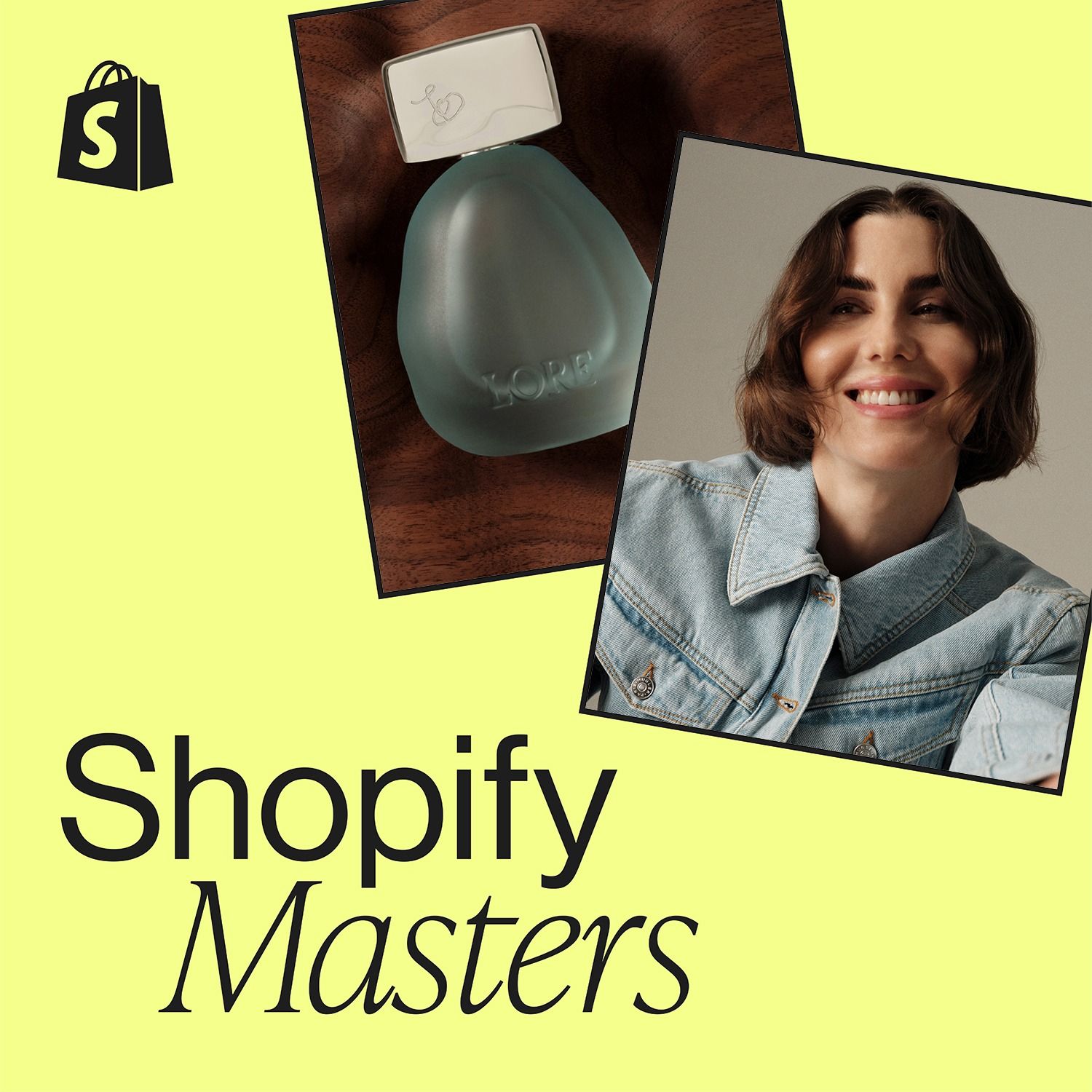
Shopify Masters
The Beauty Brand Playbook Behind Lore's Successful Launch
00:36:47
Melanie Bender spent years building some of skin care’s most coveted brands before betting her next chapter on fragrance—a category she saw on the verge of its biggest moment yet. By leading with story over specs and making influencer relationships the heart of her strategy, she took Lore from concept to 250 Sephora doors almost overnight.
Loading summary
Transcript62 lines
- [00:00]
A
That was one of the most interesting challenges. My product is invisible.
- [00:06]
B
What happens when a former aerospace engineer turned brand builder behind beauty giants like Merritt, Rhode, and Versed decide to reinvent fragrance? Meet Melanie Bender, founder and CEO of l', Or, a luxury scent brand built on the radical idea that how you feel matters more than how you look.
- [00:21]
A
That was what I wanted to spend my time on. Not beauty that you see, but beauty that you feel.
- [00:26]
B
After shaping some of beauty's most beloved names and teaming up with the founders of Youth to the People, Many, Melanie brought together nature, art, and accessibility to launch Lore. And in just a few months, the brand has landed in over 250 Sephora stores and in the hands of some top creators.
- [00:40]
A
It's not about getting the doors, it's not about getting the retailer. It's about being ready to perform in it.
- [00:45]
B
Melanie is here to share what it takes to build a luxury brand from scratch. Break through crowded shelves and trust your instincts, even when the path is anything but ordinary. I'm Adam Lavinter, and this is Shopify Masters, your companion for starting and scaling a business. Melanie, welcome to the show.
- [01:00]
A
Hey, Adam, it's so great to be here.
- [01:02]
B
Great to be here with you. You are an aerospace engineer first, right before you jumped into entrepreneurship. How does one go from aerospace engineering into founderhood?
- [01:13]
A
Yeah, so aerospace engineering was the first of three majors went there in college. How someone goes from that to being a beauty founder is a lot of, like, hand wringing and hair pulling because I think it spoke to just my uncertainty about what I wanted to do in life and to my just, like, joy and curiosity of so many things. And, you know, I think when you're, when you're young and you're starting out and you're making your first decisions for yourself, like what you're going to major in, what your first job is going to be, where you're going to live. You kind of put a lot of pressure on yourself to have it all figured out. And it turns out that I didn't. Instead of having maybe all the answers, I just had a lot of questions. I was interested in what it took to build a rocket. I was interested in how all the systems of the earth work together to make rain and, and all these things. And I was interested in how brands connect with consumers and help shape identity and beliefs and values. And, you know, over the last, I guess, 20, 20 ish years, I kind of found my way through all of those and ultimately kind of found how they connect together and help me build brands that people Love that. Grow like rocket ships. Maybe that's how it all works.
- [02:30]
B
So you were very early on at Merit. You're very early on at Road. You're very early on at first. This chapter of entrepreneurship, does it feel different this time around, given your past experience building brands?
- [02:45]
A
You know, yes and no. I know this stage so well. It is my fourth early stage brand, my third that I've been with basically from inception, pre product, pre brand, pre distribution. And I chose to do it four times because I love it so much. At this stage, you know, everything is possible. Forming your worldview, you're forming your product ethos, you're forming your products themselves. You're choosing who the consumer is and the role that you want to play in their life. And that's something that I kept coming back to, just again and again and again of loving that really formative stage, being able to touch every single part of the business and really see it take shape as founders. My first time doing it with a capital F. And that does feel different. Different and amazing ways of having the freedom and the call to make it what I think it should be, to make it the very best version of what I think it should be. But with that also comes the feeling of responsibility, that same responsibility maybe to make it the very best version of what it can be. It's a little bit of both, which is, I guess why we're here having this conversation.
- [03:52]
B
And you have two partners from Use to the People. There's three of you on the cap table, is there?
- [03:59]
A
I have two co founders, Joe and Greg, formerly founders of Use to the People. I'm founder. They're incredible in supporting me and my vision, but we do work together very closely on, you know, really all, all, all things of how that comes together and how that's executed.
- [04:12]
B
I've heard you say that you didn't want to do it alone.
- [04:14]
A
I wouldn't have done it alone, period. It is. It's a long journey. It's a long journey regardless of whether it's your first or fourth time doing it. Maybe because I knew how long it was, it felt. Felt clear to me that I wanted community building it. I wanted partnership. I wanted people who could challenge me to be the very best at what I can do and be, but also to help strengthen and fill in areas that I wanted that support. And because I knew that about myself, I honestly didn't necessarily see myself doing a brand. I couldn't really envision the situation in which I would find the right people to really make me feel Comfortable and safe to put my own IP out there in that way. And it started with a conversation with the two of them when I let them know that I was leaving Road and very quickly became clear that that was the time and that these were the people.
- [05:11]
B
What was it about Joe and Greg as partners that made sense for you and for Laur?
- [05:16]
A
Yeah. You know, I think with them, I just feel this complete creative trust. And it comes from us being very aligned in values. We've each done this, I don't know how long, over a dozen years. And I think through that time we've been able to figure out who are we as brand builders and who are we as leaders. I'm fortunate to have known them for many, many years. We got to know each other when I was building first and they were building you to the people and really just felt, I think, this kind of shared admiration and respect for how we made decisions and how we wanted our brands to show up and to function. And to me, that was kind of rare to people who really just loved brand building as much as I did, loved the integrity and the creativity, and felt that was as important as building a killer P and L. And to me, that was really the joy of finding people who were just as excited to be on this journey, who had incredible experience and knowledge and instincts, but most of all, just that joy of creating and beauty and of being able to do that together.
- [06:28]
B
ROAD was an incredible success story. Right. This is a brand that was founded by Hailey Bieber Scales, sells north of a billion dollars. Are there lessons from that particular experience that you find valuable today as you continue to build on Lore?
- [06:44]
A
Yeah, I mean, there's been incredible lessons from all the brands that I've done, which I feel so fortunate for. Very different lessons, you know, and each of the brands was very different in terms of not just identity, but strategy. And one of the things that I really took away from Rhode is that Hailey, she ran it like a fashion brand. To her, the only things that mattered were product and brand creating, things that she loved and was proud of that excited her and that she knew that the consumer would be excited and proud of, and that was it. She didn't stress about growth. She didn't stress about trying to, you know, kind of hit a certain ramp in that way. It wasn't a P and L forward business in the way that ones I had done in the past. And to me, that really resonated this hyper fixation on what are we actually making, what are we actually contributing? And that being the thing that being
- [07:38]
B
enough, how much do you think about P&L versus the vision for the brand itself and to your point, what you're actually building?
- [07:48]
A
Yeah. I mean, some days more than others, the P and L is the how. Right. It can't be the why. But the P and L is really critical for you. Understanding the path to getting to do these amazing things that define the brand. But with lor, it very much started by building. Building something. I love building something that I thought should exist and doing it in a very open and undefined way. Very early on, I figured out I wanted it to be fragrance. Frankly, I was tired of talking about how people look after doing two skincare brands and one cosmetic brand. I knew that there was something deeper than that, something deeper that I wanted to spend my time thinking about and that I wanted to bring into the world. And that led me to fragrance. So that I knew. But beyond that, I really let it be an open exploration. And it started with, you know, understanding first the science of fragrance, which is really fun. Very aerospace engineering me. And then thinking about, thinking about really what I wanted this world of, of the brand to be. It started kind of world first beliefs and codes. And from their product flowed in a very iterative way.
- [08:57]
B
Okay, let's double click on that. So world first beliefs and codes. What does that mean in the context of, say, community building?
- [09:06]
A
It's interesting. They're kind of different ends of. Different ends of the continuity of a brand. All the brands I've done, you know, I've really believed in doing it world first. Your world as a brand is it's basically how you see, how you see reality. It's. It's what you hold to be true. I like starting there because I think that's what consumers are actually loving. That's what they actually buy. They. They buy into brands that have a different conception of reality, that show them a different way of looking at the world, a different way of living within it. And to me, that's beautiful, that's compelling, that's cultural. Those are the brands that I like making. So I started first by really just kind of immersing myself, letting me imagine this world that I thought should exist, you know, kind of exploring what different ends of that could be. And then once I had that image, that idea, it was about articulating, kind of explaining this is what it is and this is why it is this way. Those were our beliefs and codes. And then everything really flowed from there. And community. I would also say that we're brand with community at our Core. But I don't believe in being crowdsourced. So it wasn't about kind of going to a group of people and them telling us what it should be. I think it's more about really how you want to contribute to people's day to day lives, what role you want to play in it, and then making that a point of decision as you go through the brand, as you go through your packaging, the design of your fragrances, your price point, to me, that's where community comes to mind.
- [10:40]
B
So let's talk about storytelling. How do you actually create a story behind a brand? You've done such a good job with these fragrances and the brand itself. How do you think about storytelling?
- [10:51]
A
I think about it very openly. And there's a deep story behind lore. There's a deep story behind each of our fragrances. And I think the key there was just letting the stories form whatever way was natural. Like I said, one of them subliminates the story of growing up in Hawaii. Lovely and a little twisted. It started really as a mood board. It's this world of Versailles. But Versailles stuck through the looking glass. And by first understanding that visually, I was able to understand more about kind of the story of the scent. So my process is really just exploring it through all different ways in. I love a Pinterest board. I love writing poetry and words. I love writing narratives and just kind of playing with it all, seeing what sticks. I'm big on bringing people into it to give feedback when ready. That's where my co founders are tremendous. I kind of just love to throw things at them, which perks them up, which makes them excited. It's not always what I think it's going to be. And I think that's the beauty of story. It's not just what does it mean to you, but how does it connect with other people. And I think we all have the ability to be storytellers and just have to let it explore and flow naturally a little bit.
- [11:59]
B
Why fragrance? So it feels like you've got this background in skincare and makeup. You learn a lot there. You jump into this category that feels somewhat associated to that world, but isn't. It also seems to me that fragrance is hyper competitive. Did you see it that way? Was there a part of the market that you thought was untapped?
- [12:20]
A
Adam, I was so tired of talking about moisturizer. The world does not need a concealer. For me, it does not. And I think what drew me to fragrance was that it was new, is that, you know, was definitely net. New to me. And it's hyper competitive in the sense that it's growing really quickly. It's changing. And I've always been attracted to, you know, kind of categories of, of dynamism, areas that are changing. Because I think anytime it's changing, that means that there's possibility here. There's things that are going to rise and things that are going to fall. To me, those are the most exciting categories to create. And that's what skincare was kind of 10 years ago, and that's what fragrance is today. So that was, you know, more of the, let's say, analytical reason for going into it, believing in the growth, believing in, you know, kind of a shortage of brands that had the playbook of best practices that I had from the brands that I had done, but is equally, if not more so important was the emotional side. And I thought about my life and, you know, the eight plus hours a day that I spent on screens, that you probably spent on screens, that everyone listening probably spends on screens. And that's this, like, really weird alternate reality that's hyper visual. There's, you know, a lot of seeing to it. There's maybe a little bit of sound, there's no smell, there's no touch. And I think it contributes a lot to this feeling of detachment. We don't feel like we belong. We don't feel like we live full lives. And to me, as I thought about fragrance and understood the science of fragrance and how it fires in our brains and the strength of the emotional response that it brings, it all felt like this very beautiful potential to create products that bring back some of that feeling, that bring back some of the depth, that create beauty. Not beauty that you see, but beauty that you feel. And that was what I wanted to spend my time on. Products that you put on because of how they make you feel.
- [14:07]
B
Perfect segue. You brought some today, Melannie, let's go through some of these.
- [14:11]
A
Let's take a look. Yeah. All right. First we'll talk about sublimity. This is our sheer solar musk. It is the very first scent that I started working on. It's the scent of growing up in Hawaii, where I'm from. You know, it was a feeling that I had always wanted to go back to, that you never can. And I thought, okay, I'll. I'll share it with the world in fragrance form. Sublimity. It's the story of all piling into the back of a truck on the weekends because the best beaches in Hawaii, you need four wheel drive to get To. Yeah, there. The beach is your playground in your palace. You know you're going to be there all day. Maybe you have, like, a cooler full of cold drinks in there with you. In Hawaii, the white florals, the pua kinikeni, the ylang ylang, they go right up to the sand and they fragrance the air there with this, like, warmth, sweetness. And when you get to the beach, you know, maybe the sun is so hot on your skin that it starts to scream at you after a couple minutes. So you dive into the water, and sublimity is that very first wave that you go under. And if you've ever been inside of a wave, if you look out the back, maybe you'll see the sun, maybe you'll see the horizon. And there's this most incredible sensation that inside a wave, time stands still, that each little drop of water, it's just moving one at a time. And that's the moment of sublimity. That's what I wanted to capture with this fragrance, which is the solar fragrance. So there's warmth to it. There's coconut nectar, there's ylang ylang blossom. There's a little bit of sandalwood. There's also a little bit of marine musk. But to me, most of all, it smells like full sun on warm skin on the beach in Hawaii.
- [15:40]
B
I gotta get a smell.
- [15:42]
A
Yeah, Please.
- [15:43]
B
You've sold me. You tell the story in such a compelling way. I mean, I'm sold on it. But how do you do this digitally? Like, this is such a tactical experience. We're smelling something here. We're together in person.
- [15:58]
A
Yeah.
- [15:58]
B
You're building this brand online. Yes. You're in retail, you're in 250 Sephora doors, which we'll get to in a moment. But when you're building a fragrance brand, how do you tell that story digitally?
- [16:10]
A
Totally. I mean, that was one of the most interesting challenges. My product is invisible. I'm choosing to sell and visual product through largely, you know, kind of visual mediums. And that's, to me, where the focus on feeling comes through that. We choose scents because how they make us feel. We choose most things in our life because of how they make us feel. And there are certainly, you know, kind of literal ways to speak to scent, descriptive ways. But to me, it was more about kind of inviting different ways to tell the story. And to me, sublimity is the scent of growing up in Hawaii. But to someone else, I have people who say, okay, this reminds me of this one vacation that I took, the last vacation that I took with my parents or, you know, to me, it's this place in Mexico that we'd go every year. What was exciting about fragrance was not just telling my stories through it, but really using it as this kind of open call for sharing stories in general. And that's, to me, also part of the strategy, because fragrance is so kind of person to person. It is very personal. It's interpreted differently, it means something differently. And I was really interested in not just being kind of descriptive and literal, but also letting people discover scents and fragrances by stories that they share.
- [17:26]
B
So how does Sephora come across? Lore?
- [17:29]
A
Yeah, I mean, we were very, very fortunate to have existing relationships with Sephora from my co founders whose first brands used the people. It's still exclusive to Sephora. You know, I think we all knew early on that we wanted to build this brand not just with a retailer, but with that retailer with Sephora, truly the best brand. Builders in beauty. They understand what it takes to build something from scratch, to shift categories. And they have an incredible vision in fragrance and a lot of, you know, potential to continue growing that. So it made us all very excited to bring it to them. And as soon as we got in the room, I think within 10 minutes in, it was very clear that this was something very special to do together. And the decision was easy.
- [18:17]
B
How does it scale so fast across the Sephora retail network? I mean, it's a relatively young business. All of a sudden you're in 250 locations. Like, how does that happen? From a capex perspective, I think the
- [18:35]
A
decision to go into retail, period, but also, what's the right footprint to start with, is a big one. Sephora has over 600 standalone doors in the US so while 250 doors is a lot of them, for them, it would be partial chain. We had a lot of conversation together with them as to what was the right number to start with. We started in 150. That's one of the real lessons that I had from being in beauty and just consumer goods as long as I have that. It's not about getting the doors, it's not about getting the retailer. It's about being ready to perform in it. And it's very easy to push to be full chain. It's very easy to push for, you know, the most doors that you can get. But what's more important is that you're in the right doors for where you're at right now. I am not a celebrity. I do not. Did not launch with a big audience. So I knew that it was very much building the brand through the brand. And for that reason, it was right to start what would be smaller in terms of door count starting in 150 doors to build and grow from there. Very fortunate to be expanding now into 250. But it's all very based on kind of what feels like the right pace to go at for how I want to build the brand with everything Lore, it's about what feels right. It's about what's the kind of what supports the vision in the long term, kind of capex wise. It's different in every retailer, in every category. As a new brand of fragrance, we're fortunate that there's not the big kind of gondola buildouts that you would have in makeup, but there's certainly investments that go into it. And that's also a reason to think about starting small and really understanding what does it take take to work in these doors so that as you're going from if it's 150 to 250 or, you know, I've had past brands that are in 7,000 doors, it's all about really being ready to make those doors successful for you and your partners.
- [20:25]
B
Do they ask for exclusivity off the bat in a partnership like this?
- [20:30]
A
It's very common for any new brand launching in a retailer for exclusivity to be part of the discussion. It's something that I was very comfortable and even excited to bring to Sephora. I'm a big believer in do one thing exceptionally and only expand from there. So I am not at all thinking about other places to go. I'm only thinking about, you know, really making Laura at Sephora the best possible partnership it can be.
- [20:58]
B
So Imaginary Ventures gets involved in the business at some point. They do a seed round with you guys. What has that experience been like with them? And do you find that they're the perfect partner for Lore?
- [21:10]
A
Yeah, I mean, they're tremendous. I was very fortunate to have gotten to know them over many, many years in beauty. And between the three of us in the founder group, we were very fortunate to know many VCs in beauty quite well. And I think that's one of the greatest advantages that we have. We have the clarity of what we want. We have the clarity of what's a good fit, what's not even, you know, kind of what are the important things to ask for and to have as part of the partnership. They've been incredible. And from the very first conversation, to me, it was clear that, all right, this is Again, like, same feeling with Sephora. This is special. This is how I want to do this. This is the right way to build something that I want to be generational, that I want to be the brand that people are talking about not two years from now, but 20 years from now. And that's very much how they think and how they operate. I also really liked how deep their experience is in luxury fashion. To me, Lore is the luxury brand. And a lot of the way that I think about building the brand is cued by luxury fashion. And I loved that they brought that experience and thought partnership while having a really intimate understanding of beauty as well.
- [22:21]
B
You have mentioned this idea of price point being almost like a middle finger to the industry. And I'm asking you this question in the context of creating a luxury brand, which I think most people would associate luxury with sort of higher price point. But no, in Lore's case, it hasn't been that way. What's the strategy behind how you're pricing the product?
- [22:47]
A
I have said that and do feel that way, that our price point is intended as, you know, kind of a middle finger to the norms. I think in the past there's been maybe two paths you take, right? You choose to be a luxury brand and you use price point as a signal of value because it's one of the clearest ones that people interpret. Or you choose to be low, disruptively priced, and that becomes your brand. And, you know, to me, neither of those fit what I wanted to do. I wanted to make something that was beautiful, that was emotional, that moved people, but I wanted to do it in a way that you can't. You know, it's not just buy one scent, like buy all four. You know, build a wardrobe. To me, it's always been about creating this kind of wardrobe of new realities that you can slip in and slip out of like you would an amazing jacket. And the reality is that you can't do that when it's 250 a bottle or 375 a bottle. It was very core to the ethos and the mission of what I wanted to do. To me, it's not a part of the brand, the price point. I have zero interest in talking about price point to the consumer. It's not a selling point. The price point is what it is. I want people to be talking about how beautiful the fragrances are, what they mean to them, what they mean to other people in their life. To me, that's the conversation. So that's, I think, the strategy and the takeaway that, you know, price point is not a brand. I think it's very easy to look at these kind of tactical levers. You're in this price point or in. You're in this category and think that that's a brand, but that's not a brand. That's merely one way that it kind of is interpreted by the customers. That's one way it shows up.
- [24:24]
B
What are the other pillars of creating a luxury brand if it's not price? So if founders are watching, they're saying, I completely resonate with what Melanie is saying. I have this vision for a brand. I want it to be luxurious, but it's going to be priced affordably so that the majority of consumers can access it or afford it. How does one do that? And how do you think about luxury in these other areas?
- [24:52]
A
I think there's one pillar at Lore, and that's obsession. And to me, that's what luxury is. There is this pull and even a compulsion to make every single thing that you do the very best version of itself. The bottle. I went through 50 forms before, you know, kind of landing on this shape. I made two trips to Peru to perfect the glass mold and really understand exactly how glass would be, you know, kind of coming through as it's melting and being formed. I explored maybe 150 colors, probably 100 different fragrances. To me, it's those details of care and, yes, of obsession that are the hallmark of a luxury brand. It's not just one thing. It's everything. And I think those are the things that are very hard to mimic. Those are the things that are very hard for incubators to be able to develop out of a box. But that's what luxury is. It's this obsession and commitment to an emotion and having that emotion carried through every single touch point of the experience.
- [26:03]
B
Let's talk about marketing for a sec. So Lore does a lot with influencers. You. You do a lot with creators. More broadly, how do you go about finding the right creator, the right influencer for the brand?
- [26:16]
A
Yeah, I mean, I think brands today are built by influencer, just period. It's. It's the single most important channel. And it was the first thing that I thought about in terms of the marketing strategy for. For Lore. You know, I think the strongest influencer programs are built on just organic fandom, on people loving what you're doing. So first and foremost, it was that intention, the product and the brand, to make it something that, all right, you see it once, you want to talk about it, you want to share it you want to take a picture, you want to be the person that told your friends about it or kind of was the first to get the package in the mail. To me, that's the heart of the influencer flywheels that you need to be building. And those are built through a lot of fucking hard work. Seating and organic influencer relationships are single biggest line item in our budget. It's the single biggest team within the company because it takes a lot of time and intention to be able to bring the right people in.
- [27:15]
B
So seating, like sending product to particular people in hopes that they share, that they create content, whatever.
- [27:22]
A
Yeah. To me, that's the bread and butter of early stage influencer programs. So you're building an experience that brings people into your brand that's built around the product, but gives them something that you know, they wouldn't get if they were just walking into a Sephora store. And then you're really understanding who are not just the influencers of your consumer, but the influencers of the influencers of your consumer to really show up in the right places. One of the biggest mistakes that early stage brands make are not being specific enough about who's the right creator for them, or not being goal driven enough about what you need to get out of an influencer program for it to, you know, for it to pay off for a brand like mine. The single largest way that people will discover about my brand. So it is really meaningful who's talking about it and how they're talking about it. So understanding the communities that you want to show up in and how you think you contribute to them is really, really important for us. You know, definitely fragrance community is huge. But we also thought about the interiors and lifestyle community. You know, we designed this bottle to be like an object of art. So we wanted people like Athena Calderon talking about it. We wanted beauty creators who were impactful to the Sephora consumer, but maybe not yet. But fragrance people, we wanted them talking about us as well, positioning us as kind of this gateway fragrance brand. Maybe you're not wearing eau de parfum every day. Well, with this brand, you know, you can. So those are some of the different community niches that we thought about. And then, you know, on the goal side, building a seating program is a beast. I've done it a couple times now, so I know what goes into it. But you're really putting a significant amount of time, of resources, of budget towards these seating boxes. So also really understanding, here's what we need to get out of it. Here's how we measure success, the earned impressions, the earned media value, the earned engagements. For it to be able to make sense and become that engine that you, you want it to be.
- [29:27]
B
How much should one set aside if they were a lean startup, not venture backed and want to create their version of a seating program, what do you think would be an appropriate budget to set aside to test something like this?
- [29:44]
A
Yeah, you know, I think it can be done at any scale, but I think you also want to think about what will really position you to break through. We were fortunate to have a founding team with from well known brands, so it was a possibility. It made it possible for us to be able to approach influencers pre launch and have them be excited to support the brand. I think if you're, you know, if you are newer as a founder, you might not have that same opportunity. So starting to build your organic influencer community in other ways I think is even more impactful. Even just reaching out to folks, getting their feedback on your product I think is a wonderful way to start. It's actually how we started. Before we had even finalized our brand, I had invited a number of fragrance influencers to give me their feedback on it and wanted their expert input in what we were developing, but also just wanted to be building relationships and fragrance. So I think if you're kind of starting from scratch, it's a really nice way to do it so that then when you're starting to seed people and be ready to send product out, it's coming from a little bit more of a warmer place and will be more likely to be shared and can grow from there.
- [31:04]
B
Let's go back to pre lore Melanie and your career over the past 20 years. You had 15 plus, if I've got that right, about 15 plus jobs. Before you jump into entrepreneurship, do you look back on your career and think there was a particular turning point that led you into founding something into this world of entrepreneurship? Was there a particular moment or chapter of your career that inspired this?
- [31:38]
A
You know, honestly no. But while this is my first time as a founder with a capital F, so much of what I did was very entrepreneurial. When I was 24, I co founded my first company which was in the marketing space and that arose, you know, as I was leaving sustainability consulting. I was in New York, had just moved from Hawaii to New York at the time. I was working as an environmental planner and really just felt no creativity in that. Missed being able to feel that nice mix of left brain, right brain, decided to leave that field and really started from the ground up first with an unpaid internship, then got my foot in the door with a marketing agency. It was a marketing agency that worked in the field of architecture and design. So not fashion, not beauty. But to me, it felt adjacent and took that role. And after maybe six months of being with that company, I pitched the CEO on launching a fashion vertical, told them, here's all the ways it's relevant. I'll run it for you. And amazingly, very fortunately, he said, okay, come back with the business plan and we'll talk about it. And I did. And we did, and he supported me on it. And I think that was kind of a common pattern with me that I saw that I couldn't get the jobs today that I wanted. I didn't have the right background. I was a kid from Hawai' Ianyorc without the right degree, without any connections. So I had to kind of be realistic about where I could start. But I also knew that where I started wasn't where I was going to end. And so I would really excel at the job at paper, but also think on what else could it be? Where do my goals align with the goals of, you know, the people who I'm. I'm working for, and how do I use that to take me a little bit closer to what I want to do? I did that when I was in the marketing space. I did that again to launch first. You know, I was hired by. By Katherine Power to run marketing for her media platforms for who, what, where and Birdie and My Domain. A few months on the job, I learned that she was interested in launching beauty brands. And I had worked in beauty at a contract manufacturer before then on brand development. And I remember writing that into my job description that, okay, now I'm going to do beauty brand development at Click. You're not going to pay me more, but here's my new title. And I did that, you know, in addition to. To the other role that I was hired to do. By doing that, it led me to Verse. I developed Verse, and then she gave me the opportunity to run it, first as general manager and then as president. So no big aha moments, I would say. Just a lot of tenacity and desire to kind of shoot my shot. Sure. And see what could happen.
- [34:35]
B
Okay, let me ask you about the other side of this coin. So mistakes and challenges. Was there a mistake that you made, looking back, that has helped you grow into the founder that you are today?
- [34:44]
A
Oh, my God, so many mistakes. Which ones helped me grow? I mean, a lot, like, definitely maybe cringe. You want to talk about those, but no mistakes that made me grow. You know, definitely what feels most relevant to lore are the mistakes and learnings from the beauty brands that I did before then. And you know, I think earlier on in my career running beauty brands, I wanted to go fast, I wanted to go big, I wanted to go as big as I could. That felt like the right onus at the time to drive growth and kind of deliver a chart that goes up into the right more quickly than any others. And as I have been through growth cycles a little bit more and understood the ups and downs, I really feel differently about it now. I feel very much feel like the growth that I want to optimize for is the growth decades from now. And I've seen enough brands go up and go down to know that a fast step doesn't keep you there. So maybe the biggest learning is patience because doing things the right way in a way that actually creates long term enterprise value, it takes time. It takes diligence. It takes knowing the right moments to lean in, but it takes also acceptance when it's not the time to lean in, when it's the time to go a little bit more slowly and kind of just, just do that whole dance.
- [36:07]
B
Melanie, it's been great to chat with you today. What are you excited about this year for Laura? What can we look forward to?
- [36:12]
A
Oh, my gosh. Well, I'm excited about so very much. We're launching our first new fragrance since we came out. It's my very favorite to wear. It's coming in July and I'm just so, so excited for that. I'm excited to do more with our community, to actually do more in the real world. And I'm just excited to maybe savor it all.
- [36:30]
B
Most of all, it's amazing to talk to you today. Thanks so much.
- [36:33]
A
Thanks, Adam.
- [36:34]
B
And thank you so much for tuning in. Don't forget to subscribe so you never miss an episode and I'll catch you next time.