← Shopify Masters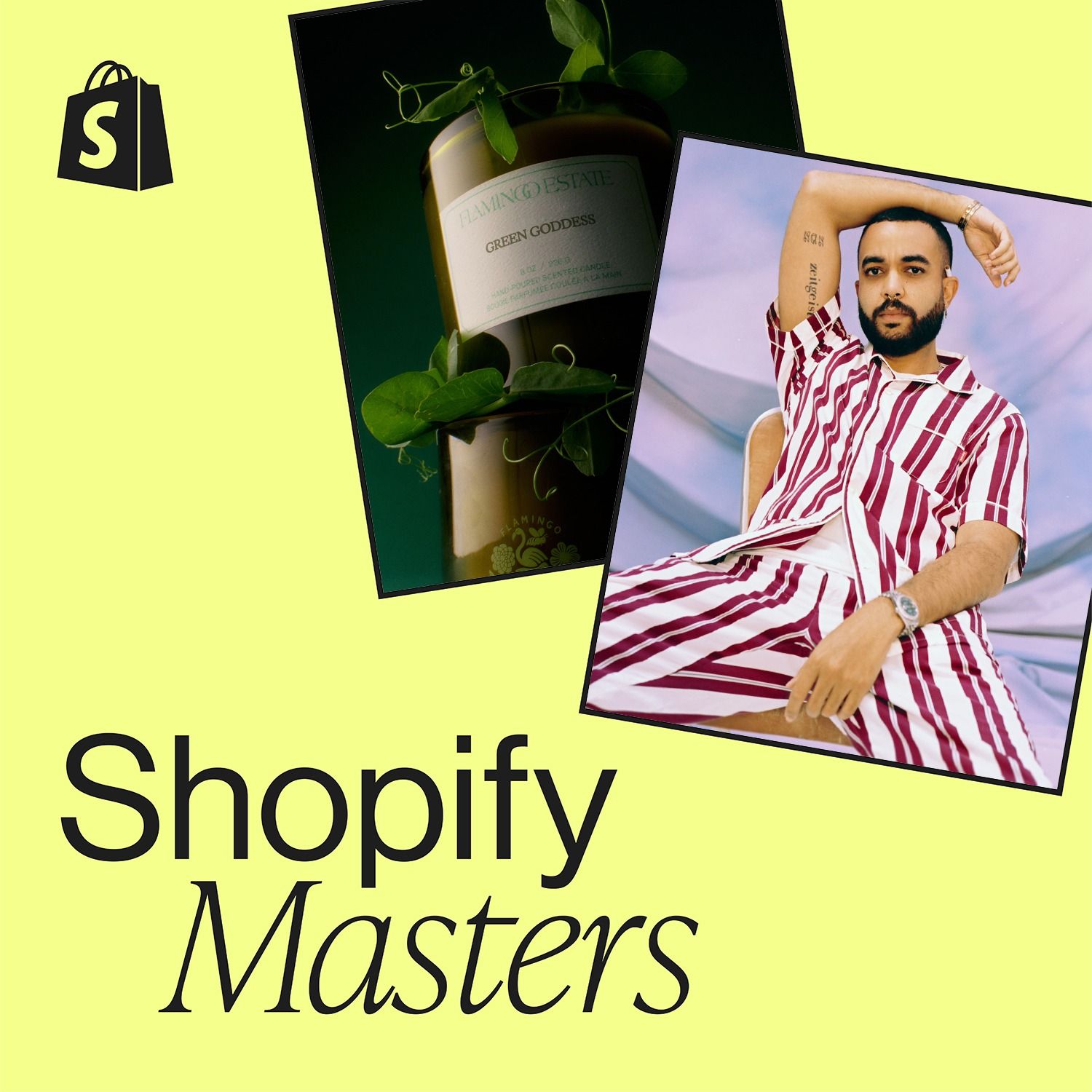
Shopify Masters
The Marketing Mistake Most Brands are Making Today (+ How to Fix It)
00:38:06
Flamingo Estate stayed true to its roots and built an eight-figure brand by saying no to almost every piece of outside advice.
Loading summary
Transcript128 lines
- [00:00]
A
I like to say that Flamingo State is a hospitality brand. Details are the kind of thing when they're right, you don't notice them. When they are wrong, this is the thing that you will notice.
- [00:11]
B
Richard Christensen and Erin Harvey launched Flamingo Estate as a lifeline for their community. What started as a produce box has exploded into an eight figure lifestyle sensation, celebrated for luscious soaps, candles, and ritual driven living.
- [00:23]
A
I don't think we ever had the notion that it would get to where it is now. We spend a lot of time on this. Oh, I'm gonna get emotional.
- [00:32]
B
From viral citywide campaigns with Shopify's shop app to building a cult following among tastemakers, this brand keeps rewriting what it means to truly live. Well.
- [00:40]
A
Curiosity, passion, not being afraid to work hard will get you everywhere.
- [00:45]
B
Today, co founder and creative director Erin Harvey joins Shopify Masters to reveal the journey behind the viral moments and how bold creativity made Flamingo Estate unforgettable. Harvey, wow. Am I excited to have you here today.
- [00:57]
A
This is such a pleasure. Thank you.
- [00:59]
B
Flamingo Estate lives in this, like, very mythical space. For a lot of us, it's like, is it a place? Is it a brand? Is it an atelier? Is it a figment of our collective fantasies?
- [01:10]
A
Yeah.
- [01:10]
B
And then in many ways, the most mysterious thing about the brand is you.
- [01:14]
A
Oh, God. Okay.
- [01:15]
B
I think because it's like Richard is. Richard's the face of it, but you're the other half behind the scenes.
- [01:21]
A
The visibility thing is like part of his nature, you know what I mean? I think it's like his happiest place. He'll call me sometimes and be like, oh, I was at the coffee shop and someone came up to me and they were like, are you Richard from Flamingo Estate? And I know he's going to have a great day. You know, I am the opposite. This is the kind of thing that is my nightmare. There's a beauty to a bit of mystery, you know, and so sometimes the ambiguity around all of this kind of stuff, to me is maybe one of the pluses. You know, is it a house? Is it a brand? Is it one of these things? There's questions that are created in people's minds, which to me is like a lure into the universe. I don't have a deep need, you know, to explain everything. I feel like the work is good, the product is nice, the packaging is cute. You know, we make like an honest product. Honestly, we're nice people and that's maybe enough.
- [02:06]
B
The birth of Flamingo Estate is inextricably. Linked to the pandemic. What set the whole thing in motion.
- [02:13]
A
Richard and I had just started dating. The pandemic hit, and there was this kind of, like, inflection moment. I think I was maybe, hey, I'll see you when this thing is over. You know what I mean? There's like, we're gonna be in for two weeks. Yeah, yeah. No. We met in January. Work for him really slowed down. He runs an agency. Productions stopped in Los Angeles. They kind of stopped globally. There was a woman who was a farmer, who was a friend of someone that worked at the house, and she was going to lose her business. They had shut down restaurants for two weeks. And in farming produce, that kind of stuff, margins are super small. And so two weeks of no business could really send someone into, like, financial ruin. Richard grew up on a farm. His parents are farmers. He lost his family farm when he was in high school. And this was something that really resonated with him, you know, and he felt like, have an opportunity to do something. He and I both obviously know how to make something cute and sell things via social media, I guess. And so he was like, bring your stuff. We'll make some cute boxes. I have a bunch of friends who exist online in a really visible way. And I was like, you know, we can send some boxes. This can be something that we. That we do to kind of, like, help at this time. And things kind of started from there. That first weekend, she thought maybe we could sell 25 of these produce boxes. You know, we sold 100. And then the week after, it was 200 and 300. And then we started, like, hiring delivery drivers, and we were making these deliveries across Los Angeles, and it, like, really started super organically from really more him than me, trying to help someone that was part of our community. We live at this house. It's seven acres in the middle of suburbia, and we grow, you know, herbs and vegetables and flowers and stuff like that. And so I think we were in a place where we were really exploring nature in a way that we had not had. Maybe the time or the pause to do earlier changed our lives.
- [03:53]
B
You were not the only people on the Internet selling farmer's market boxes at the time. It became kind of a rallying cry for a lot of restaurants. Why do you think yours broke through in such a crazy way?
- [04:03]
A
There was an earnestness and a passion maybe that people could see and feel. It was something that we were experiencing for the first time, this, like, deep dive into the land, into mother Nature. They say sometimes, I guess when you're starting a business, the best way to do it is like to build in public, you know, and we were really doing that. Like, the Instagram captions were super long and there were these stories about, you
- [04:28]
B
know, very personal, super personal, always signed with his name.
- [04:31]
A
Again, this is like, you know, someone would leave a comment on Instagram and Richard would reply to it with his cell phone number. And it's like, hey, you know, give me a call right now. And I'm like, dude, you can't, you can't do that.
- [04:42]
B
Can't do that anymore.
- [04:43]
A
He still does it. It's wild to me. Every Saturday, Richard gets a list of our top 50 customers for the week and he will send a text message to each and every one of them and then he'll engage in conversation. Oh, you know, hey, oh, what did you buy the gifts for? Oh my God, it's, you know, your daughter's christening. That's amazing. This is a level of participation, you know what I mean, that people feel. It's his love language, you know, and it's kind of found its way to every facet of our business.
- [05:10]
B
I think from a business perspective, that's a big question on everyone's minds. It's like, how do you build community? How do you build community? How do you build community? It's like, you have to build community. Come by it really honestly.
- [05:20]
A
We get like a lot of TikTok commentator, you know, it's like, oh, you know, the, the brand strategy that made Flamingo and they talk a lot about creating community or authenticity, but through a lens of strategy, it doesn't work that way. It has to be honest and it has to be natural. The way that we have found ourselves into the kitchens and pantries of these kind of people is through friends.
- [05:44]
B
Do you guys have a different relationship with the celebrity component of Flamingo Estate?
- [05:49]
A
For sure, for sure. You know, he grew up on a farm in the outback of Australia and then came to New York with really like bright eyes, you know, of the big city and making his name and, you know, like fashion and entertainment. I grew up here in Los Angeles.
- [06:05]
B
Yeah, you're an LA kid.
- [06:07]
A
And so my association towards it is really different. I also spent a lot of my early career working on celebrity backed brands. And most of the time they are decisions that happen in a boardroom where someone is like, oh, you know, we have an opportunity to tap this person and then we're going to go find these random products and then we're going to make a contract and It's a construction celebrity. Adjacency can give you visibility, but if there's not something there, then what's the point? And so we have had a lot of conversation about this. I think he's really aware of the power of something like that just to spread a message. Right. The size of the platform is something that's important. On the flip side of it, I have a need to maintain the ties to the things that made this business special in the beginning, which is so much the community. Why are we making these things? We're trying to make nice things for nice people. And so we've been able to grow in a way that respects maybe both of our perspectives on this stuff. So Pamela Anderson makes pickles for us. This is an amazing opportunity. We've also raised, you know, hundreds of thousands of dollars for wildlife charities. This is something that's super important to her and makes me feel like the use of that platform is for good rather than just, like, proliferation of our business. You know, there has to be, like, more to it than that.
- [07:27]
B
The vision that we've all just been, like, consuming voraciously for all these years is one of slow living, of making your own food, of being out in nature. And then, you know, concurrently. What might have started as sort of a quaint feeling act of service, really.
- [07:47]
A
Yeah.
- [07:48]
B
Has grown into a really serious brand.
- [07:50]
A
Yeah, no, we are. We're doing numbers like, it's crushing, for sure. And the scale of it sometimes is daunting to me. I don't think we ever had the notion that it would get to where it is now. But momentum has pulled us in that direction, for sure. He and I are uniquely aligned in that we deeply love to work. We spend a lot of time on this. Oh, I'm gonna get emotional. I think I'm like, I'm jet lagged and I'm.
- [08:17]
B
Ooh, you're good. Seven months pregnant, you know.
- [08:20]
A
Yeah. No, no. I mean, me too, clearly. No, we work really, really hard on it. I think the way that we have been able to experience the brand is not the same way that customers do. Right. Like, during that first year, for sure, we were definitely, like, cooking at home and making the things from the box and, you know, doing the rituals. We were really living that stuff and we were communicating, I think, the way that it impacted our lives personally. So super revelatory, very transformative. I think the deeper that we got into it, we continue to experience that joy or that connection through the work. You know, I like to say that Flamingo State is a Hospitality brand. And what I mean by that is just that it is the tools for you to show up and host not only the people that come into your home, but also yourself. Right. Sometimes the self care thing gets lost in people's minds. And so I like to think about hospitality as a lens. When someone comes over, you want to show them a nice time, we should also be doing the same thing for ourselves. Light the candle, cook the meal, use the thing. This wasn't something I think that I was intimately connected with before. I would, you know, buy candles and I love fragrance and that kind of stuff. But it's this like thing that sat on a table, right now we're burning, you know what I mean? 10 or 15 of them at the same time. And like, that's what it's about. It's the experience. The things are there for us to use and to love and to create moments. And those scents then get connected to memory. And so when you smell a tomato candle, it's like, oh, that was the night that, you know, so and so came over and we had this, you know, there's something to it.
- [09:53]
B
You've had so many massive successes. But the tomato line, but the tomato candle in particular has like risen to the level of celebrity. What is the lightning that you were capturing in that bottle?
- [10:02]
A
The opacity of things sometimes the mystery of things can be this lure. When you see a tomato candle, I think people maybe initially have this preconception that it's going to smell like ketchup or something. You know what I mean? I don't know what the thing that maybe you have in your mind versus what it would be in real life. There is disconnect between those two things that makes you ask a question. People like to find out the answers to questions. And so maybe that's really all it is. It's a weird name. It's obviously an amazing scent. Right. But we sell things on the Internet so you can't smell the candle. Yeah. And that storytelling around. Yeah. You know, summers in Italy and tomatoes and the leaves and crushing them in your hands. And we tried to paint a picture for people what this thing was that they maybe didn't have an immediate recognition for. If I tell you something smells like jasmine, you know what jasmine smells like? It is what it is. But tomato was something that was, it was interesting, it was unique and it's worked well for us so far.
- [10:57]
B
And it is truly like, so transportive. You know, I have the candles, I have the room spray, and it's like, I feel like, it does exactly what you're intending. Like, I spray the room. Spray. And I'm like, oh, I'm on the Amalfi coast.
- [11:09]
A
Like, here I am for a moment. That means a lot. And it's what we do, you know, like, we're burning the candles because sometimes, like, that's our only opportunity to get out of the four walls of our living room. And so having those moments, whether they're, yeah, at the sink, you're washing dishes, but now we're washing dishes in Italy. This is not so bad.
- [11:26]
B
In those early days, the. The farmers market boxes take off. You say you're, like, hiring delivery drivers. Is there a moment where the two of you look at each other and you're like, oh, like this. This is the business yesterday.
- [11:39]
A
No, I don't know that there was a moment where we were like, oh, there's something here. I think that we thought that there was something there from that first week. I think we're surprised by it constantly.
- [11:49]
B
I think there's something so powerful and beautiful, too, about being in a partnership where you can constantly be holding up mirrors to each other.
- [11:58]
A
Is it, though? It's a level of intimacy that is. That's rare. You know, I think about it a lot because, you know, you have a tough day at work, or you have specific feelings about how something should be. And maybe it's not that way. You get to go home and tell the story from your perspective and then leave it and leave it. But the partner that you're telling the story to, they only have your side, right? And so when we have conversations, you know, he'll say, oh, da, da, da, da, this happened. Blah, blah. And I'm like, yeah, but, you know, I was in the room, too. And on the flip side of it, you know, so the mirror is quite clear. It's been washed. You know what I mean? Like, Windex has been used. And it is, like, crystal clear. And that is. It can be confronting, you know, in a way that is challenging, for sure.
- [12:47]
B
But if you're willing to quiet your ego, it can be such a. It can be such a powerful vehicle for growth, your personal growth. But your personal growth is also the business's growth.
- [13:00]
A
Yes. These things are tied in a way that I've never experienced before. It makes the stakes of things feel quite high at all times.
- [13:11]
B
Everything's in one pot.
- [13:12]
A
It's all in one pot. How I show up every day is not only a reflection of myself, it's also a reflection on our business. I'm a leader, and How I show up impacts people. How he shows up impacts people. How I show up impacts the way that people perceive him.
- [13:27]
B
And also how you show up for each other in front of them.
- [13:29]
A
It's a lot of interconnected pieces, and
- [13:33]
B
that can be complex from a division of labor standpoint between the two of you. Richard is the public facing half of the brand. You do show up in a video every now and again.
- [13:45]
A
Yeah, I mean, I'm not like. I don't want to make it seem like I'm like, reclusive or something.
- [13:49]
B
Yeah, it's fun. It's like a little Easter egg. He's kind of more like, what, like the 30,000 foot view and you're in the details.
- [13:58]
A
Yeah, I think he is. And it can, you know, switch from time to time, too. I think he has a deep love of creative work. How that shows up for him, I think a lot of times is writing so, like, long form captions and you know what I mean? This kind of stuff is. He's a writer. We've done books.
- [14:13]
B
This kind of stuff.
- [14:14]
A
Yeah, stuff's exactly our Friday letters are pages and pages of prose. You know, it's like long form text verging on poetry. Yeah, no, no, no. He's a poet. He feels things deeply and he communicates through the written word. He's a very talented art director, and so he enjoys the process of, like, working on set with photographers and this kind of thing. I have similar talents. I'm also a very good writer. I also enjoy the process of working on set and art direction and this kind of stuff. My way is much more detail focused. You know, I love preparation. I need to explore the depths of the Internet before I'm ready to make the deck. And then the deck is 200 pages that gets culled down to, like, 40 really sharp ones. And each image is very important to me. And these are the reasons why he's much more like a vibe person. You know, it's like he is the engine that drives this thing. For sure. My piece of the puzzle is much more executional.
- [15:09]
B
Can you think as the details guy of like, a couple of those small details that ended up being really transformative for the brand?
- [15:16]
A
Yeah. I mean, packaging in general, I think, has always been a big piece of our brand story. It's the thing that people talk about a lot aside from the products, like, oh, you know, it's such a nice gift. Or the boxes are so amazing. Those vegetable boxes were maybe that kind of, like, first exercise in that we had these, like, giant illustrations and there was, like, text and, you know, this message on the inside. You know, these were the things that really helped people to understand what we were doing. Right. It's like, opportunity for us to communicate directly to someone in their home. You know, it's like what's on the inside flap of that box and the things that we were saying were true. You know, it was really the way that we felt, and it was really what we were trying to. Trying to get people to understand. You know what I mean? It was a message that we were trying to amplify. Details, for me, also are, I guess, the place where we can differentiate. I think that we make something and then someone else makes something that looks pretty similar. I know that ours has two different plates of embossing and that we're. There are details to what we're doing that people might not clock individually, but in a tactile way they feel. I like to check whether or not things line up. So on a box, for example, the end of the ingredients panel should also match the same line as the descriptor on the front. Should also match the IFRA on the back. There are these things about. For me, when I turn something around, if text is in the same place, it makes it easier for me as a viewer to read these things. Things are happening. And so I'm proud of my ability to make things look finished. You know, they look complete, and those are the detail pieces of the puzzle. And so I don't know that everyone always recognizes the details, but I think that they can feel the level of thought that went into what we're doing. And that, to me, is the thing that makes us different than other people.
- [17:03]
B
Right. Like, they might not be consciously clocking the alignment of the text, but they're still sort of absorbing the experience.
- [17:10]
A
Yeah, yeah. There's an intention. Right. When you look at this thing, you understand that a lot of time was put into this situation. I think that details are the kind of thing when they're right, you don't notice them when they are wrong or they are missing. You know what I mean? This is the thing that you will notice, right, Is that, like, oh, I had an amazing meal at this, like, fab restaurant that was super well decorated, but there was, like, a lipstick stain on my wine glass. You know what I mean? This is a detail. It's a very, very small piece of the puzzle, but it can ruin everything.
- [17:36]
B
You know, you and Richard both come from a marketing and advertising bathroom.
- [17:41]
A
I hate marketing. Don't say that.
- [17:44]
B
A creative background.
- [17:45]
A
Yeah, yeah. Yeah, yeah. There are a lot of businesses that are marketing driven. Right. Which is amazing. You see an opportunity strategically, you position yourself at a certain place in the market. You know what I mean? You, like, build creative around that positioning. Right. This is a way to go forward, and it's one that can be super, super successful. It's just not what we're doing. You know, Like, I like to think of Flamingo State. We run maybe more similar to the way that, like, a fashion brand does, which is that, like, creative leads. We make what we want to make, and we try to make it super beautiful, you know, I mean, and the driver is the creativity. It's the story, it's the inspiration. That's what we're doing at the same
- [18:22]
B
time, like, as the company scales.
- [18:25]
A
Yeah.
- [18:25]
B
And it's not just you and Richard.
- [18:27]
A
Yeah.
- [18:27]
B
You have more than like 100 people now.
- [18:30]
A
Right? I mean, it depends on the time of the year, but yeah, for sure.
- [18:33]
B
Are there things that you have found, even if you're sort of reticent to do so, that over time you've had to sort of codify or operationalize in particular ways so that things can keep functioning?
- [18:43]
A
Yeah, I think one of the. The best qualities that he has, but also one of the most challenging for me. He's a very willful person. Like, he will get there, you know, like, he wants it badly. Whatever it is, he wants it, and he will do, you know what I mean, like, what needs to be done. He will stay up late. He will do things. He will make sure that it happens. And so I think he advocates for things in our business that we think are important. And he will do so to anyone who will listen and even to people who will not. Things like the vegetable box, for example. It's the genesis story, I guess, of what we're doing, but especially in the beginning, it was not a profitable endeavor. We probably could have just given everyone who ordered $1 25 and called it a day. They were like, negative margin. It was like something that we really, really wanted to do. Did it. As the business started to grow, people were like, oh, you gotta cut this thing. And we're like, no, no, no. Like, we can make it, you know, at least break even. And so we did that. And then they were like, still, this is, like, too much time, you know, for you to be spending on this thing.
- [19:38]
B
The boxes.
- [19:39]
A
The boxes. People need to taste real food. They need to understand that it comes from a person. Someone grew this with their hands. Our perspective is that Mother Nature is the last great Luxury house. And we are purveyors of her finest goods. Some of those goods are vegetables. And so this is an important part of our story. So we operationalize, but we operationalize without losing the thing, you know? So the boxes for us now have become a really big piece of our puzzle. We've brought in chefs who are curating every month. They're going to the market. You know what I mean? We're including recipes. So we've really, like, changed the program to be something that now can be profitable, and we're selling out every week. And it wasn't about ditching the thing or making it easier. It has to stay the way that it is. But we have to shave off some corners, you know what I mean? Polish it a bit, do it in a way that's smarter and more efficient. But this doesn't mean that it needs to go away. We don't have a 3 PL. We pick unpack our own orders in a warehouse. You know what I mean? Like, we have tens of thousands square feet of warehouse space, and there are employees that are handwriting notes and tying ribbons. But this is what we do. This is our business.
- [20:44]
B
It allows you to have that extra level of quality control.
- [20:48]
A
There are a lot of people who make very nice things. If we are not doing it differently, then there's kind of no purpose for us to be here. And I think that what we are doing is very different. But maintaining that richness of experience is part of why this thing works. So we have to figure out, you know what I mean, creative ways to make those things continue to happen.
- [21:05]
B
You're talking about a very steadfast commitment to sticking to your guns.
- [21:09]
A
Yeah.
- [21:10]
B
You also kind of have had this, like, stratospheric rise. And when that happens, there's invariably a lot of other voices that come into the fold. Have there ever been any moments where you realized that you had started being pulled away from something that was really important to you and had to reorient?
- [21:26]
A
Yeah, I think this happens a lot, for sure. Especially as businesses grow and you need capital, and you start having conversations about investment. And then there's boards and this kind of stuff. People have thoughts. You know, you get advice from people who they just don't know your business that well. You know, they understand from, like, a top level, you know, oh, you guys make candles and hand soap, and, you know, you sell these vegetables. Okay, cool. Like, I get what you're doing. And then they'll give you some analogy, some business that they feel like exists in the same sphere. And they're like, oh, well, you know, they did it this way. And like, you guys should. You know, early in our trajectory, we had people, they were like, you guys, you should be a supplement business. Like, what do you mean? And they're like, well, you know, vegetables. You know, this is a huge business. You guys got to do the. You put a powder in a drink, and then that's going to be a ritual. And this is self care. I was like, we got to stop talking to these people. This is like, absolutely not what we're doing. You know, that's a great business. It's just not the one that we. It's not the one that we want to make. We had a lot of conversations in the beginning about need states, you know, oh, you should have a collection for people who are tired. You should have one for people who are depressed. I'm like, we're not a doctor. This is not what we're doing. We make, like, nice, nice candles and beautiful scents. You know, it's like the art of a life well lived. Right. But we are not at all trying to solve someone's problems. We are trying to be additive to someone's life. I want to elevate the space that you're in currently, but I'm not trying to get you to change. You know, this is not the. Not the job of a candle. It's not the job of an olive oil. You know, it's just to make the experience better. Right, right. But when people looked at.
- [22:53]
B
Let's not overrepresent.
- [22:54]
A
Exactly. We're not curing cancer. Like, this is not that. You know, we make, like, cute. That's it. It's something that requires a lot of, like, gut checking, you know, so much of what we've been doing since the beginning has been super intuitive. I like to say the universe, you know, pulls us in certain directions. And then, like, does it feel right in your stomach? You know, like, does this feel like what we're supposed to be doing? And so we do a lot of. A lot of that, you know, I think we. Our ears are always open. Like, I want to hear everyone's opinion. Doesn't mean I'm going to take it. Right. But I want to hear your thoughts because you have an objectivity about what I'm doing that I don't. I'm so in it. Sometimes I can't see the forest, see the tree. So I want to know your perspective. Then I have to sit with myself and find out whether or not your perspective feels like something that resonates with me deeply. Like, was this something that, like, opened my eyes and I was like, damn, that's amazing. Or was this something that I was like, oh, this is very clear that I don't need to be doing that.
- [23:43]
B
Have there been any missteps?
- [23:44]
A
For sure, yes, 100%. There's a lot of things I think that we now with 2020 vision would not do. You know what I mean? Again, we have two dogs, Freeway and Daylesford, two English cocker spaniels. They are like, kind of the mascots of Flamingo Estate. We love them very much. Richard, these are his children. You know what I mean? Like, I didn't raise them from babies. You know, I'm stepdad.
- [24:04]
B
Yeah.
- [24:05]
A
Incorporating them into the brand from a product perspective has always been something, like, deeply important to him. Yeah. We've always tried to make the tools for us to live the best life possible. So that's candles, it's hand soap. You know, all of these things that we consume every day. We just try to make really nice ones for ourselves, and then other people get to buy them too. So Freeway and elsewhere being big parts of our lives, he said, you know, we need. We need dog shampoo and pawbomb and, like, dog toys. You know, we've, like, done a lot of that. I wouldn't redo it. You know, we weren't necessarily, like, huge sellers for us or anything. I don't really want to be in the pet space. And so these are the kind of things where, you know, sometimes you have an idea and we did it, we tried it. We saw that it wasn't right for us. I wouldn't do it again. But sometimes those mistakes also help to clear the path a bit. You know where I think that if I had prevented him from doing these things, which I definitely tried to do, he did them anyway. And we got to see, you know what I mean? Like, oh, this is not our thing.
- [24:59]
B
Right.
- [24:59]
A
So I'm glad that we did it. I wouldn't do it again.
- [25:02]
B
Is that sort of gut instinct, your approach to product expansion in general? Sure. It's candles and it's soaps and it's body lotion, but it's also olive oil and it's honey and it's the farmer's market boxes.
- [25:15]
A
Right.
- [25:15]
B
Like, it sort of spans multiple categories.
- [25:18]
A
Yeah.
- [25:20]
B
What is it that's taking you in one direction or another?
- [25:23]
A
I think we have honed in on things that we do well. Right. And so going deeper into those categories, you know, is part of our plan for growth. Scent has Been a really big piece of the puzzle for us. So moving into, like, proper fragrance, you know, edp, like a perfume on the back of candles and room spray and, you know, the rest of the things. So I feel like we know. We know our lane pretty well. I think a lot of what we have been doing has been to creative people who have to work. Right. We don't have the luxury of, like, not doing this. And so if we're going to do it, I want to do it with the best people. I want to learn something. I want to. I want to grow. You know what I mean? I want to be pushed. I take the responsibility of those things really seriously. There's a momentum to what we have been doing that exists outside of my contribution, for sure. This maybe has to do with, like, his will and his kind of, like, he'll find his way through, you know, regardless of any obstacle that's in the way. Ed Ruscha is my favorite artist. Year and a half ago, like, we put beehives at his studio in Culver City, and the bees foraged on the local flora and fauna. And we harvested honey from these hives and we sold them, and we donated the money to charity. And I got to go to his studio and, like, photograph these hives with him in person, spend some time together. He let us use his artwork as the label. Like, these are things that, like, mind blowing. It's my dream. I'll cry. Like, that's the stuff that makes it. I don't care to work till 4am
- [27:03]
B
it's really beautiful, Harvey.
- [27:05]
A
No, it's weird.
- [27:07]
B
No, it's really beautiful. You're an artist and you're passionate, and you haven't lost that passion, and you're using it to also collaborate with and create new, new forms with other artists you deeply care about and then share. Right. Which is so hospitality driven. Share that with everybody else. So it's like, you might not be able to experience Flamingo Estate from the perspective that we get to, but, like, these are the fruits of your.
- [27:36]
A
No, no, no. This is. I don't love being a guest, you know? Like, you don't. No, I, like, I want to help.
- [27:42]
B
You had said to me in another conversation, the two of you come from an artistic, creative background, and then you built this business that, you know, the creativity can come first, but there's all these, like, operations that you have to figure out. Warehousing and fulfillment and shipping and, yeah, all of this stuff. Right. Are there things for people who are just starting out that people think that they need to have a handle on that. They actually don't. And they can just figure it out as they go.
- [28:07]
A
I would say most things we knew what we were trying to make and we in a broad strokes way, knew how we were supposed to get there. There were technicalities about setting up an online store and how do we do payment processing and 3 PL stuff and how did those systems communicate with each other and operational things about procurement. And there's a lot of detail focused work that we were not aware of. You figure it out, right? The passion, the curiosity, those are the things that I have found are the most important in this kind of endeavor. So much stuff is available on YouTube, you know, like, I didn't go to school for design. I have an anthropology degree. My actually it's polycultural studies. Like, you know what I mean? I'm.
- [28:50]
B
I'm like clearly an anthropologist.
- [28:52]
A
But this was not, it wasn't the thing that I went to school for. I knew I wanted to work in fashion, you know, and I was put in these situations where, you know, the ad campaign is due tomorrow and I don't like the retouching and I'd be like, well, it's 11pm like what do you want me to do about it? And she's like, there's the Internet. Go online and figure out how to do this. Like this thing is due tomorrow. So I went online, you know what I mean? And I like learned how to use Photoshop and then I would like follow other people and watch them and then I learned InDesign and Illustrator and you know what I mean? And I practice every single day. And then you figure it out, you know what I mean? Like you get there. And so I have like a really deep, rich knowledge of this stuff. Not through education, but through self determination, I guess. And so that curiosity, passion, not being afraid to work hard will get you everywhere. And I think Richard maybe had a deep understanding of this already. He was an entrepreneur, you know what I mean? He came to the States and he worked for some other people. But then he started an agency really quickly in his 20s and built it to something that's quite large and now is being run by other people and they are making it even bigger than it was. This is something that he was really aware of. You get in there and you make shit happen and don't be scared and keep moving fast. I think I've had a lot of ideas that I was like, oh, this could be something. But then having the fear that there was something that I didn't know that would prevent it from happening. I think. I now am aware that the tools that I need are passion, curiosity, kindness. I have those. So I can do whatever.
- [30:23]
B
That's the unteachable stuff.
- [30:25]
A
Yeah, no, no, this is the thing that you must have. The rest of it is nice to have if you have done the thing before. Amazing. Or if you know really well. Regulatory compliance for international of like beauty products. Amazing. Like you're even better set up to succeed than you would be if you didn't know those things. But I don't think that not having that information is a non starter. You figure it out.
- [30:47]
B
It's figureoutable.
- [30:48]
A
Yeah, all of it is. And we are in a time when information is like infinitely accessible and for free, you know.
- [30:55]
B
So I hear from some people in the know that you're doing an exclusive launch with Shop app.
- [31:03]
A
Yeah.
- [31:03]
B
Okay. So a quick primer if you're new. Shop is a built in sales channel every Shopify merchant gets access to. And you can think of it kind of as a discovery platform. Millions of shoppers browsing, one tap checkout order tracking all in one spot.
- [31:17]
A
Yeah. We are doing glass hand soap bottles and candles for the first time. We're coming back to glass. It's like a favorite material but we've made these like new vessels for soaps and lotions and stuff. A lot of the way that we grew the brand was through restaurants. You know our favorite places. We were the hand so or the candle that was in the bathroom and that kind of thing at like private members clubs and amazing restaurants in Los Angeles. And so now that we're at this like new moment where we get to re release or kind of like release for the first time. These new things that are very much about hospitality. We're doing a wild post campaign across Los Angeles that says things like, you know, if Teddy's was still open, this is the hand soap that would be in the bathroom.
- [31:56]
B
That is such a particular decent.
- [31:59]
A
We're speaking directly to certain people. You know me. Yeah. If you know your dad, if you was still open, you know, this is the candle that would be in the
- [32:07]
B
bathroom like just for the sake of the audience. Like Teddy's.
- [32:10]
A
Sorry, sorry.
- [32:11]
B
Teddy's.
- [32:11]
A
Teddy's. Very particular moment in time in la. Very particular like moment in la. It is a moment in Los Angeles that was still kind of pre Instagram social media. So there was this idea of like having fun and meeting people in a space that was only in real life. You know what I mean? Like this really like only happened at this place on a Thursday, you know, like, with this certain group of people, it was really something. And maybe this is like what our brand is about, you know what I mean? It's like we're just like trying to return people to their bodies, you know, and we're a brand that is growing, but there are luxuries like that, you know, outdoor advertising, things like that that we, you know, just don't have the budget for at this point in our, in our trajectory. And so being able to partner with someone like Shop who has a platform and, you know what I mean, a reach and a desire to work with small brands has super fulfilling for us because it's given us opportunities to do things and to say things to people, you know what I mean? Like, while they're in their cars that we never would have been able to do before.
- [33:07]
B
You have the opportunity to do these amazing billboards where you're referencing teddies. How do you think a partnership like this will allow you to just deepen your connection with LA and your community?
- [33:18]
A
I mean, that's the whole thing. I think we intentionally chose, you know, a slogan or some creative that speaks directly to a very specific community of people. Maybe some of the conversation around community gets really general. It's like one of these words that's lost its meaning. The same way that, like, authenticity, like, it doesn't mean anything anymore. And so I think we try to dive as deep as possible, as niche as possible when going about this kind of thing. And so the fact that, you know, 65 or 75, I mean, LA is pretty transient. So I don't know, 80% of people who drive by this thing may not have been in Los Angeles in, you know, 2020, 2009 until 2016, let's say, like, when these things were in prominence, you know, they might not get it. That's totally okay. For that other percentage that does, it's an immediate kind of, like, recognition that we are in some way similar or that we share, you know what I mean? This common thread. And I feel like that thing that hits you deep in your spirit, this is the thing that will create community in a way that's kind of invaluable and it doesn't have to be. Be big, can be small, but also
- [34:22]
B
how cool to be able to do something that could arguably appeal to a small group of people on something as large a scale as a billboard.
- [34:31]
A
It's crazy. We have worked with Shop once last year during Mother's Day. They had an opportunity for us to do one of the Video billboards in Times Square, which, again, like, never would have been able to do this as a brand, you know what I mean, at this phase of our story. And so we put up some of Richard's videos of him and his mom and his brother at their farm in Australia from when he's, like, 2 or 3 years old. You know, they're, like, shot on Super 8 film, super beautiful. And that's all we put there with our logo. Again, it created some questions, you know what I mean? It drove a lot of traffic. People came through the thing. But it gave him an opportunity to kind of be like, hey, mom, you know what I mean? Like, we are. We made it, right? Like, when he was a kid and Outback Australia, this was kind of the dream was that one day he would, like, make it to New York and, you know what I mean? His name would be in lights and things would really be happening for him. And so that was an opportunity for us to do that. He was really speaking to one person directly, you know, his mom. But it was Mother's Day, so why not, right? Like, this is the time to do it. And I think we're always kind of in that space is like, I. I don't need to talk to everyone, but I want the people I am speaking to, I guess, to understand that I'm speaking directly to them with a level of specificity that is personal.
- [35:34]
B
You've built such a specific world with Flamingo Estate. When people discover you somewhere else, like, shop, how do you make sure that it, like, still feels unmistakably like you?
- [35:45]
A
I think the product and maybe the associated image is so clear, I guess, that I don't really worry about people not understanding. I think what we're doing is. It's different, right? Like, the categories are random. They're mixed together because they make sense to us. The products are quite specific. You know, maybe there are other people that make them. They don't make them how we make them. Nobody's turning the party, how we turn the party. And that is something that I, like, I know, and I rely on deeply. I don't spend a lot of time thinking about, you know, what other people are doing or, like, oh, is it. We're just trying to do what we can do as well as we possibly can. If we achieve those goals, then I think everything will be fine.
- [36:25]
B
And you trust that wherever people discover you, that it's translating.
- [36:27]
A
Yeah, because the product is good. You know what I mean? Like, it's good. The creative is good. The images are nice. You Know what I mean? Like, we are spending time to make sure that that is true. I have a deep sense of responsibility, you know what I mean? Like, we really do make amazing things. And so the packaging has to be respectful of you know what I mean? The product that goes inside the bot box that you receive has to be respectful of the packaging that's respectful of the product. Like, there is this chain, you know what I mean, that really starts from the nucleus. It starts from the inside out. We're blessed to have a team that understands that as well. They all take things quite seriously and they know that we get to do cool, like, fun things and work with amazing people. This is an opportunity. Not everybody gets to do that at work. And so I think we all take it super seriously. It's our passion. Everyone's working in a place that they want to work. And so, yeah, we just try to do a good job. A good job will work. People always want nice things. You know, they want, like, to consume content that is thoughtful and that was well made and that someone has a really deep feeling for. And, you know, that stuff always resonates.
- [37:24]
B
I will say that my one hope, especially after having been in your energy for the past hour, is like, I just wanna. I wanna see a little more of you.
- [37:35]
A
Yeah, okay. I'm working on it. You know, I'm working on it. I cry a lot, though, which is like, this is why I don't really speak in meetings sometimes. I'm like. Like, it's just like, I feel it, you know, like, super deeply sometimes.
- [37:45]
B
I love it.
- [37:45]
A
It's a lot.
- [37:46]
B
Harvey, thank you so much for sharing your brain and you're very kind spirit with us.
- [37:51]
A
I appreciate you. Thank you for having me today and
- [37:54]
B
thanks to all of you for tuning in. Hit that subscribe button so you never miss out on a new episode and we'll see you next time.