← Shopify Masters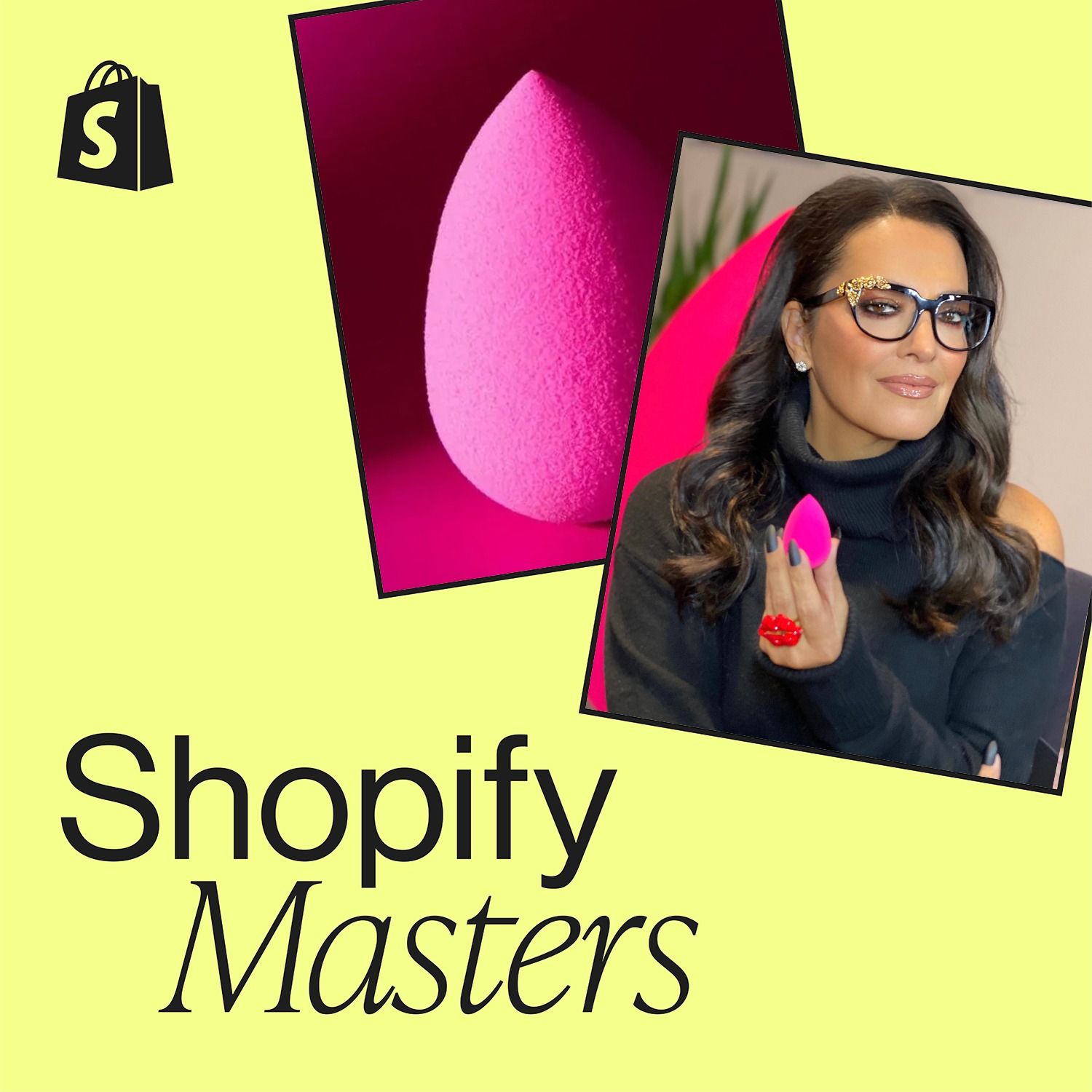
Shopify Masters
The Problem Every Makeup Artist Faces And How I Turned It Into Millions
00:43:55
Rea Ann Silva couldn’t patent Beautyblender, so she built brand recognition stronger than IP. Learn how she scaled, without investment, to sales every 12 seconds.
Loading summary
Transcript130 lines
- [00:00]
A
Basically, we're marketing a piece of foam, but we're talking about what it does to you.
- [00:10]
B
Rianne Silva built beautyblender into a category defining brand worth hundreds of millions of dollars. And it's still completely self funded.
- [00:19]
A
I didn't pay myself for about eight years. If I paid myself first, probably wouldn't have a business.
- [00:24]
B
And the strategy that made it possible. Becoming a sponge to all the information around her. While working 18 hour days as a Hollywood makeup artist, Rianne created a revolutionary design that changed the beauty world forever.
- [00:35]
A
This business for me is a dream come true.
- [00:38]
B
She picked up tips from her cast and crew and learned the rest by calling the 1, 800 numbers on the back of beauty product packages. Rihanna's here to share her approach to product development, retail partnerships, and even dupe culture.
- [00:50]
A
All of a sudden, people were gonna just steal it, right? But then I also realized when they spread, stop paying attention is when you have to worry.
- [00:57]
B
I'm your host, Adam Lavinter, and this is Shopify Masters, your companion for starting and scaling a business. Rianne, so excited to have you here. Welcome to the show.
- [01:05]
A
Oh, my God. Well, that was quite an intro. Thank you, Adam.
- [01:08]
B
I heard a stat that is so crazy that there is a beauty blender Sponge sold every 12 seconds.
- [01:16]
A
Yeah, I heard that stat too. My team did all the math behind that. It's crazy, isn't it?
- [01:22]
B
That is wild. I mean, when you reflect back 20 plus years, are you shocked by the trajectory of all this?
- [01:30]
A
Absolutely. Yes. No, I. I didn't create Beauty Blender with the intention of it becoming a consumer product at all. It was literally me MacGyvering something on set because I had a problem.
- [01:43]
B
Okay, tell us what that problem was.
- [01:45]
A
Okay, so I was department heading this show called Girlfriends. And. And I was working on several other shows at the same time. But Girlfriends was unique because it was the first show being shot and broadcast in high definition. And what that means for a makeup artist is that the makeup looks different on film. So I had the cast of these four beautiful women all needing to look natural and not like they were wearing a lot of makeup. And traditionally, for film, in order for makeup to actually transform a person, you kind of have to put a lot on. And then, of course, over the course of the day, when you're touching up more and more, makeup starts to layer on the skin. So with high definition, it was all about, like, keeping the makeup very sheer and natural. And that was the challenge. It was, how do I do these four beautiful girls that don't need a Lot of makeup to begin with, but how do I keep them looking consistent and natural all day? And so. So I started airbrushing them. And airbrushing is a beautiful technique of spraying, like, foundations and color cosmetics onto somebody's skin. But it's not very practical at all when you're on set because it makes a lot of noise. And if you've ever been on set, like right now, everybody's, like, really quiet in the studio, right? Because we're recording sound. If I was in the corner with an airbrushing machine going, chung, chung, chung, chung, chung, chung, chunk. I would be escorted out of the stage. So basically, I had to find a way to keep that airbrush look that I started in the trailer outside of the stage consistent throughout the day without using the airbrush. And it was just kind of by chance, I took a class. I'm a part of Local 706, proud member. And we do this ongoing education from time to time. And there was a makeup artist that came and shared. She was an Oscar winning makeup artist, by the way. And she came and shared some of her techniques about what she did. And it was this movie a long time ago called GI Jane with Demi Moore.
- [03:52]
B
I remember that one.
- [03:53]
A
Yeah. And there were some really big closeups on that film where she had to mask the makeup, and she started sharing how she did that. And so I took some of those techniques that she shared that day and applied them to the sponges that I was using at the time and tried to see if any of those techniques would actually work for me. And they did. And that was kind of how I started MacGyvering and cutting and using them wet and all the different things that Beauty Blender is now known for.
- [04:27]
B
So how do you find the first cohort of customers outside of your immediate network of people you're working with on set, friends and family, that sort of thing.
- [04:37]
A
So for me, because I was a professional, I was again, working on sets, working on all, you know, movies and television, commercial, music videos, all these different mediums. For me, I had a huge network of makeup artists, friends, and people that I came in contact with over the course of my career. And also, of course, being a part of the union was very helpful because there's, you know, hundreds and hundreds of makeup artists around the United States, if not the world that you have access to through the unions, if you're a union member. So that was my first strategy, was to get it in the hands of a makeup artist, because I felt like they were the only people that were going to really understand what it was that I was making. And they were all going to have the same problem because technology was changing. It was the time when we were going from, you know, shooting film into shooting, you know, digital high def was just a new term. It's crazy because everything is digital now, but at the time it, it happened in this transition period.
- [05:38]
B
You were kind enough to give me this year's version of the beauty blender sponge.
- [05:43]
A
Oh, no, you got the classic.
- [05:44]
B
Okay, the classic, which is beautifully designed. It kind of looks like an egg. I've got a pink one. But rewinding back to version one of this, and you said you were sort of MacGyvering this to life. What was the first version of the prototype that you felt like found product, market fit?
- [06:01]
A
It was an egg. It was always an egg. So what happened for me, and I think a lot of people that use makeup, makeup artists and even consumers will know that there's these triangular shaped sponges that are easy to find at any store. Those tools, those sponge tools were also the tools that professional makeup artists used for many years. But what we would do with those sponges is we would take little cuticle scissors and cut all the edges off the sponge. Because again, when you zoom in on a face like you're doing a super tight shot, you don't want to see the lines of demarcation where someone has dragged the sponge across the face and you can see lines. So when you buffer the corners and make them round, you don't have those lines of demarcation. So it began by me cutting triangular sponges, and they ended up being little eggs.
- [06:57]
B
Who was the first proper manufacturing partner that you had for the business and how did you find them?
- [07:03]
A
It's the same one I have today.
- [07:05]
B
Really?
- [07:05]
A
Yeah, yeah. That's why I'm in Pennsylvania. It's, you know, you said something about me when you were introducing me about 800 numbers and looking on the back of packages. So I was a very, very busy working makeup artist, and I used to travel with my clients around the world. And while I had this idea to make this rounded, egg shaped sponge, I couldn't find anybody to make it. And it certainly wasn't something that I could do. I mean, I would sit on the side of set and cut sponges, and so would my team. We would use them daily, so we would have to cut them every day. But you can imagine, I mean, that's no way to scale a business. So I started to look at sponge manufacturers and I would go from store to store from city to city, from country to country sometimes, and look on the back of these packages, see who's making these products, like, who can I contact that would understand why I want to create this new shape? And what I started to notice in my time, kind of like doing this in real time research, is that there were only a few companies and manufacturers that actually made beauty sponge material and distributed it. So I found one that was in the United States and Pennsylvania, and they happened to have an 800 number on the package. And I just called them. And there was a woman that answered the phone. Her name is Catherine Bailey. Really funny conversation because she was like, listen, honey, we have all these patents and I'm sure we have something that you are already talking about. I was trying to get her to sign my NDA, right? As a professional, I'd never seen anything like this, and I knew the benefit that it was gonna have for the future. So she wasn't willing to sign my NDA right away. And then she told me, well, you know, we hold so many patents and I'm sure we have something like yours, so I don't know, you're kind of wasting your time, and I'm a little relentless at times. And I said, you know, well, that's perfect, then why wouldn't you look at it? If you think you already have something like that, what's the harm of looking at it and signing my NDA? I guess I was a little pushy, so she relented and she signed my NDA and I sent her my prototype and it took several weeks. And she kind of said, it's the palm slap to the forehead. Why didn't we think of it? And I told her, because you're not a makeup artist and the people designing your tools aren't makeup artists. But I am. And so she started to help me, and then she was promptly let go from that company. And at first I looked at it as like, oh, my God, what am I gonna do now? But it was the best thing that could have happened to me or for me or for beautyblender, because now she was free to help. And she was the one that actually put me in touch with the manufacturer that I still work with today.
- [10:07]
B
Wow.
- [10:08]
A
Yeah.
- [10:08]
B
Is that unusual to have at this point, like a 20 plus year business proper brand, to have the same manufacturing partner locally, domestically, 20 plus years later?
- [10:22]
A
I can't really speak for anybody else. Everybody's circumstances and experiences are different. But I can tell you that the beauty blender foam that we make, Beauty blender out of is only made at this place. So even though, you know, I like to say I have a lot of fans, there are a lot of beauty blender dupes and knockoffs that are made, but they're all made in China and they're made with a different recipe, let's say. So one of the biggest reasons that I still work with the same manufacturers, because we have an exclusivity on this really unique material, a unique polymer that we make it out of. So they scaled with me so they also manufacture other foam products. I'm not their only customer. But what they do for beautyblender is exclusive, and that's why I've stayed with them. That's. I can only talk about myself, but that's why I've done that.
- [11:25]
B
So we were talking about an NDA in the context of manufacturing, but in general, what advice would you have for founders thinking about protecting their idea or their concept?
- [11:39]
A
Well, you need an attorney. You can find anything online, but I'm not an attorney. So I want to make sure that my NDA is tight. I think it's really important. And for, you know, this is something.
- [11:54]
B
This is something.
- [11:54]
A
This is something that I know happens because I have a lot of friends that will come to me with ideas and I tell them, don't tell me anything I don't want to hear. Don't send me your NDA because I want to remain your friend. And then, you know, if you share something with me and God knows somebody makes it somewhere else, you're going to be like, Rann told somebody, like, no, you have to get an NDA. And I think it's a way to maintain and protect relationships with people that you want to share information with. Hopefully they're going to information with you back. You know, the generosity that I've experienced by people sharing stuff with me has been invaluable. And when you have an NDA, it helps protect those conversations. But it can also be, for a young entrepreneur, an uncomfortable conversation because they feel. I know I did. I felt a little shy to ask about it sometimes. You know, like, do you mind signing an NDA? Like, I would worry a little bit about what that person would think, but it's a business transaction, and anybody who is your friend and is intentional with wanting to help you in any kind of way or at least be able to just, you know, understand what you're doing will sign an NDA.
- [13:12]
B
How do you protect against. You use the term dupe, knockoffs, competitors coming into your space, creating something that looks and feels like the Beauty blender sponge. But you know, of course it isn't. What are your defense mechanisms?
- [13:30]
A
Well, I mean, in the normal world of innovation, an innovator or a creator like myself would get a patent, right? I mean, there's patents and there's copyrights. I was not awarded a patent on beautyblender. And it's not for a lack of trying. I tried for several years. I tried until I couldn't try anymore. And every time you are rejected, you have the opportunity to try again, but then the costs continue to increase. So the advice that I got at the time was brand recognition is almost as important as IP protection. IP protection is as good as you can afford to protect. So when you're a small startup brand like myself, totally self funded, you, it's important to have ip, don't get me wrong, it's important to have patents, but you also have to be willing and able to afford to enforce them, which means you have to pay attorneys, you have to be willing to go into litigation, you have to be willing to go to the expense of protecting the ip. So for me, I didn't have that kind of money. So for me, what was really unique in my situation is that I was a renowned makeup artist doing editorial, film, television, and I had a lot of recognition. I was able to get a lot of brand recognition and get the word out about beautyblender for many years before anybody even paid attention to it. I say this very, you know, respectfully, the bigger companies, the l', Oreals, the Estee Lauders, were not really paying attention to tools. Tools were a category of products that, you know, they didn't invest in. So I was able to really appeal to the professionals in the world that they did pay attention to. And they started seeing beauty blenders in all of the kits and then they started to pay attention. But that span of time, from the time that I started to the time that the bigger brands started paying attention, I was able to gain so much traction and notoriety with the company name and the product name beautyblender that my brand recognition was the thing that kept me alive.
- [15:52]
B
What are the cornerstones? When you look back on Beauty Blender's trajectory, what are the cornerstones of that brand strategy?
- [16:02]
A
The biggest one is brand recognition.
- [16:04]
B
You know, awareness.
- [16:06]
A
Awareness, yes. And at the time too, if you think about back then, we didn't have all the social media platforms that we have now. I think there was really Facebook and MySpace. So really I depended on beauty editors that covered my product. So awareness came through magazines, through editorial, through publishing. It was a very different world than it is now, and it's moved a lot slower. Everything moves so fast now because everything is everything all the time, everywhere. Right. Where before there was the beauty of having a little bit of time to gain momentum and to really appeal to your audience and really educate them about your product, where now it's just boom, boom, boom. Everything is so quick.
- [16:50]
B
When you were talking about manufacturing partners and patents, you mentioned that you were self funding the business early. Fast forward to today. The business is still completely self funded, correct?
- [17:01]
A
Correct, yes.
- [17:02]
B
What is it about that? Is it that you want to maintain total control of the company, that you don't want to take outside capital, that the company doesn't need outside capital because you've got the margins, you've got the EBITDA or whatever. Why?
- [17:15]
A
Yes. So all of it for many years, I didn't need it. The truth is, I had so many friends that were brand founders that took investment or started with investors, and it was never a happy story, you know, and for me, I was enjoying my ride. I was enjoying founding beautyblender, creating other products. And just if I didn't need the money, I didn't understand why I would lose the autonomy and bring in an investor at the time. Now, you know, I understand it more now, 20 years later. 20 plus years later. But at the time, I just never did. And then there was the timing of the world. You know, there was a little thing called the pandemic that happened. And, you know, all of us in the beauty space were really nervous. Suddenly nobody was wearing makeup anymore. Like, there were just things that went on and happened that just kind of naturally, organically brought me to the place where I'm, I'm still here doing this. You know, I don't necessarily feel the same way because I'm in a different place now where I understand why a brand wants an investor. I mean, there's strategic investors, there's people that help you along the way, especially when you're a young brand. I think it's really important.
- [18:40]
B
Have you ever considered.
- [18:42]
A
Yeah, of course I have, but it's like a. It's like a marriage, Adam. I need to find the right, you know, work partner.
- [18:48]
B
Okay, but what about that? I mean, I think there's a lot of listeners, viewers that don't perhaps understand what it means to take on venture capital or outside investment.
- [18:57]
A
Yeah, well, I don't really either because I haven't done it. So let's just be clear about that. I can just give you what my.
- [19:04]
B
But you watched so Many.
- [19:06]
A
Yeah, no, I've definitely spoken to my friends. There have been success stories, but there's also been more challenges than not. But I really, you know, they will all tell you that, you know, you have to find somebody that you're aligned with, somebody that understands your culture and where you're trying to go in the future. I think those are really important things to be aligned in finding the right investor.
- [19:29]
B
I read something that you have some sort of vision boarding slash mental pathway process for seeing the future, as you say.
- [19:38]
A
Really? Oh, my God. What did you hear?
- [19:40]
B
I don't know. I've read that somewhere.
- [19:42]
A
You know, it's. I do, but it's. It's not very. It's not very academic or like anything like that.
- [19:50]
B
I mean, it's spiritual.
- [19:51]
A
Yeah, it's more spiritual. Honestly. It is like I find that there. There's this time for me between winding down my day and actually falling asleep that it's like my brain starts to download stuff. So I always try to keep. Well, now it's my phone, but for many years I had a notebook and a pen and paper next to my bed and I would just come up with ideas or, or things. I'm a great list writer. I write a lot of lists and I like to check off my list. Like, I feel very satisfied when that happens. And I would write things down that I would dream about or think about or feel would be a good idea. And I know it's not necessarily like looking at a trend report or you can subscribe to trend reports, and it's very different for me.
- [20:46]
B
Speaking of list writing, also saw that you like the one task a day rule as a motto.
- [20:51]
A
Yeah, I do. I feel like it's really important, especially for young entrepreneurs and people that are passionate about an idea. Look, we can all get discouraged and deflated and distracted with life. Life is challenging, you know, and I think like completing one thing a day and moving forward is important because I can't tell you how many artists and hairdressers just, you know, all kinds of different people that have said, rhianne, how have you done this? What is your secret? What do you do? There's no secret. I said, the thing is, you have to keep your passion alive and you have to do one thing every day that is a step forward in getting you closer to whatever the goal is. And there's different goals in different phases of the business too, but those come afterwards like you do, one step at a time. The way I was able to succeed, I was a single parent. I was working. And when you work on set, your time is not your own. It's not a 9 to 5 clocking in, clocking out. They tell you when to eat, you arrive when you arrive, you wrap when you wrap. And then during the time that you're there, you still have to do so many things. So for me, it was just being able to check off with all the other things I was trying to manage every day, to check off one thing every day that got me closer to my goal.
- [22:11]
B
In those early days, how long did it take until the business reached a specific level of scale where you could pay yourself out of the business?
- [22:22]
A
I didn't pay myself for about eight years.
- [22:24]
B
That's a long time.
- [22:25]
A
Yeah. And I hear, like, I have, you know, these really successful friends that have gone to, like, the Wharton School of Business and all these business schools, and they're like, no, you pay yourself first. And I'm like, oh, my God, if I paid myself first, probably wouldn't have a business because I kept throwing all of the money that I would make and then whatever I had left over from my own makeup income into the business to keep it going.
- [22:50]
B
But when founders hear that, I think the first question that comes to mind is like, how are you, how are you living if you're not paying yourself for all that?
- [23:00]
A
Well, I had a thriving makeup career and I was a very high paid makeup artist.
- [23:05]
B
So you're paying yourself that way?
- [23:06]
A
Yeah. I mean, I have to say, we live in a world now that's very different. I have so many makeup artist friends that I respect and I love, but I can tell you that when all of this was going on, it was a very unique time in entertainment, a unique time in beauty. I would double dip, triple dip, do two or three jobs. I'd have one set going with a group of makeup artists. I'd start another one, and then I'd go do like a do and go for someone that's doing a red carpet. I would do like three jobs in one day, and each one was paying me a couple thousand dollars. So I would, you know, I would. That's how I lived.
- [23:42]
B
Who was the first retail partner that said yes?
- [23:46]
A
Well, they were my pro stores. So, you know, most makeup artists that, that do film and television don't really, like, shop at Sephora. They go to these pro stores that carry every brand imaginable that you can think of, and if they don't have it, they'll go out and shop for it for you. So when you're working every day on Set, you don't have time to go shop. Right. You have to call somebody that can satisfy all your needs, get everything that you need for your next job, your current job, your kit, all these things. So the pro stores knew me very well because I always had what's called pos purchase orders from different studios going on. They all knew who I was. So when I created beautyblender and I pitched it to them and I showed them what it was, they actually understood what it was because they knew what was coming. And so they became my first customer.
- [24:38]
B
And now. How many doors are you in?
- [24:41]
A
I'm not really sure. I think it's about 6,000. Maybe more. Yeah, maybe more. It's a global brand.
- [24:47]
B
Yeah.
- [24:47]
A
That's why the 17, you know, a minute number is what it is. But it's because it's. It's everywhere.
- [24:55]
B
It's everywhere.
- [24:55]
A
Yeah.
- [24:56]
B
So many questions I think viewers would have around what makes for a good retail partnership. And also, what are some things about going into retail that a founder should understand if they want to go omnichannel? Let's say they started online and now they want to take the product in store. What can you share?
- [25:15]
A
They're two totally different ways of presenting and selling your product. So, you know, when you start off and you're like, natively a D2C brand, it's a very different business because you're not really touching your product once it comes, leaves the warehouse. Right. Like everything happens before. But when you sell to a brick and mortar retailer where there's consumers that come into the store and there's visual merchandising and there's mapping and there's all the different things that happen inside of a store. It's a more detailed, more complicated business. And your relationships and communication are really the most important, important superpowers you have in that circumstance, because you're competing, you know, inch by inch in those retail environments.
- [26:05]
B
With every other brand, what about inventory commitments or shelving fees or other financial requirements or barriers that the retailer may place on the founder early on?
- [26:21]
A
They are real. You have to have inventory. You have to be able to see scale. Some of the retailers, especially like my retailers like Sephora and Ulta, they've created these incubation parts of their business where they support small brands because they realize that it is quite an investment. It's expensive to plan out inventory, pay for inventory, produce inventory to sell, and then also have the visual merchandising expenses, not to mention the promotional expenses that go on in each of these retailers that they expect you to, you know, pay for. So it is, it is more than a notion. And I think again, for me, timing was everything because when Beauty Blender started, there really was no D2C business. There was no E commerce business. It was all brick and mortar. And for Beauty Blender, what I didn't realize at the time, again, God, is so good, I had one skew. You know, you think of a makeup brand, they have maybe 100 SKUs because they have foundations in 20 different colors and, you know, eyeshadows, blushes, everything that they have. Beautyblender was one tool, one skew. So it was much easier for me to scale that than it would be like for a brand that has four or five SKUs that they're starting their brand with. So I think your question is it's very complicated, it's very expensive, and that's why people have investors. From the beginning, I was going to ask.
- [27:49]
B
Yeah, I mean, 6,000 doors sounds like a lot of doors. And just when you think about it just from a very high level, you think, well, this would be something where an injection of capital would help.
- [28:03]
A
But still, it is. It's definitely important now. I think. I think it's really, really almost impossible to do what I did now. You know, I don't think that's the way these new brands are operating, the way they're planned. You know, there are also founders that plan their exit before they even start. You know, like they have a three or five year plan with an investor and they're in and out. I'm telling you, beautyblender was a completely different animal.
- [28:34]
B
I mean, it seems to me that a lot of the way that you've run the business so far, it's. It's like you weren't planning for the exit.
- [28:42]
A
No.
- [28:43]
B
You were solving a problem, having so
- [28:45]
A
much fun like this. This business for me is a dream come true. Like, if you can imagine, like I'm a makeup artist, I feel like I reached my ceiling there. Like I was making as much as I was ever going to be able to make. There was only 24 hours and seven days a week. I couldn't work anymore and I had to see my kid. For me to have a product that gave me income while I didn't have to be there was a dream come true. What do they call it? Like passive income? Right, passive income. I had never experienced that because every dollar I ever made before Beauty Blender was me working. I don't know that people can actually do what I did anymore. I feel like I was very lucky and I love what I did and I just never thought of doing anything else afterwards. This was my second chapter.
- [29:37]
B
You know, you said something early on that I want to come back to this idea of like, keeping the passion alive. It's a lot for founders to consistently maintain that high level of motivation or passion. So how do you keep that passion going for a beauty blender after, say, 20 plus years?
- [29:59]
A
Yeah. You know, all I can say is that it's about authenticity. Not everybody goes into business because they are authentically excited about what they're doing. A lot of people go into business to make money. Right. I mean, that should be what happens when you're spending so much time thinking about something and trying to make a business. But I think for me, the reason why I have been able to stay passionate in my business is because it is authentically who I am. I'm a makeup artist. And you know, makeup artists, we are constantly trying to figure things out, how to make things better. And I like that game and it's what keeps me engaged. And I think that is how you keep your passion. If it's just solely focused on money, I mean, money's great. You know, you can take trips and you can buy things and you can take time off. That's what money's good for. So you can restore your passion. But yeah, I think keeping your passion is really rooted in being authentic to whatever that business is that you're in. Because if you actually really love the business, it's not hard to be passionate.
- [31:21]
B
It's an important topic to explore right now. This idea of maxing out on one's capacity or burning out. You've been at this for a very long time. Have you ever experienced burnout?
- [31:36]
A
I am not really sure. And I'll tell you why. I started being a makeup artist in music video. And you know, that was not a union regulated type of production.
- [31:50]
B
The MTV era.
- [31:51]
A
MTV era, right. Like, you know, California Love. Like I did all these classic videos that we would shoot around the clock. So my point is just I have always been a workhorse. Right. Like, I actually feel like my makeup career I worked harder at than my founder's career. There's some benefits to owning your own company and being your own boss. Where in the world that I was living in as a makeup artist, like I think I said earlier, like, my life was not my own. I ate when they told me to eat. I showed up when they showed up. I rapped when I rapped. Being a founder, you can kind of design your life. In a way that is a little healthier. So for me, I don't know, I might have burned out five times already, but because I am a workhorse, I just feel grateful and I feel happy to be here. And I feel like I owe it to my customers and the people that have been so loyal and wonderful to me to keep going. And it feeds me. So I don't know what burnout is. I might have burnt out 10 times.
- [33:09]
B
Somebody once shared with me that burnout happens when you're out of alignment. And so long as you're in alignment with your passion.
- [33:16]
A
Yeah.
- [33:17]
B
You don't burn out because your energy and flow is in the right place. And to your point, it feeds you.
- [33:22]
A
Yeah.
- [33:23]
B
So I don't think that what you're saying is necessarily off base. I think it's perfectly.
- [33:28]
A
Oh, good. Because I keep thinking there's something wrong with me.
- [33:31]
B
No, I mean, it makes. It makes total sense.
- [33:34]
A
Okay.
- [33:35]
B
Do you think about lifetime value as a key metric for beauty blender? And I asked that question because, you know, rewind. 10, 20 years ago, there wasn't this hyper focus on customer LTV like there is today. There might be a focus on, say, AOV or average order value way back when. And what are. What is the margin of that initial transaction? What are the unit economics? But today, you know, there's this constant obsession with how do I keep customers coming back and buying more for beautyblender. What is the strategy here, if there is one?
- [34:11]
A
Well, you know, obviously it's a marketing strategy, and it's, again, beauty Blender being uniquely positioned as the category creator, the original. There. There are things that we can say that are authentic and true that the knockoffs and the copycats can't really do. They pretty much copy what I do. For me, I really think that is how we do it. We educate, we talk about the uniqueness. I mean, basically, we're marketing a piece of foam, you know, but we're talking about what it does to you. It's about your community. It's about, you know, your legacy, your history. You embrace all of it, and you talk about why this and not that. On that note, too, I will say, like, there was a moment in time where I started realizing that people, like the bigger companies were paying attention. And also, you know, manufacturing overseas became really what everybody was doing because of margins and pricing and everything. There started to become beauty blender knockoffs on the market. And at first, it really. It disturbed me a lot because I felt like here I had given birth and created this thing. And all of a sudden, people were just gonna just steal it. Right. But then I also realized, like, I need competition in my market in order to continue to tell my story. Why I'm the best, if I'm just the only one, then it doesn't make any difference. So for me, I think competition also helps, you know, keep that story alive. And I think it's that story of just. And again, beautyblender being the first and the category creator and being unique. I can talk about being in the Smithsonian and I've won 19 best of beauty awards from Allure magazine. There's all these storytelling truths that I get to say about beautyblender that. That the other ones can't really say.
- [36:04]
B
I'd also say that fierce competition is also an indicator that you've tapped into something.
- [36:10]
A
Absolutely.
- [36:10]
B
There's a huge market for what you're selling.
- [36:12]
A
If nobody cares, if there's no competition,
- [36:16]
B
you ain't got anything.
- [36:17]
A
Exactly.
- [36:18]
B
I always tell founders, like, competition is healthy.
- [36:21]
A
Right.
- [36:22]
B
It validates the way that you have
- [36:24]
A
something when they stop paying attention is when you have to worry when they stop. It took me a while to get there, though. I mean, at first I was very concerned and, you know, threatened and because I am self funded and, you know, these knockoffs are, you know, quite a bit.
- [36:39]
B
And the no patent thing.
- [36:41]
A
Yeah, well, yeah, the patent thing though. But really, like the money I would have had to spend to protect my ip, I often wonder about because not having it, I had to protect Beauty Blender in a different way. I don't know.
- [36:57]
B
Yeah, I think you raise an important point when you said that, you know, I had no other choice but to build a brand as a way to defend myself because I couldn't get the patent right or it was going to be too costly. And I think that's. No, I couldn't get it or you couldn't get it.
- [37:14]
A
I couldn't get it. I was an important lesson. Refused. I tried. I hired different attorneys. I tried every way. And you know what's so crazy? They didn't give me a patent and I kept being rejected and I would keep appealing it and reject it and appealing. You know, every time you do that, it's more expensive. Not just you're paying your attorney fees, but the actual appeal becomes more expensive every time you do it. So at some point I was just like, oh my God, I just have to have brand recognition as the only thing that is going to save me. But the crazy part is that a couple years ago, the actual patent office, the pts or whatever. They wanted to interview me about my experience with beautyblender. And I took the full opportunity to say, how dare you? You guys would not even give me a patent. Like, why do you even care about me right now anyway? Those are some of the ironies of life that I think are just so funny.
- [38:14]
B
100%.
- [38:15]
A
Yeah.
- [38:16]
B
So, Rhianne, doubling down on this idea of bringing back customers, generating lifetime value and loyalty, is there anything that you're doing specifically around product line extension?
- [38:28]
A
So I think it's really important for your customer and your consumer and your community, again, to understand that you are authentically innovating in a space that makes sense. So, for example, I have a very narrow focus. Beauty Blender is the number one tool in the world because it applies your complexion products flawlessly. So I'm not gonna turn around and then make shoes, okay? Your innovation has to make sense, and you have to lead your consumer on this journey with you in your innovation. So, for example, Beauty Blender is my number one tool because it is the best way to apply your complexion products. So then I created my number two best tool, which is called Power Pocket Puff. And that is also a complex tool used in a different way with powders and used in a way to extend your makeup application longer. So I think when you're able to show your community and your customer that you're not only being thoughtful about the quality and the product you're making, but you're being thoughtful about the things that they might need along the way. So it has to make sense. And again, quality is really important too. And we live in a time now where it's so much easier to do that storytelling because of social media, because of TikTok, because of Instagram, because of all these different platforms that you can really lead your consumer on a journey with you, and that's how you keep them with you.
- [40:02]
B
When you look back on your 20 plus years building this, obviously a ton of success. But are there some mistakes, some major mistakes that you look back on that you say to yourself, like, I would have done that a lot differently?
- [40:15]
A
Absolutely. I think the only way you learn is through your mistakes, right? I mean, yeah, I could give you three, but I. I think for me, what I have learned in the most dramatic way is because the people that you surround yourself with are the most important lessons, right? Learning how to identify the right executive, the right team member, the right person that is going to help you get where you're going to. Now. They're all going to tell you they are, but how to identify that they are the right person. And really, the only I know. Maybe the next question is, oh, Rhiann, how do you do that? Well. Well, you. Only for me, it's been through hiring the wrong people that I've learned very costly lessons through.
- [41:11]
B
What do they say? Hire slow, fire fast?
- [41:13]
A
They do. They do.
- [41:15]
B
There's a reason for that.
- [41:16]
A
Yeah, yeah. And I have hired slow and fired slow, and it has hurt me. So I've learned.
- [41:24]
B
Yeah. What does your team look like today? And is everyone fully remote?
- [41:28]
A
That's a really good question. So at the height of. When I say the height of beautyblender, like, there was a time pre Covid where, I don't know, I think I just grew too quick. And so it was at that time I hired a new executive because I had entered the complexion category. I started making makeup, and they're very different businesses. So I had people working on my business that were tool authorities, and then I had another group of people that were complexion authorities. And by the way, still today in Bethlehem, Pennsylvania, I have my executive headquarter offices, and I have a warehouse and all my assembly. So everything that you see around the world that is from beautyblender is assembled and shipped out of this place. So I had a lot of employees. So today, after I would say, the last two or three years, I've learned to kind of contract my business a little bit, make it a little leaner. And I have now probably only about 30 employees, where before I had about 100.
- [42:36]
B
Yeah, yeah. Is that freeing to run such a lean operation at this level of scale?
- [42:45]
A
You know, it's like a slap and a kiss. Right? Like, it's crazy. You know, I still run my business like a family business, so I really do care about every single person that works for me. And I know them and I see them and I know their names and I see their kids. So it's painful, right? It's painful to make some of these decisions, but at the same time, it is spraying because you see it in your financials. You see how everything changes, and it has been for the last two years, for me, all about becoming sleeker and leaner and able to pivot and move quicker.
- [43:27]
B
Well, congrats on all the success. It's incredible story. Thank you. I have to say thank you. Wonderful to chat with you today. I hope you enjoyed today's conversation. Let us know what you thought of today's episode in the comments below. Don't forget to follow or subscribe to Shopify Masters, and I'll see you next time.