← Shopify Masters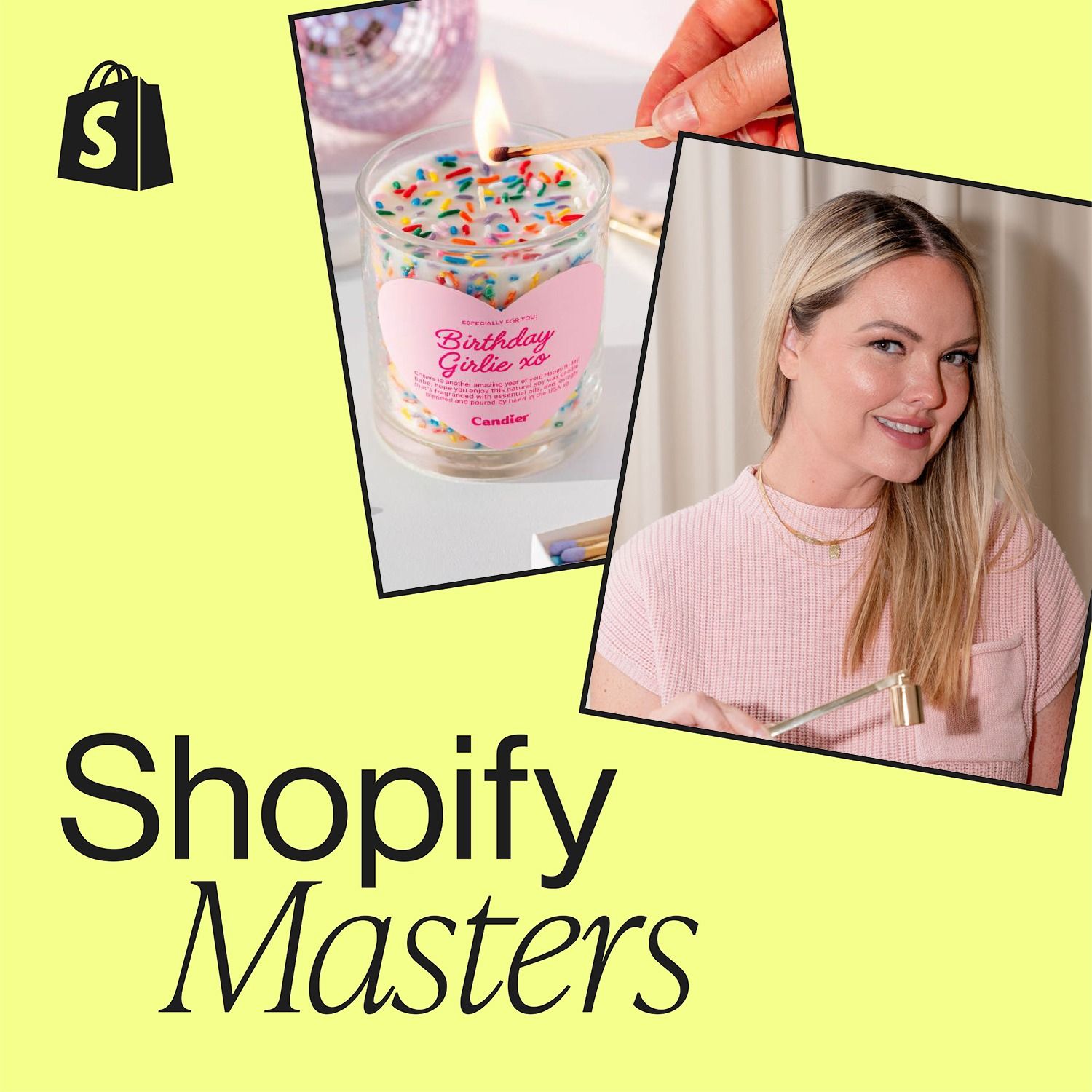
Shopify Masters
The Scrappy Outreach Strategy Behind Candier's $14 Million Retail Empire
00:36:51
Krysten Kauder built Candier—a bold, irreverent candle brand with names like “Girl, You Need to Calm the F Down”—into a $14 million business stocked at Target, Whole Foods, and Ulta, and she did it without a PR firm, sales team, or single networking event.
Loading summary
Transcript102 lines
- [00:00]
A
There is a reason why people say the whole face your fears. Because if you don't, then the fear is just going to get bigger and bigger and bigger.
- [00:10]
B
Welcome to Shopify Masters, your companion for starting and scaling a business. I'm your host, Serena Smith. Kristin Kowder started with personalized jewelry, sold out of her apartment before pivoting to build Candy Air, a fragrance brand known for bold messaging, premium hand poured candles, and a voice that's equal parts funny and feminist.
- [00:26]
A
Girl, you need to calm the f down is our first candle and it really related to me.
- [00:32]
B
Since launching in 2016, she's generated nearly $14 million in revenue and landed on shelves at Ulta Beauty, Whole Foods, and Target.
- [00:39]
A
I'm a little investigator. Like, I've always kind of been like that. If I want something, it's going to happen.
- [00:46]
B
Today she's opening up about when to walk away from your first idea and what it really takes to build an indie brand on your own terms. Kristin, welcome to the show.
- [00:53]
A
Thank you so much.
- [00:55]
B
So I was looking at your extremely fun website and your candles have these like wild names, you know, Girl, you need to calm the. Which I believe was your first candle ever. Matcha, My freak. And my favorite 3am Bodega hookups. If you've never, you must.
- [01:12]
A
Yes.
- [01:13]
B
You're also a self described introvert. So the question for me was like, where does that bold, unapologetic voice come from? Is that inside you?
- [01:26]
A
Yes, I guess, I don't know. Like, girl, you need to calm the f down. It was our first candle and it really related to me. I deal with anxiety and it's, it's just funny like the way it blew up. We were like, okay, people love these real and funny candles. So we just kept adding on the candles and they blew up.
- [01:53]
B
I think like with a lot of candle makers, the process begins with fragrance and then they sort of like build packaging in the other components from there. Is that the starting point for you or is it about the messaging first and then it leans into the fragrance and the other components?
- [02:07]
A
Yeah, it was about the messaging first. So we were first actually making bracelets and then my photographer came to me and she was like, you know, if you want to make candles, my partner has a candle manufacturing, like warehouse. And I was like, okay. And then I like looked at his website and they were candles, like made out of wine bottles, which wasn't really our vibe. So I was like, so close to just being like, no thanks. But I brought it to my then boyfriend, now husband slash partner, and he was like, you know, I think we can make these look a little bit cuter. So his background actually is fragrance at Abercrombie and also Victoria's Secret, and he has a great eye for branding and things like that. So, you know, after speaking with me about messaging and everything, we made the Girl youl Need to Calm the F Down Pink Candle. It was definitely messaging first fragrance at
- [03:06]
B
Abercrombie and Fitch and Victoria's Secret are. It's both, like, iconic. I mean, I think if you grew up in a certain era, that scent wafting out of the doors of Abercrombie and Fitch, like, never leaves you. Like, I will still recognize it from two blocks away. That's pretty incredible that you had Sean in your. In your back pocket to help you with this. And I want to talk about that a little bit more in just a bit. But let's talk about the bracelet company that preceded this. Like, this isn't your first go at being an entrepreneur. You were making these custom Alphabet bracelets under the name Ryan Porter. It was a fully fledged business. Can you give me just, like, a quick snapshot of that era, what you were building and how big it actually got?
- [03:52]
A
Yeah, so I do miss that era. Like, Alphabet bead bracelets are my baby. It was my first product, but I lived in New York City, got panic attacks, moved to Ohio, met Sean. He did art in this on the side, and we went to a, like, craft store, and I saw Alphabet beads, and I was like, oh, that'd be cool to make jewelry out of that. And he was like, why don't you just do it? I'm like, okay. So I was only working retail at that point, trying to get my mental health together. And so I just taught myself how to make Alphabet bead jewelry. And then I made a Instagram account, and I think it was Seventeen magazine that reached out to me, and they were like, you know, send us some bracelets that say, like, 17 mag or, like, yada, yada, yada. And so I did, and they posted it on their Instagram, and I could not believe. I was just shocked. So from that point, I was like, I'm gonna DM everybody. So I would go to the store, get magazines. A lot of people don't know what mastheads are, but it's like the first couple pages in a magazine that tells you all the editors. And so I'd find the editor on Instagram, DM them and be like, I'd love to g a personalized bracelet. What would you like on it? What's your shipping address, and if something came of it, amazing. But if not, whatever. So I got pressed from that. And then I also found I'd watch today's show and Good Morning America and figure out who were the people that were talking about, like, trending items and things like that. And I'd find them on Instagram, and then I DM them the same message. And I'd be like, just keep us in mind for any, like, features you think we'd be a good fit for. And we got on literally, like 10 times each for Today show and Good Morning America for our bracelets, custom bracelets. And that kind of just blew us up. And then I was like, okay, we need to make a brand name. I can't just be, like, a little Etsy account that was named, like, Kristen Couter Designs, because I didn't even think of a brand name. So when I was working retail, I would sit there when we were, like, dead and think and, like, jot down a bunch of words and names. And so Ryan is a big family name for me. It's my middle name, my goddaughter's name, my mom's maiden name. And then porter means to wear in French. And I just stuck the two together. And Sean helped me create a website.
- [06:12]
B
And, yeah, the rest is history, right? I mean, the thing that strikes me as really wild about this is, like, it sounds like you started this, like, very organically and without really the intention of it blowing up. And then all of a sudden, you're dming these editors of these huge magazines, and they're featuring you in the magazines. You're getting on today's show in gma. Like, how were you able to scale up in those moments when you would get these spikes of sales?
- [06:39]
A
Oh, yeah, Good question. So, honestly, today's show and Good Morning America would be like, oh, can you make sure that you can get these orders out in, like, one to three days? And I would just be like, yeah, even though I. I knew it's going to be like, a few more days, but I did not want to lose that. So I would have a st stack of orders, and I'd be like, oh, my God, I'm going to hate my life for the next week or so because it was just me making all these custom bracelets. Then we come to a point where I was like, this isn't really scalable. Like, I can't just keep making custom bracelets all the time, even if I, like, hire people to help me. It's just very complicating. And we also had a ton of brands coming to us for custom message product for, like, events or for a gift with purchases. Like Nike came to us for. For product. Victoria's Secret, not. Not through Sean. Like, I found the contact myself. They ordered, like, 5,000 bracelets for a Snapchat, like, giveaway thing. And it was going, like, amazing. But I got to a point that I was like, yeah, this, this is going to be hard to scale. And then also, like, it was a couple things that happened at once. I also saw a competitor which I didn't know was around, which everyone probably knows. This huge Alphabet bead company that's out was growing very, very fast. And so some retailers would be like, oh, we already carry such and such a brand, so we don't need another Alphabet bead brand. And so that was a bummer, but realizing that. And then also the photographer connection of the candles. Like, we. One short period of time, we did bracelets and candles. But with those two things, I realized maybe we should just focus on the candles.
- [08:34]
B
Yeah, it's interesting you talked a little bit about also, like, the very organic nature that the candles came to be, which is cool. And I think it's. It's a testament to you to recognize when there's an open door and you're like, maybe I should walk through it, you know. But the bracelets to candles pipeline isn't necessarily, like, so obvious. Although I think the through line is that you have this messaging element, right? You had the messaging on the bracelets, and you have the messaging on the candles. When you decided to go in the direction of pursuing the candles at the time, did you see it as a complement to the bracelets, or was there sort of a vision in your head somewhere that thought this might be the thing that takes over?
- [09:14]
A
When we were working with, like, other brands that wanted customers, bracelets, you can only put so many letters and words on a bracelet, and we actually had added keychains for that reason. And so when candles came about, it was just like a perfect fit. Like, duh, like, why don't we stick with candles? Because you can have, you know, a longer message.
- [09:37]
B
It's a smart, strategic decision. But we all know that when you're a founder, these businesses are your baby. You know, it's a piece of your identity. You never forget your first love, and you never forget your first business. Was it tough to let go of the bracelets?
- [09:54]
A
Oh, definitely. I still, to this day, like, I. I get bummed, like, you know, when I see a competitor out there and I'm like, that could be us kind of thing, but candles are like my new baby. And luckily, I don't see any other candles out there with our, like, fun, sassy messaging and personal.
- [10:16]
B
Yeah, actually, can you describe the candles a little bit for our listeners? There's obviously the really fun messaging, but there's also kind of like the prop component on the top. Walk us through them.
- [10:27]
A
Yeah. So all of our candles are handmade in America, which we're very proud of. And a lot of them, at least our bestsellers, like, have molds on them. So whether it's one of our top sellers is Espresso Obsesso. So it looks like a glass of, like, iced coffee and it has, like, ice cubes. And then we also have Matcha My Freak, which looks like a glass of matcha. Our very big bestseller is the birthday candle, and it has sprinkles. And then what else do we have? Flower candles. So those are good for, like, weddings, things like that. So, yeah, we like to put a lot of fun type of molds or embellishments in our candles.
- [11:12]
B
It is super fun.
- [11:13]
A
Thank you.
- [11:14]
B
And who is the prime candier customer? And has it changed over time?
- [11:20]
A
I wouldn't say it changed, but typically women from like their early 20s to late 30s.
- [11:28]
B
Yeah, it's girly.
- [11:29]
A
Yeah, definitely.
- [11:32]
B
What about Ryan Porter really worked that
- [11:35]
A
you knew to apply to candy air DMing, everybody. Social media, for sure. And also, I feel like I'm the little investigator. Like, I've always kind of been like that. If I want something, it's going to happen. Like, I knew from the beginning I was like, I'm going to feel like I made it. If I get Target and Disney, which seemed kind of crazy, but I just research a lot, find people, find out their email address format and, you know, message them and say it. Like, same thing like with Instagram. Like, at the beginning, I'd be like, oh, I'd love to gift you a custom bracelet. Let me know what you would like. Nowadays, it's, you know, I think our candle would be a great fit for your store. We can also, you know, do a custom, different message if you'd like, let me send you a sample. And I feel like if you offer a sample and people aren't going to say no, and then you follow up and say, like, oh, I saw you received our samples. Let me know your thoughts if there's anything special you're looking for. Yada, yada, yada.
- [12:37]
B
Well, I mean, it sounds so simple. Literally, like, do the research, find people's names. Reach out, make it personal. What was your response rate in the early days with both Ryan Porter and then also with Candy Air? Were most people getting back to you and accepting product?
- [12:57]
A
No, I. I literally would email. Oh, my gosh. I'm not exaggerating. Like, 50. 50 people a night. Wow. Yeah. Yeah. I use that time at night to do things like that. And maybe one or two people would get back to me, and one would say, no, and one would say, sure, send me a sample. I learned that if people aren't getting back to me, that might be in my category. I'm gonna try someone in a different category and see if they'll forward me on to somebody else that might say yes. And so, like, if I get a no, I'm. It's not gonna let me down. I'm almost like. More like, oh, I want to get this.
- [13:37]
B
It's interesting because you've described yourself as both an introvert and somebody who deals with anxiety that's severe enough that you were having panic attacks, and yet you were engaging in this thing that's really terrifying for a lot of people, which is, like, cold outreach. You know, it, like, freaks people out. Was there any sort of reticence or feelings of, ooh, like, what business do I have doing this? Or were you able to just take it all in stride?
- [14:07]
A
Yeah, take it all in stride. I feel like if I'm not gonna do it this way, then how am I gonna do it? That's how I kind of felt like I am not the type of person to go to networking events. Let's just say that. So I'm like, if I'm not gonna do this in person, I need to do it via email.
- [14:30]
B
So, yeah, Safer with a screen between you.
- [14:34]
A
Yes, definitely.
- [14:35]
B
Is that scrappy approach something that you would still recommend to other entrepreneurs today?
- [14:41]
A
Oh, definitely. I mean, it's worked for us, like, the past, what, 8ish years? I think it works for a ton of different, like, cases. Like, we've. We've gotten celebrities through DMing. We did a candle with Tiffany Amber Thiessen. Um, and then one of the first iconic. I know we got on a FaceTime with her, and I about died, but. And then who else? One of our first celebrities was Juliana Rancic. She posted her bracelet that said Duke, her son's name on it, and it just blew me away. But, yeah, I mean, I feel like there's a lot of maybe pressure out there to be very professional and corporate. Y still. And no, I mean, we got our success basically from Social media. So, right.
- [15:34]
B
You experimented with using a PR firm at one point. You went in sort of the more corporate, formalized, professional direction. Did it pan out for you?
- [15:47]
A
No, I, I mean they did get us a few features, but it just wasn't worth the money, honestly. Like I said, like sometimes even me not reaching out, we would get features before working with a PR company. Like we got on Forbes like for the, one of the best candles, which was our birthday candle. And yeah, it's just, in my opinion, it's not really worth it. I feel like when you're first starting out, at least you don't have the money for that.
- [16:21]
B
Yeah, I think it's a great piece of advice. Not only that sometimes you have financial constraints that don't allow you to spend the money on something like a PR firm, but even that, when you might have the resources, it still might not be the best approach. It sounds like for you going the personal route has just proved more advantageous this whole time around. You also spent some time earlier in your career interning at both Teen Vogue and Vogue. So you had a sense of how journalism and magazines work. Do you have any tips for crafting the kind of reach out messages that people might actually respond to? What to include how long they should be tone, anything of that nature?
- [17:09]
A
Yeah, so short, I feel like is definitely the best way to go. You know, these editors get pitched a million times a day and you just need to get to the point. I always keep mine literally like three or four sentences. The last sentence is always like, you know, I'd love to send over the product if, if you're interested. Other thing I was going to say is learn what a masthead is and look for the editor's name in the magazines.
- [17:36]
B
I mean, if you haven't picked up a physical magazine in a little while. This probably sounds pretty antiquated, but the masthead is generally in like the first couple of pages. It's where all of the editors and like major staff on a magazine are listed. It's important. We have to explain what it is.
- [17:55]
A
You know, I know, I know, it's crazy. And then like, you know, a lot of, how do I say, like the, the digital world today, you know, you need to go on like popsugar.com and see what people are writing about to find those editors because they write for, you know, multiple, usually multiple different websites. So, you know, pay attention to who's writing what and then pitch that person.
- [18:21]
B
And with Urban Outfitters, right. And then you got into all these other retailers which we'll talk about as well. But with Urban Outfitters, was that you reaching out to them or did they find you?
- [18:32]
A
They found us.
- [18:33]
B
Just like 17 wild.
- [18:35]
A
Yeah, I know. It is wild. I don't know how, honestly, to this day, I don't know how she found us, but. Because we weren't that big back then when she did. And then Whole Foods, though. So this is another thing. We got into Ulta through a broker at a trade show. But. And, you know, you have to, like, pay them a commission and everything. And I'm kind of looking back like, oh, I wish I didn't do that. I probably could have gotten Ulta by myself. Because you're scrappy. Yes. And Whole Foods I got myself again. I use the same principle. I just tried to find the buyer in my department, which was like, home decor, but you can also try adjacent categories. So I remember just emailing, pitching ourselves and like, what's great about our candles and kind of name dropping. Like, people who have, you know, worked with us and things like that. And Whole Foods is different. They were very professional. Like, okay, yeah, just send us. Or no, you have to go through the portal. You have to, like, you know, make this actual PowerPoint of, like, each product. So like one candle and everything about it, like the pricing, when it's made of the case, pack, the blah, blah, blah, blah, blah. And I was like, oh, man, this is going to take forever. And they probably just saying this to blow me off, but I did it. And then I followed up on my samples and it was so weird. They just like, email me back and they're like, you're approved and this is how many candles we want to order and blah, blah, blah. So I didn't need like a sales rep or anything for that. But we do have. It was funny when we first started out and we went to, like a couple trade shows ourselves, not really knowing what we were doing. And then a girl reach out to us and she was like, you know, I saw your candles on Instagram at a retailer I work with. Like, I rep brands. Like, I want to rep your brand. And her name's Genevieve and she's amazing and she's very outgoing, which is totally opposite of me. Like, at trade shows, I'm always, like, kind of, like, shy. Anyway, she was like, I'd love to rep your brand. And so after meeting with her a few times, she is our east coast rep and goes to all the trade shows for us and gets us in all the cool smaller boutiques throughout the east coast. And then Maybe. I don't know. A few months later, another girl reached out to us, and her name's Ariel. And she was like, I'd love to rep your brand for the West Coast. I'm like, sure. So the sales reps are amazing, especially for getting you into other stores that you might not have thought of.
- [21:17]
B
How long did you spend as purely a D2C brand before retail came into the picture?
- [21:23]
A
Maybe a couple years for the bracelets. But then, like, once we launched candles, it was almost immediate that we were in retailers. Wow, that's really wild.
- [21:33]
B
You know, I think that transition from D2C to retail is a really complex one often and requires systems and processes and the ability to scale in a way that you have way more control over. When it's D2C, you didn't start with the tiny little mom and pop shops, right? Like, you started with Urban Outfitters and then you got into Whole Foods. Like, that's major. What did you have to do to scale up appropriately?
- [22:05]
A
Well, we are very, very lucky. From, like, the get go, we found a manufacturer that was pretty new and scrappy, and we grew with them. And they were local. I was living in Ohio, Columb, Ohio, and we met them actually just like at a random market. And I was like, would you like to make candles for us? And they were like, yeah. And we grew their little warehouse to bigger and bigger and bigger. And to this day, for the past, I mean, the whole time we've known them, they've only made our candles. And so it's been amazing because when you work with, like, a huge manufacturer, you need to pay for everything up front. And that's kind of impossible because a lot of retailers, you know, are. They're not going to pay you for like 30 days or 60 days, things like that. But they actually had let us pay once we get paid. So it was a perfect kind of fit. And we grew together.
- [23:04]
B
Wow, that's incredible. I love. I love to hear that. It's like they have been core to your success. You have been core to their success. And this is a very big thing that comes up, right. Like, as you're working with manufacturers and they have minimums on their runs, you have to have enough cash flow often to be able to even get the product to then sell it. And it leaves a lot of founders in this position where they sometimes are forced to take on outside investment because they need the liquidity to be able to get those products manufactured. You found this beautiful. Thank God for the Midwest. Beautiful situation where they were willing to to not do it that way. So have you ever had any inclination of like, oh man, there is something that a larger manufacturer would offer us that this more hometown manufacturer cannot.
- [23:58]
A
Well, so being made to order is obviously a little operationally like slower. But also, I mean that's what's great about us. We take the attention to detail seriously. The only kind of issue that I would say we almost had was Walmart wanted to work with us and we weren't going to go from our 100 soy wax to like some cheapy wax that like, you know, a lot of people order from China, like candles that aren't very good for you just to get the price down and. But Walmart was going to order huge, huge, huge, huge, huge quantities which our manufacturer wouldn't have been able to do that. So that's like one issue. And to get to Walmart's pricing, we're going to have to make our candles smaller and not have any molds and you know, it's kind of like, well then what? No one's going to really recognize who we are there kind of thing.
- [25:03]
B
Right. You're losing the soul.
- [25:05]
A
Yeah, right.
- [25:07]
B
What are your non negotiables?
- [25:09]
A
Oh, that's a good question. I haven't really thought about that. But I think we've always stuck with our 100% soy wax. It's just better for you. The candle lasts longer as well. We also, I just love that we're made in the US and then we always give back. Like I think I'll never not give back. We give back to Girls Inc. Which helps support the next generation of female leaders. And then we also give back to Green Spark. So that helps the environment. With every order sold, we give a percentage back to negate the like carbon that we're giving up with shipping.
- [25:52]
B
That's wonderful. You mentioned earlier that your now husband Sean is a big part of this operation as well and kind of like an ace for you and that he has this background in fragrance. Is he your co founder? What's the division of labor between the two of you?
- [26:11]
A
So he's our brand director. So I'm all on like the marketing and salesy side and he is more the design and fragrance. So that's his definite like speciality.
- [26:24]
B
I work with my husband sometimes. It's quite an undertaking to be partners in life and also in business. Are there any boundaries that you set or is it all just like one sort of copy? Poorest thing. You're talking about work and bed and at the breakfast table.
- [26:43]
A
Yeah, it's that.
- [26:46]
B
And by the way, every. Every married co founder duo that I speak to is always like, we should have boundaries. We don't.
- [26:53]
A
I know. No, no. Nope. We don't try to, I guess, but not really. But we really enjoy our work. A lot of times on the weekends, we're just at home, like, with our headphones on, both working on the computer. And that might seem weird to some people, but we just really enjoy our work, so.
- [27:14]
B
And you understand each other on such a deep level because your work is the same, right?
- [27:18]
A
Yeah, definitely. And like, a lot of people do ask, like, oh, that must be hard working together. There must be a lot of disagreements and actually, no, we're really great working together, luckily.
- [27:31]
B
Amazing. You have been open about anxiety being a big part of your life. How are things today?
- [27:41]
A
A lot better, I thank you. Honestly, I rarely do things like this. I don't do podcasts. I've done a few. I've done a couple. I've done a couple panels. One of them actually being at the Shopify space on Green Street. But yeah, I get very, very nervous about public speaking. Even when I was younger, in like my early 20s, just like social anxiety in general. And then maybe like five or so years ago, I got on Lexapro and it really, really helped. Honestly, if I wasn't on Lexapro today, I probably would have, like, not shown up for this call. I'm not lying.
- [28:24]
B
You're doing great, by the way. How do you feel?
- [28:26]
A
Thank you. Thank you. I'm a little more relaxed, thank you. But you're great.
- [28:31]
B
I'm glad to hear it. I mean, you know, I think so often in the world of entrepreneurship, it can really feel like an extrovert's game. But there's so much power in being an introvert as well. For the introvert out there who's listening to this thinking, like, I don't know, if I'm built for this, what would you say to them?
- [28:53]
A
My guess, you are just make yourself do it kind of thing. Like, I mean, for example, it's really corny, but there is a reason why people say the whole face your fears kind of thing, because if you don't, then the fear is just going to get bigger and bigger and bigger. And for example, I'm terrified of flying. I hate flying so much. Which is funny because my dad was in the Air Force and yeah, he tries to help me out a lot. But the only thing that helped, like, I had tried having a drink on a flight, or people were like, oh, you can get prescribed Like Xanax just for getting on a flight. And I tried that, and, like, nothing was helping me. The only thing that finally helped was just actually doing it more often. And, you know, I should take my own advice because I've only done a couple podcasts, but I feel like really facing your fears does definitely help, and just being, you know, yourself kind of thing. Like, I get myself worked up a lot of times because I feel like a lot of people out there are so professional doing these interviews. And if more people were just, like, more relaxed and talking to someone, like, we're friends, like, I just met you, but you're so easy to talk to. And I wish I saw more people like that. And then people like me want to get so nervous about doing these things.
- [30:14]
B
Well, this is why it's amazing that you're doing it right, because then you can be the example for somebody else who thinks that, you know, they might not be cut out for this.
- [30:23]
A
Thank you.
- [30:25]
B
I think something that you just spoke to is so important, which is this element of, like, embracing fear in your life and not letting it stop you. And it feels to me like the life of a founder is kind of just like having to continually jump off the cliff. What has been the latest, like, set of fears that you've had to face in the company?
- [30:47]
A
Well, we are going to be launching fragrance, and I'm very nervous about that.
- [30:52]
B
Tell us more.
- [30:53]
A
Yeah, so we're launching in hopefully a couple months with a huge influencer, which is funny because I randomly saw her post our candles a couple times, and I hadn't remembered us sending her candles. So I was like, oh, this is organic. She likes our. Our brand, and I loved her vibe. And so we reached out and was like, would you like to make a fragrance with us? Because we're thinking about launching fragrance anyway, and I think you would be the great fit. And she was like, yeah. So anyway, she has, like, 5 million followers, and she's just amazing and lovely to work with, so I can't really say more yet.
- [31:34]
B
Oh, my God. Give us, like a. Give us like, another. Just, like, one more hint.
- [31:38]
A
Okay. Like, coquette. She's very coquette. Okay, like, like, cottage core.
- [31:45]
B
A coquettish cottagecore influencer with 5 million followers.
- [31:50]
A
Yeah.
- [31:50]
B
Okay, Internet sleuths, you can go figure it out.
- [31:53]
A
Yeah. And she's been around for, like, 10 or so years and being, like, a YouTube YouTuber and she has a sister that's pretty opposite of her, but I'm very excited about that. But obviously a little bit, like, it's new for us, but we have Sean in our. In our pocket. He has amazing experience. So. Yeah, I'm very excited about that.
- [32:20]
B
Yeah. How instrumental has Influencer collabs been for the company thus far?
- [32:27]
A
It's been great. I. I should not say this. Like, we don't really have a huge strategy. Like, I am very, like, as long as you're, like, a nice, a good person, like, look like a kind person, and I don't care if you have, like, 5,000 followers or a million followers, you know, I'm gonna still work with you. A lot of people reach out to us wanting free candles or whatever, and I'm like, well, I like your vibe. Yeah, sure. So. So, I mean, we do gift a lot, and, you know, it's good for us because we're a very small team, and we don't always have the time to make a lot of content, and those influencers are making content for us, and then we reshare it.
- [33:12]
B
Scent is obviously such an incredibly core component of this here. A candle company.
- [33:17]
A
Right.
- [33:18]
B
And scent, I think, in some ways is maybe like, the most powerful of our senses. It's also something that people cannot engage with when they are looking at the candles on your website. So what do you think it is if they're not seeing the candle on shelf where they can actually smell it? If they're looking at it on the website, what do you think it is that's getting customers in the door?
- [33:39]
A
Yeah, I think it's just, like, our realness and our fun messaging. I think a lot of people relate to a lot of our messages, like, girl, you need to calm the F down with anxiety. And then one of our other popular candles is I Can't Adult today. And that came about a couple years ago, actually, because everyone was. Was just saying, I can't, I can't. Like, I don't feel like doing this. I can't. Or, like, cracking up over something. So I think it's just very relatable.
- [34:12]
B
I would agree. Yeah. I don't know that 3am bodega hookup really spoke to me.
- [34:20]
A
Thank you. Yeah. That's our, like, New New York City collection. Basically based off my life in New York City, because I lived there on and off 10 years. We're planning on moving there somehow. We don't want to really move there with our dogs because I'm like, I'm not taking them out, like, up and downstairs all the time and all that. But, yeah, one of my favorites from there is crying in a taxi cab or on the corner of Prince and Delulu. And if you don't know what Prince is, that's a street in New York City. But, yeah, I love our new line. It's a little more serious. Doesn't have, like, toppings, like sprinkles or anything, and a little more mature in sense and very, like, expensive smelling. And I just love it.
- [35:04]
B
I love that you say that you're crying in a taxicab. Candle is the more serious of the fun.
- [35:11]
A
I know, I know. And it's funny, like, when I talk about that candle, Shawn's like, you know, it can also be happy tears. And I'm like, oh, I guess I was just thinking of me, like, being so.
- [35:22]
B
You're like, sean, clearly you haven't experienced this. It's not ever happy tears when you're crying in the back of a taxi cab in New York City. Okay, to finish this off, tell us, what's a candle name you haven't made yet, but you're dying to?
- [35:37]
A
Oh, gosh, man, that's a good one. I don't know. I wish I thought of one, but, like, probably one with, like, an actual cuss word on it, because we're always just two. Well, for example, girl, you need to calm the F down. The only retailer that actually was like, I don't know about that is Macy's. They were like, our customer's not gonna want the F. And I'm like, really? So we. We took off that. So I was just, girl, you need to calm down. But, yeah, maybe something a little more sassy.
- [36:10]
B
Yeah. Like let it rip, right?
- [36:14]
A
Yes.
- [36:16]
B
Kristin, thank you so much for being here today. This was wonderful.
- [36:19]
A
Thank you so much.
- [36:21]
B
Shopify Masters is produced by Alicia Clark and Schwang Esther Shan. Our engineers are Matt Schwartz and Miku Bedlam, and Rachel Reich is our senior content lead. And I'm your host, Serena Smith. Come back every Tuesday and Thursday to catch a brand new episode of Shopify Masters. And be sure to check out our YouTube channel for video interviews. Until next time, thanks for listening, Sam.