← Shopify Masters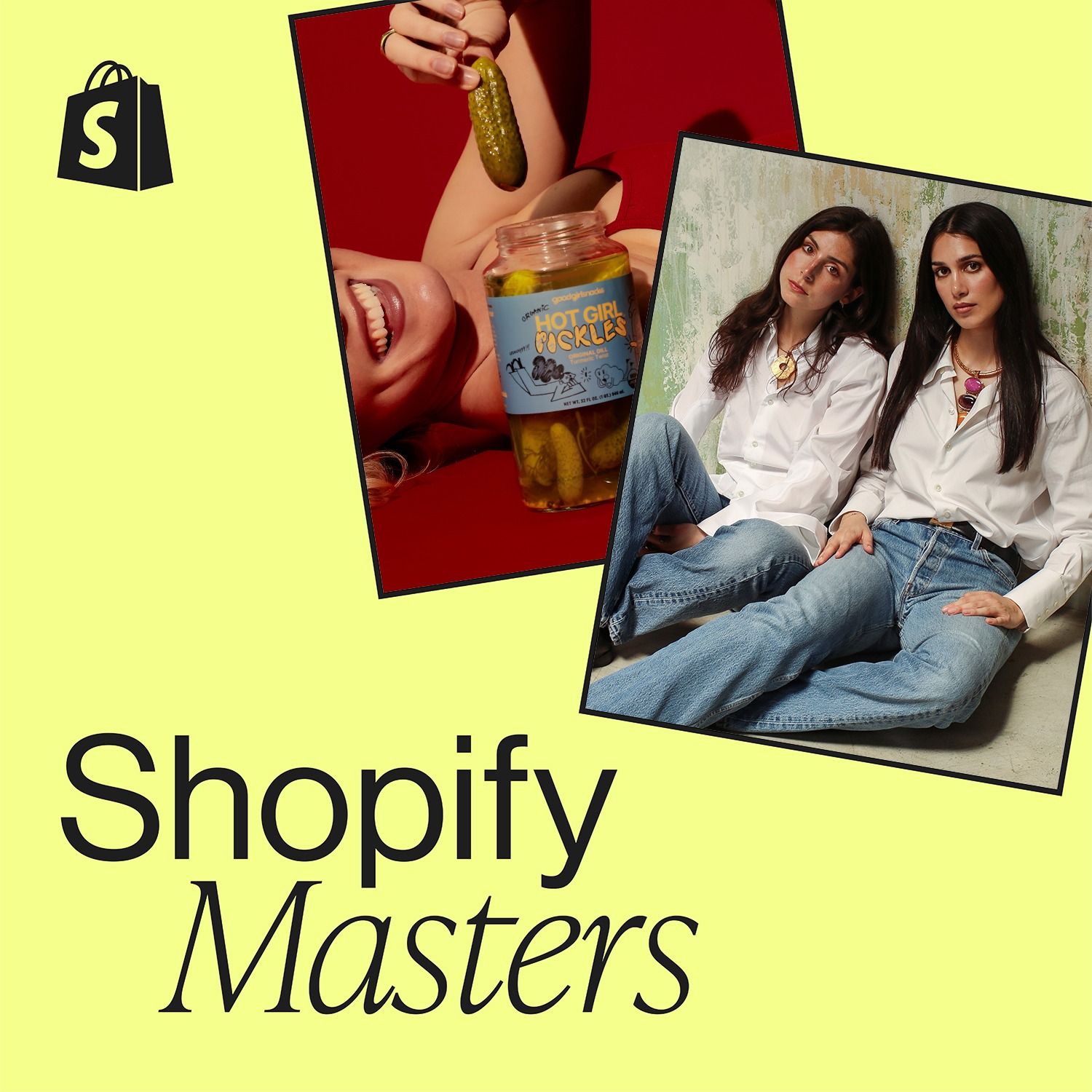
Shopify Masters
The Secret to a $0 Customer Acquisition Cost
00:48:57
Good Girl Snacks built a cult following and landed Whole Foods placement, with $0 spent on ads. Use its TikTok, community, and daily content strategy to scale as a scrappy startup.
Loading summary
Transcript186 lines
- [00:00]
Leah Marcus
We were like, honestly, we should just quit our jobs and start a pickle company at this point.
- [00:03]
Yasaman Bakhtiar
Goes viral immediately.
- [00:08]
Interviewer
Can pickles break the Internet? Leah Marcus and Yaseaman Bakhtiar launched Good Girl Snacks. With bold branding, guerilla marketing, and flavors from their Persian, Egyptian, and Tunisian cultures. The clean, organic pickles are truly unique.
- [00:20]
Yasaman Bakhtiar
We knew that if we didn't step in, someone else would.
- [00:23]
Interviewer
Good Girl Snacks has landed on shelves at Erewhon and Whole Foods, and the duo still maintains a $0 customer acquisition cost.
- [00:29]
Yasaman Bakhtiar
There is literally 9.5 billion views on the hasht pick one at the time. On TikTok, the crunch just makes you hungry.
- [00:35]
Interviewer
Leah and Yaselman are here today to spill their secret to building in public, creating viral moments, and scaling organically. Leah Yasiman, thank you so much for being here today. I was doing research on the two of you last night, watching your TikToks, and I was compelled to get off the couch and go to Whole Foods to buy your pickles, which I was then chomping on the. And I kept, like, putting them back in the fridge, and then I would do some more research and get called back to the fridge. I mean, it is like, truly. That honey harissa flavor is like, truly next level.
- [01:10]
Leah Marcus
They're addicting.
- [01:11]
Yasaman Bakhtiar
Yeah.
- [01:11]
Leah Marcus
Yeah.
- [01:12]
Yasaman Bakhtiar
We're so glad you love them.
- [01:13]
Leah Marcus
Yeah.
- [01:13]
Interviewer
Oh, my God. Did I ever. Dangerous. Dangerous to have in the house. You guys have managed to grow this really incredible social following. How tied is your success on TikTok and Instagram to your success as a company?
- [01:30]
Yasaman Bakhtiar
It's 100% correlated. We basically started posting on social media before we even had a product. So we quit our jobs summer 2023 and launched our TikTok and Instagram like, two months after that. And so people saw us build in public, and for that reason, they really want to support the brand, so they actually go out and purchase the product, whether that's online or in person at Whole Foods or Erewhon or wherever else. And we've actually noticed that on top of the fact that people want to support the brand, they have this, like, psychological thing, which is similar to what you were just saying, where if they see a video of us eating pickles on the Internet, it makes them crave them, so then they go out and purchase it in store.
- [02:12]
Leah Marcus
I feel like we also unlocked, like, a secret bucket of shoppers who follow us online and don't like pickles. Like, maybe have never bought pickles ever, but because they like our page or, you know, they want to support the business or they're just, like, curious about it. They end up buying the product, trying it, and then loving it. And so we get DMs all the time, even from, like, friends of ours who tell us, like, I'm a pickle hater, but I love your product. And it's like, I. I've never eaten pickles until now, which is crazy to us.
- [02:42]
Interviewer
There are so many things to be proud of in this company. But to me, that might be, like, the greatest flex of all. Like, converting pickle haters. Like, people who don't like pickles. It's like, it's usually vitriolic. It's, like, baked into their identity. You know, it's like not liking cilantro or something. What do you think is your ability to engage in that conversion? And also that psychology piece of, like, people, which happened to me last night, I experienced it. Like, what do you think is at the heart of that? Where people are watching these videos online and they're feeling compelled to get off the couch and go to the store?
- [03:17]
Yasaman Bakhtiar
I think that's just the TikTok effect in general. Like, you see, you know, all of these food trends or even, like, fashion trends or these weird gadgets, and you see other people using them or eating them, and for some reason, we want to be a part of that story, a part of that community, and so that's why you do it. But I think just with pickles in general, the crunch just makes you hungry. Like, it makes you want to crunch into it as well, which we found out totally on accident. Also, we got the idea for the brand on TikTok, and so it just made sense for us to have a really big presence there. And it makes sense again, as to why that's converting, because that's where the trend started.
- [03:59]
Leah Marcus
Like, you learn about marketing, and they'll teach you how to, like, sell a product through the senses, you know, so it's like sound and smells and taste, you know, and how to make people want to buy something. And for us, it's like the ASMR part of, like, eating a pickle has been so unintentional, but has worked really well, and, you know, leading to sales.
- [04:20]
Interviewer
It works. You were saying that you got the idea for the company for the pickles themselves from your own perusing of TikTok. Like, how much was this sort of pickle renaissance and pickle trend present prior to you launching?
- [04:34]
Leah Marcus
I feel like ever since COVID maybe, like, when people were at home and just, like, snacking on everything and then showing what they were eating on TikTok and sharing sort of what their snacks were like. And I think that's kind of when it started picking up. And then we just noticed, I mean, we were huge pickle lovers as well, but we were seeing all these girls on our for you pages eat them and say they were like their favorite snack, their favorite low calorie snack. Like they were obsessed with them. They were eating them out of the jar. And there was sort of like a switch between people who were now eating them as a snack as opposed to just a condiment, which was the traditional way of eating them. And then at the same time, you know, we looked at the aisle and it felt so sleepy and homogenous and boring and like it hadn't been innovated in years. And it felt really crazy to us that there was such a mismatch between, you know, the girl who was eating them on our for your pages, who was Gen Z, who was cool, and then the brands that we were seeing on the shelf who were really targeting just like, men mostly. And so we wanted to come in and cater to this niche of women that we were seeing in our for your pages.
- [05:41]
Yasaman Bakhtiar
Yeah. We were literally at work, first jobs out of college, and. And we were scrolling on TikTok and every other video we were seeing was a pickle related video. There was literally 9.5 billion views on the hashtag pickle and pickles combined at the time on TikTok. Wow. And then, you know, we picked up on all the things that Yasiman just mentioned, and it was kind of like how avocado and avocado toast became a thing randomly in 2014. The same thing was happening with pickles. And we knew that if we didn't step in, someone else would.
- [06:09]
Interviewer
Who was the first one to say, I think pickles plant be the thing for us?
- [06:13]
Yasaman Bakhtiar
I think it was you.
- [06:14]
Leah Marcus
I think it was me.
- [06:15]
Yasaman Bakhtiar
We were joking.
- [06:16]
Leah Marcus
Yeah.
- [06:17]
Yasaman Bakhtiar
And Yass texts me and she goes, what if we literally started a pickle company? And then moments later, we were buying goodgirlsnacks.com on GoDaddy.
- [06:28]
Leah Marcus
Yeah. We were like, initially just fantasizing about this imaginary company. We were like, honestly, we should just quit our jobs and start a pickle company at this point? Like, that sounds so fun. And we were thinking about all the photo shoots we'd do and the flavors we'd have and what the name would be. And then I think we kind of took a step back and we're like, wait, this is really cool.
- [06:46]
Yasaman Bakhtiar
Yeah.
- [06:46]
Leah Marcus
And it sounds really fun.
- [06:48]
Yasaman Bakhtiar
And Also, we did all the research and we knew how to make a product go viral. Like, we had the expertise and understanding whether that's just because, you know, we have marketing backgrounds or also just because we're Gen Z and we understand how the Internet works and we're chronically online. But yeah, we felt like we were the best people to do it and so we did. And it's, it's been working out so far, so. It sure has.
- [07:12]
Interviewer
I mean, it's like so funny to hear you say though, like, we should just quit our jobs and start a pickle company. I mean, it sounds like a joke, but yeah, you, you've parlayed it into something really serious and real. You started building on social media prior to launch. At what point did you start to feel some momentum that, that you were onto something before there were any pickles on the shelves?
- [07:40]
Yasaman Bakhtiar
Probably week three of posting, really on TikTok, we kind of had an epiphany and we were like, we have to create kind of like a TV show that people are tuning into every single day because that's how we're going to build a community. We don't really care about views, we care about followers. And so we started the series, which is literally day one of quitting our corporate job, Start a pickle company as best friends in our early twenties. Goes viral immediately. Wow. And we were like, oh my God. So then we just used the same format and templatized it and posted it every single day, showing what we were doing. And again, like people had a seat at the table now and they kind of were really intrigued and they were like, why are you quitting a stable job to start a pickle company and why are you doing that with your best friend? Like, you're crazy. So people were really intrigued and following us for that reason as well. But it also gave us something to post about because we didn't have a product to show or to try, like, oh, we need to post something. So we were just showing literally what we were doing without knowing what we were doing.
- [08:41]
Interviewer
So the initial community that you were building was really people who were bought into you, whether to support you or either maybe to criticize you. But it was the two of you that were following initially.
- [08:53]
Yasaman Bakhtiar
Yeah. And still to this day, like, we are the face of the brand and we will continue to be because that's the only way to maintain a zero dollar CAC in this day and age and in this industry.
- [09:04]
Interviewer
So it is pretty wild that you have managed to maintain a $0 customer acquisition cost throughout all of this. Was that something that was a deliberate strategy on your part or more just born out of the necessity of bootstrapping?
- [09:21]
Leah Marcus
I think both mostly out of necessity of bootstrapping transparently, but also I think we're a Gen Z. I think we understand that Gen Z doesn't like to be advertised to and and because of that we were just very careful about, you know, how we speak about our product. How do we make people want to buy the product without being too pushy, being too salesy? Because that's how we personally also react to ads and to things that we see on our phones every day. And especially with Gen Z, who spends all their time on their phone. We spend like so much time on our phone scrolling through content and we're so flooded with so many images and videos that it's like, how do you stand out and how do you make that person want to keep watching the video organically? So that's something that we really tried to hone in on and we didn't
- [10:11]
Yasaman Bakhtiar
think that we were going to be able to upkeep it this long, to be honest. Yeah, that just happened on accident and we kind of took a step back and we were like, we don't need to spend on this right now because we are getting this better results than we were if we would be spending money like on a meta ad or whatever else. So let's just keep doing this because it works. But yeah, we fully had like ads and like all this stuff baked into the strategy when we first started.
- [10:37]
Interviewer
Interesting. And then you've just found that you haven't needed it.
- [10:39]
Leah Marcus
Yeah.
- [10:40]
Yasaman Bakhtiar
Up until now.
- [10:41]
Interviewer
Do you think that to some degree that that is advice that could be given to other aspiring founders in the CPG space or does it feel in some sense unique to you?
- [10:53]
Yasaman Bakhtiar
I think probably a mix of both. We usually tell people in any industry, like if you're not posting every single day and if you're not the face of your brand, you're not doing your best to have a $0.00 CAC or to be scrappy or whatever. Like you have to have an online presence to a certain degree. In this day and age, it's just as important as investing. That being said, not everyone has the personality to do so. Not everyone has the understanding of, you know, the online landscape. And so if that's not you, then you need to find someone that's going to do it for you, like hire a social media manager, hire somebody to be the face of the brand. But whether it's you or somebody else, you definitely need to be online for sure.
- [11:35]
Interviewer
In the beginning, the two of you had a conversation about the necessity of posting every Single day to TikTok. Do you feel like that is a core element of your success on social, just like the deep consistency?
- [11:53]
Yasaman Bakhtiar
Yeah. If you don't post every day, the algorithm does not reward you. And if you post every day, you also have more of a chance of getting in front of more eyeballs every single day. It's kind of like the rule of sevens in marketing. Like, the more touch points you have with a consumer, the more they're going to go out and buy your product. And so if they see a TikTok 7am and then they see an Instagram post 5pm and then they go to Whole Foods to do their groceries and they see a product on the shelf, like, they're able to see all of that because you're posting every day. And now also because we're on a shelf, and so that converts to a sale. So, yeah, consistency is key, for sure. Yeah.
- [12:32]
Interviewer
You have to stay in people's conscious consciousness always.
- [12:35]
Yasaman Bakhtiar
Yeah, yeah. We want to be in your brain at all times.
- [12:39]
Interviewer
Keep the pickles top of mind. I'm, like, thinking about them right now.
- [12:43]
Leah Marcus
I know.
- [12:44]
Interviewer
I thought we were supposed to be eating them. I'm like, where are my honey harissa pickles? You know, you were capitalizing on this TikTok trend, but at the same time, like, you two know this from being Gen Z and chronically online, like, those trends are coming so fast and furious and they can be so flash in the pan. You've been able to parlay this into something that feels like it has more heft and staying power to it. But is there any fear of, like, you know what? The pickle trend ceases to be as prevalent.
- [13:16]
Leah Marcus
That's definitely something we've thought about. But I think at the end of the day, like, pickles as a snack has, like, pickles have been around forever. It's maybe like the oldest method of preserving food ever. I think they're like 2,000 years old or something. And so I think for us, social media has definitely accelerated that trend and has, like, shed light on that trend, but I don't think it's going away anytime soon. I think it's something that people have always snacked on, and just because we now have our phones and we can, you know, share that with everyone now, it's, like, become more popular. But I don't think it's something that's gonna disappear in a few years.
- [13:55]
Yasaman Bakhtiar
Being the face of the brand will allow us to not be just a trend because we've built a community. We haven't just built, like, an impulse purchase or like, someone following us because they think the images are cool. It's like they're following us because they want to support us, which seems to be the theme of this conversation. But, yeah, I think creating a community kind of makes sure that your product or your brand or whatever else doesn't die out, or hopefully doesn't.
- [14:25]
Interviewer
How are you two engaging with your community online? I mean, it's been just the two of you until very, very recently, which we'll talk about in just a sec. But, you know, are you in the comments responding to every person engaging in conversation? Do you have any kind of loyalty programs? How are you cultivating something that, though it's online, feels real to people?
- [14:48]
Yasaman Bakhtiar
The second I post a video, will interact with my TikTok feed or Instagram feed immediately, because if you interact with content, it actually makes the algorithm show your content to the right people, interestingly. And then the second I post, I answer every single comment for at least 10 minutes. And then when people tag us in stories, we repost it. We have a private, it's called Good Girl Gossip Channel for, like, our biggest fans, and we just chat with them there. We give them access to sales first. We have a texting loyalty program, an email loyalty program. We have, like, keywords that you can send us in return for something. So, yeah, we really engage with the community online as much as we can, but also offline. We do a lot of community events. Instead of inviting influencers to events that we do, we actually invite our followers. And we feel that tapping into those small network effects are actually a lot more successful than if we were to pay, you know, an influencer to show up to an event totally or do this, like, extravagant event for an influencer to come to you for, like, 10 minutes.
- [15:52]
Leah Marcus
Our followers are our influencers, and we've sent them pr. We, you know, whenever we have a question about the business or if we're unsure about how to do something, we'll open it up to our community to ask these questions and to answer them for us. And we kind of try to democratize the whole process, especially for product development and new flavors, as much as we can, because at the end of the day, like, they're the ones that we're catering to. And so we try to open up those conversations as much as possible.
- [16:22]
Interviewer
Have they played a role in your product development so far?
- [16:24]
Yasaman Bakhtiar
Yeah, so we actually we kind of, like, hacked the process on accident one time. So we were launching our. I think it was our bread and butter. Our bread and butter flavor sweetened with dates. And we were showing, you know, the process of coming up with a flavor, of trying them, and we didn't have a label on it. And we said, like, guess the flavor in the comments. And we got, you know, thousands of comments of people trying to answer it. Right. Because we also said, if you answer it right, we'll send you a PR box when it comes out. And we actually got so much inspiration, and we understood what people wanted, because people were commenting like, oh, a garlic one, or, like, we want, like, a sweet pickle, whatever. And we still have access to all of that, obviously. So if we ever want to come out with a new flavor, we can just scroll and see what the people want, which is really cool.
- [17:14]
Leah Marcus
Yeah. We were taking notes. People were like, oh, I want a tamarind flavor. I was like, okay, tamarind.
- [17:20]
Yasaman Bakhtiar
Yeah. Can we try that one?
- [17:21]
Interviewer
Yeah, maybe.
- [17:22]
Leah Marcus
Yeah.
- [17:22]
Yasaman Bakhtiar
Yeah.
- [17:22]
Interviewer
Is that where the honey harissa came from, or was that. No, that was your brainchild.
- [17:26]
Yasaman Bakhtiar
That's where the garlic cumin came from, because everyone was asking for a garlic pickle. And then we originally launched with the original dill and honey harissa. Those were, like, the two flavors that, when we started, we knew we wanted to do. I don't know why honey harissa was. Because hot honey was having its moment. And so honey harissa was, like, our take on that, with our Middle Eastern backgrounds influencing the flavor profiles. But, yeah, the garlic cumin really came out of that comment section off that video, which is interesting.
- [17:55]
Interviewer
You both share Middle Eastern background. We all do. We're all half Persian on our dad's side. Instantly bond, but also Tunisian and Egyptian. Do you have the intent to, like, bring that. Your Middle Eastern background into the flavor profile some more moving forward?
- [18:15]
Leah Marcus
Yeah, I think it'll always be an inspiration because those are the flavors we grew up eating. Like, those are the spices and, you know, the type of flavors that we're always attracted to, even when we're cooking at home, when we're going to restaurants. Like, those are the things we're always drawn to. And so I think it'll always be a source of inspiration, but we also want to make sure that the products are accessible and can be enjoyed by everyone. And we don't want to have to, like, educate a consumer on what something is, because it's like, a very niche Middle Eastern spice or something that maybe they didn't Try before. So it's kind of like a fine line between, you know, trying to have that unique factor, but then still being accessible and palatable.
- [18:59]
Interviewer
Totally. And how is something like the honey harissa selling versus, like, your classic dill
- [19:03]
Leah Marcus
or bread and butter so original? Dill has always been our best seller, and recently honey harissa has been the leader in terms of all of our flavors. I will be contributing to that.
- [19:15]
Interviewer
Yeah.
- [19:16]
Leah Marcus
Which honestly, I totally get because I think it's probably the most unique one in terms of flavor profiles. I mean, they're all very unique in my opinion, but I think this one really stands out. And you will never eat a pickle that tastes like that. And, yeah, it's been really fun to see it being a bestseller.
- [19:33]
Yasaman Bakhtiar
We also think that because of our packaging and, like, the interesting colors we have colors you've never seen on a pickle shelf before, people will actually go out and grab the product, even if they're not 100% educated on what, you know, harisa is. And, you know, we'll say, like, sweet and fiery or whatever under it. But that's also been a cool part of, of understanding our business and, like, this world we've created that people will go out and purchase a product they don't necessarily even have an education around just because the packaging is cool.
- [20:08]
Interviewer
It's wild how much this has become a part of the conversation and the landscape just in the last several years. And, you know, I think it's like we were talking about earlier. It's like all the best ideas seem so obvious in hindsight.
- [20:23]
Yasaman Bakhtiar
Right.
- [20:24]
Interviewer
But it's like you're at Erewhon and you're looking at the, the beverage aisle and, like, everything has, like a beautiful, cool, super designed aesthetic packaging. Right. To some degree. Then that category is so crowded.
- [20:39]
Leah Marcus
Yeah.
- [20:40]
Interviewer
How do you stand out? It's like sensory overload.
- [20:43]
Yasaman Bakhtiar
Totally.
- [20:44]
Interviewer
And then you go to the pickle aisle. It's like when I went to Whole Foods last night. And it's true, nothing on the shelf looks like your pickles. So many people are finding you on TikTok. But TikTok is intensely gen Z and to some degree, millennial oriented. How for the people who aren't finding you on social, how are you getting into those customer bases?
- [21:05]
Leah Marcus
We do a lot of demos, and that's something that's been really successful for us. And we don't really, like, incentivize purchases through financial means. Like, we've never really done rebates. We've never done coupons. The promos. We do in stores are really just whatever the store requires. But then we love to do demos and get people to actually try the product because it's genuinely so good. And even if, you know, you wouldn't necessarily pick it up on the shelf because you're a man and you wouldn't be drawn to something called Hot Girl Pickles, most people who try the product actually end up loving it and then want to buy it. And so demos for us have been really successful. For sure.
- [21:47]
Yasaman Bakhtiar
Yeah. So we have, like, a couple buckets. We have, you know, the people that found us on social media, and then they see us on a shelf. We have the people that are super drawn to either the name or the packaging. And then there's another layer to it, which is we're probably the only organic pickle option on the shelf. And so if you care about ingredients and what you're eating, you're gonna reach for Hot Girl Pickles. We have, you know, a very clean ingredient label on top of being organic as well, which we didn't know this, but when we first started brand, we realized how terrible the ingredients are in other pickle brands.
- [22:24]
Interviewer
I was shocked.
- [22:24]
Leah Marcus
Yeah, it's so.
- [22:25]
Yasaman Bakhtiar
Which also why, like, vinegar is a natural preservative. I don't need to put all that stuff in it. Yeah, we're happy to be that option on the shelf on top of everything else.
- [22:34]
Interviewer
This is an interesting part of this whole thing too, because, yeah, like, as somebody, I'm an Erewhon girly. I was raised hippie dippy. Like, I really care about the food that I'm putting in my body and always have. And I had no idea that pickles were not being made with clean ingredients, because it seems so. They're so obviously simple that it feels like it wasn't even a place where I was turning around and reading the ingredient label. And it was actually because of the two of you that I became hip to that. And then I thought, oh, my God, like, how bizarre. Is there any consumer education that you feel like you've had to engage in to let the people who are clean, eating oriented know, like, actually the stuff that you've been eating maybe isn't that clean. And we are. We're one of the few out there that does this.
- [23:18]
Yasaman Bakhtiar
We do that a lot online.
- [23:20]
Leah Marcus
Yeah.
- [23:20]
Yasaman Bakhtiar
Like, through our content. But it's also just, like, very obvious on the shelf. Like, at Erewhon, we'll have these little shelf talkers that say organic with, like, a pink background. So it jumps out when you're looking at this like, very boring shelf. The people that are looking for it will find it at the end of the day.
- [23:36]
Interviewer
How nice for you. Yeah. Let's talk about your retail expansion. Congratulations on the recent Whole Foods launch. And I saw you're now in Nordstrom as well. Is that a permanent thing or just
- [23:50]
Leah Marcus
like a pop up? It's a pop up they're doing with Pop up Grocer. So that's been a really fun activation for us because obviously we never thought we would be in a department store. Like, that's really random for a pickle brand.
- [24:00]
Yasaman Bakhtiar
Totally.
- [24:01]
Leah Marcus
But again, it's a different touch point and you get to access a consumer who's maybe not looking to buy pickles or maybe not looking to buy food, but then you come across their path and you know, they might want to pick you up. And so being in a space where you also don't have that outside noise and competition is kind of interesting for us.
- [24:20]
Yasaman Bakhtiar
Yeah, totally.
- [24:21]
Interviewer
You're in Whole Foods, you're at Erewhon, you are in Bristol Farms, you've had a long term relationship with Gopuff, you're in Happier grocery in New York. Do you navigate each of these relationships with retailers differently?
- [24:38]
Leah Marcus
Yes and no. I think the one thing that we always come to them with is the fact that we can bring Gen Z to your store and we have such a great grasp on our demographic and our community. And our community is so ride or die that we can bring people in through your door. And that's for a lot of older stores and older retailers, I think is really appealing. Obviously Whole Foods Erewhon, like all those stores, you know, they already have Gen Z coming to them, but for a lot of other retailers that we're speaking to, I think it's definitely an added value and something that they look for in new brands nowadays. And then on top of that, I think the one thing that we always say is we are so unique in our category. There's really not that much innovation and I think that's really appealing to buyers. And they get really excited when they see our brand because, I don't know, it's not every day that they probably come across like a pickle brand, let alone a pickle brand that has, you know, 120,000 followers on Instagram and like such a huge cult following. So for them, I think it's interesting. And that's kind of what we lead with when we pitch to these retailers.
- [25:47]
Interviewer
Right. I'm thinking about like just the absolute onslaught of pitches that these buyers must be getting and how Hard it is to cut through the noise.
- [25:56]
Leah Marcus
Yeah.
- [25:57]
Interviewer
But when you're in a category where they're not that they're not really getting pitched in. Yeah, it makes things easier. With these relationships, were they coming to you? Were you seeking them out? Is it a bit of each?
- [26:09]
Yasaman Bakhtiar
It's a bit of both.
- [26:10]
Leah Marcus
It'll depend on the store. We do work with a team of sales brokers that helped us facilitate some of these relationships. But for the most part, having a broker, it'll get you a conversation with a buyer. It's not going to get you in. So you have to have the product and, you know, the follow and the backing to actually be able to make it into the store and then once you're in the store, be able to stay in the store. Because getting in is one part, staying there is another. For us, I think it's been a mix of both. We do have a lot of retailers that have approached us and. And then sometimes it even happens in like a DM conversation. It's as simple as that.
- [26:48]
Yasaman Bakhtiar
Yeah, we're pretty picky with our retail strategy as well. Like what stores are we getting in first? Because we want to make sure we're not diluting our brand equity. So that's been another piece to this whole retail puzzle, which is like, what retailer makes the most sense for the community we already have and for the nature of the product, considering we are organic and then moving forward that way and growing that way before we enter mass market channels.
- [27:15]
Leah Marcus
And I think we're in an era of CPG where buyers are really excited about new products that are really innovating the sleepy aisles. And we've seen this with Fish Wife, for example, or Graza. I think those are the two brands that have completely transformed an area of the supermarket that no one really paid attention to, especially Fishwife. Like, I never ate tin fish until Fishwife came along or never even thought about buying tin fish. I would maybe buy tuna like once a month.
- [27:42]
Interviewer
Sardine renaissance is crazy.
- [27:44]
Leah Marcus
Yeah, it's crazy. And so I think now when buyers see brands like ours that are kind of tapping into that, you know, CPG renaissance of the sleepy aisles, they get excited and they want a piece of the pie.
- [27:57]
Interviewer
Yeah, it sounds like you've been on a bit of a rocket ship ride
- [28:01]
Yasaman Bakhtiar
the last couple of years.
- [28:02]
Interviewer
But, you know, when you're a scrappy team of two, scaling up comes with its own set of challenges. How have you navigated that and have there been some important lessons learned along the way as you've prep to be in something like a Whole Foods or Bristol Farms.
- [28:19]
Yasaman Bakhtiar
There's definitely been growing pains, which is why we hired somebody. We kind of had a conversation, and we were like, we have done a great job so far bringing this to life and, you know, maintaining the brand, maintaining the operational side of it. But we're going to be in, you know, thousands of doors next year. We need somebody that can come in and, like, help us sustain that growth and make sure that we're growing safely. Because, like Yasaman said, you can't have an out of stock in a store. Cause then they kick you out. Or you can't not demo in a state where you don't have a community, because then no one's going to buy your product off the shelf. So all of these things have led us to make our first hire, which has been amazing. And our biggest learning has been, you have to be the dumbest person in the room. Like, we need to make sure that to grow this business, we are surrounding ourselves with people that know how to do things way better than we do. And that can allow us to. To do what we're good at and kind of come in and clean things up, make sure we're growing properly.
- [29:21]
Leah Marcus
You know, it's like, we'll ship something and things break, and then it's like, oh, well, we didn't know how to, like, you know, palletize glass. And what are the things you need to do to make sure it doesn't break? And the weight limits and the wrapping with the shrink wrap and, you know, like, all this stuff that's obviously probably common knowledge when you're in the industry, but being so new to it, it was definitely a bit of a learning curve and a lot of, like, trial and error. And so now we're happy to have somebody who has that expertise who can kind of, like, take that on.
- [29:48]
Interviewer
Have you had any real panic moments?
- [29:51]
Yasaman Bakhtiar
Oh, like, every day.
- [29:52]
Leah Marcus
Yeah. So many percent. Yeah.
- [29:55]
Yasaman Bakhtiar
On the marketing side, we had all of our PR boxes break this summer, like, 200 of them. And FedEx decided it was a good idea to still deliver them. So you had, like, you know, huge influencers. And their first interaction with us is broken glass all over their front door.
- [30:12]
Interviewer
And, like, pickle juice smells so good.
- [30:15]
Yasaman Bakhtiar
And then our second PR run a few months ago, wrong tape, wrong inserts. No one knew what was going on. It was just like, here's pickles. So that was a mess for me.
- [30:26]
Leah Marcus
The, like, logistics piece is really the one that got me. And, like, dealing with freight and, like, things like that like shipments not arriving on time, or I accidentally sent a full pallet of product to the wrong warehouse. And then the company, like, reached out to me and they were like, hey, what is this? What is this shipment we just received? And then you have to work to reroute the shipment. And then obviously, all these mistakes are expensive as well, so that adds another layer of stress. It's like, not only are you delaying everything, but you're also having to pay to clean up the mess you made. And so, yeah, there's been definitely a lot of my life moments.
- [31:04]
Yasaman Bakhtiar
We, like, always make a moment out of these panic slash, like, disaster situations, because those are the videos that go viral. Like, we made a video about these 200 PR boxes that broke and it exploded, and we saw a positive out of it because people are like, oh, my God, like, thank you for being honest. I've never seen a brand talk about that before.
- [31:25]
Leah Marcus
Yeah.
- [31:25]
Yasaman Bakhtiar
And then, you know, they have respect for us or they follow us or whatever else. And then again, back to the community and, like, authenticity conversation.
- [31:33]
Interviewer
And if people are invested in you, then there's probably more leniency, right?
- [31:41]
Yasaman Bakhtiar
Yeah, totally.
- [31:41]
Interviewer
It's a more forgiving attitude. I feel like they know you.
- [31:44]
Yasaman Bakhtiar
Yes.
- [31:45]
Interviewer
On, like, a societal level, it speaks to what feels almost like a backlash to the very, like, glossy, curated perfectionism of some of the earlier Instagram years, which, like, I'm an elder millennial, I still find myself falling prey to. Do you feel like, because of your age, that it's just sort of innate, like, we're gonna be warts and all and that's gonna be better for everybody? Yeah, we're okay with being messy. Is there any advice for people for whom that feels really terrifying?
- [32:23]
Yasaman Bakhtiar
I think it only makes sense if that's your brand. Hot girl pickles, Good girl snacks. Like, even in the name of the brand and the product, there is this kind of chaotic energy to it. And so it makes sense for our brand voice to be that way as well and to talk about the chaos, to be authentic, to be friendly. Obviously, if you're, like a super clean cut brand and, like, you have a totally different demographic, that might not make sense for you. It's all about who you are and, like, what your brand ethos is and how you're building that whole side of it. If that is who you are, it's the easiest way to run a business because you don't have to hide. It's just what's happening. Yeah, exactly.
- [33:04]
Interviewer
Do you have any kind of internal rubric for, like, this is what's shareable versus this is what's not.
- [33:11]
Yasaman Bakhtiar
Yeah, for sure.
- [33:13]
Leah Marcus
I feel like stuff that's like on the marketing front, like we can share stuff that's like on the operational front, like sometimes we, you know, keep it a little hush hush because we're like, we don't want to like scare the retailers who are like, you know, maybe watching and are going to be like, what is going on? Yeah, we definitely try to be as open as, as we can and for the most part I think we're really open about everything that goes wrong. And then for us it's also kind of like tension release almost to post about it because it's so stressful. And then you post about it and you're kind of like at that point are just kind of laughing about it. And then people in the comments kind of make you feel better about the situation or they'll tell you like, oh my God, this happened to me too and made us feel better, you know, like we're not the only ones going through this. And whether you're a startup or like a huge corporation, these mistakes happen. So I think it's kind of like a good way for us to keep a good head on our shoulders.
- [34:07]
Interviewer
The benefit of building in public in terms of brand equity and broadening your consumer base and having them bought in and invested in you. But there's also this other component of it which is that being a founder is really hard and it can be really lonely. And you're speaking to this other side of it that I don't think we've heard all that often, which is that like building in public can also just help you stay sane.
- [34:31]
Leah Marcus
Yeah.
- [34:31]
Yasaman Bakhtiar
In all of it.
- [34:32]
Leah Marcus
Yeah.
- [34:32]
Yasaman Bakhtiar
Yeah. And it's connected us to so many other founders that are either reaching out to be like, oh my God, like the same thing happened to me, or you know, like, oh, I actually know somebody that can help you so that this doesn't happen again or whatever else. And yeah, the community aspect is a two way street. Like we need them as much as they enjoy watching our content, if that makes sense.
- [34:56]
Interviewer
You know, you talked about being willing to be the dumbest people in the room, but the two of you are like incredibly poised and seem to really know your stuff. You had one year in the working world before. It's not like you had years and years and years of like developing some expertise in this right before you leapt off the cliff. So who and what have you been turning to in these early years as you were just a team of two for that kind of advice and insight.
- [35:26]
Yasaman Bakhtiar
So we both went to usc, and USC breeds cpg. Food and beverage founders don't know why. We have a theory that it's the Erewhon effect of it all, but because
- [35:37]
Interviewer
students are going erewhon, and it's like CDs, there's psychology.
- [35:41]
Yasaman Bakhtiar
Yeah. They're seeing all these brands.
- [35:42]
Leah Marcus
Yeah.
- [35:42]
Yasaman Bakhtiar
So we actually went to school with, you know, the Saws founders, which is a tomato sauce brand that's like taking over the tomato sauce aisle. Spoke to them first, and they were like, you have to do this. Such a great idea. And then they were super helpful in connecting us to all the right people. Also, because of usc, there's, like, a huge network coming out of it. And so we were introduced to all the right people in terms of, like, consultants and, you know, finding the couple people on the operational side that would be able to hold our hand and teach us how to produce a product, how to find a manufacturer, how to not make expensive mistakes. And finding those people at first was like, the best investment we could have ever made because, one, it allowed us to get to market and get a product to market in eight months. But secondly, we learned everything along the way. It's not like we were paying people to do it. They were teaching us how to do it. Like, those two women were the only people we were working with, the consultants on the operational front. Everyone else, it was just like, anecdotal conversations and then just figuring it out on our own. Really. Yeah.
- [36:48]
Leah Marcus
I always say that the CPG business, especially food and beverage people, are so willing to help and so willing to share. And I think it's because most of the people in this industry are really just passionate people. Most of the people don't come from a food background or don't come like. It's not something they studied. It's not something that they've been working on for generations. You just kind of end up in this industry because you're passionate about food or you're passionate about a product. It's not really driven by any ulterior motives, usually. And so I think because of that, people have been really generous with their networks and generous in terms of helping you and giving you advice.
- [37:29]
Yasaman Bakhtiar
Yeah, we split in a lot of LinkedIn DMs for sure.
- [37:33]
Interviewer
I'd imagine you've probably gotten a thousand nuggets of wisdom. But are there any that you can call out specifically that were particularly salient or you thought, oh, that's a light bulb moment for us?
- [37:46]
Leah Marcus
Sometimes in the early days, we would kind of go back and forth about whether or not we were being too niche and whether or not we were cutting out a huge chunk of our demographic. And obviously the name is Hot Girl Pickles. Like, some people would be like, oh, well, you know, what about men? Like, you're alienating a whole. A huge chunk of consumers. And we had someone, and a few people tell us to actually, like, double down on this and double down on being niche and really hone in on that one specific girl that you're speaking to and start niche, essentially, and then eventually grow to be more wide in terms of who you're targeting. That's maybe the best advice we've ever gotten, and it's helped us really stay focused in terms of the branding, the messaging, the products we put out, like, the content we come out with, and overall just have, like, a very intentional brand.
- [38:42]
Yasaman Bakhtiar
We had so many people be like, don't be. Don't be organic. Like, the name of the brand should just be Hot Girl Pickles. Why is it Good Girl snacks? It's so confusing. Don't be in glass. Like, don't have this. Blah, blah, blah. And so, like Yas was saying earlier, all advice you get, take it with a grain of salt. And at the beginning stages, and, you know, even now, running a business is really. A lot of it is on gut feelings on top of everything else, of course. And I think we've listened to our gut so strongly that it's actually allowed us to be very different and to kind of pave a completely different path that hasn't been created yet, especially in food and beverage. And we always say that that might be because we don't come from a food and beverage background, actually. And so we were able to build things with a completely different lens. But I also do think that in part, it is because we didn't listen to a lot of advice we got.
- [39:40]
Interviewer
I wonder also how much the fact that it's the two of you in this together contributes to that.
- [39:45]
Yasaman Bakhtiar
For sure. We kind of have a shared brain, and so I think understanding each other and having each other to kind of validate these gut feelings was really important, because if I was alone, I don't know that I would have not agreed with the advice that we got.
- [40:02]
Leah Marcus
Yeah, I think it gives you more confidence to have some, like, a partner that you. That you're doing it with.
- [40:07]
Interviewer
Totally.
- [40:08]
Yasaman Bakhtiar
Yeah.
- [40:08]
Interviewer
My husband founded a company with his best friend, and it's one of those hackneyed pieces of advice. There were so many people who were like, don't do that.
- [40:16]
Yasaman Bakhtiar
Do not.
- [40:17]
Interviewer
Do not start a company with your best friend. It'll ruin your relationship. And it's been. Their experience has been the complete opposite. Like, if anything, they're like, better best friends to each other now than since starting it. And it just goes to show, like, with some of these pieces of advice, it's like, it's so dependent on the relationship or it's just old and needs to be thrown out.
- [40:40]
Leah Marcus
Yeah.
- [40:41]
Interviewer
You two were best friends prior to starting the company, right? You were best friends through your time at usc.
- [40:47]
Leah Marcus
Yes.
- [40:48]
Interviewer
How has running a business together changed your relationship?
- [40:51]
Yasaman Bakhtiar
I think it's made us closer. Like, when you're best friends, you're best friends, you do all the social things together, but then, you know, majority of your life, you're working a 9 to 5 and like, you're in your own lane. Every piece of our life is attached to each other now. Like, we are literally attached at the hip with everything we do. Our goals are the same, our path to getting there is the same. And that makes two people and their relationships so much deeper. And the fact that we're best friends on top of it all has just made that a really crazy bonding experience also. We're like trauma bonded. Like, we go through such stressful moments. And like, you going through that with somebody really ties you together to a different level. Yeah.
- [41:37]
Interviewer
It's like truly a marriage.
- [41:40]
Leah Marcus
Yeah.
- [41:40]
Yasaman Bakhtiar
Yeah. It's literally a marriage. Yeah. Yeah. I don't know.
- [41:44]
Interviewer
Well, you're. That marriage has now opened up to a third person. You're now a throuple.
- [41:51]
Leah Marcus
Yes. Yes.
- [41:52]
Interviewer
What was the process of bringing somebody else in like, for you? You were in the process of trying to hire somebody for a while. Unsuccessfully.
- [42:01]
Leah Marcus
Yeah. So we knew that 2026 would be a huge retail year for us. And so preemptively, we wanted to make sure we were hiring ahead of that to make sure we had a solid operational foundation to be able to get into all those stores. And so we started the process in the spring, and then we were unsuccessful, so we stopped looking. And then over the summer, we picked it up again, and it was trial and error. It was like having a lot of conversations, thinking you're getting somewhere, and then you're like, wait, nevermind, I don't think this is a right fit. And then you're doing that essentially, like, over and over again where you get excited about someone and then you're like, wait, actually, I don't know, I'm getting cold feet. Like, this doesn't feel right. Or maybe like there's not. It's not a perfect match. And with this new hire, I think it came out, like, super organically, where it just was a right fit from the beginning. And she's young, she's Gen Z. She understands the brand. She also, like, loves the product. And I think it just made a lot of sense for us. It was like a right culture fit. And at the same time, she obviously had the experience that we were looking for and could add the structure that we were looking for. And so it was just kind of like, you know, the perfect scenario. And it's hard when you're shopping for this role specifically, like, someone who works in operations, because it's hard to find someone who has, like, the right experience. Experience, but then who also can be a good culture fit in terms of joining a team of just us two being, you know, in our mid-20s and being best friends, like, I don't think anyone could just, like, come in and, you know, join the team and have that harmony that we were looking for. So we're really happy that we did find that.
- [43:49]
Yasaman Bakhtiar
Yeah, it always boils down to your gut. Yeah, always.
- [43:52]
Interviewer
Yeah, totally. I mean, hiring is something that comes up time and again in these conversations with people who've been in business for a really long time. Time as maybe the hardest element of the process and the place where they tend to make the most mistakes, because you can learn the things that you need to about manufacturing or operations or whatever, but people are messy. Right. It's not science. It's not data. Right. They're. They're idiosyncratic. And when you're hiring for something, for a knowledge base that you don't fully have, it's like, how do you even fully assess in somebody else if they have the thing that you're looking for when you don't necessarily have that thing that you're looking for.
- [44:31]
Leah Marcus
Exactly.
- [44:32]
Yasaman Bakhtiar
And then on top of it all, we also had to think about, okay, yes, does this person fit in with us? Do they have the operational knowledge? But are they also someone that's gonna help create culture so that when more people are coming in, they're a part of that, and they're a part of, you know, creating that ecosystem and that world within Good Girl Snacks internally. And so that was a whole other piece of it that was really tricky to find in somebody. She's awesome. Yeah, we're obsessed.
- [45:01]
Leah Marcus
Yeah. We're literally like, third Good girl. Yeah.
- [45:05]
Yasaman Bakhtiar
Yeah.
- [45:05]
Interviewer
The line is Hot girl pickles. The company is Good girl snacks. Indicates to me that you've Maybe always had your eyes on some kind of product expansion. Do you have a sense of where you're gonna go next?
- [45:17]
Leah Marcus
Yeah, we have a lot of ideas, and obviously, I think we want to first really tackle pickles before we even think about moving to another category. Like, we want to make sure that, you know, they're accessible everywhere. You can get them in every state. But we do have a lot of ideas for what's next. We'll just have to see, you know, by that time if those ideas are still relevant or if they're still, you know, if they still seem like good ideas at that point. But, yeah, we're excited. The goal would really be to have, I guess, like, a snack brand that taps into different categories of the supermarket, and that always taps into the sleepy aisles and always thinking about, you know, what's a place in the supermarket that you could innovate and that we could come in and bring, you know, like, our packaging, our fun flavors, our, you know, cool marketing, and reawaken a product that maybe hasn't been innovated in a while.
- [46:12]
Interviewer
What is one thing that the two of you did in the first six months that you feel like has had a really lasting impact on your success today?
- [46:21]
Yasaman Bakhtiar
Starting to post immediately, posting every single day. Like, day negative one was the best thing we could have ever done.
- [46:28]
Interviewer
You know, like, reminds me of that. I think it's like a Japanese proverb. Like, the best time to have planted a tree was 20 years ago, and the second best time to plant a tree is today. So if you're a founder who didn't start posting right away, it's like, start posting today, right?
- [46:41]
Yasaman Bakhtiar
Yeah, it's never too late. Yeah.
- [46:44]
Leah Marcus
And I think for us, like, the second thing that I would say is spending a lot of time building a really strong brand identity. And that's something that we took a lot of time creating and crafting. In the early days. We really wanted to visualize what the brand would look like, what our consumer looked like, what the packaging would look like. Like, down to every single detail. And I think that's been our biggest asset at the end of the day. And it's what made us really memorable and stand out on the shelf and have such a unique demographic.
- [47:19]
Interviewer
You're both young. Do you ever long for a life of less responsibility?
- [47:25]
Yasaman Bakhtiar
No, I think our life has become so much more fun, and we have so many more opportunities, and we've learned so much more than we would have if, you know, we weren't doing this that I wouldn't trade it for the world. We're in rooms with, like, people we used to watch on the Internet when we were like, eight, and now we're, like, friends with them. Or like, we got Forbes 30 under 30, which is like something that I was like, oh, my God, when I was 12, I was like, I need to be on that one day. Like, things like that wouldn't take it into existence.
- [47:58]
Leah Marcus
Yes.
- [47:58]
Yasaman Bakhtiar
Things like that wouldn't have happened unless we started this business. And the responsibility aspect doesn't feel like a responsibility. It feels like the most exciting thing in the world and like the most motivational thing. And that's why you wake up every day.
- [48:14]
Leah Marcus
Not to say that there are not days where being able to clock out of a nine to five after work and not have to think about, you know, your responsibilities. Like, sometimes we're like, yeah, that sounds kind of nice. Kind of miss it sometimes. But also everything we're doing is so rewarding that it makes it worth it.
- [48:31]
Yasaman Bakhtiar
Yeah.
- [48:32]
Leah Marcus
Yeah.
- [48:32]
Interviewer
You two are a delight. I look forward to having you back again and again and again as you continue to grow this thing. Thank you for being here.
- [48:41]
Yasaman Bakhtiar
Thank you so much for having us.
- [48:42]
Interviewer
If you've gotten your hands on one of these pickles, let us know your favorite flavor in the comments below. I'll be here next time, so make sure you subscribe and never miss a new interview.