← Shopify Masters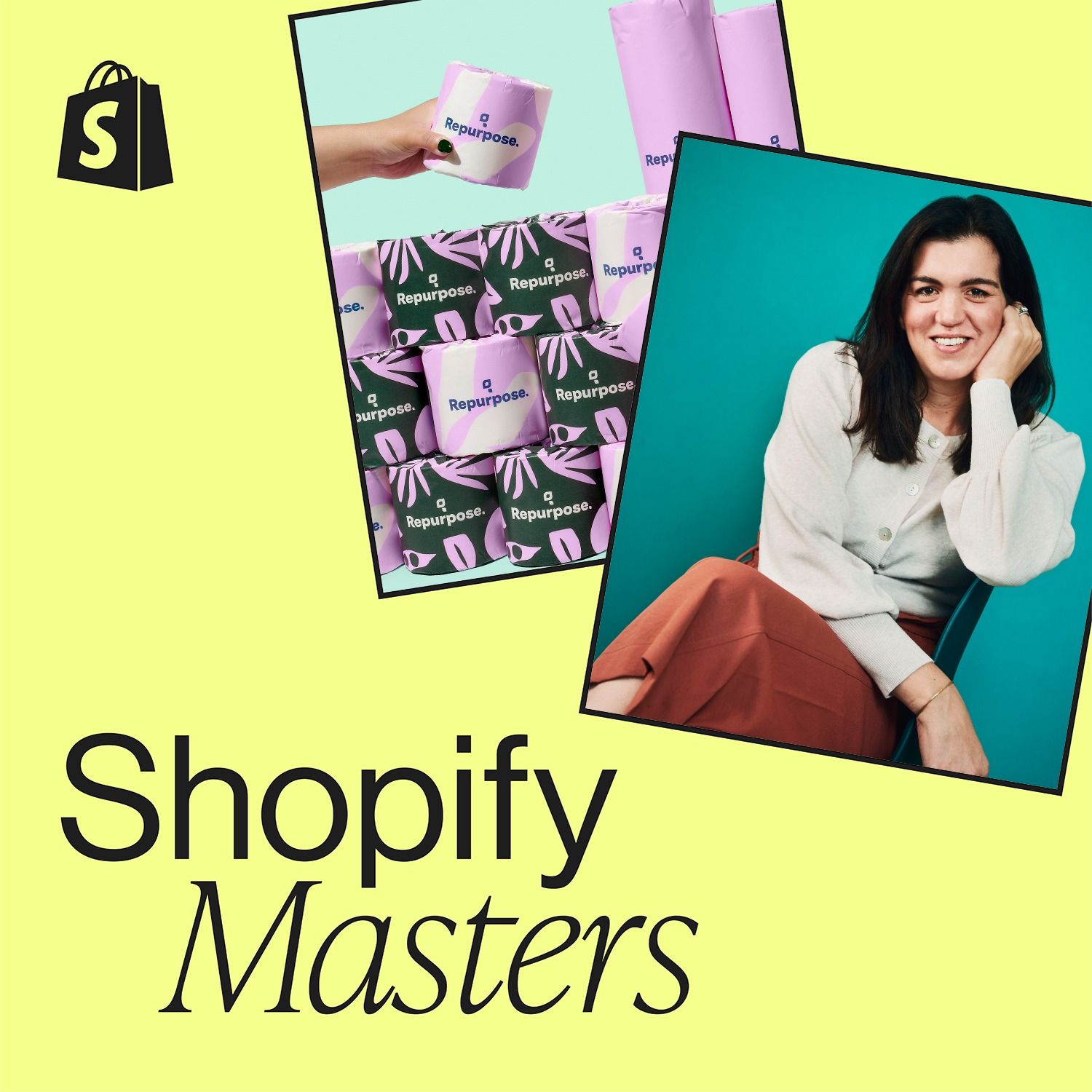
Shopify Masters
The Simple Formula Behind an 8-Figure Sustainable Brand
00:37:42
When Lauren Gropper noticed the amount of disposable plastics used on film sets, she saw a design opportunity. That reframe built Repurpose into a 15-year-old brand selling compostable products while diverting 727 million pieces of plastic from landfills.
Loading summary
Transcript118 lines
- [00:00]
A
Performance, sustainability and affordability. Those three things have to hit and bingo, we've got a great product.
- [00:10]
B
Starting with just one line of coffee cups on a few shelves, Lauren Groper launched Repurpose, a line of home goods made from plant based alternatives.
- [00:18]
A
We definitely tried to look different, to feel different, along with, hey, this is sustainable.
- [00:24]
B
Repurpose is now an eight figure brand found in 20,000 stores and responsible for diverting over 700 million pieces of plastic from land.
- [00:33]
A
I really do believe that within a decade we're not going to see petroleum based plastics. All these things will be gone.
- [00:39]
B
Lauren Groper is here with me now to share how she's leading the tableware category with new products, partners and tools. I'm Serena Smith and this is Shopify Masters, your companion for starting and scaling a business. Lauren, welcome to the show.
- [00:52]
A
Thanks Serena. I'm so happy to be here.
- [00:54]
B
Take us back to what was now many years ago, Pre repurposed launch, pre2010. You're on this film and TV set, you're working to make them more sustainable, which we both know is an uphill battle already. Definitely. And you get to the lunch hour and you're just surrounded by this sea of plastic.
- [01:15]
A
Yes.
- [01:15]
B
What takes you from frustration into action?
- [01:18]
A
I really saw it honestly as just a design challenge. I'd gone to school for sustainable design and I thought to myself, this is just the wrong design, this is the wrong material. We can solve this plastic problem with better design. What if we could use good materials instead of materials that are toxic and last forever and end up in our oceans and landfills? What if we could use something just better, cleaner, that would actually degrade? And so that was kind of what got the wheels turning. And I was just very excited by thinking about how to solve this problem using design. And then I thought, well, design is one thing, but how do you have broader impact? Like, how can I bring this into the world in a bigger way and actually make change? And there were other companies that I had kind of seen come up at that time that were challenging the status quo, that were kind of disrupting these legacy brands. Like, you know, organic baby food or natural cleaning was kind of coming up and it just felt like there's a space and a place to have a brand that stands up against plastic disposables. And why can't it be Repurpose? So that was the start. I was just very kind of like, yeah, young, naive, just thought I could, you know, take it on and didn't know what I was getting into. Had, had, I known I honestly may not have done it. So I'm happy that I didn't know. And yeah, I was just like, let's do it, let's go, I'm gonna do this.
- [02:44]
B
Did you have the sense and certainty at the time that there were better alternatives out there? Did you know what they were already or were you just committed to going on the journey of figuring it out?
- [02:56]
A
I think a little bit of both. I had seen, you know, alternatives in the market, but they weren't very well made. I always thought the design could be improved a lot and the price was really high. So it felt like, you know, you're not winning on price, you're not really winning on design or performance. It's just never going to take off. But if the products could be made better, if there could be just sort of a price point that was closer to parity, then you would have something, then there's not really a reason to say no. So the whole time sort of pre launch was kind of getting to that place where, okay, how close can we get to price parity and how happy are we with these designs? Like, are we ready to put our name behind this and put this out into the world? Yes, it performs. Yes, it looks great. Yes, it's sustainable. Okay, check launch.
- [03:43]
B
Take me into that process from a design and a development perspective, but also from a decision making perspective for you.
- [03:51]
A
What?
- [03:51]
B
Right. I think part of the reason why sustainability hasn't been at the forefront for so many years is because it is expensive. Right. So what is the matrix that you're utilizing to figure out when you're like landing at the right place and how are you pulling those levers?
- [04:06]
A
It's so hard. I love that you said what's the matrix? Because it is really hard. What we use actually is kind of the Venn diagram of performance, sustainability and affordability. Okay. Okay. Those three things have to hit in order for us to put something out into the world with the repurposed brand on it. So performance, meaning it can't just like melt or break or whatever in your hands. It has to work as well as a conventional product. Affordability can't be some niche, crazy expensive. You know, there are, for example, there are products out there that are so sustainable, like incredible, incredible design, incredible materials, but they cost just. It's insane. So they're not going to hit mass. Right. There's no way that you can get this kind of product into a Target or a Walmart at a price that is just way out in left field.
- [04:59]
B
People aren't Going to buy it?
- [05:00]
A
No. So what is it that kind of meets the criteria of definitely sustainable, third party certified, independently tested for toxins, et cetera, Breaks down according to certified compostability standards. Like it meets all these third party criteria and it's affordable and it performs. Bingo. We've got a great product. So that's how we put out into the world. And if it doesn't meet those three, it doesn't go. So, for example, we get asked all the time, can you guys make like an alternative to Ziploc sandwich bags? My kids use these every day in their lunches and I would love nothing more than to do this, but because of the material, the plant based plastics, they're porous. So when you put something into a freezer or you want to keep something fresh, it will not perform to the level of plastic. So things go stale within a day. So is it a great thing to carry, you know, a snack to the soccer field? Yes, but it does not meet our level of a performance standard to put out in the world. So we haven't.
- [06:02]
B
Are there products that you've gone down the path of attempting to do that?
- [06:05]
A
Yes, all the way down the path. And there are companies out there, I applaud them. They're doing great work trying to get these products out into the world and be sort of a alternative to Ziploc. But I don't feel that the performance is something that I would want to use at home or that I would stand behind. So we didn't do it. And there's multiple examples of products like that where it's shocking to me that there are products like that in the world that you're like, this is so expensive. It doesn't perform. It's halfway sustainable. How is this thing even being sold? But it is.
- [06:33]
B
At the same time, it's got to be hard to get like deep into
- [06:36]
A
R and D only to realize you
- [06:38]
B
have to abandon ship.
- [06:39]
A
It's so hard. And that's why, like, I applaud everyone trying to do the right thing and trying to put a product out there that is, you know, better for you, better for the planet. Any alternative is better. But I think for us, and I think the reason that we have been successful over the years and been around 15 years is because we are so focused on product, are so focused on affordability and sustainability all at the same time. And we do not sacrifice. I want convenience. I'm a mom, I have two kids. Life is messy, life is fast. I want convenience, but I don't want to feel Guilty about cutting corners or using disposables. And couldn't we just give a mom an easy out with a product that works well, there's no negative consequences and it's good for the planet, good for her health, her family's health. I feel like that's a win.
- [07:29]
B
You launched with one product, the coffee cup?
- [07:33]
A
Yes.
- [07:34]
B
Why launch with just one? And why? And why? You know, why go narrow and deep in the beginning and why was that the place to start? Was it about consumer interest? Was it about ease of manufacturing? Was it about the development process? Why land there?
- [07:48]
A
Note to entrepreneurs out there, never launch with just one product, or if you have one product, maybe have multiple versions of it. But it really was the unique product that we had that we felt was kind of combining all those things, like amazing performance, super sustainable, it was affordable. It was. Had like this amazing feel. It felt like a velvet cup kind of thing. And. And the lid was also compostable. So it was a very unique. Like, you didn't need a sleeve. And people loved it. They loved the feel of it. They love how it looked and felt. And also it was sustainable. So I think the reason we launched with one is. Cause that's the one that people wanted. By people, I mean consumers and our customers, which are retailers, they were like, this is something unique that's different than everything else on the shelf. So, yeah, let's do it. And that's why we launched with one. But I would never launch with one again. It's very hard to stand out. Think of, you know, you're walking down the grocery aisle and you're looking at the shelves. One little item is very hard to stand out as a brand and kind of notice it. So you always want to have more. More items in order for the person walking down the aisle to see you and notice it and maybe spend three seconds being like, yeah, I'll take that.
- [08:56]
B
Lessons learned.
- [08:57]
A
Yeah, hard one.
- [08:58]
B
You were talking about launching with a coffee cup because it was what customers wanted and also what retailers wanted. How were you gleaning those insights at the time? Were you pitching on multiple potential products and then narrowing it down to the one?
- [09:13]
A
Yes, we were doing that. And we had gotten quite a bit of press on that one product. And so that was really driving some of the interest like this. It was very unique at the time. And because of that press, that gave us something to share with a retailer that was like, oh, okay, I see it's been sort of validated. I'm interested in this. Yes, let's do it. And Then the consumer was buying it.
- [09:33]
B
The world has really changed in the last 15 years in so many ways. Yes, but like, what was the conversation around compostables and sustainability like at that time?
- [09:47]
A
It was a challenging conversation. I mean, I do think we were probably ahead of the market in that consumers didn't really care the way they do today at all. There wasn't the same education as there is today at all. This was almost sort of like pre, I believe, pre. Sort of E commerce as a mainstream way of, of shopping. So I think it was definitely for us an uphill battle to get people interested just in like, why what is this and why do I need it? And the concept of like, what's wrong with plastic? Like, what do you mean it's bad for my health? What do you mean it lands in the ocean? What do you mean it, you know, it lasts forever? I think there was very little awareness around the problems with plastic. That education, that awareness continued to rise with Internet culture and with the meme of the. The straw in the turtle's nose, which happened, I know, in 2016, because it turning point for us.
- [10:38]
B
Watershed.
- [10:39]
A
Yeah, watershed moment. Totally. And then people start to really care and say, hey, yuck, I don't want plastic in my life. I realize it's bad for me, it's bad for the planet. Like what else is out there? And luckily we were already out there. So that was a watershed moment for us because that's when we were able to kind of mass penetrate.
- [10:58]
B
Okay. But 2010-2016 is a long period of. It's a long period of time.
- [11:04]
A
Rough waters.
- [11:05]
B
And it sounds like the, in many ways the onus was on you at Repurpose to be engaging in a lot of this consumer consumer education, but also retailer education to both convince retailers that you deserved space on shelves and also to convince consumers of the merits of using this.
- [11:25]
A
Absolutely.
- [11:25]
B
What were some of the mistakes you made early on when it comes to that education process?
- [11:31]
A
So many. We made so many mistakes. I mean, on the education side, we didn't have the budgets. I mean we had really minimal marketing budgets. We were like living on a shoestring to be able to do anything. And so it was sort of early days of social. We relied on that and influencers and whatnot. But really you're hitting like a tiny fraction with the budgets that we had. So I think what we did was probably try to penetrate too much of the market early on when really we probably only had a, you know, a consumer buy in on the west coast, probably, maybe Some of the, you know, northeast coast, really, it was like a coastal thing and maybe some pockets of, you know, various metropolitan areas throughout the country. But it was not widespread across the country in terms of just awareness or desire for these kind of products. So I would have focused more heavily on those markets and just gone very deep there versus trying to kind of like peanut butter spread across the country and, you know, support that. It was really hard.
- [12:32]
B
Is that a piece of advice that you would still give to founders in this space today, Narrow the focus or do you feel like the landscape has changed still?
- [12:41]
A
I think the landscape has changed so much, especially with E commerce. You can really, I mean, you can be available for everyone everywhere. But I would focus my marketing budget. Yes. On those areas that I feel have the. The strongest consumer market for my product. Absolutely.
- [12:57]
B
Being innovative is a double edged sword. Right. On the one hand, everybody wants to be a disruptor in the category. And on the other hand, if you're too far ahead of the curve, you're kind of sol. Where do you feel like repurposed was in that spectrum?
- [13:14]
A
I think we always had, I mean, after we had that for the one skew, we moved on to more SKUs where some of the SKUs had that sort of broad appeal. They weren't necessarily super innovative, but they were kind of the workhorses where they, you know, people would need them and use them. It was kind of like everyday, essential type thing, like a. Everyday plate, just like a dinner plate. It was innovative and is innovative still in that we're using upcycled sugar cane versus any kind of like virgin paper. So we're taking the waste from the sugar industry. They don't use the cane, they use the juice. And then we use the cane, grind it up and that becomes a plate. So it is innovative, but at the end of the day it's a plate. And that was one where we definitely had interest from consumers and buyers. But then we'd have to also. We'd also have to have something that was like super innovative just to kind of like give us an edge, I guess, and give us that brand cache and give us something that people really aspired to. So we always lead with something super innovative while at the same time delivering kind of the basics that people need.
- [14:17]
B
When you launched, you were, if not entirely virtually alone in the category. You think about that from the, from the retailer's perspective, where even were you trying to persuade them to place you when there wasn't an entire aisle of Right. Sustainable compostable products?
- [14:34]
A
Great question. In the early days, they were sort of like, oh, we'll put you in the section with the green cleaning and the natural baby food and the organic. You know, we're like, no, they're not going to come looking for us there. We want to be right next to the big legacy players in the paper products aisle. Please put us there. So that's eventually where we landed, and that's where we've done well. I mean, I think people scanning the aisle, you have literally three seconds to kind of catch their eye and say, hey, we're different. And when we launched, we definitely tried to look different, to feel different. I mean, we are different and just sort of stand out from what has been there for 50 years plus to sort of say, hey, this is something you can do different. And I think that alone, just trying to kind of like brand ourselves as different, maybe a little more modern, younger, is what helped us stand out in those early years. Now everything looks like that. We didn't obviously create that look and feel, but I think just products on shelf have gotten beautiful, you know, and different, and everybody has a point of view and looks amazing. But our aisle is still a little bit behind the legacy players are, you know, they've been around a long time. It does not look like the way the rest of kind of the snack aisle does, where everything is bright colors and cool patterns and, you know, that's what we tried to bring to the aisle along with, hey, this is sustainable and the rest is not. So.
- [15:58]
B
And did it work?
- [15:59]
A
It worked right away? No, not right away. I mean, I think it worked in certain markets really well, and I think it did help us stand out. But I think the reason we've been able to kind of stay ahead, continue to be successful in the markets that we're in, is we figured out how to sell through. So, like, it's one thing to get on the shelf. It's another thing to actually have people buy you time and time again or to kind of bring new to brand buyers to your brand. And I think we've always thought of ourselves as omni, meaning we're available online and in store. You know, anywhere people shop, we are. And so that just kind of putting our efforts across multiple channels has a halo effect to the other channels. So maybe you see us on, you know, on our E commerce site, on rips.com or you see us on, you know, Instacart or what have you or Amazon or wherever you may not buy then, but then you see us on shelf and you recognize the look and feel of the brand and then you purchase. So having kind of that omnichannel strategy and really kind of trying to be everywhere all at once though it is expensive. It's what really drives sell through on the other channels. Like they all kind of play into each other.
- [17:19]
B
It's symbiotic in a way.
- [17:20]
A
Yeah, exactly.
- [17:21]
B
But in so many ways the relationship and the dynamic with brick and mortar retailer is pretty different from the DTC universe. Are you servicing those customer bases differently?
- [17:34]
A
Yes, definitely. The SKU offering is different. Kind of what is highlighted in each is different. What people love on E commerce is not always the same as what they love on shelf, which is interesting because I think best in class brands, you know, the number one item on the shelf is also the number one item, you know, on the website is also the number one item wherever. And for us it's actually a little different. Yeah. So our number one item on the shelf is not the number one item online. And I think that's because our number one item on shelf is the plate. A plate in a bowl. And that's because people are buying kind of, they're in store, they're having a party, oh, got to get the plates. Or you know, they know they're having an event and it's almost like a last minute purchase. You're not often thinking ahead of, oh, I'm gonna have people over next week. Let's spend the, you know, time going online shopping for this so that in five days I'll have my, you know, my plates. Whereas online people are subscribing to things that they use every day. We make trash bags, we make toilet paper, sustainable trash bags and bamboo toilet paper. But those can be subscribed to. It's just every day you just want, you don't wanna think about it. And so that's what's really popular on E Com. Just the products that, you know, you use all the time, every day and it just comes to your door. I also think people don't want to have to like lug a giant thing of toilet paper from a supermarket shelf. So it's interesting. It's different, different use case.
- [18:58]
B
In the early days you were virtually alone on shelf with no other competitors. And that had its own challenges being so early to market. And now the shelf is full of competitors. That's its own challenge. To what extent do you think Repurpose is responsible for the category exploding in the way that it has and what's your relationship with the competition?
- [19:24]
A
I think my biggest accomplishment, our biggest accomplishment and what I Can tell my grandkids one day is that, you know, we helped to change this entire category. I don't think we are solely responsible, but we certainly played a decent part in changing the category, which I feel amazing about. So on the one hand, I'm really happy that, you know, everything is now basically compostable or sustainable in some way. That's amazing. Although it's now just table stakes. So how do we differentiate as a brand? Like, why do we need to be there if everything is compostable? And I think where we're focused now is really kind of interesting design. So how can we bring design into the fold where someone is able to. It's not just a simple paper plate. Maybe it has different shape, different form factor. We make these amazing disposable wine glasses that are compostable, that just look beautiful. You'd want them whether they're compostable. Compostable or not. So I think we're trying to appeal to kind of people that love something that is just a commodity, but they want it designed more beautifully and more elevated. And it's also sustainable, of course, but it has that kind of extra something that's not just your, you know, average commodity product. So that's where we're leaning now.
- [20:37]
B
The wine glass is so beautiful and so durable and also so much mimics plastic that you kind of wouldn't know that it's not.
- [20:48]
A
Yeah, you wouldn't know. Yeah.
- [20:49]
B
Is that its own barrier to overcome?
- [20:51]
A
A little bit, yeah. It's funny. Cause I was actually at a camping weekend with a bunch of other moms and dads at this school trip. And I was like, okay, I'll bring the cups. So I brought the wine cups. And a bunch of people were like, oh, no, thanks. I didn't use plastic. And I'm like, but it's not. And I had to explain, like, they didn't realize that it wasn't because it does look exactly like a plastic cup. And they were actually so excited after the fact, like, oh, my God, this isn't plastic. What? And I was like, yeah, not at all. And it's made from actually, like, corn. And they compost in 90 days. They're like, what? No, microplastics. So I think it's hard. We have to do all the education on the. On the package. It's easier online when you have a lot more room to tell the story in the way that you use infographics or videos or whatever it is to show. But, like, on shelf, it's gotta be on that package. So I think the more that we can tell the story and like Lean in, for example, like on E. Com, that is one of our top products. Because I think you can see how it's used, you can understand why it's not plastic and no microplastics. And we can share all that information where it's a little harder. If someone's just seeing it at a party, I don't think they realize.
- [22:01]
B
Do you have any nuggets of brand messaging wisdom? Especially when we're talking about being on shelf in terms of how to engage in the education that feels like it's giving the consumer enough without it feeling overwhelming. Giving it to them in a way that feels interesting without them feeling like they're being spoken down to or that it's spinach, like that feels like such a tough line to walk.
- [22:29]
A
So hard. Especially because. Which I agree with, there are specific federal guidelines and state guidelines that dictate what you can and cannot say. And they're quite prohibitive. So you can't say just broad based terms like eco friendly cups. You can't say eco friendly. We can't even, for example, in California use the term biodegradable because biodegradable doesn't have a third party certification to it. Like this chair is biodegradable technically.
- [22:56]
B
So because everything will biodegrade.
- [22:58]
A
Everything will biodegrade at some point.
- [23:00]
B
So, okay, so explain to me also then the distinction for everybody between biodegradable versus compostable.
- [23:05]
A
Biodegradable is the term that I think is most widely known, which is something will degrade. The product will degrade eventually, over time, it will not last forever. However, biodegradable has no specific timeline associated with it. Compostable means it will also degrade. However, it has to degrade in a certain timeline. So to be certified compostable, the product has to basically completely degrade into the soil within 90 days. If it's home compostable, it's within 12 months. But that's a very different metric. It's a very different metric. So like in three months, this thing has to be gone in a municipal or industrial compost. And why they say that? Because it's a very controlled environment. You have really high levels of heat, humidity, oxygen. All those things are playing together so that this thing, the product will break down within 90 days.
- [23:57]
B
You've had 15 years of figuring out this matrix of performance versus sustainability versus affordability. Things that I would think could be in conflict with one another.
- [24:09]
A
Yes, they are in conflict with one another. Okay, so we definitely are in conflict with one another.
- [24:14]
B
Can you take us into the process of how you make that assessment and how you know when you're sort of getting into this sweet spot and if it's helpful, maybe times that you got it wrong and learned from that.
- [24:26]
A
Yeah, we've gotten it wrong a number of times. I think where we have gotten wrong mostly. And I think I have like the founder itis of this, which is like, ooh, shiny object. Like, ooh, innovation. I definitely lean more that way. And so I get really like bedazzled by a new kind of material or a new resin or what have you that is like, oh, we can make this out of that. Isn't that cool? And you go down the path of like, yeah, but it's just way too expensive. And at the end of the day, it doesn't perform. Like, we've had this amazing kind of instead of plastic to, to seal the product, we use this sort of like compostable bag. And it was super compostable. We thought the performance was great. And then lo and behold, on shelf, it was like the bag was just like tearing open. The product was just falling out. That's just horrible. And you know, we thought we were doing something great, but no, we just didn't do enough testing. We rushed it. We were like, yeah, let's do this. This is amazing. I really wanted to do it. And we didn't have the right product and we rushed it. I think a lot of the times when we rush things because we think it's going to be like first to market or new or innovative and like, oh, this would be so great. We got to get this in front of whatever. It's really kind of bit us most of the time.
- [25:43]
B
So there is tech that you are excited about that just can't be introduced at this level yet.
- [25:49]
A
No. And there's so much that I, I mean right now that I would love to commercialize and bring to market that is just so unique. But either the price is too high or the performance isn't quite there. That's usually the challenge. Like the sustainability factor is so high and so amazing. And that's what I get excited about. Like, that's what gets me really jazzed. But then the practical measures aren't there.
- [26:13]
B
It's gotta be frustrating as a founder and as the leader of a mission driven business where you really are trying to make a positive impact on the planet. And you have, right? How many pieces of plastic have you diverted?
- [26:27]
A
727 million.
- [26:28]
B
Say that again.
- [26:29]
A
727 million pieces.
- [26:31]
B
Wow. Yeah. That's remarkable, right? You can lay your head down on the pillow at night, and yet the problem continues to feel like larger and more insurmountable. It seems by the day.
- [26:43]
A
It does.
- [26:44]
B
When you started, microplastics were not in the conversation really whatsoever.
- [26:48]
A
I didn't even know what they were.
- [26:50]
B
Now they're mainstream. I read something yesterday that they're in every organ of our body or something horrifying fetuses are being born with. It's. It's crazy, right? How does that impact you as a human being, but also as a business leader of an organization that is trying to affect positive change? Is it motivating or sometimes you just want to lie down on the couch?
- [27:13]
A
It's both, depending on the day, you know, it is motivating for me, actually. I do feel like, okay, then we have to do more. Let's do more. How can we do more, do better? Like, I want to be that company that actually is, like, taking a stand and trying to do better. But then there are those days, too, where it just sounds. You know, some days it just seems insurmountable, and it's like a tidal wave of, oh, you know, you hear news about certain chemicals being now allowed to be sprayed on all pesticides, and it's like, oh, my gosh. You know, it's. It's hard. I think, though, that for me, I just. I tend to be a positive person. I want to focus on what we can do and do whatever I can to. To make it better.
- [27:57]
B
In those moments where it feels like something akin to burnout might be creeping in, what do you do to combat it?
- [28:04]
A
Take a break. You know, take it. Even if it's just like, go take a walk, whatever it is that are, like, go be with the kids. Just get your head out of the mess of it. I think every founder, every entrepreneur deals with this. It's like such a rollercoaster. There is a lot of burnout. Sometimes you feel like you're kind of like, banging your head against the wall, or we use the pushing the boulder up the hill analogy a lot. It is really hard. It is super, super hard. But then you have this, like, great news or something really cool that happens with your product or like your team does something really amazing, and it just kind of like, propels you to the next step, that next level. But, yeah, I tend to kind of like, take a walk, get in nature, just get out of the day to day of it and. And step away and.
- [28:50]
B
And come back and appreciate the Small wins.
- [28:53]
A
Appreciate the small ones for sure.
- [28:55]
B
You recently launched bamboo toilet paper. Yes. Can you explain to us what makes it so different from regular toilet paper and why that was the next evolution in your product expansion?
- [29:09]
A
Bamboo toilet paper, for one thing, uses bamboo versus virgin paper from trees. So you're not cutting down trees, you're using a renewable resource. Bamboo is like a weed. It just grows the minute you cut it down. So it uses significantly less water to produce as well, less energy. So that alone just using bamboo versus trees is a huge environmental win. However, the other big piece and the reason why I believe bamboo toilet paper has kind of taken off in the world is because bamboo toilet paper does not contain forever chemicals called pfas. And those forever chemicals are in most conventional toilet paper. So as people become more aware of the problem with PFAS and the links to cancer, it probably might be a good idea to think about the toilet paper that you're using day in, day out, every day. And I think that just kind of educating people on what is in conventional toilet paper has resulted in kind of an interest in the alternatives, Bamboo being the biggest one.
- [30:08]
B
God, it's like you kind of have to be the bearer of bad news.
- [30:10]
A
I know, I feel like such a Debbie Downer.
- [30:12]
B
But then you're like, but I've got the solution.
- [30:13]
A
But you could have something different. Yeah, I know. It is kind of like, wah, wah. But then, you know, there is this great solution and you know, there is a little bit of a price premium, not just our product, but bamboo is, because it's not at scale of kind of like the gigantic, you know, toilet paper manufacturers. We're not quite there yet, but there are many brands besides us kind of out there really trying to push this. And it's what's growing the category. So it provides the growth in the category. So I think it's just going to be get bigger and bigger and soon be mainstream.
- [30:45]
B
You started the company with the brand positioning of sustainability first.
- [30:50]
A
Yes.
- [30:51]
B
Has that shifted over the years? Is that still what you're leading with?
- [30:55]
A
It is always sort of part of our DNA, but I think it's not necessarily what we're leading with now. It's always going to be there. And we want to be known as kind of a brand that you can trust. We're authentic, we walk our talk, we'll be very transparent. But I think we want people to know more about kind of how it impacts them, their health, the health of their family. So a lot of our product products are, or all of our products are non toxic. So we offer a safe alternative to the conventional products that may or may not, you know, have microplastics or PFAS or what have you. And we are offering an alternative. And I think people care sadly a little more about that than they do about the kind of environment at large. So while we as a company are, you know, through and through sustainable, I think our messaging and what we're kind of sharing first and foremost is more about microplastics and toxins. Then you know, here's the amount of trees that you're gonna save.
- [31:50]
B
From an internal perspective. How did you assess how and when to start to make that transition?
- [31:57]
A
It was really just sort of how messages were being kind of perceived. So we would, you know, like any company, test different messages, use different ad formats. And what people were really kind of responding to most was messages around microplastics, messages around pfas, messages around issues that they cared that were kind of impacting their own health and the health of their family versus messages of sustainability.
- [32:21]
B
Gotta meet people where they are.
- [32:22]
A
Gotta meet people where they are. Yes.
- [32:24]
B
Give us a little bit of hope.
- [32:25]
A
I think today's consumer, the younger generation, they just expect sustainability. It's like it's almost an expectation, it's not a feature. So of course it's sustainable. You know, that's just table stakes. I know that now what. So I think to your point about like we, we started leading there and then it just became mainstream and table stakes. So then what?
- [32:48]
B
The problem can feel insurmountable in moments. Are you, having been inside this thing, so deeply hopeful that there is a potential brighter future ahead for us if we're willing to make these shifts.
- [33:02]
A
I am very hopeful. I'm super hopeful I think for sure. I really do believe that within a decade we're not going to see petroleum based plastics, we're not going to see PFAS and toilet paper. All these things will gone.
- [33:15]
B
Love to hear that.
- [33:16]
A
Yes.
- [33:17]
B
AI is obviously unavoidable, Right. And can supercharge your workflow in so many ways. Can you talk about how you've brought it into the business and your workflows?
- [33:29]
A
It's one of those things as well that is challenging for me because of the environmental impact. So I don't think people are super aware of the amount of energy that AI requires to actually operate and the huge data centers that use significant amount of energy to actually just fun, you know, make AI function. So there is that kind of like, well, I want to lean on AI so heavily because it is Incredible. We have brought it into our organization. We do use it daily, but we're very conscious to understand, okay, you know, which tools are we using? Do they offset anything? Like, we're conscious of what we're using and perhaps maybe how can we offset some of the kind of the footprint that we create using AI? And it is a challenge because it is amazing. We actually brought in a group to come and do sort of an online course. We have a group that teaches our whole company so that we have a single vocabulary now so that the whole team is aware of, like how to use ChatGPT, how to create GPTs, how to create projects, how to use the tools to create new interesting marketing assets. You know, we use it for all of our scopes of work to put in kind of like standardized procedures. We use it in fine. I mean, we use it for everything. Shout out to Chat Walrus. Craig folds. Chat Walrus. There you go. Yeah.
- [34:47]
B
In hindsight, do you think being so early to market was a blessing or a curse?
- [34:54]
A
I think a bit of both, honestly. I don't think it's great to be always first to market. It can be, it's nice to be like a close second, a fast follower, as they say. Being ahead of the market is challenging because you burn resources. You spend money in trying to kind of like educate the market and bring the consumer along. It's like surfing. I was talking about this with one of our sales guys the other day. Shout out to Cody. He's like, it's so much like surfing. Like, you don't want to be too early, you're going to miss the wave completely. And if you're too late, same thing. It's like, it's really hard to get the timing exactly right. But I think if you're doing something innovative, yeah, you do want to be more on the early side than the late side, for sure. But if you are too early, you're just spending a lot of like money that's really hard to get to advance the company. I mean, those early day kind of investors are amazing, but you're not necessarily getting huge amounts to kind of prove your concept. You have to be so careful with every dollar. So when you're very far ahead of the market, it's just, it's tough.
- [35:58]
B
Now with the benefit of perspective, do you have any advice for others in terms of how they can assess getting that timing right or to some degree, is it luck?
- [36:09]
A
Some degree, it's luck. And they come out and they have this incredible product and they've got the Right. Mix of kind of buzz around it and it just goes. It's amazing. And I like, you know, hats off to those people who are doing incredible jobs at making that work. I think the advice is like, yes, if you have something innovative and you truly do have something innovative, go for it. You've got to go. You got to try it. But be really thoughtful about your go to market and, you know, your marketing plan and how you spend every dollar. Be really thoughtful about the markets that you go into. And it's a challenging proposition. When you're bringing innovation to market and you're early, it is.
- [36:44]
B
On the flip side, is there something that you can point to that you did in the first six months of being in business that you think set you up for long term success?
- [36:53]
A
Yes. I think we were very much like a sales first organization where it was like, you can sit there and tweak your product till the cows come home and make it perfect. And we were like, okay, it's not totally perfect, but we gotta sell. Like, let's go. We gotta show revenue here. Like, it was always about revenue. Like, let's go. Let's make things that people want. And if it's not absolutely perfect, but almost all the way there, like, let's take it to market. Because we were salesforce. We were like, how are we gonna make a sale? Let's go.
- [37:22]
B
Lauren, thank you so much for being here.
- [37:24]
A
Thank you, Serena. This has been amazing. Really appreciate it.
- [37:26]
B
And thanks to all of you for tuning in to Shopify Mast. If you like what you saw, be sure to hit the subscribe button so you never miss an episode.