← Shopify Masters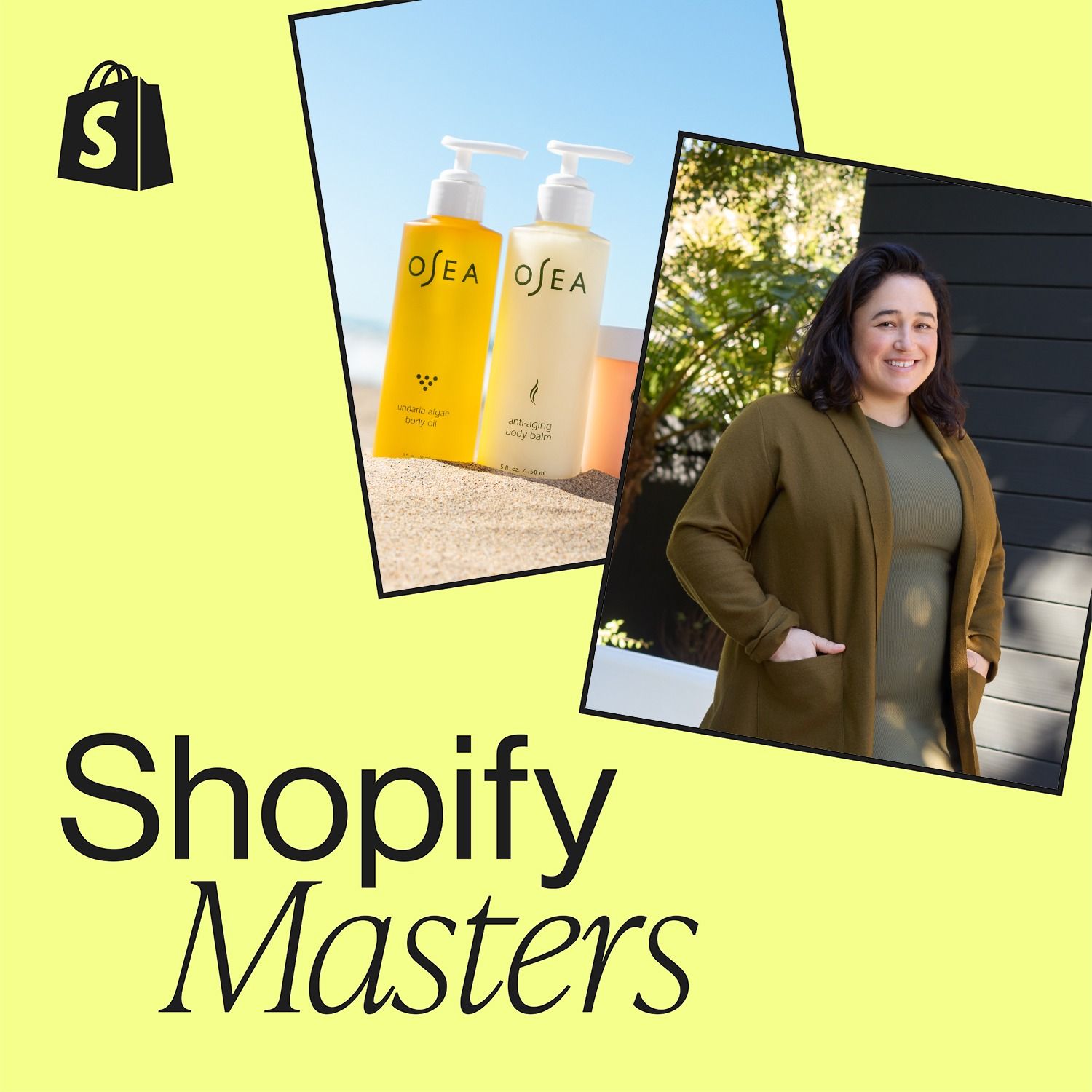
Shopify Masters
The Skin Care Brand That Refused To Compromise for 30 Years
00:39:06
Melissa Palmer inherited a wholesale beauty brand from her mother and rebuilt it into a nine-figure omnichannel business—with direct to consumer, Amazon, TikTok Shop, and more than 1,500 Ulta locations each playing a role in how OSEA Malibu finds and keeps customers.
Loading summary
Transcript134 lines
- [00:00]
A
I would never put this in my body, so I'm not putting it on my body.
- [00:07]
B
Can a family business really break $100 million in revenue? Osea did, turning three generations of sea inspired skincare into a clean beauty powerhouse. Founder Melissa Palmer took family formulas from spa shelves to viral TikTok moments and explosive D2C growth.
- [00:23]
A
I'd say I usually have a hunch of what's going to be a top seller. What often surprises me is why Melissa's here.
- [00:29]
B
To share the ultimate ingredients for growth, hacking a nine figure, and why heritage and innovation are the secret power formula behind oseo's success.
- [00:36]
A
We were totally the fringe weirdos and now like normal.
- [00:41]
B
I'm Serena Smith and this is Shopify Masters, your companion for starting and scaling a business. Melissa, hello. So happy to meet you and have you here.
- [00:50]
A
You too. Thank you for having me.
- [00:52]
B
Oh my God, thanks for being here. I have to talk about the formidable line of women that you come from for a minute. Your great grandmother was one of the first or the first female chiropractor in
- [01:08]
A
the us Disputed if she was the first or the second. She graduated chiropractic School in 1919 and at that time women were not allowed to attend chiropractic school. She read about it, she saw this and she knew she had to do it. Moved her whole family from New York to Iowa. She showed up at the first day and there she was.
- [01:30]
B
Wow.
- [01:31]
A
They let her in.
- [01:31]
B
Wow.
- [01:32]
A
Okay.
- [01:32]
B
And then like I don't want to skip over your grandmother, but like let's skip to your mom who moves to this sort of hippie commune which is where you're born and partly raised. Yes, like a clothing optional commune. This is not like a fair weather commune. This is serious.
- [01:49]
A
Okay. The clothing optional, I think it was more like long hippie dress required, like long hair with a, like a middle part required. But it was a real commune.
- [02:01]
B
It was today.
- [02:02]
A
It was basically everything you can think about anyone in LA being interested in today is what we were doing. Everyone was on like a meditation program. Food was such a part of everything we did. Visualization, manifestation, energy. So we were totally the fringe weirdos. And now like normal to the extent that anyone is. I mean normal.
- [02:29]
B
I mean growing up in. In a situation like that, deeply communal living, fringe, outside of the mainstream. What was your perspective on career and business growing up?
- [02:42]
A
I just was raised in such a creative way. I didn't even start school till third grade. I was on of a Montessori program. So I didn't learn to read till later. But after we left the commune, which was just such a cool and unique way to grow up, I was raised with such a mindset. I think it was necessity, but, like, if I wanted something, I had to earn it. So I had paper routes, lemonade stands, a babysitting business. Like, all these different ways I was making money. And I really quickly got to see if I worked hard, I could get cool stuff. So I think that's what really started my entrepreneurial spirit.
- [03:24]
B
Did you have the sense at the time, like, oh, I have this entrepreneurial bone in me?
- [03:29]
A
No. I just knew I wanted to go to summer camp and that if I got three paper routes and then got the kids in the neighborhood to help me fold the newspapers, I could deliver them much faster and, like, give them a smaller part of the revenue, and then I could go to camp. I didn't even know the word.
- [03:46]
B
It's like some skills are developed and some talent is just innate.
- [03:53]
A
Exactly. The gifts of our childhood are so unique.
- [03:57]
B
Yeah. We will talk a little bit more about that going on. I mean, I did not grow up on a commune, but I had a hippie, dippy mom who was like, you know, just sending me to school with just, like, the weirdest stuff.
- [04:09]
A
Oh, my gosh. You get it.
- [04:11]
B
Oh, my God. And so I went, you know, you go through this period of just, like, desperately wanting to be white bread, you know, like, can I just be normal? Can I wear the normal clothes? Can I have the turkey sandwich? You know? Did you go through a period of rebellion from your roots?
- [04:27]
A
Absolutely. In the 11th grade, I started wearing. I got super into the gap, like, preppy clothes. I joined student council. I was like, you know, I wore loafers. It only lasted, like, two years, but it was like. Like cosplaying that I was this super preppy person because that's all I ever wanted.
- [04:47]
B
Right.
- [04:48]
A
On the note of the weird lunches, I won't take us too far down, but, like, the funniest thing to me now is how, like, eating a whole sweet potato is very trendy on TikTok.
- [04:56]
B
Yeah.
- [04:57]
A
I used to get, like, a sweet potato in a paper bag for lunch. So I feel like everything's really coming full circle.
- [05:03]
B
Yes. I mean, as is the case with osea. Right. Like, totally clean. We'll talk about it. But, like, you know, obviously, clean beauty has now, like, expanded. Exploded. When your mom started was sort of out of frustration with what was in skincare and maybe not in skincare at the time. Clean beauty was not a movement yet. There weren't really Any players in the game yet? What do you remember from those early days?
- [05:32]
A
So the way it started was really just so simple and organic. Our commune was really a wellness retreat and people would come and cleanse and do a whole holistic program. My mom was in charge of the spa and she had to look for products to use in the spa because she needed treatment products. I remember her looking for products. This was really far back. And she just read the ingredients like she did with food. She thought, I would never put this in my body. So I'm not putting it on my body because now, as is very mainstream to say, the skin is the largest organ in your body and things are topically absorbed. And she just thought, you know what, I can make my own, I can do better. So she started with her own rough formulations and that was really the beginning of osea. Then she spent another decade with just bathtubs full of seaweed essential oils all over the house, perfecting her formulas until we launched in 1996.
- [06:31]
B
Were you involved in some of that early formulation?
- [06:34]
A
I mean, we were all involved because OSEA has always been kind of like the other child in our house, I would say. So Some of the products were specifically formulated for different times of my life. Like our ocean cleansing mud was made for my middle school acne. My little brother just constantly smelled of essential oils. We would had like a scent to our family. So there was just product and essential oils everywhere.
- [07:01]
B
You maybe as another act of rebellion, left OSEA for a period of time, right. To go and run a hula hoop company. This is very LA and Burning man coated.
- [07:14]
A
You got it on the Burning man side.
- [07:16]
B
This is very Venice. This is not a typical skincare CEO path. What did that chapter teach you about business and entrepreneurship?
- [07:27]
A
So the first 15 years of OCA, I started helping my mom with like the first order. And we spent 15 years really slowly growing the business. I did it all through high school, college, and we grew 10% a year off of zero. So we were just a small business supporting ourselves.
- [07:48]
B
And what did that look like in the early days? How, how were you reaching customers? What were your channels?
- [07:53]
A
Our primary and essentially only channel was the spa market. We'd wanted to go into retail and it was just the two of us. We knew we couldn't compete and we realized that spas were really slow moving business that was manageable and plus we had to go to all of the spas and hotels and train them. So we focused on like five star hotels on the beach. And it was great. It was like the most fun business.
- [08:15]
B
A win win.
- [08:16]
A
We loved it. So we just kept growing and I kept wanting to grow faster and grow more, but I didn't really have any experience. So I got completely obsessed with hula hooping. Wanted to start a hula hooping business, met someone who was doing this completely weird, unique, fringe business and just had to follow it. My mom was really supportive, hired one employee and kind of did a little bit of both, but got the opportunity to run the business. And it was at the most incredible moment when E commerce was just starting, when social media was just beginning. And at that time, OCO was 99.9% a wholesale business. The.01% was our phone orders, where my mom and I would like take orders on the phone and talk to all of our customers.
- [09:06]
B
How quaint.
- [09:07]
A
We still have some of those customers DM us on Instagram and it's so cute. Yeah, I took so many phone orders.
- [09:14]
B
Okay, so but you go and you run this Hulu company. You've never run a company prior.
- [09:20]
A
I mean, not really. I started, I grew a company very slowly and the hula hoops were just like fast moving. We went on Good Morning America, crashed a website, went viral, though that wasn't quite the term then, and grew to be a multimillion dollar company selling hula hoops.
- [09:41]
B
You did not stay there forever.
- [09:43]
A
I did not.
- [09:44]
B
You went back to osea. Why the shift back? What brought you back? What did you want to bring to OSEA and grow?
- [09:50]
A
Candidly, I was kind of figuring out what I was going to do next and I thought, I'll take a year off, just figure it out. And I tinkered with building a website. And that year was the first year I built a website. It worked. And we hit our first million dollars in revenue. And I thought, okay, I'll give it another year and then the rest is history.
- [10:12]
B
So you come back and you're like, okay, let's make this shift from wholesale to D to C. DTC works pretty much right out of the gate. Some of the growth that you have been craving, you're seeing the fruits of your labor right away. Sounds like your mom had sort of by design grown this business very slowly. Is there any tension there or is she along for the ride?
- [10:35]
A
She's along for the ride fully, I would say. I had to earn each part of the business. You know, it was so interesting to come back to a business I basically was running as a kid and I was correcting and fixing my own work. And so first I built the website and then made all this new revenue. Then I had to build customer care. And then operations started getting pretty tough because the volume was growing. So I just really organically built the business. And the part that my mom has always been 100% committed to is product, which has made us a great team because I run the business and growth and love the product, but she is the product. It is like, so through her. So it's, yeah, super supportive, but definitely radically changed the way the business looked and operated.
- [11:26]
B
For sure. When you came back and you said you were sort of like fixing some of the mistakes that you'd made when you were younger because you didn't know any better, what were some of those mistakes that you had to undo or innovate on?
- [11:37]
A
I built our QuickBooks. I had to redo our. All of our software. Now it seems so funny this long later to think. Think about what I was fixing, but our order forms just every. You know, I used to ship every single order. You name a department. I had the job. And between my mom and I, we kind of just did everything. So I got to go through and scale every part of the business. Maybe more than fix it, like, kind of tweak it and scale it.
- [12:04]
B
If you can go back to that time you came back to the company in 2015.
- [12:08]
A
Yep.
- [12:08]
B
A long time ago in in business years. Not so long ago in. In regular years. What do you remember being the biggest learning curves or stumbles in that first year back?
- [12:23]
A
Well, if I could go back to 2015, I would go back and have Shopify be what it is today. And I can't even imagine where we would have been. Probably one of the biggest learning curves was learning how to grow paid ads and how to scale a D2C business at that time. And it's funny when you say, you know, 11 years ago wasn't that far back in business years in D2C. 11 years ago was like 50 years ago because it was like dog years. It really was. Like in 2015, we had this huge dilemma of, like, I had to learn how to code to have a website before and, like, learned how to build our site on Magento and all these. It was like, oh, should we go with Magento or Shopify? Everything we had to do was so, like, if we wanted to, you know, doing an affiliate program was so much work and so crazy. So if I had to go back, I mean, I would love to go back with the skill set now, of course, I think I would have given myself more permission to spend more on ads at that time because they were such a great deal. That's the truth.
- [13:33]
B
Right. And they were, they were performing in, in such a different way than they are in this present moment even.
- [13:38]
A
Totally.
- [13:39]
B
I understand that for you a more recent unlock has been TikTok shop. What has that opened up for OSEA that feels different from what you were pursuing prior?
- [13:50]
A
I think the thing about TikTok shop that initially got me excited is, well, first of all that it's new. And one of the things I love so much about E commerce and have loved so much throughout the years is like just the excitement of new strategies and the constant unlocks you can find in the business. New ways to message, find new audiences. But even like new tools like subscription or loyalty or you know, we were doing Influencer in 2015 and it was like an untouched landscape and now Influencer is so competitive. So TikTok shop a couple years ago was just like the Wild west. And I think I got so excited because it reminded me of the early days of D2C. What TikTok shop does for us now is it does drive revenue and it's a healthy revenue channel. But that's not really where we see its value. It's driving so much branded organic search and driving so much trial and discovery. Because as we sample and grow through TikTok and like TikTok affiliates, we see that it drives our direct D2C, it drives Amazon and it drives customers to ulta.
- [15:06]
B
I heard you also say that it has turned some of your lower performing products into hits.
- [15:15]
A
Kind of the way we've grown over these 10 years is first we unlocked D2C then that was really like 2015 to 2020. So much growth building this really loyal high value consumer on our own dtc, which is different than most beauty brands because a lot of them have gone to retail. Side note, we've never considered ourselves beauty really. Just, well, 2020 to 2025 was really much more of a retail unlock. We were in 1500 plus Ultas, all the Nordstrom stores. So that's been kind of balancing what it's like to have a really robust D to C, a really robust retail business. Then we started opening Amazon, TikTok shop, all these new channels and I think one of the things that has been really surprising is the way that different products perform in different channels. So as an example, we have this body polish called Andari Algae cleansing body polish. It's such a great product, but we just cannot get it to work on D2C. On TikTok, it's been going bananas. We have another product which is a pillow mist. Really low performer, went completely viral on TikTok. It's now been. It's been sold out for three months now. It's driving us crazy because I think it's a combination of virality. But these creators on TikTok find new ways of talking about products that we can't think of and it unlocks it. And now everyone is going into all of our channels looking for the pillow mist. Similarly, we see it on Amazon where different products take up. So having a really diverse product portfolio, that omnichannel approach of which products they succeed on which channel, I think will be a huge unlock for us.
- [17:07]
B
Do you find that you're actually like speaking to your consumers in different ways in these different channels too?
- [17:12]
A
I would say with some minimal pivot, but so much of the product, it's done by creators, so they're speaking to their audiences. Fundamentally the same core messaging through their lens.
- [17:26]
B
You do have some products in the line that people have an almost like evangelical zealotry about. I mean, I know your mom is sort of queen of product, but you've been deep in the trenches of family business. You've been deep in the trenches too. Like when you guys are formulating a product, do you, after all these years have a sense for like, what might be lightning in a bottle?
- [17:50]
A
I think it always surprises me, really. I always get nervous with every launch. Now it's like a superstition maybe like with an athlete who wears the same pair of socks. I have to freak out before every launch and think it's not going to succeed, it's going to completely fail. So maybe I'm too deep into that to think about it, but it typically, there's a little bit of like a predictable pattern about what works when there's like price, market alignment, but there's usually a piece of magic that we didn't anticipate. A lot of that comes through our paid media because we're so responsive with constantly ideating our ads and it's instant feedback if something's taking off. We know what kind of messaging is working. So I'd say I usually have a hunch of what's going to be a top seller. What often surprises me is why, what is your advice?
- [18:45]
B
Not everybody has the resources that you have at your disposal. A lot of the people watching the show are very early stage founders or aspiring. They have more limited resources. But it sounds like you still feel like investment in paid ads is a strategy that can work. What is your Advice in terms of getting as much juice out of that
- [19:05]
A
as possible, I would say I'm not totally sure that not everyone doesn't have the same resources because of the resources available. With AI right now, there's so much ability to ideate creatively. I'm just gonna say there's leaders who are like, maybe not in the details. I love the details. I saw our homepage banner on Shopify yesterday and I didn't like the image. So I just thought, you know what, I was on my phone, I thought, I'll just go change it. And then I realized there is now an AI tool to edit your images on site. In my phone, I was able to upload a different image, extend the sky, and totally crop and reshape the image within three minutes. And it was on the site. And we have an incredible team. But these resources that are available, I think allow single entrepreneurs, founders, small startups to move at such a different scale. So my biggest advice is use every resource available and just continue ideating. And in terms of paid ads, it's constant. You have to ideate new creative, try new hooks, try changing one word, use AI to change the backdrop, change the color of the sky, change the background color. And if you just keep trying, you just don't know what's going to hit. And often it's. It's not really the most perfect thing that works. It's just something that you tried.
- [20:40]
B
It feels like you have an orientation toward like quick change. Like you're like, okay, not working. Let's iterate, let's pivot, let's pivot, let's iterate. Is that how you approach all facets of the business? Or are there spaces where sometimes you're like, no, we gotta hold on this.
- [21:02]
A
I think there are parts of the business where we can be really fast. Like something like paid social or paid ads, all paid media, organic social, anything. Marketing driven, fast product. Some products can take decades to launch. We're launching a product in a month that we've been working on legitimately for 15 years. Sometimes I think the fastest we can get a product to market is, I think at this point, 18 months, which is really fast for us. And sometimes we'll get a product all the way to the end and it's not quite there and we'll pull it. Which I would say is not totally typical at our scale, but it's finding parts of the business where we have to be slow and then moving quickly where we can.
- [21:53]
B
What can you tell me about this product that you've been developing for 15 years.
- [21:57]
A
I mean, let's just say it helps protect your skin from the sun and it's so hard to do naturally. We have an internal list of close to 50,000 ingredients that we won't use in our product. So nothing is fast or easy in our product development. So if I can change a banner on the website to be really responsive and change that in two minutes, it's a huge win for the business.
- [22:23]
B
Oh my God. Wow. You're right. And, and the FDA doesn't regulate the vast majority of these ingredients. The onus is really on you as a founder, as a business owner to hold your scruples and to have some kind of line that you won't cross at the same time as you scale in a business explodes. Sometimes that commitment can get tested. Has that ever happened for you guys, where the commitment to the cleanliness, to the sustainability piece felt like it was at odds with the growth of the company?
- [22:56]
A
For us, fundamentally that is why we started this business and it just comes first. We've been so lucky to scale such a successful, healthy, thriving business. But, but fundamentally we are here to continue our exact same mission. When osea started in 96, our logo was the same, our tagline was the same, our top selling cleanser launched in 1996. And that mission has been completely unwavering and a lot of it is actually just evolving. That mission as an example with sustainability, they. The options we have today are so vastly improved and our scale is so much larger that we can actually say, nope, we're not going to buy this pump unless it is pcr. And what's great is we're getting to drive innovation in packaging that trickles out into all buyers of that same pump because now it's just in PCR or small things that really add up, like our shipper boxes, our brown cardboard instead of bleached white, which looks better. But now everyone's trending towards brown cardboard and we're so excited. Yes, it is just, it's, it's why we do what we do.
- [24:16]
B
I was just speaking to the Flamingo estate co founder Aaron Harvey and he was talking about this exact same thing about using these like brown corrugated shipping cardboard and like how can you take a humble material that has not seemed aesthetic in the past and sort of elevate it to the, to the point where it feels like it's being perceived as luxury.
- [24:34]
A
What's so cool? And I would have never imagined this 30 years ago. We're turning 30 this year.
- [24:41]
B
Congratulations.
- [24:42]
A
Thank you. Our sustainability choices would now be perceived as luxury. So we packaged the products in glass originally because it was the most sustainable resource that we could buy in stock packaging. Also, we use a lot of essential oils in the product and they don't do well in plastic. And now, you know, I remember a sale when I was doing sales for the business and wholesale in the 90s, it was a constant complaint that the products were in glass. Now that's what makes our products feel so luxurious. So there is such an amazing shift in consumer perception that a brown cardboard box is great for the planet. Your products are safe, look good and it is luxurious. So I love that they see it that way too.
- [25:27]
B
Totally. I mean, to that end, you know, being an early player, even like very first in the market, right. Like OSEA comes out in a moment when the term clean beauty doesn't even exist. Now it's completely exploded in all directions. I mean, you know, Sephora has a whole clean at section. Like it's gone fully mainstream.
- [25:49]
A
Right.
- [25:49]
B
At this point, you can kind of easily see what the upsides are to the category exploding might do for your company. Have there also been downsides?
- [25:58]
A
We certainly have a lot of competitors and knockoffs, but I like it because it just challenges me to do do more and grow. I don't really see it as a downside. I think for the brand it's just grown the base of consumers who are actually seeking clean products. I think for the consumer, one of the downsides is it is difficult to sort through what is authentically a clean product. It's pretty confusing overall as a consumer, the information that's out there deeply. However, I just see it as upside that there's actually a desire. You know, there's mainstream products that are safe to use in other areas outside of beauty, like laundry detergent and products that are interact with our everyday life.
- [26:52]
B
Heritage is such a big part of the brand as we've been talking about. I mean, your mom is still ahead of product. You grew up in this. At the same time, like, how do you honor that heritage while ensuring that the brand doesn't get stuck in the past?
- [27:09]
A
It's a question I ask myself daily.
- [27:12]
B
Really.
- [27:13]
A
I kind of land in a couple of ways. There is an ever evolving set of tools and channels around us. Like the fact that we could be relevant on TikTok in our 28th year, in our 28th years, when we hit the wall in Ulta as TikTok viral. To me, that's reflective of how I hope to guide us forward. Also, it's great that Gen Z is like so into everything about who we are, like just who we naturally are. But I really look at the opportunity as like, how can we stay completely true to our mission while existing in new channels and in a modern way?
- [27:58]
B
Does it matter to you if customers know that you are like the OGs in the game?
- [28:03]
A
You know, it's funny, we used to never highlight that we launched in 96 and now we're really into it because I've realized like actually that's something to be so proud of.
- [28:13]
B
Yeah.
- [28:13]
A
I also want people to know that we have been doing this for 30 years. I cannot tell you how many people I meet and they're like oh, congratulations on your new brand and they think OC is new. Or when I'm at an influencer event and I tell everyone there who mostly was born after 1996 and they gasp that it's 30 years old, ancient. But a really good business takes time to build and I love sharing that it's possible to slowly grow and grow faster and slower and to really build something strong and steady.
- [28:48]
B
Something that I really love about you is that like you come from this intensely crunchy background and and it seems like your worldview is still very much aligned with that. But then you also kind of have this like growth like bro hacky side to you.
- [29:03]
A
I feel seen. Yeah.
- [29:05]
B
You know we contain multitudes.
- [29:08]
A
Yeah.
- [29:09]
B
You were bullish on D2C. You kind of were reading the tea leaves with TikTok shop like what in E Comm right now is really exciting you that you feel like is like at the forefront.
- [29:20]
A
I think the most exciting thing is that's coming will be agentic shopping. But I think the way that we shop is going to radically change. Even just the way. I mean obviously AI is like the most interesting, exciting new thing that's happening and I'm just in every part of AI I can be in but from really like the growth aspect it's just going to change the way people shop
- [29:52]
B
completely in that you feel like we will all just be turning to AI to give us super hyper personalized recommendations.
- [30:02]
A
Yeah. And I think we'll be engaging very differently with let's just say like a product landing page, the level of customization and even like the way you can talk to AI will be you'll be asking for things. I don't know if I'm explaining this right but it's just going to shift the behavior how we shop and what we're shown.
- [30:29]
B
Are there ways that you have found to leverage Agentix shopping Currently, I would
- [30:35]
A
say the biggest area of success that we've had now is really focusing on GEO and shifting all of our SEO to be focused on the fact that our SEO is now being read by an AI. So we have to structure it differently. And we've noticed over the past year a difference in our search terms in what kind of questions and terms are successful in GEO versus SEO. I would say the most successful piece of AI we have right now on the website, aside from all of the small tools that we're using, is we do have a customer care agent named Pearl who shops with you on the website and she has been very successful. That said, the way I see AI is it's like a boost. We also have a whole set of humans in LA who are messaging you and live chatting you. And so I think it's the combination of that personal touch with AI as well. So in a, in a sense that's also how I see the brand evolving is having like a really core essence and being so true to the heritage of who we are is going to become even more important. When you can virtually make a brand and a website within 30 minutes now.
- [31:58]
B
Totally. Right. When that part becomes the easy thing.
- [32:02]
A
Yes.
- [32:03]
B
Then the really deeply human part that you can't replicate becomes the essential thing.
- [32:10]
A
I look at AI as a tool to get us towards being more human. If we can like free up some of the tasks, then we can like focus on much higher touch experiential connection with consumers. I have a plan that I'm building on this AI piece of tool that will slack me our customers so I can actually start calling our customers, which is something so weird. I would have never done that in the past 15 years. But if AI can help me have more human connection to me, that's a win.
- [32:44]
B
So you're saying utilizing AI to sort of basically feed you high value customers and then you engage in the personal
- [32:51]
A
touch by giving a small little piece of tech.
- [32:53]
B
Yeah, the. The phone sales line is back open in 2026.
- [32:58]
A
Let's just say that was an idea last week. So we'll see.
- [33:01]
B
She moves fast. O recently crossed the hundred million dollars mark.
- [33:07]
A
Yes.
- [33:07]
B
Congratulations.
- [33:08]
A
Thank you.
- [33:09]
B
This is massive. What do you think the biggest misconception is about scaling a legacy company today?
- [33:15]
A
Gosh, so many things. I was running this business when we were doing $100,000 in revenue and I thought if we hit 10 million in sales, everything would all of a sudden get so easy and so different. I think what surprises me is that at this time, size in a sense some things do get easier, but it's just a whole new set of problems. And the most valuable muscle and skill that I have learned to build and that we've built as a company, as a and as a team is like resourcefulness and responsiveness. Because now the problems are just bigger scale, but they're new and unique. So I guess it was just a misconception I had myself. Like, I thought it just seemed like this big, elusive, could never imagine what it would feel like. But it's actually still really fun and it still feels really good.
- [34:19]
B
No fickleness there.
- [34:20]
A
No, it's so fun.
- [34:22]
B
I mean, and isn't that so human, right, that we're like, you know, if I just get, if I just get the relationship, if I just get the home, if I just get the paycheck, if we just get the. To this number of sales, like, salvation will be mine. I'll be coasting. There will be no more problems. You know, everything.
- [34:39]
A
We just keep going to this next place. But it's like, it's really fun at every stage. I think I've started appreciating every moment
- [34:47]
B
a lot more, living in the process.
- [34:50]
A
Yeah, we just had our all team retreat and it was just so cool to think like, wow, we've all built this together and like, actually like soak in the winds. Maybe that's my answer to earlier. So something I wish I would have done even more in 2015 and every year is like, just celebrate the wins.
- [35:09]
B
I think it's such an incredibly important piece of advice, especially for people who are in the early days where building their business is so incredibly consuming and the to do list is endless and you're wearing a thousand hats and something good happens. Could be a big win, could be a small win. And so often the inclination is to just kind of blow past it because invariably there's a million other things to do, you know, and it's so important to take a moment.
- [35:38]
A
Yeah. You know, the other piece of advice I would have given myself is archive everything. Oh, it's so cool. And now I'm having to go back and find it, but like, keep a little log of like your wins. And I have just this like Google Slides I've been building and I, I've been doing it a lot more the past couple years of like, hey, we had this really cool thing happen and now I can like go back into it and I have like our brochure from 1990, our biggest press piece. We were in the Legally Blonde movie in like early 2000s and saving all of those things. I never would have thought. Of course, I thought we were building a business for forever. But it's cool to think about your business as a time capsule and what can you save and then also what can you learn from yourself in that sense, too?
- [36:30]
B
I do that on a personal level. Like, I. During moments of transition, I. I have long been recording, even before the voice moment thing existed, like finding ways to record audio recordings to myself. And I'll go back and I'll listen to them because it. It takes you back into the immediacy of that moment. And it's always. It's always different than what you think it's going to be. You're like, oh, that's where I was. Oh, that's how far I've come. It's nice to have that moment of reflection.
- [36:57]
A
That is so cool. Okay, that just. I do something at the end of each year called a year in review, where I, like, take all my pictures and make like a whole review my ear. And you've just given me something because now I'm adding audio to this year. That's such a cool thing to talk to yourself.
- [37:13]
B
Yeah, yeah, yeah, yeah. It really. It really takes you into the texture of the moment. You know, you can hear your own voice. You've talked about building a business that fits your life rather than the other way around. From a practical perspective, what does that mean?
- [37:28]
A
I mean, I think it's something that any entrepreneurial, all of us are learning every day. I think the practical perspective is thinking about what makes you feel good in your life so that you can keep going. So this is like a really small practical thing. But I don't like to wake up early. It's just not for me. I love to work at night. I like to have slow mornings. So I just built that into my life. And it gives me so much more energy to achieve and to keep going and thinking about. Like, if, you know, you're in this business for the long haul, how can you set it up to nourish you and your life so that you can get it, give everything you can.
- [38:10]
B
Have you always been good at setting boundaries?
- [38:13]
A
No. No. That is definitely a learning journey. You know, like all of us, we have to learn sometimes for ourselves the hard way. I've definitely pushed myself too much to the point of burnout, work too much, and then learned that actually the work is always there. Someone once said about D2C that it's like business is just like a hungry beast. It's always hungry. It's sort of like your to do list is always there. And so having peace with that just helped me realize, like, I can take the time.
- [38:45]
B
Yeah, it's not going anywhere. No, it's a nice note to end on. Thank you, Melissa.
- [38:50]
A
Thank you. This was so fun.
- [38:52]
B
Thanks to all of you for tuning in. Hit that subscribe button so you never miss out on a video. New, new interview, and we'll see you next time.