← Shopify Masters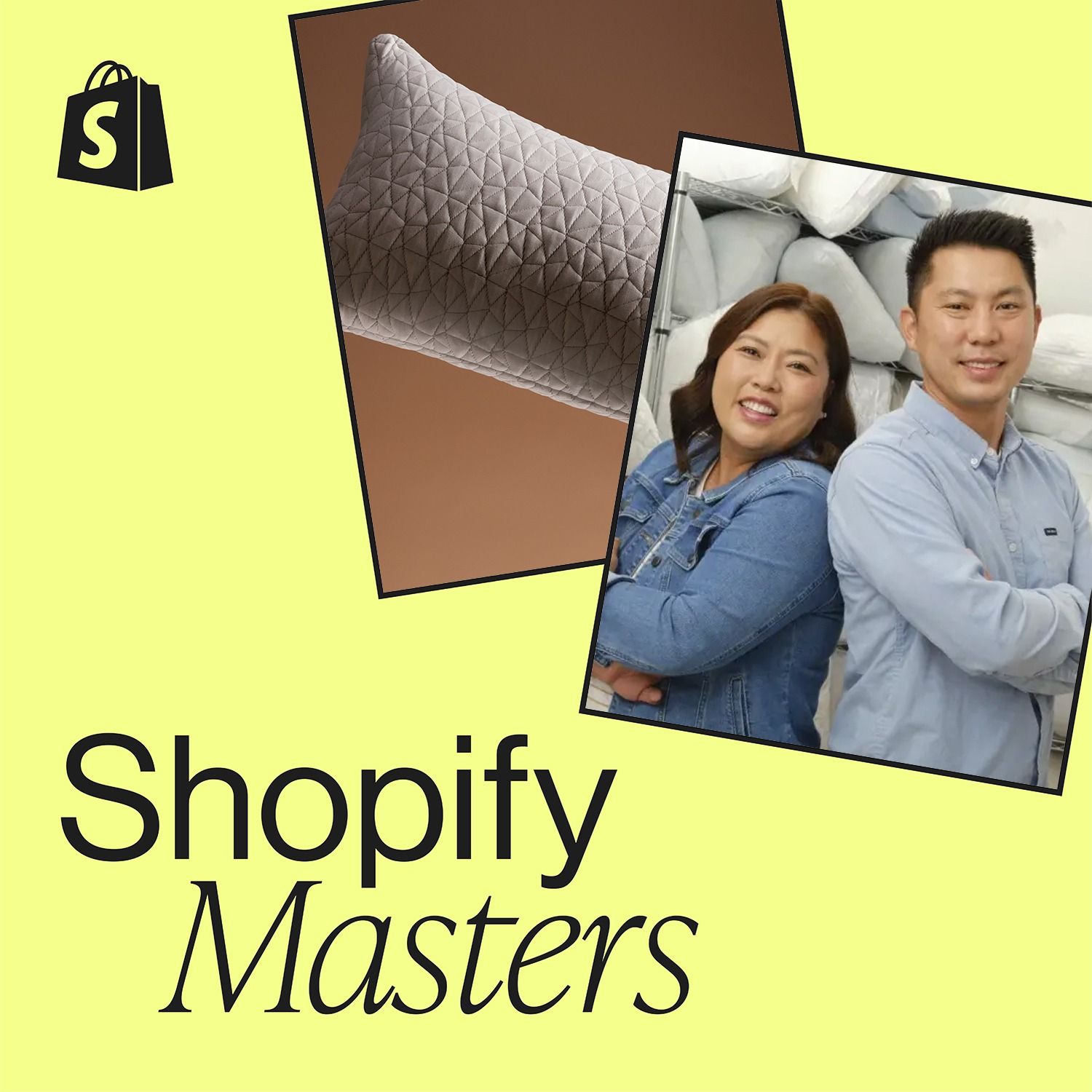
Shopify Masters
The Sleep Brand Founders That Refused To Rest Until the Product Was Perfect
00:27:50
Kevin and Jin Chon cut open a pillow, found carpet padding inside, and spent 13 years fixing it. They built Coop Sleep Goods into a nearly nine-figure brand by spending more on materials, staying focused on one product, and trusting that a better pillow would market itself.
Loading summary
Transcript94 lines
- [00:08]
Jin Chong
If the quality wasn't up to par that we would want our mom to sleep on, it wasn't good enough.
- [00:15]
Interviewer
Brother and sister duo Kevin and Jin Chong built Coop sleep goods by opening up the pillow and fixing what was inside.
- [00:23]
Kevin Chong
We don't want to sell anything that's not better than what's existing. We were really patient and I think that paid off for.
- [00:29]
Interviewer
From a first order of 10 pillows to what's now a nearly nine figure brand, their story is equal parts grit, unrelenting belief that people deserve a better night's sleep.
- [00:39]
Kevin Chong
Our parents actually invested a lot of money into us to start this. And there's a moment when we lost all of that too.
- [00:44]
Interviewer
Kevin and Jin join me to talk about waking up the betting industry and how resilience has been key to their success. Kevin, Jin, great to have you both here.
- [00:53]
Kevin Chong
Great to be here.
- [00:54]
Jin Chong
Thank you so much for having us.
- [00:55]
Interviewer
Is this true that this started with you cutting open a pillow and looking at the stuff that was inside?
- [01:01]
Jin Chong
Yes. My brother had a back issue. My mom actually has a lung condition. One size fits all. Pillows don't work for anyone. We opened it up and when we did, we realized therein lies the problem.
- [01:14]
Interviewer
The stuff, the actual materials. What's wrong with what's inside the pillow, Kevin?
- [01:18]
Kevin Chong
A lot of it's just like recycled materials that is often like couch remnants that they shred up or like leftover mattress, like cuttings, they shred it up and ends up on the floor and it's like rainbow colored. And often they use that for carpet padding and they're using that in pillows. And that's when we realized, like, this is why they're sewing it shut so you can't look inside. And that's when we realized, like, this is a problem. No one knows this.
- [01:43]
Interviewer
I would think that still to this day, people don't really think about what's actually inside. Yeah, their pillow. And you both have been in the textile industry for some time or your parents have like this goes back some generations?
- [01:56]
Jin Chong
Yes, our parents business was in apparel manufacturing. They designed and made clothing for big retailers, names we all know for a very long time. And so growing up, we had all kinds of jobs within the family business because it is truly a family business. And so we had that experience coming into this.
- [02:13]
Interviewer
So now the business is 13 years old. But at the beginning, what was the opportunity that you saw and what made you decide that you should pursue this?
- [02:22]
Kevin Chong
So I think when we saw how pillows were being made, it's like, this is not right being from that apparel background. Textile background, we're like, we could fix this. This is easy. It's a rectangle. But I think the part that we had to learn was the filling side of things, and it's a totally different industry. And so it took some while for us to kind of break through, but we were truly, like, thinking as outsiders. And as we start to talk to people within the industry, we were definitely outsiders.
- [02:48]
Interviewer
And, Jin, you were practicing as a lawyer?
- [02:50]
Jin Chong
Yes. I was an attorney working for a large insurance company at the time. My brother said, hey, I really want to try E Commerce. And I said, great, let's do it. And I quit my job and made the jump.
- [03:03]
Interviewer
Wait, you quit right away?
- [03:05]
Jin Chong
Yes.
- [03:06]
Interviewer
What did your parents think of that?
- [03:07]
Jin Chong
My parents are immigrants to the United States from Korea. And every immigrant's dream for their children is to do something like be a doctor, a lawyer, cpa, or, you know, one of those things. And I think the reality of being an attorney, that changed how I was as a person. I think my mom could see that I was not very happy or fulfilled doing law, and so she was. She was okay with it. I was. I was a little bit worried that she'd react in a different way, but she was okay.
- [03:32]
Interviewer
And before Coop, Kevin, did you have a background in entrepreneurship or E commerce?
- [03:36]
Kevin Chong
No. So, like, straight out of college, my parents had built their business, and I was like, I should at least give it a shot. Went in there, and, like, I got my butt kicked. That industry, like, it was a fast fashion kind of time, and I learned everything from, like, how to pack a box, logistics, manufacturing, working with the buyers. I'd fly out. And so that's kind of how I really cut my teeth. And that's when I asked Jen to join the company, because I saw, like, E Commerce as an opportunity. There's times when I was like, shoot, I think I kind of screwed Jin up too, like, inviting her on this journey. But now it's all good. But it was. There's moments where, like, dude, did we make a big mistake? You know, she left, you know, a great job, and our parents actually invested a lot of money into us to start this. And there's a moment we lost all of that, too. And so there's some sketchy moments, but, you know, in hindsight, it was all. It was all worth it.
- [04:28]
Interviewer
So the seed investment then comes from your family. And also, I read something that you had to sell the vehicle or your family vehicles to fund the business.
- [04:35]
Kevin Chong
I'm a car guy, and there's a moment where, like, I don't know if I'm gonna pay, like, be able to pay the mortgage. And I sold my car, bought, like, a used Prius, which is, like. I don't know. It was a little humbling for me, but it was great because I got amazing gas mileage, and I love that thing. There's moments where, like, scraping by, you know, eating bologna sandwiches, kind of season of life. It's kind of what it took. You know, put our head down, saved every penny, and saved kind of rebuilt things. And that's how we built up to where we were without really taking on investors or anything like that. It was bootstrapped from the beginning.
- [05:07]
Interviewer
Your initial minimum order quantity was only 10 pillows. I mean, most founders think that they've got to commit a lot more in terms of inventory to test something.
- [05:18]
Kevin Chong
I think we lucked out because we found a local manufacturer. So we actually, like, for clothing, we do a lot of local manufacturing, but also importing and. And so for local, if you use available fabrics and things like that, they tend to be easier to work with, and minimums can be lower. Definitely. If you went straight overseas or something, you'd be in the thousands.
- [05:40]
Interviewer
When do you start to expand the product line? So you start with pillows. At this point, you're into all kinds of stuff. The bedding, accessories, and sheets. I think you've got 200 plus SKUs at this point. But at the beginning, was it just pillows?
- [05:53]
Jin Chong
It's always been pillows. We started with our original pillow. That was the mainstay for a significant amount of time, probably six years before we even expanded into the next pillow. We wanted to make sure that it was perfect. And so we always leverage customer reviews to really do product research. And that's kind of how the pillow started, is we started seeing reviews, people saying, it's too high, it's too low. And we're like, we'll just make it adjustable. Why can't we do that? Right? And that's what made sense to us. And I think for us, the focus has always been on the pillow, because if that's good, then people will buy and trust our brand, that we're doing the right thing and making the best possible product, and then that will spread into other products. And we've always focused on fixing the problem with the product. We don't make the product just to make the product. We fix problems with the product.
- [06:44]
Kevin Chong
There are moments that were. I think we were very tempted to dabble in other things. It's like a trait of an entrepreneur, right? You have Like a squirrel brain and just see shiny objects. But I think learning from fashion and the idea of, like, hey, if we're going to build this, we have to build a brand, not a commodity. We took the saying of, like, you know, inch wide, mile deep for versus, like an inch deep, mile wide of all these different products that, you know, don't really mean anything. So we're like, we're going to make the best pillow. We're going to be known for pillows. We're going to be like the Kleenex of pillows. Coop's going to be like the Kleenex of pillows. And when people think of pillows, we want them to think of Coop. And so we really believe that we have to dig our niche here. And once we get known for that, we can build out. And we were really patient, and I think that paid off.
- [07:27]
Interviewer
How do you differentiate yourselves from the
- [07:30]
Kevin Chong
competition during that time? Like, it was all one size fits all, you know, and same thing from apparel. Like, one size fits all is not good for anyone. That's just like a big drapey whatever. And sleep, it's a bigger issue because it's physiological. No one's the same size or shape or the same sleep position. And so when you do that, you end up with, like, kink necks and things like that. And so when we approached it from that angle, it no longer was just like a commodity product. It was a solution to a problem that a lot of people had, and they finally found something that would actually help them.
- [08:02]
Interviewer
Jane, you talked about customer reviews informing product development. How extensive can that review process be to inform R and D? Does it get expensive at some point by allowing customers to continuously offer feedback on what they like, what they don't like, and you having to iterate against that?
- [08:19]
Jin Chong
I think it's probably the cheapest and most scalable way of including customer feedback as part of an R and D process. They are your customers. They already like the brand. They already like you. They want your product, and they want to help you make it better. And they're using it and testing it daily. So for us to not listen to our customer and to take that to heart would be foolish of us. And I think that a lot of companies don't do that. And I think that's where we really excelled. And to this day, we read customer reviews. To this day, we bring things up in our product meetings where we're like, hey, people are saying that there's this issue, and if we don't address it and fix it, somebody else will probably come down the line and do it. And this is again, that pathway to making the best possible product that we can.
- [09:03]
Interviewer
Your cost of goods seems to me is quite high.
- [09:09]
Kevin Chong
And the.
- [09:09]
Interviewer
The foam that's typically used in these pillows is somewhere between 25 and 50 cents per pound. Is it? And you guys are paying upwards of $5 a pound?
- [09:21]
Kevin Chong
I would say definitely in the beginning, like, we had to make the sacrifice of profit to make the product better. The fact that we were running such a lean team allowed us to do that versus, you know, a giant company with crazy overhead. So all those savings, you know, went back into the product, and we're product oriented first. And so, yeah, like, it didn't make sense to, I think, a lot of companies, but the fact that we were lean, we were still profitable. And so as we scaled up and volume increased, we had more negotiating power with the suppliers. But even then, we were doing something that no one else did in the industry, which was using like prime virgin foam, which is what they call it. And they scoffed at the idea that we would take that, cut it all up, and then put it into a pillow. They're like, that's such a waste of money. Just use the scraps. And we're like, that's the whole thing. Like, we don't want to do that. It took us a couple years to convince them. They finally came on board. Our volume increased, and so the unit economics, everything got better to a much healthier position. Then reallocating that to the product once again. You know, so we improved the fill, the fabric, the liner, and like Jen's been talking about, we kept iterating to make it better and better. I think that gave us the edge. Like, we're always product first.
- [10:34]
Interviewer
You're sort of priced pretty competitively because pillows can get really expensive, right? North of $250 in some cases.
- [10:43]
Jin Chong
Yeah, they can be super premium, like you're talking about. And then there's the $5 bargain bin at the big box stores. I think that we are average, I think if you do the math, average. But there's very few that are really in our price point. We really focus on making it accessible for people, but not skimping on the actual production. And again, we probably give up margin there, but we're happy to do that to make sure that our customers are getting the best product possible.
- [11:10]
Interviewer
How do you educate the customer on the problem set? Like, what pain points are you highlighting that the customer can resonate with in a space where it sort of feels like People view pillows as almost like A commodity, like it's something I put my head on. That's it. What sorts of things are you addressing?
- [11:32]
Kevin Chong
Throughout the 13 years that we grew, the ability to tell story really became available and the ability to target was also another like layer to apply on top. And so I think understanding the consumer where they are, you know, especially like in the adulting stage post college, you got some money, you're getting older, you wake up and sometimes you feel like you got hit by a truck. It's like speaking to that. And when you do that and it's real, people relate and they're like, oh my gosh, I do feel that way. And then you show them why and here's the solution. Like it just becomes a really easy, relevant conversation to have with them and they want to learn more. And the fact that we're providing an actual like practical solution, not just another beautiful pillow that made us stand out. I think when we started like no one else was really doing that. And yes, our prices were more expensive, but they're like, it's going to fix something, you know, and so it's worth it.
- [12:28]
Jin Chong
One of the biggest ways that we've grown is through word of mouth, which is strange in a digital e commerce world. I think if someone tries our pillow and they love it, it becomes water cooler talk. They tell everyone they know about it because it's incredible. You wake up and you feel so refreshed and you feel good. Then you buy one for your mom and your sister and then we've had customers buy tons for Christmas presents, which is kind of strange in the world of pillows. But in addition to us telling the story, I think the personal experiences that people have and the sharing that they do within their communities has really been something that's helped us grow.
- [13:04]
Interviewer
Do you think that sharing happens organically or can you incentivize customers to actually spread the word about Coop?
- [13:10]
Jin Chong
It's been organic to this point and I think that that also helps us as a brand because we're not paying people to talk about us in that way. Especially early on it was legitimately like Mary tried the pillow. She loved it so much. She bought three for her best friends who were new moms and needed good sleep. And that's been, I think paramount for us.
- [13:32]
Interviewer
I mean that's incredible if you can do that because your customers then effectively become default marketing organisms for the brand. And if they're telling somebody else, like to your point, if Mary is telling Jane about Coop and Jane buys a pillow that Jane now has a $0 customer acquisition cost attached to her.
- [13:51]
Jin Chong
Yes.
- [13:52]
Interviewer
Right. So it's unbelievably powerful from a return on ad spend or unit economics perspective, however you want to slice it, if you can figure out a way to get your customers to talk about you.
- [14:02]
Jin Chong
And it wasn't intentional of, oh, how do we get Mary to talk about us? It was, how do we make the best product possible? Because that's going to make Mary's life better. And once we made Mary's life better, she was telling Jane, and then Jane's life got better and then she's telling Susan. And so it becomes this exponential thing.
- [14:17]
Interviewer
Have you ever tinkered with a proper referral strategy in the business?
- [14:21]
Kevin Chong
Yeah, we have like a rewards program set up, but even without, we're just seeing like, where people are hearing about us. And most of them it's family and friends and it's, it's shocking how much traffic we get through that. And so, yeah, we do have a rewards program where they can get points and buy more product. But yeah, even without it, it's just organic.
- [14:40]
Interviewer
I keep reading about this mom test. What is the mom test?
- [14:44]
Jin Chong
Our mom has a lung condition and we sleep on our pillows eight hours a night. Your face is in it, on it, around it. And so if the quality wasn't up to par that we would want our mom to sleep on, it wasn't good enough for us or good enough for our customers. And I think that keeps the standards high and it reminds everyone how important it is to not skimp on product.
- [15:03]
Interviewer
It seems to me that Coop is now a sleep brand. There's so many aspects of that category that I think can be tapped into and potentially profitable. So what goes into that product extension strategy and how do you figure out what you want to launch next?
- [15:21]
Kevin Chong
The industry is pretty saturated. There's a lot of brands out there. And so at least for me, it's like, yeah, we can go into this category, but, like, how are you going to beat them if you're selling the same product? Like, you can't. And I think that's how we thought about the pillow too. So we look at what's out there, we look at what's actually selling, and people are, are demanding it. And then we go to a drawing board and we sit with the product team. We're like, how do we make this better? What are the weaknesses? We look at our competitor reviews the problems. We, we, we compile them and we're like, this is what everyone's complaining about. And we fix that. We don't want to sell anything that's not better than what's existing. And once again, it's like product oriented. And then when you market that, they're like, oh, this is better. And, you know, it's just common sense. People, people want to buy the better product and it pays off.
- [16:08]
Interviewer
How do you find the right manufacturing partner?
- [16:10]
Jin Chong
It's really difficult when I say that. Kevin and I have literally traveled the world from India, all over China. We've visited so many factories and it took a long time to find. There are only so many machines that can actually cut the foam that we need for our products because we don't shred our foam. When you shred foam, it clumps. When you cut it, it doesn't clump as much. And so to reach the scale production, we actually did have to go offshore. And it took a lot of perseverance and persistence and patience.
- [16:41]
Interviewer
Do you think founders have to go on this sort of globe trotting expedition to find the right manufacturer? Can you leverage online tools to shortlist and say, come up with the top five before you jump on a plane? Like, how does that work?
- [16:55]
Jin Chong
I think it's important for founders to understand how their products are made. I think there's an education part that has to happen. And I think if you were really being a product first brand, it's important for the founder to be hugely invested in that. The travel, it's fun, it's an adventure, and it's a learning experience. I think that you can start online with platforms where they list, but you'll soon find you're dealing with a trading company or the factory picture does not match the actual factory. So there's an aspect of when you're first starting up. Sure, you work with what you can, and especially if you have small minimum order quantities. But once you hit scale, I think you do have to hit the road and you have to see it and verify it for yourself.
- [17:39]
Interviewer
What is the role of your social channels as it relates to brand building? So you've got a TikTok presence, which I think has about 5,000 followers. You've got a much bigger Instagram presence, north of 60,000 followers or something like that. You've got a YouTube channel, like, where do these channels sit in terms of the brand stack?
- [18:00]
Kevin Chong
So I think each channel, each social media platform plays a little differently. But ultimately it's to take a moment to, you know, step into what's relevant in media and today and inject the brand and show that we understand where things are going. And here's who we are, and here's our personality. I think it's a great place to have fun, and I think it's a great place to educate. But I feel like if you just purely educate, purely just have fun, you kind of miss it as well. And so it's a place where you need to be relevant, but also just educate and inject the problem you're solving. And it's a delicate balance, especially as a brand, but I think that's where it's a little bit of science, but a lot of art. And we have a team that's really trying to be on top of that and just do it in a beautiful, relevant way that feels real and not just purely manufactured.
- [18:56]
Interviewer
Do you feel like you intentionally tell a different story on TikTok than you would on Instagram?
- [19:02]
Kevin Chong
Even from, like, pure attention span, like, TikTok's really pushed the limit of, like, it's seconds, right? So the hook in the beginning, if you don't nail that, like, no one's gonna watch. I think Instagram's a little bit slightly longer format where people are trained to be a little bit more generous with their attention. And so there's, like, minute, different aspects of that, and same thing for, like, YouTube shorts and things like that as well. And so I think it's really important that you know the nuances. I know it's easy to just copy and paste onto all platforms, but I think if you tweak those little things, it actually performs a lot better.
- [19:36]
Interviewer
And pr Jin, you've gotten a lot of it. You've been in Forbes and other outlets. How do you get pr?
- [19:42]
Jin Chong
This is going to sound crazy, but we get it organically. I know that that's hard, right? Because then how do you duplicate that? How do you follow that? But I think it, again, comes back to the fundamentals of have an amazing product and people talk about it. There are so many opportunities that have come across our plates where it's, oh, so and so loves your pillow and sleeps on it and tells everyone about it. And that's how we found out about your brand. And so I think, again, being the best product out there, focusing on that often gets you attention and people like you and they want to share about you. That gets you on listicles and different articles. And then I think a little bit of PR begets more pr, because then you're being seen by more people, and it becomes this snowball effect that really grows. We have engaged a PR agency recently, but most of the awards and all of that, you see we are not going after that is organic. People becoming aware of us and then including us. And Consumer Reports was a big part of that as well.
- [20:40]
Interviewer
What does a good PR partnership look like and how do you incentivize that PR agency to chase the right things? And how do they get compensated? Like, are they compensated only when you get placed in the outlets that you're targeting or are they on retainer? Like, how does this all work?
- [20:56]
Jin Chong
There is a retainer and I think a lot of it comes down to conversations and a mutual understanding of, hey, we know we're already getting all of this stuff organically. What we'd like for you to go after is this, right? And so we want to be on this specific list or we want to be recommended by, you know, these publications that maybe haven't talked about us yet that we feel like is a different audience that doesn't know about us yet. And so I think that's really where it comes from is an agency that you feel like has a vested interest in your success and will partner with you and focus on the things that you really want to do versus what they're used to doing regularly.
- [21:33]
Interviewer
Have you tinkered with influencer marketing at this point at all?
- [21:36]
Kevin Chong
Yeah, that's like a major, you know, marketing channel that I think all brands use. It's, it's been really successful for us, but we found that more than like the, the mega influencers, it's been like the mid size and some micro influencers that I want to say actually have a following that they can influence. A lot of big names, you know, a lot of reach, but actually not that much influence. So it's people in the betting space, people in health and wellness that their followers really trust. Those are the ones that have been really successful for us.
- [22:06]
Interviewer
How do you target those folks?
- [22:09]
Kevin Chong
It's a lot of research because you can use like bots and like lists and things like that, but you got to go to their account. Look at the interactions. Are there comments, are there saves, are there shares? That's what counts.
- [22:20]
Interviewer
How do you think about channel distribution and which channels are most profitable for the brand?
- [22:25]
Jin Chong
I think channel distribution is really important and to keep that tight to your chest, it's really tempting to go anywhere and everywhere that will have you. But for us, we focus on just a few small channels. And to your point, big retail was really just opened last year for us. The most profitable channel for us is Shopify. It's, it's our D2C obviously because we get to control the customer journey and we get to tell them more of our story, engage with them directly. That's been the focus for us, is continuing to grow our DTC experience with our customers.
- [22:59]
Kevin Chong
The reason Shopify is also so valuable is like the ltv. You know, you own the customer, the email list and like Jen said, you continue to store it. And when new products launch you can remarket to them and then the aov, like the average order value aspect on site, you know, it's not just one product that they're looking for, you know, you can tell upsell them, you know, accessory products and things like that. So that's the big lever there, you know, much higher AOV and much higher ltv.
- [23:25]
Interviewer
What role does email play?
- [23:27]
Kevin Chong
Huge. You know, I feel like these days, like a lot of sites have that initial offer to new customers, you know, they sign up, get their email and then you send them the code. So that's key. I would say majority of our initial customers go through that flow and then post purchase experience of like how to unbox, how to use the product, education and then follow up, ask for reviews and then sharing new products, you know, after a couple weeks so that you stay relevant and warm. And then when the sales comes, you remarket it's crucial. Like I don't think you can run a DTC business without it.
- [24:01]
Interviewer
What have you learned in terms of setting up those email flows? Like how many emails is too many emails and how do you nurture the customer in the right way without over communicating?
- [24:10]
Kevin Chong
My gut is like, wow, these are way too, too many emails. But I think you got to look at the data, right? You got to look at the bounce rate, the click rate, open rate, all of that, it tells you something there. And so I think email is where you really got to get nitty gritty with the data and the science of it. And that tells you where to go, where to push more, where to pull back, you know, when is email better, when is a text better? Things like that. And so I think you got to look at the data even like the, the headlines or even the copy of the body images, it's all data driven for us.
- [24:42]
Jin Chong
I know for me as a customer, SMS is a huge driver of my purchases because it does grab your attention, whereas email can be a little bit, I can disregard that email. And so I feel like there's more volume in email. We're a lot more careful with sms.
- [24:57]
Interviewer
Yeah. And I think brands are a little bit more hesitant when it comes to text messaging because it's that much more intimate.
- [25:02]
Jin Chong
Yes.
- [25:03]
Interviewer
Or at least it feels that way.
- [25:05]
Jin Chong
But if you love the product and the brand, you're actually kind of happy to hear from them. And so that's me as a consumer saying that, because when I get the texts from the brands that I love and that I shop often and they're telling me they have a sale, they're telling me they have a new offering, I will click through and it will interrupt my day. But I am happy to be there.
- [25:23]
Interviewer
And you talked about the importance of customer feedback earlier. So in the context of sms, can you leverage SMS for inbound? I mean, you're obviously using it for outbound push, but can you pull and bring customer feedback in through sms?
- [25:37]
Jin Chong
We have not done that yet. Actually. That's a good idea. We should look into it.
- [25:41]
Interviewer
So Coop is 13 plus years old now. You've been through a lot. Are there any big mistakes that you look back on that you think you would do differently?
- [25:52]
Kevin Chong
I want to say mistakes necessarily, but I think there were like side quests that took a lot of time and resource. We built this whole huge logistic company that was very large and it was amazing, but at the same time it took a lot of focus and energy and, and had we focused solely on Coop, I think we would have been much further along. Another one was we were invited onto this very well known entrepreneurial like pitch show that I think a lot of people know and we just kind of stopped everything else and we focused on that all resources. And we built this big bed where they were all going to be in the bed and with our logo on the back and did a had us dance and jingle and outfits and like, we put so much hope into that, this home run that we're like, this is it, this is going to set us like send us into the stratosphere. And at the last minute they on set, they're like, sorry guys, you guys can't go on. And we're like, what do you mean? Like, we're here at the studio, they're right there and they called it off. Until this day we have different theories of why, but long story short is like, it really knocked the wind out of our sails. And so I think the lesson from that, I was like, don't build it for home runs. Go for the singles, doubles, triples. Build the foundation in the right, healthy way and the home runs will come.
- [27:05]
Interviewer
The merger with Comfy. Do you feel like that was a single, double, triple home run?
- [27:09]
Kevin Chong
That was a home run for us because they are the leaders in the spa space. The bedding that comfy created like it's the best, and it gave us immediate legitimacy into the bed and sheeting space. And so, yeah, it helped us, like, really leap forward in that category.
- [27:26]
Interviewer
Well, it's been an incredible journey thus far. Congrats on all the success with Coop, and thanks so much for being here. It's a lot of fun.
- [27:33]
Jin Chong
Thank you for having us.
- [27:34]
Kevin Chong
Likewise.
- [27:35]
Interviewer
And thank you for tuning in. If you like what you saw, be sure to hit that subscribe button below so you never miss an episode. And I'll see you next time.