← Shopify Masters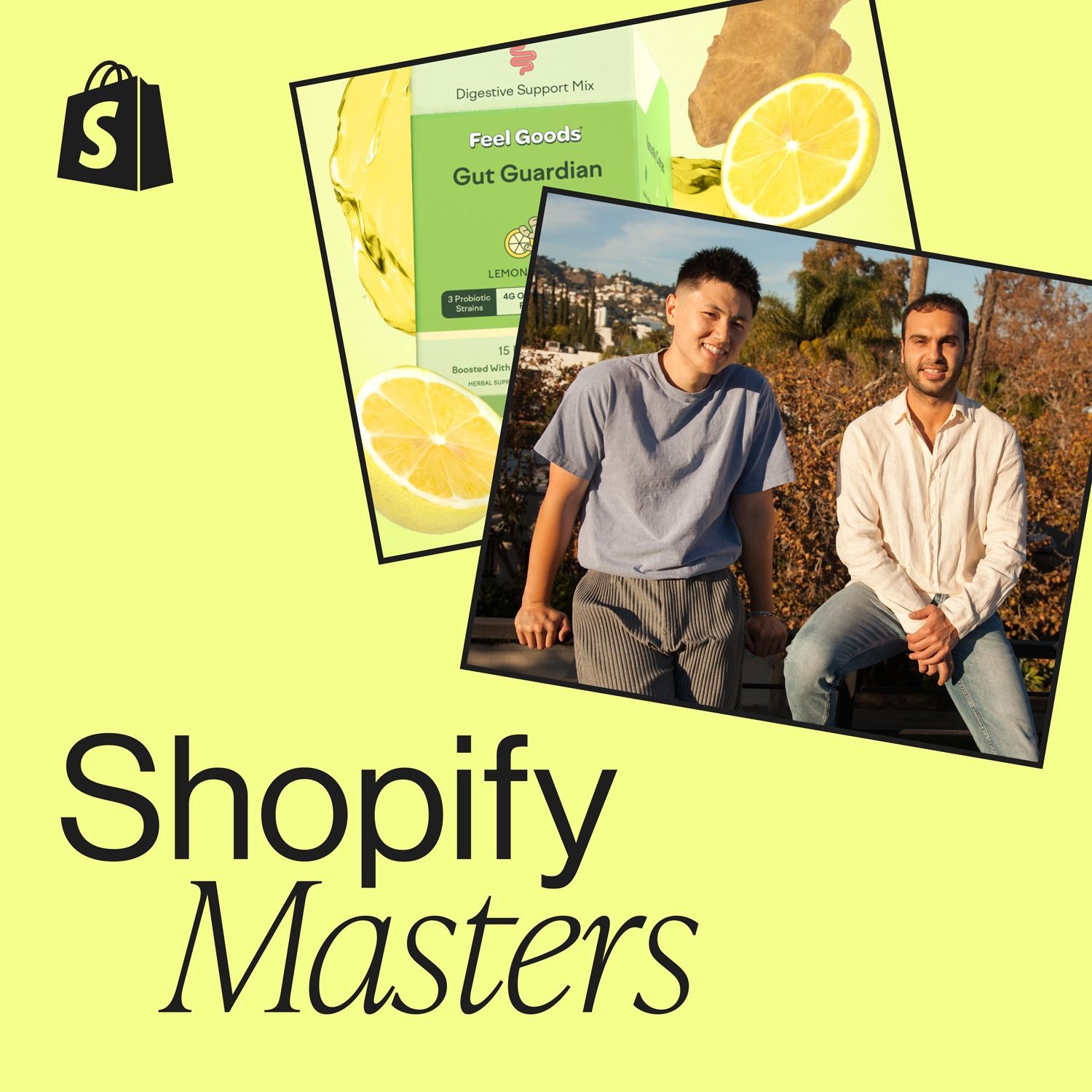
Shopify Masters
The Wellness Brand That Turned TikTok Flops Into an 8-Figure Business
00:36:31
The founders of Feel Goods built an eight-figure supplement brand with 100 million organic impressions and not a single product on a retail shelf. Their secret was radical transparency, founder-led content, and treating TikTok like a free testing lab before ever spending on paid ads.
Loading summary
Transcript90 lines
- [00:00]
A
I know a lot of people say double down on what's working. I think you should 10x on like what's working.
- [00:10]
B
Dustin Pourbaba and Brian Wong launched feelgoods to rewrite the rules. Their products center on real functional ingredients, bold content and a dose of unfiltered honesty.
- [00:20]
C
We spend a lot of time on R and D, putting together a formula that actually does what we say it'll do it.
- [00:25]
B
From hand mixing early batches in their kitchens to shipping over 15 million units, Feelgoods now boasts over 100 million organic impressions and has raised 4.7 million to fuel even more scale as an eight figure brand.
- [00:39]
C
The first, what, like 40 videos we posted just didn't go anywhere and it's debilitating.
- [00:44]
B
Dustin and Brian join us to reveal how they're building a wellness movement customers actually trust. This is Shopify Masters and I'm your host, Adam Lavinter. Guys, welcome to the show.
- [00:54]
C
Thanks for having us.
- [00:55]
A
Thank you.
- [00:56]
B
It's great to be here with you both. When we were talking earlier, I was telling you about this product that we've been drinking in our home, a vitamin C supplement that mixes in water. In Canada, we've got cold winter, so vitamin C products become very popular. But you mentioned that this product in particular was a big sort of impetus to why you guys exist.
- [01:22]
C
Yeah, I mean, the long story short is I had a cold one day and being a fairly health conscious person, my first instinct was let me go buy some juice. So I went to erewhon, probably spent $30 on, on two juices. And as I was sitting outside drinking it, it bothered me that the cost was so high to get quality nutrition into my body. And at the same time, those juices, you know, they're 30 to 50 grams of sugar each. And for whatever reason just that day kept kind of nagging me. And as I thought about it more, I was like, well, you know, what would have been the alternative? And it's you go run to the store and buy the product that you're referring to, which is the household staple in America for, you know, immune health. And the reality is, unfortunately it's not a very clean product. It's 70% sugar, it's a vitamin C mega dose, and then just packed with, you know, all sorts of additives and, you know, the light bulb kind of went off of, you know, why am I paying for a sugar filled product that I think is healthy and is there a gap in the space or is there a way that, you know, we can create a product to basically Fill that need. And that's ultimately kind of how feelgoods or the inception of feel goods started. Was on that mission of creating a better for you immune health supplement.
- [02:49]
B
Brian, how do you get involved and how do you become so passionate about this space?
- [02:52]
A
Also fairly relatively health conscious person. And you know, just also at the time, Dustin and I were also just talking about, you know, the problems with, you know, legacy kind of pharmaceuticals and just like health, health products. And then we were just excited about the kind of idea of just like putting something together ourselves. Because also at the time, you know, we had a lot of time, this was during COVID and went down a rabbit hole of just like looking at like, okay, what are just healthier alternatives and like natural ways to actually like take care of your health. And a lot of that kind of went back to, you know, growing up, herbal revenues were a big thing in my family. You know, my mom would always kind of go the alternative kind of eastern medicine route, which now back then it was kind of just like woo woo magic. Now it's very, very, you know, like cemented in kind of like, you know, western society. And like you understand like what adaptogens are and like all these like herbal kind of supplements and so just went down that rabbit hole like looking into, you know, what can help with immunity, what can help with stress, what can help with like energy. And then kind of just spitballing with us and like we realized like there can be something that's made a lot more natural and a lot more clean than what's on the shelf.
- [04:04]
B
How do you come up with the first versions of the products? So there are, there are different, I mean there are different problem sets or pain points in the. For example, you know, vitamin C addresses immunity in cold months. That's just one example. There's myriad of different examples. How do you decide that you're gonna go with. I know hydration is one lane. Yeah, Gut health is another lane.
- [04:28]
C
Well, when you know, we were first toying with the idea and the first idea product wise was can we make a better for you immune focused product? But you know, we also thought of it a bit more grand and said, is there a way we can create a, you know, a longer term business that, you know, it's. Our mission is to just create a suite of really healthy products. So when we started with immunity, you know, to Brian's point, we looked at our own experiences. You know, Brian's Chinese, I'm Persian, we both grew up on kind of herbal remedies. And that was the starting point. So spent probably six months ordering every fruit, root, adaptogen you can think of into my kitchen. Had, you know, beakers all over the place. Look like, you know, we were running a break, but a healthier breaking bad. Everyone would come in like, what the hell are you guys doing? And really just started tinkering around and just getting very familiar with the different ingredients. And, you know, vitamin C is one aspect of immune health, but the reality is it's just. It's a piece, right? And if you truly want to take care of immune health, there's a suite of different remedies that you need. So our immunity product is vitamin C from acerola cherries. As opposed to synthetic vitamin C, we use roots like turmeric and ginger. You know, we have ashwagandha to help with stress, which is a big component of immune health. Goji berry, elderberry, all these different ingredients that provide much more holistic, comprehensive, you know, immune support. And basically took that format and then applied it to, you know, the future products that we eventually launch as well.
- [06:07]
B
How do you go from mixing in your respective condos or apartments or houses to finding a producer that can manufacture at scale?
- [06:18]
C
It was hard when we started making them in our, you know, in the kitchen. We'd, you know, blend them all ourselves, put them into little craft baggies, and just give them out to friends. And, you know, once the feedback was positive, kind of the next step was, all right, let's expand a bit beyond immediate friends and family and see if other people like what we're making. And step one is, do people actually like the product? And then step two was, can we market this product? So we made, you know, the scrappiest kind of landing page you can think of. And also the scrappiest, you know, we had, like, five different photo, basic, very photo ads that we launched as well. And we launched those, and immediately people were buying the product. There wasn't actually any product to sell. So we would just go back and refund everyone and say, hey, you know, we're out of stock, or we're launching soon. Sorry about that. But once we had both of those, you know, kind of points validated, that was really when we said, all right, there is a business here. We should probably do this properly and start something.
- [07:23]
B
Is there anything that you would have done differently in that first inning of launch? I asked that because I think it's an interesting way to validate product market fit, right? You know, you have something you've got people actually purchasing, but you don't have the product ready. So looking back, how would you have set up the order of things?
- [07:43]
C
I don't think I would have changed anything. So to say, I. And you know, this is something both of us have learned, you know, a lot lately is just do everything faster back then. I wish we would have just. Even though we were pretty scrappy, there's probably, you know, a few months that we could have saved, which, you know, doesn't seem like a long time, but every day that you tack on is just an extra day. So if anything, I would have just
- [08:08]
A
encouraged it a lot quicker because you can imagine someone going through what you were saying to your earlier question, like, how do you formulate this, how do you go through all this stuff? Then you know, like lead times are going to take, you know, two to three months when, you know, we kind of just gave ourselves the all the motivation and like validation we needed in a couple weeks, which saves all that time to really get started.
- [08:29]
C
It was, it was hard too because, you know, we were sourcing ingredients ourselves to the kitchen and you know, mostly buying like ashwagandha from the store. And the reality is that when you go into actual production, the facility is ordering significantly larger quantities. They're getting those ingredients from other suppliers and there's a nuance between the specific ingredients too. So while we were trying to perfect it on our end kind of small batch, once you go to big batch, it's a completely different set of suppliers. So know the way it tasted for us was Nothing like what V1 of the actual product tasted like. So again, we, we could have just expedited things and moved a bit quicker.
- [09:12]
B
And early on this is on the side, right? You have two other companies you're running. Brian, you're working for a tech, right Company at some point, I mean, how, how, how are you juggling all of this? And when do you feel like it was the right moment to jump in?
- [09:27]
C
It was busy. I had two full time companies that I was running and you know, at the same time this was just such a cool and interesting idea. And you know, I genuinely care about health and I genuinely feel that there is a problem in the US with how, you know, we perceive health as a community and a society. So this was just a very interesting opportunity for me personally and you know, kind of hit my passions. And you know, once we saw those initial levels of success, even though they were very small, like, you know, we sold maybe $100 worth of product next to a girl scout cookie stand. But it was enough for me to say I'm young. Let's take a leap and, and try something here. And I'm happy we did. You know, it's been a roller coaster, but we also both had a lot
- [10:20]
A
of time since it was Covid and we were just locked in our rooms all day. So this was a fun passion project to work on. But to Dustin' as well, like, you know, like, you know, the day job was great. You know, like, I was working consumer tech at the time. We were making apps. It was a food tech app platform. They recently got acquired when I was there. And usually post acquisitions, things are always changing and like, you know, there's a lot more corporate structure and all that, so it really got a lot more boring and time freed up a lot more. But the leap from like tech to kind of just selling goods and actual, like, tangible products online, I think for me made it feel really, I don't know, really real. Like a real, actual business.
- [11:00]
B
When does it feel like a real business to you? You've accomplished a lot over the course of the three plus years that you've been officially live.
- [11:08]
C
I mean, honestly, it has a lot to do with Shopify when things really start to get exciting. And we were like, okay, this is an actual real business is when orders start to come in. When we got the Shopify ding, when someone place an order and hearing those throughout the day was, I was elated and, you know, consistently hearing those and hearing the frequency of those pings increase, that's really when ultimately we were like, okay, we have to stop these other businesses and really start focusing on this full time.
- [11:43]
A
Yeah, I think for me too, going back to like, just seeing actual customers have product in hand and then getting and hearing testimonies and feedback and just like, I mean, back then and even now makes it really feel like an actual business. Because I think, you know, one of the biggest things with business is like, how do you actually solve people's problems and how do you do better for the world? Like, literally probably when we got our first few reviews and like, you know, like, this is real. People are actually taking the product. They're loving it, and it's actually helping them with their daily lives and health. That's when it felt real.
- [12:14]
C
Yeah.
- [12:14]
A
Yeah.
- [12:15]
C
The reviews, I would say, also definitely made a big impact. I remember early on when we first launched our immunity product, there was like two or three moms that left us a review and they were glowing. Like, I couldn't believe I was drinking and taking these other things. And now that I'm taking your immunity Product I feel xyz and it was just like the most ecstatic comment that someone had left and she was literally sharing how it had changed her life and she just felt better throughout the day. Getting comments like that is the most rewarding part of the business and you know, ultimately is what motivates us every day to wake up and, and grind and try and build this, you know, cleaner, healthier household brand in the supplement space. It's definitely the most fun part of the job is, is actually like interacting with customers and seeing them use your products and enjoying the products and ultimately improving their life in some way, shape or form.
- [13:14]
B
And you've improved a lot of lives. I mean you've shipped over 10 million feel goods orders at this point.
- [13:20]
C
We've shipped a millions and millions of mixes to date since the immunity product. We've launched our Gut Guardian line, we launched our hydration Hero line and they both kind of follow the same plan. So our Gut Guardian line, for example is a blend of three types of organic fiber, three different roots to help with bloating. There's probiotics, there's L glutamine. Taking the fiber category, which traditionally is just, you know, a single source of fiber, usually super gmo, it's filled with sugar and artificial ingredients and said, hey, can we create quite literally the healthiest, most comprehensive form of this product to tackle day to day gut and digestive health? The company has grown of course since then. So we have a team of nutritionists and doctors that we work with. We spend a lot of time on R and D and you know, really validating the products and putting together a formula that is just significantly cleaner, healthier and you know, efficacious. It actually does what we say. It'll do it, it'll help with your gut, it'll help with bloating, it'll help with regularity. Having grown the product lines over time is also just kind of expanded the, the feel goods universe. And that's, you know, really exciting for us now is kind of thinking, okay, what's you know, next on the horizon for us?
- [14:37]
B
Is that your role though? I mean, as founders you want to identify what's next and then you take that idea to the doctors and to the nutritionists and you say we need a formula for this particular problem because this problem is so big.
- [14:51]
C
It's a few things, right? You one, you want to make sure that the actual market is big enough, otherwise it's not worth your time. And then is there an opportunity to innovate and we clearly Saw that in the gut and digestive space. Right. Like, if you walk down the aisle at a CVS or a Whole Foods or a Walmart, doesn't matter. It's the same suite of products at all these stores. And it's basically either a basic probiotic, a very, very basic GMO fiber product, or a laxative. And those are the three kind of elements. And so for us, you know, realizing, hey, these companies are really old. If you turn and look at the back of the ingredients, very often they're just filled with sugar. They have added food, artificial food coloring, artificial sweetener. The claims are somewhat outrageous, and, you know, it's a gamble going up against the big space. But at the same time, if you're confident that you can really craft a healthier and innovative product, then I think there's an opportunity. And at the same time, you know, and this is where Brian shines, is not only can we make a better product, but is there a unique way for us to market this product and tell our story? And.
- [16:13]
A
Right. I think also getting, you know, signals from social and like, you know, because really to get your product out there and your, Your brand out there. Right.
- [16:22]
B
It's.
- [16:22]
A
It's a lot of marketing content these days. Even what Shopify is doing with, with the podcast here. And, you know, for example, even when we started with our immunity product, it was just literally putting out content out there and just literally making it as engaging as possible and helping people real. Because what we didn't realize was how many people also didn't realize, like, that they were taking, you know, this, this, this, this product. And so we were just like, okay, here, let me just break it down really quick. You know, we got on TikTok at the time where it was, you know, that was kind of when TikTok was having its moment. And, you know, there were a ton of people using the app. Still do, obviously. And we're just literally showing people like, hey, if you care about your immune health during a time when people really did so, which is why we got an immunity also in the first place. It was, you know, it was just coming off Covid everyone's, you know, not trying to get sick. It's like, okay, if you're taking this product, this is what's in here. This is why it's not good for you. Because half of it is just sugar and just making it really fun. And we call it, like, edutaining content. Right. It's one part education is another part entertainment. But, you know, everything we're saying is really, like a lot of the research we've done in, you know, how we're formulating our products and like, what's wrong with kind of like what's, what's in legacy stores and what legacy brands are doing, and that really helped push a lot of, you know, our early momentum, brand awareness. And just literally using that as marketing
- [17:44]
B
material for that content strategy has been unbelievably effective for you guys. You've got over 200,000 followers on these social channels. What's changed in terms of your content strategy over the years? And what do you find has been
- [17:57]
A
the most effective for us and a lot of brands? It's still going to be meta, but the thing is, we produce a ton of content on TikTok, and it's just one of the places where initially we got to flex our content muscles with the short form. And, you know, that's also the best content that's doing well on Meta. We test a lot on that platform because it's just easier to post. Right. You know, you're not worried too much about how everything looks. It's, it's just literally made for that audience. And if it does well, it does well, you know, and then how we kind of like repurpose a lot of our TikTok content is like we're just going to see what has the most engagement and what's getting the most views. And then we're putting that into kind of the, you know, meta, which does a lot better with targeting acquisition, and we're spending a lot there as well.
- [18:38]
C
It's great for cost. Right, because we can throw a video on TikTok and just let it, let the algo do its thing. And if it gets views, it gets views. If it gets views, that means it's a good video. If it doesn't get views, normally, it's not a good video. So we save a lot of that upfront cost on testing that we would normally have to do on Meta. Use TikTok really as our testing playground and then funnel in the winners into meta.
- [19:00]
B
So you're testing the short form on TikTok, then repurposing across meta and other channels.
- [19:04]
A
Exactly.
- [19:05]
B
Gotcha.
- [19:06]
A
Going back to kind of the edutainment piece of just like keeping everything as engaging, like understanding how content moves like the waves, it moves, you know, like, I think one thing that's been kind of just consistent is putting the founders in front of the camera and like actually talking about, you know, the, the, the product, the brand and like, what we stand for and like why our products formulated the way they are. People love just seeing behind the scenes again to this PODC and you know, just understanding again what.
- [19:36]
C
Well, I mean real quick, just the transparency is, has been really helpful for us.
- [19:41]
B
I mean and you're sharing everything you're sharing. We were oversharing, we were sharing a lot and failures.
- [19:48]
C
Yeah, we, at one point we had a series called Monk Fruit Gate. You know, and this is when it was literally just me and Brian in the office doing a million things and someone forgot to put, it was probably me forgot to put Monk Fruit on the back of our labels for a very large production batch that we had just produced. And we didn't realize until after it was already ran. So we had to throw away literally hundreds of thousands of packets that didn't have the word Monk Fruit on it because we couldn't ship a product that was mislabeled. And we launched a TikTok series about this, this whole process and how we forgot and how we had to throw it away and how we're putting in new systems to ensure that this doesn't happen again. And probably to this day I think that that is the like the best comments we've ever received on a video of like, oh my God, I can't believe how much you guys are sharing. This is awesome. I'm learning this, I'm learning that I love the transparency of your company. I want to buy your products. I don't know what you sell, but I want to buy them. And we've really kept that mentality throughout the years and just been honest.
- [20:58]
B
I mean, do you feel like that's a big reason why you haven't gone into retail at this point? Do you feel like this control over your messaging, your brand, that direct touch
- [21:09]
C
point with the consumer DTC is amazing, right? We can control everything at the end of the day and there's still so much room to grow DTC that you know, we want to stay hyper focused on that, you know, part of the business. Retail is amazing for us. What's really important is building a massive community and you know, a community of feel goods, fans really where when the day comes, when we do launch retail, people know who we are. They like the brand, they like the products. If they see it on shelf, you know, there's a higher likelihood that they're going to buy the product. And you know, that's really our goal is not forcing it for the sake of sales, but really trying to reach that point organically. We've had a few retail opportunities that we passed on and in hindsight I'm happy we did. Allowed us to be very focused on, on what we're doing. I think that's had a big part of the success.
- [22:10]
B
Why do you feel like you passed on that opportunity?
- [22:15]
C
It changes the dynamics of the business. It fundamentally across really every aspect. Right. Even, even the marketing. It's like on Brian's note, right, if we're producing content, a lot of that content now has to shift to hey, we're in Whole Foods or hey, we're in Target. And then that's taking away from the other types of content that we were previously making. So there's these shifts that you have to make in the business and we just don't feel those shifts are worth it enough right now for us to launch in retail yet.
- [22:53]
B
Brian, you guys have received almost 5 million in funding at this point. Is there pressure now to expand into retail eventually?
- [23:03]
A
I mean, retail obviously is, there's a lot of volume there and they can literally take your business to kind of the next stage of growth and like unlocking this entire channel. But you know, to Dustin's point, I think there is a time and place where you have to do it strategically and it's not like just like, hey, let's go after every store under the sun. I also think early on, a big part of not going to retail too early too was just really trying to dial in the product and the formulations and making sure everyone and their moms loves, you know, kind of because everyone and their moms is shopping in retail, you don't have, you know, a second chance to kind of convince why someone, why your product is great, tastes great. And when we do get into our first retailer, how do we really do it strategically and thoughtfully? And funding's definitely going to help with that.
- [23:51]
C
Yeah, and there's, there's instant feedback with DTC and being on, you know, on Shopify, for example, earlier you had asked how we, you know, kind of think of new product development. And a lot of it also just has to do with talking to our customers. We do extensive surveying frequently where we'll ask, you know, what frustrations do you have in your life? You know, of course, more health related, what products are you taking? Which products of ours are you taking? What do you like? What do you not like? Is it the flavor, is it the function? You know, does it not mix well enough? And having that instant feedback has helped us tremendously on product development, on marketing, and eventually that will just continue to get more and more dialed in. So that when we're ready for retail, the likelihood of success should fundamentally be a lot higher.
- [24:41]
B
What does community mean for you guys? I mean, you mentioned it's important you want to build community, but in 2026, I mean, it seems to me that a lot of brands are thinking about this strategically, right? You've, we, we want some sort of community strategy for feel goods. What does it mean and what are the pillars of a good community play?
- [25:04]
A
I mean for community, right? It really just comes down, it kind of goes, coincides with like what, what is brand? Right? And I kind of think about as an audience because as a brand these days and you know, with marketing, content is just so pervasive and heavy. Like if you're not literally cranking out what the Internet wants to see these days, which is soreform video in our opinion, like, you're probably gonna have a tough time marketing your products. And like, you know, when you're building community slash audience, it's like who is actually resonating with that content the most. And to, you know, what Dustin's saying like earlier about like things like Monk Fruit Gates, like who is actually getting, I guess, an emotional response from the content we're putting out, right? And through that, whether that's, you know, our first touch point or literally our seventh touch point through videos or whatever they're seeing, like, are they actually resonating with what we stand for as a brand, which is better clean, very transparent nutrition and then are they actually vibing with, you know, kind of like what we're putting out and like the, the content we're making? And that really builds, I think, not only obviously the brand awareness and community and like just seeing Lily people in the comments, like interacting with each other and like replying and whatnot, but also is great business because these people are more likely to buy and they're more likely to stick around, which is huge and important. It's not just about the first purchase, it's about, you know, everyone after that. And like, if you were to see us on a shelf in retail, eventually, like you'll know that, hey, maybe it was your friend who we consider part of the community, referred you to or said they saw feel goods on, on a TikTok and you should go try it. So that's kind of how we think about it.
- [26:41]
C
We almost try to position ourselves as your nutritionist friend. You know, customers can, can email us, they can text us, we respond, you know, nearly instantly without giving medical advice, without, without giving medical. We, we give the initial and then
- [26:58]
A
follow up there's always a disclaimer.
- [27:01]
C
You know, the end goal philosophy is, if we were to launch apparel, do we have a strong enough community where they would be so excited to rock our apparel because they love the brand that much? And if the answer is yes, then we're doing our job right. And that's really how we're just navigating the space and making these decisions is, are we benefiting the community? And if the answer is no, then it shouldn't be worth our time.
- [27:30]
B
Let's talk more content. So what have you found to be the most effective channel from a return on ad spend perspective?
- [27:37]
A
We're still heavily meta and we're spending the most there. But historically where we've seen just the most impressions and views, it's been TikTok and like, we really got on that channel hard. I think this was like, maybe in 21 or 22. And the great thing about, you know, just getting really good at content is it kind of lifts all other channels and boats because we repurpose a lot of that content. And well, well, TikTok was, was a
- [28:04]
C
great channel to start because we were basing everything off, off views. And if we posted a video and it wasn't getting any views, it was always, is the concept a bad concept? Is the initial sequence the hook? Is there something wrong with it? Are we just not being engaging enough? Is the setting not good enough? And we were just constantly tinkering every single day with making these small adjustments and it took a while. I think the first, what, like, 40 videos we posted just didn't go anywhere. And it's debilitating, but you just have to keep iterating, iterating, iterating, increase the frequency, try new things, and eventually you're gonna find, you know, something that works. And then we did and, you know,
- [28:55]
A
and it's something like I always tell founders, like, to really try and develop that muscle yourself early on. I think one of the only things you can really truly own as a brand is your marketing and content. And, you know, a lot of people, like, maybe want to outsource that early on or, like, have someone else do it or just give it to like a social media manager or something. But to truly understand the nuances and like going through that whole phase of just like flopping and like, not, not not seeing the results with your content, it's eventually something that can be developed. And like, I had no prior experience. We, we didn't both. Didn't have any prior experience in like making content.
- [29:31]
C
It's engagement muscle Memory.
- [29:32]
A
Right.
- [29:32]
B
Honestly, you know, I mean, developing the muscle, from what perspective are you suggesting that they put themselves out there, they're the face of the company, they start shooting the videos or just the muscle of shipping content on a regular basis. Testing.
- [29:46]
A
Exactly. I mean, if you're not, you know, if you're camera shy or you don't want to be in front of the camera, at least being as much of that part of that creative process as possible. Because like I said, just knowing like what takes, what works. And a big part of this is also watching a lot of content that works. I think that's the first thing to start doing. I know people like to say, you know, like, you're probably rotting your brain on TikTok, but like, you got to understand that platform you want to make for the content for that platform. Right. And so, you know, just, yeah, being part of that creative process as the founder, super, super important.
- [30:16]
C
You know, I mean, I wasn't in any of the videos, honestly. It was, it was always Brian. He's just naturally better on camera than I am. But we every day would chat about, okay, let's make this video, but let's also go back and look at other content. Why didn't these pop off and just constantly analyzing that. And it's helped so much because now when we're producing content, we can second nature. Yeah. Nearly instantly tell if it's a good video or not a good video. And that also saves a lot of time now. So just building that over time, you know, has had a tremendous impact on the business.
- [30:56]
B
Guys, what does the team look like? You started out, the two of you, obviously, but how many are working in the business today?
- [31:03]
C
It's pretty small. It's us two. You know, we have a full time CS team, you know, customer service. Customer service, yep. You know, someone full time who's handing all of our affiliates that are making content for us and then we've tried to keep it super light. So all other functions of the business so far are, you know, just different agency partners that we work with. We're hiring, you know, in the process of hiring two more full time people right now because we, we did so much with so little in the beginning. You know, just adding a couple more bodies for us now is it's like the equivalent of adding, you know, 40 people.
- [31:40]
B
Sure.
- [31:41]
C
So we're, we're doing damage with, with a small team and that's the beauty
- [31:44]
A
of selling online too and you know, not going to retail because, you know, you go into retail, we'll probably Need a three. You know, you need salespeople, you need people on the ground, you need people demoing.
- [31:53]
B
But need that next round of seed capital series. Oh, sorry.
- [31:58]
A
To be able to see it online, you know, and like, you know, double
- [32:00]
B
triple our business over the last years.
- [32:02]
A
But keeping, you know, headcount relatively lean is also one of the reasons, like we just love staying online at a
- [32:07]
C
certain point it's not sustainable, which we reached that point last year, which is why we went and raised that round. But you know, the more involved you are in the beginning, you know, you understand all aspects and functions of content, the business and then you over time realize exactly who you need to hire, what they need to be good at, how they're going to fit in, what value they're going to bring. And you know, now that we're building up the team, it's also just freeing up our time to, you know, focus on bigger picture tasks which, which is great and definitely a load off. But you know, I think packing orders anymore. Yeah, we'll keep the lean mentality for as long as we can.
- [32:48]
B
Looking back on your history, any major mistakes that you feel like you could redo? Monk fruit labeling fiasco aside, we've already talked about that one. Any other big, big teaching moments?
- [33:02]
C
There's a lot. The biggest mistake personally for me is not moving quick enough, which I alluded to earlier. But it applies to every aspect of the business. To how we're formulating product, to how we were finding our manufacturing partners, to how we launch content, to how we test new ideas, to how we launch new products moving forward. You know, I'm really trying to like almost cut my time in half on any task. So we're rebranding the company soon, which, you know, we can also talk about, which is, is very exciting and it's going to look incredible in our, you know, initial timeline was, you know, let's, let's say X months and that was our North Star and we were planning to that and then, you know, a little bit more time on we said, you know what, let's actually cut that in half. Which was really, really aggressive and like things are probably going to break along the way and we're going to make some mistakes, but we'll end up in a better position sooner rather than later. And that's really how we're trying to make, you know, any of our big decisions now is just how do we do this as fast as possible done
- [34:19]
B
is better than perfect.
- [34:20]
A
100%.
- [34:21]
B
Brian, any last thoughts?
- [34:23]
A
Similar to that is just like Kind of striking where the iron is hot with, you know, whether it's sales or content. Because, like, when something, you know, when you have success, like, I know a lot of people say double down on what's working. I think you should 10x on like, what's working, you know, so, like, you know, if a video would go viral, like, how do we create like, you know, 100 more of those rather than just like maybe a few more of those subsequently is like, if we're making sales off that, how are we ordering 10x more rather than just like double the amount of inventory? And I think those things could have probably helped.
- [34:54]
C
That was definitely a mistake is we would, we would sell out a product and we. It's all right, let's order, you know, 25% more on the next batch. And the reality is, like, we should have ordered quadruple what we had ordered, which again, ties into the fact that, like, if you're going to go for it, go for it. Go big or go home.
- [35:13]
B
Honestly, before we wrap, what, what's the new rebrand?
- [35:16]
C
Feelgoods as a, as a name is, is staying. We're updating quite literally everything else. Packaging, you know, website, social, our identity, really just elevating, you know, we're calling it feelgoods 2.0. Feel goods 1.0 is, did great. It, it got us to where we need to be, but, you know, to take it to the next level and really portray the company, you know, how we see it, which is truly a ultra, ultra clean, nutritional, delicious suite of products that are perfect for any household. We needed to take things to the next step. So we're, we're very excited it's launching soon. It's been a lot of work, but it's going to look great.
- [36:02]
B
Well, guys, congrats. Well done on, on all the success thus far. Wishing you the best. Appreciate it as you navigate your next chapter. Thanks for being here.
- [36:09]
C
Thanks for having us.
- [36:10]
A
Thanks for having us and thank you for tuning in.
- [36:13]
B
Hit that subscribe button so you never miss out on a new episode. Leave us a comment below and tell us what industry you want to change. I'll catch you next time.