← Shopify Masters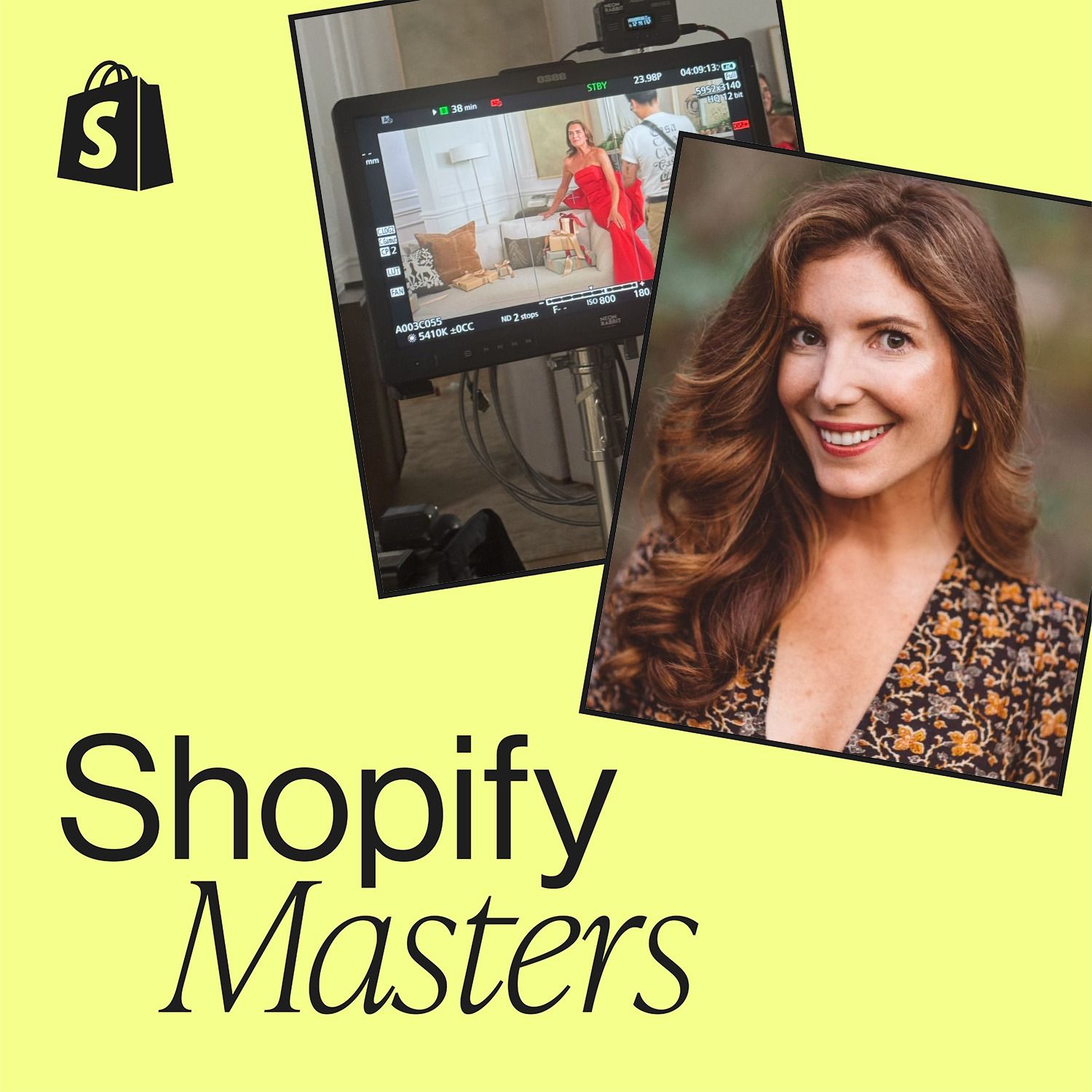
Shopify Masters
Why Celebrities Are Getting Into Business (And What Most Get Wrong)
00:34:02
Kimberly Kreuzberger, founder of Pivot Projects, shares her framework for finding influencers who actually convert, briefing them, and scaling strategically.
Loading summary
Transcript93 lines
- [00:00]
A
Celebrity has audience like the new commercial.
- [00:08]
B
Kimberly Kruseberger spent five years ago taking the company from 0 to 100 million in revenue. Then she started her own celebrity brand building machine, executing strategies for Halle Berry, Channing Tatum and Chrissy Teigen.
- [00:20]
A
We sit across 30 brands.
- [00:21]
B
She's now growing her company, Pivot Projects, into one of the industry's most well known partners. When it comes to finding the right talent, and that really converts, the best storyteller wins.
- [00:31]
A
And I've seen a fashion influencer in Summit, New Jersey drive as much conversion as a celebrity surprise.
- [00:37]
B
Follower count means almost nothing when it comes to actual conversion. And she's here to share what the world's best storytellers all have in common. I'm your host, Adam Lavinter, and welcome to Shopify Masters, your companion for starting and scaling a business. Kim, thanks for being here today.
- [00:51]
A
Thanks, Adam.
- [00:52]
B
Why don't we start with that early statement that follower count almost has nothing to do with conversion. In the context of, say, building a business or building a brand, what is it that makes it so?
- [01:08]
A
I think more than anything, the best storyteller wins. So it doesn't matter how many followers you have. And also because of paid and distribution, you can drive the follower count or the audience. So you have to first start with really good content. And so not necessarily, you know, the men or women who have 40 million followers are the best marketers. I think they're good, they're good storytellers most likely, if they were able to attract that many followers. But I, we sit across 30 brands right now and I've seen a fashion influencer in Summit, New Jersey drive as much conversion as a celebrity with millions of followers, if not more. And there's platforms like Shop My, which we like Live and Breathe by, which does an amazing job of tracking that conversion. And you'll see on that platform, it's not necessarily the influencer or the celebrity that has the largest following. It's truly like who is telling the how, the why, the when, how often are they doing that with trust and authority? Those are the storytellers that are kind of rising to the top and becoming really important to brand.
- [02:14]
B
And is it that celebrities aren't great at conveying that trust or authority? Is that where they're falling short?
- [02:21]
A
I don't know. I don't think that's. I think it's a trade like anything. And I think these influencers grew up talking in camera to their audience and they're following almost like they're on FaceTime and there's just a different comfort level. And I think some celebrities have done a really good job blurring those lines. But for the most part, I think that there's a comfort level of those who are able to talk in camera and, and continue to market a product probably to the point of almost like discomfort. And I don't know if every celeb is willing to go to bat that often and that frequently for a brand where I think some micro influencers will do it, you know, consistently and create a lot of impact by doing that.
- [03:01]
B
When did micro influencers start to take shape?
- [03:05]
A
You know, when I started the business in 2019, I was really working with just celebrities. And as we started working with brands, that's where I started getting a lot more exposure to the conversion. And when you would go under the hood, I would look at these men or women who had under 50,000 followers. But they were incredible storytellers and I would watch them convert and I would use the platforms, whether it's shop my or turning those assets over to a paid social agency and watch the conversion and how. How well their assets performed. And that's when I started really kind of keeping them on the radar. But I think, I mean, everyone's like a micro influencer. If you have influence in your society and your circle of trust, I think that's going to make you a great storyteller and a great converter.
- [03:54]
B
Pivot Projects is now near six years old. You've worked across. You said you've got 30 brands in your portfolio. You worked with all of these celebrities, some big names from Molly Sims, Chrissy Teigen. It's a long list. What are the patterns in terms of the actual success of the business model build or the brand build that you've been able to identify?
- [04:14]
A
Yeah, we procure talent first and foremost. Whether that's a list celebrity or 50 creators. From that we create premium content, whether that's social first or produced content in any capacity and then experiential. And that's just the flywheel of what we're seeing and what marketers want. They want more than just casting talent. Right after you cast talent, you want to produce some sort of content and then of course you want to create some sort of event. And at that event, you want a ton of micro influencers or social first attendees that can help you amplify the event. So that's kind of the three muscles of the business. When I started the business, I think it was really casting big names. So it was either celebrity was the demand or. Or it was quantity over quality, which you've seen. Like brands like Unilever really wanted to scale up and a lot of their budget is shifting to influencer and they want a lot high throughput. I think that's shifting. I think there's a lot of brand safety issues. So it's not as easy. And an example of this, we work with Chase Infatuation, which is owned by Chase. You can't just cast a thousand influencers using a platform. There is like an art and a science with really doing an audit of these users, what's in their bio, what did they last speak to. And we use platforms like Sprout. Social has a brand safety regulatory component, but you really, at some point need the mix. You really need to go on the handle and say, I don't care if they have X followers and they meet all of these prerequisites, it's not the right fit for the brand. And I think sometimes when you're moving fast at high throughput, you can't be as high touch. So I think there's a shift in quality over quantity. And, and I think the best marketers know that getting five incredible assets they can use to boost or wait list on paid is going to be more impactful than hundreds of assets that they're testing with that are less impactful.
- [06:11]
B
Okay. For listeners or viewers that don't understand what that term whitelisting means with respect to paid. Can you just double down on that for a moment?
- [06:18]
A
Yeah. We've seen a shift recently over the last, like, I don't know, year. We're beyond just getting paid rights that you're contracting an influencer for so that they can use the content in Meta or TikTok. Whitelisting is when the ad comes through from the influencer's handle. So you almost look like you're getting an ad from Ashley Tisdale when she's talking about a brand versus the brand providing you or showing up in your
- [06:41]
B
feed, which is more personal, more authentic.
- [06:45]
A
Yeah. And you have to say the brand name within the first three seconds. You have a very short window to capture attention. So you need to make sure it serves as an ad, but also catches their attention with somebody that's maybe recognizable or someone that, oh, do I follow them? Should I be following them? So it tends to be way more effective in paid and it comes at a premium. The influencer will charge more for whitelisting than just paid usage.
- [07:10]
B
When you look across your portfolio at Pivot, you've seen so many businesses at this point, could you Just share a few sort of business model tips with respect to go to market in terms of what advice or what you'd think could make a business successful.
- [07:27]
A
I think if you are a creative and an entrepreneur and you're out there trying to start a business, you might not be a master of numbers. And so I don't think anyone should engage either putting their own money in or raising capital unless you have an amazing CFO or finance lead. And the reason ultimately you have no business if you can't manage margin and, and EBITDA and really be hyper, hyper thoughtful on how you're building and scaling revenue. So I think first and foremost, think of that operating team and if you are creative and entrepreneurial, really think of that strong number two as a finance ops lead. And that should be, you know, your key hire before you do anything. And I think people get excited about marketing, which is sexy, or the merchant. But I firmly believe that you have to know your numbers better than you know just as well as your cfo. You have to wear the CFO hat for as long as you're driving that business while you're the CEO, while you're the founder. So never take your foot off that gas until you feel really comfortable with that. Number two, building and scaling into the business. I think that's essential. And I think thinking about how you're capitalizing the business and the people you're going to put on that cap table, they're not just bringing money, but what kind of experience and strategy are they bringing and how influential will they be on that journey? And has any of them had exits? You really want people with a history of doing something and showing success and then hopefully exiting the business. I mean, those are the best people to learn from because it's a playbook that you can model against.
- [08:59]
B
And by default, I mean, if they're on the cap table, they're essentially your partners.
- [09:02]
A
Yeah.
- [09:03]
B
So choose wisely.
- [09:04]
A
Yeah. And you report to them. I mean, it's their money, their product, right? Yeah. So I think that's strong. Yeah, I think that's great. Choose wisely.
- [09:10]
B
Take me back to your experience with goop. So before PIVOT projects, you were with GOOP for a while. Right. And largely responsible for scaling this business from zero to north of $100 million in revenue, from a small team to north of 300 employees.
- [09:29]
A
Yeah.
- [09:29]
B
You must have learned a ton throughout that experience. You've said it. That was your sort of quote, unquote, MBA in real time.
- [09:35]
A
Yeah.
- [09:36]
B
If you could just share a few of your Biggest takeaways or your biggest learnings from building goop, what would they be?
- [09:41]
A
For me, it was all the mistakes we made in a good way. It's funny, our team was so small. So even when we were like moving email service providers, like, it seemed like a decision we were all part of and weighing in, and so moving and migrating too many emails, you just learn along the way. And I think as our leader, we were all learning together. And that's what I think I loved most about goop. The leadership team was like best in class. When I think back of the CFO and the chief merchant and our chief content officer and even Gwyneth, we had something really special in those early days. And there was a lot of testing that happens. And anyone who's worked at a startup, 0 to 20 million, 20 to 50 million, just a game of test and learn. You know, you make really wise decisions and you lean on experts, but at some point you have to take the leap, you know, we were testing retail doors and pop ups, we were testing new media channels, podcasts. We built in. GOOP Health, which was a big community event in GOOP Health was one of those things that for the rest of my career, I'm so proud of, bringing 400, 500 goopies together. It was a ticketed event, was executed beautifully. I think from a consumer experience, it was really celebrated. And I just think about all of those things that you're able to build and design and architect because you built a business case that said I'm either gonna lose my job or get promoted. And if I do this right, it's worth putting my stake in the ground. And so you're just taking a lot of risk and a lot of swings. And I think that's what makes startup world addicting. And I think a lot of people who work for startups end up going back into another one and another one, and it's hard to do that in a rigid, highly bureaucratic, established business.
- [11:18]
B
During your tenure at goop, you obviously had a lot of success. There were obviously some mistakes along the way.
- [11:24]
A
Yeah.
- [11:25]
B
What were some of the biggest mistakes?
- [11:28]
A
One that comes to mind, I think we were always on the lookout for a net, a porter hire, an Estee Lauder, a l', oreal, someone who has done all of this and can teach us. And we waiting on the messiah to walk in the door. So we'd wait months for these hires from these huge organizations. And most of the time we were completely disappointed. I mean, I think there's a level of grit and resourcefulness that's needed at a startup that sometimes when you come from those big organizations, it doesn't translate. And so we wasted a lot of time waiting for some of those key hires to really guide us and teach us. And most of the time we were disappointed and it always came back to like, okay, now it's back to us having to do the work.
- [12:17]
B
They're not grinders.
- [12:18]
A
Not grinders. Probably don't have scarcity mindset and worried about running out of money.
- [12:23]
B
Right. What was the urge for you to start pivot? Like, how did you know it was the right time to transition to a new startup?
- [12:31]
A
Yeah, I moved to LA for the first time after never living here. So my kids were going to school with agents and managers and all of that was new to me. I come from a publishing background, so when I would share with people that I'm working at Goop or I've been at GOOP a long time or I'm the chief revenue officer, you know, a lot of people would be like, do you mind sitting down with Kate Bosworth or my client X? And you know, this talent is talking to them about their experience. They're really passionate about starting something or they have a nascent stage business and they would love some advice around it. So I took a few of those meetings and, and I really saw the opportunity between a lot of people investing in celebrity. This is in 2019, 2020. That seemed like an easy check to write and a no brainer due to like, you know, exits like Casamigos and Aviation Gin and I mean we can name a bunch, honest. And then I saw a lot of talent camp representation. So like inner circle, you know, the best friend or the agent. And I didn't see a lot of people sitting in that hardcore operating role like a CEO that was going to shepherd a business from 0 to 5 million, 5 to 10 million. And I'd meet with a lot of talent and they talked about their idea and what they have, but they didn't have those fundamentals. A brand deck, a go to market strategy, a high level financial model. And so I think the catalyst for me leaving was early days of goop, which I loved because it was so exciting to decide which revenue streams to lean into, which revenue streams to prioritize testing into those revenue streams and being able to do that for a slew of business. So Magic Mike, which Channing Tatum was so special and Hallie on Reesman in the early days. And then I met Molly Sims, she had ideas, but she was like, I know I want to do something, but I really want your help like architecting what that looks like. And so we spent a lot of time together on. And that was one of the only ones that I would say that we incubated together. Most of them were nascent stage businesses that needed commercial strategy.
- [14:32]
B
Yeah, I think one of the big misconceptions in the market, let's say, is that said company or product simply needs a celebrity or celebrity influence or influencer to become successful. And that simply attaching a big name to a brand or a business model is enough to make this thing succeed or scale. Mean, case in point, you know, that not to be true, that operations that go to market strateg. There are a few. But let's say it's. People look at the Kardashian playbook and think like, well, it's just easy because they're celebrities and anything they touch turns to gold. And people are borrowing from these use cases that they're seeing, whether it's aviation gin or Casamigos or Goop and saying, well, look, I have this great idea. If I can just have a celebrity involved, this business will be successful. Yeah, but based on what you're doing and the work that you've done at Pivot, you know that there's so much more work involved. And in fact, that is not the case. And these, these use cases that I just mentioned are really more of the minority.
- [15:37]
A
Yeah. Really agree. What feels obvious is that celebrity has audience.
- [15:42]
B
Right.
- [15:42]
A
So technically, like the new commercial, you know, it's really hard. You have to be talking to community and to potential customers all the time with frequency. And so I think from that perspective, it feels obvious that anyone with millions of followers that can talk about your brand on an ongoing basis would be a marketing lever. What I think happens is celebrity take on a lot of projects, you know, in their share of mind shifts. So sometimes you catch them in this. Like during COVID while I was doing this, I caught a lot of celebrities at the right time who were very focused on brand building while production was shut down or projects were limited as that scales up and they go back to their day jobs, I think you lose that share of mind or it's hard to have them in full time operating mode. And I think what I have found with any business, you need incredible operators to build and scale. You need amazing marketing, you need ongoing marketing. I think part of the evolution of Pivot projects, I think there's a lot of ambassadors that can help build and scale a brand and they can talk to different segments of audience to avoid that cross pollination. And that can be very effective if done really well. And that's part of the quality over quantity. More of like a really thoughtful ambassador group. So how are these 15ambassadors that are different audiences and regions and diversity, how are they talking about your brand on an ongoing basis? What's the incentive for them to do that? Are they on the cap table? Are they not on the cap table? I find that to be more interesting as a model. And, and then I think there's a brand risk component. Betting your business on one celebrity that could have one interaction that can ruin your business. And I think that could happen with a CMO that does something stupid or a CEO. But I just think there's a lot of risk and I think if you can expand that mindset into a broader group, I think it's a more interesting way to approach scaling the business.
- [17:41]
B
Right. What makes for a successful brand these days when we're talking about generating deep lifetime value and engagement over time, like let's say your go to market is successful, you have good celebrity product market fit, you have good early indicators and good early traction in the market, but your lifetime value just isn't there over time. Like competition is fierce, let's say.
- [18:07]
A
Yeah.
- [18:08]
B
How do you think about ensuring that consumers still remain attached to that initial engagement they first had with the brand?
- [18:17]
A
I think it's hard. It's like immediately I thought of like supplements and beauty. It's super competitive. You know, the FDA blended, you know, I don't know what's regulated, what's not in some of the supplement brands. But you see brands like Runes, you know, which is using a ton of influencers and really pummeling your feedback and it must be working. I mean I don't work on that brand, but I think that's a great question. I think lifetime value is hard. I think there's a loyalty piece that right now is very, very difficult. I think as brands or as consumers we're tempted to try. If it's a modest price point, I know I will like, I'll serve an ad, I'll swipe up, I'll convert. Not necessarily like I'm not going to be a high lifetime value customer probably, but I'm willing to try things at modest price points. I think it's a good question. I don't have the right answer of like what's going to keep them forever Unless you have a product that is showing results that I mean I think of like anything Fiber focused or GLP1 or high protein I think people become obsessive with something that they feel like is making them feel better or showing results. I think that would be the only thing I'd bet my life or even like a beauty product.
- [19:29]
B
Yeah.
- [19:30]
A
That changes their skin. I think you'd have to see something like, visible or feel something for the product to be irreplaceable.
- [19:37]
B
Okay, so in a way, I'll say then, based on what you said, that a brand that can successfully bake in their product into the everyday routine of the consumer, it's almost like this engagement becomes a daily habit or a daily ritual, and therefore you're generating deep lifetime value over time because the consumer is now so addicted to the routine of it all can become something.
- [20:03]
A
Maybe.
- [20:03]
B
But a couple of other keywords that you mentioned earlier on storytelling, community. I mean, this was in the context of goop, but these are buzzwords that are, you know, I think in the zeitgeist of just brand building or business model building these days, are there frameworks around storytelling or around narrative or around community building now that you find are successful in terms of the way that you guys work with brands?
- [20:29]
A
I think a big part of the success of working with talent is briefing. And I find we even get better with each creative brief. So basically, instead of just letting the influencer create UGC with maybe two or three key messages, it's getting maniacal with what they're shooting, how they're shooting, what the lighting looks like. I mean, even in our briefs, you have to follow the brand. You have to engage when they post, you have to comment. I mean, it's just building a much deeper relationship so that it doesn't feel inauthentic. I think the best influencers push back when it's too scripted. And I have influencers that won't even commit to a campaign until they see what captions need to look like to see how copy heavy it needs. And I appreciate that because ultimately we want it to work for their audience, so they have to protect that. That component. But I think the briefing has to be really, really detail oriented, thoughtful, has to really understand what they're doing well on their handle and how do you leverage that. So a little bit of like the magic of what Adam does for on behalf as a creative proxy for a brand that should be thoughtful and that should be integrated. When you, when I send you the brief, I should also be thinking of what's worked really well for you. So an example of that is I always tell the brands, like, go through their feed for an influencer. Find the two or three assets that are either high performing assets or ones that caught your attention and let's use them on North Star. So when we send the brief to the influencer, let's say we really liked these two that you did, whether or not it was for a brand, but how you spoke in camera, how casual you were, the environment, how you closed out that content piece. So I think really trying to get really narrow and so you're giving them creative freedom within the reins of what they do well. But it's not a free for all. You're still paying for an asset that has to work for your brand.
- [22:21]
B
What makes for a good creative partner or a good celebrity partner?
- [22:26]
A
Less casting and more creative director.
- [22:28]
B
Okay.
- [22:29]
A
I think that blend is really like where the world should be going. So I mean like Alex Cooper is doing that well. She has a content studio. You're seeing that with a lot of the big YouTubers where they really control the content and the output, whether they're producing and they're directing. I think that's a big trend that we're seeing. So it's less talent insert into a campaign more. Let's find the blend of the creative direction of that talent, what they think will work, a little bit of their own humor and that should be infused for it to be really successful.
- [23:02]
B
One of the things that we were talking about that I think is interesting to explore is this idea behind what motivates a celebrity to get involved with business in general. This is a relatively new phenomenon. Let's say it's been the past decade, decade plus. It's obvious, like I mentioned before, why a company would want to partner with a celebrity. Right. That's obvious in terms of a growth hack. But on the flip side, what is the motivation for a celebrity to jump in to business, which is not like a quick win. Right.
- [23:36]
A
And at times they put a lot of money in.
- [23:37]
B
Right.
- [23:38]
A
I think the best ones are capitalizing the business to like at least proof of concept so they're not immediately diluted with a investment deck or an idea. I personally think that established brands P and G. Lauder, l' Oreal have spent decades researching. So when they do go to a talent, they've done a lot of research to show that the data proves that someone like Eva Longoria will be a high converter, will speak to their core consumer, will speak to a growing segment that they want to target. And I think when you take a step back, when you know that information, and let's say the campaign is 5 million for a 12 month, 18 month deal. You build a business, your own beauty brand, which, you know, you put all the pieces together, you can have a billion dollar exit. I mean, that's a big difference, right? I think talent, you know, they're either perfectionists and they're workhorses like the ones I've been around. I don't really work with like lazy celebrities. I mean, if they're coming to me, they already have established business, their household name, and they want to build something. Like they're hungry. And so I think those that are hungry, they want more. I think someone like Gwyneth, what I loved working about her, she's just so curious and she's smart. And so I think it was just about doing more than just being behind, you know, in front of the camera. I think there's, they're multifaceted and multi hyphenated and that's what makes what's happening in the creator economy and celebrity. I think that's what makes it so fascinating for all of us.
- [25:11]
B
Yeah, totally. And one of the cool parts about Pivot is that you have the ability to actually invest in some of these businesses. I mean, that's a highly selective process and I'm sure you're quite specific. Specific about what you choose to invest in.
- [25:24]
A
Yeah.
- [25:25]
B
Do you have specific criteria? Is it like a gut feeling? Like what goes into it?
- [25:30]
A
I have to say I'm probably the worst in diligence when investing and I'm.
- [25:34]
B
So it's pure gut.
- [25:35]
A
No, I, no, no, I. One, I don't invest from Pivot. Like that's probably one of my biggest regrets. When I started this business, I should have done it and started a fund because for all the sweat equity and even though it's, you know, cash equity hybrid on some of the deals, I, I probably could have had a much easier path if I wrote a check than spent years building the business. And most of the checks I write, I write personally because I would like to exit the business at some point. So I haven't wanted to muddle those liens. And I'm only saying I don't do the diligence I should be doing because I'm busy and I'm operating. And so I count on other people who have invested that I trust that are writing checks and understanding why and what they think the magic is meeting the operators. I feel like I have good instincts around operating talent and I would say most of the checks I'm writing because I really believe in that CEO, cmo, the combination of the operating team to drive that business. And I think the product is really good.
- [26:34]
B
That's very cool. When you reflect back on your career now, do you have a summary that you could share in terms of your biggest learnings or your biggest takeaways in terms of what say a new founder might benefit from?
- [26:50]
A
I think maybe very feminine, but I think it took me a lot longer to bet on myself. You know, I started my own business at 40 and you know, just when you see this younger generation, you know, they're consulting at 24, I'm like, Ah, never even thought of that. I mean granted the world has changed, but I think I really felt like I needed this like really buttoned up asset pack before I could go on my own. So like years of networking, great relationships, New York and la, a lot of like proving out my own like thesis around a business. So I just think I would have bet on myself a little earlier. And I see this in a lot of the businesses we operate like, well I founded the business but I can't be the CEO. And I think there's a lot of replacing yourself versus trusting your instincts, building an army around you. So build that moat of amazing operators. But you did something right to get to where you are with an amazing idea to fund, you know, to capitalize the business to this point. And I think, I don't know if it's feminine energy, but I think a lot of women like doubt themselves. So I don't, I don't know if that's good or bad, but I wish I like kind of bet on myself a little bit more. I'm still like that. I still don't do a lot on social. I'm not a LinkedIn warrior. Like I think I do the work and I'm not good at telling the story about the work I'm doing. So thank you for considering putting me on. But I think you have to like find me to even like hear the story of what we're doing.
- [28:10]
B
Somebody once told me that entrepreneurs wake up every day and ask themselves like what the heck am I doing? What do I even do today? It's this like perpetual self doubt loop
- [28:21]
A
and never am I thinking I should
- [28:22]
B
post and never goes away and tell
- [28:24]
A
what I'm going to do today. Like that's just not instinctual to me and I think we can all do a better job of that.
- [28:31]
B
Let me ask you across your portfolio of 30 brands if you could again pull together a few lessons or learnings from the first six months of the most successful brands in your portfolio. What are These businesses doing right early on that we could learn from.
- [28:48]
A
Well, we've been working with MIDI Health, which is an incredible company, you know, that really focuses on telehealth, perimenopause, menopause, democratizing nurse practitioners and doctors and creating more access in healthcare for women. And we started doing influencer work for them, which started with true influencers micros and then a few bigger names and really testing into like, is this working? Are they great storytellers? Do they understand? And once we found a few of the right, we just did a campaign with Jenna Bush, we did one with Molly Sims. Some of these women are doing such an incredible job of telling their own personal story and that has been really successful as social assets and now paid assets. And so with that, we're now doing some really exciting work led by Melissa Waters, who's an incredible cmo. I think it goes back to test and learn, like really seeing what kind of campaign you can work and ensuring those are converting, learning more and more about the briefing process, getting tighter with that. And so that when you do take the leap with a celebrity or macro, you really feel confident that you're going to deliver the rate. We're going to nail the deliverables because we've learned a lot along the way.
- [29:58]
B
Are there any trends that you are paying attention to?
- [30:01]
A
Yeah.
- [30:02]
B
Either in the celebrity influencer space or even outside of it that you're paying attention to today that may shape how
- [30:09]
A
you do business differently, like adapting to platforms and tech. I think there are some people who are really worried about that, like, oh, well, don't you feel like you'll be out of a job? There's platforms like, like To Know or Shop My and I feel like lean in even harder for them. We use Shop My. We actually really push our clients to onboard Shop My and that's because it's an incredible measurement tool. And so for us to be successful at the end of the day, we need to be able to show metrics at the end of every month. So it's measuring, you know, the EMV for every post. I'm able to record all the screenshots. I'm able to do a really thoughtful key learnings document and recap. And I wouldn't be able to do that if I said I don't want to adapt to some of these, you know, platforms that could replace us. If anything, it's what's the integration of what we're doing and what the platforms and what AI can, you know, do for us.
- [31:01]
B
Is there anything that you've learned personally as a founder, that has helped shaped your motivation. And the reason I asked the question is because I think it's hard for founders, especially early stage founders that have not had that previous success, to stay consistently motivated.
- [31:20]
A
Yeah, I'm a grinder. For better, for worse. My husband is always like, there's some sort of deep trauma we need to work through of why you're working 14 hours every day. And it is. I mean, there's definitely something there that's, you know, my motive. And I think it's a scarcity mindset. I'm always worried about running out and not having enough. So I think that might be 80% of my motivation. And then the other 20% is, I think, giving my children. I have three kids. I really work hard to integrate my business into what, like, their life. So they really understand what I'm doing. They know I'm excited about it. I had an early female boss at Conde Nast once tell me that she was like, never tell your kids you have to work to, like, pay the bills. I don't know. Something that she said about, she was like, really make it part of their lifestyle. We can't not afford to go to Disney. Don't ever say that, because at some point you're gonna make enough and that statement won't be true and you're still gonna be working. So the flip side is talk about how much you enjoy your work, how good it is for you as a mom, as a business owner, what kind of opportunities it's unlocking for the family, and really come from a very positive place of our scarcity mindset. But my oldest son is going to be 14. My daughter's 12. We work with Fortnite. I mean, I'm asking them to cull through, like, who are the hottest gamers? Tell me why. So, like, you know, and they know all the influencers, they know all the YouTube stars. So making them part of the business has been really fun and something I never even thought about, but it's been unlocking, like, a new excitement for me.
- [32:55]
B
But that point about leveraging your kids as almost like forecasting tools.
- [32:59]
A
Yeah.
- [33:00]
B
Is so insightful and so often overlooked.
- [33:04]
A
I mean, they're on Clash Royale and way deeper in the platform than I am. So they're like, oh, mom, they have a new skin. You should look at it.
- [33:11]
B
I mean, we didn't grow up with social media. I mean, I'm aging myself here. Yeah, no, see, you know, our kids, we often overlook the fact that they can be incredible tools in a way that helps to shape our businesses as we look beyond into the future. Not that any of us have a crystal ball, but, you know, we are moving at a pretty fast pace these days.
- [33:30]
A
Yeah.
- [33:30]
B
And they seem to have, you know, their foot on the pulse kind of thing.
- [33:33]
A
Yeah. No, I feel like they're better at half that than we are.
- [33:35]
B
Yeah. Kimberly, it's amazing to talk to you.
- [33:38]
A
Thank you.
- [33:39]
B
Thank you so much for all of the advice, and thank you for tuning into the show today. If you like what you saw, don't forget to comment below. Follow or subscribe to Shopify Masters and we will see you next time.
- [33:53]
A
Sa.