← Shopify Masters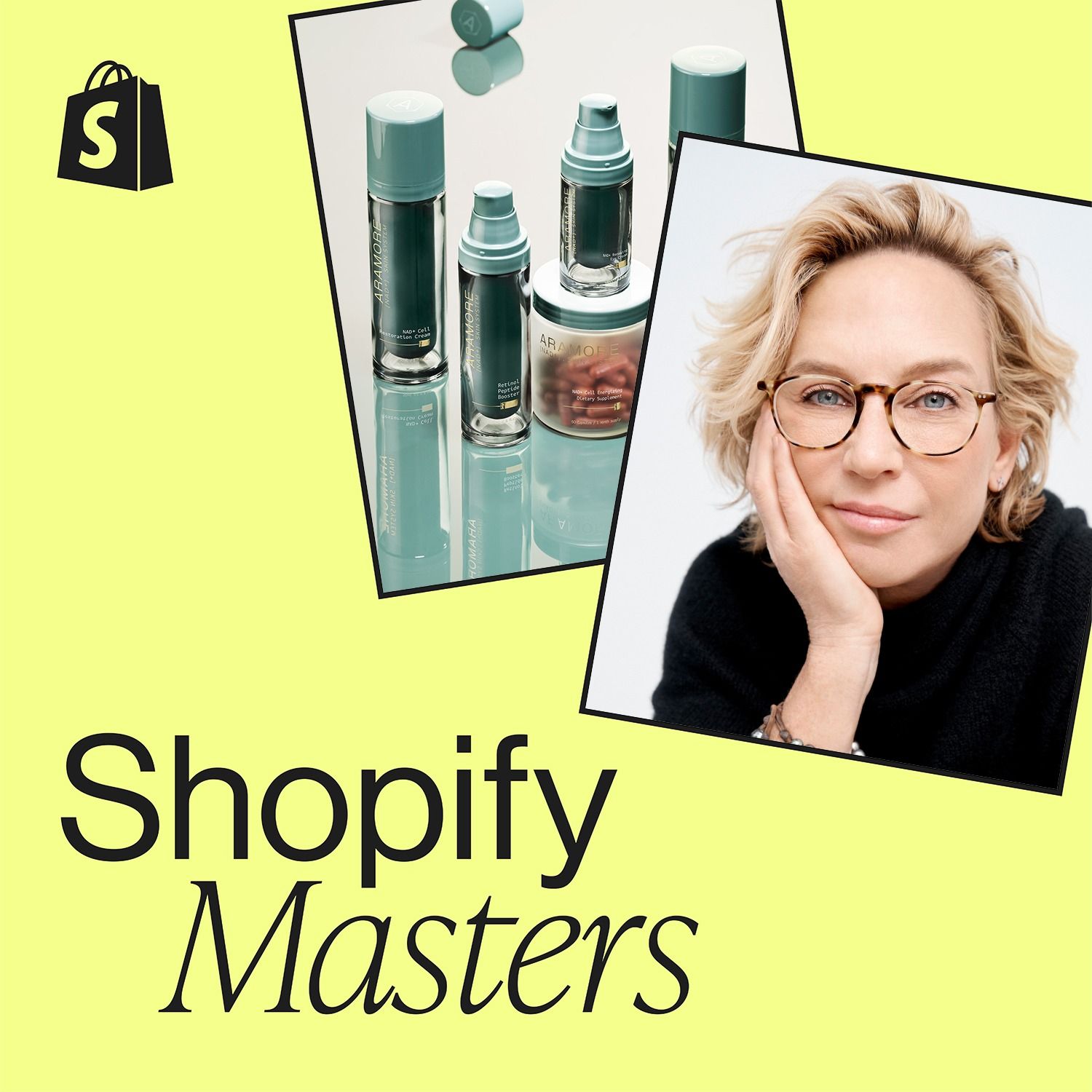
Shopify Masters
Why This $5 Million Skin Care CEO Chooses Reddit Over Influencers
00:38:01
Melisse Shaban built Virtue Labs into a hair care brand with more than $50 million in revenue. Now she’s CEO of Aramore, a biotech skin care company with peer-reviewed NAD+ research that’s generated $5 million, and skipping influencers entirely. Instead, she’s sending free products to Reddit strangers and asking for the truth.
Loading summary
Transcript68 lines
- [00:00]
A
Nothing is instant. We don't age instantly and we don't fix things instantly. It's a journey.
- [00:08]
B
Welcome to Shopify Masters, your companion for starting and scaling a business. I'm your host, Serena Smith. Today's guest has built a career bridging science, innovation and storytelling at some of the most respected names in beauty, including Aveda, the Body Shop and Frederick Faki. Melissa Schaben is now CEO of Aramore, a first of its kind skincare line that uses biotechnology to support healthy aging at the cellular level.
- [00:30]
A
We picked really accur skin care users and put them on a 28 day regimen to see what they saw. In 100% of the instances. They saw a dramatic change in the underlying look and feel of their skin.
- [00:45]
B
And with over $5 million in sales and growing, the market is clearly paying attention. Melissa's here to talk about building trust in a crowded industry, the science behind the brand, and what longevity means for the future of skin care. Welcome to the show. Meliss. Thanks for being here.
- [00:58]
A
Thank you for having me.
- [01:00]
B
You have had an extraordinary career shepherding some of the most iconic names in beauty. And just prior to Aramore, you spent more than a decade as both CEO and founder of Virtue Labs, the award winning hair care brand. With this one, you're stepping in as CEO and not founder. What made it worth stepping into that seat?
- [01:20]
A
Yeah, I didn't start out as the CEO. I started out as a board member. And, and you said it earlier, the ability to find a genuine piece of technology, biotechnology, not claims, facts. And there is a difference and be a part of commercializing that and making it accessible to consumers and trying to educate on concepts that can be very complicated in some ways. And yet as you and I have talked about simple in others, it was attractive to me. We had done the same thing at Virtue and I'd had a great run and enjoyed it so much, the storytelling and making the impossible possible there. And I just thought this was another opportunity to do that as a last shot in my career. Probably.
- [02:13]
B
Does it feel like a last shot in your career?
- [02:15]
A
We'll see. I tend to mentor a little bit more now and sit on the sidelines and help. So you're right. Me jumping back in again was a little bit not in the plan, but I couldn't resist the temptation.
- [02:29]
B
Does this being your baby, but also in some ways not being your baby, change the way you think about building
- [02:35]
A
the brand a little bit? I can be a little bit more objective. I think when you build something from the ground up, you oftentimes don't see the flaws in it. You bear it out of your soul. It comes from you. And so I think there's a fine line between being critical enough on something and not critical to hit the right marks. So I do think there's a different relationship with it. I don't behold it in the same way. I see it for what it is and what it can be versus something that's so close to me.
- [03:15]
B
Yeah, that's an important distinction and I would imagine very valuable inside the company, provided people are actually listening.
- [03:22]
A
Oh, yeah.
- [03:23]
B
The world of skincare is very noisy, right? Collagen, retinol peptides, exosomes, salmon sperm. Like, the list goes on and on. And we're living in this era of like TikTok micro trends, where it feels like there's something new flash in the pan that's coming out every day. For someone who has never heard of an NAD precursor or has heard of it, but has no idea what it is, how would you describe it? Like I'm your girlfriend over dinner in a way that I can understand. What's it doing for our skin?
- [03:53]
A
Yeah. You know, actually, to the medical community, this is not novel. Right. NAD is the fuel for cellular renewal. And you need it in every living cell. Every living cell needs nad. Now, how you get it, how it penetrates, that's. That's where the magic happens or doesn't happen. So NAD shots and infusions, it's going all over your body and it probably going through your gut and being, you know, probably peed out, to be honest with you. You know. You know, probably you're losing all of them. I'm a big infusion person. I love it. I've been doing it for like over a decade. But, you know, you feel good for a day or two and you have a little bit more energy, but those things are not sustainable because your body's just flushing it out. And for skin, skin's a little bit of a picky, picky cat. Skin cells don't like other things that fuel cellular renewal. Your skin doesn't benefit from how much protein you eat. Your muscles do, your heart does, the other organs do, doesn't benefit from sugar, which is also a part of cellular turnover and renewal and health. Your skin only likes fat. And so that barrier that's so important, it keeps stuff in and it keeps stuff out. And so NAD is very valuable. But as a molecule unto itself, it does not penetrate the barrier. It's not get to the cellular level. So most products don't go all the Way down to the basal level of the cells. Right. Most products sit on the first couple of layers of your skin. So they're dealing with the obvious need for moisture or light abrasion or those kinds of things. So our science, or our IP really was our ability to put a chassis with which was a ketone, fatty acid ketone, with NAD precursor and deliver it down to the basal cell level. So the body's actually producing more nad. And that means as your cellular turnover happens, you know you've got eight layers of skin and every 28 days you're sloughing off a layer and that bottom layer is migrating itself up to the top of what you see. It's in a healthier form. That's cellular energy, that's cellular renewal. It's cellular maturity at the lowest level that works itself up to what you visibly can see as the signs of aging.
- [06:39]
B
Okay, so just so that I have it correctly, let me put, let me put it in, let me put it in layman's terms for a second. Essentially what you're saying is that with Aramore, you figured out how to create a delivery system for this NAD precursor so that it could actually be absorbed all the way deep into your skin so that it can actually do the work of cellular renewal. And it's not actually NAD itself so much as something that is prompting your skin to generate its own NAD.
- [07:07]
A
Yeah.
- [07:08]
B
Okay.
- [07:08]
A
Typical to the GLP1s.
- [07:10]
B
Right.
- [07:10]
A
Your GLP1 that's in your body, it's just, it just flushes through too quickly. So now they've figured out a way to create a tail and a longevity that has the side effects. So it's super interesting. It's really the fuel to cellular renewal.
- [07:25]
B
Have you seen actually, like, given how popular GLP1s have become in the last several years, that it's changed consumer appetite and understanding of the deeper science? Yeah.
- [07:42]
A
I think the fact that something actually delivered in this really incredible way where your objectives or your aspirations were met, I think it puts pressure on industries that promise a lot and don't deliver a lot. And I think consumers are sensitive and now mindful of wanting real science and real proof around the claims that you're making. And nothing is instant. We don't age instantly and we don't fix things instantly. It's a journey.
- [08:15]
B
I mean, on that front, from the science perspective, you know, there's no regulation in the world of skincare marketing. Right. People can kind of slap claims on any product that they want. And calling something science backed is essentially table stakes. At this point, right. It's table stakes, but it's often when you dig in more marketing fluff than it is substance in a lot of instances. What does scientific rigor look like at Aramore and how are you communicating that to the consumer?
- [08:45]
A
It looks like real clinical work, real work on real skin and peer reviewed journals and white papers and, and ultrasound and measurements where we actually can see the barrier thickening by 12%, which is enormous in the world of the barrier function. And with stronger barrier function and stronger barrier. That's skin health. As your barrier collapses. If you think about it, it's kind of interesting. It's kind of the only one of the very few organs you actually see and it's your largest organ and you see the effects of the environment and pollutants. That's what you see. But what you don't see is what's happening at the cellular level. You don't see what's happening to your heart, you don't see what's happening to your brain. You have symptoms maybe, but you don't see it in your skin. You actually visualize it. And you know, I think that there's the, the, the way Aramore was started, it wasn't intended to be necessarily a skincare product. It, it was started by one of the Kennedy family members and it was really intended to look at longevity through the prism of gut, brain and skin. And gut and skin are pretty connected. There's a lot of connectivity there. And then as the science evolved, it became apparent that we could actually affect cellular energy and cellular health for the skin.
- [10:17]
B
Clinical studies are powerful, but I don't know how many people are actually out there reading white papers before they buy a moisturizer. And ultimately like we know it's emotion that drives purchase. So how are you taking something that is really the power of it is this, this scientific backing and this like deeply technical knowledge and translating it into a story that resonates with customers?
- [10:45]
A
I don't know that we are yet, frankly, to be honest with you. You know, I think that is the unlock. Right?
- [10:50]
B
Yeah.
- [10:51]
A
I mean we have seen big brands get to be very big with no science and deep emotional connection or aspirational connection. We have the real science and now the unlock is to figure out how we help people to understand that longevity or the aspiration of longevity. And I'm still unclear what really that means. It's becoming a throw around, trendy term. But I think we have to really start to architect. What does longevity really mean? I think the process of, I even Hate the word aging because it connotes something negative. But the process of aging is a lifelong journey. If you think about your life, you're relatively young. I'm not relatively young. We sort of change every decade, and our skin and our body changes. We get a little bit of a free ride up until we're in our late 20s, maybe early 30s. And then whether we're having babies or we're, you know, just going through different challenges in our bodies, and our hormones are changing, our skin changes. And so every decade for women, not as much for men, but every decade for women brings a different level of change. And I think that journey requires attention. We sometimes think of the skincare business as like a luxury business. It isn't. It really is a health and wellness business.
- [12:17]
B
Yeah, that's a big transition for people. When I think people are primarily thinking about skincare through the lens solely of aesthetics, rather than as this really essential organ that can let the good stuff in and hopefully keep the bad things out. I mean, it's your first line of defense against pathogens. Right. We don't often think about it that were just like, my skin looks sallow. I don't want it to look this way. Right, Right where. I mean, you said that you don't know that you found. You have found the mark quite yet with aramore in terms of engaging in the storytelling in a way that really resonates with consumers. Can you talk about an example of a time where you and the team went in one direction and you realized it wasn't quite connecting?
- [13:03]
A
Yeah, I think we have to avoid historical, easy, cheap shots at the skincare industry. Oh, you don't need Botox. You need nad precursors. You don't need this or you don't need that. You know that that isn't the case. The reality is finding a way to help people to understand that if you take care of your skin and your body and you start early on in life, and it's very small things that you have to do. It isn't 27 layers. It isn't 17 products. You don't have to spend 1000 dol a month. The reality is feeding the skin cells what they need to be fed. And I think the mistake historically is you think you have to be everything to everyone. You don't have to have. As an example, you know, we had products in the line that didn't have nad in them. Well, you know, I think that's for some other company. I think we are the company and the only company in the world right now that can actually deliver what we're delivering. And I think the mistakes come when you think that you have to be all things to all people almost in a regimen type of way. You don't. I mean, you know, I think it's the same way we think about vitamins. Some people feel like they need 20 different vitamins. I'm gonna take vitamin D and, you know, magnesium. That's for me, what I need to replace. So I think it's that same how do we supplement what the body that when it needs it, versus getting caught up in the beauty space, which is new, new, new, new, new. Any trend that comes your way, you're jumping on. And our challenge is policing the industry and not letting people get away with saying that it's real science when it's not. That's not fair. That's a lie.
- [14:57]
B
I mean, how do you police that?
- [14:59]
A
You call them out. Show me the receipts. Let me see your data. You can put a white paper up, but if it's not peer reviewed, then it doesn't matter. You wrote it. I can say anything I want about something. To your point, just making sure that there is demonstrable evidence that's available in consumable ways to people who are curious enough about this category to say, I'm going to find out if this is really true or not. Some people aren't. That's okay.
- [15:32]
B
You were talking about the natural consumer orientation toward, you know, jumping on all of the new things that are out there. It's hard not to be pulled into every trend. But also as a brand builder and as a business builder, it can be very difficult to have the restraint not to just constantly be adding more SKUs. Right. You're saying you actually broadened your skus and went into other product lines that didn't have nad and ended up getting rid of them. What was the aha moment for you that made you recognize, oh, we need to go deep versus broad?
- [16:13]
A
I think that consumers today, they are more curious. I think authenticity and transparency and it's an overused word, but we lived by it at virtue. We really did. We had true technology that really transformed hair. And I believe at the end of the day, although it's been challenged in the last couple of years, for me, I think right wins. I think truth wins in the end. I've been a little confused by it over the last year or so, but if you know what I mean. But I do think at the end of the day, I think consumers. I know, I do, as a consumer of everything I consume everything. There's nothing that I'm not, from tabletop to linen to steaks to wine to, I mean, everything. I love consuming things and buying things. And I know what I'm loyal to and I know what it. When brands, they deliver on their promise. I stay loyal. And I think you see it in the hospitality business, I think you see it in the wine business. I mean, you do see that loyalty and that brand effect in certain categories. There has been no barrier to entry for years now in the beauty business. If you had 10 followers and you suffered from rosacea, then you developed a rosacea brand, there were no barriers to entry. I think the barriers are starting to pop up now. I think consumers are weary and tired of the influencing world and maybe a little bit of the celebrity world, even though I was a part of it a little bit. But I think I, I put Jen Garner above all other celebrities or people who are known and that's who we had at Virtue because she's the most decent, honest, authentic person I've ever known. So I think it's course correcting a little bit. And I do think that different platforms of communication and of curation are evolving.
- [18:27]
B
Does that mean that at Aramore you are intending to steer clear of influencer or celebrity partnerships?
- [18:35]
A
The thing that in my experience that really worked is, and I'll use Jen as an example, Jen was a customer, she was a genuine and a good friend of Adir, who was one of my partners in the business. And so it was really quite organic. Like it was really, it was real. It wasn't. We weren't paying her to do something. She loved the brand, she loved the deer and wanted to be to use her platform. And so I think when that's there and it's really not so overtly transactional, I think that resonates with people. So I think there'll be influencers, but a different kind of influencer. Someone that's objective, someone that is a real scientist who can say, like, listen, you know, I've used a lot of things and you know, real longevity experts, whatever that will ultimately mean and not shilling because I think we've had enough of that.
- [19:36]
B
People can smell it. Yeah, we're over it. We're over it.
- [19:40]
A
Yeah.
- [19:42]
B
There are a lot of CPG companies and skincare brands that are doing a really great job of building a following and really connecting with, with consumers and building some kind of digital community via places like TikTok and Instagram. I was really interested to hear that you guys have been using Reddit. Can you tell me about what that process looks like?
- [20:05]
A
Like with everything that's going on is Reddit is. It's back again in a way that it's a trusted. Because I know it's you on the other side. You're not, you're not being paid, you're not looking at your followers, you're not looking at your likes. You're being genuine and authentic. Authentic. We did a 28 day use rate with Reddit. We picked really active skin care users and put them on a 28 day regimen to see what they saw. In 100% of the instances, they saw a dramatic change in the underlying look and feel of their skin. And it goes back to the 28 day cycle because you're starting at the point in which the lowest layer of cells, the bottom layer of the cells are going to rise to the top within that four to period of time depending on age. And that's when you start to see transformative change. And so we had a really interesting result, very encouraging. And so we're going to continue to use Reddit in that way where we're putting active skincare users on the product for free and letting them give us the good, bad and ugly. I mean, and lucky for us, and as we expected, it was all very, very good. And we don't choose by demographic. It is, we're completely democratic about how this works. It's just there you an active skincare user and it was usually people between 40 and 60 that were, that were doing this and it was fascinating.
- [21:30]
B
You got to have a lot of faith in your product.
- [21:33]
A
Yeah.
- [21:35]
B
To go to, I listen, I do a Reddit deep dive into some topic or another on an almost daily basis. I find it to be like an incredibly valuable place for as you said, like what ends up being like pretty unbiased information from people who are just like really trying to share what they've learned. I'm a Reddit Stan, for sure, but I can see from a brand perspective how it would also feel a little bit risky. Right. Because in terms of what you're putting on like TikTok or Instagram, you have control, you have control, a greater degree of control over what's being put out there. With Reddit, there's almost like a degree of like healthy skepticism that exists in that channel that doesn't elsewhere.
- [22:24]
A
And I'm okay with the negative. I mean I don't know about you, but like even when I'm looking at like clothing and I'm getting fed, I always go to the one or two reviews that are, that are bad because I want to know what is it that they saw and is that something that I might see as well? Like, I'm more interested in the mediocre or negative reviews to see, oh, well, those jeans actually were too tight or oversized or those shoes were actually, you know, they were. That's more helpful to me as I'm making my selections than, you know, everybody buying these five star reviews. And so we're not afraid. And we know the benefit. We know the benefit to healthy skin. We know the benefit to a healthier barrier. It affects every condition you have. It affects acne, it affects rosacea. A healthier barrier, it's like a healthier heart harden. It's just everything is better. So we're confident in that. It may not achieve what you want as a customer spending 100 bucks, but I know it's going to increase the thickness of that barrier and the health, the overarching health of your skin. And so again, it may not achieve what you want. You may not feel like it did enough moisturization. So you're not going to rebuy it. It's okay. I know underneath what's going on. And for us at this point, we haven't seen anyone say, well, it didn't do anything.
- [23:54]
B
How does that translate then to retention and lifetime value of a consumer? Is that a greater priority for you versus just getting more people in the door?
- [24:07]
A
You know, it's really tough right now. As you know, the algorithms are awful. It's really hard with Meta right now. The CAC has never been higher. It's brutal. I would rather have 100 loyal, great customers than a thousand people that buy once and whatever. So for us, the pace of growth, the pace of customer acquisition is natural. We're not trying to spoil the ocean here. I get a little nervous sometimes that they're going to commoditize the nad. It's a trending topic. People don't really understand it. And I don't want to get left behind because l' Oreal or Lauder or Proctor comes out and sort of throws a blanket over the category and confuses the consumer because nobody really can do it. But for right now, I think it's about customers that see the value in it, understand that it's really important to the lifespan of skin and that they're committed to compliance. So it's repurchase.
- [25:19]
B
You have spent your career building brands as a CEO, as a founder in multiple capacities. This is not your first rodeo, but every baby is unique. What has surprised you most about attempting to grow this company?
- [25:40]
A
I don't know surprised me is most. You know, sometimes you can have too much experience in that it experience can be fear, you know, because you've seen things before and historically you've experienced things that haven't worked, you tend to stay away from those things versus everything comes in cycles. So for me, I think the quickness in which the communication platforms are changing and how we communicate and the enormous amount of content that is required has been shocking. And also it goes against my ethos, you know, growing up the way I did in the branding you had, it was like a. Almost like the brand had a promise and they were just do's and don'ts and things that were not non negotiable. They just were. I'm sorry that this brand can't play there or this brand can't do that or this brand can't speak like that because of the underpinning DNA of the brand. And I think the thing that's shocking to me now, not so much about Aramore, but just in general is there doesn't seem to be as many guardrails out there for brands. And I don't know if that's good or bad. I do know that the stickiness of a brand is harder now because of that.
- [27:10]
B
Have there been hard one lessons for you in that regard in terms of being forced to sort of change your point of view or perspective on building?
- [27:24]
A
Yeah, I mean, I don't like clickbait types of things, but I think it's a necessary evil. The attention span is so limited, so it almost takes those types of strategies to be able to. To make space for the real storytelling. That's a little frustrating and I don't love it. I think it reminds me of the things that used to happen 30 and 40 years ago in advertising where it was salacious and it was shameful. You'd make a woman feel badly about themselves and it was hope in a jar. And if you just use this product, you could maybe look like Cindy Crawford. It feels gross to me. But you know, some of that new types of clickbaiting that you just need to grab someone's attention because you got about three or four seconds and that's it. Mm.
- [28:25]
B
I mean, it brings up something else that I noticed. Right. So much of skincare and the beauty world in particular, to your point, preys on women's insecurities and fear mongering as a means of driving purchase. The word anti aging is everywhere. And when you really think about what anti aging means. It's like it, you know, you could be of multiple opinions about it, right? But it's like, it's a little gnarly, right? It's indicating, like you were saying that there's something pejorative about aging, that aging is a bad thing, that it's like something that you're supposed to be stopping. I noticed on Erin Moore's website that that term is almost entirely absent. You're not really leaning into anti aging, but from a marketing and an SEO perspective, that's a very particular stance to take because that is the search term that everybody is looking for. Was that by design? We're not leaning in this direction.
- [29:21]
A
We're leaning into aging. Not anti aging, leaning into aging. This really is about, look, if you're not aging, you're dead. I mean, that's just the reality, right? I'm not chasing around a bunch of young 25 year olds. That's not what we're doing here. I want to lean into age in a way in which we can control things. I think we see it in fitness, I think we see it in food. I think women now understand that bone health, muscle health, all of those things are critically important. Being bone thin as you get older is not a good thing. That is not what you want. That's when you get brittle, right? You're all jacked up and brittle. And you know, and if you look backward, it was almost. We force fed these notions and to your point, we force fed them in a way that I wanted you to look in the mirror every day and see the worst in yourself. Not the best, if you think about what, and I mean this respectfully, but if you think about things like Jenny Craig and Weight Watchers, you were never supposed to succeed. Never. You were just supposed to stay as part of this community. And you had this shared thing that you did that made you feel okay. I mean, it was the strength of it, but the weakness of it too. And so we're all for aging. We're lined up to age well, age beautifully, see joy in yourself. Stop looking at every little insult and nick and knack that somebody else has defined as beautiful. Just, let's be healthy.
- [31:03]
B
It's a very beautiful thought about how things could evolve for all of us. You've built so many legacy brands over the years. For earlier stage founders who are interested in really going the distance, what do you think they tend to get wrong about what actually makes a product or a brand endure?
- [31:29]
A
I was sitting on a panel recently and it was a bunch of senior folks from different large companies and private equity. And someone asked, do you think there's a space where a brand can be 100 years old anymore? And it was an interesting question. Because if you think about brands that are 100 years old, you gotta go to Lauder or Revlon. It is really hard to be a founder. It's really hard, and it's really hard to be a successful founder, whatever success means. And that does not mean that you sell your company for a billion dollars. That's luck, oftentimes and timing. I think it is continuing to have a vision and an aspiration. For what? Something. What you want your brand to be. Because it never is exactly what you want it to be. It's like us as human beings. One of the things that I love about Aramore and I loved about virtue is it never really became everything. It never really became 100% of what was supposed to be, because it always aspired to be better, and it always reached for the ultimate opportunity to enhance people's lives. You mentioned it earlier, the emotional connection of why we love something. We love a product or we love and experience. And it's so hard to replicate that. And so I think when you're a founder, there's two things that are going to hurt you. You're going to take in money at some point, and that is going to feel very good for a while, and then it's going to feel very bad. Try not to give up the majority ownership of your company if you can, and then hold on to your vision. And don't be afraid of not being the smartest person on every subject matter in the room, because that's not what you are as a founder. You're a visionary. You see the possibilities every day. And I think if you can lean into that and not getting caught up in. I have to make the decision about the three pl or I have to make the decision the P and L this or something like that. Just have good people around you if you can.
- [33:42]
B
Have you in your own journey fallen prey to that in moments in your career.
- [33:48]
A
Yes, absolutely. I think every founder does. And, you know, I think we're good at different stages of company's life, too. Sometimes you grow out of what you're good at. I build things. That's what's exciting to me. Once, you know, once it gets to a certain point, maybe I'm not the right person. Once that vision is sort of really stationary and may not be the right person to continue to lead. And that doesn't Offend me.
- [34:17]
B
Me.
- [34:18]
A
But yes, I've seen it all. I've seen deals break. I've seen investors make poor choices. And so all of that experience, good, bad or whatever, I have it in my Rolodex and I appreciate people who have a little scar tissue.
- [34:34]
B
Yeah, hard one. You were saying earlier that if and when you take on outside money that it'll feel really good for a little while and then it'll start to feel really bad. Can you elaborate on that?
- [34:46]
A
You lose control at some point in time, unfortunately. It's the nature of how these things work. When you get involved in, you're not self financing or you're not aligned with the people who are investing and they believe things should be different. You only have so much say and you have to be comfortable with that. You have to be okay with that and it's likely going to happen.
- [35:14]
B
What does success look like to you?
- [35:16]
A
Oh, you know, it's funny, it changes over time. I've been lucky enough to work with really incredible entrepreneurs. I mean, I worked for Horst Ruckelbacher at Aveda. I worked for Anita Roddick and Body Shop. I saw crazy, brilliant, insane, fearless entrepreneurship. And those people were crazy, insane, fearless, brilliant entrepreneurs. So, you know, I think success is, you know, financially, you want to deliver on your promise, especially if you have investors. You try to do that. That's really important. I think success is creating a culture and an environment where people are generally happy and they feel like they're rowing the same way in the boat. They feel like they're contributing. And as a founder, when you start a company, everybody does everything. There's no hierarchy. There's no, you know, you're packing boxes till three in the morning, you're sitting on a broken bench or whatever. There's real joy in that. And you know my history. I used to say to people in the early days, there will be a time that you will miss this. And sure enough, there always is.
- [36:34]
B
It is so true. What does growth look like at Aramore over the next several years?
- [36:41]
A
I, you know, sometimes when I let myself drift and dream, I think this could be the next batter. I think it has the chops to be the next real breakthrough. Not in the same distribution because it's accretive and not doesn't replace other skincare products. I don't have to push somebody else's. Yeah. I don't have to cannibalize somebody else's business for you to use these products. This should be something you put into your regimen for different reasons. So I think it looks like somewhere between 50 and 100 over the next 36 to 48 months.
- [37:22]
B
Amazing. Melissa, you're a delight. Thank you for being here today.
- [37:26]
A
Thank you for having me.
- [37:27]
B
That's Melissa Schaben, CEO of Aramore. Shopify Masters is produced by Alicia Clark and Schwang Esther Shan. Our engineers are Matt Schwartz and Miku Beitlam, and Rachel Reich is our senior content lead. And I'm your host, Serena Smith. Come back every Tuesday and Thursday to catch a brand new episode of Shopify Masters. And be sure to check out our YouTube channel for video interviews. Until next time. Thanks for listening, Sam.