Loading summary
Transcript85 lines
- [00:01]
A
You're listening to Short Wave from npr.
- [00:06]
B
Hey, shortwavers. Regina Barber here and Emily Kwong with
- [00:09]
A
our bi weekly science news roundup, this
- [00:11]
B
time with a back to back visitor, our colleague, one of my heroes, Sascha Pfeiffer. Are you happy to hang out with us again?
- [00:18]
C
It is so fun to be back with you and in the studio. We've never all been in the studio, all three of us together.
- [00:22]
B
Yeah.
- [00:23]
A
Sasha, our first topic is to get you ready for summer. It's about a potential new sunscreen ingredient. How diligent are you with sunscreen?
- [00:29]
C
I am so diligent. And as all of of us age, I think we start, you know, get more and more concerned about our skin, which does not do good things as you age. So I am pretty religious about sunscreen.
- [00:38]
B
Yeah. I. I also put sunscreen on my face religiously every morning. Been doing it for a long time. But I don't know if you know this.
- [00:46]
A
I'm also pretty artsy.
- [00:47]
B
I mean, for a science person.
- [00:48]
A
I've seen you draw and paint. You're good. And you were in a band.
- [00:53]
B
I was in a couple bands. But how artsy do you think you two are?
- [00:57]
A
I'm so artsy, it's shocking. I'm on a science podcast. Like, I don't know how I ended up here. Honestly, I.
- [01:03]
C
Well, this is probably the norma trajectory, but I'm less artsy than I was as a kid, and I feel like I need to return to it a little bit more.
- [01:08]
B
Same.
- [01:09]
A
You're gonna wanna after you hear this study because it may help you stay young. Oh, I'm all fish into the sunscreen. Yeah.
- [01:15]
B
So we're gonna continue to talk about the arts, and we're gonna round out the topics with a look at a cheaper, more sustainable wood to make art with a new marimba material. So that's that percussion instrument.
- [01:26]
C
Interesting. So these two topics connect so nicely.
- [01:28]
B
We did it on purpose today on the show.
- [01:32]
A
Whether you're playing in or outside, this week we have sc. You're listening to Short Wave, the science podcast from npr. All right, Sasha, we have so much to get through.
- [01:50]
B
Yes.
- [01:50]
A
Where do you want to start?
- [01:52]
C
Let's start. Since it's summer, which means sunscreen season, with your sunscreen story.
- [01:57]
A
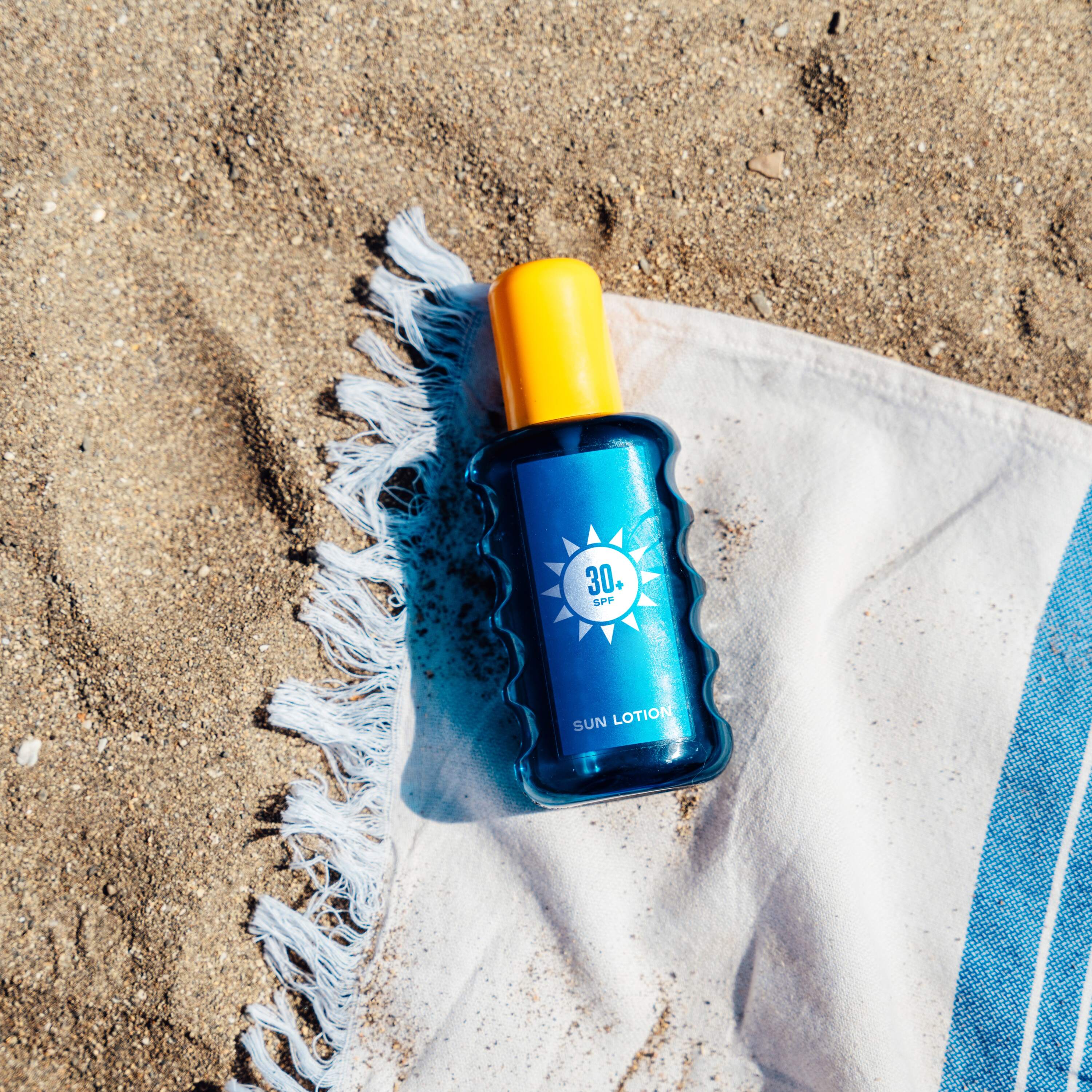
Yeah. Sasha. It's been over 25 years since the FDA approved a new ingredient for sunscreen in the U.S. but there is a promising candidate. A molecule called Gadusol. It's found in some fish and coral reefs. But if we want to incorporate this molecule into human sunscreen, we're going to need to make a lot of it. And a new study out this week in the journal Trends in Biotechnology takes us a big step closer.
- [02:19]
C
A molecule in fish and coral that is almost like built in sunscreen. How does that work?
- [02:25]
B
So it absorbs UV rays, protecting fish from getting sunburned. That's how chemical sunscreens protect us humans. Researchers discovered Gadusol in codfish eggs around 40 years ago, but it's also found in coral reef ecosystems, zebrafish, and salmon eggs.
- [02:41]
A
And in this study, researchers did a whole series of engineering experiments to make more of this superpowered molecule.
- [02:48]
C
I'm going to note that I'm really good about wearing sunscreen, but the few times I've gotten slightly burned, I'm in the water. And so it's interesting that the fish had this protection.
- [02:55]
B
They figured it out.
- [02:56]
C
So what kind of engineering experiments were done in this study?
- [03:00]
B
Well, they turned to the workhorse of biology labs everywhere. E Bacteria. Yeah. And they programmed the bacteria to pump out a bunch of Gadusol, which is a lot easier and more sustainable than trying to harvest it from other sources like fish eggs.
- [03:15]
C
And meanwhile, by the way, the fish don't have to slather or spray sunscreen all over themselves. It's just built in.
- [03:20]
A
So lucky evolution did that. Yep.
- [03:22]
C
All right, so now that researchers have figured out how to produce this stuff more efficiently, what are the chances it becomes an actual product on store shelves and when?
- [03:31]
A
Yeah, it'll be a while still. We talked to James Gagnon. He's a developmental biologist at the University of Utah, where he studies Gadrisol. He didn't work on this study, by the way, but he said future research will be needed to figure out how to mix this ingredient with all the other things that go into sunscreen to make it something you can spread on your skin. And then the FDA would have to approve it.
- [03:50]
B
But James thinks the study was a big step towards more Gadusol research and maybe even more research on the amazing properties of marine creatures.
- [03:58]
D
They've been facing the challenge of the sun hitting them since basically the origin of life on Earth. And so they've evolved a million amazing solutions we haven't explored. I think Gadusol is just the tip of the iceberg in this.
- [04:09]
A
Another big plus for Gadusol. James says it only absorbs harmful wavelengths, not visible light.
- [04:15]
D
So this opens the door to sunscreens that will not make you pasty white.
- [04:19]
C
So interesting. All right, now I want to know how the arts might affect aging. Tell us about that. 1.
- [04:25]
B
So researchers in the UK just published a study that suggests engaging in artistic activities weekly could slow aging to to a similar extent as mild exercise. Participants who sang, danced, painted, went to museums seemed a year younger. Biologically, yeah.
- [04:40]
A
And this finding comes from a study of more than 3,500 adults in the UK those results appear in the journal Innovation in Aging.
- [04:47]
C
And how are these scientists measuring whether you're biologically younger?
- [04:51]
B
Yeah. I spoke with lead researcher and epidemiologist Daisy Fancourt at University College London. She says that by looking at the participants DNA from blood samples, you can see the effects of a. So some older DNA strands are harder to read.
- [05:07]
A
So a bit like pages in a book getting sticky. And as we get older, there are particular patterns of sticky pages that tend to occur. The research team compared that biological data to survey data from the participants, where the participants shared what sort of activities they did and how often. The researchers found that artsy people who sang, danced, painted, and so on tended to have biologically younger looking DNA. Daisy thinks all of this might be because studies have shown engaging in the arts is known to lower stress, reduce inflammation, and is good for heart health.
- [05:40]
C
I think I need to pick up painting or something to try to slow my own.
- [05:43]
A
We should have a dance party right after this.
- [05:46]
C
But, you know, you can imagine I'm going to ask this. There could be other factors, like people who go to dance classes or museums may have more money, and more money can mean better health. And they also might have more free time, maybe less stressed out. So what about those factors?
- [05:58]
B
Right. I asked Daisy that too. And her team controlled for all of that and still saw these results. And their study did include a large socioeconomically diverse population of adults. And when reporting this, I also wondered if these results might be because people are often connecting with other people when doing these activities. So could these people just be healthier because they were more social? So Daniel Belsky, another epidemiologist I talked to who didn't work on the study, thought that could be a factor.
- [06:28]
A
People who report being socially isolated and lonely tend to exhibit a faster pace of aging than people who have richer social networks. So, Sasha, maybe call your friends or plan a date with your husband to go to the museum this weekend.
- [06:41]
C
He's not a big museum guy, but I'm gonna tell him that Regina and Emily told us to go. That's right.
- [06:45]
B
Science.
- [06:46]
C
Exactly. So your third one is about music. The band room, the marimba. Tell us about that one.
- [06:52]
A
Yes. So Amartya Bhattacharya was in 9th grade high school band when he discovered the marimba.
- [06:58]
E
I remember going into my school's room and hearing this beautiful five octave Yamaha rosewood marimba for the first time. Its tone is so rich and beautiful, especially on the low register, that at that moment, I fell in love with the instrument for what it is.
- [07:18]
A
The music you're hearing just now is the marimba. It looks kind of like a xylophone, though it's made of wooden bars. You play it by hitting those bars with mallets. And it comes with an enormous price tag. Prices range, but this five octave marimba costs $32,000, making it the most expensive instrument in Amartya's band room.
- [07:37]
C
What accounts for that price tag?
- [07:39]
B
Yeah, the biggest reason is the material for the wooden bars. The Honduran rosewood. This wood is responsible for that gorgeous sound, but has a very slow growth cycle and is the target of over harvesting, illegal logging, resulting in a highly restricted trade. All this drives up the cost of the marimba.
- [07:57]
C
So I hope someone is looking into alternative materials so we can still hear the music without compromising all wood.
- [08:03]
B
Definitely, yes. Now a rising second year at Northeastern University, Amartia developed a methodology for testing out 17 different woods, cutting them into bars, and testing three properties in particular, so their density, stiffness, and sustain. The sustain is what allows those notes to ring out.
- [08:20]
A
So Amartia ran his test and a lot of the alternative material sounded terrible. Here's bamboo plywood.
- [08:28]
B
Ugh.
- [08:29]
A
And here's a composite of wood and 3D printed plastic. But then he had a breakthrough. Here's cherry wood. Oh, and the best one, hickory.
- [08:41]
B
Oh, I like cherry better though.
- [08:44]
A
Hickory was the closest natural match to Honduran rosewood in terms of density, stiffness, and sustain, while being more affordable. Amartya presented these findings at the meeting of the Acoustical Society of America this week. And mind you, this research was not peer reviewed.
- [09:00]
C
I really love that he did this research.
- [09:02]
A
Yeah.
- [09:02]
C
So what could this mean for the band rooms of the future?
- [09:05]
A
Yeah.
- [09:06]
B
Amartya considers this an exploratory study in terms of what materials are out there and what has potential.
- [09:11]
E
I don't think, like the Boston Symphony Orchestra is going to take their rosewood marimba and throw it out and replace it with the hickory one.
- [09:17]
A
But he does hope that this study could someday make the marimba more accessible for everyone, especially student musicians in low income school districts. So, Sasha, are you going to be blasting some marimba music tonight in an effort to slow your aging?
- [09:31]
C
I mean, after hearing you play that instrument, I feel like I need to get to know it better.
- [09:34]
B
It was good. I liked it.
- [09:35]
A
Yeah.
- [09:36]
B
Sasha, thank you so much for coming on our show again and hanging out with us. Come back anytime.
- [09:41]
A
Yeah, we're gonna lure you like a fish.
- [09:43]
C
I can't wait. Let's do it in person again next time.
- [09:45]
B
And for more sign stories just like these, follow Short Wave on the NPR app or wherever else you're listening from.
- [09:51]
A
The app is honestly very cute. Download it right now. The news may not always be cute, but Short Wave is great.
- [09:56]
B
We're always cute.
- [09:57]
A
Yeah. We're really integrated with the app. You can use it to keep up with our show, but also to know what's going on in the world. Sign up for push notifications if you want to know when the latest Short Wave episode drops. This episode was produced by Rachel Carlson, Jordan Marie Smith, and Hannah Chin. It was edited by Rebecca Ramirez and Christopher Inteljada.
- [10:19]
B
Tyler Jones checked the facts. I'm Regina Barber.
- [10:21]
A
And I'm Emily Kwong. Thank you for listening to Short Wave, the science podcast from N.