Loading summary
Transcript49 lines
- [00:00]
Commercial Announcer
This message comes from Capital One. Say hello to stress free subscription management, easily track block or cancel recurring charges right from the Capital One mobile app. Simple as that. Learn more@Capital1.com Subscriptions terms and conditions apply.
- [00:19]
Regina Barber
You're listening to Shortwave from NPR. More than 60 years ago, the Soviet Union successfully launched the first man into space. Today, the number of people who've been to space is in the hundreds. Still, that's a far cry from widespread space travel.
- [00:38]
Ariel Ekblaw
I have been obsessed with the science fiction idea of humans living in space for a long time.
- [00:44]
Regina Barber
Ariel ekblah got her PhD in aerospace structure and design, a crucial step towards her dream of shifting space life from sci fi to reality.
- [00:53]
Ariel Ekblaw
Nowadays I go by space architect, thinking about the future of infrastructure in orbit.
- [00:58]
Regina Barber
Step 2. Ariel founded the company Aurelia with two other women, Danielle Dalot and Sana Sharma to get more people to space more often and for longer periods of time. She says the challenge now is building in space.
- [01:12]
Ariel Ekblaw
The bottleneck isn't rockets anymore, it's real estate. It's trying to get bigger volumes of space stations in orbit.
- [01:18]
Regina Barber
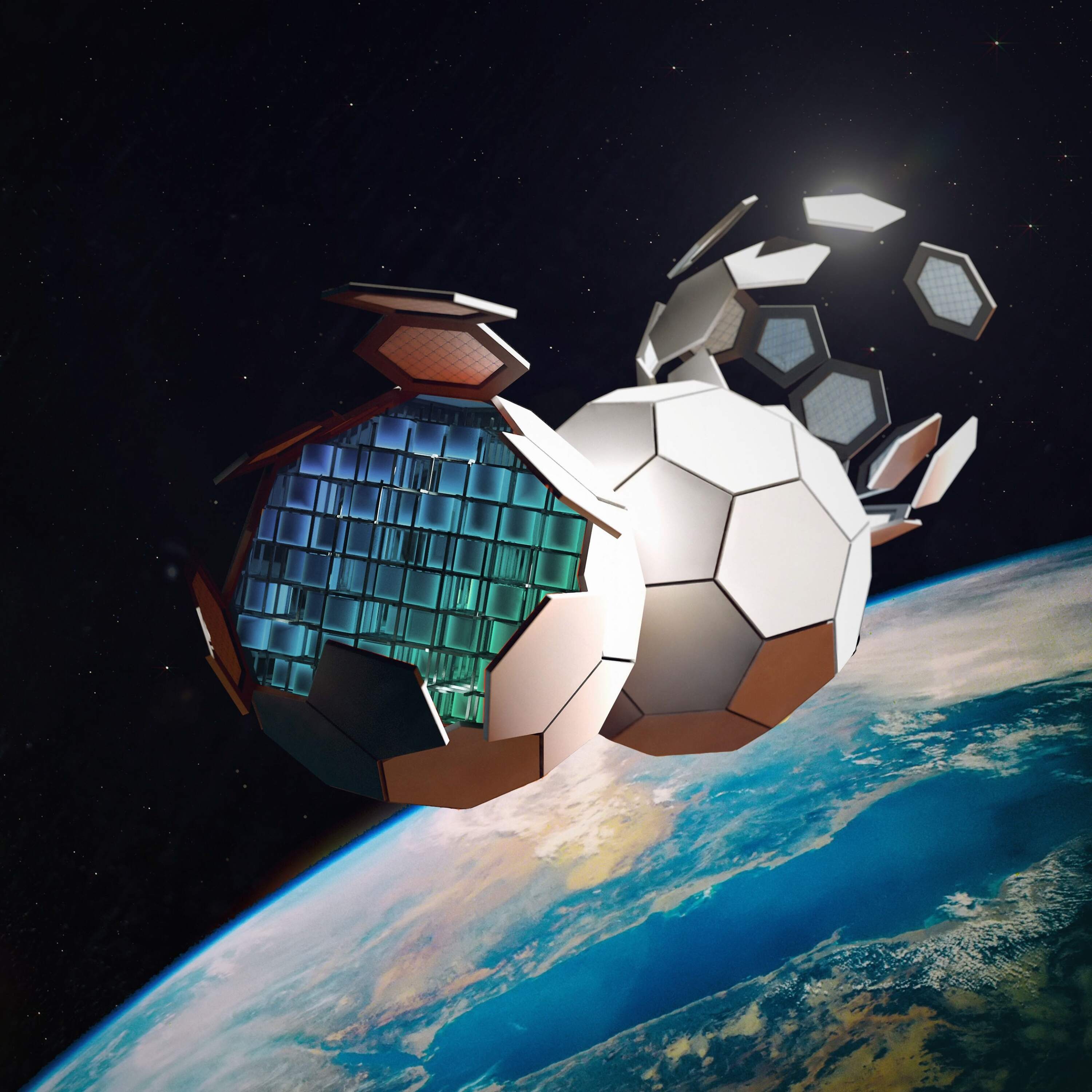
Her solution? The equivalent of magnetic Legos in space called tesserae structures that would self assemble into large livable structures in orbit. And Ariel says the reason she's so excited for more humans to live in space isn't to escape the Earth.
- [01:33]
Ariel Ekblaw
I love Earth. Earth is the best home we'll ever have. One of the things we're most excited for in the space context is can we off world heavy industry? Don't off world the humans. Let them have a beautiful existence on Earth. But off world the heavy industry and slowly let Earth recover as a garden planet.
- [01:51]
Regina Barber
Today on the show, constructing buildings in space to build a better Earth. From creating microgravity laboratories and harnessing unfiltered solar power to fabricating large human dwellings in space, we get into why yesterday's sci fi could be tomorrow's reality. I'm Regina Barber and you're listening to Shortwave, the science podcast from NPR.
- [02:17]
Ariel Ekblaw
Foreign.
- [02:20]
Commercial Announcer
This message comes from LinkedIn ads. One of the hardest parts about B2B marketing is reaching the right audience. That's why you need LinkedIn ads. You can target your buyers by job title, company role, seniority and skills. All the professionals you need to reach in one place. Get a $250 credit on your next campaign so you can try it yourself. Just go to LinkedIn.com nprpod that's LinkedIn.com nprpod Terms and conditions apply only on LinkedIn ads.
- [02:53]
BetterHelp Announcer
This message comes from BetterHelp the holidays are a time of traditions, like making your grandmother's pudding recipe or watching that movie you've seen a thousand times. Incorporating therapy into your life can help you take time for yourself during what can be a joyful but sometimes tough time of year. And by caring for yourself, you can show up more for the important moments. This December, start a new tradition by taking care of you. Visit betterhelp.com NPR for 10% off.
- [03:22]
Commercial Announcer
This message comes from NPR sponsor Veeam. AI promised intelligence, but it also exposed everything people couldn't see. With Veeam and Security AI, you can see your entire data estate in real time. Learn about accelerating safe AI at scale@veeam.com.
- [03:40]
Regina Barber
So Ariel, during your PhD, you designed a tesserae, which is a self assembling building unit you created for living in space. How does this work?
- [03:50]
Ariel Ekblaw
So if you think about how space structures have been built in the last 20, 30 years, it's typically aluminum that gets pre built and welded on the ground and then it has to be squeezed into a rocket, has to fit inside. What we developed at MIT that we call tesserae are basically like split space Legos that have powerful magnets on their edges. When those Legos, these modular pieces are released in space, they float together. That's because they're in microgravity. They're basically in free fall around a planet. We have videos from inside the International Space Station. We've tested the prototypes twice now. We're about to go back to the ISS in early 2026.
- [04:29]
Regina Barber
Like smaller versions of them.
- [04:32]
Ariel Ekblaw
Exactly. Prototypes that help us test the algorithm of self assembly, test the energy required to pulse through the magnets in addition to coming together. It's a self correcting system. So the tiles have essentially like AI built into the pieces themselves, into the hardware, and they can decide if they bonded correctly. And we were really inspired by biomimetic systems like how proteins and DNA self assembles in the body and can correct itself.
- [04:57]
Regina Barber
Oh, wow. This name actually comes from like an art process, right, where like it's mosaics, I think in like in Roman times. Is that where this name came from or is it an acronym?
- [05:10]
Ariel Ekblaw
It's both. So I went on this amazing trip and we had an incredible opportunity to help restore ancient Roman mosaics. And we learned about tesserae, these tiny little tiles that make up the bigger mosaic. And I came home incredibly inspired to make my work fit in that word. Yes, it's a terribly tortured acronym. Never going to do this again.
- [05:29]
Regina Barber
No, this is what you do when you're in science.
- [05:31]
Ariel Ekblaw
Exactly. You got to lean into the nerd dub. So it stands for Tessellated electromagnetic Space structures for the Exploration of Reconfigurable Adaptive Environments. Tell me that's too much. I know it is.
- [05:48]
Regina Barber
You got it, you got it? No. So what are the hurdles that still exist to, like, getting this up and running in space?
- [05:55]
Ariel Ekblaw
Yeah. So when you have a modular system like this, you have a lot of seals that have to really work well to be able to, for example, use it as a habitat to keep air pressure inside. So we're designing a system of gasketing or clamps that would actually bring the structure in together and hold air pressure. And then the second of many things we think about is how do we protect the human crew that's inside this big bucky ball. So we're also thinking about the shielding that's required to provide good radiation protection.
- [06:26]
Regina Barber
Your company has also talked about how space structures can be used for things like agriculture or manufacturing. How would that work?
- [06:34]
Ariel Ekblaw
Yeah. So one of the interesting things about deep space exploration is we're going to have to be able to grow our own agriculture. We have to be able to be self sustaining in a future space station. And this actually does still come back down and benefit life on Earth. In that example of our kind of mission driven work that's focused on Earth first in areas that are torn by natural disasters or really resource constrained environments, there's a lot that we can learn from space agriculture and then be able to take some of those lessons down to Earth. We just did a big space garden project with Daikin, one of the world's largest H vac companies, thinking about how do you keep air humidified? How do you keep it at the right temperature in an extreme environment? How do you get CO2 out of the air and turn it into oxygen for humans or the opposite for plants? Right. Plants need CO2. So we're working with some exceptional partners to put together this notion of a space garden. How would we actually do plant growth in orbit? And then brought this to the Venice Architecture Biennale earlier this year.
- [07:34]
Regina Barber
That is amazing. So this kind of work would, I assume, require workers like, do you envision people farming and doing shift work in orbit?
- [07:45]
Ariel Ekblaw
Yes, I think there's a mix. It's going to be humans and robots working together. So we call this human robotic interaction, or the symbiosis between humans and robots in the future. We're already thinking about things like AI data centers in space, partly to get the carbon footprint of those installations off of Earth. But also to get really abundant green energy to those installations. And so a company that we spun out of our work at Aurelia, called Rendezvous Robotics, is taking the test array work forward to be able to do things at that scale without humans involved. But on the habitation side, yes, I think we will have humans. I think we're a critical part of exploration, what it means to find new knowledge for the sake of new knowledge and explore this frontier. So I think it'll continue to be a mix of humans and robots.
- [08:32]
Regina Barber
So would the workers live their lives up there eating, sleeping, and working, or would they be commuting?
- [08:40]
Ariel Ekblaw
I anticipate that the workers are less likely than people think from science fiction to actually live in space. Steady state. Turns out it's quite hard to live in microgravity. Your bones get weaker, your heart gets weaker, your shape of your eyeball changes. And so what really, I think, makes more sense is that we think of these installations in low Earth orbit, for example, close to Earth or between Earth and the Moon, as places where you commute to do your work, to do the really special thing that calls you to orbit. But when you're done with that, if it's two weeks or three months or six months, then you come back down to Earth and you still live your life on Earth. There is, of course, a farther out future where we've actually figured out artificial gravity, which is when you spin a habitat gingerly so you don't make people sick, but you spin it a big enough one at a slow enough rate that you can actually get close to Earth's gravity. And then it's healthier for people to live in orbit for long durations. But in the near term, I think it'll be more like commuting to space than living in space.
- [09:40]
Regina Barber
So when I think about commuting, commuting now is like not the best for the environment. So what about commuting to space? Is that going to affect our environment as well?
- [09:51]
Ariel Ekblaw
This is a really important question for the space industry because at this particular moment, there's not a significant carbon footprint from the space industry compared to, say, commercial aviation. But if we succeed in all of these launches, we very well may scale up to the point where it's significant. So there's already some great research into cleaner types of rocket fuel to make sure that the prevalence of launches, if we get a higher frequency of launch cadence off of Earth, that it doesn't contribute to a really serious additional carbon footprint.
- [10:22]
Regina Barber
So if there are a lot of launches, like people are commuting up into space. How are we going to deal with space junk and debris?
- [10:29]
Ariel Ekblaw
Space debris is one of these really important problems that we're facing in the space industry. It's an early tragedy of the commons from all the prior launches that have gone up. There's a couple different ways to deal with it. One, we have to stem the tide. So we have to have really responsible actors who are no longer contributing to additional debris. The FAA made a ruling that any new objects that are launched to space have to have a provable deep orbit plan. You have to convince the FAA that your object is going to burn up completely on reentry and be incinerated. So it's not going to contribute to space debris. The other project is to remediate and so go and actually clean up the existing debris. And there's some really cool ideas. Think Pac man in space. Basically going through with a net or big magnet with some ability to collect over time enough debris that you have enough mass that you begin to feel the effect of drag in the atmosphere and you'd be pulled in and be able to burn up on reentry. Space is very vast, so even the debris amount that we have now is not hindering us from doing space launches, but we absolutely need to clean it up.
- [11:34]
Regina Barber
Speaking of environmental issues and space and junk and pollution, you're exploring building solar panels in space, in low earth orbit, like basically where the International Space Station is. How would that work?
- [11:49]
Ariel Ekblaw
So this is where Rendezvous Robotics comes in again. This is our startup that's focused on how do you self assemble things that aren't habitat related, that are big, flat, massive, and would have a really important near term function like being a solar panel or being a radiator. It would be way too slow and dangerous to ask a human to go out in an EVA suit, which is what we call an extra vehicular activity suit, and go do that by hand, which is how a lot of the International Space Station was built, which is wild. And we also don't want to rely on a robotic arm. Too slow, too much risk that it would bump or with too much momentum.
- [12:24]
Regina Barber
Yeah, it's too fragile.
- [12:25]
Ariel Ekblaw
Yeah, exactly, it's too fragile. So we really need all these pieces to be able to come together. Not all at one time, but gradually attaching to each other, build out a big field, you know, the size of maybe several football fields worth of solar panels. We're super excited to be working with companies that are thinking about the future of space space based solar power. Thinking about how do you capture raw unfiltered sunlight above the clouds, way more efficient. Concentrate it and beam it down to Earth. You could have New York City powered at night by a beam from space.
- [13:00]
Regina Barber
Now that you say it's a beam, I'm less scared because when I saw that in making areas of Earth have light when it is nighttime can be dangerous. Right? Like you could alter seasons, you could mess up ecosystems, could mess up circadian rhythm. But you're talking about an actual beam, which sounds kind of super villainy too. So how are you thinking about some of these issues that might be a problem?
- [13:27]
Ariel Ekblaw
Yes, this company Overview Energy has basically figured out a way to do it very safely. So like you said, it's a concentrated beam. So it's not going to light up the city, it's not going to affect animals, it's not going to affect kids, homes, seasons. Yeah, not going to affect seasons. It's essential something that you would beam down onto maybe even existing solar panels. And then they also control the energy of it so that a plane can fly through it.
- [13:52]
Regina Barber
So it doesn't overload it too.
- [13:53]
Ariel Ekblaw
Yeah, exactly. So it doesn't overload it. It is not a concentrated thing that could cause any damage. So it doesn't basically require a air traffic control keep out zone, for example. And this is an incredible innovation that we've known how to do in some way since the 1970s, but it wasn't cheap enough until recently when the cost to get to space have dropped so dramatically to begin to make this a reality.
- [14:19]
Regina Barber
So how feasible is this? Like if you were. Give me a timeline.
- [14:22]
Ariel Ekblaw
I think inside five years they're going to have power beaming demos from orbit. They just did an airplane based power beaming demo. So they showed that it could do it as they're moving in a plane. So I think within five years they'll have power beaming from space certainly. And 10 year mark, you're thinking about power utilities from space, fundamental green energy and much more abundant. That's a much more profoundly clean way to deliver energy to the global south as they start to industrialize even further rather than needing to rely on fossil fuels or some of the ways in which, you know, other nations came up through industrial energy use. So I think there's a really interesting twin opportunity between Earth and space there to act as ethical space faring and Earth based citizens.
- [15:10]
Regina Barber
Ariel, thank you so much for talking with us today about building in space.
- [15:15]
Ariel Ekblaw
Thank you so much for having me.
- [15:19]
Regina Barber
Short wavers. I know every podcast everywhere asks you to follow them and for good reason. For us, as a show on a public media budget. One of the best ways you can help us grow, grow, survive and thrive is to follow us from wherever you're listening. We appreciate you. If you like this episode, check out our Space Camp series listed in the show Notes. This episode was Produced by Burleigh McCoy, edited by our showrunner Rebecca Ramirez, and fact checked by Tyler Jones. The audio engineer was Kwesi Lee. Beth Donovan is our vice president of podcasting and I'm Regina Barber. Thank you for listening to Short Wave from npr.
- [16:08]
Commercial Announcer
This message comes from Greenlight Parents say financial literacy is the hardest life skill to teach. Greenlight's debit card and money app for families makes it easy for kids to learn to earn, save and spend wisely. Start today risk free@greenlight.com NPR this message comes from Vanta. What's your 2am security worry? Is it do I have the right controls in place or are my vendors secure? Enter Vanta. Vanta automates manual work so you can stop sweating over spreadsheets, chasing audit evidence and filling out endless questionnaires. Their trust management platform continuously monitors your systems, centralizes your data and simplifies your security at scale. Get started@vanta.com that's V A N T.
- [16:55]
BetterHelp Announcer
A dot com this message comes from Mint Mobile starting at $15 a month, make the switch at mintmobile.com Switch $45 upfront payment for 3 months 5 gigabyte plan equivalent to $15 a month. Taxes and fees extra first 3 months only. See terms.