Loading summary
Transcript33 lines
- [00:01]
A
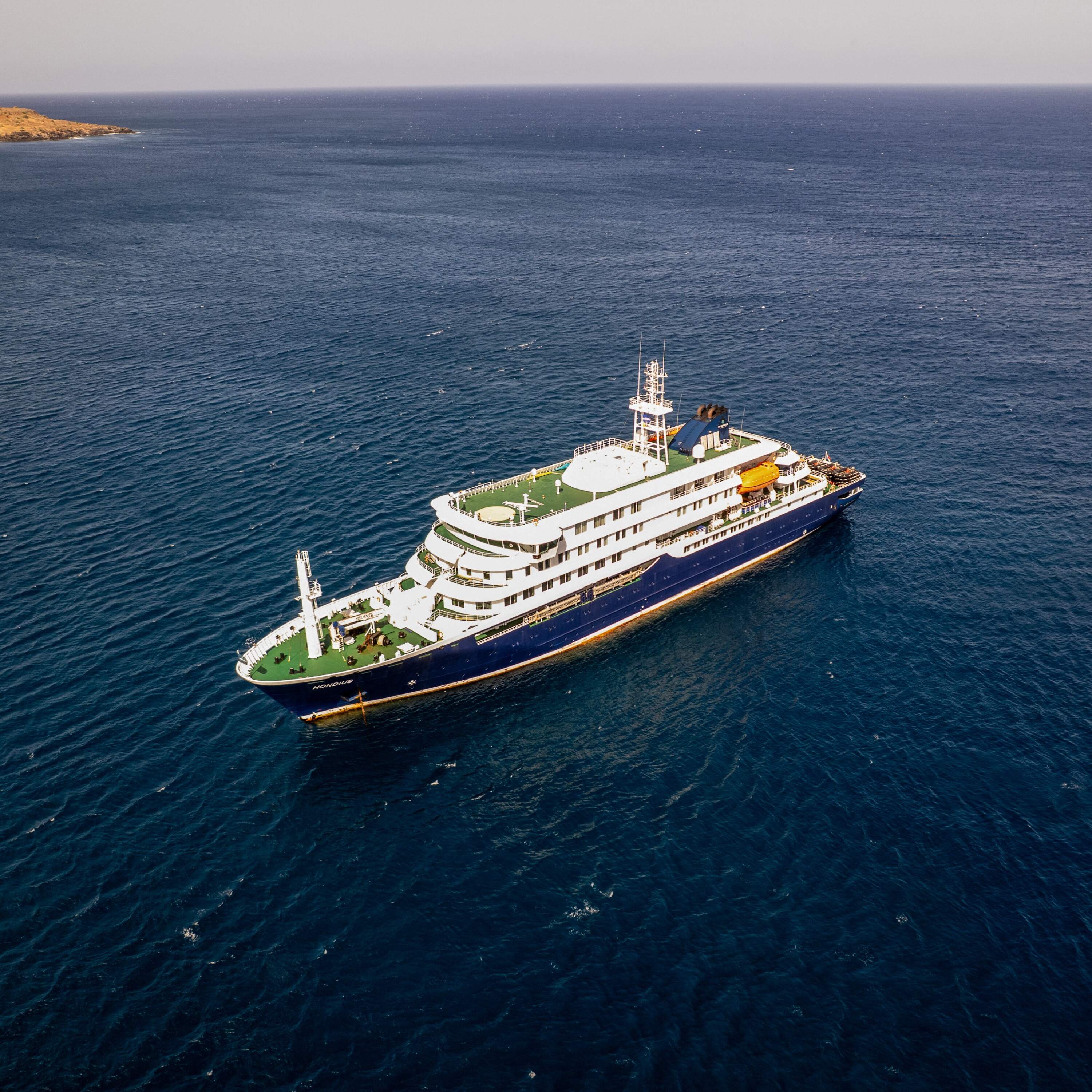
This week on the NPR Politics podcast, President Trump has never been more unpopular and the midterms are now less than six months away. So the intensity of opposition that's waiting for a lot of these Republican candidates in a general election is very, very high. The politics of a wartime economy this week on the NPR Politics podcast, Listen on the NPR app or wherever you get your podcasts. You're listening to short wave from NPR. On May 2, the World Health Organization got an alarming report that a ship in the South Atlantic was in trouble and multiple passengers aboard were severely sick with symptoms that seemed flu like but more serious. Some cases eventually evolved into a respiratory illness. And as of this recording, Thursday afternoon at 4:00 Eastern, three people have died. And experts have confirmed at least some of those cases were caused by hantavirus. Some passengers have since been medically evacuated, but the rest are still on board, socially distancing. Jake Rosemary is one of them and posted a video to social media.
- [01:10]
B
I am currently on board the MV Hondius.
- [01:14]
C
And what's happening right now is very real for all of us here. We're not just a story. We're not just headlines. We're people, people with families, with lives, with people waiting for us at home. I can't even imagine the stress.
- [01:37]
A
Emily Abdallah is an infectious disease doctor at the University of Michigan, and she's been following the news.
- [01:43]
C
I had never heard of hantavirus associated with a cruise ship before.
- [01:48]
A
Hantavirus infections are rare, but they can become very serious depending on the strain of hantavirus, which is often transmitted from rodents to people. In the U.S. there were only around 900 confirmed cases of hantavirus between 1993 and 2023, the vast majority occurring in the Western U.S. 35% of those cases resulted in death. In medical school, Emily remembers being taught that people are usually exposed to hantavirus in rural places. The classic example is a remote cabin that's been locked up for the winter now infested with mice.
- [02:23]
C
It gets opened up for the spring and summer camping season and humans are exposed to the droppings and the urine of the rodents and then come down with hantavirus. And so the first thing that I really thought about is not knowing the timeline of the symptoms and how long folks had been on the ship. You know, is the ship infested with rodents?
- [02:52]
A
And as timeline details of this ship started to emerge, Emily had one big question.
- [02:59]
C
What species of virus is it? Because only one has been shown to potentially cause transmission in humans.
- [03:11]
A
Today on the show, Hantavirus and why it can be so deadly, plus how at risk you are at home and. And what you can do to protect yourself. I'm Emily Kwong, and you're listening to Shortwave, the science podcast from npr. I am here with Emily Abdallah to talk about what's happening on this ship and hantavirus. Emily, I understand hantavirus is from a group of viruses that come from rodents. How does hantavirus get passed on to humans?
- [03:46]
C
So typically the rodent is infected. It's not very much affected by this virus. And it can carry the virus for a long time and get transmitted between the different rodents. And they excrete hantavirus particles in their urine, in their droppings, and in their saliva. So most cases are from humans getting exposed to the rodent droppings. So they'll be sweeping up the rodent droppings and the virus particles get aerosolized. More rarely, it can come from rodent bites, but it's often being exposed to the droppings that get air sliced. Cause they get dried out and then they can more easily spread in the air.
- [04:36]
A
That's really tough. Cause people who are cleaning the rodent droppings are trying to do the right thing. They're trying to clear it. But you're saying the hantavirus can, if you're brushing with like a broom, it can fly up into the air and persist and get past to people.
- [04:51]
C
Yes. If there are droppings in urine, you want to wear a mask when you're cleaning them. And as much as you can, wet them down, because when they aren't dried, they have less potential to aerosolize or go into the air. And we get this from inhaling the viral particles. In fact, when we look at cases in the Americas, from what I understand, a lot of the cases are in younger people of working age who are doing agricultural work. And so in some parts of the world, that's more men than women who are in sheds and barns and sweeping things up.
- [05:31]
A
Okay. Yeah. And there is one known strain of hantavirus that after someone is exposed to the bodily fluids of a rodent, could spread from that person to other people. It's called the Andy strain. And the WHO confirmed Wednesday this is the strain that is aboard the ship. What were some of the early signs that experts were tracking?
- [05:50]
C
The WHO started releasing some information about the timing of symptom onset. And what's really interesting to me is that the first patient who fell ill had been traveling in South America, including in Argentina, before the ship left on April 1. The first report of symptoms in that person was on 6 April. Now, most cases of hantavirus that I've heard about and what they report in the medical literature is that the incubation period from the time you're exposed to the infectious disease until you manifest symptoms is usually one to six to eight weeks for hantavirus. So this person got on the ship on the first and had symptoms at least by the sixth. And that's really fast. But it's just at the razor's edge and even a little sooner where one starts to wonder that this person was exposed before they got on the ship. And then this person, unfortunately passed away shortly after the onset of their severe symptoms on 11 April. The next person, who as I understand was a very close contact, and I think if you look in some reports, the spouse of the person who passed away on the ship, the second person was first reported to have symptoms on April 24th. So that is several weeks after the onset of symptoms of the first person. And in my reading of these cases of human to human spread, it's often when the person is symptomatic that they have been shown to transmit to other people. So given that gap and that timeline and then the others who have fallen ill, it's been, from what I understand, what's been reported mostly around the 24th or 28th April. That's a several week jump from when the first person developed symptoms on the 6th of April.
- [08:00]
A
Okay.
- [08:00]
C
And I think you're seeing that possibility play out in how they're responding in terms of the public health interventions they're doing like contact tracing and quarantining, contact tracing, isolation, quarantining.
- [08:15]
A
Do we even know there will be more cases that emerge on the ship?
- [08:19]
C
So I think part of the question about more cases is not just the possibility of human to human spread, but I think it's still remains a possibility that there was some exposure on the ship to animals or rodents or to some commonplace folks stayed prior to getting on the ship. So in addition to contact tracing, the epidemiologists on the ground are figuring out when did people arrive in South America? Where were they before? Where did they travel? Where did they stay? Where were they situated on the ship? So I think, you know, it's a very nosy job, but it's a very important job because you need to ask people all kinds of questions to figure out what is more common in the people who ended up developing infection.
- [09:13]
A
So passengers on the ship, some have evacuated, but most are still aboard and they have been advised to practice maximal physical distancing and remain in their cabins whenever possible to reduce transmission. Because this andi strain of hantavirus can progress into something really bad. We've seen that. So what can this strain of hantavirus turn into?
- [09:33]
C
So hantavirus pulmonary syndrome. Hps, that's predominantly in the Americas. And it's named to really let us know that it is predominantly impacting when it becomes severe, the lungs and the heart. Okay. It starts out with those sorts of symptoms that we would just call like a flu like illness, like fevers, myalgias or muscle aches, joint aches, headache, and then it progresses to a severe respiratory illness, basically respiratory failure, or it can. And so if you look at it from a very basic science standpoint, how the infectious particle impacts the human body, it basically affects the capillaries and it causes them to become leaky. And the mechanisms for that aren't understood. But in the Americas, for severe disease, that leak is in the lungs.
- [10:32]
A
Wow. Okay. So with hantavirus pulmonary syndrome, the worst outcome is if it turns into something in your lungs.
- [10:40]
C
The lungs. And the heart.
- [10:42]
A
And the heart. And that's where you get these very high mortality rates, between 30 and 50%.
- [10:48]
C
Exactly. These are folks who need ventilators, and in some cases they need ecmo. What's that? Sort of like a heart lung bypass machine. Extracorporeal membrane oxygenation. It's a way of bypassing both the heart and lungs to keep the blood oxygenated, to keep oxygen going to the body's tissues.
- [11:09]
A
Okay. Given that viruses know no borders.
- [11:13]
C
Yes.
- [11:14]
A
What do you think about the fact that earlier this year, the US Officially pulled out of the who?
- [11:19]
C
I believe in public health. I have immense respect for public health officials and for those on the ground epidemiologists. And these folks are essential. They are essential to keeping us safe because infections will keep emerging and re emerging and we need. It can't just be about the physician with the patients in front of them. To protect the public, we need a broader response, which is public health. And we need to coordinate at a global level, because infections are global. People travel. The vectors, you know, the animals and insects that carry these infections travel. They get on ships, they get on planes, people move around. And it's has to be a global response. And we have to work together to coordinate, especially in our very global world. So I think that working at that international level is critical. I think local public health is critical and everything in between.
- [12:29]
A
Dr. Emily Abdallah, thank you so much for talking to us.
- [12:32]
C
This was delightful to join you today and just thoughts with the people on the cruise ship and their families and with the public health officials helping to keep everyone safe.
- [12:51]
A
If you liked this episode, please share it with a friend. And while you're at it, follow Short Wave on the app you're listening to so you never miss an episode. This episode was Produced by Burleigh McCoy and was edited by our showrunner, Rebecca Ramirez. Tyler Jones checked the facts. Jimmy Keeley was the audio engineer. I'm Emily Kwong. Thank you for listening to Short Wave, the science podcast from npr.
- [13:22]
B
This message comes from Thumbtack Avoiding your unfinished home projects because you're not sure where to start. Thumbtack knows homes, so you don't have to don't know the difference between matte paint, finish and satin or what that clunking sound from your dryer is. With Thumbtack, you don't have to be a home pro, you just have to hire one. You can hire top rated pros, see price estimates and read reviews all on the app. Download today.