Loading summary
Transcript87 lines
- [00:01]
A
You're listening to Short Wave from npr. Hey, short Wavers. Emily Kwong here with Angela Zhang, a reporter who's been on our team for the last few months through the Stanford Health Equity Media Fellowship. Hey, Angela.
- [00:14]
B
Hey, Emily. Hey.
- [00:16]
C
So lately, I've been biking to work, and I've been getting stuck behind the trash truck that comes down my street, and I'm trying to dodge a smell, which is a fun time. But I've also been wondering, where does all of this trash even go?
- [00:27]
A
I. I assume it goes to a landfill, right?
- [00:29]
C
Well, that's what I thought at first, too, but in some places around the country, a portion of our trash goes to an incinerator.
- [00:35]
A
Wait, so our trash is getting burned?
- [00:38]
C
Yeah, it's getting burned. About 12% of the trash we generate in the United States gets sent to these plants called waste to energy facilities. They convert the energy they get from burning the trash into actual electricity that we can use on our grid, which is kind of wild to me.
- [00:53]
A
And the conversion of this waste to energy, is this a new technology?
- [00:58]
C
Not really. So people have been burning trash for a long time? Like, New York City had trash incinerators way back in the 1800s.
- [01:05]
D
And I remember this, when I was a kid, you would take your garbage and throw it down a chute that was next to the elevator shaft, and that was literally just burning it.
- [01:13]
C
So that's Marco Castaldi. He's a professor of chemical engineering at the City College of New York. So burning the trash, not new, but using the burning process as a deliberate source of energy. That's newer since. Since the 1960s.
- [01:26]
A
Hmm. And to be clear, we no longer have incinerators in residential buildings, correct?
- [01:30]
C
Yes. You're not carrying your trash to the incinerator in your building.
- [01:34]
A
At least last time I lived in New York. This is not a thing.
- [01:37]
C
Yes. Still, Emily, not everyone's a fan of waste to energy. There's actually this big counter movement of advocates that have successfully shut down plants all over the country. I talked to Jessica Roth, who's part of the Global alliance for Incinerator Alternatives, or Gaia.
- [01:52]
E
Waste to energy, quote, unquote, is the most expensive and the dirtiest way of generating energy that we have. It's incredibly inefficient. They keep saying that this is an important piece of the puzzle, and in fact, it barely makes a blip on the radar.
- [02:08]
A
Today on the show, we dig deeper into the story of where our trash goes. How does an incinerator work? And is the story as clean as it looks? You're listening to Short Wave, the science podcast from N.
- [02:27]
F
This message comes from Integrative Therapeutics, makers of Cortisol Manager. Daily stressors come and go, and heightened stress can affect sleep and focus. Cortisol Manager helps support a healthy response to everyday stress. Available at Amazon.com, use code STRESS2026 for 20% off. These statements have not been evaluated by the Food and Drug Administration. This product is not intended to diagnose, treat, cure, or prevent any disease. This message comes from Midi Health, a virtual care platform for women in perimenopause and menopause. Chief Medical Officer Dr. Kathleen Jordan shares the wide range of symptoms they work to address for women in midlife. There's dry eyes, dry hair, dry skin. There's dry mouth, trouble sleeping, panic, and anxiety attacks.
- [03:13]
C
When we ask patients about common symptoms,
- [03:16]
F
on average, they report six MIDI Health committed to helping women in midlife with perimenopause and menopause care. Accessible via telehealth visits@joinmidi.com so, Angela, we
- [03:30]
A
are talking about waste to energy plants. These are facilities that can burn our trash to create electricity. How do they work exactly?
- [03:39]
C
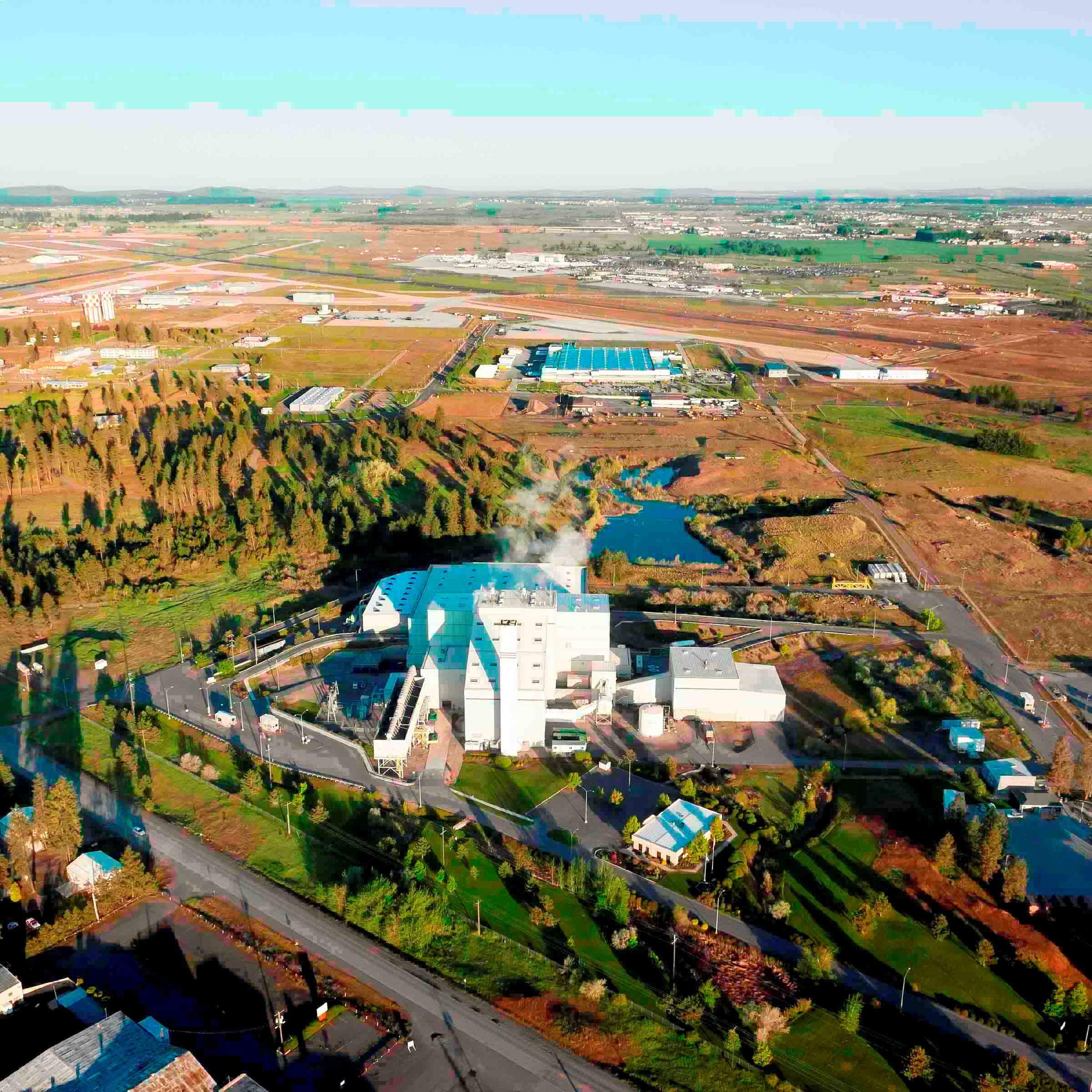
I didn't know the answer to this either, so I actually went on a trip to the Spokane waste to energy facility in Washington State to find out.
- [03:50]
B
So this is the furnace.
- [03:52]
A
Oh, wow.
- [03:52]
B
Okay, so like I said, that's over 2,000 degrees in there. Nice place to work in the wintertime.
- [04:00]
A
I bet.
- [04:01]
C
I met Chris Averitt there. He's a director in the public works division, and he took me on a tour of the facility to see the whole process. And this building was big, like nine stories tall. And as you heard, it was also really loud.
- [04:15]
A
Yeah, sounds loud.
- [04:16]
C
Also, he showed me something really cool.
- [04:18]
B
Those boxes are the Antarctica waste. A lot of times they'll be frozen, so we have to let them sit for a little bit to let them thaw out.
- [04:26]
A
Wait, what? Like the garbage sent from Antarctica generated by people at, I guess, research stations there?
- [04:31]
C
Who knew? Right. And the other thing, Emily, is there was so much trash constantly getting pushed and piling up against this, like, 40 foot wall. How many, like, days of trash do you think that is?
- [04:45]
B
That's about six days worth of trash.
- [04:48]
A
Wow.
- [04:49]
C
I mean, it's that complete floor to ceiling.
- [04:51]
B
Yeah, it gets a lot higher than this.
- [04:53]
C
Once the trash arrives at the facility, it's fluffed and dried and then it's put into the boiler to burn.
- [04:59]
A
Okay, how does all this get turned into energy?
- [05:02]
C
Well, the facility runs water in the wall next to the furnace, as the trash is burning and the water heats up and it becomes steam. And then the steam is processed through a turbine to make electricity, which I thought was like, a pretty cool process. But the facility also has to deal with what's left after all of the burning. The trash is reduced to ash. And then there are materials in it, like aluminum or other metals that can actually then be sent to recycling and be recovered.
- [05:29]
A
That's pretty cool. How much energy, though, are these facilities actually producing? Can I power my house with it?
- [05:35]
C
Maybe. The Spokane facility generates enough to power 13,000 homes each year.
- [05:40]
A
Besides the energy this is all creating, are there other reasons why pro incinerator people like this process?
- [05:46]
C
Well, for Spokanes specifically, the incinerator is the closest place to dispose of trash. It travels a shorter distance than if it went to a landfill. Also, Spokane sits on an aquifer, so the city didn't want to risk chemicals from landfills leaching into the water. Plus, in general, waste to energy facilities also reduce the amount of trash because after they burn the trash, the ash that's left over after is smaller in volume. And the facilities avoid methane, the major emission from landfills. Although, Emily, speaking of landfills, I do have to say they are much cheaper to send trash to.
- [06:22]
A
Okay, so incinerating trash is more expensive.
- [06:24]
C
Totally. So for dollar per ton of trash, it's much more expensive to send to an incinerator.
- [06:30]
A
Oh, okay. Let's talk about the chemical byproducts of all of this, Because I thought when you light trash on fire, it releases toxins. There's a lot of smoke. How do they manage that?
- [06:41]
C
Yeah, so open air fires definitely do that. And it's true that older incinerators might have also had a lot of these
- [06:47]
D
problems in, like, the 60s, 70s, and so on. When they were first built, there was not a lot of air pollution control systems. So you would see smoke, you know, material getting exhausted into the atmosphere. You didn't have controls on them, even for dust or particulate matter.
- [07:03]
C
That's Marco Castaldi again. I should also say that he's on the steering group for the Waste to Energy Research and Technology Council. That's a nonprofit headquartered at Columbia University. Marco says that systems for combustion and filtering have improved and they're able to better monitor the emissions that they're creating. That being said, there's definitely some toxic emissions that the facility has to deal with. First, there's the ash after the recyclables have been removed. And this ash is pretty nasty. It has chemicals like mercury and Lead. The other part is what you mentioned, the smoke and the gas, which contains a cocktail of chemicals. So the facility has to filter all of that out. And each facility might be a little bit different, but the one in Spokane injects chemicals to neutralize the toxins and then physically filters out the particulates in these giant fabric filters.
- [07:53]
A
That's pretty cool. These modern facilities. So how do the anti incinerator people feel about these innovations?
- [08:01]
C
They don't think it's enough.
- [08:02]
E
Just because industries started calling it waste to energy doesn't make it anything other than incinerations.
- [08:07]
C
That's Jessica Roth again from Gaia.
- [08:09]
E
Waste to energy was a way for the incinerator industries to get more funding to sort of perpetuate the myth that what they were doing was not harmful and that they should be continuing to operate.
- [08:22]
C
So Gaia is an international organization that was founded to advocate against incinerators. One of their main arguments is that incinerators produce toxic emissions that are bad for your health. So like we said, a cocktail of gases.
- [08:35]
A
But we just heard Chris say at the facility in Spokane that it's clean. Is Gaia thinking of older incinerators or open trash fires maybe?
- [08:45]
B
No.
- [08:45]
C
So they're talking about the same facilities. And this was surprising to me because I thought for emissions, like, we have numbers on that, right? Like the data says that they're high or they're not. The chemicals that the Spokane facility measures, they're all under the regulatory levels. And experts like Marco say that we have to be realistic about how clean something is really able to get.
- [09:05]
D
Anytime we're dealing with garbage or processes, there's going to be some emissions. So the regulatory framework for these waste to energy facilities have some of the most stringent limits, and these facilities operate actually below that.
- [09:23]
C
To be clear, landfills have been linked to some negative health effects as well. And that's what waste management experts kept saying to me, that there's just no such thing as zero risk. So when it comes to toxic chemicals from burning our trash, regulatory bodies set limits based on minimal risk.
- [09:39]
D
Really? You know, one could argue, okay, are those limits appropriate or not? And so on. That's a different discussion.
- [09:45]
C
But to environmental justice activists like Jessica, this is not a different discussion at all.
- [09:51]
E
The fact is, is that the emissions that come out of incinerators are really toxic and really dangerous. Like, I don't want the smallest amount of that in my living space, and I should be allowed not to have that. But I'm not if I live near an incinerator.
- [10:04]
A
So These two sides really don't agree on the safety of the emissions that are being created by incinerators. But shouldn't science help us prove this? Like, chemicals don't lie, so you can measure whether a chemical that's being created, emitted, has a certain health effect in an area. I mean, what. What does research show?
- [10:26]
C
So that was actually a really tough part to wade through. There are studies showing higher rates of asthma, cancer, birth defects in communities near incinerators. And then there are also studies showing the opposite, that the incinerators aren't linked to increases in health conditions, especially in newer incinerators with better technology. One paper even looked at the chemical level in chicken eggs near an incinerator. So that's how deep we're getting here. And sometimes these studies were even funded by the environmental justice organizations or by parties that are linked to incinerators.
- [10:57]
A
These are like dueling science swords. It makes it hard to figure out who's right.
- [11:01]
C
Right.
- [11:02]
A
This cacophony of scientific information representing different points of view.
- [11:06]
C
Yeah. So I searched all over for someone who might be able to speak to this as more of a third party. I found Peter Tait. He's a doctor in Australia. He did some systematic reviews of the literature, and he did find some papers correlating incinerators with health conditions like cancers, miscarriages, or birth defects. Okay. And some studies show that incinerator workers had more coughing and skin irritation than workers from other industries. So maybe that suggests some occupational exposure.
- [11:35]
G
Now we have to use these weaselly likely, maybe, possibly because there are potentially confounding factors.
- [11:43]
C
Peter says the best you can say is that incinerators have some potential for harm, but that there may be other reasons for the health problems in a community. Okay. Many of the largest incinerators are located near low income communities or communities of color. And these are communities that are already more likely to experience air pollution from highways or environmental risks from contaminated sites. And for the studies that don't show any health effects, Peter says that might be because some things like cancer and birth defects take a long time to show up. So it might take decades to manifest. Whether a newer, more advanced incinerator, whether that's associated with less harm.
- [12:20]
G
I don't think there has been enough exposure for long enough to be able to say so. Yes, proponents can say there is no evidence. But the problem is that a lack of evidence doesn't mean that you don't try and do the best available work to minimize risk of exposure and therefore risk of harm.
- [12:42]
A
Reducing harm has to be something everyone can agree on. So how should companies be communicating the potential harms of incinerators?
- [12:50]
C
Yeah, so Peter says that the companies that manage incinerators should consider and listen to the community. And this is really important because like we just said, a lot of incinerators are in lower income communities or communities of color and they often have less say in what gets built around them.
- [13:06]
G
Communities need to be allowed to make an informed decision about whether they want to wear that risk of whatever size it is on our general behalf.
- [13:18]
C
And if people do live near an incinerator, Peter says it's important for the industry to be transparent with them about the monitoring and emissions data.
- [13:25]
A
That would be cool. And while more research is being done about incinerators, at least I hope. Fingers crossed. Do we build more of them? Do we get rid of them?
- [13:35]
C
Yeah, it's hard to say. Right. But both sides were in total agreement about one we need less trash altogether.
- [13:43]
B
We don't want to keep generating more waste. We want to strive towards zero waste principles.
- [13:49]
E
The real answer is waste diversion and waste reduction and redesign and all of these upstream measures. By the time you're at the bottom of the chain, there are no good options.
- [14:03]
A
That is so interesting that they all agree we need less trash, including those who want to see incinerators be a trash solution in our communities.
- [14:13]
C
Yeah. And so they all agree, which kind of gives me hope. Right. There's no good way to get rid of trash and it has to be dealt with somewhere. But before you do that, always consider ways that you can reduce, reuse, recycle,
- [14:25]
A
or compost sticking in those alternatives to trash right at the end. Nicely done. Angela Zhang, Stanford Health Equity Media fellow, thank you so much for this reporting.
- [14:35]
C
Thanks for having me store Rivers.
- [14:38]
A
You know, there's no other show that will delve as deeply into trash as ours. So make us a part of your daily habit by following our show right now. Hit that little button and we'll come in with some more goodies tomorrow. This episode was produced by Hannah Chin and edited by our showrunner, Rebecca Ramirez. Tyler Jones. Chuck the Facts. Robert Rodriguez was the audio engineer. I'm Emily Kwong. Thank you for listening to Short Wave from npr. See you next time.
- [15:05]
B
This message comes from Lisa from Night One. You'll feel the difference. Premium materials that deliver serious comfort and full body support. Go to leesa.com for 30% off mattresses, plus get an extra $50 off with promo code NPR.
- [15:22]
F
Two hundred and fifty years ago, the nation's founders considered a free press a critical protection for we the people. Today, the NPR Network proudly upholds your First Amendment rights with reporting accountable only to you. It's something we protect together. Join the people who power the NPR Network by showing your support@plus.npr.org each story you hear on Planet Money starts with a question. What happens if we refund tariffs? Why are groceries so expensive? At npr, we stand for your right to be curious because the forces shaping our world can be hard to see. Follow NPR's Planet Money wherever you get your podcasts and start seeing how the economy really works.