Loading summary
Transcript53 lines
- [00:00]
NPR Sponsor Announcer
This message comes from Angie. Tackling a home project. Angie can connect you with pros who do such a good job you might ask them to be your kid's godfather. Don't do that. Just trust them to get the job done. Find a pro for your projects@angie.com that's a N G I dot com.
- [00:19]
NPR Station Announcer
You're listening to Short Wave from NPR.
- [00:24]
Nate Rott
Hey shortwavers. Nate Rodd here with updates on a daring rescue mission currently underway. One that rest assured if you haven't heard, has got all the workings of a good sci fi movie. Rockets, space robots and a very valuable telescope.
- [00:41]
Brad Sanko
Switch was designed to study these short lived flashes of high energy radiation we call gamma ray bursts.
- [00:47]
Nate Rott
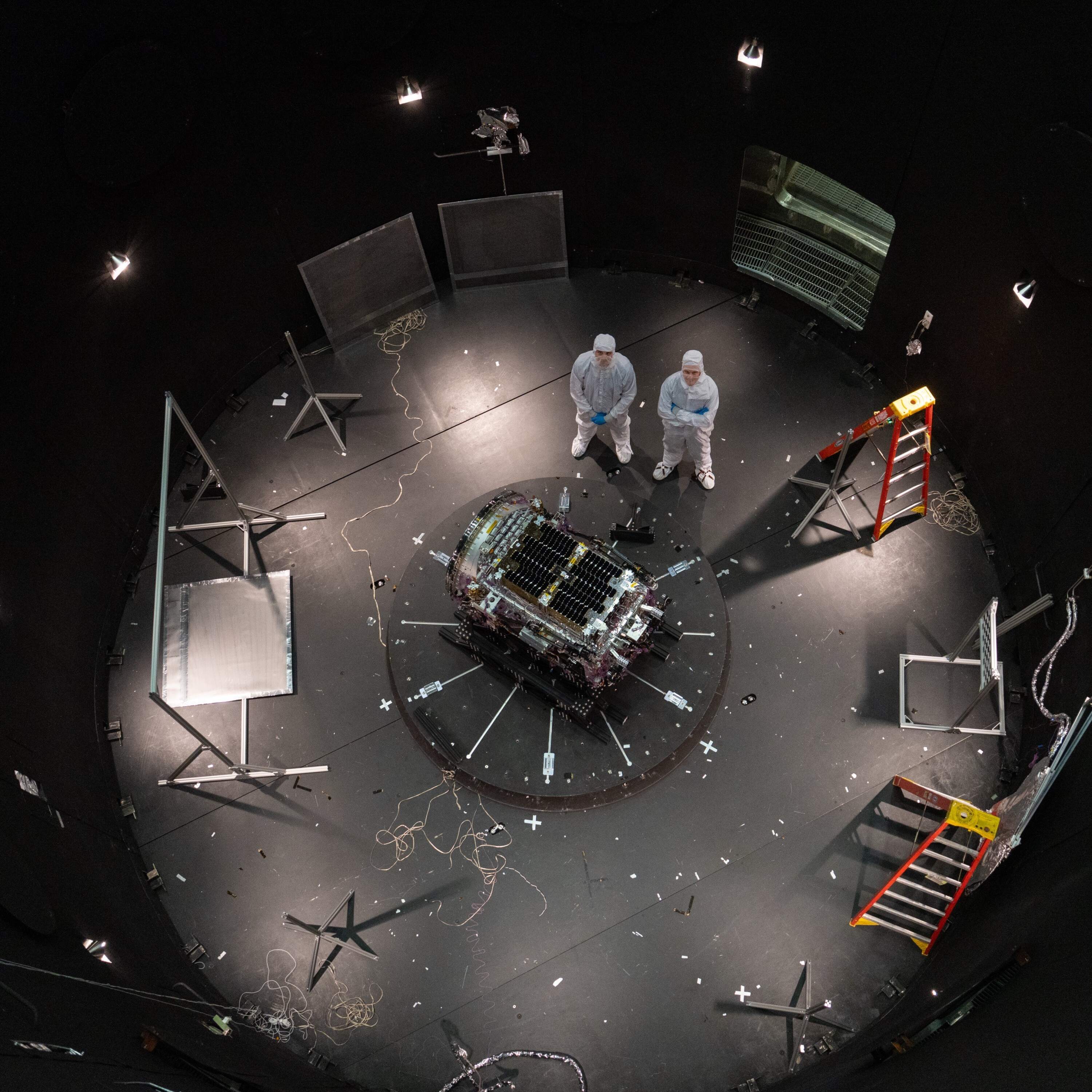
Brad Sanko is a research astrophysicist at NASA's Goddard Space Flight center and he's the principal investigator in the Neil Gehrel Swift Observatory, or SWIFT for short.
- [00:57]
Brad Sanko
Swift is a NASA astrophysics mission. It was launched in 2004. It has been doing fantastic science for over two decades now, but unfortunately it's come into a spot of trouble recently.
- [01:15]
Nate Rott
Swift operates in low Earth orbit, meaning there's still a little bit of atmosphere for it to contend with and atmosphere that causes it and all satellites at that altitude to lose speed, heat up and slowly fall back to Earth.
- [01:28]
Brad Sanko
But what's surprised us in the last few years is that the rate at which it has fallen has accelerated significantly
- [01:36]
Nate Rott
thanks to the sun.
- [01:38]
Brad Sanko
You may have noticed that the sun has been much more active in the
- [01:43]
Nate Rott
last year or two, causing colorful auroras that have been seen as far south as Florida.
- [01:49]
Brad Sanko
Those are beautiful. I've seen wonderful pictures, but every time I see one of those I cringe because every time the sun does that, it causes the Earth's atmosphere to puff up and that leads Swift to fall at a faster rate.
- [02:02]
Nate Rott
Brad and other scientists used to think that Swift could keep photographing the sky, expanding our understanding of the Universe until the2030s. Their latest calculations paint a much less
- [02:13]
Brad Sanko
colorful picture and and if we do nothing now, it will re enter the atmosphere probably by the end of this year.
- [02:21]
Nate Rott
Which is why NASA has partnered with an Arizona based startup to launch a refrigerator sized robot aptly named link, that's on its way right now to meet up with Swift to give it a boost today on the show, the first of its kind effort to save a telescope falling from the sky and how it might shape the future of space exploration. You're listening to Shortwave, the science podcast from npr.
- [02:54]
NPR Sponsor Announcer
This message comes from NPR sponsor Carvana. Carvana believes selling your car should be easy. Get a real offer down to the penny picked up from your driveway. You may keep waiting for a catch. There isn't one. Sell today@carvana.com pickup fees may apply. This message comes from NPR sponsor NetSuite. Don't want your business to fall behind because you're late to AI? Netsuite Next can help. Netsuite Next aims to be the next huge leap in how business gets done, because AI is built into everything you do. Try NetSuite next for free. If your revenues are at least in the seven figures, go to NetSuite AI Shortwave. Built for every industry, ready for every boardroom.
- [03:38]
NPR Station Announcer
This message comes from Integrative Therapeutics, makers of Cortisol Manager. Named Best overall Ashwagandha supplement by Vogue. Use code STRESS2026 for 20% off of Cortisol Manager on Amazon.com the Swift satellite
- [03:53]
Nate Rott
is descending faster than you guys anticipated because of the sun's proclivities, Right. So what's the plan to try to get it back up there and keep doing its thing?
- [04:04]
Brad Sanko
So on Friday, a rocket was launched from the belly of an airplane that took off from the Marshall Islands. That rocket was carrying the Link spacecraft in its nose, went up into orbit close to Swift, and everything is working well, all the systems on board. That will continue for another week or so. At that point, Link will then begin its slow approach towards Swift. Over the period of a couple of weeks, it will attempt to sync up its orbit with Swift, get closer and closer, push Swift into a higher orbit where it can continue to conduct its science observations, and then ultimately Link will let go, drop down to a lower altitude, and burn up in the atmosphere.
- [05:01]
Nate Rott
Okay, so you're launching a spacecraft that is going to grab on to this observatory and literally boost it further out of the atmosphere.
- [05:10]
Brad Sanko
That's exactly right. It has these three robotic arms that come off of the end. I think of them almost like lobster claws. They just know are designed to pinch and grab hold at three stable points on the bottom of Swift. Once they have established a firm grip and the ability to control Swift, they have an electric propulsion system that will allow it to, over the course of several months, gently push Swift up to a higher orbit so that it can then continue its science observations.
- [05:46]
Nate Rott
A Swift lift, if you will.
- [05:49]
Brad Sanko
Absolutely. We've definitely been playing on the Swift themes for some time. It's called that because it can slew very rapidly to repoint its sensitive X ray and UV telescopes anywhere on the sky within a few minutes, which is a very unique capability in the NASA astrophysics portfolio.
- [06:12]
Nate Rott
It's like the Rapid Response Observatory, essentially. Switch.
- [06:16]
Brad Sanko
Exactly. That's exactly right. Yep.
- [06:20]
Nate Rott
I mean, I guess that explains why you guys are trying to save this satellite. It's extremely valuable.
- [06:25]
Brad Sanko
That's right. I mean, the only other thing. I mean, we talk about this a little bit, but just, you know, honestly, we think this is going to work, but we don't know for sure. It's just a very different kind of mission than we're used to doing at NASA. Ultimately, Swift is going to reenter. If it's unsuccessful, you know, Swift was going to reenter anyway. And we've learned a lot from this process. You know, we did this because, you know, of the scientific opportunity to demonstrate this exciting new technology.
- [06:54]
Nate Rott
Okay, so correct me if I'm wrong, but this is like the first time that anything like this has ever been attempted, right?
- [06:59]
Brad Sanko
Yes. So this is the first ever attempt to do a capture for a satellite that was not intended to. To do it. You know, Hubble, for example, has been serviced a number of times by astronauts flying on the space shuttle, but Hubble was designed for that. And it was done by astronauts. It's done by people. This is fully robotic, fully autonomous, and Swift was never designed for this. So it really is a technological first of its kind.
- [07:31]
Nate Rott
And it seems like the timeline that you've all been operating under has been really, really short, too.
- [07:37]
Brad Sanko
So not only is this a technical first of its kind mission, but the schedule is also very unique. So we identified this problem a little more than a year ago. We brought on Catalyst in September, and they have been responsible for designing, building, testing, and launching Lync in nine months. That is really remarkable. It's just not the time scale we're used to working with. When we're doing space missions, you want to test them out. We didn't have the luxury of time in that we had to come up with new ways to do things. And hopefully that will teach us, NASA, how to work with commercial partners, how to work faster when it's really necessary to do that.
- [08:27]
Nate Rott
And so far it's seeming like, yeah, I mean, this mission has launched.
- [08:30]
Brad Sanko
Yes.
- [08:30]
Nate Rott
Okay.
- [08:31]
Brad Sanko
The same day, apparently, that another Swift was in the news.
- [08:37]
Nate Rott
She's always upstaging people. You know, I was going to ask you at some point if all this work about Swift officially makes you a Swiftie.
- [08:45]
Brad Sanko
100%. I think it comes with the territory. For sure. We would love. If she's listening, we would love to partner with her.
- [08:52]
Nate Rott
Okay. When that partnership happens, I want to be there on the Red carpet watching it.
- [08:57]
Brad Sanko
You'll be the first invite, don't worry.
- [08:59]
Nate Rott
Taylor Swift partnership aside, you're talking about how this is a first of its kind mission, first of its kind attempt. Do you see this technology being used going forward?
- [09:09]
Brad Sanko
I think this could significantly change how low Earth orbit environment works. Right now every satellite, ultimately it reenters, burns up in the Earth's atmosphere. But you could easily imagine a world where you replenish them, change the batteries, put new instruments on board. This could potentially lead to a much more sustainable low Earth environment. There are also obviously defense applications for this. You can imagine the ability to change the trajectory of a satellite would be of great interest to folks on the defense world. And NASA, I would say, very wisely saw Swift as an opportunity not only to save a scientific mission, but also to develop this capability with its broad applications.
- [10:07]
Nate Rott
It's saving a scientific mission and it's a scientific mission in and of itself.
- [10:12]
Brad Sanko
Yeah, absolutely. 100% cool.
- [10:14]
Nate Rott
And so in a month, roughly, it's going to make contact and it's going to start its Swift lift.
- [10:21]
Brad Sanko
That's the idea. When it gets a little bit closer, it'll take a bunch of pictures. And this is for two reasons. One is because we actually don't know what state SWIFT is in. We haven't seen it in 22 years. And we want to verify that the observatory all is behaving like we think it should and make sure that the points where the robot is going to grab on to Swift are the right ones. And the second reason is because the actual capture itself is all done autonomously. And so the Link spacecraft has a bunch of cameras on board. It needs to train those cameras in the same way that like a self driving car is trained so that it knows, okay, I'm this far away, I need to fire these thrusters, get a little bit closer, my robotic arms are here, I need to maneuver them in this direction. All that is happening using computer vision software that's on board. And we need actual images of Swift in different orientations and different lighting conditions to train that capability.
- [11:29]
Nate Rott
Would you say you're cautiously optimistic about Swift's chances?
- [11:32]
Brad Sanko
Absolutely, 100%. The fact that we have gotten this far I think is remarkable. There is something on orbit that is working thus far pretty well that leads me to think that, you know, we're going to continue to do well, but still we have a lot of challenging things ahead of us. And so it's going to be an exciting ride for the next couple months.
- [12:01]
Nate Rott
All right, Brad. Well, let me know when Taylor Swift gets in touch with you and you create that partnership and otherwise. I will keep a close eye on the progress of this mission and excited to hear how it goes.
- [12:11]
Brad Sanko
I appreciate it. Thank you so much.
- [12:16]
Nate Rott
Short Wavers do us a favor and follow us on the NPR app or wherever you listen to podcasts. We're here every Monday through Wednesday, plus Friday for funsies. This episode was produced by Burleigh McCoy, edited by our showrunner Rebecca Ramirez, and fact checked by Tyler Jones. The audio engineer was Jimmy Keeley. I'm Nate Rott. Thanks for listening to Shortwave from NPR Foreign.
- [12:44]
NPR Sponsor Announcer
This message comes from Capella University. You know that feeling when there's a spark building inside you that you were meant for more? That's your own drive pushing you towards what's next. Capella University gets that with their Flex Path Learning format. You can set the pace and earn your degree without putting life on pause. You you've built experience and know what you're capable of. Now this is your time to turn that momentum into more. The only real question is, what can't you do? Learn more at capella.edu.
- [13:18]
NPR Station Announcer
this message comes from Bombas. Comfy footwear is the last thing you want to worry about this summer. Bombas sandals and slides are perfect for beach days, barbecues and everything in between. Go to bombas.com NPR this message comes from Brex.
- [13:34]
NPR Sponsor Announcer
If your best finance people are doing expense reports and chasing receipts, it's time to get Brex AF agentic finance that eliminates that work before it starts. Learn more@brex.com af.