Loading summary
Transcript52 lines
- [00:00]
A
This message comes from bonterra your nonprofit's mission is big but your team is small with fundraising software from bonterra's network for good you can focus on changing lives big impact less stress learn more at bonterratech dot com nfg hey short.
- [00:19]
B
Waivers regina barber here if you're looking for a free quick way to support us i have an answer right now on the app or platform where you're listening leave us a rating or a review if you're watching it really helps new listeners find our show and we really do read what people write like andy m one hundred forty four who at the end of last month said i always learn so much from this podcast and i'd love to share the fun facts i learn with people i know thanks andy and everyone else listening embrace your inner andy while you're listening take a second leave us a review and share us with your friends okay onto our show.
- [01:00]
C
You'Re listening to short.
- [01:00]
B
Wave.
- [01:04]
C
From npr.
- [01:08]
B
Parasites scare me i think of cordyceps the parasitic fungus that inspired the video game turned tv series the last of us the one that in real life bursts out of the head of ants and controls them when they're dead or i think of people finding a tapeworm in their bodies after eating raw meat those have haunted me since childhood and even more unsettling i was reminded recently by a paleontologist that parasites have been around a lot longer.
- [01:36]
D
Than i had thought we have fossils as old as about five hundred fifteen five hundred sixteen million years old that have evidence of parasites on them and these are kind of small worm like animals building tubes on top of these shelled creatures called brachiopods in order to basically steal the food that they're drawing.
- [01:52]
B
Into their mouths carmen nangloo's that paleontologist he's at the university of california riverside and he says trying to trace how far back parasites popped up is hard work they're rare to find in fossils among other things they tend to be made of only soft tissue that doesn't preserve well in rock sometimes researchers get clues that only give a small portion of the whole mystery and like the world's greatest detective batman karma had to deal with a mysterious character but in this case it was a fossil that nobody could figure out they had this.
- [02:26]
D
Weird marking on them looked pretty much like a perfect sort of stylized question mark we had no explanation at the time for what this thing could possibly.
- [02:33]
B
Be they did have a name for it though the riddler like the batman.
- [02:38]
D
Villain so it just sort of sat there in the back of our minds kind of like burrowing away at them for you know over the course of maybe like two three years since we first found them and we kept on shelving it because we weren't sure what it was but we knew we'd come back to it because it was super.
- [02:49]
B
Interesting karma's detective skill even helped a mystery outside of his specialty a few years ago while at the university of toronto he stumbled upon some fossils that he suspected could be a rare first at first his colleagues didn't think he was onto something then after looking deeper into specimens from the same dig site.
- [03:07]
C
They realized we found the first leech fossil that has ever been recorded.
- [03:17]
D
That'S.
- [03:17]
B
Danielle decarl a paleontologist at the university of toronto together with her and karma on today's show we get into an ancient haunt parasites we talk about what the riddler tells us about the power of parasites through the ages and why breakthroughs in our fossil record may be tucked away in a basement i'm regina barber and you're listening to shortwave the science podcast from n.
- [03:52]
A
This message comes from schwab everyone has moments when they could have done better same goes for where you invest level up and invest smarter with schwab get market insights education and human help when you need it support for this podcast and the following message come from indeed spend more time interviewing candidates who check all your boxes with indeed sponsored jobs claim your seventy five dollars sponsored job credit now at indeed dot com shortwave terms and conditions apply this message comes from dell technologies your new dell pc with intel core ultra helps you handle a lot when your holiday to do's get to be a lot that's the power of a dell pc with intel inside get yours at dell dot com deals all right.
- [04:43]
B
For the lowdown on these creepies these parasites this halloween season our dynamic duo is carmen nangloo and danielle decarl danielle let's start with the basics what are the qualifications for being a parasite oh.
- [04:55]
C
Yeah so parasitism is a type of symbiosis and symbiosis is basically just a situation where you have individuals from two or more species that live together in very close association for a long period of time and they're adapted for this purpose and parasitism is like a specific form of symbiosis where you have one organism that lives inside or on another organism that's called the host and the parasite gains nutrients at the expense of the host and it has some kind of adaptation for doing so so it's either eating little bits of the host or it's kind of stealing nutrients from.
- [05:34]
B
The host yeah okay so i've heard of a few kinds of parasite fossils like the ones that live on other organ organisms and steal their food like what kinds of parasites can be found.
- [05:45]
D
In these fossil records yeah there's tons of different fossil parasite worms there are actually fossils of insects in amber i think specifically a group of insects called plant hoppers and we can actually see nematodes emerging from them in this amber fossil so we have not just the host we also have the parasite and in fact the parasite is actually leaving the body it looks basically like if you took a photo of that happening.
- [06:08]
B
In a modern environment so karma i want to talk about the riddler this mystery you solved like take me back you're looking at all these images of ancient mollusks basically with question marks on them and you're like i have no.
- [06:21]
D
Idea what this is yeah we were stewing on this for about two three years so once in a while i would basically go back to the paper or go back to those photos rather and do a bit of a search and i feel like i was just basically like kind of like like an investigation you're knocking off lists of lists.
- [06:35]
B
Of animals or list of suspects right.
- [06:37]
D
Exactly suspects and that's not just other animals but it's like could it be a feature of the animal's own gut could it be something about their gills so we kept on looking at photos of these kinds of structures couldn't see any of them and then eventually i wound up with these parasitic modern worms that build tubes that are very very.
- [06:52]
B
Similar i mean which is so cool and it makes it a kind of aquatic worm called a spionid so in the study you said that this also shows the behavior of this really old spionid or parasitic worm and to actually show behavior in fossils is really really rare what do you mean by that like how are you seeing the behavior of these parasitic worms on ancient mollusks.
- [07:15]
D
Yeah no totally well you know the first thing to remember is for an animal to enter the fossil record is super rare most things are never going to enter the fossil record at all and then to have the association is doubly rare and then what's cool about this the shape of this trace specifically is it's highly characteristic and when we look at their modern day relatives the spionids who produce these kinds of traces we actually know quite a lot about their behavior and how they produce the trace because spionids on modern day oysters and mussels and other kinds of commercially important bivalves for eating have been really well characterized and so we kind of know what must have happened the larva must have landed on one of these shells it bore in sort of dissolved away a little bit of the shell built itself a little home and then gradually elaborated this long tube out of which the adult worm would have stuck its face and its tentacles to feed.
- [08:02]
B
On water now that you've figured out that these the riddler it's an ancient parasite what else can that tell us like now that we know more about this ancestor how can that help us understanding that parasite now yeah you know.
- [08:16]
D
Four hundred eighty million years ago this group of worms was living inside of basically small clam shells completely content as can be over the course of basically every major mass extinction this group has continued to be successful to the point that we still are studying this modern group of organisms so it tells you something about parasitic lifestyles how resilient they.
- [08:35]
B
Can be because they basically still exist.
- [08:37]
D
In our ocean today totally yeah everyone loves to talk about dinosaurs but you know what these worms are a little bit innocuous but they're still doing their.
- [08:44]
B
Thing yeah and danielle you helped karma on some other research we're talking about again this mystery you found this really rare fossil this clue to leech evolution and normally when we think about leeches we think they are parasites right but your study is kind of unique right.
- [09:03]
C
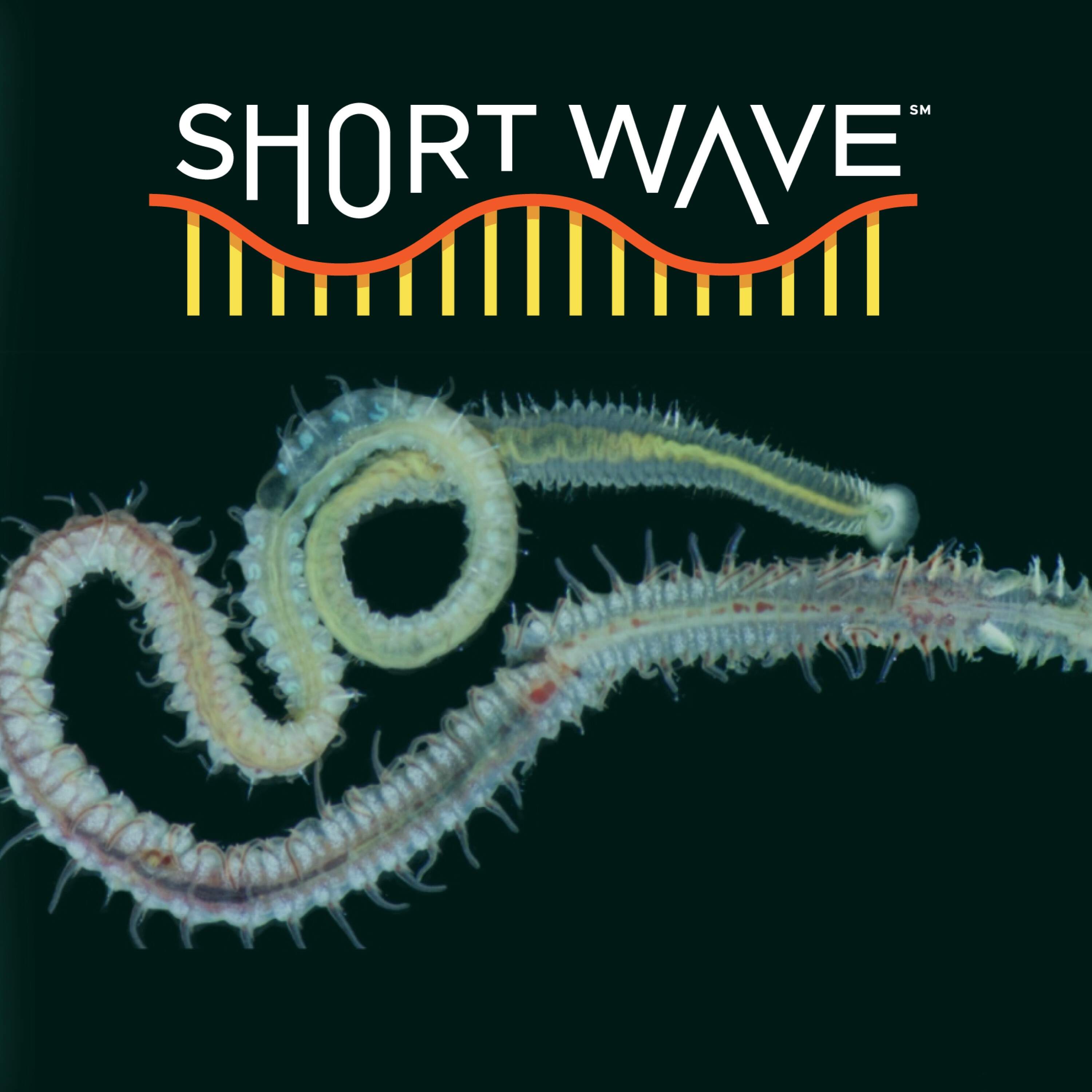
Yeah so like you said when we think about leeches most of the time we think about ones that feed on our blood right or the blood of other vertebrates but today there are lots of leeches that don't do that so some of them they'll swallow basically anything that can fit in their mouths or they'll bite off chunks of like dead bodies and things like this and then we have other leeches in the kind of modern biota i suppose so they'll suck on the bodily fluids from things like crabs and shrimp they'll kind of attach and stick their mouth parts in the little membranous parts between the hard plates oh my gosh and they'll suck out the bodily fluids in that way so the fossil that we found it wasn't found alongside any real large vertebrates so we think that instead of parasitizing vertebrates which is sort of the prevailing hypothesis for what the oldest leeches did we think that our fossil instead would have either preyed on other animals by kind of swallowing them whole or it might have been a parasite of invertebrates of larger animals like trilobites yeah and.
- [10:11]
B
What'S fun is like this fossil wasn't hidden away or newly unearthed you both found out it existed from a published paper about a fossil fossil site in.
- [10:20]
C
Wisconsin yeah they also included photos of some fossils that were beautifully preserved but they weren't entirely sure yet exactly what they might be okay another mystery karma saw one of them yes another mystery so karma saw one and he thought it might be a leech so he brought it to myself and my our other co author rafael iwama who's also a leech scientist and he was very excited about how this might be a leech and instantly rafa and i both we're like no i don't think so.
- [10:49]
B
Karma how did you feel when they rejected you like that i felt crushed.
- [10:53]
D
Absolutely crushed which is what happened because you know it looked like a dynamite thing and leeches i know don't have a fossil record i'm not a leech scientist myself but i knew what a huge discovery that would be but no they were pretty upfront about that which is what you want in a scientific colleague so that's great how did you.
- [11:07]
B
All confirm like what was the process in being like yes this is the first leech fossil after we rejected karma.
- [11:16]
C
And we threw his first hunch out the window we decided to get in touch with andrew and lauren and they were kind enough to share some photos of a lot of animals that they or a lot of fossils from the waukesha site that they hadn't yet identified which included some other segmented worms and one that immediately leapt out at us was this one that we ended up describing as macromyzon as the first fossil leech and this one did in karma's defense have lots of similarities to that first fossil but it wasn't the one that showed you is what you're telling me yeah it had a little little bit of extra detail in there that sort of made us feel really confident and the first thing in particular that we noticed was that big sucker that it has at the at the posterior end which is something that's a huge hallmark of leeches today as well so.
- [12:04]
B
Karma you were right like do you feel vindicated like in the end it was a different fossil your suspicion of these things being leeches you're right i.
- [12:14]
D
Feel like vindicated sounds too like competitive i feel really scientifically satisfied that that there was is that too professional you're so canadian well yeah i know danielle's canadian too so you know she's giving.
- [12:26]
C
Me grief but you know it's it's courage right like you had the courage to be wrong and because of that that's true we stumbled upon this this amazing discovery if you if you hadn't had the courage to be wrong we'd all still be leechless we'd be leechless.
- [12:40]
B
That'S true daniel what does this tell us about modern day leeches that now we have a fossil record yeah it.
- [12:47]
C
Tells us a couple things first of all tells us that this group of animals that leeches are like two hundred million years older than we thought they were initially it also tells us that despite the kind of prevailing sort of hypotheses at the time it was unlikely that the first leech fed on vertebrate blood instead we think it was either a parasite of invertebrates or it was a predator and it also kind of tells us a little bit about the habitat of leeches so as karma kind of mentioned earlier most leeches today are either aquatic living in freshwater or there are terrestrial ones but we also have some kind of marine leeches and the prevailing wisdom before this new discovery was that those marine leeches represented sort of a single origin or a recolonization of the oceans right like the ancestor of this one lineage moved back into the oceans and gave rise to a whole bunch of all the marine leeches that.
- [13:45]
B
We see today i've been covering paleontology stories for a couple years now and one of the things that always sticks with me is just how many fossils are just sitting around daniel i'm going to ask you first like how do you see the fossil record and like of many animals or anything kind of changing in the future with so much data not even looked at yet yeah.
- [14:06]
C
I think there's huge potential for discovering new fossils in collections that already exist i'm sure there are lots of projects just like the riddler you know the generations of scientists never they never found that one paper from the seventies that really kind of blew everything open right and they just kind of put those things in a drawer and they're waiting to be rediscovered by new generations of people i think as well with new technologies you know again with this the riddler one of the technologies that they use to sort of get a lot more information was ct scanning things like this right so if we sort of subject the fossils that we do know about to further scrutiny maybe we'll find even more organisms like inside ones that we already knew whether they're like bodies are physically there or whether there are traces of those that activity i think.
- [14:53]
B
There'S huge potential i love that i'm so glad i asked you that question karma what do you think if you.
- [14:59]
D
Think about the history of life basically like a movie that's going through basically the fossil record we're not getting a complete picture so imagine watching that movie but you're squinting the entire time but once in a while you get to open your eyes and see the whole picture and then you go back to squinting and so this site in wisconsin called waukesha is one of these sites of exceptional preservation where when watching the movie that's the whole tape of life you get to open your eyes for a very brief moment and get the totality of the picture which includes all the soft tissues things like leeches and stuff wow.
- [15:31]
B
Thank you danielle thank you karma for coming to talk to me this has been amazing oh likewise thank.
- [15:37]
C
You so much for having us this.
- [15:38]
D
Has been really fun yeah anytime it's always fun.
- [15:43]
B
This episode was produced by rachel carlson and edited by showrunner rebecca ramirez tyler jones checked the facts and jimmy keeley was the audio engineer beth donovan is our vice president of podcasting i'm regina barber thank you for listening to short wave from npr.
- [16:08]
A
This message comes from mint mobile at mint mobile their favorite word is no no contracts no monthly bills no hidden fees plans start at fifteen dollars a month make the switch at mintmobile dot com switch that's mintmobile dot com switch upfront payment of forty five dollars for three month five gb plan required equivalent to fifteen dollars a month new customer offer for first three months only then full price plan options available taxes and fees extra see mint mobile for details this message comes from npr sponsor capella university interested in a quality online education capella is accredited by the higher learning commission a different future is closer than you think with capella university learn more at capella edu support for npr and the following message come from texas mutual insurance company by investing in local communities and rewarding policyholders for prioritizing safety they are building a more resilient texas more at texasmutual dot com texansgetit texas mutual texans get it.