Loading summary
Transcript93 lines
- [00:00]
Announcer
This message comes from 1-800-FLOWERS. Looking for the best place to shop this Mother's Day? Go with the brand. That makes it easy to send something thoughtful to everyone on your list. 1-800-flowers.com right now at 1-800-flowers. Order one dozen roses and get another dozen free. More flowers mean more smiles, all backed by the quality, attention to detail and trusted delivery experience that make 1-800-FLowers your top choice to send something beautiful mom will love. Make Mom's Day at 1-800-Flowers.com NPR.
- [00:34]
Emily Kwong
You're listening to Shortwave from NPR.
- [00:39]
Hannah Chin
Happy spring shortwavers. I'm producer Hannah Chin and my NatureQuest buddy Emily Kwong is also here.
- [00:45]
Emily Kwong
Hi, Hannah.
- [00:46]
Hannah Chin
With a story about an age old question for homeowners. Namely, should I cut down that big tree in my front yard?
- [00:54]
Emily Kwong
Yeah. To chainsaw or not to chainsaw. That is the question. Darcy Hughes lives a few miles north of Seattle, Washington, and has got this big towering cedar tree that grows right next to her house. Right now, we've got a few birds
- [01:10]
Hannah Chin
up there and a few crows. Of course, It's generally pretty peaceful here.
- [01:21]
Emily Kwong
Cedars are evergreens. So all year long, this tree casts a long dappled shadow over her front yard.
- [01:29]
Hannah Chin
Really? No direct sunlight comes through these branches at all.
- [01:34]
Emily Kwong
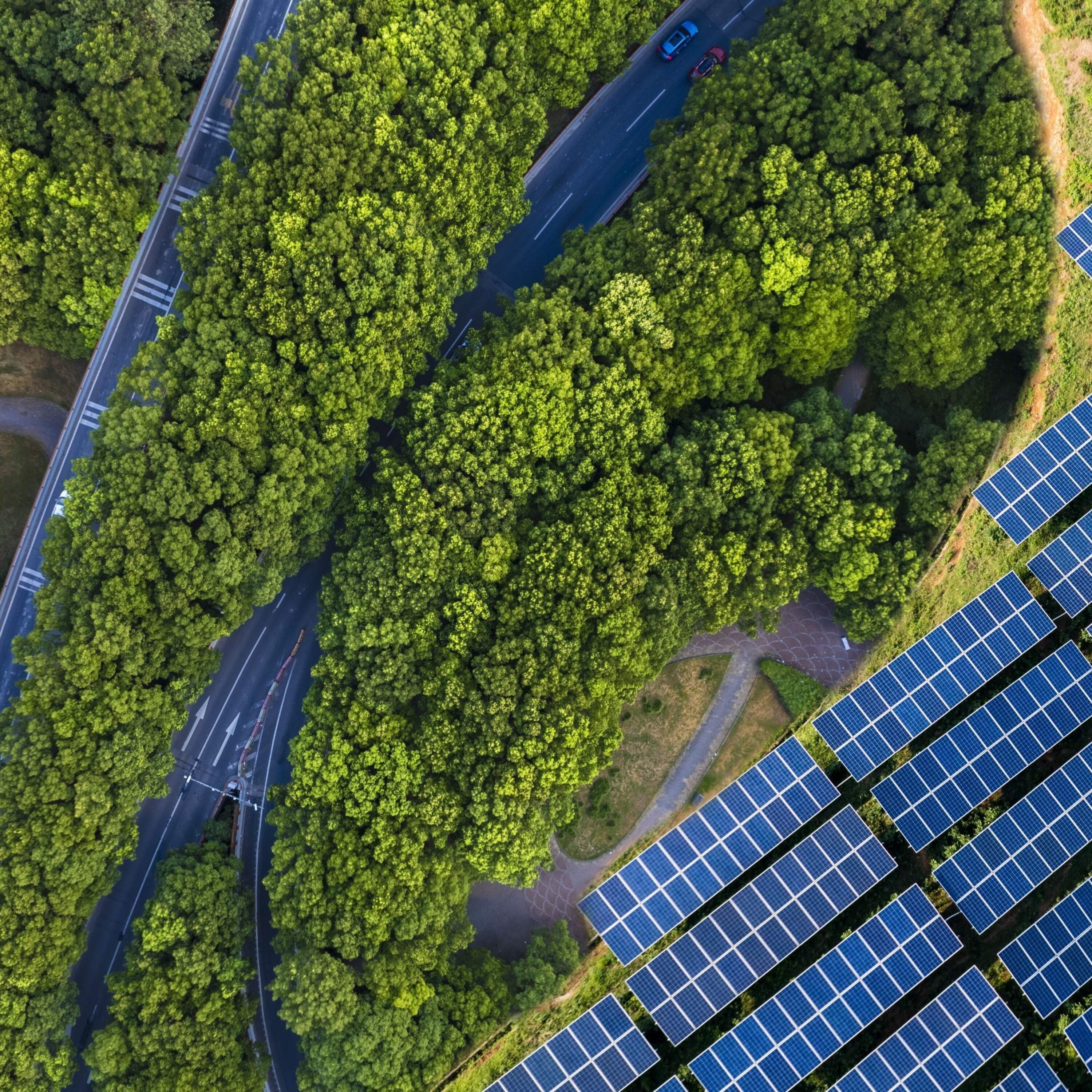
And Darcy wants to know, should she keep the tree or cut it down to install solar panels on her roof?
- [01:42]
Hannah Chin
Okay, so really the question should be to solar or not to solar.
- [01:46]
Emily Kwong
Yes. Now there are nearly 6 million solar energy installations in the US alone. When it comes to home solar, a lot of people make the switch because most public utilities rely on fossil fuels
- [01:58]
Hannah Chin
like coal, like natural gas. Yeah.
- [02:00]
Emily Kwong
But Darcy is in this really unique situation because Snohomish county, most of its energy comes from hydropowered dams. So 90% of her energy is already carbon free.
- [02:10]
Hannah Chin
Got it. Wait, so then what's the point of installing solar?
- [02:14]
Emily Kwong
She wants to be self reliant and it wouldn't hurt to lower her electric bills by making her own energy. But at what cost? And is it worth the life of a tree?
- [02:24]
Hannah Chin
So today on the show when to Make Way for Solar, we get into the nitty gritty of how solar works and how to choose a solar system that's right for you. I'm Hannah Chin.
- [02:34]
Emily Kwong
And I'm Emily Kwong and you're listening
- [02:36]
Hannah Chin
to Shortwave, the science podcast from npr.
- [02:46]
Sponsor/Advertiser
This message comes from 1-800-Flowers. She does a lot for your family. Mother's Day is your chance to show her you see it with a gift from a brand trusted for generations to help people get the moment right. With double blooms from 1-800-Flowers. Buy one dozen roses and get another dozen for free. It's a bigger Gesture backed by 50 years of experience delivering fresh flowers so you can feel confident sending something that lands. Show up for her with double blooms@1800flowers.com
- [03:15]
Announcer
NPR this message comes from Charles Schwab with their original podcast Choiceology. Choiceology is a show about the psychology and economics behind people's decisions. Download the latest episode and subscribe@schwab.com podcast
- [03:32]
Sponsor/Advertiser
this message comes from LinkedIn ads. Ever invest in something that seemed incredible at first but didn't live up to the hype? For marketers, that's impressions. When ads don't create revenue, that's a tough conversation with the CFO. Instead, invest in results your CFO will love. LinkedIn Ads generates the highest ROAS of all major ad networks. So advertise on LinkedIn. Spend $250 and get a $250 credit. Just go to LinkedIn.com NPRpod Terms and Conditions apply.
- [04:05]
Hannah Chin
Okay, Emily. So today we are focusing on a solar Crisis. This is NatureQuest, our series answering environmental questions like you.
- [04:15]
Emily Kwong
Whoop, whoop.
- [04:17]
Hannah Chin
And I guess we gotta start with solar panels themselves. I gotta be honest, because I'm a renter. I'm, like, not totally sure how these work. I do know I think they're kind of ugly. Like, when I pass them, they look like giant flat screen TVs that are, like, stuck to the roof fair.
- [04:33]
Emily Kwong
But, Hannah, I'm gonna change your mind, because solar panels are actually glorious. They are the end result of humankind's enduring ambition to harness the power of
- [04:40]
Narrator/Reporter
the sun, turning sunlight into electricity. Scientists of the Bell Laboratories at Murray Hill, New J demonstrate a solar battery which converts light into power.
- [04:50]
Emily Kwong
These scientists at Bell Labs back in the 1950s used the photovoltaic effect.
- [04:56]
Jenny Heinzen
Photo as in light photo. And then voltaic voltage. Electricity.
- [05:01]
Emily Kwong
This is Jenny Heinzen, master electrician and the curriculum director at the Midwest Renewable Energy Association. And she went full teacher mode and explaining to me how this photovoltaic effect turns the energy of the sun into an electric current current. So first you need a material. And it was Bell Laboratories in New Jersey that figured out you could use strips of silicon, the same stuff found
- [05:22]
Narrator/Reporter
in sand, principal ingredients of ordinary beach sand. Enough light from a lamp to power this toy Ferris wheel. Lights on, she works. Lights off. The motor stops.
- [05:32]
Emily Kwong
Silicon ended up being such an efficient and scalable material that it is what modern solar panels are made out of.
- [05:39]
Jenny Heinzen
They're very much like computer chips. They are silicon based semiconductors.
- [05:44]
Emily Kwong
So basically, the solar panel has a positive side and a negative side. It's designed that way, and the positive side is what absorbs the sunlight. The sun's energy travels as photons. Those photons, when they hit the solar panel, they knock electrons free. So then there's all these free electrons, which then travel through the solar panel to the negative side. And the flow of electrons, as we know, is electricity. And this process is happening across hundreds of cells on any given solar installation.
- [06:12]
Jenny Heinzen
And now those electrons are being used to light your house and do your laundry and make toast and do everything else.
- [06:19]
Emily Kwong
Of course, you need a device to accept these electrons. A lot of people use solar inverters. These are magic boxes that convert that direct current into an alternate current. So if you need more electricity, it pulls from the utility. If you make extra electricity, that will actually flow back onto the grid to power your neighbo homes and businesses. But if the power goes out, lights out.
- [06:46]
Hannah Chin
Wait, so solar doesn't work during a power outage?
- [06:50]
Emily Kwong
No, because the inverter recognizes something is wrong with the grid and shuts down. So Jenny has seen a lot of people add batteries to their systems as a backup power source. So that would allow you to truly live off the grid.
- [07:02]
Hannah Chin
Oh, okay. So now I understand how solar panels work. Maybe I appreciate them a little bit more than I did before. But, Emily, I still want to know the answer to Darcy's question. Like, should she cut down the tree to make way for solar panels?
- [07:16]
Emily Kwong
Okay, so for this, I wanted to cast a wide net. I talked to five people in different parts of the country who are all connected to the solar industry. The five include a journalist, a policy person, a trade person, a master electrician, and someone at Darcy's local public utility.
- [07:31]
Hannah Chin
What did they say?
- [07:32]
Emily Kwong
Asked them all the question. And I expected them to say, you know, break out the chainsaws. Solar forever. But instead, I got this.
- [07:41]
Kevin Lucas
I would not make that as the first move for sure.
- [07:43]
Emily Kwong
If a tree is shading their home, it's doing a really good thing for them.
- [07:47]
Jenny Heinzen
I wouldn't cut down a tree that I loved in my yard to do solar. Maybe this isn't the right answer as a solar advocate.
- [07:54]
Hannah Chin
Wait, okay, this does surprise me that all of them are so pro tree.
- [07:59]
Emily Kwong
Yeah, many of them talked about how trees sequester carbon from the atmosphere, which Darcy well knows. But this point about sequestration is interesting to me because pound for pound, solar panels are significantly more efficient than trees at Offsetting carbon. And yet everybody begged, Darcy, unless this tree is sick and rotting and a hazard to your home someday, do not cut it down.
- [08:19]
Hannah Chin
Yeah, I gotta say, this feels like more of an emotional argument rather than a logical argument. It just doesn't really totally make sense. Did they explain why?
- [08:29]
Emily Kwong
Yeah, it is a logical argument.
- [08:31]
Hannah Chin
Got it.
- [08:31]
Emily Kwong
Yeah. I'll let you John Farrell at the Institute for Local Self Reliance, speak his piece.
- [08:36]
Sponsor/Advertiser
Having a tree is amazing, and especially if it shades your house and especially if you have, you know, high energy bills in summer months.
- [08:42]
Emily Kwong
Trees provide natural cooling. And a sustainable house isn't just about whether you have all the gizmos and the solar panels and the electric car and the heat pump, whatever. It's also about, like, your home's natural environment and how much energy it uses. And a home with more shade is going to use a lot less AC and have to, you know, tap the local utility less.
- [09:05]
Hannah Chin
I mean, I'm from Oregon, and my parents and the folks I grew up with have been experiencing really unprecedented heat waves for the past couple of summers. Plus, a lot of homes in the area, including mine, are older and so they don't have ac. So the shade that the trees provide is really invaluable.
- [09:23]
Emily Kwong
Yeah, the Pacific Northwest is historically very cool, but it is getting hotter. And I was reminded of this while talking to Susie Oversby, who runs solar programs at Darcy's local public utility, Snohomish County Pud.
- [09:35]
Announcer
We're getting more extreme and more frequent heat events. And so we are at the utility seeing more and more customers installing air conditioning.
- [09:44]
Hannah Chin
Okay. So because of the shade, don't cut down the tree. End of episode.
- [09:49]
Emily Kwong
Don't cut down the tree, but not end of episode. There are other pathways for Darcy to explore solar. I've come up with a three step plan. Do you want to hear it?
- [09:57]
Hannah Chin
Yes. I love a three step plan. What's step one?
- [10:00]
Emily Kwong
Call up a solar installer and have them come to your house. Maybe the shade isn't as significant as Darcy assumes. Solar panels can work in cloudy weather. Also, there are places besides her roof where she can put panels. There are ground mounted systems, pole mounted systems, even plug in solar panels so
- [10:20]
Kevin Lucas
you can put them on a balcony, you can put them in your backyard, you can hang them from a porch or something like that.
- [10:27]
Emily Kwong
This is Kevin Lucas. He works for the Solar Energy Industries association, the big trade group that represents the solar industry.
- [10:33]
Kevin Lucas
The installers can come to their house and look at the trees and determine exactly how much sunlight they get through the year. And then with that information, along with the quotes of a couple different reputable installers, she can make a decision as to whether this makes sense.
- [10:47]
Hannah Chin
I didn't even realize this was something that you could do. Basically like phone a trustworthy expert.
- [10:53]
Emily Kwong
Yes, Trustworthy is important because NPR's Jeff Brady, who has been covering the solar industry for years now, says there's some high pressure sales tactics out there. Okay, so Jeff suggests finding a local solar installer who's been doing this for a long time. He likes this website called the Amicus Solar Cooperative for finding that trustworthy local person.
- [11:12]
Hannah Chin
Got it. So step one, get an expert, call a reputable solar installer. What's step two?
- [11:19]
Emily Kwong
Okay. If your property is a good candidate for solar, break out your calculator, because solar installation ain't cheap.
- [11:25]
Jeff Brady
If you're spending, you know, $20,000 up front to put solar panels on your house, you gotta sit down and do some figuring, is this gonna save me money over the long run?
- [11:35]
Emily Kwong
Jeff says read those contracts carefully before committing to that solar installer.
- [11:40]
Jeff Brady
It's like long term relationship, it's going to last for 20 or 30 years, hopefully. I heard one person say that most solar panel relationships last longer than most marriages.
- [11:52]
Emily Kwong
Falker's thing to say. I know.
- [11:55]
Jeff Brady
So you really want to choose closely who that person is and also check
- [11:59]
Emily Kwong
if your area has incentives. So state or local policies that allow you to lower the installation costs or even to offset your energy bill, like if you produce energy for the grid, you might get a discount on your
- [12:10]
Jeff Brady
electric bill once you build it. It's there, it's sitting there. You've spent the $20,000 and now the fuel is free. And you're generating electricity for free.
- [12:20]
Hannah Chin
Right? Free is a great price.
- [12:21]
Emily Kwong
True.
- [12:22]
Hannah Chin
But Emily, I remember hearing that the Trump administration and the big beautiful bill recently gutted the biggest financial incentives for renewables. That was the 30% federal tax credit on new solar installations.
- [12:34]
Emily Kwong
Yeah, that cut was made at the federal level. And the growth of the solar industry did slow down last year.
- [12:40]
Hannah Chin
Yeah.
- [12:40]
Emily Kwong
And yet Solar still produced 7% of US energy last year. That was unthinkable to Jeff 20 years ago. So he told me even with these cuts, he thinks solar's here to stay.
- [12:52]
Hannah Chin
So basically we'll see what happens with the solar industry in the future.
- [12:55]
Emily Kwong
Indeed.
- [12:56]
Hannah Chin
But Emily, you said this was a three step program. What's your third step for Darcy?
- [13:01]
Emily Kwong
Darcy, third step. And this is especially if your installer is like, actually there's no place for you to put solar. Check out community solar. Basically any shared solar projects. These are where a group of people finance the installation of solar panels in another place. It's good for people who rent or people with trees. Jenny the electrician put it this way.
- [13:21]
Jenny Heinzen
So there's a plot of land and you go in together and you all garden together. You can do that with solar solar gardens.
- [13:26]
Emily Kwong
So even if the sun isn't shining directly on your house, it is always shining somewhere.
- [13:31]
Hannah Chin
I love a community solution. Emily Kwong yeah, thank you so much for bringing us this story.
- [13:35]
Emily Kwong
Hannah Chen you're very welcome.
- [13:38]
Hannah Chin
Short Waivers if you liked this episode, check out Jeff Brady's recent reporting on Plug In Solar Panels. Link it in our show notes and
- [13:45]
Emily Kwong
be like darcy, send us whatever question you have about your local environment. Just record a voice memo with your question and we'll go on a quest. Email it to shortwavepr.org this episode was
- [13:57]
Hannah Chin
produced by me, Hannah Chin, and edited by our showrunner, Rebecca Ramirez. Tyler Jones checked the facts. Sam Paulson wrote the NatureQuest theme music. The audio engineer was Robert Rodriguez. I'm Hannah Chin.
- [14:09]
Emily Kwong
I'm Emily Kwong. Thanks for listening to Short Wave from npr.
- [14:19]
Sponsor/Advertiser
This message comes from Capital Group. In a world full of noise, long term thinking stands out. On the Capital Ideas podcast, Capital Group leaders explore the decisions that matter most in investing, leadership and life. It's a rare look inside a firm that's been helping people pursue their financial goals for more than 90 years. Listen to the Capital Ideas podcast from Capital Group, published by Capital Group, Inc. This message comes from Rosetta Stone. Spring Travel Coming up. Rosetta Stone has been the trusted leader in language learning for over 30 years. Ready to start learning a new language this spring? Visit rosettastone.com NPR today. This message comes from Simon and Schuster, publisher of Get a Financial Life. Feeling stuck with Money, the classic money guide, Get a Financial Personal Finance in youn 20s and 30s by Beth Kobliner has been updated for today's economic reality. Tackle debt, save smarter, invest wisely, and navigate rising costs with confidence with this no nonsense roadmap to financial stability. Start planning for your future. Now read Get a Financial Life by Beth Kobleiner today.