← Short Wave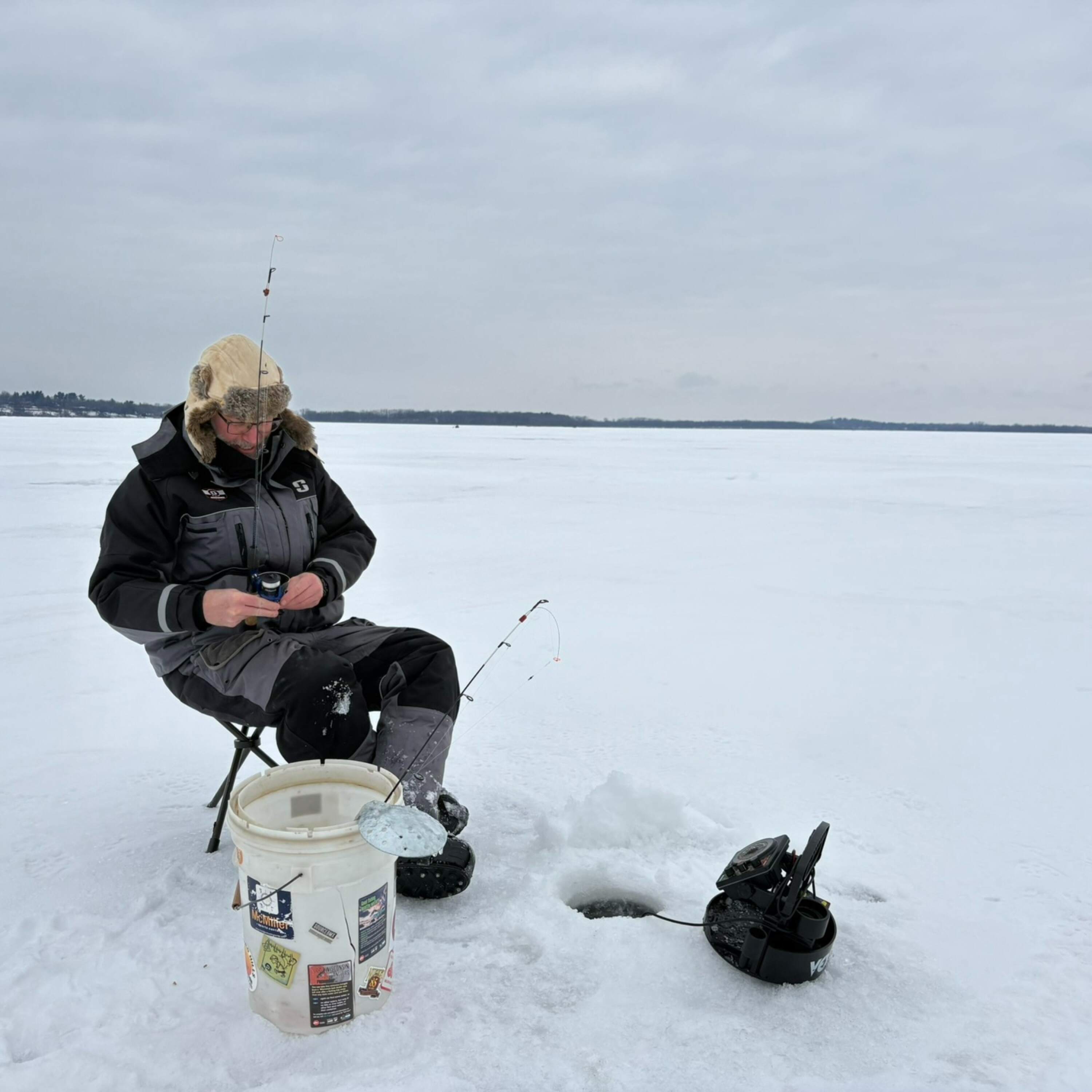
Short Wave
Spring ice is thawing earlier in lakes. What does that mean for life below the surface?
00:12:39
Loading summary
Transcript91 lines
- [00:00]
Sponsor/Advertisement Voice
This message comes from brex. BREX is the intelligent finance platform that helps you spend smarter and move faster. With Brex, you get corporate cards with built in expense management, plus a team of AI agents that handle manual finance tasks. Learn more@brex.com you're listening to Short Wave from NPR.
- [00:24]
Emily Kwong
Hi Short Wavers. Emily Kwong here with producer Burleigh McCoy and part two of her Changing Lake Ice reporting. Don't worry if you haven't listened to the other episode. You don't need to to appreciate this one.
- [00:36]
Burleigh McCoy
Definitely not Emily. But quick recap. Last episode we talked about how changing ice conditions are making it less safe to be on the ice, which is true. Where I live in Montana, not only have there been warm spells which make the lake ice less safe, this year, ice wasn't safe enough to walk on until the second week of January. Wow. And Emily, you know how much I love to ice fish.
- [00:57]
Emily Kwong
Yes, you live for ice fishing season, Burley.
- [01:00]
Burleigh McCoy
I know. And so far this year that's been really tough here. So I recently went on a nice fishing trip with a fisheries biologist named Zach Feiner.
- [01:08]
Zach Feiner
We'll say I did see one guy catch one here yesterday, so he threw it back. So there's at least one fish out there for us.
- [01:15]
Burleigh McCoy
But Zach is in Madison, Wisconsin.
- [01:19]
Emily Kwong
Wait, you left your family in Montana to go fishing all the way in Wisconsin?
- [01:23]
Burleigh McCoy
In a heartbeat. There's just no commitment. More serious. But really, I wanted to get on the ice with Zach to talk about how lakes everywhere are losing ice and the impact that that's having on, like, ecosystems, from disrupting their food chains to lowering biodiversity.
- [01:39]
Emily Kwong
Which could have a huge impact on your fishing way of life.
- [01:42]
Burleigh McCoy
Exactly. Me and about 1.7 million other ice fishers in the U.S. ice fishing is a huge industry that generates millions of dollars through equipment sales and guide services. I talked to David Van Lan about how one of his favorite seasons, ice fishing, is shrinking. He grew up on a dairy farm south of Green Bay, Wisconsin, moved to Madison for work in 1971, and he says he's been fishing the area for decades.
- [02:08]
Zach Feiner
We've lost a good six weeks off of our ice fishing season since I started back in the 1980s. We used to start in December, end in April. Now we start in January, end in March.
- [02:21]
Emily Kwong
Today on the show, how losing lake ice is affecting life below the surface
- [02:27]
Burleigh McCoy
and what that means for ecosystems and people who enjoy them.
- [02:30]
Emily Kwong
You are listening to Short Wave, the science podcast from npr.
- [02:46]
Burleigh McCoy
This message comes from Charles Schwab. When it comes to managing your wealth Schwab gives you more choices like full service, wealth management and advice when you need it. You can also invest on your own and trade on think or swim. Visit schwab.com to learn more.
- [03:00]
Sponsor/Advertisement Voice
This message comes from BetterHelp International Women's Day is this March time to celebrate all women. The leaders, the caregivers, the hype friends, the how do you do it? All types. Women deserve to be reminded how much they matter and that therapy offers a space to care for themselves. BetterHelp makes it simple by matching you with a qualified therapist based on your needs and preferences. Visit betterhelp.com NPR for 10% off. This message comes from Wix. Nothing beats seeing your ideas turn into cold, hard cash. Well, if you use WIX Harmony, you better get used to it. WIX Harmony makes it unbelievably easy to create a fancy new website that's built to sell. Get the perfect blend of AI and drag and drop tools that puts you in control of every detail, plus an AI agent to help you every step of the way. Try it for free@wix.com Harmony Quick reminder everyone.
- [03:58]
Emily Kwong
Short wave comes out four days a week. That's Monday, Tuesday, Wednesday, and Friday. So to make sure you never miss an episode, look for the Follow button on your podcast app and give it a tap. Thank you so much. Okay, Burleigh, let's get into this. How was this reporting trip to go fishing in Madison, Wisconsin?
- [04:17]
Burleigh McCoy
It was packed. Zach picked me up at 5am early
- [04:21]
Emily Kwong
bird gets the fish.
- [04:24]
Burleigh McCoy
I'm Burley. Can I throw my stuff in the back?
- [04:30]
Zach Feiner
Picked up some donuts.
- [04:32]
Emily Kwong
Donuts are essential for ice fishing.
- [04:34]
Burleigh McCoy
They are essential. We drove about 15 minutes south to Lake Wabisa to meet someone named Tom Sehosh.
- [04:41]
Zach Feiner
He's a big walleye fisherman. He is the one who gave me the intel on this spot, and he's
- [04:47]
Burleigh McCoy
actually probably already down there because I wanted to catch a walleye.
- [04:52]
Emily Kwong
Is a walleye a fish?
- [04:54]
Burleigh McCoy
Yes. They are one of potentially dozens of fish that are sensitive to changing lake ice. Their populations are doing okay right now in a lot of places, but biologists like Zach are keeping an eye on them because they spawn in the spring.
- [05:07]
Emily Kwong
Oh yeah, that's when ice usually melts.
- [05:10]
Burleigh McCoy
Exactly. And so a big part of what Zach tracks is that timing of the ice freezing and thawing.
- [05:16]
Zach Feiner
And one of the parts of my research that has really jumped out is that the timing at which the lakes thaw in the spring has gotten really variable. So, for example, the earliest in recent years, the earliest the lake has thawed has been in the middle of March. And the latest lake has thaw has been in the middle of May. So from one year to the next is a two month difference.
- [05:38]
Emily Kwong
That is a huge jump. What impact does that have on the fish?
- [05:42]
Burleigh McCoy
Yeah, Zach says it breaks down the normal process of what happens when a lake thaws.
- [05:46]
Emily Kwong
Can you describe that process?
- [05:48]
Burleigh McCoy
Yeah, it's kind of a domino effect. So in springtime, when a frozen lake starts to get more sun and warmer temperatures, that kickstarts algae blooms in the water that feeds little critters called zooplankton. And those zooplankton are a really important food source for some fish. But if there are these massive differences in when spring starts, it messes up the whole system.
- [06:09]
Zach Feiner
All those events start to get scrambled up and mistimed. So then your food web gets delinked or decoupled, and ultimately you end up with not having enough food around to feed small fish.
- [06:19]
Burleigh McCoy
Zach's research has shown that in years with huge swings. And when the lake thaws, they don't count as many young walleyes the next fall. So fewer of them are surviving. Whoa. And the more that happens, eventually, the less walleye there will be for people to catch and take home.
- [06:34]
Zach Feiner
And the important thing to point out is that while I've seen this in walleye, lots of other species are seasonal spawners. They spawn in the spring or in the fall. So you could see these effects probably happening for a lot of different species.
- [06:45]
Emily Kwong
You know what I'm thinking about for some reason, listening to this?
- [06:48]
Burleigh McCoy
Okay.
- [06:49]
Emily Kwong
My cat is so sensitive to the slightest changes in dinner being served by a half hour. Like, and if it were a difference of months for his life cycle, I'm
- [07:02]
Burleigh McCoy
sure Zuko would scream.
- [07:04]
Emily Kwong
Yeah, Yeah. I hope I'm not making like a false comparison here. It's just like I'm appreciating. There's so much sensitivity for these species that a difference that could seem small to us is actually life or death to them.
- [07:15]
Sponsor/Advertisement Voice
Yeah.
- [07:15]
Burleigh McCoy
Especially if the food is just no longer there anymore. And this is true for lakes outside of Madison as well. Scientists are really just kind of starting to study this. So in our last episode, we talked about how many lakes have already lost weeks of ice coverage each winter season. And thousands are predicted to stop forming ice entirely before the end of the century. And these are lakes where the ecosystems have evolved to be icy in the winter.
- [07:40]
Emily Kwong
Yeah. I've been wondering about this ever since your last story. What is the ecological impact for organisms that have adapted to live in an icy lake.
- [07:48]
Burleigh McCoy
Yeah. I mean, walleye are this cool water species that could really suffer in the coming years as the climate continues to warm. And they're one of many where this could happen. Right. I really wanted to experience being on a walleye lake while they're still around and doing okay. So back at Lake Wabisa, we unloaded the fishing gear from the car in the neighborhood cul de sac. With just one house near the end
- [08:11]
Zach Feiner
of the road, we are headed through here. The joys of urban ice fishing.
- [08:15]
Burleigh McCoy
I followed Zach through the dark to a tall chain linked fence next to the house while he pulled the sled that had all the gear in it. After a few minutes, the tree lined path opened up to a dark open expanse with one green light in the distance. This is Tom?
- [08:32]
Zach Feiner
Yep, I think so.
- [08:34]
Emily Kwong
How great Gatsby of you. What was the green light?
- [08:37]
Burleigh McCoy
It's a headlamp. So we had our headlamps on, we walked out onto the lake.
- [08:43]
Zach Feiner
I'll see your face without a spotlight
- [08:46]
Burleigh McCoy
in my eyes later. Oh, yeah, sorry about that.
- [08:48]
Zach Feiner
No, no, everybody's got one. All the cool kids are wearing them.
- [08:51]
Burleigh McCoy
Yeah. Zach sets up his insulated pop up tent and drills some holes in the ice to fish through. We've got some electronic machines to help us out. One is sonar that can tell you if something is moving in the water and where. Another is an underwater camera. Both of these things help you find fish.
- [09:10]
Emily Kwong
So I'm picturing you all standing in the dark on this icy lake and there's a line down in the hole and you're like waiting.
- [09:16]
Burleigh McCoy
We're watching the sonar because it looks like there's something down there. Does it look like it's still there?
- [09:25]
Zach Feiner
It doesn't, unfortunately. That's the problem with fish. They move.
- [09:29]
Burleigh McCoy
But eventually there it is.
- [09:33]
Zach Feiner
Gonna find out. Got one? Yep. Blue gills.
- [09:44]
Emily Kwong
Oh, a bluegill's fish. So not a walleye.
- [09:47]
Burleigh McCoy
A bluegill? Yeah. Not a walleye. Zach says bluegill are a warm water fish and one that will probably do better in waters like these as climate change continues. So I take the fishing pole, give it a try.
- [10:04]
Sponsor/Advertisement Voice
All right.
- [10:05]
Zach Feiner
New species.
- [10:06]
Burleigh McCoy
Oh, okay. I've never caught a crappie before.
- [10:09]
Emily Kwong
Crappy. Not a bad word. Just a different type of fish.
- [10:13]
Burleigh McCoy
Also a warm water fish, actually. And now as an avid ice fisher, I'm always looking for reasons why I'm not catching the fish that I want to catch. So I asked Zach if changing ice from year to year could be the reason we're not seeing walleye today.
- [10:29]
Zach Feiner
It could Be one of the reasons why. Yeah, yeah, yeah. I mean, it's, it's tough. There's a lot of lakes where walleye have declined really significantly, and now the only reason there are walleye in there is because we have to stock them.
- [10:43]
Emily Kwong
Stocking. Yes. I learned about this the one time I've. I went ice fishing in Maine. Stockings where humans are putting young fish in the lake.
- [10:50]
Burleigh McCoy
Yeah. Often thousands, to keep up their numbers. It's done for conservation and for people like me who like to fish. And it happens in a ton of places, including the lake. I fish in the winter. Now, Zach says the question becomes, when do people stop stalking if a lot of those fish are just going to die?
- [11:09]
Emily Kwong
Right. Like, are you setting them up for doom if you're putting them in a lake that is inhabitable for them?
- [11:14]
Burleigh McCoy
Right. Like, if ice keeps shifting rapidly and significantly knocking down walleye populations, how long should people continue adding them back? And maybe, for example, switch to supporting warm water fish that people like to catch that would thrive in these warmer waters?
- [11:28]
Zach Feiner
If you have this traditional connection to walleye, maybe that's a harder change to accept or to deal with.
- [11:34]
Emily Kwong
This would be a big change for the fishing community to ask someone to do something that they've done their whole life differently. I guess climate change asks that of all of us. Does Zach have any idea, though, how people are going to handle going for warm water fish instead of these cold favorites?
- [11:50]
Burleigh McCoy
Yeah. He says through surveys, he's found people have definitely noticed a change in lake ice, which is a big first step to get people to think about then how to make changes.
- [11:59]
Zach Feiner
When you're faced with what to do about climate change, especially regard to, like, fish or other things, like, it's hard to, to control the amount of, like, carbon in the atmosphere right. At the local level, but you can think about the things you can control. Maybe that means you make different harvest decisions, you keep fewer walleye, maybe you decide to go fish for something else. Right. That might be more resilient to harvest, like a largemouth bass or bluegill that are more of a warm water fish.
- [12:24]
Emily Kwong
This story is reminding me how people who fish and people who hunt are actually paying often more attention to the environment than most. So it's cool to be hearing this from them directly, you know?
- [12:34]
Burleigh McCoy
Yeah, that's so true. And Zach says it may also get people to think about what else they can do to help lake systems, like protecting the habitat that certain fish like. Like walleye.
- [12:44]
Emily Kwong
As for you, fisher Burley, did you ever get any walleye?
- [12:49]
Burleigh McCoy
I did, but not the way I wanted. I'll have the fried Walley.
- [12:57]
Emily Kwong
You got one served to you a different way on a plate.
- [13:01]
Burleigh McCoy
I did. It was lovely. It was delicious. I had it with some fried cheese curds, so no walleye. I'll just have to go back and maybe it'll be for a different kind of fish.
- [13:15]
Emily Kwong
If you liked this episode, do us a favor and share it with a friend, because your vote of confidence is actually what ensures we can keep making this program. I also suggest you check out part one of Burley's Changing Lake Ice series and gorgeous photos from Burley's fishing trip. We will link to them both in our show notes.
- [13:35]
Burleigh McCoy
This episode was produced by Rachel Carlson, edited by our showrunner, Rebecca Ramirez, and fact checked by Tyler Jones. The audio engineer was Kwesi Lee.
- [13:43]
Emily Kwong
I'm Emily Kwong.
- [13:44]
Burleigh McCoy
And I'm Burleigh McCoy.
- [13:46]
Emily Kwong
Thank you for listening to Short Wave from NPR.
- [14:09]
Sponsor/Advertisement Voice
This message comes from Capital One. Capital One offers checking accounts with no fees or minimums. What's in your wallet? Terms apply. See capitalone.combank for details. Capital One NA member FDIC NPR News.
- [14:24]
NPR News Announcer
Now is your podcast source for updates every hour on the US Military action in Iran. President Trump calls it a war and says the goal is regime change. He also says US Casualties are possible, with news changing rapidly. Listen to NPR News now. New episodes at the top of every hour on the NPR app or wherever you get your podcasts.
- [14:47]
Sponsor/Advertisement Voice
This message comes from the BBC with its new podcast, the Interface. Every Thursday, three leading tech journalists explore how tech is rewiring your week and your world. Listen to the interface on BBC.com or wherever you get your podcasts.