Loading summary
Transcript49 lines
- [00:01]
Commercial Announcer
This message comes from Avalara. What's it like running a business with Avalara? No thinking about tax and compliance. It's handled calculating, filing, validating accurately and audit defensibly. Avalara agentic tax and compliance with confidence.
- [00:18]
Emily Kwong
You're listening to Short Wave from npr. When Karen Parangatai's father died, she did what a lot of people do. She reconnected with his side of the family. And a pattern she learned on that side of the family changed the course of her life. She noticed that a lot of people on his side had died young. Not just her cousin, but her cousin's sister, her cousin's mother, and her cousin's grandmother all gone.
- [00:47]
Sarah Zhang
So the family started to realize there must be something wrong.
- [00:51]
Emily Kwong
Sarah Zhang is a staff writer at the Atlantic. She recently wrote a story on Maori families like Karen's where long lines of people have died from a rare form of stomach cancer called diffuse gastric cancer. It causes cancerous cells to percolate undetected in the stomach lining, only becoming obvious in advanced stages. But by then, it's usually too late to treat. That's what happened to Karen's cousin.
- [01:17]
Sarah Zhang
And so after this, Karen hears from her auntie who tells her, you know, you need to get tested because there's this mutation that's running through our family that gives you a really high risk of stomach cancer.
- [01:27]
Emily Kwong
Now, if she tested positive for this mutation, Karen would have a 70% chance of developing this form of cancer.
- [01:34]
Sarah Zhang
She does get tested and she finds out she is positive for the mutation.
- [01:39]
Emily Kwong
But then doctors tell Karen about one unexpected life saving option. She can get surgery to get her entire stomach removed.
- [01:48]
Sarah Zhang
Her reaction is just like, what do you mean? Like, can you live without a stomach? How would she eat? How would she replace it?
- [01:54]
Emily Kwong
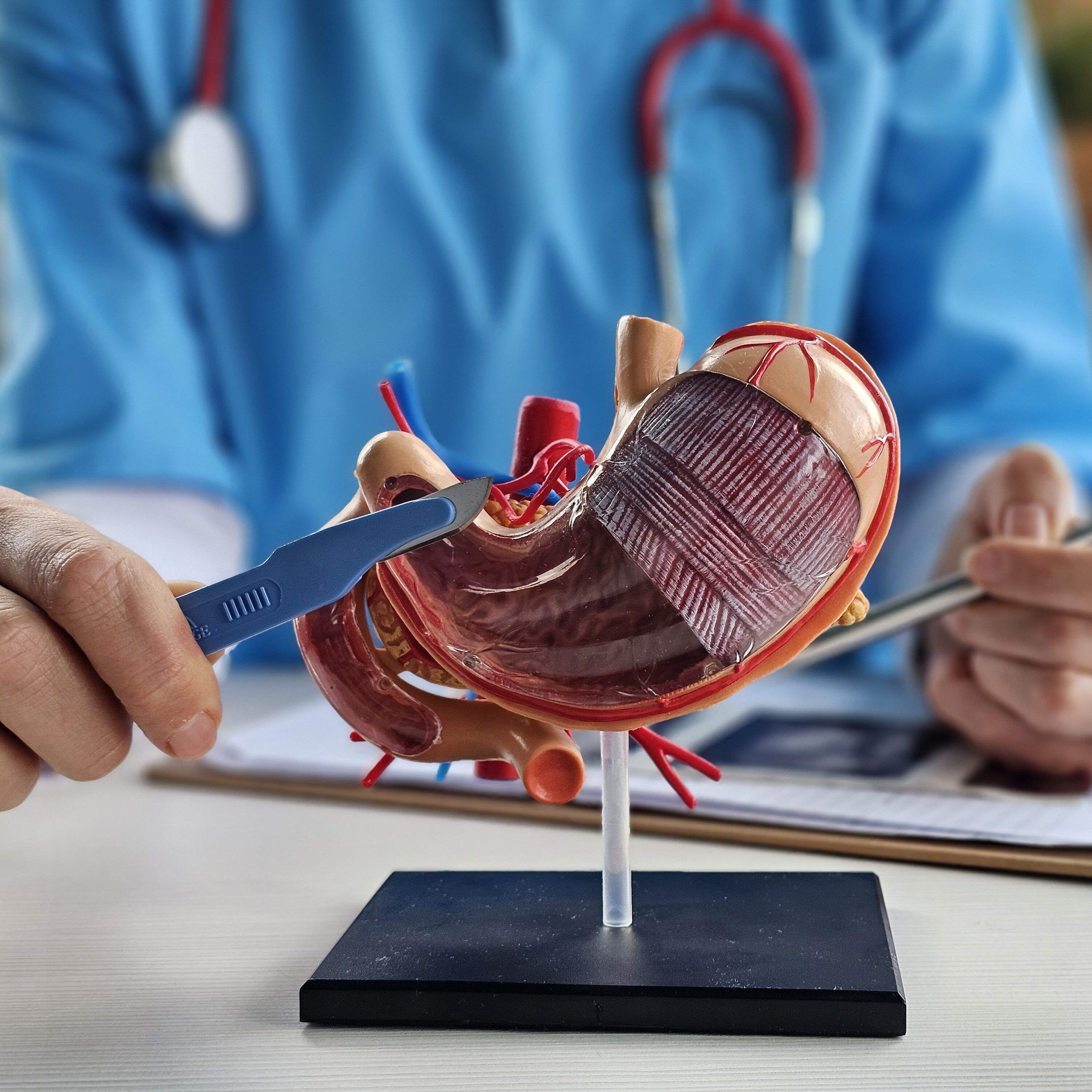
And Sarah says both options come with risks. A 70% chance of deadly cancer or surgery with a 100% chance of significant side effects. Today on the show Life Without a How Maori families have advanced scientific understanding of a rare form of stomach cancer and are beating the odds of survival. I'm Emily Kwong, and you're listening to Shortwave, the science podcast from NPR Foreign.
- [02:27]
Podcast Promo Announcer
This message comes from LinkedIn ads. Ever invest in something that seemed incredible at first but didn't live up to the hype? For marketers, that's impressions. When ads don't create revenue, that's a tough conversation with the CFO. Instead, invest in results your CFO will love. LinkedIn Ads generates the highest ROAS of all major ad networks. So advertise on LinkedIn spend $250 and get a $250 credit. Just go to LinkedIn.com NPRpod Terms and Conditions apply. This message comes From Dell Dell PCs with Intel inside are built for the moments that matter. Like a big project that can't be interrupted by an update with long lasting battery life, you can stay focused on what matters built for you Dell.com DellPCS this message comes from Capella University. You know that feeling when there's a spark building inside you that you were meant for more? That's your own drive pushing you towards what's next. Capella University gets that with their flexpath learning format. You can set the pace and earn your degree without putting life on pause. You've built experience and know what you're capable of. Now this is your time to turn that momentum into more. The only real question is what can't you do? Learn more@capella.edu the NPR app brings you
- [03:55]
Emily Kwong
the best of public radio, personalized for you, your favorite podcasts like shortwave, your local station, and the world's biggest stories. Download the NPR app in your app store today. Back in the 90s, doctors found a rare form of cancer in Maori families, and they traced it to a mutation in the CDH1 gene. Now, this gene encodes a protein that normally orients and aligns cells in the stomach, but without it, Sarah Zhang writes, the cells become lopsided, rogue, and possibly cancerous. Any parent with a mutation in the gene has a 50% chance of passing it on to their children. But the reason doctors even know about the gene at all is because of one Maori woman, Maybelle McLeod. So Sarah, let's pick up with her story. What did May Belle do when she realized her family had a history of stomach cancer?
- [04:49]
Sarah Zhang
Yeah, so the way she talked about it is that nobody talked about it. They believed it was a curse. So you sort of, you know, you thought if you talked about it, you might be the next one to fall to the curse. There's actually an article from the 1960s that talks about this particular family, which is in fact the McLeod's, where I think a 21 year old came in with this type of diffuse gastric cancer. This family has lived with this history of stomach cancer for a really long time. Mabel herself is a nurse and she goes to a genetics conference and she realizes, you know what, this, this is not a curse. This is genetic. And she decides to contact the scientist, a geneticist, to figure out exactly what the gene in her family is.
- [05:32]
Emily Kwong
It's like a science sleuthing story. She's like, there is an answer to this, and I think it could help us. So I'm gonna go get those answers for myself. So what does the McLeod family ultimately do and find?
- [05:45]
Sarah Zhang
Yeah. So they agree to be studied by a scientist named Perry Guilford. And I think it's really unusual and interesting, is that the family goes to the scientist. Right. It isn't the other way around. And they were very clear that they, you know, they were the ones who were gonna go around and collect the samples. They didn't want Perry knocking on doors or calling on people.
- [06:07]
Emily Kwong
This family answers for themselves. Yeah.
- [06:09]
Sarah Zhang
Yeah. So they end up collecting, I think, about 100 samples for the family, living relatives. They actually also got archival samples from relatives who had died from stomach cancer years ago. And the other part is that not only they had to collect the physical samples is that they were also building their family tree back generation.
- [06:28]
Emily Kwong
Wow.
- [06:28]
Sarah Zhang
Because not only do you need the, you know, genetic analysis, but you have the family tree to have something. How a mutation runs through the family.
- [06:36]
Emily Kwong
Wow. So because of May Belle's work, they discover this connection between stomach cancer and this particular gene. CDH1 may Belle didn't have it, but Karen Paringitai, who we met at the top of the episode, did. She now faces an agonizing decision to remove her stomach or not. She did decide to go through with the procedure in 2010. What is that procedure like to get your stomach removed?
- [07:05]
Sarah Zhang
It is a long surgery. It's a complicated surgery. The very simple way of explaining it is that basically they cut your abdomen open and they take out your stomach and then reconnect your intestine to your esophagus. But of course, there's still scarring on the inside, and it takes a while to recover. So the first few days after surgery, you can kind of really only eat soft foods. And you have to eat a little bit, a lot, and you have to chew a lot. Like, chew like chewing gum is how people have described it to me. Whoa.
- [07:39]
Emily Kwong
You have to masticate.
- [07:40]
Sarah Zhang
Exactly.
- [07:41]
Emily Kwong
Because your stomach juices are not going to break that down for you.
- [07:43]
Sarah Zhang
One person literally told me she had a timer on her phone, and she would take a bite, chew, chew, chew, swallow, wait. And then take another small bite. Chew, chew, chew, swallow, wait. Just so she wasn't eating too fast.
- [07:57]
Emily Kwong
Besides the changes to eating, what other changes did Karen experience? Because what you eat is so connected to, like, your blood sugar and your energy levels. And how was that for her?
- [08:10]
Sarah Zhang
Yeah, yeah. 100%, I think, you know, Also, what you eat is so connected to how you socialize. Right. Like, true. She talks about how it was really hard to go out to dinner with friends because she didn't know if she would, you know, suddenly, like, feel faint or sick in the middle of dinner or after dinner, and you lose a lot of weight. Sometimes people have had to change jobs because they can just no longer have the physical stamina. And so these are things that usually change over time. I think what I universally heard is that the first six months of the year can be really difficult. And then, you know, some people find you are pretty much back to normal, and some people find that they still struggle with fatigue or nausea or vomiting. Yeah.
- [08:49]
Emily Kwong
Reading the piece, I was just amazed at the changes happening on the inside as your body. Like, you write about how the upper part of the intestine adapts into a pseudo stomach. So part of your body is like, ugh, I got it. I will be the stomach for us now. And eventually, people can eat larger portions. They don't have to eat as many meals, and they are able to maybe put on some weight back. And you talk about how people still need regular shots of B12 because you need your stomach and stomach acid to release the B12 from food. But otherwise, are people able to live as if they have a stomach without one? Yeah.
- [09:31]
Sarah Zhang
There are some people who have said to me, like, they have friends who are like, what? You don't have a stomach? I would have no idea. Like, you eat totally normally. You are a total foodie. Other people have said to me, like, oh, like, everything is normal, except it's really hard for me to drink water. We don't really know why. We think it maybe is like, the surface tension of the water makes it really hard to go down the esophagus. On the other hand, there are people who say water is totally fine. I talked to someone else who was, like, drinking from a liter bottle of water on our zoom call the entire time we were talking. It's really very person to person. Yeah.
- [10:02]
Emily Kwong
You also write how in a number of your conversations, people opened up about alcohol and alcoholism, that after their surgery, alcohol went down better and they found themselves drinking. How common was that?
- [10:15]
Sarah Zhang
Yeah, it came up in, I would say, the majority of my conversations. So, like, after this kept happening, I was like, huh? I think this must be, like, a real pattern. And there is some scientific evidence to suggest that there is something here. Right. There is, like, an association between getting bariatric surgery to lose weight and then later having higher risk of alcohol use. Disorder. So while we don't really know exactly what the cause is or what the causation is, a number of people who get part of their stomach removed end up having a higher chance of developing alcohol use disorder. You know, probably the way alcohol moves through your stomach is different. And of course, there's also just like the psychological component, right? Like, you know, on one hand you're dealing with the fear of cancer, and then you're dealing with, like a huge change in your daily life. One man I talked to, James, you know, he talked about how it was really quite hard right after the surgery because he found it really difficult to, you know, provide for his daughter. He couldn't pick her up, you know, drive. So that might be part of it as well.
- [11:18]
Emily Kwong
You know, it's interesting how medicine has come so far, right, that we can test for mutations that are likely to lead to cancer. We can reduce people's risk for cancer in this big way. But it also puts a really tough choice on people's shoulders, which is to have a part of their body removed. And reading your piece, you know, it sounded like even doctors who were performing these preventative surgeries had mixed feelings because there is a 100% chance that their patients are going to have some kind of side effects or complications. So what do you make of where we're at with medicine right now that these are the choices people face?
- [11:52]
Sarah Zhang
Yeah, you're exactly right. Like, it's incredible how much progress we made, but how far we still have to go. You know, Perry Gilford, the geneticist who discovered the mutation, he said, you know, I think in the future we'll think these surgeries are draconian. We can't believe. I can't believe we were doing such draconian surgeries on people taking their whole stomachs out. And I think, you know, everyone would love to have a better treatment option. This is a really invasive surgery. It is really life changing. I think another piece of this there have. I talked to a couple of surgeons who said that it was their experience talking to patients that made them sort of consider, hey, have we, like, really thought about all of the physical and psychological side effects of getting your stomach out? As a surgeon, you can often look at outcomes like how much weight was regained after two years. And then I think there's sort of like the more qualitative part of, like, what is your quality of life after two years, which is harder to capture in a number on a chart, on a paper. So I think the difference now is that if you do not have a family history. I think surgeons are much more comfortable saying, let's wait, let's do the endoscopies and see what actually happens.
- [13:04]
Emily Kwong
As for Karen, how's she feeling about getting her stomach out?
- [13:08]
Sarah Zhang
You know, I think she feels like it saved her life. The other piece of this is that, you know, we started talking. When I talked to Karen, she sort of told me a lot about her father's family and sort of what her father did. And she, because of this sort of ironically, because of this mutation, she became so much closer to her father's family. So now she has a relationship with them. Her kids have a relationship with them. And she herself is a Maori studies professor. So one of her research projects was, in fact trying to understand how a mutation affects a family like hers.
- [13:44]
Emily Kwong
That's so cool.
- [13:45]
Sarah Zhang
Yeah. Through this, she, like, really reconnected with her family. And she told me that she was visiting her family recently and she was there with her perc partner and the rest of her family. There were eight of them. And she kind of turned to her partner and said, you're the Ottawa now. He's like, well, yeah, I'm not, you know, a member, like a blood relative of your family. And she was like, no, you're the only one out of the eight of us with a stomach. Wow.
- [14:11]
Emily Kwong
Sarah Zhang for the Atlantic, thank you so much for talking to me about this family and the contributions of the Maori people to, like, cancer research and what it's like to live without a stomach. Super interesting.
- [14:26]
Sarah Zhang
Yeah, thank you. It was great talking to you. If you like this episode, please follow
- [14:31]
Emily Kwong
us and share it with a friend. We're trying to grow our audience and we know you have someone in your life who would like a little sciency palate cleanser during their commute, an interesting story they can share at the dinner table, or just a fun fact about the world around us. This episode was produced by Rachel Carlson and edited by our showrunner, Rebecca Ramirez. Tyler Jones is our fact checker extraordinaire. Kwesi Lee was the audio engineer. I'm Emily Kwong. Thank you for listening to Short Wave from npr. See you next time.
- [15:12]
Commercial Announcer
This message comes from Mint Mobile. If you're tired of spending hundreds on big wireless bills, bogus fees and free perks, Mint Mobile is for you. Shop plans@mintmobile.com Switch taxes and fees extra. See Mint Mobile for details.
- [15:29]
Podcast Promo Announcer
This message comes from Simon and Schuster, publisher of Get a financial life. Feeling stuck with money, the classic money guide. Get a Financial Personal Finance in your 20s and 30s by Beth Kobliner has been updated for today's economic reality. Tackle debt, Save smarter, Invest wisely and navigate rising costs with confidence with this no nonsense roadmap to financial stability. Start planning for your future now. Read Get a Financial Life by Beth Kobleiner Today.
- [15:58]
Sarah Zhang
Every single complex society that's ever existed
- [16:00]
Emily Kwong
in the history of the world so far has collapsed.
- [16:03]
Sarah Zhang
Do we think we're different?
- [16:06]
Podcast Promo Announcer
Are we doomed?
- [16:07]
Emily Kwong
The new podcast about the end of the world. I don't like where this is headed. I'm Ben Bradford. Join me for Are We Doomed?
- [16:14]
Podcast Promo Announcer
Part of the NPR Network.
- [16:15]
Emily Kwong
Listen now, wherever you get your podcasts.