Loading summary
Transcript103 lines
- [00:01]
A
This message comes from Alexa. The all new Alexa will do more so you don't have to chat naturally while Alexa learns your style, anticipates what's next, and makes it happen free with prime on your Amazon devices. Learn more@Amazon.com Alexaplus you're listening to Shortwave from NPR.
- [00:24]
B
Hey, Shortwavers. Emily Kwong here with producer Rachel Carlson.
- [00:29]
A
What's up, Rachel?
- [00:29]
C
Hey, Emily. Do you remember the field trip we went on to this bookstore?
- [00:33]
A
Yes, yes.
- [00:33]
B
We went to Ripped Bodice.
- [00:35]
C
For anyone who doesn't know, it's this store that's basically devoted entirely to romance novels.
- [00:41]
B
But this isn't like your mom's Fabio bookstore. It's like romance novels across all different kinds of genre and storytelling. It's really cool.
- [00:49]
C
Recently I kind of entered that world. Like, I got sucked into this whirlpool that's called Book Booktok, which, if you don't know, is basically lots of tiktokers reviewing books. And a lot of the time they're kinda spicy.
- [01:03]
D
Like, what.
- [01:03]
B
What have you been reading?
- [01:05]
C
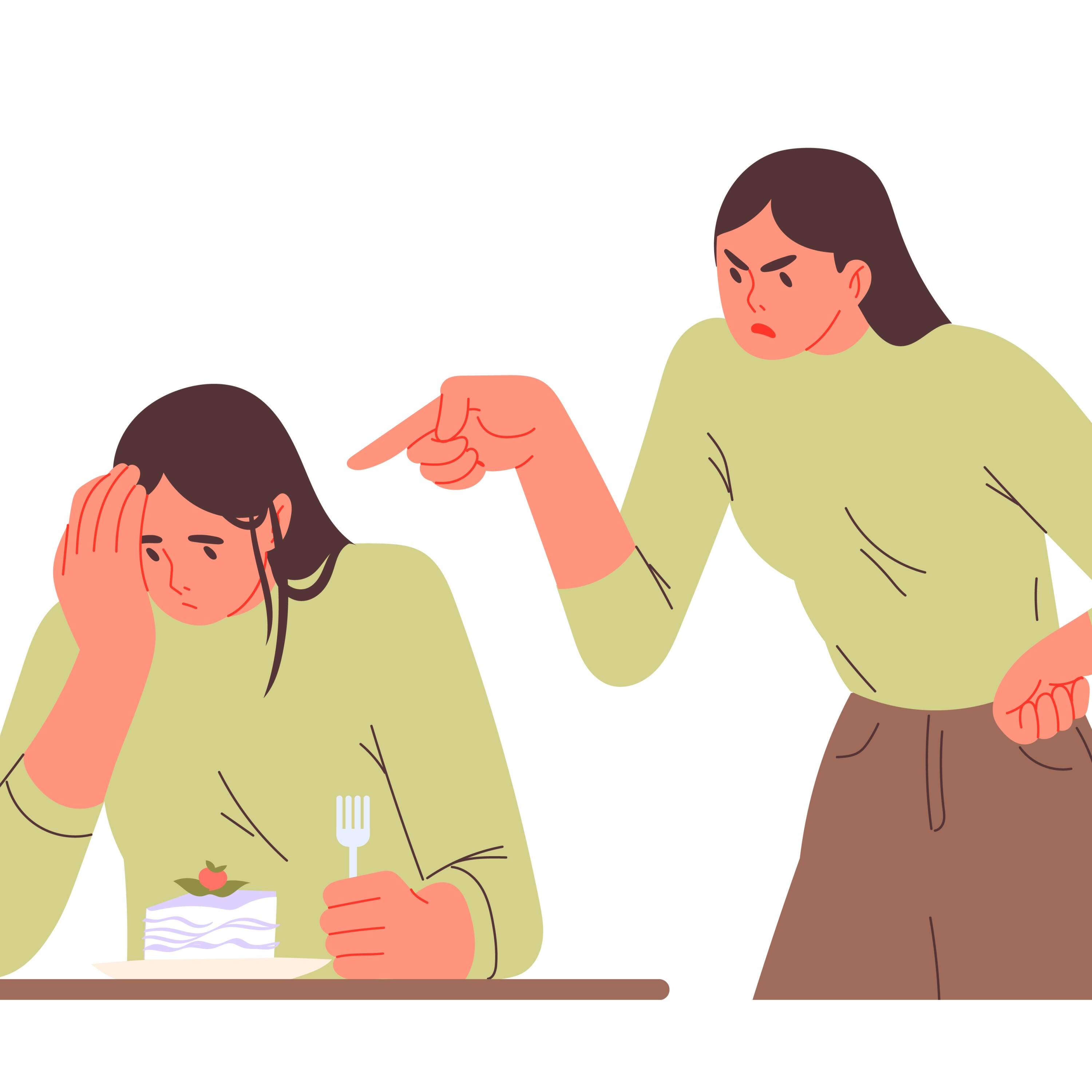
So I started reading these romance fantasy books about dragons. And they were so fun, Emily. Like, so fun. But I felt really embarrassed about how much joy they were bringing me. It's kind of like I didn't even want to be enjoying them.
- [01:19]
B
Oh, that's kind of sad.
- [01:21]
C
It was kind of sad. And I was really frustrated with myself, A, for liking the books in the first place, but then B, for being frustrated that I like them. Like, not allowing myself to just enjoy them.
- [01:32]
B
Yeah, this is like a guilty pleasure for you.
- [01:35]
C
And pretty much immediately I was like, I need a better excuse to think about all of these conflicting feelings more. So I called pleasure activist Sammy Schalk in what would be the start of the reporting journey for this episode.
- [01:47]
D
So.
- [01:48]
B
So what did Sammy say?
- [01:49]
C
That it's a wider problem than just me.
- [01:51]
E
I think there's a way that people just don't take seriously folks who are too open and joyful. I think there's an association with childhood, too, of it being childlike to really unabashedly love something. And as adults, we're supposed to have, like, restraint within our emotions, and that includes our joy.
- [02:12]
B
I feel this too much. I feel like as an older sibling especially, I always feel pressured to tone it down.
- [02:19]
C
I totally get that. And after talking to her about some of these social aspects of pleasure, I really wanted to know what is going on in our brains to make us feel so bad about feeling good. So I turn to someone else. He describes his job as Studying the good things in life.
- [02:35]
B
That sounds like a dream job.
- [02:36]
C
It's so awesome. It's such a good job. Description Morten Kringlebeck is a neuroscientist at the University of Oxford and the director of an entire center dedicated to studying how humans flourish as. And he reminded me basically that at its core, the point of experiencing pleasure is the survival of humanity.
- [02:56]
F
We need to be able not just to survive for ourselves, but also survive as a species, which means that the fundamental pleasures are the ones where we can have some food that gives us the energy to go on, but also sex that allows us to basically work as a species.
- [03:11]
C
Pleasure is so important, and researchers like Morton have started to understand that it's really not just one thing in the brain. Pleasure happens in this cycle. We want something, we like something, and we learn that we like it. But like everything else in life, this cycle can fall out of balance.
- [03:32]
B
So today on the show the Neuroscience of Pleasure. What it is, where it lives in the brain, and how to have a healthier relationship with the things that just feel good. You're listening to Shortwave, the science podcast from npr.
- [03:47]
G
This message comes from Jerry. Most drivers overpay for car insurance because the system is needlessly complicated. Jerry fixes that by handling all the insurance shopping legwork for you. Compare 50 plus insurers side by side and purchase your policy directly in the app. No spam calls, no hidden fees. They'll even monitor price trends and can alert you to better rates. Drivers who save with Jerry could save over $1,300 a year. Download the Jerry app or visit Jerry AI, NPR today.
- [04:22]
B
Okay, Rachel, so you revealed earlier that pleasure, it's not just like a feeling, it actually works in a cycle. What does that mean?
- [04:30]
C
Right. So I've often thought about pleasure just as this singular experience. I do something I like, and then I feel good.
- [04:37]
B
Yeah, same.
- [04:38]
C
And for a long time, researchers also thought that was the case.
- [04:42]
D
When I started in this field several decades ago, I thought that there was one unitary system in the brain that mediated both wanting and liking for rewards. I think most neuroscientists did think that at the time.
- [04:52]
C
That's Kent Berridge. He's done a bunch of work with Morton, and he's a professor of neuroscience at the University of Michigan. And as he studied pleasure, he saw that there were these different components in the brain. Liking and wanting.
- [05:04]
B
Oh, so it's not a unitary system at all. These are separate parts.
- [05:08]
C
Liking and wanting, they're separate. But usually these two things, wanting and Liking go together, but there are cases where they get separated or fall out of balance, like in addiction.
- [05:18]
B
That's so interesting. So, Rachel, walk me through how this pleasure cycle unfolds.
- [05:24]
C
So it all starts with the wanting stage. You and I both drink coffee. So let's take the example of our morning coffee. Say I get to work around 7am and I haven't even seen or tasted any coffee at this point in the morning, but I'm anticipating taking that very first sip.
- [05:40]
B
This is how most of my mornings go.
- [05:41]
C
Yeah. And maybe like around 7:30, you might be motivated enough to get up from your desk. I usually am. And I'll go and make myself a cup of coffee. So scientists can actually measure this motivation by looking at how much work someone will do in order to get to their goal. So say I do get up, but there's no more coffee in the office. Coffee pot. I'm devastated. But how much effort am I actually willing to put in to go get some? Like, will I make a new pot? Will I leave the office and drive to go get more. More coffee?
- [06:13]
B
Okay, so that's the wanting part of the cycle.
- [06:15]
C
Yeah, that's like measuring the motivation, which is wanting. Researchers mainly see this in the brain's reward system, which is a group of areas deep in the brain like the nucleus accumbens and the ventral striatum, parts of the amygdala. They're all queuing us up basically to expect something good.
- [06:32]
A
Okay.
- [06:33]
B
So once you move beyond the desire and you finally get that cup of coffee and it smells as good as you thought it would, and then it tastes really good, what happens next is that the liking part, that's the liking.
- [06:46]
C
And Kent and Morton both say we can measure this liking in a few different ways. So researchers can look at something like whether or not a rodent, which is the animal of choice for most of these studies, eats the food that it's given. So like, if you give a rat
- [06:59]
F
sugar water, the sweeter the sugar water is, the more the rat will lick its lips.
- [07:04]
C
And caregivers have done this with babies basically forever. You give the baby some food and look at its facial reaction to see if it likes it or not.
- [07:11]
A
Yeah.
- [07:11]
B
Okay.
- [07:12]
C
And if the baby does like it, it might lick its lips or stick its tongue out. And if it doesn't, it's probably spitting that food right out.
- [07:20]
B
The opposite of liking.
- [07:22]
C
Yeah.
- [07:22]
B
So when it comes to pleasure overall, though, I tend to think of dopamine, the feel good chemical. Does that have a role to play in any of this?
- [07:31]
C
I'm glad you asked that, because we've often heard about dopamine in relation to pleasure. Just in general.
- [07:37]
B
Yeah.
- [07:38]
C
But it's actually specific to the experience of wanting. That's the first part of the cycle we talked about.
- [07:43]
D
Dopamine is the most famous reward neurotransmitter in the brain, but it turns out it doesn't actually generate pleasure the way we once thought it did. It does, however, generate intense wants and urges for these pleasures in life.
- [07:55]
C
Kent's talking about the difference between wanting something and actually enjoying that thing once you get it.
- [08:02]
G
Oh, okay.
- [08:02]
C
And he says if you lower the dopamine levels in rats or even in humans, they can still like things that second part of the pleasure cycle, but they just might not be as motivated to work for those same things.
- [08:14]
B
Gotcha. So dopamine truly is related more to the first part of the cycle, the wanting and desire.
- [08:20]
C
Exactly.
- [08:21]
B
And you said that happens in the brain's reward system. So where do we see liking in the brain?
- [08:26]
C
Emily? This is my favorite part of all the research Ken and Morton told me about. Liking lives inside of these tiny sites in the brain. In rodents, they're like little buttons nestled right inside of those reward structures we talked about in their brains.
- [08:41]
F
We call them hedonic hotspots.
- [08:42]
C
These hotspots form like an interconnected web in the brain, and they can even be stimulated with drugs to produce either more pleasure or less pleasure.
- [08:51]
B
Earlier, you kind of hinted that these two components, wanting and liking, they can get separated or out of whack with each other.
- [08:57]
C
Yeah, it's true. Sometimes parts of the cycle do fall out of balance, like with addiction, which we mentioned earlier. But I do want to be clear. There are lots and lots of theories of addiction. We really could have whole episodes on them. But some of Kent's research suggests that the brain might be kind of stuck in the wanting stage. A person might be extremely motivated to do something, even if, over time, that thing doesn't actually bring them pleasure.
- [09:21]
B
Okay, even if they don't experience the liking stage.
- [09:24]
C
Exactly. And Kent talked about how many of us can also see this pattern to a lesser extent. In our daily lives, we can all
- [09:32]
D
have wants triggered by rewards, reward cues, things like foods and consumer items and video games and little social messages. These things can trigger dopamine release, mesolimbic activation, and we want to engage with
- [09:45]
B
them even if we don't even like them. This feels consistent with a lot of people's relationship to social media. Okay, so just to go back to, like, the origin Point of this episode, you were sharing that you love these dragon romance novels, but you feel a little guilt. Where does that guilt part come from?
- [10:05]
C
So there's not a ton of neuroscience research that specifically focuses on guilty pleasures in the brain. But I did ask Morton to think about his previous research and then hypothesize how having some of these negative emotions about the things we actually like might change those good feelings.
- [10:22]
F
They engage these kind of higher social networks, and those social networks then have the power to make us change how it is that we are running through that pleasure cycle.
- [10:34]
B
Ah, the power of other people.
- [10:36]
C
It's big. So this idea of a guilty pleasure could be an example of something we really do like but don't want to like. Or it could just be a way of signaling to other people, like, hey, I'm separate from this thing that I enjoy. It's kind of hard to say.
- [10:52]
B
Okay.
- [10:52]
C
Although there is some behavioral research that suggests feeling guilty about doing something. Something might actually make us enjoy that thing more.
- [10:59]
B
Okay, tell me more about that, about liking something, even if you should feel guilty about it.
- [11:04]
C
I talked to Kelly Goldsmith about this. She's a behavioral scientist and professor of marketing at Vanderbilt University. And she did a whole series of studies in 2012 testing the associations between guilt and pleasure.
- [11:16]
H
Oh, wow.
- [11:17]
C
She and her team basically got people to be thinking about guilt without being consciously aware of it.
- [11:22]
B
How'd they pull that off?
- [11:23]
C
So they'd have participants do things like unscramble a bunch of words, and for some groups, those words were related to guilt, and then that group would go do another kind of task. So, like, for one of these studies, Kelly gave participants unlabeled chocolates, and then they rated how much they liked the chocolates and how much they'd be willing to pay for them. And you can probably guess which group said they liked the candy more.
- [11:47]
B
The ones thinking about guilt.
- [11:49]
C
Yeah. And this pattern was true for a bunch of other studies Kelly did.
- [11:53]
B
Humans are fascinating. We're just like a conundrum of contradictions.
- [11:57]
C
Totally. And Kelly did tell me about how it's really easy to say, like, this one thing is bad, and this one thing is good. But a lot of the time, as we know in science and in life, that's so not the case. And things that we identify as bad might be good or vice versa.
- [12:14]
I
Our lives are so constrained. Most of us, most of the time, we show up for work, we eat the breakfast, we get our kids to school. It's like holding down a spring.
- [12:21]
G
And.
- [12:22]
I
And when you just get A chance to let go of that spring a little bit and do something a little bit naughty. It can actually feel pretty excellent.
- [12:27]
B
Absolutely. Like the joy of rebellion. But I, I do recognize how it can get out of hand. So how do we go about honoring our pleasures in a healthy way?
- [12:38]
C
Emily this is something I heard from pretty much every person I talk to that for the most part we really should just lean into the things plural that make us happy. Morton talked about how some of the most fulfilling pleasures give us a sense of meaningfulness. So being part of a community, cooking with friends and family, doing social activities.
- [12:57]
F
I think the take home message from my research is that it's not really about moderation and it's not really about will. It's about variation. It's about realizing that there are many different pleasures out there. And most importantly, you shouldn't be somebody who just does it for themselves. You should share the love.
- [13:14]
C
This reminded me of something Sammy told me too, about how when we emphasize our negative feelings about a certain pleasure, we really risk cutting off potential connections with others. Connections that could bring us the kind of meaningfulness and pleasure Morton and I talked about.
- [13:29]
E
One of the things that I really try to encourage folks when we're talking about pleasure activism is to address what I call like the pleasure police in your head. Because just because somebody else doesn't like something doesn't mean it's not good.
- [13:43]
B
Yeah, we don't have to be all or nothing about the things that give us pleasure.
- [13:47]
C
It's like what Kelly said. Nothing has to be entirely bad, nothing has to be entirely good. We really exist kind of in these in between spaces and so does our pleasure.
- [13:56]
B
Rachel, thank you for diving into something so complicated in this liminal space of pleasure and all of its attendant parts. You are a queen and I hope you can enjoy those books without shame.
- [14:07]
C
Henceforth, I will let you know.
- [14:12]
B
This episode was Produced by Burleigh McCoy and Rebecca Ramirez, who was also the editor. It was fact checked by Rachel Carlson. The audio engineer was Robert Rodriguez. I'm Emily Kwong. Thanks for listening to Short Wave from npr.
- [14:34]
G
This message comes from Jerry. Many people are overpaying on car insurance. Why? Switching providers can be a pain. Jerry helps make the process painless. Jerry is the only app that compares rates from over 50 insurers in minutes and helps you switch fast with no spam calls or hidden fees. Drivers who save with Jerry could save over $1,300 a year before you renew your car insurance policy. Download the Jerry app or head to Jerry Ainpr.
- [15:07]
A
This message comes from Alexa. The all new Alexa will do more so you don't have to chat naturally while Alexa learns your style, anticipates what's next, and makes it happen free with prime on your Amazon devices. Learn more@Amazon.com Alexaplus this message comes from Prolon Feeling heavy and depleted after the holidays, Prolon's five Day Fasting Mimicking Diet aims to make it easy to reset your body habits and energy heading into the new year. Developed at USC's Longevity Institute, the goal of Prolon's nutrition program is to rejuvenate you from within by working at the cellular level to support fat loss, glowing skin and Sharper Focus. Get 15% off, plus a bonus gift when you subscribe@prolonlife.com NPR.