Loading summary
Transcript49 lines
- [00:00]
Commercial Announcer
This message comes from US bank simplify how you do business with business Essentials, a powerful combination of no monthly maintenance fee, checking and card payment processing. Deposit products are offered by U.S. bank National association member FDIC.
- [00:16]
Emily Kwong
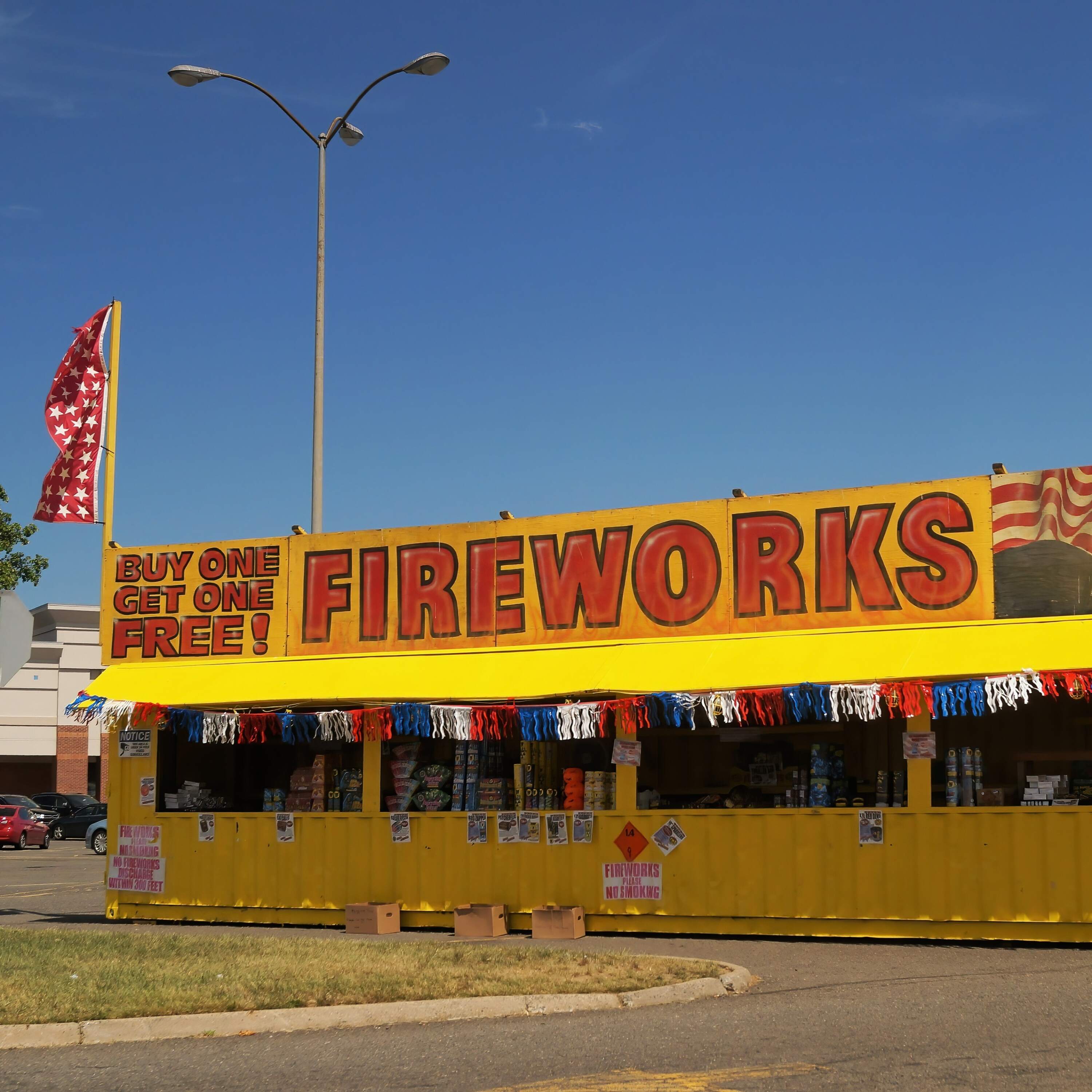
You're listening to Short Wave from NPR. As a kid on the Fourth of July, Kang Carter's family would always get together, have a picnic and light fireworks. His brother brother loved that part. Ken not so much.
- [00:32]
Ken Carter
I remember sort of thinking about like what I would do if something went wrong, like where the emergency room was going to be, hoping I wasn't going to blow my hand up, that kind of stuff. I was a very cautious kid.
- [00:46]
Emily Kwong
Ken is a clinical psychologist at Oxford College of Emory University where he studies sensation seekers, people who may enjoy risk, thrill or a new sensation. The types who on the 4th of
- [00:59]
Ken Carter
July have probably driven across state lines to buy fireworks that might not be legal in your current state, looking for the largest explosions, the most beautiful colors, and have invited the, you know, neighborhood people over to their house to witness that.
- [01:16]
Emily Kwong
Ken, by comparison, is a self described chill seeker.
- [01:20]
Ken Carter
The types of people who are looking at the fireworks, wondering whether or not those are legal in the state and being prepared, the kind of people who might bring something to put out the fire.
- [01:33]
Emily Kwong
Most people, Ken says, are probably in
- [01:35]
Ken Carter
the middle who are going to enjoy it but may be nervous every now and then.
- [01:38]
Emily Kwong
And this spectrum of personality on display as fireworks burst overhead has always intrigued him.
- [01:46]
Ken Carter
I've always been amazed how two people can have the same experience but kind of have a different emotional reaction from it.
- [01:53]
Emily Kwong
As a psychologist, ken uses a 40 point scale to measure someone's self sensation seeking behavior. And he has met people who score 38, even 40.
- [02:02]
Ken Carter
I'm actually at an eight out of 40.
- [02:05]
Emily Kwong
Oh, that's quite low.
- [02:07]
Ken Carter
It's quite low.
- [02:10]
Emily Kwong
So today on the show, the psychology and brain chemistry of why some people like to light illegal Roman candles on the 4th of July while others watch from a distance with a fire extinguisher in hand. Plus how I score on Ken's Sensation Seeking survey. I'm Emily Kwong and you're listening to Short Wave, the science podcast from npr.
- [02:38]
Commercial Announcer
This message comes from Schwab. With the new Schwab Teen Investor account, teens can gain Hands on Investing experience. It's co owned by you and your teen so you can monitor the account while your teen learns how to invest and manage money. Learn more@schwab.com this message comes from NPR sponsor NetSuite. Don't want your business to fall behind because you're late to AI. NetSuite Next can help. NetSuite Next aims to be the next huge leap in how business gets done, because AI is built into everything you do. Try NetSuite next for free. If your revenues are at least in the seven figures. Go to NetSuite AI shortwave built for every industry, ready for every boardroom. This message comes from BetterHelp. People talk about mental health more openly now, but asking for help can still feel hard. BetterHelp's 2026 State of Stigma report surveyed 2,000Americans and found that 85% believe getting support is wise, yet 74% say society discourages people from doing so. Don't let stigma stand in the way of support. Start therapy with BetterHelp. Visit betterhelp.com NPR all right, Ken, let
- [03:49]
Emily Kwong
us dig deeper into the brain chemistry of what makes some people want to seek out bottle rockets and others keep a far distance from fireworks. What decides this?
- [04:02]
Ken Carter
Yeah, there are lots of things that really are part of this, and the thing I like to focus on a lot are two chemicals that we have in our body. One is called cortisol. It's a stress hormone. Really helps organize your body systems to handle that fight, flee, or freeze response. And we know that when these highly chaotic things are happening that for average and low sensation seekers, it produces a lot of cortisol in their body and they're trying to react to that cortisol. High sensation seekers, on the other hand, don't tend to produce that much cortisol when they're in those highly chaotic experiences. So when they're seeing those fireworks, they actually produce higher amounts of another chemical called dopamine, which is a neurotransmitter or chemical messenger that's involved in pleasure. So when these high sensation seekers are seeing these fireworks that are illegal from five states away and they're blowing up, they're experiencing a lot of pleasure but not that much stress. And that's why two people can have the same experience, but really their bodies are reacting in a very different way.
- [05:10]
Emily Kwong
What decides that? The difference among people?
- [05:15]
Ken Carter
Yeah, there's some genetics involved in it, for sure, but the environment plays a piece as well. There's some evidence that high sensation seekers had some sort of unpredictable, chaotic experiences in general when they were younger. But a lot of it tends to be genetic is really what's what. That's why you see a lot of thrill seekers that can sort of run in families.
- [05:37]
Emily Kwong
Oh, that's really interesting. What about experiences that happen in adulthood? I'm thinking about people for whom Maybe they didn't have an issue with fireworks before, but then perhaps they were deployed or survived a war, and fireworks for them are now a trauma reminder.
- [05:52]
Ken Carter
Yeah. And so that's something a little bit different. So what I study is sensation seeking as a personality trait, which can change a little bit over time. But there are some things that might cause people to be to sort of seek that chaos a little bit later, which might include some trauma kinds of experiences. And so what I look at is whether or not this is the kind of thing that's sort of always been like this or did something happen that sort of may have pivoted them towards sort of seeking chaotic experiences. We also know that a lot of these high sensation seekers are create like they pick careers where they're going to be a lot of chaos, and there's going to be a good amount of high sensation seeking involved in that. Whether it's firefighters or first responders or military, a lot of high sensation seekers are drawn to those careers because of their superpower of being able to be calm in those chaotic experiences.
- [06:47]
Emily Kwong
Okay, so just to clarify, thrill seeking as a personality trait is not a you are or you aren't. It's more of a spectrum.
- [06:57]
Ken Carter
Yeah. So the original researcher that really looked at this was someone named Zuckerman, and I've done some modifications to his brief sensation seeking survey, and there's four different pieces to it. So you actually might be a sensation seeker but not realize it because you may actually score high in one level, but a little bit lower in another level.
- [07:16]
Emily Kwong
What are the four categories you're looking at in the survey?
- [07:21]
Ken Carter
Yeah, so the four categories, number one, is called thrill and adventure seeking, like driving fast or dangerous kinds of things that are really involved, sort of body sensations. Another category is called experience seeking. This is sort of sensations of the mind and of the senses. These are people who like adventure travel or eating strange foods, for example. The first two tell me the kinds of things you might choose. The last two components tell me how much trouble you might get yourself into by trying to seek those things. One's called disinhibition. This is your ability to sort of look before you leap. Those that score low always sort of look and sort of do things carefully. Those that score high, just do stuff and figure out the consequences later. The last one's called boredom susceptibility. This has to do with how quickly you get bored and how irritated you get when you get bored.
- [08:15]
Emily Kwong
Yeah. So you wrote an entire book about thrill seeking called Inside the Minds of Thrill Seekers. Daredevils and adrenaline junkies. You have the survey in there?
- [08:26]
Ken Carter
Yes.
- [08:26]
Emily Kwong
The whole team took it on short wave. Oh, you scored an eight.
- [08:32]
Ken Carter
I did. I'm very proud of those eight points. I mean, I earned every one. Yeah.
- [08:39]
Emily Kwong
My score was 32 and I can tell you that I'm laid up in bed right now with a thrown out back because I decided to go sprinting in 90 degree heat on Wednesday. And when I was out there, I was like, this is fun. And then later I came inside and I was like, was that a good idea? And then my back hurt the following day. And then I was like, that's probably fine. No stress. No stress response occurred. And my husband was like, you need to lie down. Like you're. You have injured yourself. So that's why I am recording this from my bed. Because, yeah, I really wasn't stressed. Even though other people would have been very stressed in that situation.
- [09:21]
Ken Carter
Yeah, that doesn't surprise me. A lot of high sensation seekers will say that will actually bounce back quicker when they do have an injury and they're ready to do it again. There is a guy that actually, there are many high sensation seekers are actually underrepresented in emergency room situations because they can actually avoid getting injured. But when they do get injured, they bounce back relatively quickly.
- [09:43]
Emily Kwong
And you said you've met people who are 40.
- [09:45]
Ken Carter
Oh, yes, I've met 38. S, 40s, 32. Still pretty, pretty high. Yeah. But a lot of people will have what I call anchors in their life who are people who will pull them back from doing things that are too dangerous. They could be family, friends, kids, or even certain jobs where you think about whether or not you might want to get injured, you might get injured and that sort of keeps them anchored a little bit more.
- [10:10]
Emily Kwong
Yeah, yeah, Very important. Important. The balance seems very important of anchors and people who are. Let's have a little adventure.
- [10:20]
Ken Carter
Yeah, I think so too. To me, we need high sensation seekers. We need these thrill seekers out there. These are the people that keep us protected. These are the people who sort of push the boundaries. They eat foods that we're going to taste them for the very first time and take a big bite out of them and they end up having these really amazing experiences. And I think there are things we can all learn from these high sensations. Even if you're not one, you can learn some really great things from them. Like how, you know, I used to be a person who wouldn't try new foods, but now I know, like, you know, the worst thing that can happen is that you don't like it.
- [10:53]
Emily Kwong
Yeah. Or if you have an allergic reaction, grab that EpiPen.
- [10:57]
Ken Carter
Yes, yes, yes. Be careful. But just. But being disgusted isn't the worst thing.
- [11:02]
Emily Kwong
Yeah. Going back to the science, aside from kind of self reported survey results, how else do psychologists like yourself study such a personality trait?
- [11:12]
Ken Carter
There was a study done in the Netherlands where they looked at how high sensation seeking might impact how a person drives. They actually had people who were following a pace car in front of them and they were hooked up to some physiological devices to measure their heart rate and their sort of stress response and also the distance they followed the car in front of them. And the low sensation seekers, as you can imagine, followed that car kind of far back and were pretty stressed out when they were doing it. The high sensation seekers followed really closely behind and their stress response was relatively low. So this is why if you're in a car with a high sensation seeker who's changing lanes and moving through traffic and you're wondering and you're really stressed out, if you're a low sensation seeker, it's important to remember that they're not really stressed at all. And that if you're, if your friend that's in the driver is in the companion seat, says they're stressed, they might be.
- [12:12]
Emily Kwong
This is good advice. Listen to your friends while driving. Okay. Well, Ken, since your book came out in 2019, have you learned anything new about sensation seeking?
- [12:22]
Ken Carter
Yeah, I think what I've, I've been focusing on a lot since the book is how those people who aren't high sensation seekers, what we can learn from those high sensation seekers, we think about these high sensation seekers really being adrenaline junkies, but they're kind of not. And one of the things they've told me is that adrenaline is a really bad drug. Will Gad was the very first person to climb up Niagara Falls when it was frozen. And he's told me that adrenaline is a terrible drug. If he was just after adrenaline, he would just run back and forth in traffic. But he told me the reason why he's doing it is for the experience, what it's going to feel like to do it. And you need to be able to focus really well. And so the fact that he has lower levels of cortisol because he's a high sensation seeker lets him to be able to focus and do that really well. And there's some evidence that that emotional regulation that you garner to be able to do those complicated things can last even after the event. A lot of high sensation seekers, I talk to say they'll do things like, you know, wingsuit flying or bungee jumping, and it gives them clarity and they'll do that before they make a big decision. And that clear sense of mind can last for weeks after those events.
- [13:41]
Emily Kwong
So as you prepare for 4th of July, what advice do you have for folks who perhaps are not so into fireworks? What do you think people should do?
- [13:50]
Ken Carter
I always tell people to lean into your awe, find the thing that feels awesome for you and do that unapologetically. As long as it's, you know, safe and it's not going to hurt anybody, that is.
- [14:04]
Emily Kwong
Ken Carter, a clinical psychologist at Emory University, thank you so much for coming on the show.
- [14:10]
Ken Carter
Thanks for having me.
- [14:14]
Emily Kwong
Have a safe, happy holiday, short wavers, whatever you decide to do. This episode was Produced by Burleigh McCoy. It was edited and fact checked by our showrunner, Rebecca Ramirez. The audio engineer was Robert Rodriguez. Beth Donovan is our senior director and Colin Campbell is our senior vice president, president of podcasting strategy. I'm Emily Kwong. Thank you for listening to Short Wave from npr.
- [14:45]
Commercial Announcer
This message comes from Synchrony bank who can help you get your do nothing savings off the couch and working hard. No more sleeping late and eating all the chips. Time to start earning your keep in a big way with their High Yield Savings account that has a great rate, easy access to your funds and no monthly fees or minimum balance requirements. Put your lazy savings to work. Go to synchrony.com NPR Member FDIC this message comes from Bombas. From sharks to burnt hot dogs, comfy footwear is the last thing you want to worry about this summer. Bombus sandals and slides are perfect for beach days, barbecues and everything in between. Go to bombas.com NPR and use code NPR for 20% off. This message comes from Mint Mobile. If you're tired of spending hundreds on big wireless bills, bogus fees and free perks, Mint Mobile is for you. Shop plans@mintmobile.com Switch taxes and fees extra. See Mint Mobile for details.