Loading summary
Transcript41 lines
- [00:00]
Mint Mobile Announcer
This message comes from Mint Mobile. If you're tired of spending hundreds on big wireless bills, bogus fees and free perks, Mint Mobile is for you. Shop plans@mintmobile.com Switch taxes and fees extra. See Mint Mobile for details.
- [00:18]
Katie Wu
You're listening to Shortwave from npr.
- [00:23]
Nate Rott
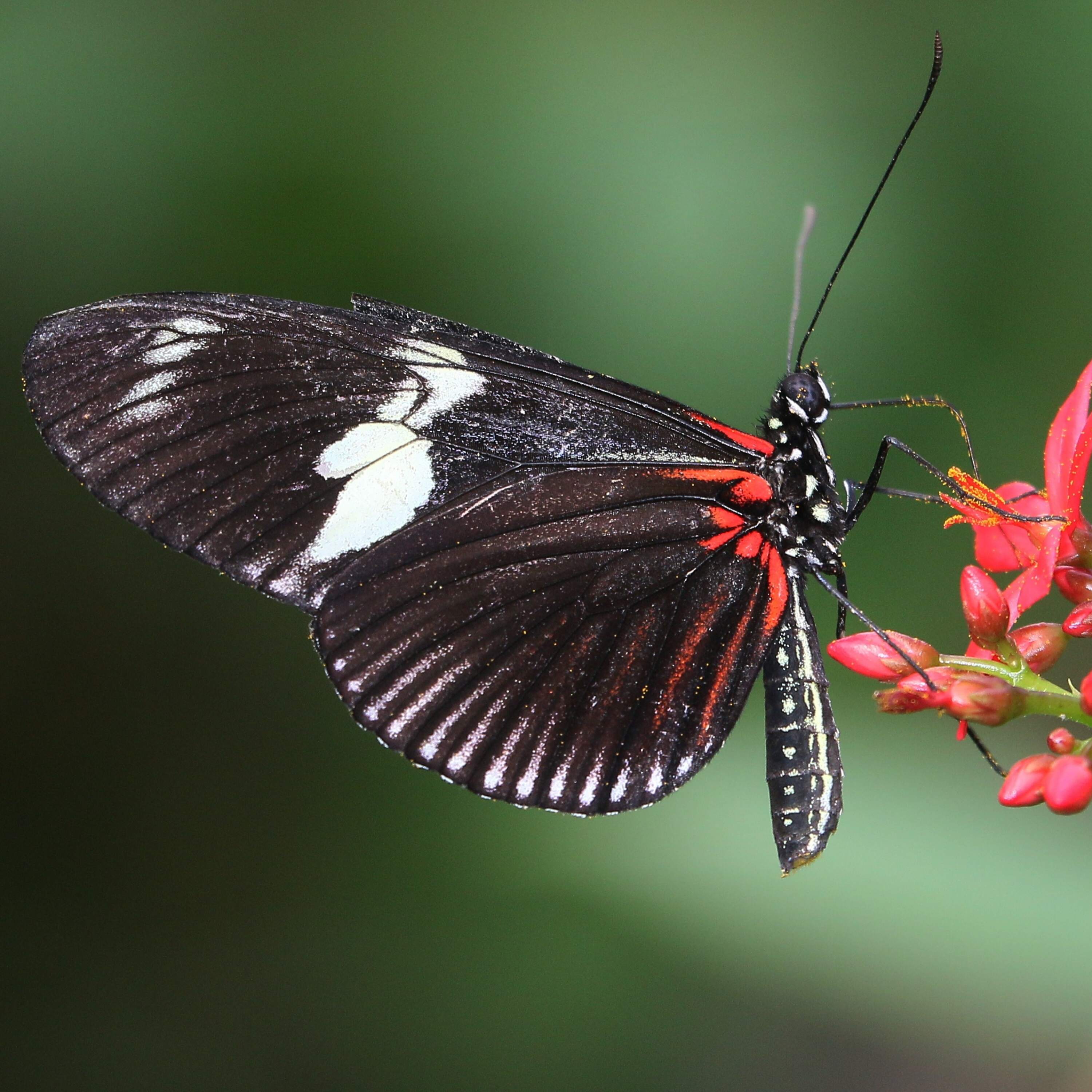
Shortwavers, it's your boy Nate. Rot in the host chair. Maybe it's because I'm turning 40 this year and I'm reminded of my mortality every time I pull my aching body out of bed. But man, there's a certain song from the 80s that's really been hidden. Absolute banger. And then I recently learned about this butterfly that does live the butterfly equivalent of forever, 25 times longer than other butterflies, which you know, to be fair, normally lives only a few weeks.
- [00:59]
Katie Wu
To put that in perspective, it would be like if we found another great ape out there that could survive for more than a millennium compared to our puny, like, I don't know, 75ish years.
- [01:10]
Nate Rott
Katie Wu is a science journalist for the Atlantic. She's how I learned about this little guy because she recently wrote about this genus of long lived butterflies called Heliconius
- [01:20]
Katie Wu
for work and they seem pretty ordinary at first glance. I mean, they're cute, they're colorful, they love to drink nectar. Standard butterfly stuff. But then they just keep living and living and living and living like for months at a time.
- [01:37]
Nate Rott
How these butterflies defy aging, that's still somewhat of a mystery. Sorry fountain of youth seekers, but scientists do have a clue.
- [01:45]
Katie Wu
They know their longevity has something to do with pollen, but but how exactly they're making use of that pollen to extend their lifespans is still kind of
- [01:53]
Nate Rott
a mystery today on the show. Studying a super aging butterfly. What scientists do and don't know about what causes their long lifespans and what lessons humans could take from it, including whether pollen is worth adding to your anti aging regime, assuming you have one. You're listening to Shortwave, the science podcast from npr.
- [02:20]
Schwab/Netsuite Sponsor Announcer
This message comes from Schwab. With the new Schwab Teen Investor account, teens can gain hands on investing experience. It's co owned by you and your teen so you can monitor the account while your teen learns how to invest and manage money.
- [02:33]
Mint Mobile Announcer
Learn more@schwab.com this message comes from Mint Mobile. If you're tired of spending hundreds on big wireless bills, bogus fees and free perks, many Mint Mobile is for you. Shop plans@mintmobile.com Switch taxes and fees extra. See Mint Mobile for details.
- [02:53]
Schwab/Netsuite Sponsor Announcer
This message comes from NPR sponsor Netsuite. Don't want your business to fall behind because you're late to AI Netsuite Next can help. Netsuite Next aims to be the next huge leap in how business gets done, because AI is built into everything you do. Try Netsuite Next for free. If your revenues are at least in the seven figures, go to NetSuite AI Shortwave. Built for every industry, ready for every boardroom.
- [03:19]
Nate Rott
Okay, Katie. Other than the fact that these Heliconius butterflies live so much longer than their butterfly cousins, like, why is their long lifespan so surprising?
- [03:29]
Katie Wu
I'd say there are kind of two scary parts to this whole process of aging, right? It's like actually getting old and then actually stopping living. All things eventually stop living. I don't think we can avoid the death part of this equation, but I think the prospect of aging, like, losing our physical and mental capabilities, deteriorating, looking wrinkly and gray, and our hair ending up in all the weird places like that is very unappealing to a lot of people. These butterflies not only live very long, but they spend their adult lives, like, still remaining extremely vigorous and active and capable of producing offspring. Like, functionally, they are kind of going hard until their last day, which is absolutely wild. The researchers who have been looking into them will sometimes study captive populations of these butterflies, and they'll see adult butterflies zooming around their cave, gorging on nectar, mating in the afternoon, maybe laying some eggs, and then come nightfall, they just drop dead. It's like, oh, guys, I'm going to the gym.
- [04:35]
Mint Mobile Announcer
Thud.
- [04:36]
Katie Wu
It's just out of nowhere, they seem to just stop.
- [04:40]
Nate Rott
They're, like, literally living their best lives until the very end.
- [04:43]
Katie Wu
Absolutely. And that really just defies our typical intuitive conceptions of aging. And while these butterflies, you know, they do kind of fade in terms of coloration over time. That's pretty much the only thing that scientists can see. Otherwise, they're doing their most important evolutionary purposes, right? Like, they're. They're nourishing their bodies, they're mating, they're producing offspring until they just don't.
- [05:05]
Nate Rott
So scientists thought Heliconius might be living longer because it was eating pollen. I gotta ask, like, how does a butterfly eat pollen? Like, they don't even have mouths, Right?
- [05:18]
Katie Wu
It's a great question. And okay, butterflies have mouths, right? But what they really, really, really fundamentally lack is, you know, really strong jaws and teeth, the kind you might expect if you were dealing with pollen. And I don't know how many, you know, of us humans really appreciate this. We look at flowers, and we're like, oh, this lovely, like, yellow powder. It must be so soft and fluffy. It's like eating cotton candy. But no, pollen is hardcore. It's like these really coarse, hard grains that you generally need to grind apart with something really tough. Like, I mean, maybe picture it's like granola for insects and. Right. How do you manage that? An adult butterfly has a proboscis. It's basically this long straw, because for most adult butterflies, all you really need to do is sip nectar, basically drink sugar water through a straw that comes out of your face. And so scientists have actually been really puzzled by how Heliconius butterflies manage to grind pollen down into a usable form. As far as they can tell, they'll collect the pollen on that straw, like, structure their proboscis and kind of just move the proboscis around. Maybe they, you know, ooze out some saliva enzymes to help, you know, with the. The mechanical process of breaking it down. But it is still kind of a mystery. No matter what exactly happens in that process, though, they eventually slurp up whatever mixture they've made, and they're able to extract nutrients to the tune of living a lot longer than their close relatives.
- [06:55]
Nate Rott
It's like drinking a boba tea. But, you know, being able to, like, smash up the boba somewhere in the straw along the way is what I'm thinking of.
- [07:04]
Katie Wu
It truly is like drinking granola with a straw that is attached to your face.
- [07:10]
Nate Rott
Okay, so these butterflies are taking the time to find this pollen and grind it up. Do we know if that's what's causing them to live so much longer? That's just the leading theory.
- [07:22]
Katie Wu
What is knowledge?
- [07:25]
Nate Rott
I ask myself every day.
- [07:27]
Katie Wu
I would say this is the leading idea, but the story is a little bit more complicated than that. It's not just like, if you feed any animal or even any butterfly pollen, it's gonna all of a sudden live 25 times longer. Something about the Heliconius body has, I guess, adapted them to being able to process this pollen. So, for instance, if researchers give another type of butterfly some pollen and they're able to even, like, grind it up for them, they don't actually live longer. It's not this magic elixir that can just impart longevity onto any given species. Something about the Heliconius has allowed them to sort of evolve alongside this resource and give them access to it. And so when you deprive them of pollen, they live a little bit less long. But it's not like they revert back to a common butterfly that only lives a Few weeks, they still live a little bit longer than their close relatives. It just sort of dampens their potential.
- [08:25]
Nate Rott
So if I went outside and started licking flowers, it wouldn't extend my lifetime?
- [08:30]
Katie Wu
I don't think so. I mean, I can't really promise anything, but I will say, like, depending on which flower you lick, it could also kill you. So look at your own risk.
- [08:38]
Nate Rott
Okay, yeah, well, live fast, die young as the butterflies do, or die old. I mean, but you've done a lot of reporting on this idea of longevity, and you've reported on other animals that have long and healthy lifespans, namely bats. Like, what is their secret?
- [08:58]
Katie Wu
Yeah, bats are wild. And I am fascinated by bats because they seem to have a variety of strategies that help them live a lot longer than you would expect. And bats, they are mammals, so more similar to us than these butterflies. And they sort of defy that rule that you were talking about earlier, right. You would expect them to be more like a mouse, you know, not live that long, have a ton of babies, die quickly. But a lot of bats can live for a really, really, really long time. And scientists think that, you know, there's a few things going on. One strategy seems to be that they were able to shut down their bodies to a really extreme degree during hibernation. It's like putting your body in deep freeze. And, you know, we humans can maybe relate to this. If anyone has ever heard of the process of like cryogenically freezing someone, it's like we're mimic that process, right? We grind our metabolism to a near halt, we lower our body temperature. Because part of the idea of aging is, you know, maybe it's just the accumulation of wear and tear on the body. So if we can slow down all the things that tend to accumulate damage in our bodies, maybe we just extend the lifespan of something a little longer. It's. It's really a lot like just being really careful with your car, right. It's going to last you longer if you don't ding it up a bunch along the way.
- [10:14]
Nate Rott
Makes me wish I could, like sleep harder, you know, like go into like a somewhat hibernative state.
- [10:20]
Katie Wu
Totally. And, you know, some of the other things that bats do are a little bit harder to mimic, even with modern technology. But, you know, just the way that they sort of control their immune responses, they're less reactive, I'd say they produce fewer of the inflammatory immune responses that can also create a lot of damage in the body. But that really is the name of the game for a lot of animals that live A long time. They're either able to stave off some of the damage that would typically kill a body as expected, or they're able to do a lot of extra repair in the body. So even if that damage builds up, they can take care of it really quickly in ways that human bodies can't.
- [10:58]
Nate Rott
So anytime I hear about the idea of like animals, you know, nobody cheats death, but extending life, you know, humans have been obsessed with the idea of the fountain of youth for forever, right? What lessons do you think we can learn from these animal aging studies besides not going out and licking every flower for pollen?
- [11:20]
Katie Wu
Yeah, it's a really interesting question and such a natural one. I admit that I probably don't have the most exciting answers for you. I mean, I wish I could tell you, like, oh my God, I just created this new pollen protein bar and if you go out and buy it, we're all gonna live like an extra hundred years. It's not that simple. I think part of the lesson here is that it's not just that these anim have figured out like, things in their environment or like day to day strategies to live longer. Like, oh, if I just hibernate, I'll live longer. If I just eat this pollen, I'll live longer. Their bodies have to be adapted to sort of make the most out of those strategies, right? Like bats evolved to be able to hibernate and shut their bodies down in ways that human bodies naturally can't. Heliconias, butterflies are able to extract nutrients from that pollen in ways that even close relative butterflies can can't do. It's not just about the pollen. It's about how receptive the body is to the pollen or to the hibernation. And so I think it's a good lesson for humans because there's some humility in this, right? I'm not saying that we should give up on eating well or getting enough rest or taking care of our bodies in other ways. I think those things can help us live better, healthier lives and you know, maybe even live longer than some other people who aren't practicing those good lifestyle habits. But there is a cap, right? A cap on how much impact that can have on a single lifespan. On a more encouraging note, human lifespans have really, really, really extended even in the past couple centuries, right? When our babies stopped dying of terrible infectious diseases. With the advent of antibiotics and vaccinations and better hygiene, we have extended the average human lifespan. And so it's not to say that technology and innovation and modern medicine haven't played a Helping us live longer. But I think one thing that people often forget is that the average lifespan has ticked up because we've cut down on a number of really young babies and kids that have died. There have been people living into their 80s for a very long time. And so we probably do have to acknowledge that there is to some degree an evolutionary cap. And I doubt that even with all of the super interesting hacks from medicine to diets to vaccines, all those things are good. But those alone are probably not going to all of a sudden add, you know, 50 years to the typical human lifespan at this point.
- [13:50]
Nate Rott
Katie, thank you so much for bringing us this reporting.
- [13:53]
Katie Wu
Of course. And I hope you and I both live exactly as long as we want to.
- [13:58]
Nate Rott
To long, prosperous lives.
- [14:00]
Katie Wu
Exactly.
- [14:02]
Nate Rott
Short waivers if you want to live forever. Or if you just like this episode, follow us on the NPR app or whichever app you like to use. This episode was Produced by Burley McCoy, edited by our showrunner Rebecca Ramirez, and fact checked by Tyler Jones. The audio engineer was Jimmy Keeley. I'm Nate Rott. Thanks for listening to Short Wave from npr. I want to be forever young. Do you really want to live forever?
- [14:32]
Katie Wu
Forever, forever.
- [14:36]
Mint Mobile Announcer
This message comes from Mint Mobile. If you're tired of spending hundreds on big wireless bills, bogus fees and free perks, Mint Mobile is for you. Shop plans@mintmobile.com Switch taxes and fees extra. See Mint Mobile for details. This message comes from Integrative Therapeutics, makers of Cortisol Manager named Best Overall Ashwagandha Supplement by Vogue. Use code STRESS2026 for 20% off of cortisol Manager on Amazon.com this message comes from Capella University. That spark you feel? That's your drive for more. Capella University's flexpath Learning format lets you earn your degree at your pace without putting life on pause. Learn more at Capella Eduardo.