Loading summary
Transcript71 lines
- [00:00]
Amazon Pharmacy
This message comes from Amazon Pharmacy. When you're on hold with the pharmacy and you hear your call is very important, after the 10th loop, you start to doubt that Amazon Pharmacy delivers meds to you fast. Without the hold music, Amazon Healthcare just got less painful.
- [00:19]
NPR Host
You're listening to Short Wave from npr. Hey, shortwavers.
- [00:25]
Regina Barber
Regina Barber here and Rachel Carlson with our bi weekly science news roundup featuring the hosts of All Things Considered. And today we have Elsa Chang. Hello, welcome.
- [00:35]
NPR Host
Hello, West Coast.
- [00:35]
Regina Barber
Representing Woo Hoo.
- [00:37]
Rachel Carlson
And I heard we've got some new research on how some people are aging extra well. Hopefully including me, right?
- [00:43]
NPR Host
Yeah, me too.
- [00:43]
Regina Barber
Oh, yeah.
- [00:44]
NPR Host
Plus, endangered eagles feeding on toxic toads without harm.
- [00:48]
Regina Barber
And a new discovery about life in some of the deepest parts of the ocean.
- [00:52]
Rachel Carlson
Fascinating. I love mysterious, mysterious deep sea stories.
- [00:56]
NPR Host
Just like our whole, you know, summer series, sea Camp.
- [00:58]
Rachel Carlson
That's right.
- [00:59]
NPR Host
You're listening to Shortwave, the science podcast from NPR.
- [01:17]
BetterHelp
This message comes from BetterHelp. With all the talk about mental health and wellness these days, it can feel like there's advice for everything. But how do you know what actually works for you? BetterHelp therapists have a 4.9 rating from 1.7 million client reviews. So you're in good hands with their licensed therapists who can help figure out what's best for you. Visit betterhelp.com NPR for 10% off your first month.
- [01:43]
Amazon Pharmacy
This message comes from Amazon. Have you ever been so sick that even the thought of standing up to go to the doctor made you even more sick? Amazon One Medical has 247 virtual care so you can get help while horizontal. And with Amazon Pharmacy, you can get medicine delivered fast right to your door. You just have to make it to your door. Thanks to Amazon, Healthcare just got less painful.
- [02:08]
BetterHelp
This message comes from Charles Schwab. When it comes to managing your wealth, Schwab gives you more choices like full service, wealth management and advice when you need it. You can also invest on your own and trade on thinkorswim. Visit schwab.com to learn more.
- [02:24]
NPR Host
Okay, Elsa, West Coast, Best coast. Where do we start?
- [02:28]
Rachel Carlson
Okay, I definitely want to start with the people who age extraordinarily well. Super curious if we're talking about Asians. Rachel, kick us off.
- [02:36]
Regina Barber
For 25 years, Northwestern University has studied these people who are in their 80s, but with the memory abilities of someone 50 to 60 years. They're called superagers. And this week in the journal Alzheimer's and Dementia, researchers summarize some of the secrets superagers seem to have in common.
- [02:53]
Rachel Carlson
I Want to be a super ager? What's their secret? Tell us.
- [02:58]
Regina Barber
One commonality between superagers is they all have consistent social interaction, strong social relationships, and meaningful interactions with other people.
- [03:07]
Rachel Carlson
Okay, so keep partying. Go ahead.
- [03:09]
NPR Host
Other factors may include getting good sleep, not just like, being asleep for enough time, but getting high quality sleep. A clinical clinical neuropsychologist at Northwestern University, Dr. Sandra Weintraub, says movement and exercise may also play a key role, but those are more difficult to study objectively.
- [03:26]
Rachel Carlson
Okay, I feel like I'm screwed on sleep, but I have a social interaction piece down. What about genetics?
- [03:33]
Regina Barber
I asked another researcher who wasn't involved in the paper, Amanda Marr. She's a clinical neuropsychologist at the University of Michigan. And she told me genetics do play a role in super aging. Surprise. But they're not the whole picture. Lots of people have genetic risk factors for Alzheimer's disease or dementia, but don't show any signs of those conditions.
- [03:52]
NPR Host
So the question is, what helps those people's brains resist those conditions?
- [03:56]
Rachel Carlson
Yeah. Do they have any ideas from this research?
- [03:59]
NPR Host
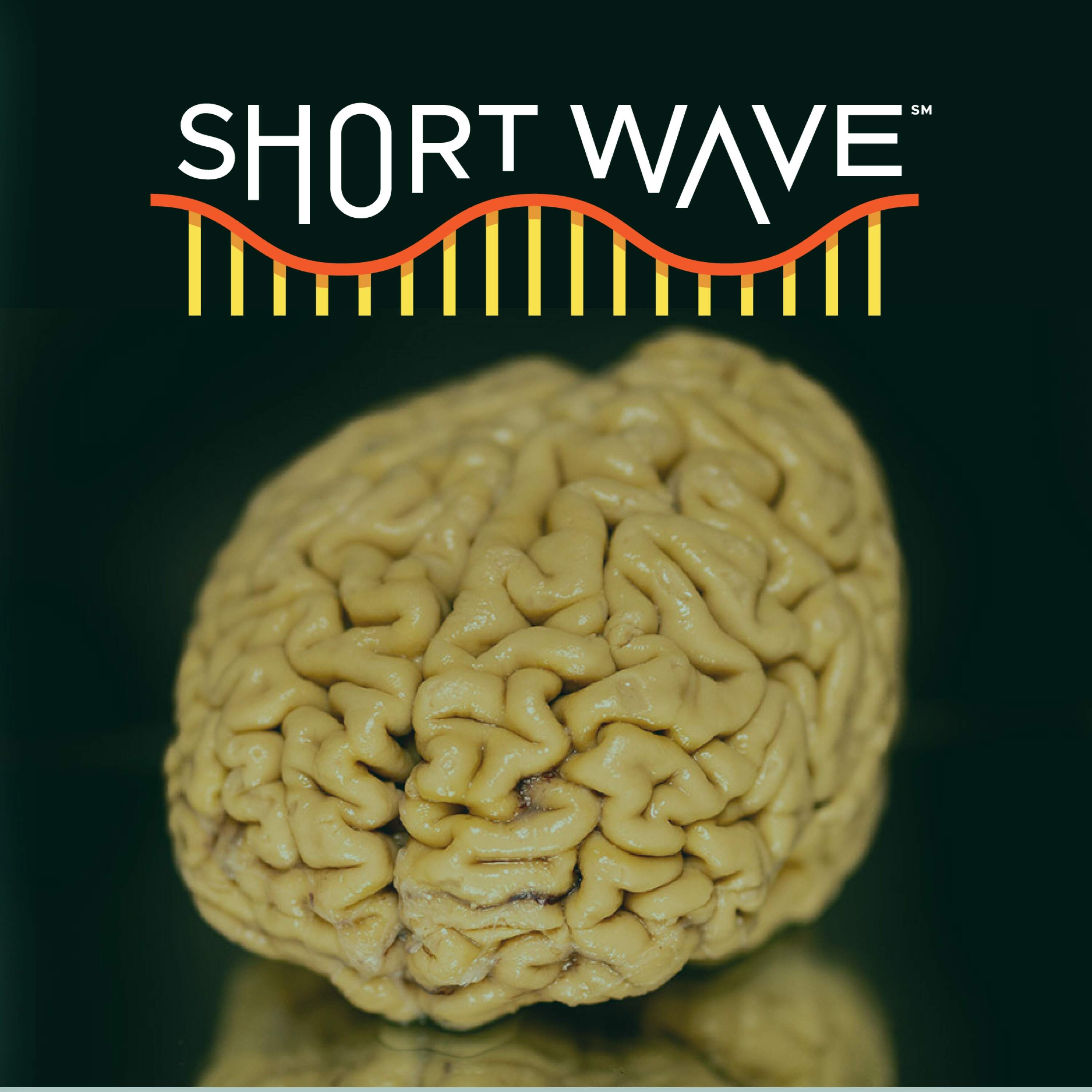
Yeah, those two things we already mentioned, like social interaction and sleep probably play a role also. We know that the human brain tends to slow down as we age. Like, even healthy brains shrink, which can make learning and memory harder as people age. But superagers brains shrink more slowly than brains of their peers, and researchers think that that's involved in avoiding cognitive decline.
- [04:21]
Regina Barber
Superagers also have a lot of this particular type of neuron compared to other people their age. It's called the Von Economo neuron, and it's a big neuron found in humans and some other species like whales and elephants. And researchers think it's related to social relationships or social bonding.
- [04:37]
NPR Host
And everyone we spoke to said these are all clues to help understand how those behavioral elements and neurological elements are connected to one another. Here's Sandra Reintraub again.
- [04:46]
BetterHelp
Just because you're getting older doesn't mean you're losing it.
- [04:49]
Rachel Carlson
I think we assume, oh, you know.
- [04:50]
BetterHelp
They'Re just getting older, they're forgetful. That's not true.
- [04:53]
Regina Barber
Sandra says there's a lot of variability amongst older people and that superagers offer insight into how we all might be able to keep our brains healthy as we age.
- [05:03]
Rachel Carlson
Oh, I want that. Okay, so we go from superagers to eagles in Japan. They are somehow eating toxic toads and still doing okay. What?
- [05:14]
NPR Host
Yeah, that's right. So these are the crescent serpent eagles, which are, are critically endangered in Japan. A subspecies of these eagles live on two small islands there, and there are only about 200 of them.
- [05:25]
Regina Barber
And in 1978, cane toads from Central and South America were introduced to one of the islands, Ishigaki. The goal was pest control to get rid of the bugs eating the cane sugar crops. But the toads are toxic, so predators who fed on them started dying, too.
- [05:40]
Rachel Carlson
But the eagles are totally fine.
- [05:42]
NPR Host
Yeah. So a new study documents the fact that the they've been feeding on the toads for almost 50 years with no visible symptoms from the cane toad's toxins. The question is how? Like I asked Elisa Tobe at Kyoto University about that. She's the lead author of a recent study in the journal BMC Ecology and Evolution. She got blood and tissue samples from these eagles on both islands and compared them to other raptors. And she found that the eagles have a special genetic adaptation to evade these toxins. An added patient that Alisa says they've had for at least 10,000 years, long before the cane toad showed up on the island.
- [06:15]
Regina Barber
So by chance, they can feed on them.
- [06:18]
Rachel Carlson
That's so cool. Is there any idea why they even have this adaptation at all?
- [06:23]
Regina Barber
It turns out it's a somewhat common adaptation. We talked with evolutionary biologist Shabna Mohammadi about this.
- [06:30]
NPR Host
This adaptation isn't unique to the eagles. It's actually very, very widespread. And what we found in rodents, in frogs, in snakes, many predators, sometimes they've gained this adaptation and they still have it today, even though they don't need it.
- [06:49]
Rachel Carlson
Okay, but what's the upshot? Like, is this good news for this endangered species?
- [06:55]
Regina Barber
Yes and no. So some people have argued we should keep these cane toads for the eagles to feed on, since they aren't harmed. But keep in mind these toads are an invasive species, A human induced ecological disaster, and haven't been good for the environment. On Ishigaki, many animals die of heart attacks if they eat them. So Elisa's still in favor of removing the invasive pest.
- [07:16]
NPR Host
On the plus side, Shabnam says understanding this adaptation can tell us much more about evolution. Like when species so distantly related can have gene sequences that can do the same thing.
- [07:26]
Rachel Carlson
That's so cool. Okay, last topic. Life in the deep ocean. Rachel, what's going on down there?
- [07:33]
Regina Barber
We're talking about the hadal zone, Elsa. It's the deepest part of the ocean, Named for the Greek God of the underworld, Hades.
- [07:39]
Rachel Carlson
Oh, I get it. Okay, yeah.
- [07:41]
Regina Barber
If you could have imagine based on that name. Life is pretty hard down there. No sunlight reaches down this far and.
- [07:48]
NPR Host
For a long time, researchers thought that life in this zone mostly ate like organic matter falling from the ocean surface. Like bits of dead animals. Like poop.
- [07:56]
Rachel Carlson
Yum.
- [07:57]
NPR Host
But now a study in the journal Nature suggests that these deep sea creatures may also get some energy from chemicals seeping out of the ocean floor.
- [08:04]
Rachel Carlson
Ooh. How does that work?
- [08:05]
NPR Host
So I talked to Meng Gren Du. She's a geochemist at the Chinese Academy of Sciences. And to study all this, she took this incredible journey down nearly six miles under the ocean surface in a submersible. And she landed in two trenches in the northwest Pacific Ocean near Japan and Russia. So submersible is like a time machine to me. So whenever I dive to a new ocean somewhere, it always open a new world for me.
- [08:33]
Regina Barber
During her aquatic time travel, she found tubeworms, clams, and microbial mats living near cold seeps. Those are places where chemicals like hydrogen sulfide and methane seep out of the ocean floor.
- [08:44]
Rachel Carlson
Ew. Wait, how do these sea creatures survive on that?
- [08:48]
Regina Barber
The researchers think that microbes inside of the animals use those chemicals to make organic compounds. Then the animals feed off of those compounds.
- [08:57]
NPR Host
Yeah, and the next step is exploring, like, more trenches at this depth. Now that we know that there's so much life down there, Mangren thinks that there are many more species to discover and more to learn about how life works there.
- [09:08]
Rachel Carlson
Yeah, but she has to get in a submersible. Not for me.
- [09:12]
NPR Host
No way. She loved it. She said it was amazing.
- [09:15]
Rachel Carlson
Okay, good for her.
- [09:16]
Regina Barber
But if you come back, we won't make you get in one.
- [09:18]
Rachel Carlson
No, it'll never happen.
- [09:19]
NPR Host
No. You can hear more of Elsa on consider this NPR's afternoon podcast about what the news means for you.
- [09:29]
Regina Barber
This episode was produced by me, Rachel Carlson, and Michelle Aslam. It was edited by Rebecca Ramirez and Christopher Intel.
- [09:36]
NPR Host
Yotta Tyler Jones checked the facts. Ted Meadbane and Gilly Moon were the audio engineers. I'm Regina Barber.
- [09:42]
Regina Barber
And I'm Rachel Carlson. Thanks for listening to Shortwave, the Science podcast from NPR.
- [10:10]
BetterHelp
This message comes from LinkedIn ads. One of the hardest parts about B2B marketing is reaching the right audience. That's why you need LinkedIn ads. You can target your buyers by job title, company role, seniority, and skills. All the professionals you need to reach in one place to get a $100 credit on your next campaign. So you can try it yourself. Just go to LinkedIn.com results. That's LinkedIn.com results. Terms and conditions apply only on LinkedIn ads.
- [10:39]
Amazon Pharmacy
This message comes from NPR sponsor Shopify. Shopify is the commerce platform behind millions of businesses around the world and 10% of all e commerce in the US from household names like Mattel and Gymshark. Get started with your own design studio. With hundreds of ready to use templates, Shopify helps you build a beautiful online store to match your brand style. If you're ready to sell, you're ready for Shopify. Sign up for your $1 per month trial and start selling today@shopify.com NPR.